Rosacea Treatment
Rosacea care focuses on controlling facial redness, flushing, bumps, and skin sensitivity through dermatology assessment, trigger management, topical or oral medicines, and selected device-based treatments.
Quick answer
Rosacea is a chronic inflammatory skin condition that causes flushing, persistent redness, acne-like bumps and visible blood vessels, usually on the central face. Treatment combines trigger management, gentle skin care, prescription topical or oral medicines and, for selected patients, vascular laser or light-based therapy. Rosacea cannot be permanently removed, but with the right plan it can usually be controlled well.
What Is Rosacea?
Rosacea is a chronic inflammatory skin condition that affects the centre of the face, most often the cheeks, nose, chin and forehead. It causes flushing, persistent redness, burning or stinging, acne-like bumps and, in some people, visible small blood vessels or eye irritation. It is not contagious, and it is not caused by poor hygiene. Rosacea tends to run a long course with flares and quieter periods, which is why treatment focuses on control rather than a one-off fix.
Rosacea can feel far more personal than a simple skin condition. Because it sits on the most visible part of the body, it can influence how you feel in meetings, social situations, photographs, travel and everyday conversation. Many people describe the same cycle: flushing, then persistent redness, then sensitivity, then bumps that look like acne but do not respond to acne products, and finally frustration when over-the-counter treatments make the skin worse instead of better. That frustration is common, and it usually reflects the wrong diagnosis or the wrong products rather than anything you have done incorrectly.
Most people arrive at this topic with practical questions as well as emotional ones. Is the diagnosis actually rosacea? Can the redness be reduced? Are the medicines safe for your skin type? Is laser or light-based treatment appropriate for you? And what does sensible long-term maintenance look like? This page walks through what rosacea is, what it looks like, what drives it, how it is treated and what a realistic outcome looks like, including the limits of what treatment can do.
One point is worth stating plainly at the start. Rosacea cannot usually be cured in the sense of disappearing forever. It can, however, often be controlled effectively with the right diagnosis, trigger management, skin barrier protection, prescription therapy and, for selected patients, device-based treatment. Early, well-planned care can reduce flares, improve comfort, protect the eyes when ocular rosacea is present, and help prevent progression in some forms of the condition.
What does rosacea look like?
The classic rosacea face shows persistent redness across the cheeks and nose, sometimes spreading to the chin and forehead, often with episodes of sudden flushing and warmth. Some people also develop red papules and pus-filled bumps that resemble acne but occur without blackheads. Fine red lines, dilated superficial blood vessels called telangiectasias, may become visible over time. In a smaller group of patients, the skin gradually thickens, most noticeably around the nose. Appearance varies by skin tone: in lighter skin, redness is usually obvious, while in darker skin rosacea may show as warmth, swelling, discoloration, sensitivity or recurrent bumps rather than a visibly red complexion. Because of this, rosacea in darker skin is frequently under-recognised, and experience across a broad range of skin types matters at diagnosis.
What causes rosacea?
No single cause of rosacea has been identified; it appears to result from a combination of genetic predisposition, an overactive innate immune response, abnormal reactivity of facial blood vessels, and environmental factors such as ultraviolet exposure. In some patients, Demodex mites, microscopic organisms that live naturally on facial skin, are present in higher numbers and appear to contribute to inflammation. Damage to the skin barrier makes matters worse, because a weakened barrier lets irritants in and lets moisture out, keeping the skin in a reactive state.
What is the main cause of rosacea?
There is no single main cause of rosacea, but the most consistent underlying feature is a facial vascular and immune system that over-reacts to everyday stimuli. Heat, sunlight, alcohol, spicy food, hot drinks, emotional stress, exercise, cold wind and certain medications do not cause rosacea by themselves: they trigger flares in skin that is already predisposed. This distinction matters for treatment: trigger management reduces flares, while medical therapy addresses the inflammation underneath.
Rosacea Symptoms and How They Are Grouped
Rosacea symptoms usually fall into four overlapping patterns, and most patients have features of more than one at the same time. Understanding your dominant pattern is the foundation of a sensible treatment plan, because each pattern responds to different tools.
- Flushing and persistent redness: episodes of sudden warmth and redness, gradually becoming a background redness that no longer fully fades between flares. This is the pattern most people mean when they describe rosacea and facial redness together.
- Papules and pustules: inflamed red bumps and pus-filled lesions across the central face. They resemble acne but typically lack blackheads, and they often worsen with standard acne products.
- Phymatous changes: gradual thickening and enlargement of skin texture, most often around the nose. This pattern develops slowly and is less common than the others.
- Ocular rosacea: dryness, burning, grittiness, redness, light sensitivity, eyelid inflammation or recurrent styes. Eye involvement can occur with or without obvious skin findings.
Alongside these patterns, most rosacea-prone skin is simply sensitive. Stinging with sunscreen, burning with moisturiser, tightness after cleansing and intolerance of fragranced products are everyday realities for many patients. This sensitivity is not a separate problem: it reflects a compromised skin barrier, and repairing that barrier is part of treatment, not an optional extra.
What can be mistaken as rosacea?
Several conditions can be mistaken for rosacea, which is why confirming the diagnosis comes before any prescription. Acne vulgaris causes similar bumps but includes blackheads and whiteheads and responds to different treatment. Seborrheic dermatitis causes redness and flaking around the nose, brows and hairline and can coexist with rosacea. The facial rash of lupus can mimic rosacea’s redness distribution but has different implications and needs different care. Allergic or irritant contact dermatitis from cosmetics can inflame the same areas. Flushing can also be caused by certain medications, menopause and, rarely, endocrine conditions. Finally, prolonged unsupervised use of topical corticosteroids on the face can produce a rosacea-like eruption of its own. Treatments that help rosacea may not help these conditions, and may worsen some of them, so an accurate diagnosis is not a formality.
Who May Need a Rosacea Assessment
You may benefit from a dermatology evaluation if you have repeated facial flushing, persistent redness, burning, stinging, visible small blood vessels, acne-like bumps that do not respond to acne products, or skin that reacts strongly to common cosmetics and cleansers. Many patients notice that their skin becomes hot and red after sun exposure, alcohol, hot drinks, spicy foods, emotional stress, exercise, sauna, hot weather, cold wind or certain medications. If that pattern sounds familiar, it is worth having the condition properly assessed rather than continuing to experiment with products.
Rosacea is common in adults, particularly after the age of thirty, though it can begin earlier. It affects all skin tones. Because redness reads differently across skin tones, patients with darker skin sometimes go years without a correct diagnosis, treating presumed acne or eczema while the underlying rosacea continues. An assessment that takes skin tone into account can shorten that road considerably.
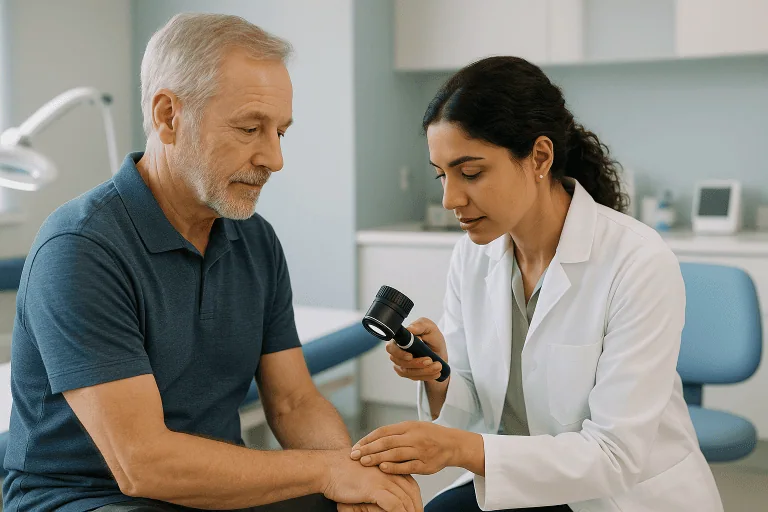
Diagnosis is usually clinical: your dermatologist evaluates your symptoms, medical history, visible skin findings and triggers. A skin biopsy is not usually required, but it may be considered if the diagnosis is unclear or another condition needs to be excluded. Dermoscopy or close skin examination can help assess blood vessels, inflammation, scaling and signs of previous product damage. If eye symptoms are present, dryness, burning, a gritty sensation, light sensitivity, recurrent styes or red eyelids: an ophthalmology assessment may be recommended, because ocular rosacea affects comfort and, uncommonly, can involve the cornea if left unmanaged. Ocular rosacea sits within the broader family of ocular surface diseases, and coordinated skin and eye care produces better results than treating either in isolation.
Many patients arrive at a specialist consultation only after a long trail of disappointment: multiple non-prescription products, harsh acne therapies, frequent exfoliation, steroid creams used without supervision, or cosmetic procedures that were never appropriate for sensitive rosacea-prone skin. Others seek a second opinion because their redness or bumps keep returning despite previous treatment. In all of these situations, the useful first step is the same, clarify the diagnosis, then rebuild the plan from the ground up rather than adding another product to an unstable routine.
Conditions and Indications Rosacea Treatment Addresses
Rosacea care addresses several related patterns of disease. Many patients have more than one pattern at the same time, which is why treatment plans often combine different methods rather than relying on a single medicine.
- Persistent facial redness: ongoing redness across the cheeks, nose, chin or forehead, often associated with visible superficial blood vessels.
- Flushing and heat sensation: episodes of sudden redness, warmth, burning or facial discomfort triggered by temperature, food, stress, alcohol, exercise or sunlight.
- Papules and pustules: red bumps and pus-filled lesions that resemble acne but usually occur without blackheads and may worsen with standard acne products.
- Skin sensitivity and barrier damage: stinging, burning, dryness, tightness or intolerance to cosmetics, sunscreens or cleansers.
- Visible facial vessels: fine red lines (telangiectasias) that may be treated with vascular-focused device therapies when appropriate.
- Phymatous changes: thickening or enlargement of skin texture, most often around the nose, which may require medical therapy and, in selected cases, procedural treatment.
- Ocular rosacea: eye dryness, irritation, redness, eyelid inflammation, recurrent styes or a gritty sensation, requiring coordinated dermatology and ophthalmology care.
- Steroid-aggravated facial redness: rosacea-like inflammation that can develop or worsen after unsupervised use of topical corticosteroids on the face.
The indication for treatment is not only cosmetic. Rosacea can cause physical discomfort, recurrent inflammation, eye symptoms and progressive vascular visibility. It can also lead to avoidance behaviours, reduced self-confidence and anxiety in social or professional situations. Treating the condition is about restoring predictability to skin that has come to feel unpredictable.
How Rosacea Treatment Works
Rosacea treatment is a structured approach to controlling facial inflammation, flushing, redness, bumps and skin sensitivity, tailored to the dominant features of your condition. There is no single rosacea prescription. A patient whose main problem is background redness needs different tools from a patient with inflamed pustules, and different tools again from a patient whose eyes are the main concern.
How to treat rosacea?
Rosacea is treated in layers, usually in this order:
- Confirm the diagnosis. Rule out acne, dermatitis, lupus-related rash, contact allergy and medication-related flushing before treating.
- Identify triggers. Map which foods, temperatures, activities and products reliably provoke your flares, so avoidable flares are avoided.
- Stabilise the skin barrier. Replace harsh routines with gentle cleansing, a tolerated moisturiser and daily broad-spectrum sun protection.
- Add prescription topical therapy matched to your pattern, anti-inflammatory agents for bumps, or vessel-constricting agents for redness in selected patients.
- Consider oral therapy for moderate, severe or widespread inflammation, most commonly low-dose anti-inflammatory antibiotic regimens under dermatology supervision.
- Consider device-based treatmentvascular laser or intense pulsed light, for persistent redness and visible vessels that medication cannot reach.
- Plan maintenance. Agree what continues long term, what stops, and how the plan adapts when symptoms shift.
Treatment begins before any prescription is written. A detailed consultation establishes the full story: when symptoms began, what triggers flares, which products you use, which medications or supplements you take, whether you have eye symptoms, and what you have already tried. It helps to bring photographs of flares, a list of current skin care products, prior prescriptions, allergies and any relevant medical records: a flare rarely performs on cue in the consulting room, and photographs taken at home often tell the dermatologist more than the skin does on the day.
During the examination, your dermatologist assesses redness distribution, inflammatory lesions, scaling, oiliness or dryness, skin thickness, visible vessels and signs of irritation from previous treatments. Conditions that mimic rosacea are actively considered, not assumed away. This step protects you from the most common failure in rosacea care: treating the wrong condition with the right medicine, or the right condition with products that inflame it further.
Skin barrier stabilisation is usually the first practical step. Rosacea-prone skin typically needs gentle cleansing, a non-irritating moisturiser and daily sun protection. Your dermatologist may recommend avoiding abrasive scrubs, alcohol-based toners, fragranced products, unnecessary acids and unsupervised steroid creams. Sunscreen deserves particular emphasis, because ultraviolet exposure is one of the most common rosacea triggers; for sensitive skin, mineral or carefully selected broad-spectrum formulations are often better tolerated. None of this sounds dramatic, but a stable barrier makes every subsequent treatment work better and irritate less.
Prescription topical medicines are selected according to the dominant symptoms. Anti-inflammatory gels, creams or foams reduce bumps and pustules; some formulations also target the Demodex mites that contribute to inflammation in certain patients. Separate topical options can reduce visible facial redness for limited periods by constricting superficial blood vessels. These redness-reducing medicines must be used carefully, because some patients experience rebound redness or irritation; your dermatologist will explain how and when to apply them, what to expect, and when treatment should be adjusted or stopped.
Oral medicines may be recommended when inflammation is moderate, severe, widespread or not adequately controlled with topical therapy. Low-dose anti-inflammatory antibiotic regimens are commonly used because at these doses they act mainly on inflammation rather than infection. For selected patients with difficult inflammatory disease, other oral therapies may be considered with close monitoring. Where ocular symptoms are present, oral treatment may also help eyelid inflammation, with eye care coordinated through an ophthalmologist when needed. Decisions about starting, changing or stopping any medicine belong to the treating doctor, who weighs your overall health, other medications, pregnancy status and previous responses.
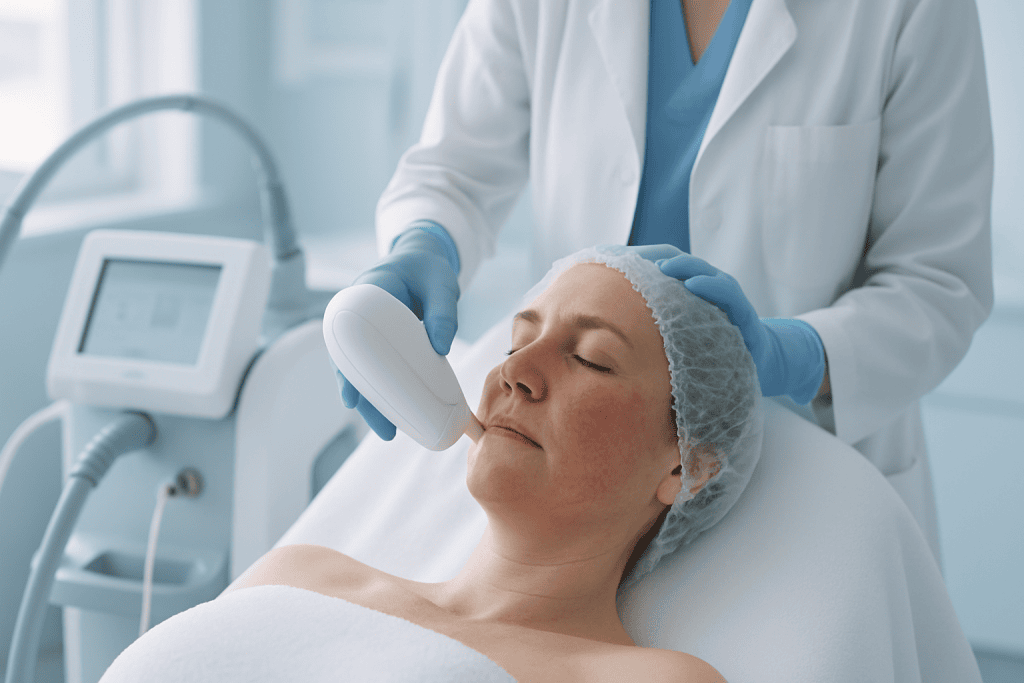
Device-based treatment addresses what medication generally cannot: established visible vessels and stubborn diffuse redness. Vascular lasers and intense pulsed light systems deliver controlled light energy that is absorbed by blood within enlarged superficial vessels, reducing their visibility over time. Parameter selection depends on skin tone, vessel type, redness pattern, recent tanning, medication use and sensitivity: this is why identical machines produce very different results in different hands. Sessions are short and outpatient-based, typically lasting from several minutes to under an hour depending on the area treated and the technology used. Protective eyewear is worn, and cooling methods are often applied to protect the skin surface and improve comfort during treatment. These vascular treatments differ in purpose from broader facial rejuvenation procedures: the target here is specific blood vessels and inflammation, not general skin resurfacing, and rosacea-prone skin needs settings chosen with that sensitivity in mind.
During a session, patients often describe a snapping or warming sensation. Afterwards, the skin may look redder or slightly swollen for a short period, and some patients develop mild bruising depending on the settings and target vessels. Aftercare typically involves sun avoidance, gentle skin care and guidance on when to resume makeup or active products. Several sessions, spaced weeks apart, are usually planned to reach a meaningful improvement: a single session rarely completes the job, and honest planning acknowledges that from the start.
Phymatous rosaceathickened skin, most often around the nose, is treated according to severity. Medical therapy can control the inflammatory component, but established tissue thickening may require procedural treatment to reshape or smooth affected areas, using energy-based or surgical techniques. Such treatment is individualised and usually considered only after inflammation is under control. Patients weighing broader cosmetic goals alongside rosacea care, for example, options within face aestheticsshould raise them during the dermatology consultation, because sequencing matters: aesthetic procedures on inflamed, reactive skin tend to disappoint, while the same procedures on stabilised skin behave far more predictably.
What clears up rosacea fast?
Honestly: nothing clears rosacea fast, and products promising rapid results are among the most common causes of worsening. Prescription topical and oral therapies typically need weeks to show visible improvement, and device-based treatment works across a series of sessions. The quickest genuine wins are usually subtractive, removing the harsh cleanser, the exfoliating acid, the fragranced product or the unsupervised steroid cream that has been quietly feeding the inflammation. Many patients feel their skin calm within days of simplifying their routine, even before medical treatment has had time to act. Speed in rosacea care comes from getting the diagnosis and the plan right the first time, not from stronger products.
Throughout treatment, follow-up matters. Rosacea changes over time, and the best plan is one that adapts: at review visits, your dermatologist checks symptom control, irritation, adherence, triggers and response to medications or procedures, then adjusts. A good plan also stands on its own between visits: written instructions, medication schedules, maintenance guidance and clear criteria for when a further dermatology or ophthalmology review would be sensible.
Why Acting Early Matters
Rosacea often begins quietly, intermittent flushing, a little extra sensitivity, redness that fades by morning. At this stage symptoms come and go, and it is tempting to wait. Over time, however, redness can become more persistent, visible vessels more prominent, and inflammatory bumps more frequent. Early diagnosis allows treatment to begin while the condition is still easy to influence.
Will rosacea go away by itself?
Rosacea does not usually go away by itself. It is a chronic condition that typically fluctuates, flaring, settling, then flaring again, and in many patients it gradually progresses if untreated, with flushing evolving into fixed redness and, in some, visible vessels or skin thickening. Individual flares do settle, which can create the impression that the condition has resolved, but the underlying tendency remains. This is precisely why maintenance care exists: the goal is to keep the quiet periods long and the flares short.
How to get rid of rosacea permanently?
There is currently no treatment that removes rosacea permanently, and any product or clinic claiming otherwise is overstating what medicine can do. What treatment can realistically achieve is durable control: substantially less redness, fewer and milder flares, fewer bumps, calmer and more comfortable skin, and reduced visibility of blood vessels after appropriate device-based treatment. Some effects, such as vessels cleared by vascular laser, can be long-lasting, though new vessels may develop over time and occasional maintenance sessions may be needed. Framing the goal as control rather than elimination is not pessimism; it is the difference between a plan that works for years and a cycle of short-lived fixes.
Delaying care creates avoidable problems. Patients continue using harsh acne products, exfoliants, steroid creams or cosmetic procedures that aggravate inflammation. Repeated flares weaken the skin barrier, making the skin more reactive and less tolerant of even simple products: a downward spiral in which each new product attempt makes the next one more likely to sting. Persistent inflammation may also contribute to thickened skin changes in some patients. When the eyes are involved, untreated ocular rosacea can cause chronic irritation, eyelid inflammation and recurrent styes, and in uncommon cases can affect the cornea.
Acting early does not mean aggressive treatment. For many patients, early intervention is gentle: confirm the diagnosis, simplify the skin care routine, protect against sun exposure, identify triggers and use targeted medication only when symptoms require it. The advantage is simply that the plan is built before rosacea disrupts daily life or becomes resistant to simple measures.
Benefits of Rosacea Treatment
The benefits you can expect depend on your subtype, severity, triggers and consistency with the care plan, but patients commonly seek, and can often achieve, the following improvements.
| Benefit | What It Means for You |
|---|---|
| Reduced redness and flushing | A tailored plan may decrease background redness, lessen flare intensity and make facial colour more predictable over time. |
| Fewer bumps and pustules | Anti-inflammatory topical or oral treatments can reduce acne-like lesions and help prevent repeated inflammatory outbreaks. |
| Improved skin comfort | Barrier repair and appropriate prescriptions may reduce burning, stinging, tightness and sensitivity to everyday products. |
| Better control of visible vessels | Selected light or laser-based treatments may reduce the appearance of superficial facial blood vessels when they are a major concern. |
| Protection of eye health | When ocular rosacea is recognised, coordinated treatment can address dryness, eyelid inflammation and irritation before complications develop. |
| Long-term maintenance strategy | A structured plan clarifies triggers, medication use, skin care choices and when follow-up is sensible over the long term. |
Recovery and Treatment Timeline
Rosacea recovery is best understood as symptom control over time rather than a single recovery event, because medication, skin care changes and device-based treatments work on different timelines.
| Time Period | What Patients Can Expect |
|---|---|
| Day 1 | The dermatologist confirms the plan, reviews skin care changes and may begin topical or oral medication. If a device-based session is performed, temporary redness, warmth or mild swelling can occur. |
| First week | Skin often feels calmer as irritating products are removed, though prescription medicines take longer to show visible change. After light or laser treatment, temporary redness or swelling usually settles within days. |
| First month | Inflammatory bumps and sensitivity may begin to improve. Patients using redness-focused medicines or device therapies may notice gradual change, though visible vessels typically need multiple sessions. |
| Two to three months | Most plans are reassessed in this window. Medication doses, topical frequency or session schedules are adjusted according to response and tolerability. |
| Longer term | Maintenance becomes the priority: continued sun protection, trigger management, gentle skin care and periodic follow-up to reduce relapses and preserve results. |
Factors That Influence a Good Result
Outcomes vary because rosacea is shaped by skin biology, vascular reactivity, inflammation, environment and lifestyle triggers. A good result usually depends on matching treatment to the rosacea subtype and adjusting it over time. Patients with mainly inflammatory bumps often respond well to anti-inflammatory topical or oral therapy. Patients with prominent visible vessels usually need device-based treatment in addition to medication, because creams do not remove established vessels. Patients with ocular symptoms need eye-focused care built into the plan from the beginning, not added as an afterthought.
Skin type and sensitivity shape the approach. Some patients tolerate prescription creams easily; others need a slower introduction schedule with treatments layered in gradually. Darker skin tones require particular care with device settings to reduce the risk of pigmentation changes: a genuine consideration, not a reason to exclude device treatment altogether. Recent tanning, photosensitising medications, pregnancy, breastfeeding, certain medical conditions and a history of scarring or pigmentation problems all influence which options are suitable and when.
Consistency matters as much as the prescription itself. Rosacea improves gradually, and stopping treatment too early commonly allows symptoms to return. Maintenance therapy is usually lighter than the initial plan, but it remains part of the plan. Daily sun protection, sensible trigger management and gentle products make every medical treatment more effective. Patients who travel frequently benefit from specific guidance on climate changes, long flights, low-humidity cabin air, unfamiliar hotel toiletries, sun exposure and shifts in diet or alcohol intake, small factors individually, but together they explain many otherwise mysterious flares.
Expectations should be realistic and stated out loud during planning. Treatment can often reduce redness, bumps, sensitivity and visible vessels, but rosacea remains a chronic condition with a tendency to flare. The measure of success is control: fewer flares, shorter flares, better comfort, improved appearance and a clear plan for what to do when symptoms return. Your dermatologist should be able to tell you which of your concerns medicine can address, which need device-based treatment, and which call for long-term maintenance rather than a short-term intervention, and should say so plainly.
Daily Skin Care and Trigger Management for Rosacea
Day-to-day habits carry a surprising share of the result in rosacea care, because the skin’s reactivity is shaped by what touches it every morning and evening. A sensible routine is short and boring in the best possible way: a mild, soap-free cleanser used with lukewarm, never hot, water, skin patted rather than rubbed dry, a fragrance-free moisturiser suited to your skin type, and a broad-spectrum sunscreen every morning regardless of the weather or the season. New products are best introduced one at a time, tested first on a small area of the jawline or behind the ear for several days, so that if the skin reacts you know exactly which product is responsible. Ingredients that rosacea-prone skin commonly resents include denatured alcohol, menthol, camphor, witch hazel, eucalyptus, strong fragrances and aggressive exfoliating acids; none of these is necessary for healthy skin, and removing them costs nothing.
Which triggers matter most?
The triggers that matter most are the ones that reliably provoke your own flares, and these differ genuinely from person to person, which is why blanket avoidance lists tend to fail. A simple trigger diary, kept for a few weeks, is more useful than any generic list: note the food, drink, weather, activity, stress level and products on flare days and on calm days, and patterns usually emerge quickly. For many patients, heat is the common thread, hot drinks, hot showers, saunas, hot weather and intense exercise, which suggests practical workarounds rather than abstinence: letting drinks cool slightly, exercising in cooler hours or cooler rooms, sipping cold water during workouts, and rinsing the face with cool water afterwards. For drinks, temperature often matters more than the caffeine itself. Alcohol, particularly red wine, is a frequent trigger but not a universal one. Wind and cold can provoke flares as reliably as sun, so a scarf in winter is as much rosacea care as sunscreen in summer. Stress and poor sleep amplify almost every other trigger, which makes ordinary stress management a legitimate part of the treatment plan rather than a platitude.
Can makeup be used with rosacea?
Yes, makeup is entirely compatible with rosacea when chosen and removed carefully, and for many patients it is an important part of feeling in control while medical treatment takes effect. Green-tinted primers or colour-correcting bases visually neutralise redness under foundation. Mineral-based, fragrance-free formulations are usually best tolerated, applied with clean fingertips or a soft brush rather than firm buffing, and removed gently with a mild cleanser rather than wipes or vigorous rubbing. Camouflage is not a substitute for treatment, but there is no medical reason to face a flare bare-skinned if covering it makes daily life easier.
When the eyes are involved, daily habits matter there too. Consistent eyelid hygiene, warm compresses followed by gentle lid cleansing, supports medical treatment of ocular rosacea, and an ophthalmologist can advise on lubricating drops and when specialist review is warranted. Like the skin routine, eye care works through consistency rather than intensity: a few unhurried minutes each day protect comfort far better than occasional intensive efforts when symptoms peak.
Living With Rosacea Over the Long Term
Rosacea is common, but it is not simple, and it rewards a methodical approach. The most effective care starts with the correct diagnosis, a careful review of triggers and previous treatments, and a plan matched to your skin, your health and your daily life, then adjusts as your condition changes. Flares will still happen; what changes with good care is how often, how intensely and how much they matter. Patients who understand their own pattern, which triggers to respect, which products to trust, which symptoms signal that the plan needs review, consistently do better than patients handed a prescription without an explanation. That understanding, as much as any medicine or laser, is what turns rosacea from an unpredictable condition into a managed one.
Preparation
- A dermatologist reviews symptoms, skin type, triggers, medications, and previous treatments. Patients may be advised to avoid harsh skincare, sun exposure, alcohol, spicy foods, or other known triggers before evaluation. Bring a list of current creams, medicines, and allergies.
Aftercare
- Use prescribed topical or oral treatments exactly as directed and protect the skin with gentle skincare and daily sunscreen. Avoid personal rosacea triggers and attend follow-up visits to adjust treatment. Temporary dryness or irritation may occur with some medications and should be reported if persistent.
Frequently Asked Questions
What affects the cost of rosacea treatment?
The cost depends on the rosacea type, symptom severity, dermatologist assessment, prescribed medicines, whether device-based treatment is recommended, and the need for follow-up. Travel and language support may also affect the overall budget for international patients.
How can I get a personalised quote for rosacea care at Acibadem?
You can request a free consultation and share your medical history, photos if appropriate, previous treatments, and current symptoms. The team can then guide you on the likely care pathway and provide a personalised quote.
Is rosacea treatment usually a single visit?
Rosacea is commonly managed as an ongoing condition, so care may involve an initial assessment, treatment adjustments, and follow-up. Device-based treatments, if suitable, may require planned sessions rather than a single appointment.
Are medicines and device treatments included in the same package?
Package contents can vary. Some care plans may include consultation and treatment planning, while prescriptions, pharmacy items, device procedures, or follow-up may be listed separately. It is best to confirm what is included before travelling.
Can international patients receive follow-up after returning home?
Follow-up planning can often be discussed before departure. Depending on your treatment plan, the dermatologist may advise remote check-ins, local prescription coordination where possible, or a return visit for device-based care.
Medically reviewed by the Acıbadem International Medical Board August 31, 2026
See our medical review board →
Update history
- PublishedJune 8, 2026
- Medical review approvedAugust 31, 2026
- Last content updateSeptember 8, 2026
Trusted care for international patients
From the Acibadem Blog
Skincare Alongside Rosacea Treatment: Gentle Cleansers, Daily Sunscreen and Tracking Triggers
A rosacea skincare routine works alongside prescribed treatment, not instead of it. Guidance from the NHS and Mayo Clinic centers on three habits: washing…

Can Rosacea Be Cured, or Go Away Permanently?
Rosacea cannot be cured, and it rarely disappears permanently on its own. It is a long-term inflammatory skin condition that tends to flare and…

Is Rosacea Autoimmune, Does It Itch, and Does It Get Worse with Age?
Rosacea is not classified as an autoimmune disease. Current evidence describes it as a chronic inflammatory skin condition driven by an overactive innate immune…
Is It Rosacea or Acne? Why Dermatologists Look at Flushing, Age and Blackheads Before Treating
Rosacea and acne both cause red bumps on the face, but they are different conditions. Rosacea usually begins after age 30, brings flushing and…
How Rosacea Is Treated, and How to Calm a Flare-Up Fast
Rosacea is a long-term inflammatory skin condition with no cure, but it is very manageable. Treatment combines gentle skincare, daily broad-spectrum sun protection, avoiding…