

When Is It Time to See a Dermatologist for Acne? Signs Over-the-Counter Care Is Not Enough
Key Takeaways
- The NHS estimates that about 95% of people aged 11 to 30 experience acne to some degree, so having it is ordinary; having it scar is not inevitable.
- Most acne treatments, over-the-counter or prescription, take two to three months to show their effect, which is the fair window for judging a consistently used routine.
- Nodules and cysts form too deep for topical products to reach and are the lesions most likely to scar, which is why guidelines treat them as a reason to see a doctor from the outset.
- Post-inflammatory hyperpigmentation, the dark mark left after a spot heals, is more common and slower to fade in medium to deep skin tones, an argument for earlier assessment in those groups.
- Acne is not caused by poor hygiene, and scrubbing or harsh cleansing can worsen it by adding irritation to already inflamed skin.
- Guidelines list emotional distress alongside physical severity as a legitimate reason to escalate care, so mild acne that is affecting mood still warrants an appointment.
It is usually time to see a dermatologist for acne when a consistent over-the-counter routine has not helped after roughly two to three months, when breakouts are painful, deep or leave scars or dark marks, when acne covers the chest or back, or when it is affecting mood or daily life. Sudden severe flares, or acne alongside new hormonal symptoms, also warrant a medical review.
The bathroom shelf tells the story before anyone says it out loud. A cleanser bought in spring, a spot gel from a friend’s recommendation, a new moisturizer that promised to “work with” the first two. Each one arrived with hope, and each one has been used long enough to know that hope is not the same thing as a plan.
Most people with acne start exactly here, and many do well with a pharmacy routine and patience. Others reach a quieter question: how long is long enough, and at what point does home care stop being reasonable and start costing something, whether that is skin texture, sleep, or the habit of avoiding photographs? Knowing when to see a dermatologist for acne is less about failure and more about matching the tool to the job.
This explainer lays out the signs that over-the-counter care has reached its limit, what a specialist visit actually involves, and what the first weeks of prescription treatment tend to look like, based on mainstream guidance rather than skincare folklore.
When to see a dermatologist for acne: what "not enough" looks like
Acne is one of the most common skin conditions in the world; the NHS estimates that about 95% of people aged 11 to 30 are affected to some degree. Because it is so ordinary, people often assume it must always be a pharmacy-shelf problem. That assumption is where a lot of unnecessary scarring begins.
Over-the-counter care is designed for mild acne: mostly blackheads, whiteheads and a scattering of small red bumps that come and go. It is not designed for the deeper, more inflamed forms, and it cannot address the hormonal or genetic drivers that keep some people breaking out for years. So the real question is not “Have I tried hard enough?” but “Is this the kind of acne that responds to what I can buy?”
Several signals answer that question. The first is time: a routine used consistently for two to three months without meaningful change, the window the NHS gives for most treatments to show their effect. The second is depth: lesions you can feel under the skin before you can see them, which hurt when pressed and linger for weeks. The third is aftermath: marks, pits or discolored patches that outlast the spots themselves. The fourth is spread, particularly to the chest, shoulders or back, which the NHS specifically flags as a reason to seek prescription care. The fifth is emotional weight, which guidelines treat as a legitimate reason to escalate care, not a vanity concern.
Any one of these is enough to book an appointment. Two or more suggest the appointment is overdue. None of them means anything went wrong; they simply mean the acne has features that need a different set of tools.
How acne forms, and why some kinds outgrow the pharmacy shelf
Every acne lesion starts in a hair follicle, the tiny tube in the skin that a hair grows through. Attached to each follicle is a sebaceous gland, which produces sebum, the natural oil that keeps skin supple. Acne develops when four things go wrong together: the follicle lining sheds skin cells too fast and they clump, the gland makes more oil than usual, a normally harmless skin bacterium multiplies in the blocked, oily space, and the immune system reacts with inflammation.
The result depends on how deep and how inflamed that reaction becomes. A comedone is a plugged follicle without much inflammation: a blackhead if open to the air, a whitehead if closed. A papule is a small, tender red bump. A pustule is a papule with a visible white or yellow center. A nodule is a large, hard lump that sits deep beneath the surface. A cyst is a deep, soft, pus-filled lesion. Mayo Clinic lists all six as the recognized types, and the distinction matters because they respond to very different treatments.
Over-the-counter ingredients work mostly on the first two steps. Benzoyl peroxide reduces bacteria and mild inflammation; salicylic acid helps unclog pores; adapalene, a topical retinoid now available without prescription in some countries, normalizes how follicle cells shed. These are genuinely useful for comedones and superficial bumps.
Nodules and cysts are a different problem. The inflammation is centimeters deep, the follicle wall may have ruptured, and the damage is happening below where any cream can reach in useful amounts. Hormones that drive oil production are not touched by anything topical. This is the mechanical reason some acne “stops responding”: the medicine was never where the disease was.
How long should you try over-the-counter acne treatment before moving on?
Skin turns over slowly, so acne treatments are judged in months, not days. Mayo Clinic advises that nonprescription products need several weeks of consistent use before improvement shows, and the NHS notes that most acne treatments, prescription or otherwise, take two to three months to work. That is the fair trial window: long enough to let the medicine act, short enough that you are not losing a year to a routine that was never going to be adequate.

“Consistent” is doing a lot of work in that sentence. A fair trial means using the product once or twice daily as its label directs, on the whole affected area rather than dabbed on individual spots, without skipping weeks or rotating between three new products. Many people who believe they have “tried everything” have in fact tried many things for two weeks each, which tests nothing.
Some practical markers help judge the trial honestly. Take a photo in the same light at the start and again at eight weeks; memory is unreliable and skin changes are gradual. Count new inflamed spots over a week rather than judging by the worst day. Note whether the type of lesion is changing: fewer whiteheads but persistent deep lumps means the routine is handling what it can and missing what it cannot.
There are also reasons to shorten the trial. If you develop painful nodules, if marks are forming as spots heal, or if a product causes escalating redness, peeling or burning that does not settle, the trial is over regardless of the calendar. The NHS also advises that moderate or severe acne should be assessed by a doctor rather than managed at the pharmacy in the first place, so severity, not just duration, sets the clock.
Cystic acne: when to see a doctor rather than wait
Cystic and nodular acne earn their own section because the usual advice to “give it time” works against people who have it. These lesions form deep in the skin, often feel like a firm or tender pea beneath the surface, and can persist for weeks. When they heal, they are the form of acne most likely to leave permanent pitted or raised scars, which is why Mayo Clinic notes that earlier treatment lowers the risk of scarring and emotional distress.
The NHS is direct on this point: nodules or cysts are a reason to see a doctor, not a reason to buy a stronger cleanser. Topical products cannot penetrate to where a cyst sits, and picking or squeezing pushes inflammation sideways into surrounding tissue, widening the eventual scar.
Certain features make prompt assessment even more sensible. Cysts that appear along the jawline and lower face in adults, particularly in a pattern that tracks with a menstrual cycle, may point to a hormonal contribution a clinician can evaluate. Nodules that merge into connected, draining lumps, especially on the back or chest, describe a more severe pattern that usually requires oral treatment. A single very painful, hot, rapidly growing lump may not be acne at all but an abscess or infected cyst, and that needs a same-week appointment.
What a dermatologist can offer for these lesions differs in kind, not just strength. Options Mayo Clinic describes include oral medicines that reduce inflammation or oil production, and in-office procedures such as injecting a small amount of corticosteroid into a large cyst to shrink it over a few days, or draining a lesion under sterile conditions. Whether any of these is appropriate depends on the individual, and that judgment belongs to the treating clinician, but the point stands: cystic acne is a medical problem from the first lesion, not after the tenth.
Acne not responding to treatment: the patterns that matter
“Not responding” can mean several different things, and separating them helps both you and the clinician you eventually see. The first pattern is no change at all: the same number and type of spots at week ten as at week one. Assuming genuine consistency, this usually means the acne is being driven by something the product does not touch, such as hormones or deep inflammation.

The second pattern is partial response with a persistent core. The scattered whiteheads clear, but the same few areas keep producing deep lumps. This is very common, and it is a clear sign that the routine has reached its ceiling.
The third pattern is initial improvement followed by relapse. Skin looks better for a month, then breakouts return despite the same routine. Sometimes the culprit is a change elsewhere: a new hair product, a medication started for another condition, or, as Mayo Clinic notes, stress, which does not cause acne but can worsen existing acne. Sometimes it reflects the natural fluctuation of the condition. Either way, a pattern of relapse is worth discussing rather than repeating.
The fourth pattern is worsening, and this deserves particular attention. Some products cause irritation that mimics acne, producing red, rough bumps that are actually a reaction to the product itself. A sudden explosion of inflamed lesions, particularly with fever, joint pain or feeling unwell, describes a rare severe form that Mayo Clinic notes requires urgent medical care.
One more pattern is often missed: acne that clears but leaves a new problem behind. Persistent dark, red or purple marks, known as post-inflammatory hyperpigmentation, or texture changes are a form of not responding, because the goal of treatment is intact skin, not just fewer spots. Bringing dated photos to an appointment turns all of these patterns from impressions into evidence.
Scarring and dark marks: the signs that time matters
Acne is temporary for most people; the NHS notes that it often settles by the mid-twenties. Scars are not temporary, and this asymmetry is the strongest argument for not waiting too long.
Two kinds of mark follow inflamed acne. Post-inflammatory hyperpigmentation is a flat patch of darker skin left where a spot healed; it is the skin’s melanin response to inflammation and is especially common and long-lasting in people with medium to deep skin tones. Post-inflammatory erythema is the pink or red equivalent, more visible on lighter skin. Both fade over months, sometimes longer, and both fade faster when new inflammation stops arriving.
True scars involve a change in skin structure. Atrophic scars are depressions where the healing follicle lost tissue; people describe them as ice-pick, boxcar or rolling depending on shape. Hypertrophic or keloid scars are raised, firm areas of excess tissue, more common on the chest, shoulders and jawline. Once formed, these do not resolve on their own, and treating them later is more involved, less predictable and never restores skin to exactly how it was.
The practical signal is simple: if you can see or feel a change in skin surface where a spot used to be, the acne is already causing lasting damage. That is the point at which the calculation shifts from “is this bad enough?” to “how much more of this can be prevented?” Mayo Clinic frames early treatment precisely this way, as the main lever for reducing scar risk.
Family history adds weight. Scarring tendency runs in families, so if a parent or sibling carries acne scars, it is reasonable to seek assessment earlier than someone without that history. The goal is not perfect skin; it is arriving at the natural end of acne with as little permanent evidence as possible.
When acne affects mood, sleep or confidence
The NHS lists “your acne is making you feel very unhappy” alongside nodules and cysts as a reason to see a doctor. That placement is deliberate. Acne is visible, it arrives during years when people are most self-conscious, and it has been linked in research to anxiety, low mood and social withdrawal. Treating it is health care, not cosmetics.
The emotional signs that warrant escalation are practical ones. Someone who has started declining invitations, avoiding cameras or swimming, spending long stretches in front of a mirror, or waking early to cover skin before anyone sees it is carrying a load that a pharmacy routine was never meant to lift. Parents sometimes notice this before teenagers say it, in a child who used to be sociable and has become reluctant.
Two points deserve emphasis. First, the severity of acne on a clinical scale and the distress it causes do not always match. Mild acne in a prominent spot on someone who is struggling deserves the same seriousness as moderate acne on someone who is coping well. Dermatologists are trained to weigh both, and there is no threshold of “bad enough” that you must pass to be taken seriously.
Second, the relationship runs in both directions. Stress does not create acne, but Mayo Clinic notes it can make existing acne worse, so untreated distress can feed the very problem causing it. Effective treatment often eases that cycle.
If low mood has become persistent, or if thoughts of self-harm have appeared, that is a reason to speak to a doctor promptly in its own right, separate from any skin plan. A dermatologist can treat the acne; a primary care clinician or mental health professional can support the rest, and both conversations are worth having.
Adult acne, hormonal patterns and when a wider check is worth it
Acne is not confined to adolescence. Mayo Clinic notes that it can persist or first appear in the thirties, forties and beyond, and that adult acne is more common in women, often because of hormonal fluctuations around menstrual cycles, pregnancy, or starting or stopping hormonal contraception.
Androgens, the group of hormones that includes testosterone and that both women and men produce, stimulate the sebaceous glands to make more oil. Anything that raises androgen levels or increases the skin’s sensitivity to them tends to push acne along. This is why some adult acne follows a recognizable pattern: deep, tender lesions along the jawline, chin and neck that flare in the week before a period and never fully clear in between.
Most adult hormonal acne has no underlying disease behind it. Occasionally, however, it is one sign of a wider picture. Mayo Clinic mentions polycystic ovary syndrome, a common condition in which the ovaries produce more androgen than usual, as a possible cause. Clues that prompt a broader look include acne alongside irregular or absent periods, new hair growth on the face or body, thinning scalp hair, or unexplained weight change. These are worth mentioning to any clinician, because a dermatologist may recommend blood tests or a referral rather than treating the skin alone.
Adult acne also behaves differently under treatment. Skin in the thirties and forties is often drier and more easily irritated than teenage skin, so the strong drying products that a sixteen-year-old tolerates may cause more harm than help. Persistent adult acne is also the group for whom a dermatologist may discuss medicines that act on hormonal signaling, options that are simply not available over the counter and that require medical assessment of suitability. Which, if any, is appropriate is a decision for the prescribing clinician.
Who usually needs a dermatologist, and who is usually asked to keep going
Referral patterns are fairly consistent across guidelines, and understanding them sets realistic expectations.
People who usually benefit from specialist care include those with nodular or cystic acne; those with acne that is scarring or leaving lasting marks; those with moderate acne that has not responded to two to three months of a well-run over-the-counter routine, the NHS timeframe for judging treatment; those with widespread acne on the chest or back; those whose acne is causing significant distress; and those with signs suggesting a hormonal or medication-related cause. Anyone with a sudden, severe flare accompanied by feeling unwell should be seen promptly rather than routinely.
People who are usually asked to continue home care first tend to have mild acne, meaning mostly comedones with a few small inflamed spots, no scarring and no significant distress, who have not yet given a consistent routine the time it needs. “Asked to wait” is not dismissal; it reflects evidence that mild acne responds well to correctly used pharmacy products and that stronger medicines carry side effects worth avoiding when they are not needed. In many health systems a primary care clinician manages the first prescription steps, with a dermatologist involved for more severe or unresponsive cases, so the pathway may have two stops rather than one.
A few groups sit in the middle and should lean toward seeking care sooner. People with medium to deep skin tones, in whom post-inflammatory hyperpigmentation is more likely and slower to fade. People with a family history of acne scarring. People who are pregnant, planning pregnancy or breastfeeding, because several common acne medicines, over-the-counter and prescription alike, need reviewing for safety. And anyone whose acne appeared or worsened after starting a new medication, since the medication itself may need discussing with whoever prescribed it.
Dermatologist vs over-the-counter acne care: what actually changes
People sometimes imagine a dermatologist visit ends with the same products in stronger concentrations. Occasionally that is true, but the more important differences are in diagnosis, range and monitoring.
| Aspect | Over-the-counter care | Dermatologist-led care |
|---|---|---|
| Best suited to | Mild comedonal acne, few inflamed spots | Moderate to severe, nodular, scarring or unresponsive acne |
| Diagnosis | Self-assessment | Clinical examination, grading of severity, check for look-alike conditions |
| Main tools | Benzoyl peroxide, salicylic acid, adapalene, gentle cleansers | Prescription topical retinoids and combinations, oral antibiotic courses, hormonal therapies, isotretinoin, in-office procedures |
| Reaches deep lesions | Rarely | Yes, through oral medicines and procedures |
| Time to judge | Two to three months (NHS) | Similar, but with scheduled reviews to adjust |
| Safety monitoring | Label warnings only | Side-effect review, pregnancy planning, blood tests where a medicine requires them |
The diagnostic step matters more than it sounds. Several conditions mimic acne, including rosacea, folliculitis, and a reaction to hair or skin products; a clinician can tell them apart, and the right diagnosis changes the treatment entirely.
Range is the second difference. Mayo Clinic describes prescription options that work through mechanisms no shelf product offers: oral antibiotics that reduce bacteria and inflammation systemically, hormonal medicines that reduce the androgen signal to oil glands, and isotretinoin, an oral retinoid that shrinks sebaceous glands. Monitoring is the third. Prescription medicines carry real side effects, and a clinician’s job is to weigh them against the harm the acne is doing, then check in. Which path fits a given person is not a matter of preference; it is a clinical judgment made with the treating team.
What actually happens at a dermatology visit for acne
A first acne appointment is more conversation than procedure. Expect questions about when the acne began, how it has changed, what you have used and for how long, your menstrual pattern if relevant, other medicines and supplements, family history of acne or scarring, and how the acne is affecting daily life. Honest answers about consistency with past products are useful, not embarrassing; they tell the clinician what a fair trial has already ruled out.
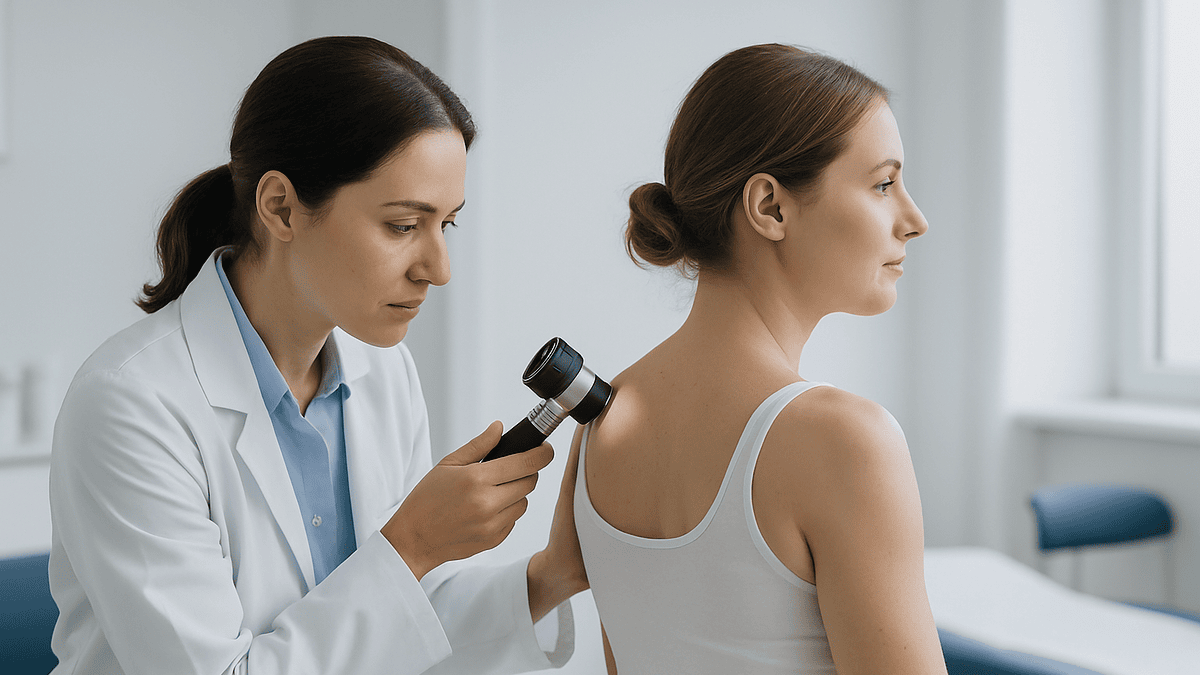
The examination involves looking closely at the face and often the chest and back, in good light, without makeup if possible. The clinician will identify which lesion types dominate, note any scarring or pigment change, and grade the severity. Most guidelines use a simple scale from mild to severe, and this grade largely determines the treatment tier. Blood tests are not routine for acne but may be arranged if a hormonal cause is suspected or if a particular medicine requires baseline checks.
Treatment discussion follows. A dermatologist will usually explain the options that fit your grade, their expected timeline, their side effects and what would trigger a change of plan. Mayo Clinic notes that oral antibiotics, when used, are generally kept to the shortest effective course and paired with a topical agent to limit bacterial resistance, and that isotretinoin requires close monitoring because of its side-effect profile, including its potential to cause serious birth defects. Expect a frank conversation about contraception if that medicine is considered.
Practical preparation helps. Bring or photograph the products you have used. Bring dated photos of your skin over recent months. Write down the two or three things that bother you most, whether that is pain, marks or how you feel. A follow-up visit is usually scheduled within a couple of months, because judging response takes that long.
What the following weeks usually look like after starting prescription care
The most common disappointment after a dermatology visit is not a failed medicine but an unrealistic calendar. The NHS notes that most acne treatments take two to three months to work, and prescription products are no exception. Understanding the typical arc prevents people from abandoning a plan that is quietly working.
Weeks one to two often bring adjustment rather than improvement. Topical retinoids, which speed up the shedding of follicle cells, commonly cause dryness, peeling, mild redness and increased sun sensitivity as skin adapts. Mayo Clinic describes these effects and notes they tend to ease with continued use; clinicians frequently suggest starting gradually and using a plain moisturizer and daily sunscreen. Some people notice more spots surfacing in the first weeks as clogged follicles clear, which is disheartening but not a sign to stop.
Weeks three to eight are where inflamed lesions typically begin to reduce in number and heal faster. Oral antibiotics, when prescribed, tend to show anti-inflammatory effects within this window. Deep nodules take longest, and marks left by earlier spots will still be visible, so the skin can look “in progress” rather than clear.
By the two-to-three-month review, the clinician can judge response properly and decide whether to continue, adjust or step up. This is also when a plan for maintenance is usually discussed, since acne tends to return when treatment stops abruptly.
Isotretinoin follows its own path: Mayo Clinic notes it is taken as a course over several months under regular medical supervision, with dryness of skin, lips and eyes being common and with mandatory pregnancy prevention and monitoring. Its timeline and every adjustment along the way are set by the prescribing clinician. Across all these routes, the unifying rule is the same: judge at the scheduled review, not in the mirror on a bad morning.
What people often get wrong about seeing a dermatologist for acne
Myths around acne are stubborn, and several of them delay appointments.
The first is that acne is caused by dirt, so the fix is more washing. The NHS is explicit that acne is not caused by poor hygiene, and Mayo Clinic notes that scrubbing and harsh cleansers can irritate skin and make acne worse. Gentle washing twice a day is enough; extra scrubbing adds inflammation without removing the cause.
The second is that seeing a dermatologist means being put on the strongest medicine straight away. Treatment is tiered to severity. Many people leave a first appointment with a prescription topical routine and a follow-up date, nothing more dramatic.
The third is that acne is something you must simply outgrow. It is true that the NHS observes most acne settles by the mid-twenties, but “most” is not “all”, and the scars formed while waiting do not outgrow anything. Treatment shortens the active phase and protects the skin during it.
The fourth is that adult acne is always a sign of a hormone disorder or a poor diet. Most adult acne is ordinary acne. The evidence linking specific foods to breakouts is mixed; Mayo Clinic notes that some studies suggest high-glycemic diets may worsen acne, but the data are not strong enough to prescribe a diet as treatment. A clinician screens for hormonal disorders when specific clues exist, not by default.
The fifth is that a dermatologist is only for severe cases. Distress, scarring tendency and unresponsive mild acne are all legitimate reasons to be seen.
The last, and most damaging, is that popping a deep spot speeds healing. It does the reverse, driving contents deeper and widening the eventual mark. If a lesion needs draining, a clinician can do it under sterile conditions in a way that fingernails cannot.
Questions to ask your care team
A good appointment is a two-way exchange, and arriving with questions makes the plan easier to follow. These are the ones people most often wish they had asked.
- How would you grade my acne, and does anything about it suggest a cause other than ordinary acne?
- Which lesion types are driving my scarring or marks, and what is the priority for preventing more?
- What is the mechanism of each treatment you are suggesting, and why does it fit my pattern?
- How long before I should expect to see change, and what will you look for at the review?
- Which side effects are common and manageable, and which should prompt me to contact you before the next visit?
- Does this plan need changing if I am pregnant, planning pregnancy or breastfeeding?
- How will this treatment interact with medicines or supplements I already take?
- What should my daily routine look like alongside prescription treatment: cleanser, moisturizer, sunscreen, makeup?
- What is the plan for maintenance once the acne improves, so it does not return when treatment stops?
- Are there procedures, such as steroid injections into cysts or extraction, that would help specific lesions?
- When existing marks or scars are the main concern, what options exist later, and when is the right time to consider them?
- If this plan does not work, what is the next step, and how many steps are there?
Write the answers down or ask permission to record them; a lot of detail arrives in a short visit. The point of these questions is not to negotiate a particular prescription but to understand the reasoning, so that when the first weeks bring dryness or a slow start, you know whether that was expected. Every treatment decision remains with the clinician who examined you, but a patient who understands the plan is far more likely to give it the consistent months it needs.
When to call your doctor
Most acne can be assessed at a routine appointment. Some situations should not wait for the next available slot.
Seek prompt medical attention if acne flares suddenly and severely, particularly with fever, joint pain, feeling generally unwell, or lesions that break down into open sores. Mayo Clinic describes rare severe forms of acne that present this way and require urgent care. A single lump that is rapidly enlarging, hot, very painful or streaked with red skin spreading outward may be an abscess or skin infection rather than acne, and it also needs a same-week assessment.
Call emergency services or go to an emergency department if, after applying any acne product, you develop swelling of the face, eyes, lips or tongue, tightness in the throat, difficulty breathing, or faintness. Mayo Clinic notes that rare but serious allergic reactions to common over-the-counter acne products can occur, and these are emergencies.
Contact the clinician who prescribed your treatment, before your scheduled review, if you experience severe or worsening skin irritation that does not settle, signs of a reaction such as hives or blistering, persistent stomach pain or bowel changes, unusual mood changes or low mood, visual disturbance, or severe headache while taking any oral acne medicine. Do not stop or change a prescribed medicine on your own; describe what is happening and let the prescriber decide.
Book a routine appointment if a consistent over-the-counter routine has not helped after two to three months, if deep painful lumps are appearing, if marks or scars are forming, if acne has spread to your chest or back, or if it is weighing on your mood or daily life. And if acne is accompanied by irregular periods, new facial or body hair growth or other changes that worry you, mention them, because they may change what your clinician looks for.
Frequently asked questions
How long should I try over-the-counter acne treatment before seeing a dermatologist?
Roughly two to three months of consistent use is the window the NHS gives for most acne treatments to work, so that is a reasonable trial for pharmacy products. Shorten it if deep painful lumps appear, if marks or scars are forming, or if the product causes escalating irritation. Moderate or severe acne should be assessed by a clinician without waiting out that trial.
Is cystic acne a reason to see a doctor right away?
Yes, nodules and cysts are listed by the NHS as a reason to see a doctor rather than continue pharmacy care. They sit too deep for topical products to reach and are the lesions most likely to leave permanent scars. A single rapidly growing, hot, very painful lump may be an abscess rather than acne and should be seen the same week.
What does acne not responding to treatment actually look like?
It can mean no change after a fair trial, partial clearing with a persistent core of deep lumps, improvement followed by relapse, or worsening despite consistent use. Marks or texture changes appearing as spots heal also count, because intact skin is the goal. Dated photos taken in the same light help you and a clinician see the pattern clearly.
What is the difference between dermatologist and over-the-counter acne care?
Three things change: diagnosis, range and monitoring. A dermatologist grades severity and rules out look-alike conditions such as rosacea or folliculitis. Prescription options work through mechanisms shelf products lack, including oral medicines that reduce inflammation, oil production or hormonal signaling. Side effects, pregnancy safety and progress are then reviewed at scheduled visits.
Do I need a referral, or can I book a dermatologist directly?
It depends on where you live and how your health coverage works. In many systems a primary care clinician manages the first prescription steps and refers to a dermatologist for severe, scarring or unresponsive acne; in others you can book directly. Either route is legitimate, and a primary care visit is a reasonable first stop if you are unsure.
Will a dermatologist put me straight on isotretinoin?
Usually not. Treatment is tiered to severity, and many people start with prescription topical medicines or a short oral antibiotic course. Mayo Clinic describes isotretinoin as an option for severe acne or acne that has not responded to other treatments, prescribed under close monitoring because of significant side effects. Whether it is ever appropriate is a decision for the prescribing clinician.
Can adult acne mean something is wrong with my hormones?
Most adult acne is ordinary acne influenced by normal hormonal fluctuation, and Mayo Clinic notes it is more common in women. Occasionally it accompanies a condition such as polycystic ovary syndrome. Clues worth mentioning to a clinician include irregular or absent periods, new facial or body hair growth, thinning scalp hair or unexplained weight change, which may prompt further tests.
Why does my skin look worse in the first weeks of prescription treatment?
Topical retinoids speed up the shedding of cells lining follicles, which can bring clogged pores to the surface and cause dryness, peeling and redness as skin adapts. Mayo Clinic notes these effects tend to ease with continued use. Improvement in inflamed spots typically follows over the next several weeks, which is why response is judged at the scheduled review, not in week two.
Can acne scars be treated later if I wait?
Scars can be improved later with procedures a dermatologist may discuss, but treatment is more involved, results vary, and skin is never returned to exactly how it was. Dark or red marks left after spots fade on their own over months once new inflammation stops. Preventing scars by treating active acne early remains the more reliable strategy.
Does diet or hygiene cause acne, and should I fix those first?
Acne is not caused by poor hygiene, and harsh scrubbing can worsen it, according to the NHS and Mayo Clinic. Evidence on diet is mixed; some studies suggest high-glycemic diets may aggravate acne, but data are not strong enough to make diet a treatment. Gentle cleansing and a balanced diet are sensible, but they are not a reason to delay medical care.
References
This article is for general information only and is not a substitute for professional medical advice. Please consult a qualified doctor about your individual situation.

More from the Blog
How Atopic Dermatitis Treatment Escalates: Barrier Repair, Topicals, Phototherapy and Beyond
Atopic dermatitis treatment steps move up a ladder: daily barrier repair with moisturizers and gentle bathing first; then anti-inflammatory creams such as topical corticosteroids…

When Does Cellulitis Need Hospital Care? How Doctors Decide Between Tablets and IV Antibiotics
Most cellulitis is treated at home with oral antibiotics, usually for about a week. Doctors move to hospital care and intravenous antibiotics when the…
Hair and Scalp Care With Alopecia Areata: Sun Protection, Gentle Styling and What to Avoid
Hair care with alopecia areata is about protecting the scalp and the hair you still have, not forcing patches to regrow. Wash gently with…

Dandruff Myths Corrected: Hygiene, Dryness and Why Washing Less Often Rarely Helps
Dandruff is not caused by poor hygiene or a dry scalp. It is a mild form of seborrheic dermatitis, driven by scalp oil, a…

Vitiligo Treatment After You Fly Home: Planning Phototherapy and Follow-Up Across Borders
Vitiligo treatment usually continues for months, so anyone who starts phototherapy or topical treatment while away from home needs a written plan before flying.…

What Happens During Molluscum Lesion Removal: Numbing, the Procedure and Aftercare
A molluscum removal procedure is a short outpatient visit in which a clinician either scrapes the bumps off with a small spoon-shaped tool (curettage),…