

After Botox: Exercise, Lying Down and Alcohol
Key Takeaways
- The visible effect of botulinum toxin injections typically begins one to three days after treatment and takes one to two weeks to be complete, which is why judging the result early is misleading.
- The widely quoted four-hour upright rule is a practical convention built around the hours the protein takes to bind to nerve endings, not a figure from a clinical trial.
- Mainstream medical guidance specifies avoiding rubbing or massaging treated areas for 24 hours; clinics extend that to strenuous exercise because workouts involve sweat-wiping, pressure and flushing.
- Sweat comes from glands in the skin while the injection sits in muscle, so sweating two days after treatment cannot wash the effect out.
- No controlled study has shown that frequent exercise shortens the typical three-to-four-month duration, though heavy facial muscle use and metabolism are plausible, untested factors.
- Trouble swallowing, speaking or breathing, generalized weakness or sudden vision changes appearing hours to weeks after injection are warning signs that need urgent medical attention.
Most guidance suggests waiting at least four hours after botulinum toxin (Botox) injections before lying down or bending over, and holding off on strenuous exercise, saunas and alcohol for about 24 hours. The main reasons are to avoid pressure or rubbing on the treated area and to reduce bruising and flushing. Light walking is generally fine; ask your injector about your specific plan.
The appointment was at 8:15 a.m. The spin class was at 6 p.m. Somewhere between the two, sitting in a parked car with a cold pack pressed to her forehead, a colleague of mine typed the question half the waiting room had probably typed before her: can I still go tonight?
The honest answer is more interesting than the yes-or-no she wanted. Almost everything you are told to avoid after these injections comes from one of two places: a reasonable theory about where a tiny volume of liquid might drift in its first few hours, or a practical wish to keep bruising and flushing to a minimum. Very little of it comes from large trials, because nobody has run them.
That does not make the advice wrong. It does mean the rules deserve to be understood rather than simply obeyed, so you know which ones to treat as firm and which ones bend around real life.
What is actually happening in your face in the first few hours?
Picture a droplet smaller than a raindrop placed into a muscle the width of a pencil. That is roughly the scale of each injection. The protein in that droplet has one job: to attach to the nerve endings that feed the muscle and block the chemical signal (acetylcholine) that normally tells the muscle to tighten. Once the signal is blocked, the muscle rests, and the skin folding over it relaxes.
Two clocks start the moment the needle comes out. The first runs in hours. Until the protein has bound to those nerve endings, it is still a liquid sitting in tissue, and in theory firm pressure or a strong shift in position could nudge a fraction of it somewhere it was not meant to go. The second clock runs in days. Patient guidance from Mayo Clinic notes that the visible effect usually begins one to three days after treatment and may take a week or more to be complete; Cleveland Clinic gives a similar picture, with full results settling in around two weeks.
Nearly every aftercare rule you will hear maps onto one of these two clocks. The four-hour rule and the no-rubbing rule protect the first. Advice about heavy exercise, heat and alcohol is mostly about comfort and bruising during the second. Keeping the two separate makes the whole list far less mysterious.
One thing that is not happening: nothing is being cured or permanently changed. The effect is temporary, typically fading over three to four months according to both Mayo Clinic and the NHS, as the nerve endings gradually rebuild their connection to the muscle.
What is the 4-hour rule for Botox?
Ask five injectors and you will hear the same number: stay upright for about four hours. Do not lie flat, do not bend over to tie your shoes for a long stretch, do not nap face-down on the sofa, and keep hats, headbands and helmets off the treated area.
Where does four come from? It is a convention rather than a trial result. The protein binds to nerve endings over the first several hours, and while it is still unbound, injectors would rather gravity and pressure not have a say in where it settles. Four hours is a rounded, practical window that comfortably covers that binding period without being so long that nobody follows it. You will find it in clinic leaflets far more often than in medical textbooks, and it is worth being candid about that.
Does lying down for ten minutes undo the treatment? Almost certainly not. The volumes are tiny and the muscles are small, and case reports of unwanted spread are overwhelmingly linked to injection technique or unusually large amounts, not to someone reclining in a dentist’s chair. The rule exists because the cost of following it is nearly zero and the theoretical downside, a heavy eyelid or an uneven brow that lasts weeks, is real enough to avoid.
So treat the four-hour rule as a firm one, precisely because it asks so little. Sit, walk, read, work at a desk. Skip the yoga inversion and the afternoon nap until dinnertime.
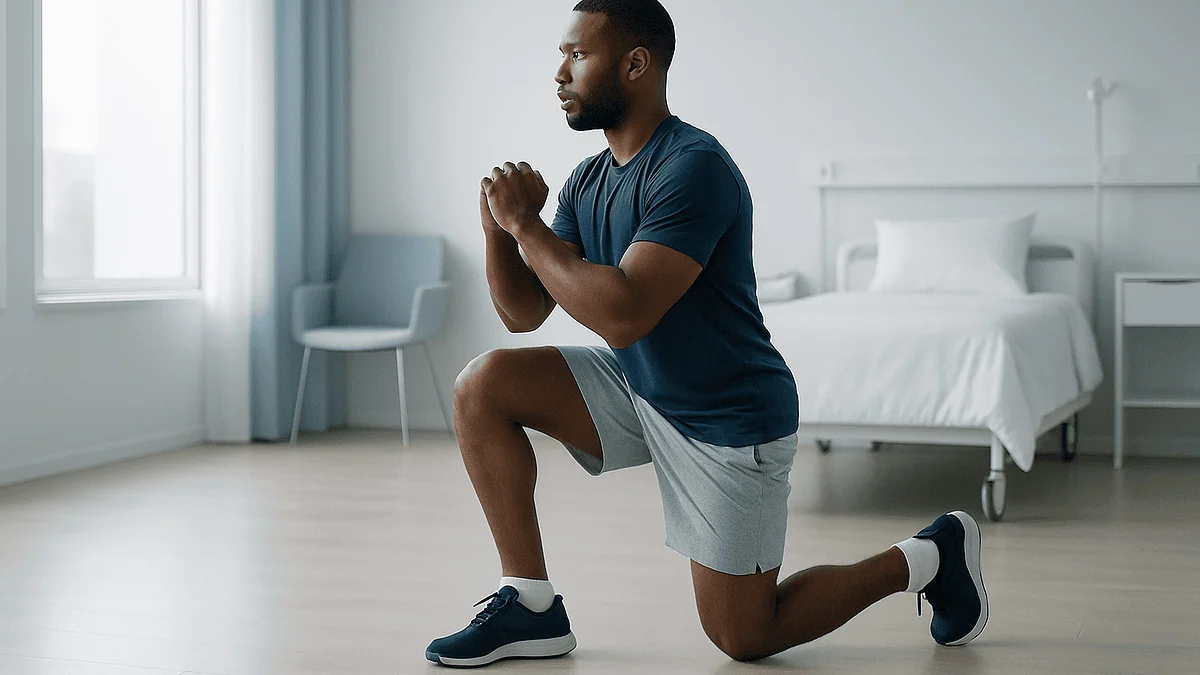
How long after Botox can you exercise?
The most common instruction is to skip strenuous exercise for the rest of the day, roughly 24 hours. The number lines up with the one figure mainstream sources do give: Mayo Clinic advises not rubbing or massaging the treated areas for 24 hours, and Cleveland Clinic repeats the same 24-hour caution. Exercise itself is rarely singled out by those references. Clinics extend the rubbing advice to workouts because a hard session tends to involve exactly the things the rule is trying to prevent: wiping sweat off your brow, pressing your face into a mat, pulling a tight strap over your forehead.
There is a second, softer rationale. Vigorous exercise raises heart rate and pushes more blood to the skin, which is why your face flushes. More blood flow at freshly punctured capillaries means a slightly higher chance of a visible bruise, and possibly a little more swelling. Neither is dangerous. Both are annoying if you have somewhere to be.
What about the idea that pumping blood will carry the protein away before it binds? It is a plausible-sounding theory with no good evidence behind it. The protein is placed in muscle, not in the bloodstream, and the binding happens locally within hours.
Put those threads together and a fair answer emerges. Walking, gentle stretching that keeps your head above your heart, and ordinary chores are fine straight away. Running, lifting, cycling, hot yoga, swimming with goggles and anything that ends with you sweating hard or lying face-down deserve a day’s pause. If your injector says 48 hours, they may have a reason specific to where and how they treated you; ask, then follow it.
Which workouts are the real concern, and which are fine?
Not all exercise is equal here. A brisk walk and a headstand are both “exercise,” yet only one of them puts your forehead below your heart. It helps to sort activities by what they actually do to the treated area rather than by how many calories they burn.
| Activity | Sensible wait | Why |
|---|---|---|
| Walking, light stretching, desk work | None | Upright, no pressure or flushing |
| Running, HIIT, heavy lifting | About 24 hours | Flushing, sweat-wiping, straining with head down |
| Yoga with inversions, Pilates face-down | About 24 hours, longer for inversions | Head below heart; face pressed on mat |
| Swimming with goggles or cap | About 24 hours | Tight pressure across brow and around eyes |
| Cycling with a snug helmet | About 24 hours | Pressure and rubbing on forehead |
| Hot yoga, sauna, steam room | About 24 hours | Heat-driven flushing and swelling |
| Contact sports, boxing, martial arts | Until bruising settles; ask injector | Direct impact to treated muscles |
The waits in the table are the widely used clinical conventions built around the 24-hour no-rub guidance from Mayo Clinic and Cleveland Clinic, not trial-derived thresholds. The middle column is conservative on purpose; the right column tells you which rule each activity is really about.
Notice that the deciding factor is usually equipment or position, not effort. A hard uphill walk with your head up is less of an issue than a gentle restorative yoga class that ends in a forward fold. When in doubt, ask two questions: will my face be below my heart, and will something be pressing on the area? If both answers are no, you are probably fine.
Can I sweat 2 days after Botox?
Yes. By day two the first clock has long since stopped; the protein has bound where it was placed, and sweating cannot rinse it out. Sweat comes from glands in the skin, while the injection sits in the muscle beneath. The two do not share plumbing.
The reason sweat keeps coming up in these questions is not the fluid itself but what people do about it. Mopping your forehead with a towel, pressing a wristband across your brow, splashing cold water and rubbing it dry: those gestures are the rubbing and pressure the first 24 hours ask you to avoid. Two days out, that concern has passed for most people.
Heat is the other half of the worry. A sweaty session usually means a flushed face, and flushing means more blood at the surface. On day one that can nudge a fresh puncture into bruising. By day two, most capillary leaks have sealed, and any bruise that was going to appear has usually already declared itself. Working out will not erase a bruise, but it is unlikely to create a new one at that point.
A practical note for people who train hard daily: if you have any lingering tenderness or a small lump at an injection site on day two, let it be your guide. Mild pressure sensitivity is a sign the tissue is still settling, and it is reasonable to choose a workout that does not involve your face touching anything. Otherwise, sweat freely.
Does Botox wear off faster if you exercise a lot?
This is the question athletes and instructors ask most, and it deserves a straight answer: nobody has proven it, though the theory is not silly.
Here is what the evidence actually shows. Mainstream references give a typical duration of three to four months, with Cleveland Clinic noting that some people see effects last up to six. Every source acknowledges wide individual variation. None of them lists exercise as a factor that shortens duration, because no controlled study has measured it.
Here is the theory. The effect wears off as nerve endings sprout new connections to the muscle. That repair process depends on metabolism, and very active people may have a somewhat faster metabolic tempo overall. People who train intensely also tend to use their facial muscles a great deal, squinting into sun, grimacing through the last repetition, and heavy use may encourage the muscle to recover its signal sooner. Each step in that chain is plausible. None has been tested directly for cosmetic injections.
What clinicians do observe is that the same person often gets a consistent duration from one treatment to the next, and that duration varies enormously between individuals for reasons that seem to include muscle size, how much protein was used and how the muscle is habitually worked. A marathon runner who notices her result fading at ten weeks is not imagining it, but her neighbor who never exercises may notice exactly the same thing.
The sensible takeaway: do not skip exercise to preserve a cosmetic result. If your effect consistently fades early, that is a conversation about placement and amount for your injector, not a reason to give up your morning run.
What makes Botox kick in faster?
Mostly, patience. The one-to-three-day onset described by Mayo Clinic reflects how long the protein takes to be drawn into nerve endings and shut down the signal, and there is no reliable way to compress that biology from the outside.
One idea has been tested. A small randomized trial asked participants to deliberately use the treated muscles, frowning and raising the brows repeatedly, in the hours after injection, on the theory that active nerve endings take up the protein faster. Those who did the exercises reported noticing the effect modestly sooner than those who kept their faces still. It is a single small study and the difference was measured in hours to a day, not weeks. Mainstream patient guidance has not adopted it as a recommendation, and it is hard to square with the instruction not to touch the area, since most people cannot frown vigorously for hours without eventually rubbing their forehead.
Everything else you may have read, drinking more water, taking particular supplements, applying heat or cold, avoiding caffeine, has no supporting evidence for onset speed. Cold packs can help with a bruise or a tender spot; they do not change when the muscle relaxes.
A more useful reframe: plan backward from the date that matters. If you want the full effect for an event, the two-week settling period noted by Cleveland Clinic is the number to work with. Booking two or three weeks ahead solves the “kick in faster” problem far better than anything you can do in the recovery chair.
Can you drink alcohol after Botox, and does it really matter?
Most aftercare sheets say to skip alcohol for about 24 hours afterward, and many suggest avoiding it the day before as well. The reasoning is about bruising rather than the treatment itself.
Alcohol widens blood vessels near the skin, which is why cheeks flush after a glass of wine. It also has a mild effect on how readily platelets clump, the first step in sealing a tiny leak. Put those together at the site of a dozen fresh needle punctures and you have a modestly higher chance of a purple mark that takes a week to fade. That is the entire argument, and it is a reasonable one. There is no evidence that a drink changes how well the protein binds or how long the effect lasts.
How firm is the rule? Softer than the four-hour rule and roughly on par with the exercise advice. A single glass with dinner eight hours after treatment is unlikely to matter much. Several drinks the same evening, especially if you are prone to bruising or take anything that thins the blood, is a different story, and worth avoiding if you have photographs or a meeting coming up.
Do not forget the second-order effects. Alcohol tends to lead to a face-down sleep, a hand rubbing tired eyes, a forgotten hat pulled low on the walk home. The drink itself is minor; what it makes you do in the first hours is where the risk sits. If the plan is a celebratory glass, have it the next night.
Lying down, sleeping and the first night
Once the four hours are up, lying down is fine. Sleep is not the enemy; pressure is. The first night is about protecting the treated area from being mashed into a pillow for seven hours while you are unaware of it.
Back-sleepers have it easy. Side-sleepers and stomach-sleepers can help themselves with a slightly raised head, which also does something useful for any mild swelling by letting fluid drain downward, and with a pillow arrangement that discourages rolling face-first. Nobody stays perfectly still all night, and a brief spell on your side is not going to relocate the treatment. The aim is to avoid sustained, direct pressure, not to sleep like a museum exhibit.
Evening appointments are where this gets tricky. An injection at 7 p.m. means the four-hour window closes at 11 p.m., which for many people is bedtime. That is workable, but a morning or early-afternoon slot gives you the whole day upright and makes the first night a non-event. If you have the choice, take the earlier time.
Two small habits help more than they should. Wash your face gently that evening with fingertips rather than a cloth, patting dry rather than rubbing, in line with the 24-hour no-massage advice from Mayo Clinic. And leave the silk eye mask and tight sleep cap in the drawer for one night; both concentrate pressure exactly where you were treated.
Saunas, steam rooms, hot showers and facials
Heat gets lumped in with exercise for the same reason: it sends blood to the skin. A sauna after treatment will not melt the protein or move it, whatever the internet suggests. What it can do is turn a pinprick into a visible bruise and make mild swelling last a little longer, so the conventional advice is to leave saunas, steam rooms, hot yoga and very hot showers for about 24 hours.
Facials, microdermabrasion, face massage and any treatment that involves pressing, kneading or rolling the skin are a different matter. They collide directly with the 24-hour rule against rubbing and massaging that both Mayo Clinic and Cleveland Clinic describe, and most injectors extend that caution across the first several days for anything involving firm pressure. A relaxing facial the day after an injection appointment is exactly the wrong order; book it the week before or two weeks after.
Everyday warmth is fine. A normal shower, a hot drink, a warm room, sunshine on a walk: none of these produces the sustained, whole-face flush of a steam room. Hair washing is fine too, provided you are not scrubbing your forehead in the process. Blow-drying with the nozzle aimed away from treated areas is reasonable.
Sun deserves one extra sentence. It has nothing to do with the treatment settling, but skin that is healing tiny punctures and possibly bruising will be less forgiving of a burn. Sunscreen applied with a light touch is sensible from day one.
Bruising, swelling and headache: what normal recovery looks like
Most people leave the appointment looking much as they arrived, with a few small raised bumps where the liquid sits under the skin. Those flatten within an hour or so as the tissue absorbs the fluid. A faint redness at each site usually fades the same afternoon.
Bruising is the most common visible after-effect, and it is a matter of luck as much as technique: a needle that happens to graze a tiny vessel leaves a mark. Cleveland Clinic lists bruising, swelling and mild pain at the injection site among the common side effects, and the NHS notes the same. A bruise here behaves like a bruise anywhere, darkening over a day or two before yellowing and clearing within about a week. Concealer can be applied gently after the first day.
Headache is the other frequent complaint, particularly after forehead treatment. Mayo Clinic includes headache and flu-like symptoms among possible side effects; these are usually mild and settle within a day or two. If you want something for the discomfort, ask the person who treated you what they recommend, since a few common pain relievers can add to bruising.
An uneven look in the first week is more common than people expect and usually not a problem. One brow may soften a day before the other because the protein was taken up at slightly different speeds. Judging the result before the two-week mark is like judging a cake at the halfway point; give it time, then have any genuine asymmetry reviewed.
Myths that keep circulating, and what the evidence says instead
Recovery advice attracts folklore, partly because the firm rules are so few that people fill the gaps. A short tour of the most persistent claims:
- “Sweating pushes it out.” Sweat glands sit in the skin; the protein binds in muscle. They do not communicate. The real concern is towel-rubbing and pressure, not moisture.
- “Drinking lots of water makes it work better or faster.” Hydration is good for you and irrelevant to onset. Nothing in the biology of nerve binding is affected by an extra glass of water.
- “You can’t wear makeup for days.” Most guidance simply asks you to avoid pressure and rubbing for 24 hours. Light makeup applied with a gentle dab is generally considered fine later the same day; heavy blending with a sponge is not.
- “Exercise will make it spread and give you a droopy eyelid.” Droop is a recognized possible side effect, but it is overwhelmingly linked to placement and amount rather than to what the patient did afterward. Exercise has never been shown to cause it.
- “If you feel nothing by day two, it didn’t work.” Onset of one to three days with full effect at one to two weeks is the norm, not a failure.
What survives scrutiny is a short, boring list: stay upright for a few hours, keep hands, hats and hard surfaces off the area for a day, and go easy on anything that flushes your face that same day. The rest is optional caution, and knowing which is which is most of the battle.
When to see a doctor after Botox
Serious problems after cosmetic injections are rare, but they are recognized, and the warning signs are specific enough to learn. MedlinePlus, drawing on the official safety labeling for botulinum toxin products, describes a possible spread of the toxin’s effect beyond the treated area that can occur hours to weeks after an injection.
Seek medical care urgently if you notice any of the following: difficulty swallowing, speaking or breathing; a hoarse voice or loss of voice; generalized muscle weakness, or weakness in a part of the body that was not treated; double vision, blurred vision or a drooping eyelid that appears suddenly; loss of bladder control. Trouble breathing or swallowing is an emergency, not a next-day phone call. The same goes for signs of a severe allergic reaction: hives, swelling of the lips or throat, wheezing or feeling faint.
Less urgent, but still worth a prompt call to the person who treated you: a bruise that keeps growing rather than settling, increasing redness, warmth or pus at an injection site, which can indicate infection; an eyelid or brow that has visibly dropped and is affecting your vision or expression after the first week; a headache that is severe or does not ease after a couple of days; or any new numbness or tingling.
Keep the practitioner’s contact details and the date of treatment somewhere easy to find. If you end up seeing a different clinician, being able to say exactly what was injected, where and when helps them enormously.
A realistic two-week plan, and what actually matters most
Strip away the folklore and the plan fits on an index card. For the first four hours, stay upright and hands-off: work, walk, run errands, but skip the nap, the headstand and the tight hat. For the rest of that first day, avoid anything that presses on or flushes the treated area, which covers hard workouts, saunas, facials and more than a token drink. From day two, live normally, with the small courtesy of not scrubbing your forehead with a towel. Around day fourteen, look properly and decide whether anything needs reviewing.
If I had to rank these by how much they matter, the ordering is clear. The four-hour upright rule and the 24-hour no-rub rule come first, because they address the only mechanism that could plausibly change where the treatment acts, and they cost almost nothing to follow. The exercise, heat and alcohol advice comes second: sensible for avoiding bruises, not a threat to your result if you slip. Everything else is optional.
The thing people most often get wrong is not a rule at all. It is timing the appointment badly, booking three days before an event, then trying to speed up a process that runs on its own schedule. The fix is a calendar, not a workout hack.
Above all, the person who treated you knows what they did and where. Their aftercare instructions may be more conservative than the general picture here, and if so, follow them. General evidence explains the rules; your injector tailors them.
Frequently asked questions
How long after Botox can you exercise?
Most injectors advise waiting about 24 hours before strenuous exercise, matching the mainstream 24-hour guidance against rubbing or massaging the treated area. Light walking and desk work are fine straight away. The concern is pressure, sweat-wiping and face flushing on the first day, not the effort itself. If your injector gives a longer window, follow their specific advice.
What is the 4-hour rule for Botox?
The 4-hour rule means staying upright and avoiding lying flat, bending forward for long periods, or wearing tight hats and headbands for about four hours after injection. It is a practical convention covering the hours in which the protein binds to nerve endings, when pressure or gravity could theoretically shift a small amount. It costs little to follow and is worth treating as firm.
Can I sweat 2 days after Botox?
Yes. By day two the protein has bound where it was placed and sweating cannot affect it, since sweat glands are in the skin and the injection sits in muscle. The earlier caution is really about towel-rubbing, pressure and heat-driven flushing on the first day. If an injection site still feels tender, simply avoid workouts that press your face into anything.
Does Botox wear off faster if you exercise a lot?
There is no controlled evidence that exercise shortens the effect. Mainstream sources give a typical duration of three to four months, sometimes up to six, with wide individual variation. Some clinicians suspect very active people, who use facial muscles heavily and may have a faster metabolism, see shorter results, but this remains a theory. Do not skip exercise to preserve a cosmetic result.
What makes Botox kick in faster?
Very little. Onset of one to three days reflects how long nerve endings take to absorb the protein and stop signaling. One small randomized trial found that deliberately using the treated muscles for a few hours brought the effect on modestly sooner, but this is not standard advice. Water, supplements, heat or cold do not speed onset. Planning treatment two to three weeks before an event is the reliable solution.
Can I lie down after Botox?
After about four hours, yes. Lying down itself is not the issue; sustained pressure on the treated area is. On the first night, sleeping on your back or with your head slightly raised helps side- and stomach-sleepers avoid pressing the area into a pillow. A brief roll onto your side during sleep will not relocate the treatment.
Can you drink alcohol after Botox?
Most aftercare advice suggests avoiding alcohol for about 24 hours because it widens blood vessels and mildly affects clotting, raising the chance of a bruise at fresh puncture sites. It does not change how the treatment works or how long it lasts. A single drink hours later is unlikely to matter; several drinks the same evening, or any if you bruise easily, are worth postponing.
Can I go to the gym the day after Botox?
Generally yes. After the first 24 hours the main cautions have passed for most people, and normal training including running, lifting and classes is considered fine. Avoid deliberately rubbing or massaging any tender spots, and if you have a fresh bruise, know that heavy exertion may make it slightly more visible rather than cause harm.
What should you avoid in the first 24 hours after Botox?
Avoid rubbing or massaging the treated area, lying flat or bending forward for the first four hours, strenuous exercise, saunas, steam rooms and hot yoga, facials or face massage, tight hats or goggles, and more than a token amount of alcohol. Gentle face washing, light makeup applied by dabbing and normal daily activity are fine.
When should I see a doctor after Botox?
Seek urgent care for difficulty swallowing, speaking or breathing, generalized muscle weakness, double or blurred vision, a sudden drooping eyelid, loss of bladder control, or signs of allergic reaction such as hives or throat swelling. Contact your injector promptly for a spreading bruise, signs of infection at an injection site, a severe or persistent headache, or asymmetry still present after two weeks.
References
- Botulinum Toxin Injections – Cleveland Clinic
- Botox injections – NHS
- Botox – MedlinePlus Health Topic
- Botulinum Toxin Injection: MedlinePlus Drug Information
This article is for general information only and is not a substitute for professional medical advice. Please consult a qualified doctor about your individual situation.

More from the Blog

Are Lip Lift Results Long-Lasting? How the Upper Lip Ages After Surgery
A lip lift removes a narrow strip of skin beneath the nose, and because removed skin does not grow back, the shorter distance between…

Cheek Augmentation Risks: Implant Shifting, Asymmetry and Numbness Explained Honestly
Cheek augmentation risks include implant shifting or malposition, visible asymmetry, numbness or altered sensation in the cheek and upper lip, infection, bleeding, fluid collection,…

What Happens During Rhinoplasty? Anesthesia, Incisions and the Steps Inside the Operating Room
During rhinoplasty, you are given general anesthesia or intravenous sedation with local anesthetic, the surgeon makes incisions inside the nostrils (closed approach) or adds…
Why Is a Night Headband Worn After Prominent Ear Surgery? Duration, Sleep and Sports
After otoplasty, the surgery that sets prominent ears closer to the head, a soft headband is usually worn at night so that rolling over…
Which Noses Are Candidates for Revision Rhinoplasty? Breathing, Shape and What Is Assessed
A revision rhinoplasty candidate is usually someone whose nose has fully healed from a previous operation, typically around a year later, and who has…

What Scar Revision Surgery Can and Cannot Do: Realistic Results and the Year-Long Maturation
Scar revision surgery can make a scar narrower, flatter, better aligned with skin creases, or less tight, but it cannot erase a scar; it…