

Aortic Aneurysm Repair Recovery: Hospital Nights, Wound Healing and Weeks Back to Routine

Key Takeaways
- After endovascular repair (EVAR) the hospital stay is typically about 1–3 days, while open repair usually means roughly 5–10 days, according to MedlinePlus.
- Full recovery from open repair commonly takes 2–3 months because the abdominal muscle layer, the slowed gut and the body's energy reserves all heal more slowly than the skin.
- After open repair, lifting is usually limited to about 10 pounds for around 4–6 weeks to protect the incision from a hernia.
- EVAR requires lifelong imaging scans, typically at about 1 month, within the first year and then yearly, to detect an endoleak around the stent graft.
- The NHS repairs most abdominal aneurysms once they reach about 5.5 cm, while smaller ones are watched with ultrasound every 3–12 months depending on size.
- Sudden severe tearing pain in the abdomen, back or chest, or a leg that turns cold, pale and numb, is an emergency at any point after repair.
Recovery after aortic aneurysm repair depends mainly on the technique. After endovascular repair (EVAR) through the groin, people often leave hospital within a few days and return to light routines over roughly 2–6 weeks. After open repair through the abdomen or chest, the stay is typically around a week or more and full recovery often takes 2–3 months. Your surgical team sets the pace based on your healing.
The discharge folder sits on the kitchen table, still in its plastic sleeve. Inside are wound-care leaflets, a follow-up appointment card and a list of phone numbers. The person who brought it home from the hospital has a different question than the one the folder answers. Not what to do, but when. When will the stairs stop feeling like a hill? When does the groin bruise fade? When can the garden, the grandchildren, the commute, come back?
The honest answer about the aortic aneurysm surgery recovery timeline is that there are two very different timelines, and which one you are on was decided in the operating room. A repair done through small punctures in the groin asks a few weeks of patience. A repair done through a long incision asks a few months. Both are measured in walks around the block, not in calendar days.
This explainer sets out what each path usually looks like, what the wound should be doing week by week, what tends to surprise people, and which signs should never wait until the next appointment.
What actually happens during aortic aneurysm repair
The aorta is the body’s main artery, a hose roughly the width of a garden hose that carries blood from the heart down through the chest and abdomen. An aneurysm is a weak spot where that wall balloons outward. The repair does not shrink the bulge or make the wall strong again. It reroutes blood through a new, reinforced channel so the weak wall no longer takes the pressure.
Surgeons do this in one of two ways. In open repair, the surgeon makes an incision in the abdomen (or chest, for a thoracic aneurysm), clamps the aorta above and below the bulge, opens the aneurysm and sews a fabric tube called a graft inside it. The old aneurysm wall is then wrapped around the graft like a sleeve. The heart and gut are briefly disturbed, which is part of why recovery takes longer.
In endovascular aneurysm repair, usually shortened to EVAR, nothing is clamped or opened. The surgeon threads a collapsed stent graft, a fabric tube held open by a metal mesh, through a blood vessel in the groin and guides it into position under X-ray. Once released, it springs open and seals against healthy artery above and below the aneurysm. Blood then flows through the stent graft, and the aneurysm sac around it is left to depressurize. For an aneurysm in the chest the same idea is called TEVAR.
The procedure itself, whether open or endovascular, is a one-day event. Everything that follows is about three things healing at once: the skin, the arteries that were entered or sewn, and the body’s energy reserves after a major operation. MedlinePlus and the NHS both describe these two approaches as the standard options, chosen according to the aneurysm’s shape and the patient’s overall health rather than by preference alone.
Open repair vs EVAR: how the approach shapes your recovery
Almost every question about recovery has two answers, so it helps to see them side by side before anything else. The figures below are typical ranges described by MedlinePlus and the NHS, not promises; your own stay may be shorter or longer for reasons that have nothing to do with how well you are doing.

| Recovery feature | EVAR (endovascular) | Open repair |
|---|---|---|
| Incision | One or two small cuts or punctures in the groin | Long cut on the abdomen or side, sometimes the chest |
| Anesthetic | Often general, sometimes regional or local with sedation | General anesthetic |
| Typical hospital stay | Roughly 1–3 days | Roughly 5–10 days, occasionally longer |
| Intensive care | Usually brief or not needed | Commonly 1–2 days at the start |
| Return to light routine | Often within 2–6 weeks | Often 2–3 months |
| Long-term follow-up | Lifelong imaging scans to check the stent graft | Fewer routine scans once healed |
| Main early challenge | Groin bruising, soreness, fatigue | Wound pain, slow gut, deep fatigue |
Two patterns stand out. EVAR front-loads the benefit: a shorter stay and a quicker return to the kitchen and the car. Open repair front-loads the cost, in hospital nights and weeks of tenderness, but needs less surveillance later. Neither approach is simply better. Surgeons weigh the aneurysm’s anatomy, whether the neck of the aneurysm can seal a stent graft, the patient’s lungs, heart and kidneys, and the patient’s own priorities.
Hold this table in mind as you read on. Every section that follows splits along the same line, and knowing which column you are in explains most of what you will feel.
Who is usually offered repair, and who is usually asked to wait
A small aneurysm is not an emergency and is not usually repaired. The risk of an operation has to be smaller than the risk of leaving the bulge alone, and for small aneurysms that balance tips toward watching.
The NHS describes a tiered approach for abdominal aortic aneurysms found on screening. A small aneurysm, 3.0–4.4 cm across, is usually rechecked with an ultrasound once a year. A medium aneurysm, 4.5–5.4 cm, is scanned about every 3 months. A large aneurysm, 5.5 cm or more, is the point at which repair is usually discussed, because beyond that size the wall becomes markedly more likely to tear. Mayo Clinic describes similar thresholds, and notes that an aneurysm that is growing quickly, causing symptoms, or has an unusual shape may be repaired sooner regardless of exact size.
So who is asked to wait? People whose aneurysm is below the size threshold and not growing fast. People whose heart, lungs or kidneys would make a major operation unusually risky, for whom the team may suggest continued surveillance, EVAR rather than open surgery, or more time spent improving fitness and controlling blood pressure first. And people who smoke are often asked to stop before a planned repair, because smoking slows wound healing and speeds aneurysm growth.
Waiting is active, not passive. Surveillance scans, blood pressure management and quitting smoking are the treatment during this phase. Some people live for years with a stable small aneurysm and never need an operation.
The one situation where no one waits is a rupture, a tear in the aneurysm wall. That is a medical emergency treated immediately, and recovery after emergency repair is typically slower and harder than after a planned one, because the body starts from a far weaker position. Everything in the rest of this article assumes a planned, elective repair.
Aortic aneurysm surgery recovery timeline: the first hours after the operation
Waking up after aortic repair is less dramatic than most people fear, but it is busy. There will be more tubes than you expected, and almost all of them are temporary.
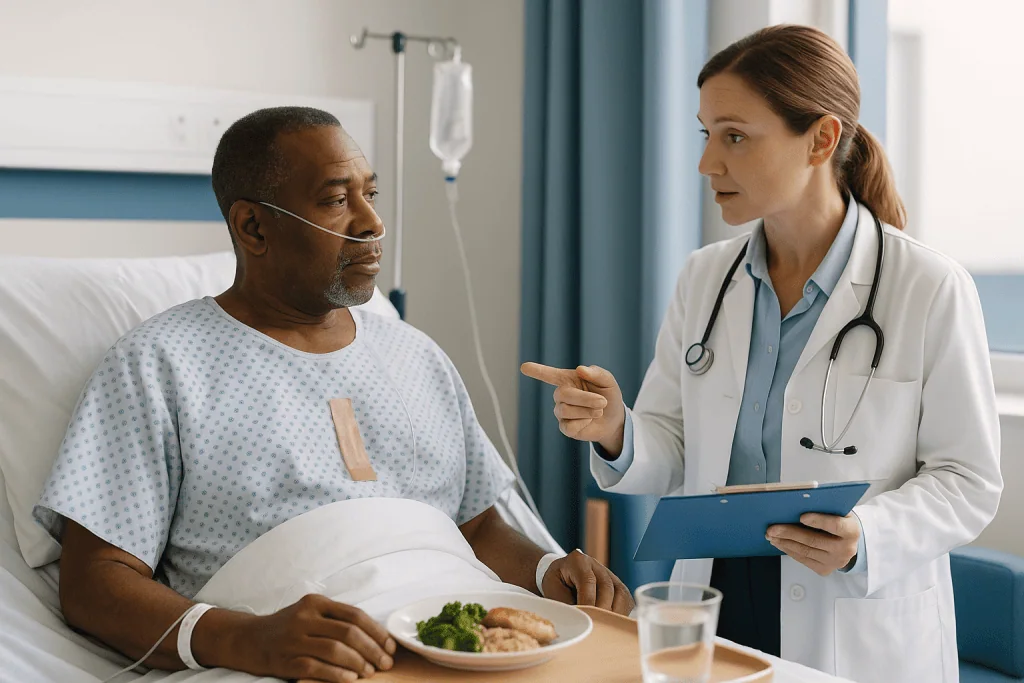
After open repair, most people spend the first night or two in an intensive care or high-dependency unit, where nurses can watch blood pressure, urine output and breathing closely. You are likely to have a drip in your arm, a thin line in an artery at the wrist to read blood pressure continuously, a urinary catheter, and sometimes a tube through the nose into the stomach to keep it empty while the gut rests. Pain is managed with a combination of medicines, often including an epidural, which is a fine tube near the spine that numbs the abdomen. MedlinePlus describes this early phase as the point where the team is checking that the graft, kidneys and legs all have good blood flow.
After EVAR, you usually return to an ordinary ward. The groin sites are checked for bleeding or swelling, the pulses in your feet are checked repeatedly, and you may be asked to lie flat for a few hours so the puncture seals. Many people are sitting up and eating the same evening.
Early movement matters in both cases. Nurses and physiotherapists will have you doing breathing exercises and foot pumps within hours and standing within a day where it is safe, because lying still raises the risk of chest infection and blood clots in the legs. The tubes come out one by one over the first days as each function proves it is working on its own. That steady removal is, quietly, the first milestone in the aortic aneurysm surgery recovery timeline.
How long is the aortic aneurysm surgery hospital stay?
Discharge is not a date; it is a checklist. You go home when you can walk a short distance safely, eat and drink, pass urine without a catheter, manage pain with tablets rather than drips, and when the wound and the circulation in your legs look settled. How long that takes is where the two approaches part ways.
For EVAR, MedlinePlus describes a hospital stay of roughly 1–3 days. The NHS notes that most people are home within a few days, with some units running same-day or next-day discharge for straightforward cases. The limiting factor is usually the groin, which needs to be dry and free of growing swelling, and the kidneys, which are checked because the X-ray dye used during the procedure can temporarily stress them.
For open repair, MedlinePlus describes a typical stay of around 5–10 days. The gut is the usual gatekeeper. Handling the intestines to reach the aorta puts them to sleep for a while, a state called ileus, and until they wake up you cannot eat normally or pass wind. Pain control, mobility and a sealed, healthy incision are the other boxes to tick.
Several things lengthen either stay without meaning that something has gone wrong: an existing lung or kidney condition, age and frailty, a small post-operative fever that needs checking, or simply living alone and needing an extra day to be safe. Emergency repair after rupture often means a much longer stay, sometimes weeks, because the body is recovering from blood loss and shock as well as surgery.
Ask early what the discharge criteria are on your ward. Knowing that you are waiting on your bowels, not on a bed, changes how the days feel.
EVAR recovery time: the first two weeks at home
People are often surprised by how ordinary they feel after EVAR, and then surprised again by how tired they get by mid-afternoon. Both are normal. The small incisions hide the fact that a major artery has been instrumented and that you have had an anesthetic.
In the first week, the groin is the main story. Expect bruising that spreads and changes color over days, a firm tender lump under one or both incisions where a little blood has collected, and soreness when you bend at the hip or climb stairs. The NHS advises keeping the sites clean and dry, showering rather than soaking, and watching for increasing redness, warmth or discharge. Walking is encouraged from day one at home: several short walks a day rather than one long one.
Fatigue tends to peak in the first week and ease over the second. A short daytime rest is sensible; staying in bed all day is not, because inactivity slows the return of stamina and raises clot risk.
MedlinePlus describes most people returning to normal, light activities within about 2 weeks and more fully over roughly 4–6 weeks after EVAR. Heavy lifting and straining are usually restricted for a few weeks so the groin punctures heal and the stent graft settles. Driving is usually possible once you can brake hard without flinching, often within 1–2 weeks, but the exact timing is a decision for your surgeon, and insurers may have their own requirements.
Many people also feel a vague ache in the lower back or abdomen for some weeks, sometimes called post-implantation syndrome, with a low-grade temperature in the first days. It is common and usually settles, but a fever that climbs or persists should be reported rather than assumed.
Open AAA repair recovery: why the wound and the gut take longer
Open repair asks more of the body in three places at once, and understanding each one makes the slower timeline feel less like a setback.
First, the incision. A long cut through the abdominal wall cuts through skin, fat and muscle layers. The skin edges knit within about 2 weeks, but the deeper muscle layer takes weeks to months to regain strength, which is why MedlinePlus advises avoiding lifting anything heavier than roughly 10 pounds, about a full kettle or a bag of groceries, for around 4–6 weeks. Lifting too soon risks a hernia at the scar.
Second, the gut. Having been moved aside and left in cool air during surgery, the intestines often stay sluggish for days. Appetite is poor, bloating is common, and the first normal bowel movement can feel like a genuine achievement. Small, frequent meals and gentle walking help. Constipation from pain medicines adds to the problem, which is why most teams discuss bowel care before discharge.
Third, energy. The body’s reserves are spent on healing, and many people describe the first weeks at home as more tiring than the hospital. Sleep is broken by wound discomfort and the simple difficulty of turning over. This is the phase when visitors, meals and a chair in the shower matter more than any exercise plan.
Mayo Clinic and MedlinePlus both describe full recovery from open repair as taking about 2–3 months, with a return to desk work often somewhere in the middle of that range and to physical work toward the end. The timeline is not linear; good days and flat days alternate, and a week in which you feel no progress is usually followed by one in which the stairs suddenly feel shorter.
Wound healing after aortic aneurysm surgery: what normal looks like
Scars worry people more than almost anything else in recovery, partly because they are the one part of healing you can actually see. Knowing the normal sequence helps you spot the abnormal one.
In the first few days, any incision is swollen, pink and tender, and a small amount of clear or faintly blood-tinged fluid on the dressing is ordinary. Bruising around groin punctures after EVAR can look alarming, spreading down the thigh and turning yellow-green as it fades over 2–3 weeks. A firm pea- or walnut-sized lump under a groin incision is usually a small collection of blood that the body reabsorbs.
Between about one and two weeks, the skin edges seal. Stitches may dissolve on their own or be removed at a clinic; staples on an abdominal incision are often taken out at around 10–14 days. The scar line looks raised and red, and may feel numb or oddly tingly as cut nerves recover; that numbness can last months and sometimes never fully resolves.
Over the following months the scar flattens and fades toward a pale line. Itching is a sign of healing, not a problem.
Day-to-day care is simple. The NHS advises keeping the wound clean and dry for the first days, showering once the team says you may, patting rather than rubbing, and leaving dressings in place as instructed. Avoid baths, pools and hot tubs until the wound is fully closed. Loose clothing reduces friction at a groin site. Do not apply creams, powders or home remedies unless your team suggests one.
The signs that break the normal pattern are increasing rather than decreasing redness, warmth spreading outward, thick or smelly discharge, a wound edge that gapes, a groin lump that grows or pulses, or fever. These belong in the section on when to call, and they should not wait for the follow-up appointment.
Weeks back to routine: walking, driving, lifting and work
Recovery becomes real at the point where it meets your actual week. Here is what the evidence-based guidance from MedlinePlus and the NHS says about each ordinary activity, with the usual caveat that your own team’s instructions take precedence.
Walking is the cornerstone of both pathways. Start with a few minutes several times a day and add a little each day. A reasonable aim is to be walking 20–30 minutes at a comfortable pace within a few weeks of EVAR and within about 6 weeks of open repair, pausing when tired rather than pushing through pain.
Stairs are allowed from the first days at home, slowly, holding the rail.
Driving depends on being able to perform an emergency stop and turn to look behind you without pain, and on no longer taking medicines that cause drowsiness. That is often around 1–2 weeks after EVAR and 4–6 weeks after open repair, but surgeons differ and insurers may require clearance; ask before you take the keys.
Lifting is the activity most often restricted. MedlinePlus advises nothing heavier than about 10 pounds for roughly 4–6 weeks after open repair, to protect the abdominal wall. After EVAR the restriction is shorter, usually a couple of weeks, to let the groin heal.
Work follows the same split. Desk-based work is often possible within 2–4 weeks after EVAR and around 6–8 weeks after open repair; physical jobs may need 3 months or more after open surgery.
Sex can resume when it feels comfortable and the wound has healed; many people wait 2–4 weeks. Some men notice changes in erectile function after open repair because nerves near the aorta can be affected, and this is worth raising openly with the team.
Travel and flying are generally discouraged until the first follow-up, and on any long journey the clot-prevention basics apply: walk the aisle, flex the calves, drink water.
Medicines after aortic aneurysm repair: what they do and who decides
Most people leave hospital with a few new or adjusted prescriptions. None of them are about the repair itself, which needs no medicine to keep working. They are about the arteries everywhere else, and about getting through the first weeks comfortably. What follows describes what each type of medicine is for; which ones you take, and for how long, is entirely a decision for your prescribing clinician.
Pain relief in the first days usually combines simple analgesics with stronger medicines for breakthrough pain. The stronger ones are typically tapered off within 1–2 weeks because they cause constipation and drowsiness, both of which slow recovery. Taking pain relief regularly in the early days, rather than waiting for pain to build, usually means moving more and needing less overall.
Antiplatelet medicines, such as low-dose aspirin or a similar agent, make blood platelets less sticky. They are often continued long term after aneurysm repair, according to NHS and Mayo Clinic guidance, because people with aneurysms tend to have arterial disease elsewhere and the medicine lowers the risk of heart attack and stroke.
Statins lower cholesterol and stabilize the fatty deposits in artery walls. They are commonly recommended lifelong for the same reason, regardless of cholesterol numbers.
Blood pressure medicines protect the rest of the aorta and the repair’s landing zones. Keeping pressure well controlled is one of the few things shown to slow aortic disease.
Blood thinners for a short period, often as a daily injection in hospital, reduce the risk of clots forming in the legs while mobility is limited.
Never stop or alter any of these on your own, even if you feel well. If a medicine causes side effects, the right move is a phone call to the prescribing team, who can adjust it safely.
Life after aortic aneurysm repair: follow-up scans and the long view
The operation fixes one weak spot. It does not change the fact that the rest of the aorta and the other arteries belong to the same body with the same tendencies. Long-term recovery is therefore less about the scar and more about surveillance and habits.
After EVAR, imaging follow-up is lifelong. The NHS and Mayo Clinic describe scans, usually a CT or ultrasound, at around 1 month, again within the first year, and then at least yearly. The reason is a complication specific to stent grafts called an endoleak: blood finding its way into the aneurysm sac around the graft, which can slowly re-pressurize the wall. Many endoleaks seal on their own or simply need watching; some need a small additional procedure. Missing scans is the single most common way a good EVAR result is lost, which makes the appointment card in the discharge folder the most important piece of paper in it.
After open repair, the graft is sewn in and does not shift, so routine scans are far fewer. Teams usually arrange a check a few weeks after surgery and occasional imaging over the years to watch the rest of the aorta.
In both groups, the long view is cardiovascular. Mayo Clinic and the NHS emphasize the same list: no smoking, blood pressure controlled, cholesterol managed, regular walking, and attention to any symptoms of heart disease. People who have had an aneurysm are also more likely to develop another elsewhere in the aorta, and close relatives have a higher-than-average chance of having one too. Mentioning the diagnosis to siblings and adult children, so they can ask about screening, is a quiet but genuinely useful part of life after aortic aneurysm repair.
What people often get wrong about aortic aneurysm surgery recovery
Recovery is full of folk wisdom, some of it inherited from relatives who had very different operations decades ago. A few corrections, each grounded in current guidance from the NHS, Mayo Clinic and MedlinePlus.
“Small scars mean a small operation.” EVAR is a major vascular procedure performed through small holes. The fatigue is real, the kidney and groin checks are real, and the need for lifelong scans is real. Treat the first two weeks with respect even if the incisions look trivial.
“Rest is the best medicine.” Early walking is what prevents chest infections, clots and the loss of muscle that makes later recovery harder. Rest matters, but as a break from movement, not instead of it.
“Once it’s repaired, it’s gone.” The aneurysm sac is still there, with a graft inside it. After EVAR it needs watching; after either repair the rest of the aorta needs watching. The operation manages the risk; it does not remove the disease.
“Pain means something is wrong.” Wound pain, groin aching, back discomfort and twinges along the scar are normal for weeks. What matters is direction: pain that is slowly easing is expected, pain that is getting worse or has changed character is not.
“If I feel fine I can stop the tablets.” Antiplatelet, statin and blood pressure medicines protect arteries you cannot feel. Stopping them without discussion removes that protection silently.
“I should be back to normal in a week.” After open repair, 2–3 months is typical, and some people describe 6 months before stamina feels fully restored. Comparing yourself to a neighbor who had EVAR, or to your own expectations, is the fastest route to discouragement.
“I can’t exercise again.” Regular moderate activity is encouraged and protective. Only very heavy straining is discouraged, and your team can tell you where that line sits for you.
Questions to ask your care team before you leave hospital
The ward round moves fast, and the questions you think of at 2 a.m. rarely survive until 8. Writing them down beforehand, and asking a companion to take notes, turns discharge from a blur into a plan. These are the questions that most reliably prevent avoidable worry later.
- Which type of repair did I have, open or endovascular, and is there anything about my anatomy or my operation that changes the usual recovery advice?
- What are the specific signs, for my wound and for my legs, that should make me call the ward or go to an emergency department today rather than wait?
- What is the heaviest weight I should lift, and for how many weeks? Does that include a grandchild, a shopping bag, a vacuum cleaner?
- When may I shower, when may I bathe or swim, and who removes any stitches or staples?
- When can I drive, and does my surgeon need to confirm this in writing for my insurer?
- Which of my medicines are new, which have changed, what is each one for, and which are meant to be short term?
- When is my first follow-up scan, who arranges it, and what happens if I do not receive a date?
- If I had EVAR, how often will I need scans in the years ahead, and what is an endoleak in my case?
- Who do I contact in the evening or at the weekend if something feels wrong?
- Is there a cardiac or vascular rehabilitation program I can join, and what level of walking should I aim for by my first appointment?
- Should my brothers, sisters or children be screened for an aneurysm?
- Are there symptoms related to sexual function or bowel habit that I should expect and report?
The answers will be specific to you, which is exactly why they are worth asking rather than looking up. A good team welcomes the list; it tells them you intend to take your recovery seriously.
When to call your doctor: red-flag signs after aortic aneurysm repair
Most recovery worries can wait for a daytime phone call to the ward or clinic. A small number cannot, and the distinction is worth memorizing before you need it.
Call emergency services or go to an emergency department immediately if you experience sudden, severe pain in the abdomen, back or chest, especially if it is tearing in nature or comes with faintness, sweating or collapse. The same applies to a groin wound or lump that is bleeding heavily or expanding rapidly, to a leg that suddenly becomes cold, pale, numb or very painful, which can signal blocked blood flow, or to chest pain, breathlessness, or symptoms of stroke such as facial drooping, arm weakness or slurred speech. Mayo Clinic and the NHS list these as emergencies in anyone recovering from aortic surgery.
Contact your surgical team the same day if you develop a fever, chills or shaking; redness, warmth or swelling spreading from the wound; thick, cloudy or smelly discharge; a wound edge that opens; a groin lump that is growing or pulsing; a calf that becomes swollen, hot and tender, which may indicate a clot; persistent vomiting, no bowel movement with increasing bloating, or an inability to pass urine; or pain that is steadily worsening rather than easing despite your prescribed relief.
Mention at your next appointment, or by phone if it bothers you, numbness around the scar, changes in erectile function, mild swelling of the legs, low mood or poor sleep that is not lifting, and any new medicine side effects.
Trust the trend. Symptoms that are slowly improving are usually part of healing. Anything new, sudden or getting worse is a reason to pick up the phone. No team will think less of you for calling about a sign that turns out to be nothing; they would far rather hear from you early. Every decision about what to do next, including whether to adjust medicines or arrange an earlier scan, sits with the clinicians who know your operation.
Frequently asked questions
What is the typical EVAR recovery time?
Most people are home within about 1–3 days after EVAR and back to light daily routines within roughly 2 weeks, with a fuller return to normal activity over about 4–6 weeks, according to MedlinePlus. Groin bruising and tiredness are the main early issues. Heavy lifting is usually restricted for a couple of weeks, and your surgeon decides when driving and work can resume.
How long does open AAA repair recovery take?
Recovery from open abdominal aortic aneurysm repair is usually measured in months rather than weeks. The hospital stay is typically around 5–10 days, and MedlinePlus and Mayo Clinic describe full recovery taking about 2–3 months. The abdominal wall, the slowed gut and overall stamina take longest to return. Desk work often restarts in the middle of that range and physical work toward the end.
How long is the aortic aneurysm surgery hospital stay?
It depends on the technique. After endovascular repair the stay is usually about 1–3 days; after open repair it is typically 5–10 days, and longer after an emergency operation for a rupture. Discharge is based on criteria, not a date: walking safely, eating, passing urine without a catheter, managing pain with tablets, and a settled wound with good blood flow to the legs.
What is life after aortic aneurysm repair like?
For most people life returns to something close to normal, with regular walking encouraged and only very heavy straining discouraged. The lasting changes are surveillance and prevention: lifelong scans after EVAR to check for an endoleak, occasional imaging after open repair, and long-term attention to blood pressure, cholesterol, not smoking and heart health, since aneurysm disease affects the arteries more widely.
Why am I so tired weeks after aortic aneurysm surgery?
Fatigue after major vascular surgery is expected and often lasts longer than wound pain. The body spends its energy on healing muscle, repairing the artery and recovering from anesthesia and blood loss. After open repair, poor appetite and broken sleep add to it. Short daily walks that gradually lengthen restore stamina faster than resting all day. Tiredness that keeps worsening, or comes with fever, should be reported.
When can I drive after aortic aneurysm repair?
Usually when you can perform an emergency stop and twist to look behind you without pain, and are no longer taking medicines that cause drowsiness. That is often around 1–2 weeks after EVAR and 4–6 weeks after open repair, but the decision rests with your surgeon. Many insurers also require confirmation that you are fit to drive, so ask before you get behind the wheel.
Is it normal for the groin to bruise and lump after EVAR?
Yes, within limits. Bruising can spread down the thigh and change color over 2–3 weeks, and a firm, tender lump under the puncture site is usually a small blood collection that the body reabsorbs. What is not normal is a lump that grows quickly, pulses, bleeds, or a groin that becomes increasingly red, hot or painful. Those signs need a same-day call to your team.
What is an endoleak and should I worry about it?
An endoleak is blood leaking into the aneurysm sac around a stent graft after EVAR, which can keep pressure on the weakened wall. It is the reason EVAR needs lifelong imaging follow-up. Many endoleaks seal on their own or are simply monitored; some need a small additional procedure. The practical message is to attend every scan, because an endoleak causes no symptoms until it matters.
Can I exercise again after aortic aneurysm surgery?
Regular moderate exercise is encouraged and protective for your arteries. Walking starts in hospital and should build gradually over the weeks at home. Very heavy lifting and intense straining are usually restricted for several weeks, longer after open repair, to protect the incision. Your surgeon or a cardiac rehabilitation team can tell you where the line sits for you and when more vigorous activity is reasonable.
Will I need to take medicines for life after the repair?
The repair itself needs no medicine, but most people are advised to continue long-term treatments that protect the rest of the arteries, typically an antiplatelet medicine, a statin and blood pressure control, according to NHS and Mayo Clinic guidance. Pain relief and short-term blood thinners are stopped within weeks. Which medicines you take, and for how long, is a decision for your prescribing clinician.
References
- MedlinePlus: Abdominal aortic aneurysm repair – open
- MedlinePlus: Endovascular abdominal aortic aneurysm repair
- NHS: Abdominal aortic aneurysm – Treatment
This article is for general information only and is not a substitute for professional medical advice. Please consult a qualified doctor about your individual situation.

More from the Blog
How Dangerous Is a 4 Cm Aortic Aneurysm? Sizes, Surveillance and Screening
A 4 cm aortic aneurysm is classed as small. In the largest surveillance trials, aneurysms between 4.0 and 5.5 cm ruptured at roughly 1%…

Before Coronary CT Angiography: Caffeine, Fasting and Kidney Function Checks
To prepare for coronary CT angiography, most people are asked to avoid caffeine for roughly 12 hours, stop eating about 4 hours beforehand while…
How Is Deep Vein Thrombosis Treated in Pregnancy and After Surgery? Adapting the Plan
Deep vein thrombosis in pregnancy and after surgery is treated with anticoagulant medicines that stop the clot growing while the body slowly dissolves it.…

Pulmonary Embolism Recovery: Restarting Activity Gradually and What the First Months Involve
Pulmonary embolism recovery time varies widely. Most people feel noticeably better within a few weeks, but full recovery of stamina commonly takes several months,…

Metabolic Health: The Five Markers That Define It and How Few Adults Meet Them
Metabolic health is usually defined by five markers measured without medication: a waist circumference below 40 inches for men and 35 for women, fasting…

When Is an Electrophysiology Study Recommended Before Ablation or a Device?
An electrophysiology (EP) study is usually recommended when the heart's rhythm problem cannot be pinned down from an ECG or wearable monitor alone, when…