

Bone Marrow Transplant Recovery Milestones: Discharge, Day 100 and the First Year

Key Takeaways
- Transplant day itself is an intravenous infusion resembling a blood transfusion, not an operation; the physical toll comes from the conditioning chemotherapy given in the days before it.
- The hardest stretch is usually the two to three weeks after Day 0, when blood counts are at their lowest and mouth and gut soreness from conditioning peaks.
- Engraftment is defined by a sustained rise in neutrophils on the daily blood count, and cells collected from a donor's bloodstream typically engraft faster than cord blood.
- Day 100 marks the point after which most acute complications, including acute graft-versus-host disease, become less likely, but chronic GVHD and late infections can still appear.
- Autologous recipients skip GVHD entirely and usually recover faster, while allogeneic recipients remain on immune-suppressing medicines for months and follow a longer, less predictable path.
- Because transplant erases prior immunity, childhood vaccinations must be repeated, with inactivated vaccines given first and live vaccines deferred until the team judges immune function adequate.
Bone marrow transplant recovery unfolds in stages rather than a single date. Blood counts usually recover within a few weeks of the infusion, most people leave hospital after several weeks to a few months, Day 100 is a traditional checkpoint for complications, and immune function commonly takes a year or longer to rebuild. Timelines vary with transplant type, and the care team sets each milestone.
The whiteboard in the room has a number on it that changes every morning. Not the date, not the room temperature: the day count. Day minus six, minus two, zero. Then plus one, plus five, plus eleven. Families learn to read it the way sailors read a tide table, and almost everyone asks the same quiet question on the first evening: when does this end?
The honest answer is that a bone marrow transplant recovery timeline does not end so much as it hands off, from one phase to the next. There is the raw stretch before the new cells take hold, the cautious weeks at home, the Day 100 review that carries more weight than most people expect, and a long, uneven first year in which the immune system is rebuilt almost from scratch.
This explainer walks through those milestones in order, with what the evidence says about typical ranges, what tends to go wrong, and what to ask the team that knows your case.
What actually happens in a bone marrow transplant?
Despite the name, there is no operation on transplant day. A bone marrow transplant, also called a stem cell transplant, replaces the blood-forming stem cells in your marrow with healthy ones delivered through an intravenous line. Stem cells are the immature cells that mature into red cells, white cells and platelets. The infusion itself looks much like a blood transfusion and usually takes a few hours, according to the NHS.
The heavy lifting happens before that. In the days leading up to Day 0, you receive conditioning: high-dose chemotherapy, sometimes with radiation, designed to destroy diseased marrow and, in donor transplants, to quiet your immune system so it does not reject the graft. This is the part that makes transplant demanding, because conditioning also wipes out your own healthy blood production for a time.
Two broad types shape everything that follows:
- Autologous transplant uses your own stem cells, collected earlier and frozen. It is essentially a rescue strategy that allows very high-dose treatment. There is no risk of the graft attacking your body.
- Allogeneic transplant uses cells from a donor, related or unrelated, or from umbilical cord blood. The donor immune system can help fight residual disease, but it can also turn on the recipient, a complication called graft-versus-host disease.
Where the stem cells come from also varies. They may be drawn from a donor’s bloodstream after growth-factor injections, or collected directly from the pelvic bone under anesthesia, or taken from cord blood. Mayo Clinic notes that most transplants today use cells filtered from circulating blood, which is why “stem cell transplant” and “bone marrow transplant” are used almost interchangeably.
Everything in the recovery timeline flows from this one fact: your blood factory has been shut down and restarted with new machinery. The calendar that follows is really a record of that factory coming back online.
Who is usually offered a transplant, and who is asked to wait?
Transplant is reserved for situations where the potential benefit justifies real risk. The NHS lists the common reasons: leukemia, lymphoma, myeloma, severe aplastic anemia in which the marrow stops producing cells, certain inherited blood or immune disorders such as sickle cell disease or thalassemia, and some solid tumors in children. In each case the aim is to restore healthy blood production or to allow treatment intense enough to control the underlying disease.

Being eligible is not the same as being ready. Teams look at several things before setting a date:
- Disease status. Many conditions respond best when transplant happens in remission or after the disease has been reduced by earlier treatment. Someone whose disease is still active may be asked to complete more therapy first.
- Organ function. Conditioning strains the heart, lungs, liver and kidneys. Tests of each are standard, and a result that falls short may lead to a reduced-intensity approach or a delay.
- Active infection. An untreated infection going into conditioning can become dangerous once white cells disappear, so it is usually cleared first.
- Donor availability. For allogeneic transplant, a matched donor must be found and screened; waiting for a suitable match is one of the most common reasons a timeline stretches.
- Support at home. Mayo Clinic and the NHS both stress that a caregiver, transportation to frequent appointments and a clean living space are part of the plan, not afterthoughts.
Age alone is less decisive than it once was. Reduced-intensity conditioning, which uses lower doses of chemotherapy and relies more on the donor immune system, has widened the group of older adults who can be considered. The trade-off is a different balance of relapse and complication risk, and only the treating team can weigh it for an individual.
Being asked to wait is not a verdict. It is usually a sign that the team is trying to move the odds, however slightly, in your favor before the count reaches zero.
The bone marrow transplant recovery timeline at a glance
Every program has its own version of this chart, and every patient’s chart looks a little different once the days start ticking. Still, the broad shape is remarkably consistent across the NHS, Mayo Clinic and MedlinePlus descriptions, and seeing it in one place helps families pace themselves.
| Phase | Typical window | What is happening | Main concerns |
|---|---|---|---|
| Conditioning | Roughly the week before Day 0 | Chemotherapy with or without radiation clears diseased marrow | Nausea, mouth soreness beginning, fatigue |
| Day 0 | Infusion day | Stem cells delivered through the central line | Mild reactions to preservative; usually uneventful |
| Aplastic phase | First 2 to 4 weeks | Counts at their lowest while new cells settle in | Infection, bleeding, mucositis, transfusion needs |
| Engraftment | Usually within a few weeks (NHS, Mayo) | New white cells appear and rise | Fever, rash, fluid shifts around engraftment |
| Discharge | Several weeks to a few months after admission (NHS) | Counts stable, eating, infection controlled | Frequent clinic visits, medicines, isolation habits |
| Day 100 | About 3 months | Formal reassessment | Acute GVHD window closes; chronic GVHD window opens |
| Late recovery | Up to a year or more (NHS) | Immune system rebuilt; vaccinations restarted | Late infections, fatigue, chronic GVHD, emotional recovery |
Two caveats matter. Autologous recipients generally move through this table faster and skip the GVHD rows entirely, because their own cells cannot reject them. Allogeneic recipients, particularly those with unrelated or mismatched donors, often spend longer in the middle rows and remain on immune-suppressing medicine well past Day 100.
The other caveat is that the windows overlap. Someone can be engrafted, home and still fighting a stubborn viral infection. The table is a map, not a promise.
What are the worst days after a bone marrow transplant?
Ask people who have been through it and the answer clusters tightly: the stretch from roughly a week after conditioning until the new cells appear, often the second and third weeks after Day 0. Clinicians call it the aplastic phase, meaning the marrow is temporarily empty. The chemotherapy has done its work, your old blood production has stopped, and the graft has not yet taken over.
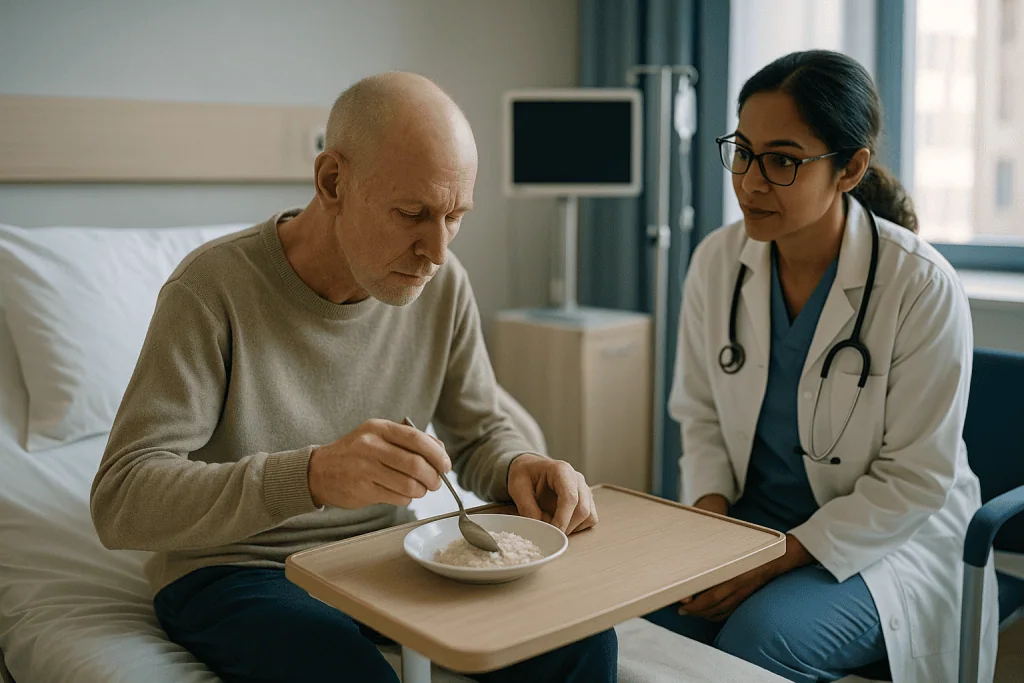
Several things converge in those days. Neutrophils, the white cells that fight bacteria, fall to near zero, so even ordinary skin and gut bacteria become threats, and the NHS notes that infection is the main risk during this window. Platelets drop, which is why bruising and nosebleeds appear and why transfusions become routine. Red cells fall too, adding to a fatigue that many describe as unlike any tiredness they have known.
Then there is mucositis, the inflammation and ulceration of the lining of the mouth and gut caused by conditioning. It typically peaks in the second week and can make swallowing painful enough that nutrition is given through the line for a time. Mayo Clinic lists mouth sores, diarrhea and nausea among the expected effects of this period, and pain control is a standard part of care rather than a sign that something has gone wrong.
Emotionally, this is also the low point for many families. The room is small, the visitors are limited, and progress is invisible until one morning the lab report shows a handful of new white cells. Teams know this and build in support, but it helps to know in advance that the hardest week usually arrives after the treatment itself is finished, not before it.
What the evidence supports is that this phase is temporary by design. It is the cost of clearing the marrow, and the length of it depends largely on the stem cell source and how quickly engraftment arrives.
What does engraftment mean, and how will you know it has happened?
Engraftment is the moment the transplanted stem cells find their way into the marrow spaces and begin producing blood cells of their own. It is the single most important early milestone, and it is defined by numbers on the daily blood count rather than by how you feel.
In practice, teams watch the neutrophil count. When it climbs above a set threshold and stays there for consecutive days, the graft is considered to have taken. Platelet engraftment follows, usually later and less predictably. Mayo Clinic describes this as happening over several weeks after infusion; the NHS gives a similar range and adds that people generally stay in hospital until counts have recovered enough to make infection less likely.
Speed depends on where the cells came from. Cells collected from a donor’s bloodstream tend to engraft fastest, marrow-harvested cells a little slower, and cord blood slowest of all, because the dose of stem cells in a cord unit is small. That is one reason cord blood recipients often face a longer aplastic phase.
Engraftment can announce itself. Some people run a fever, develop a rash or retain fluid as the new immune cells arrive, a picture sometimes called engraftment syndrome. It usually settles with supportive care, but it can look alarmingly like infection or early graft-versus-host disease, so the team will investigate rather than assume.
Occasionally engraftment is delayed or, rarely, fails altogether. Graft failure is uncommon but serious, and Mayo Clinic lists it among the recognized risks. Plans for that scenario, including the possibility of a second infusion, are part of the consent discussion before Day 0, which is why it is worth asking about them early rather than in the middle of a difficult week.
Once the counts hold, the tone in the room changes. The daily number on the whiteboard starts to feel like a countdown rather than a sentence.
Going home: what does discharge after a stem cell transplant depend on?
Discharge is not triggered by a date on the calendar. It is triggered by a checklist, and understanding the items on it takes some of the mystery out of the wait. The NHS says most people spend several weeks to a few months in hospital; Mayo Clinic notes that where you recover, in hospital or as an outpatient with daily visits, varies by program and by how you are doing.
Teams generally want to see the following before they sign the paperwork:
- Stable blood counts. Neutrophils engrafted and rising, with transfusion needs falling to a level that can be handled in clinic.
- No uncontrolled infection. Any fever explained and treated, with intravenous antibiotics either finished or switched to a form you can take at home.
- Eating and drinking. Enough by mouth to stay hydrated and nourished without a feeding line, even if appetite is far from normal.
- Medicines managed. You or a caregiver can name each medicine, its purpose and its schedule, and any anti-rejection drug levels are within the range the team wants.
- A safe landing. A caregiver available around the clock in the early weeks, a way to reach the unit at any hour, and a home cleaned according to the program’s guidance.
MedlinePlus discharge guidance also emphasizes central line care, because the line stays in for weeks or months after you leave and is a direct route for infection if handled poorly. Expect to practice flushing and dressing changes before the door opens.
Some programs ask allogeneic recipients to stay within a short drive of the center until Day 100, and to attend clinic several times a week at first. For autologous recipients the follow-up schedule is usually lighter. Either way, the first appointment is typically within days of leaving, and it is normal to be readmitted for a fever or a transfusion in the early weeks without it meaning the transplant is failing.
The first weeks at home: infection, food and a new kind of tired
Home feels enormous after a transplant room, and that is part of the challenge. The rules that were enforced by staff now have to be self-enforced, and the immune system, though engrafted, is nowhere near mature. MedlinePlus is blunt about the timeline: you remain highly prone to infection for many months, and a number of everyday precautions continue for around a year.
Infection prevention shapes daily life. Hand hygiene for everyone in the household, avoiding crowds and anyone with a cold, wearing a mask in public spaces and clinics, no gardening or handling soil, and no cleaning of litter boxes or bird cages are all standard advice in NHS and MedlinePlus guidance. Fresh flowers and standing water are often discouraged because of mold. None of this is forever, but the early weeks are when it matters most.
Food safety follows the same logic. Raw or undercooked meat, eggs and shellfish, unpasteurized dairy and juice, and unwashed produce carry bacteria a normal gut shrugs off. Many programs keep dietary restrictions in place until counts and immune-suppressing medicines allow, and a dietitian usually sets the specifics. Appetite and taste often remain altered for weeks after mucositis heals; small, frequent meals and calorie-dense options are the usual workaround.
Then there is the fatigue, which surprises people who expected to feel better once they were home. Anemia, deconditioning from weeks in bed, medicines and simple recovery all contribute. Mayo Clinic describes months of gradual return to normal activity rather than a switch flipping. Short walks, done daily and lengthened slowly, are the most consistently recommended approach, and rest is a legitimate part of the plan rather than a failure of willpower.
Emotionally, the first weeks at home are often when the enormity of what happened lands. Low mood, anxiety about every temperature reading and irritability are common. Naming them to the team is worth doing; psychological support is part of transplant care, not an extra.
Why is Day 100 after bone marrow transplant such a big deal?
Day 100 is neither magic nor arbitrary. It grew out of decades of transplant experience showing that most of the acute, life-threatening complications, including graft failure, severe infections during profound immune suppression and acute graft-versus-host disease, tend to appear in roughly the first three months. Cleveland Clinic describes acute GVHD as classically arising within the first 100 days and chronic GVHD as developing after that point, though the two can overlap.
Because of this history, Day 100 became the standard moment to take stock. A typical review includes:
- A bone marrow biopsy or blood test to check that the disease remains controlled and, in donor transplants, that the marrow is now fully donor-derived, a measure called chimerism.
- A structured search for early chronic GVHD in the skin, mouth, eyes, liver, lungs and joints.
- Review of immune-suppressing medicines and, if things are going well, a plan to begin reducing them.
- A decision about whether it is safe to move further from the center and to space out visits.
- Planning for the vaccination schedule that usually begins later in the first year.
For autologous recipients the date carries less clinical weight, since GVHD is not a concern, but it still marks a point where many programs relax precautions and reassess the underlying disease.
What Day 100 is not is a finish line. Immune function is still limited, chronic GVHD can appear for months afterward, and fatigue rarely resolves on a schedule. Patients sometimes feel let down when the day passes and life does not snap back. It helps to reframe it: Day 100 is the point at which the team stops expecting the early emergencies and starts planning the long rebuild. Reaching it is meaningful, and the evidence supports treating it as a genuine checkpoint rather than a symbolic one.
Graft-versus-host disease: what it is and when it tends to appear
Graft-versus-host disease, usually shortened to GVHD, happens when immune cells from the donor recognize the recipient’s tissues as foreign and attack them. It is the defining complication of allogeneic transplant and does not occur after an autologous one. Paradoxically, a mild dose of the same reaction can be useful, because donor cells that patrol for foreign tissue may also patrol for residual disease. The art of transplant medicine lies largely in managing that balance.
Cleveland Clinic separates GVHD into two patterns:
- Acute GVHD typically emerges in the first weeks to three months, often around engraftment. It targets three organs above all: the skin, causing a rash that can range from mild redness to widespread blistering; the gut, causing watery diarrhea, cramping and nausea; and the liver, showing up as jaundice or abnormal blood tests.
- Chronic GVHD usually appears after Day 100 and can affect almost any tissue. Dry, gritty eyes, a dry or sore mouth, tightening or thickening of the skin, joint stiffness, shortness of breath and weight loss are among the recognized features. It can be mild and limited or widespread and disabling, and it may persist for years.
Risk rises with the degree of mismatch between donor and recipient, with older age of donor or recipient, and with certain stem cell sources. Teams try to prevent it with medicines that damp down the donor immune response, which is why allogeneic recipients leave hospital on immune-suppressing therapy and why those drugs are tapered slowly rather than stopped.
Treatment, when GVHD does occur, generally involves corticosteroids and other immune-modulating agents chosen by the transplant team according to severity and organs involved. The NHS lists GVHD among the most serious risks of donor transplant, and it is the single biggest reason the allogeneic recovery timeline is longer and less predictable than the autologous one.
Reporting new rashes, diarrhea, mouth dryness or breathlessness promptly matters because early treatment tends to be simpler than late treatment.
Which medicines are part of recovery, and roughly how long do they last?
Leaving hospital often means leaving with a bag of medicines, and understanding the categories makes the schedule less bewildering. What follows describes mechanisms and typical timelines only; the choice, dose and duration of every medicine sit with the prescribing clinician.
Immune suppressants. After an allogeneic transplant, drugs such as calcineurin inhibitors work by blocking the signaling that activates donor T cells, the immune cells most responsible for GVHD. Blood levels are checked regularly because the effective range is narrow. They are usually continued for several months and then tapered gradually, often beginning around the Day 100 review if GVHD has not appeared. Autologous recipients generally do not need them.
Anti-infective prophylaxis. Because the new immune system is immature, medicines are given to prevent rather than treat infection. Antivirals reduce reactivation of herpes-family viruses that most adults carry silently; antifungals guard against molds and yeasts that exploit low white counts; and an antibiotic is commonly used to prevent a specific lung infection that classically strikes people on prolonged immune suppression. The NHS and Mayo Clinic both describe these as standard in the months after transplant, with duration tied to how long immune suppression continues.
Growth factors. Injections that stimulate the marrow to produce white cells are sometimes used to shorten the aplastic phase or to boost counts that dip later.
Supportive medicines. Anti-nausea drugs, medicines to protect the stomach lining, mouth rinses, and treatments for high blood pressure or high blood sugar triggered by other medicines are common and usually temporary.
Interactions are a real concern, particularly with immune suppressants, and this extends to over-the-counter products, herbal supplements and grapefruit juice. The safest habit is a single rule: nothing new, however natural it seems, without checking with the transplant pharmacist or team first.
Three months to a year: rebuilding the immune system from scratch
The second half of the first year is less dramatic than the first, which is exactly why it catches people off guard. Counts look normal on paper. Hair is growing back. Yet the NHS and MedlinePlus both describe recovery of immune function as taking a year or more, and there is good biology behind that.
A normal neutrophil count means the new marrow can fight bacteria. It does not mean the adaptive immune system, the part that remembers specific viruses and vaccines, has recovered. B cells, which make antibodies, and T cells, which coordinate the response, take many months to repopulate and even longer to regain a full repertoire. In allogeneic recipients still on immune suppressants, or those with chronic GVHD, the process is slower again.
Practically, this period looks like this:
- Precautions relax in steps, not all at once. Masks in crowded indoor spaces, food safety and avoidance of sick contacts typically continue while immune suppressants are being tapered. The team, not the calendar, decides when each restriction lifts.
- Vaccinations restart. Transplant erases prior immunity, so childhood vaccines have to be repeated. Programs generally begin with inactivated vaccines several months after transplant and defer live vaccines until much later and only when immune function and GVHD status allow. The exact schedule is guideline-based and individualized.
- Late infections remain possible. Shingles, respiratory viruses and certain fungal infections can appear well after Day 100, particularly during immune suppression.
- Long-term monitoring begins. Thyroid function, bone density, heart and lung health, eyes, skin and hormonal function are checked because conditioning and prolonged steroids can affect them over years.
Fertility deserves a specific mention. High-dose conditioning frequently causes infertility, a risk Mayo Clinic lists explicitly, and options for preserving fertility are usually discussed before treatment rather than after. Menopausal symptoms in women and low testosterone in men can also surface in this period and are treatable concerns worth raising.
Life after bone marrow transplant: work, exercise, intimacy and travel
Can you live a full life after a bone marrow transplant? Many people do, though the route back is rarely straight and it is not the same for everyone. The evidence supports a realistic optimism: the NHS describes gradual return to normal activities over the first year, and long-term follow-up programs exist precisely because there is a long term to follow.
Work and study. Fatigue and infection risk keep most people away from workplaces and classrooms for several months, and longer if the job involves crowds, children or manual labor. A phased return, part-time at first, is the common recommendation, and remote work has made that easier for some.
Exercise. Deconditioning after weeks in bed is substantial, and muscle takes longer to rebuild than blood counts. Walking is the foundation, with resistance work added as platelet counts and energy allow. Swimming pools, gyms and shared equipment are usually off the list until the team clears them because of infection risk.
Intimacy. Libido often drops with fatigue, medicines and hormonal changes, and mucosal dryness from GVHD or menopause can make sex uncomfortable. Barrier protection is generally advised while counts are low and immune suppression continues. These are common, manageable issues, and transplant teams are used to being asked.
Travel. Most programs ask allogeneic recipients to stay near the center until at least Day 100. Later travel is a shared decision that weighs immune status, GVHD, vaccination gaps and access to care at the destination. Long journeys carry a clot risk that is higher after cancer treatment, so mobility, hydration and the team’s advice on prevention matter. Live-vaccine requirements for certain regions can be a barrier for a year or more.
Sun, pets and gardens. Skin is more sun-sensitive after conditioning and some medicines, and sunburn can trigger GVHD flares, so protection is lifelong advice. Existing pets are usually fine with hygiene; new pets, reptiles and soil are deferred.
Emotional recovery runs alongside all of this. Anxiety at every checkup, guilt about a donor, and a sense of being changed are common and worth voicing.
What people often get wrong about bone marrow transplant recovery
Myths gather around transplant the way they gather around any treatment that is both frightening and rarely witnessed. A few deserve correcting.
“It’s a major operation.” The infusion is not surgery. There is no incision and no anesthesia on Day 0. The donor may have a procedure if marrow is harvested from the pelvis, but for the recipient the physical ordeal comes from conditioning and the weeks that follow, not from an operating room.
“Once the counts recover, you’re back to normal.” Neutrophil recovery is the first step, not the last. Adaptive immunity, stamina and, in donor transplants, freedom from GVHD all take far longer, and the NHS is explicit that full recovery can take a year or more.
“Day 100 means you’re safe.” It means the window for most acute complications has largely closed. Chronic GVHD, late infections and relapse of the underlying disease all remain possible afterward, which is why follow-up continues.
“Autologous and allogeneic are basically the same experience.” They share conditioning and the aplastic phase, but the allogeneic path adds immune suppression, GVHD surveillance and a longer, less predictable timeline. Comparing notes with someone who had the other type can mislead.
“A stronger immune system now means catching every bug forever.” The opposite is closer to true. Immunity is rebuilt, and with revaccination most people regain protection over time. The extreme caution of the first year is a phase.
“You’ll take on the donor’s personality or allergies.” Blood type can change to the donor’s, and some allergies have been reported to transfer, but personality is not carried in blood-forming stem cells.
“Feeling low means you’re not coping.” Depression and anxiety after transplant are common, documented and treatable. Asking for psychological support is part of recovery, not evidence of failing at it.
The thread running through these corrections is the same: recovery is longer and more staged than the word transplant suggests, and knowing that in advance makes the slow parts easier to bear.
Questions to ask your care team before and after discharge
Transplant teams expect questions, and the best ones are specific to your situation rather than to transplant in general. These are worth writing down and bringing to a visit, because the answers will shape your personal version of the timeline.
Before Day 0
- Is my transplant autologous or allogeneic, and what does that mean for how long recovery is likely to take in my case?
- What stem cell source is being used, and how does that affect the expected time to engraftment?
- What is the plan if engraftment is delayed or fails?
- Which fertility-preservation options apply to me, and is there time to use them?
- Who will be my main contact, and how do I reach the unit at night or on weekends?
Around discharge
- What exactly are the criteria you are waiting for before I can go home?
- Which of my medicines are for prevention, which for treatment, and roughly how long is each expected to continue?
- What temperature should trigger a call, and where should I go if I have a fever after hours?
- How far from the center can I live, and for how long?
- Which foods, activities and places are restricted now, and what will change the restrictions?
Around Day 100 and beyond
- What did my Day 100 tests show about disease control and, if relevant, chimerism?
- What is the plan for tapering immune suppressants, and what signs of GVHD should I watch for while that happens?
- When will vaccinations begin, and which ones will be deferred?
- What long-term effects of my conditioning should be monitored, and how often?
- What support is available for fatigue, mood and returning to work?
A caregiver’s questions matter as well: what to watch for, how to manage the central line, and who supports them. Recovery is a two-person job in the early months, and teams generally welcome the second notebook.
When to call your doctor
After transplant, the usual rules about waiting a day to see if something settles do not apply. The immune system cannot be trusted to sound the alarm on its own, and an ordinary-looking problem can escalate in hours. Every program provides a card or number for exactly this reason, and calling too often is never the mistake; calling too late can be.
Seek urgent advice, or emergency care if the team is unreachable, for any of the following, which MedlinePlus, the NHS and Mayo Clinic all flag as warning signs:
- A temperature at or above the threshold your team gave you, or shaking chills even without a fever.
- Redness, swelling, pain or discharge around the central line, or a line that will not flush.
- Shortness of breath, chest pain, a new cough or rapid breathing.
- Bleeding that does not stop, blood in urine or stool, black stools, or a sudden spread of bruises or pinpoint red spots.
- A new rash, especially on the palms, soles, ears or trunk; yellowing of the skin or eyes; or watery diarrhea several times a day, all possible signs of GVHD after a donor transplant.
- Severe headache, confusion, drowsiness, a stiff neck, or a seizure.
- Inability to keep fluids down, or signs of dehydration such as dizziness on standing and very dark urine.
- Painful blisters in one band of skin, which may be shingles.
- Sudden swelling or pain in one leg, or calf tenderness.
- Thoughts of harming yourself, or a low mood that is stopping you from eating, sleeping or taking medicines.
Less dramatic changes still merit a call at the next opportunity: a mouth that feels persistently dry or sore, eyes that are gritty, skin that is tightening, weight that is falling, or fatigue that is getting worse rather than better. Each can be an early signal of chronic GVHD or another treatable problem.
Your care team decides what needs assessment and what can wait. Your job is to make sure they have the information in time to choose.
Frequently asked questions
What are the worst days after a bone marrow transplant?
For most people the low point falls in the second and third weeks after the infusion, when blood counts bottom out and mouth and gut soreness from conditioning peaks. Infection risk is highest then, transfusions are common, and fatigue can be profound. This phase is temporary by design and usually eases as engraftment arrives, though the exact timing depends on the stem cell source and individual factors.
Is a bone marrow transplant a big operation?
No. The recipient does not have surgery; the stem cells are given through an intravenous line in a process that looks like a blood transfusion and takes a few hours. What makes transplant demanding is the high-dose chemotherapy, sometimes with radiation, given beforehand and the weeks of low blood counts that follow. A donor may have a procedure if marrow is collected from the pelvic bone.
How long is stem cell transplant recovery time in total?
Blood counts usually recover within a few weeks, hospital stays commonly run from several weeks to a few months, and the NHS describes full recovery, including immune function, as taking a year or more. Autologous transplants generally recover faster; allogeneic transplants take longer because of immune suppression and the risk of graft-versus-host disease. Your team can give a range tailored to your transplant type.
What happens at day 100 after bone marrow transplant?
Day 100 is a formal reassessment. Teams typically check that the underlying disease remains controlled, confirm in donor transplants that the marrow is donor-derived, look for early signs of chronic graft-versus-host disease, review immune-suppressing medicines and begin planning their taper, and decide whether visits can be spaced out. It marks the end of the highest-risk window, not the end of recovery.
Can you live a full life after a bone marrow transplant?
Many people return to work, exercise, relationships and travel, though the route back usually takes a year or more and is not identical for everyone. Long-term effects such as fatigue, chronic graft-versus-host disease, infertility and hormonal changes are real and are monitored in follow-up. The evidence supports realistic optimism, and the details of what to expect depend on your diagnosis and transplant type.
What are the main bone marrow transplant side effects and downsides?
The recognized risks include serious infection during low blood counts, bleeding, mouth and gut inflammation, organ strain from conditioning, graft failure, graft-versus-host disease after donor transplants, infertility, and later effects on bones, thyroid, heart and lungs. Recovery is long, follow-up is intensive, and the underlying disease can relapse. Teams weigh these against the potential benefit for each individual before recommending transplant.
Why can't you be around crowds after a bone marrow transplant?
Because a normal white cell count on paper does not mean the immune system can recognize and fight specific viruses yet. The antibody-producing and coordinating immune cells take many months to rebuild, and immune-suppressing medicines slow this further. Crowds, sick contacts and enclosed public spaces raise exposure to respiratory viruses that a recovering system handles poorly. Restrictions are lifted in stages as the team judges immunity has recovered.
Do you have to get all your vaccines again after a transplant?
Yes. Conditioning and the new marrow effectively erase prior immunity, so vaccinations given in childhood and adulthood have to be repeated. Programs usually begin with inactivated vaccines some months after transplant and defer live vaccines until immune function has recovered and there is no active graft-versus-host disease. The schedule follows national guidelines and is individualized by the transplant team.
What is the difference in recovery between autologous and allogeneic transplant?
Both involve conditioning and a period of very low blood counts. Autologous recipients use their own cells, so there is no graft-versus-host disease and no need for immune-suppressing medicines, and recovery is generally quicker. Allogeneic recipients receive donor cells, face GVHD risk, take immune suppressants for months, and follow a longer, more closely monitored timeline with a heavier emphasis on the Day 100 review.
When should I go to the emergency room after a bone marrow transplant?
Seek urgent care for a fever at or above the threshold your team set, shaking chills, breathing difficulty, chest pain, bleeding that will not stop, confusion, a severe headache, signs of infection at the central line, a new spreading rash, jaundice or repeated watery diarrhea. Call the transplant unit first if you can reach them; if not, go to emergency care and tell staff you are a transplant recipient.
References
- NHS: Stem cell and bone marrow transplants: Overview
- NHS: Stem cell and bone marrow transplants: What happens
- MedlinePlus: Bone marrow transplant – discharge
- Cleveland Clinic: Graft vs. Host Disease
This article is for general information only and is not a substitute for professional medical advice. Please consult a qualified doctor about your individual situation.

More from the Blog

How Leukemia and Lymphoma Treatment Paths Differ, and Where They Overlap
Leukemia and lymphoma are both cancers of white blood cells, but leukemia begins in the bone marrow and travels in the blood, so it…
Preparing for Stomach Cancer Treatment: Nutrition Assessment and Pre-Surgery Checks
Before stomach cancer surgery, care teams typically assess nutrition by tracking recent weight loss, appetite and how much a person can actually eat, alongside…
Lumpectomy or Mastectomy for Breast Cancer: What the Surgical Team Weighs With You
For most early-stage breast cancers, lumpectomy followed by radiation and mastectomy offer similar long-term survival, so the choice usually turns on tumor size relative…

How Graft-Versus-Host Disease Is Treated: Immunosuppressive Therapy Step by Step
Graft-versus-host disease is treated by calming the donor immune cells that are attacking the recipient's body. Prevention starts with immunosuppressive medicines around transplant. If…
Who Is a Candidate for Robotic Partial Nephrectomy? Tumor Size, Location and Kidney Health
A robotic partial nephrectomy candidate is usually someone with a single, small kidney tumor, most often 4 cm or under and sometimes up to…
What Happens After a Surgical Oncology Operation? Walking, Wound Care and Pathology Results
After cancer surgery, the first hours focus on waking safely, controlling pain and getting you upright to walk, usually the same day or the…