

Can Pulmonary Edema Come Back? Warning Signs After Discharge and When to Seek Care

Key Takeaways
- Pulmonary edema is a consequence of another condition, so it comes back only when that condition recurs or remains uncontrolled; heart failure is the cause most likely to repeat, altitude and lung injury the least.
- A morning weight gain of three pounds or more in one day, or five pounds in a week, is the American Heart Association's threshold for calling the care team because a change that size over that time is almost always fluid.
- Diuretics remove fluid that has already built up; the medicines that reduce the chance of the next episode are the ones that change how the heart and stress hormones behave, and they are the ones most often dropped because they produce no obvious sensation.
- Fluid limits are individual and set by the care team, often in the range of 1.5 to 2 liters a day where they apply, and over-restriction causes dehydration and kidney injury rather than protection.
- High-altitude pulmonary edema develops in people who ascend quickly above roughly 8,000 feet, resolves with descent, and does not return at sea level, though susceptibility on future climbs is increased.
- Immersion pulmonary edema in swimmers and divers can recur under similar conditions and sometimes reveals silent heart or blood pressure problems, which is why a cardiac evaluation is standard before returning to the water.
Yes, pulmonary edema can come back, and whether it does depends almost entirely on its cause. When the trigger was a weak or stiff heart, fluid can return if the underlying heart condition flares, medicines are missed, or salt and fluid build up. Episodes caused by altitude, immersion, or a one-time lung injury are less likely to recur once the trigger is avoided. New breathlessness, weight gain, or swelling after discharge should be reported promptly.
The discharge paperwork is folded on the kitchen table, the oxygen tubing is gone, and for the first time in days the house is quiet. Then a thought arrives at two in the morning, when breathing feels just a little heavier against the pillow: is it starting again? Almost everyone who has been treated for fluid in the lungs asks some version of the question can pulmonary edema come back, usually in that exact hour.
The honest answer is not a single word. Pulmonary edema is a symptom of something else, the way a fever is a symptom of an infection. Whether it returns depends on what pushed the fluid into the lungs in the first place, on how well that cause can be controlled, and on how quickly small changes are noticed at home.
This explainer walks through the causes that tend to repeat, the ones that usually do not, what the first weeks after discharge typically look like, and the specific changes worth a phone call rather than a wait-and-see.
What actually happens inside the lungs when fluid builds up
Picture the lungs as roughly 300 million tiny balloons, the alveoli, each wrapped in a net of capillaries so fine that oxygen crosses the wall in a fraction of a second. That wall is wet on the inside by design, but only a film. Pulmonary edema is the state where fluid leaks out of the capillaries faster than the lung’s drainage system can clear it, filling the air spaces that should hold only air. Breathing becomes work, and oxygen struggles to cross a wall that is now flooded (Mayo Clinic).
Two broad mechanisms drive the leak. In the first, pressure is the problem. When the left side of the heart cannot push blood forward efficiently, blood backs up into the lung vessels, and pressure forces plasma through the capillary walls. Clinicians call this cardiogenic pulmonary edema, meaning it originates in the heart. In the second, the wall itself is damaged. Infection, inhaled toxins, severe pneumonia, or the systemic inflammation of acute respiratory distress syndrome (ARDS, a severe form of lung injury) makes the capillaries leaky even at normal pressure. This is noncardiogenic pulmonary edema (MedlinePlus).
The distinction matters for the recurrence question. A leaky wall tends to heal once the insult is over. A pressure problem returns whenever pressure rises again, which is why people with heart failure can have more than one episode. Lying flat makes it worse because gravity no longer keeps fluid in the legs and abdomen, which explains the classic pattern of waking at night breathless and needing to sit up (Cleveland Clinic).
One more piece of plumbing: the kidneys. They decide how much salt and water the body keeps. Diuretics, the medicine class most often used in treatment, work by asking the kidneys to excrete more of both, lowering the volume the heart has to move and the pressure in the lung vessels.
Can pulmonary edema come back? The answer depends on the cause
Ask a cardiologist and a mountain medicine specialist the same question and you will get different answers, because they see different patients. Both are right.
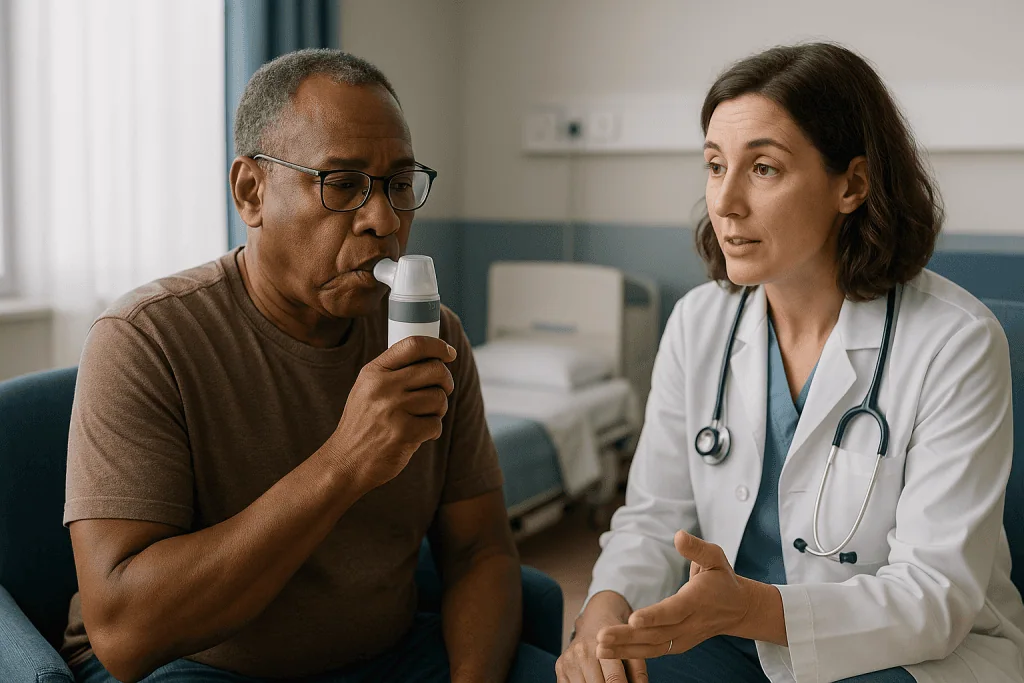
When the cause is chronic, recurrence is a real possibility. Heart failure, the most common reason for pulmonary edema in adults, is a long-term condition. It can be well controlled for years, but the underlying weakness or stiffness of the heart muscle does not disappear, and any event that tips the balance, a missed medicine, a salty week of restaurant meals, an infection, an irregular heart rhythm, can push fluid back into the lungs (Mayo Clinic). Severe kidney disease behaves similarly, because the body’s main route for removing excess fluid is impaired.
When the cause is a single, identifiable event, recurrence is far less likely as long as the event is not repeated. High-altitude pulmonary edema resolves with descent and returns mainly if someone climbs quickly again without acclimatizing (Mayo Clinic). Re-expansion edema after a collapsed lung is drained is tied to that one procedure. Edema from a near-drowning or a toxic inhalation heals with the lung.
A middle group exists. Severe high blood pressure can cause what clinicians call flash pulmonary edema, fluid that appears over minutes rather than days. If the blood pressure stays controlled, episodes may not return; if it spikes again, they can. Narrowing of the kidney arteries is a recognized trigger of this pattern and is one of the things a care team may look for after an unexplained episode (Cleveland Clinic).
So the practical answer to can pulmonary edema come back is this: find out which category your episode belongs to. The discharge summary usually says. If it does not, that is the first question to ask at follow-up, because everything else, from how often to weigh yourself to whether flying is sensible, flows from it.
Why heart failure is the most common reason pulmonary edema returns
Heart failure is a misleading name. The heart has not failed; it is working harder than it should to move the same amount of blood, and it is losing ground. Some hearts pump weakly. Others pump normally but have become stiff and cannot relax enough to fill. Either way, the left ventricle, the main pumping chamber, ends up with higher pressure inside it, and that pressure transmits backward into the lung veins (NHS).
The body responds to a struggling heart in ways that help in the short term and harm in the long term. The kidneys hold on to salt and water to keep blood pressure up. Stress hormones make the heart beat faster and the blood vessels tighten. Over weeks, this extra volume and extra resistance raise the pressure in the lungs further. The person often notices nothing until the balance tips, at which point the lungs can fill over a day or two, or in flash episodes over an hour.
This is why clinicians talk about decompensation, the moment a previously stable heart failure patient becomes acutely unwell. Common triggers, according to the American Heart Association, include skipped medicines, excess salt or fluid, uncontrolled blood pressure, atrial fibrillation (a fast, irregular rhythm), a chest infection, a new heart attack, and anemia. Several are preventable or at least detectable early.
The encouraging part is that modern heart failure management has changed the picture. Guideline-directed medicines, taken consistently, reduce the frequency of hospital admissions, and people with heart failure increasingly live with it for many years rather than in a cycle of emergency visits (NHS). Recurrence is possible, not inevitable. The difference between the two often comes down to monitoring at home and acting on small changes before they become large ones.
Who is at higher risk of a repeat episode, and who is usually asked to wait
Risk of recurrence clusters around a few features that your care team will already know about. A heart that pumps weakly on echocardiogram, a previous admission for heart failure, significant kidney impairment, poorly controlled blood pressure, atrial fibrillation, and diabetes each push the odds upward. So does living alone or struggling to afford or organize medicines, which is less a medical fact than a practical one, and worth telling your team about without embarrassment.

Age by itself is not the risk; the conditions that accumulate with age are. An older adult with a well-controlled heart can do better than a younger person with an untreated one.
Who is usually asked to wait? After any admission for pulmonary edema, most teams ask people to hold off on several things until a follow-up review confirms stability. Driving is typically deferred until breathlessness at rest has settled and medicines have been adjusted. Air travel is often discouraged in the early weeks because cabin pressure lowers oxygen levels slightly and long periods of sitting raise clot risk; if a flight is unavoidable, the usual advice is to walk the aisle regularly, keep hydrated, and arrange follow-up at both ends. High-altitude trips are a particular concern for anyone with a history of either cardiogenic or altitude-related pulmonary edema (Mayo Clinic).
Swimmers and divers who had an immersion episode are generally asked to stay out of open water until a cardiac evaluation is complete. Strenuous exercise is restarted gradually, often through a supervised cardiac rehabilitation program when heart failure is the cause, rather than by returning to a previous routine on day one.
None of these are permanent bans. They are pauses while the team confirms that the cause is controlled, and the timing is individual. The right person to ask when each can resume is the clinician who saw your scans.
Pulmonary edema recurrence by cause: a summary table
The table below is a simplification, and any individual case can differ, but it captures how clinicians think about the likelihood of fluid returning.
| Cause of the episode | How likely to return | Usual triggers for a repeat | What mainly prevents it |
|---|---|---|---|
| Heart failure (weak or stiff left ventricle) | Possible, as the underlying condition is long-term | Missed medicines, salt or fluid excess, infection, arrhythmia, new heart attack | Consistent medicines, daily weights, early reporting of changes |
| Severe high blood pressure (flash edema) | Possible if pressure is not controlled | Blood pressure spikes, narrowed kidney arteries | Blood pressure control, investigation of the kidney arteries if suspected |
| Advanced kidney disease | Possible between dialysis sessions or with fluid excess | Fluid overload, missed dialysis | Fluid and salt limits set by the renal team, dialysis schedule |
| High-altitude pulmonary edema (HAPE) | Low at sea level; can recur with rapid re-ascent | Climbing quickly above roughly 8,000 feet without acclimatizing | Slow ascent, descent at first sign, medical review before future trips |
| Immersion pulmonary edema | Reported in some swimmers and divers | Cold water, heavy exertion, tight equipment, underlying heart or blood pressure issues | Cardiac assessment, avoiding triggers, specialist advice before returning |
| Re-expansion edema after lung drainage | Uncommon; tied to a single procedure | Rapid drainage of a large collapsed lung or effusion | Controlled, slower drainage during the procedure |
| Lung injury (ARDS, inhalation, near-drowning) | Low once the lung heals | A new, separate injury | Treating the original cause; no specific long-term measures |
Two patterns stand out. First, the causes that recur are the ones where something in the body keeps pushing pressure up. Second, in almost every row, the preventive step is something that happens between hospital visits rather than inside them. The altitude figure comes from Mayo Clinic’s guidance on HAPE; the other rows describe mechanisms rather than measured rates, because reliable recurrence percentages for most of these causes do not exist in mainstream patient references.
What the first days and weeks after discharge usually look like
The first week home is often stranger than people expect. Breathing feels nearly normal, but stairs that were easy a month ago leave you stopped on the landing. Appetite is poor. Sleep is broken by trips to the bathroom, a direct effect of diuretics doing their job, and the scale may still be dropping as the body sheds fluid it had been storing for weeks. This is expected, not a setback.
Most people treated for cardiogenic pulmonary edema leave with a new or adjusted set of medicines and instructions to weigh themselves every morning. A follow-up appointment within the first couple of weeks is typical, and many heart failure services phone in between. That early visit is where blood tests check how the kidneys are coping with the diuretics and where doses are fine-tuned. It is not a formality; it is the single most important appointment of the recovery, and skipping it is one of the most common preventable reasons people return to the emergency department.
By the second and third weeks, energy usually improves. Walking distance lengthens. Swelling in the ankles, if present at admission, has generally gone. The cough that lingered may clear. Some people notice dizziness on standing, which is worth mentioning at follow-up because it can mean blood pressure has dropped further than intended.
Weeks four to eight are when longer-term measures begin: cardiac rehabilitation, a structured exercise and education program that the NHS and the American Heart Association both recommend after a heart failure admission, and often additional medicines introduced one at a time. The pattern of adding medicines gradually can feel like things are getting worse. Usually it is the opposite; each medicine class addresses a different part of the overactive stress response, and they are layered in slowly so side effects can be tracked.
For noncardiac causes, the timeline is simpler. Altitude and immersion episodes typically settle within days once the trigger is removed, and the main task is the follow-up evaluation to rule out a heart contribution.
Pulmonary edema warning signs after discharge: what to report early
Fluid rarely returns all at once. In heart failure it tends to creep, and the creeping phase is the window where a phone call prevents an admission. These are the changes the American Heart Association asks people living with heart failure to watch for and report, not so you can diagnose yourself, but so your team can.
- Breathlessness that is new or worse, especially with activities that were manageable a few days earlier, or that now needs an extra pillow at night.
- Waking suddenly short of breath, or being unable to lie flat.
- A dry cough or wheeze that was not there before, sometimes worse lying down.
- Swelling returning in the ankles, legs, or abdomen; shoes or a waistband that have become tight.
- A rapid weight gain on the morning scale.
- Unusual tiredness, a racing or irregular pulse, loss of appetite, or new confusion, which in older adults can be the first sign of low oxygen.
The weight figure is worth memorizing. The American Heart Association’s guidance is that a gain of three pounds or more in a single day, or five pounds in a week, should prompt a call to the care team, because a change of that size over that time is almost always fluid rather than fat. Some teams set individual thresholds, which override the general one.
Notice what is not on the list: a bad day. Energy fluctuates during recovery, and one tired afternoon is not a relapse. The signal is a trend, two or three days moving in the wrong direction, or a single abrupt change. Keeping a simple log of weight, breathlessness, and swelling turns a vague worry into something a nurse can act on in a two-minute phone call.
If breathlessness is severe, sudden, or accompanied by frothy or pink-tinged sputum, that is not a phone-call situation. It is an emergency, covered in the final section.
Why do my lungs feel heavy? Fluid, stiffness, or something else entirely
Heaviness in the chest is one of the most searched symptoms after a pulmonary edema admission, and it has more than one explanation.
Returning fluid is the obvious one. As the air spaces fill, the lungs literally become heavier, and the muscles of breathing have to work against stiff, waterlogged tissue. People describe it as breathing through a wet blanket, often with a need to sit forward. This is the version that needs a call.
Recovery itself can feel heavy. After an episode, the lungs may stay mildly stiff for a while, and the respiratory muscles are deconditioned from days of reduced activity. Breathing feels effortful without any new fluid. The difference is the trend: this heaviness improves week by week rather than worsening over days.
Anxiety is a third and underrated cause. A chest that once filled with fluid becomes a chest people monitor constantly, and the hypervigilance itself tightens breathing. This is not imaginary and it is not weakness; it is a predictable response to a frightening event. It usually eases as confidence returns, and it is worth naming to your team if it does not.
Other lung and heart conditions can produce the same sensation. Pleural effusion, fluid in the space around the lung rather than inside it, is common alongside heart failure and feels different on imaging but similar in the chest. Chest infection, anemia, and a blood clot in the lung all cause heaviness and breathlessness, and each needs a different response.
The point is not to sort these out yourself. It is to recognize that heaviness after discharge has a short list of causes, that some are benign and some are not, and that a clinician can usually tell them apart with an examination, a weight trend, and sometimes a chest X-ray or a blood test for a heart-strain marker called BNP (MedlinePlus).
Daily weights, salt, and fluids: the three habits that catch recurrence early
If one habit prevents more readmissions than any other, it is the morning weigh-in. Same scale, after emptying the bladder, before breakfast, wearing similar clothes. Write the number down. The scale detects a liter of retained fluid, roughly two pounds, days before you would feel it in your ankles or your breathing, which is precisely why the American Heart Association’s self-check plan is built around it.
Salt comes second. Sodium makes the body hold water, and in a heart that is already struggling to move volume, extra water translates directly into extra lung pressure. The challenge is that most sodium in a typical diet does not come from the shaker; it comes from bread, processed meats, soups, sauces, cheese, and restaurant food. Reading labels and cooking more at home does more than removing the salt cellar. Your team sets the target; what matters is that it is a daily practice rather than an occasional effort.
Fluid is third and more individual. Not everyone with heart failure needs to limit drinks, and overdoing a restriction can cause dehydration and kidney strain. Where a limit is advised, the NHS notes it is often in the range of 1.5 to 2 liters a day, but this is set by the care team based on kidney function and symptoms, and it should not be self-imposed (NHS).
A few supporting habits round this out. Alcohol weakens heart muscle over time and interferes with blood pressure control. Nonsteroidal anti-inflammatory painkillers, a class sold for aches and fevers, cause the kidneys to retain salt and water and are a recognized trigger of heart failure decompensation; the question of what to take for pain is one for the prescribing clinician. Vaccination against influenza and pneumococcus is recommended for people with heart failure because chest infections are a leading trigger of repeat episodes (CDC, via AHA guidance).
Medicines after pulmonary edema: how they work and why consistency matters
People often leave hospital with a bag of new medicines and a vague sense that the diuretic is the important one. The diuretic is the one you feel, because it sends you to the bathroom. It is rarely the one doing the most long-term work.
Diuretics, often called water tablets, tell the kidneys to excrete more sodium and water. They relieve congestion and are the main treatment for fluid that has already accumulated. Their timeline is short: hours to a day for effect, and the dose is often reduced once the extra fluid is gone. Blood tests track kidney function and potassium while they are adjusted.
The medicines that change the trajectory of heart failure work differently. Several classes, including those that block the renin-angiotensin system, those that block adrenaline’s effect on the heart (beta blockers), those that block aldosterone, and a newer class originally developed for diabetes (SGLT2 inhibitors), each dampen one part of the overactive stress response that makes a failing heart work harder. Their benefit builds over weeks to months, not days, and they are typically started at low levels and adjusted at follow-up visits. Which classes apply, and in what order, depends on the type of heart failure and is decided by the prescribing clinician (NHS).
Two patterns of risk follow from this. The first is stopping something because it does not seem to be doing anything. Beta blockers in particular can make people feel more tired in the first weeks, and the benefit is invisible from the inside. The second is running out, or losing track across several bottles. Both are among the most common reasons for a repeat episode (AHA).
If a medicine is causing a problem, the answer is a conversation with the team, not a quiet omission. There is almost always an alternative within the same class or an adjustment that keeps the protection without the side effect.
What is immersion pulmonary edema, and can it come back?
Immersion pulmonary edema (IPE) is fluid in the lungs that develops during swimming or diving, often in people with no heart disease and no warning. The scenario is strikingly consistent: a triathlete or a scuba diver, frequently in cold water, develops cough, breathlessness, and sometimes frothy sputum partway through a swim, climbs out, and recovers over hours to a day with oxygen.
The mechanism combines several pressures at once. Immersion pushes blood from the limbs into the chest. Cold water tightens blood vessels, raising the pressure the heart pumps against. Exertion increases the volume the heart has to move. Tight wetsuits and the breathing resistance of diving equipment add to the load. In some people, these converge to raise lung capillary pressure enough to force fluid across, exactly as in cardiogenic edema, but transiently and with a structurally normal heart.
Here the evidence is honest about its limits. IPE has been described mainly in case series and surveys of swimmers and divers rather than in large studies, so reliable recurrence rates do not exist. What those series consistently show is that a proportion of people who have had one episode have another when they return to similar conditions, and that a subset turn out to have underlying high blood pressure or a heart or valve problem that was silent on land.
That is why the standard response to an immersion episode is a cardiac evaluation before returning to the water, including an echocardiogram and blood pressure assessment, and a discussion about triggers that can be modified: water temperature, exertion level, equipment fit, and hydration. Diving medicine physicians are the usual specialists. The decision about whether and how to return is individual, and anyone who develops breathlessness or cough in the water should leave the water immediately and seek assessment rather than push through.
High-altitude and re-expansion pulmonary edema: the one-off causes
Two forms of pulmonary edema have nothing to do with the heart and behave very differently from the cardiogenic kind.
High-altitude pulmonary edema (HAPE) develops in people who ascend quickly, typically to elevations above roughly 8,000 feet, before the body has adapted to the thinner air. Low oxygen causes blood vessels in the lungs to constrict unevenly, driving blood at high pressure into the vessels that remain open and forcing fluid out. Cough, breathlessness out of proportion to effort, and chest tightness are the usual pattern, and it can be life-threatening if the person stays at altitude. Descent is the definitive treatment and symptoms generally improve as altitude falls (Mayo Clinic).
Does HAPE come back? At sea level, no. On the next mountain, it can, and people who have had one episode are considered more susceptible on future ascents. Prevention is behavioral: a slower climb with rest days, not sleeping much higher than the previous night, and descending at the first sign of trouble. Some climbers are prescribed preventive medicines for future trips; whether that applies, and which, is a decision for a travel or mountain medicine clinician.
Re-expansion pulmonary edema is rarer and happens in hospital. When a lung that has been collapsed by a pneumothorax (air in the chest cavity) or compressed by a large effusion is drained and re-expands quickly, the suddenly re-perfused capillaries can leak. It usually declares itself within hours of the procedure and is managed with oxygen and support while the lung settles. Because it is tied to a single event, it does not recur in daily life; the only scenario in which it could happen again is another large collapse requiring another drainage, and clinicians reduce the risk by draining large collections slowly.
Both are reminders that the question can pulmonary edema come back has a reassuring answer for a meaningful group of people, provided the trigger is understood and respected.
Can you live with pulmonary edema? The honest long-term picture
Strictly, nobody lives with pulmonary edema; it is an acute state that is either resolved or is an emergency. What people are really asking is whether they can live well with the condition that caused it. For most, the answer is yes, with the qualification that the work is ongoing.
Heart failure is the condition most people mean. The NHS describes it as a long-term condition that usually cannot be reversed but can be controlled with treatment, often for many years, and whose outlook has improved substantially as medicines and monitoring have developed. The variability is wide: some people with heart failure run, work full time, and travel; others have more limited stamina. The factors that distinguish the two groups are largely the ones already covered, the heart’s pumping function, kidney health, other conditions, and how consistently the plan is followed.
What living well usually involves is unglamorous. The morning weight. The label-reading. The medicines taken even on good days. A cardiac rehabilitation program at the start, then a regular activity habit. A standing relationship with a heart failure nurse or clinic. Flu and pneumonia vaccinations. Knowing which changes warrant a call and making that call without apology.
Emotional adjustment deserves its own mention. Anxiety and low mood are common after a frightening admission and after a diagnosis that reframes the future. Both are treatable, both affect how well people manage their physical health, and both are legitimate things to raise at follow-up.
For people whose episode had a one-off cause, living with it means something simpler: respecting the trigger, completing the follow-up evaluation, and then, in most cases, returning to ordinary life. The honest summary is that a pulmonary edema episode changes what you pay attention to far more than it changes what you can do.
Can you have COPD with clear lungs? Why not all breathlessness is fluid
After a pulmonary edema admission, every breathless moment can feel like fluid. It often is not, and chronic obstructive pulmonary disease (COPD) is a good example of why.
COPD is a group of conditions, mainly emphysema and chronic bronchitis, in which the airways are narrowed and the lung tissue has lost elasticity, usually from long-term smoking or exposure to smoke and fumes. It causes breathlessness, cough, and wheeze. Yet on a chest X-ray, lungs affected by COPD often look clear, or even over-inflated, because the problem is airflow rather than fluid. A clinician listening with a stethoscope may hear wheeze or reduced breath sounds instead of the wet crackles that mark edema (NHS; MedlinePlus). So yes, it is entirely possible to have COPD with lungs that look clear on imaging; the diagnosis is made with a breathing test called spirometry, which measures how fast air can be blown out.
The two conditions frequently coexist. Smoking damages both the heart and the lungs, and a person with COPD and heart failure can be breathless from either, or both at once. Sorting out which is driving a given bad week is a recurring clinical puzzle, solved with the weight trend, the BNP blood test, imaging, and sometimes a trial of treatment aimed at one cause.
Why this matters for the recurrence question: treating breathlessness as fluid when it is airway narrowing, or the reverse, delays the right treatment. A COPD flare needs bronchodilators and sometimes antibiotics or steroids; a fluid episode needs diuretics and attention to the heart. If you have both diagnoses, ask your team to help you recognize the features that usually distinguish them in your own case, and when in doubt, report the breathlessness and let them decide.
What people often get wrong about pulmonary edema coming back
Some beliefs about recurrence are so common that correcting them is one of the most useful things a follow-up visit can do.
The first is that feeling well means the risk has passed. Heart failure is quiet between episodes by nature. The fluid builds without sensation until it reaches the lungs, which is the whole reason daily weights exist. Feeling fine is a reason to keep doing what is working, not a reason to stop.
The second is that the diuretic is the medicine that prevents recurrence. It treats fluid that has already arrived. The medicines that reduce the chance of the next episode are the ones that change how the heart and the stress hormones behave, and they are the ones most often dropped because they produce no obvious sensation.
The third is that drinking less water is always safer. Over-restriction causes dehydration, dizziness, falls, and kidney injury, and it is a frequent cause of readmission in older adults. Fluid limits are individual and sometimes unnecessary.
The fourth is that rest is protective. Prolonged inactivity deconditions the heart and the breathing muscles and raises clot risk. Graded activity, ideally through cardiac rehabilitation, is part of the treatment, not a risk to it.
The fifth is that oxygen at home would prevent another episode. Oxygen treats low oxygen levels; it does not remove fluid or lower lung pressure. Whether anyone needs it is a separate assessment, and most people recovering from cardiogenic edema do not.
The last is a quieter one: that a second episode means the treatment has failed or that the person did something wrong. Recurrence is a known feature of a chronic condition. What matters is how early it is caught and what is learned about the trigger. A repeat episode is information for the team, not a verdict on the patient.
Questions to ask your care team before and after discharge
A follow-up appointment lasts minutes and the questions that matter are easy to forget. Writing them down beforehand, and bringing someone to listen, changes what you leave with. These are the ones that most directly affect whether and how pulmonary edema might come back.
- What caused my pulmonary edema, and is that cause long-term or a one-time event?
- If it was my heart, what did the echocardiogram show about how well it pumps, and what does that mean for recurrence risk?
- What weight change over a day or a week should prompt me to call, and whom exactly do I call?
- Which of my medicines treat fluid that has already built up, and which are meant to prevent the next episode?
- Do I have a fluid limit, and if so, what is it based on?
- Are there any painkillers or over-the-counter products I should avoid because they cause fluid retention?
- When is it safe to drive, fly, travel to altitude, swim, or return to work, and what would change that advice?
- Am I eligible for cardiac rehabilitation, and how is it arranged?
- What tests are planned at follow-up, and what would make you adjust the plan?
- Which vaccinations are recommended for me now?
- If my breathing worsens at night or at the weekend, what is the exact pathway: nurse line, urgent care, or emergency services?
Two things worth saying plainly at the appointment: anything that makes the plan hard to follow, whether cost, memory, side effects, or living alone, and any symptom you have been downplaying. Clinicians adjust plans around real constraints all the time, but only when they know about them. The answers to these questions belong to your treating team; this article can only tell you which questions are worth asking.
When to call your doctor, and when to call emergency services
Two tiers of response cover almost every situation after discharge.
Call your care team, usually the same day, if you notice any of the following building over a day or more: breathlessness that is new or worse with ordinary activity; needing more pillows or waking short of breath at night; a weight gain of three pounds or more in a day or five pounds in a week, or whatever threshold your team gave you (AHA); swelling returning in the legs, ankles, or abdomen; a new dry cough or wheeze; unusual fatigue, dizziness on standing, a racing or irregular pulse, or loss of appetite; or any medicine you have stopped, run out of, or cannot tolerate. These are the changes that a phone call can usually turn around with an adjustment at home.
Call emergency services immediately, do not drive yourself, if there is sudden or severe breathlessness, especially at rest; a feeling of suffocating or being unable to lie down at all; coughing up frothy or pink-tinged sputum; blue or gray lips or fingertips; chest pain or pressure, which can signal a heart attack; fainting or near-fainting; or new confusion or drowsiness, which can indicate dangerously low oxygen. Acute pulmonary edema is a medical emergency that is treated with oxygen and intravenous medicines, and the outcome depends on how fast treatment starts (Mayo Clinic; MedlinePlus).
Older adults and people with several conditions sometimes present without dramatic breathlessness; confusion, a fall, or simply being much less well than usual can be the only sign. If someone who was recently treated for fluid on the lungs seems suddenly not themselves, treat that as a reason to seek care rather than to wait.
Every threshold in this section is general. Your discharge instructions, and the clinician who knows your heart, take precedence over anything written here.
Frequently asked questions
Can pulmonary edema come back after it has been treated?
Yes, it can, but only when the underlying cause persists or returns. If the cause was heart failure or advanced kidney disease, recurrence is possible whenever fluid and pressure build again, often after missed medicines, excess salt, or an infection. If the cause was a one-time event such as rapid ascent to altitude, a lung injury, or drainage of a collapsed lung, it rarely returns once the trigger is avoided.
What are the first pulmonary edema warning signs after discharge?
The earliest sign is usually a rising weight on the morning scale, which can appear days before breathing changes. After that, people typically notice breathlessness with activities that were manageable, needing an extra pillow at night, returning ankle swelling, a new dry cough, or unusual tiredness. These are reasons to call the care team the same day rather than wait for the next appointment.
Can you live with pulmonary edema long term?
People live with the condition that causes it rather than with pulmonary edema itself, which is an acute state. Heart failure, the usual cause, is a long-term condition that is often controlled for many years with consistent medicines, daily weights, attention to salt and fluid, regular activity, and a standing relationship with a heart failure team, according to NHS guidance. Quality of life varies widely and depends largely on how well the cause is managed.
What is immersion pulmonary edema and does it recur?
Immersion pulmonary edema is fluid in the lungs that develops during swimming or diving, often in cold water and often in people with no known heart disease. Immersion, cold, exertion, and tight equipment together raise pressure in the lung vessels. Evidence comes mainly from case series, which report that some people have repeat episodes under similar conditions, so a cardiac evaluation and specialist advice are standard before returning to the water.
Why do my lungs feel heavy weeks after pulmonary edema?
Heaviness can come from returning fluid, from lungs and breathing muscles that are still recovering and deconditioned, or from anxiety-driven tightness after a frightening event. The pattern matters: recovery heaviness improves week by week, while returning fluid worsens over days and usually comes with weight gain or swelling. Other causes such as a chest infection or a clot are possible, so persistent or worsening heaviness should be assessed by a clinician.
Can you have COPD with clear lungs on an X-ray?
Yes. COPD narrows the airways and reduces lung elasticity rather than filling the lungs with fluid, so a chest X-ray often looks clear or over-inflated. The diagnosis is made with spirometry, a breathing test that measures how quickly air can be exhaled. COPD and heart failure frequently coexist, and distinguishing a COPD flare from a fluid episode is a common clinical task that uses weight trends, blood tests, and imaging.
How long does pulmonary edema recurrence risk last after discharge?
There is no fixed period after which risk disappears, because it depends on the cause. For heart failure, the early weeks after discharge are when adjustments to medicines and kidney function are closely watched, and the follow-up visit in that window is particularly important. Over the longer term, risk is shaped by how well the heart condition is controlled rather than by time since the last episode. For one-off causes, risk falls once the trigger is removed.
Does pulmonary edema always mean heart failure?
No. Heart failure is the most common cause in adults, but pulmonary edema can also result from severe high blood pressure, advanced kidney disease, lung injury from infection or inhaled toxins, acute respiratory distress syndrome, rapid ascent to altitude, immersion during swimming or diving, and rapid re-expansion of a collapsed lung. Identifying the cause is the first step, because it determines both the treatment and the likelihood of recurrence.
Should I weigh myself every day after pulmonary edema?
Daily morning weights are the standard recommendation for people whose episode was caused by heart failure, because the scale detects retained fluid before symptoms appear. The American Heart Association advises reporting a gain of three pounds or more in a day or five pounds in a week. For one-off causes such as altitude or lung injury, daily weights are usually unnecessary, but your discharge instructions should state what applies to you.
Can I fly or travel to high altitude after pulmonary edema?
Usually not in the early weeks, and only after a follow-up review confirms stability. Cabin pressure lowers oxygen slightly and long flights raise clot risk, so teams generally advise waiting, walking the aisle regularly, staying hydrated, and arranging follow-up at both ends when travel is unavoidable. High-altitude trips are a particular concern for anyone with cardiogenic or altitude-related edema. The timing is individual and decided by your treating clinician.
References
- MedlinePlus: Pulmonary edema
- Cleveland Clinic: Pulmonary edema
- NHS: Heart failure, overview
- NHS: Living with heart failure
This article is for general information only and is not a substitute for professional medical advice. Please consult a qualified doctor about your individual situation.

More from the Blog
Pain After Robotic Lung Surgery: Why Small Incisions Still Ache and How It Is Managed Safely
Pain after robotic lung surgery is common even though the incisions are small, because the ports pass between ribs where the intercostal nerves run,…

Emphysema With Heart Disease: How Pulmonologists and Cardiologists Coordinate Your Care
Emphysema and heart disease frequently occur together because they share causes such as smoking and chronic inflammation, and each can worsen the other. Coordinated…

Viral vs Bacterial Lung Infection: How the Difference Shapes Your Treatment Plan
Viral and bacterial lung infections can feel almost identical, but they are managed differently. Viral infections, which cause most bronchitis and many pneumonias, are…

Blood Thinners Before Pleural Effusion Drainage: What Your Team Checks and Why Timing Matters
Thoracentesis is generally classed as a low-bleeding-risk procedure, so many people continue their blood thinners, but the decision depends on which medicine you take,…

How Is Asthma Treatment Planned for Children? What Specialists Consider for Growing Lungs
Asthma treatment for children is planned in steps. Specialists first confirm the pattern of symptoms, using breathing tests once a child is old enough,…

Acute Bronchitis Warning Signs: Breathing Changes That Mean Urgent Care, Not Waiting
Acute bronchitis usually causes a cough that fades within about three weeks. Warning signs that need prompt medical assessment rather than waiting include breathlessness…