

Caring for Someone With Acute Lymphocytic Leukemia: Hospital Stays, Hygiene and Support

Key Takeaways
- A temperature of 100.4°F (38°C) or higher during leukemia treatment is treated as an emergency because neutropenia removes the usual signs of infection.
- Induction chemotherapy for acute lymphocytic leukemia typically means a hospital stay of several weeks, with blood counts hitting their lowest point around the second week.
- Washing hands with soap for at least 20 seconds, cooking animal products thoroughly, and avoiding unpasteurized foods are the infection-control measures with the strongest evidence.
- Maintenance treatment for ALL continues for about two years after remission, because remission means undetectable disease, not absent disease.
- A neutrophil count below 500 cells per microliter is classed as severe neutropenia, the window when visitor and food precautions matter most.
- No mainstream evidence links stress to acute leukemia; established risk factors are prior chemotherapy or radiation, certain genetic conditions, and chemical exposures such as benzene.
Caring for someone with acute leukemia means helping them through weeks-long hospital stays for intensive chemotherapy, protecting them from infection while their white cell counts are low, keeping careful records of medicines and appointments, and watching for warning signs such as fever. Hand hygiene, safe food handling, and a plan for who to call at any hour matter most, with every treatment decision left to the hematology team.
The ward door has a sign about clean hands and a pump of alcohol gel beside it. You use it for the fourth time in an hour, then sit down with a thermos of soup that the nurse has already told you is fine to bring in. Across the room, your sister, your father, your partner, your child is attached to a pole of pumps and asking whether you remembered the phone charger. This is what caring for someone with acute leukemia looks like on an ordinary Tuesday.
Acute lymphocytic leukemia (also called acute lymphoblastic leukemia, or ALL) moves fast, and so does its treatment. Within days of diagnosis most people are admitted for intensive chemotherapy, and a family member suddenly becomes part nurse, part scheduler, part bodyguard against germs.
None of that comes with a manual. What follows is the closest thing we can offer: what actually happens in hospital, why infection is the thing to fear more than hair loss, and how to look after the person without losing yourself.
What does caring for someone with acute leukemia actually involve?
Leukemia is a cancer of the blood-forming cells in the bone marrow, the spongy tissue inside bones where blood cells are made. In acute lymphocytic leukemia, immature white cells called lymphoblasts multiply so quickly that they crowd out the normal red cells, platelets, and infection-fighting white cells. That single mechanism explains almost every caregiving task you will take on: tiredness from anemia, bruising from low platelets, and above all vulnerability to infection from a shortage of healthy neutrophils, the white cells that attack bacteria.
Day to day, the caregiver role usually divides into four strands. The first is logistics: appointments, blood counts, transport, parking, insurance letters, and the small matter of who feeds the cat. The second is infection control, at the bedside and later at home. The third is observation, since you will often be the first to notice a new temperature, a cough, or confusion. The fourth is simply presence. People in treatment consistently describe someone sitting with them as more valuable than anything in the gift shop, and the National Cancer Institute (NCI) lists companionship and advocacy among the core caregiver tasks for a reason.
What the role does not involve is deciding on treatment. Hematologists, the doctors who specialize in blood disorders, choose the chemotherapy protocol, judge when counts are safe, and adjust medicines. A good caregiver asks questions, writes down answers, and reports changes; they do not adjust pills or second-guess the plan from a search engine. Holding that line protects the patient and, frankly, protects you from an impossible burden.
How acute lymphocytic leukemia treatment works, in plain language
Treatment for ALL is built in phases, and knowing the names helps you follow ward conversations. The NHS and the Mayo Clinic both describe three main stages. Induction is the first, intensive block of chemotherapy aimed at clearing leukemia cells from the blood and marrow so that normal blood production can restart; this is the phase that keeps people in hospital for several weeks. Consolidation (sometimes called intensification) follows with further cycles designed to eliminate cells that survived induction. Maintenance is a longer, gentler phase of lower-intensity treatment taken largely at home; the NHS notes it typically continues for about two years.
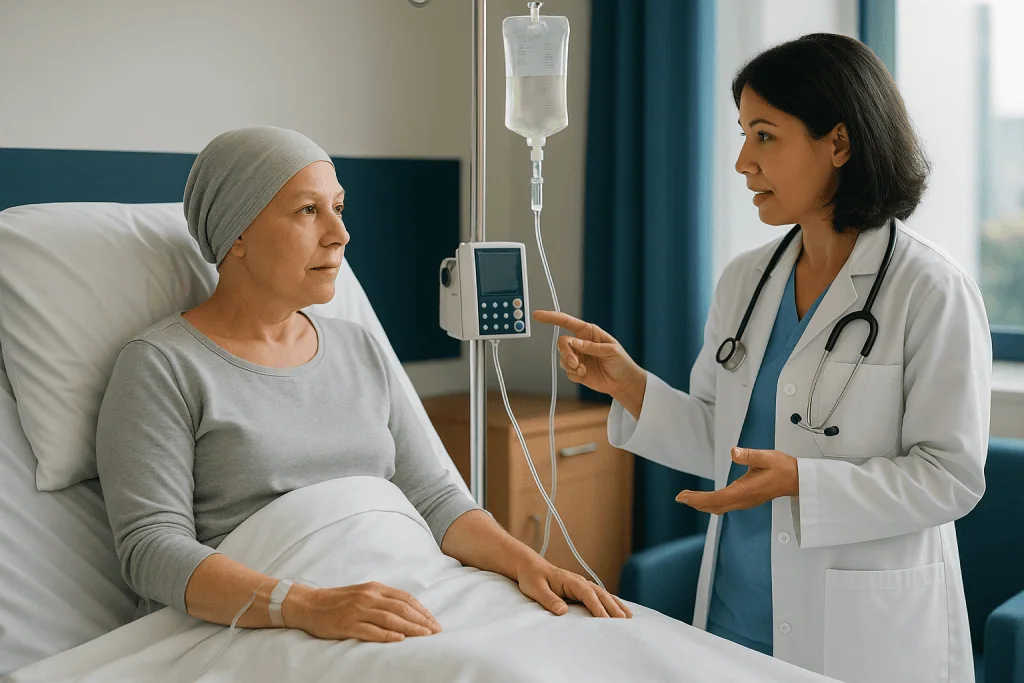
Because leukemia cells can hide in the fluid around the brain and spinal cord, most protocols also include treatment delivered directly into that fluid by lumbar puncture, a needle placed in the lower back. The term you may hear is CNS prophylaxis, meaning prevention of disease in the central nervous system.
Beyond conventional chemotherapy, the care team may discuss targeted drugs that block specific molecular signals in some subtypes, immunotherapies that direct the patient’s own immune cells against leukemia, or a stem cell transplant, in which the marrow is replaced with blood-forming cells from a donor after very high-dose treatment. Each option carries its own risks, timelines, and eligibility rules. The NCI’s patient summary on adult ALL lays these out neutrally, and the treating hematologist is the only person who can say which apply to your relative.
Remission, the word everyone waits for, means that leukemia cells can no longer be detected by standard tests and blood counts have recovered. It is a milestone, not a finish line, and it is why the phases continue well beyond that first good result.
Who is usually treated intensively, and who is asked to go more gently?
Acute leukemia is almost never a wait-and-see diagnosis. Unlike some slow-growing blood cancers that are monitored for years, ALL is treated promptly in nearly everyone, because the untreated disease progresses over weeks. What varies is the intensity of that treatment.
Children and younger adults are usually offered the most intensive protocols, since their bodies tolerate high-dose chemotherapy better and the biology of childhood ALL responds differently from adult disease. Older adults, people with heart, kidney, or liver conditions, and those whose overall fitness is limited may be offered modified or lower-intensity regimens that balance the chance of controlling the leukemia against the risk of serious side effects. Mayo Clinic notes that treatment plans depend on the ALL subtype, the person’s age, general health, and features of the leukemia cells themselves, including specific chromosome changes that steer the choice of targeted drugs.
There are also moments within treatment when the team deliberately pauses. If neutrophils or platelets have not recovered enough, the next cycle may be delayed by days or weeks. An active infection, a liver enzyme result, or a bout of mucositis (painful inflammation of the mouth and gut lining) can all shift the schedule. Caregivers often experience these delays as setbacks; clinicians see them as routine safety checks. The honest answer when the calendar slides is that it almost always reflects counts, not failure.
Some people, after discussion with their team, choose a palliative approach that focuses on comfort and quality of life rather than intensive therapy. That is a legitimate medical pathway, supported by specialist palliative care, and a caregiver’s job is to support the decision the patient and their doctors reach together rather than to argue for a different one.
What do the first hospital weeks usually look like?
Induction is the hardest stretch for most families, so it helps to know its shape. The NHS describes the initial phase as taking place in hospital, often for several weeks, because chemotherapy drives blood counts down to very low levels before they recover. Day by day, the pattern tends to run like this.
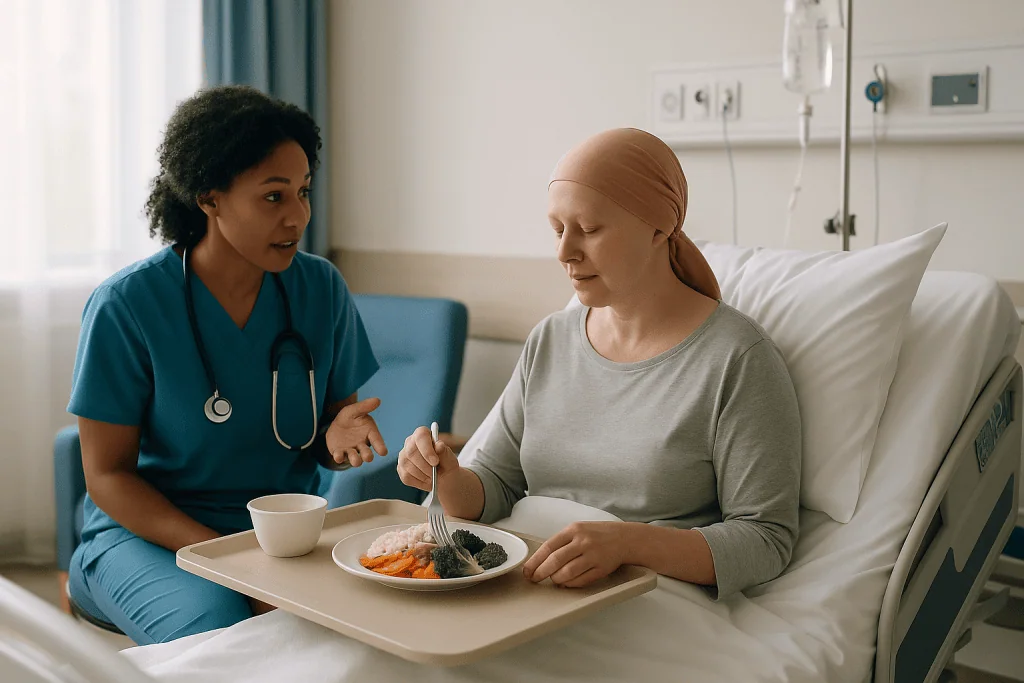
Early on there is a flurry of procedures: a central line (a long, soft tube placed into a large vein in the chest or arm so that drugs, fluids, and blood samples can go through one access point), bone marrow sampling, and the first chemotherapy infusions. Many people feel surprisingly well in the first few days.
Around a week to ten days in, counts typically reach their lowest point, called the nadir. Fatigue deepens, appetite drops, and the risk of infection peaks. Red cell and platelet transfusions are common and expected. Antibiotics are started quickly for any fever. This is the period when visitors are most restricted and when caregivers feel most useless, because the useful work is being done by cell counts and time.
In the following weeks, as the marrow begins to recover, energy returns in small increments. A repeat bone marrow test checks whether remission has been achieved. Discharge planning starts, with teaching on line care, temperature checks, and who to call.
Timelines are ranges, not promises. Infections, organ side effects, or a slower-than-hoped recovery can stretch a stay. Ask the nurse in charge each week what the current expected milestones are, write them down, and expect them to move.
What to bring to the hospital for a long chemotherapy stay
A hematology ward is not a hotel, but a few well-chosen items make weeks there far more bearable. Check with the ward before bringing anything in, because infection-control rules vary and fresh flowers, plants, and some foods are often not allowed around people with low white cell counts.
Technology first: a long charging cable, headphones, and a tablet or laptop loaded with films and audiobooks. Hospital Wi-Fi is uneven; a downloaded series is a kindness. A notebook and pen for both of you, because questions arrive at 3 a.m. and doctors arrive at 8.
Comfort next: their own pillowcase and a soft blanket (washed at home, changed often), loose clothes that open at the front or have wide sleeves to accommodate a central line, non-slip slippers, and lip balm, since mouth dryness and sores are common. Unscented moisturizer helps skin that chemotherapy dries out. A soft-bristled toothbrush is essential; the NCI advises gentle oral care when platelets are low to limit bleeding gums.
Food and drink: a sealed water bottle, and small individually wrapped snacks the team has approved. Appetite swings wildly, and having a cracker to hand at the right moment matters more than a large meal that goes cold.
Paperwork: a folder with the medication list, allergy information, insurance details, contact numbers for the ward and the out-of-hours line, and a simple sheet where you log temperatures, symptoms, and questions. Caregivers who keep a running log are better advocates, because they can say precisely when a cough started rather than guessing.
Leave at home anything irreplaceable, and anything that cannot be wiped down. Ward rooms are cleaned hard and often.
Why infection is the main danger: neutropenia explained
If you absorb one piece of medical knowledge as a caregiver, make it this. Neutrophils are the white blood cells that respond first to bacteria and fungi. Chemotherapy, and the leukemia itself, deplete them. Neutropenia is the medical term for a low neutrophil count, and the Cleveland Clinic describes a count below 500 cells per microliter of blood as severe. At that level the body cannot mount a normal defense, and ordinary bacteria living harmlessly on skin or in the gut can cause serious bloodstream infections within hours.
Two features make this dangerous in practice. First, the usual signs of infection are muted. Without neutrophils there is less pus, less redness, less swelling, so a fever may be the only clue. The NCI defines a fever of concern during cancer treatment as a temperature of 100.4°F (38°C) or higher, and advises that it be treated as an emergency rather than watched. Second, people often feel reasonably well until they do not, and the decline can be rapid.
This is why wards restrict visitors with coughs, why nurses glove up for line care, and why you will be asked to wash your hands more than feels reasonable. It is also why the single most important instruction you will receive at discharge is to check temperature at any sign of feeling unwell and to call the designated number immediately for a reading at or above the threshold, without first trying a fever reducer, which can mask the signal.
Neutropenia is temporary, and counts recover between cycles. Understanding when your relative is in a low-count window, which the team can tell you from the latest blood test, lets you tighten precautions when they matter and relax them when they do not.
Neutropenic precautions at home: hygiene that holds up to evidence
Once home, the most effective infection-control measures are old-fashioned and well supported. Hand hygiene comes first. The CDC recommends washing with soap and water for at least 20 seconds, and using an alcohol-based hand rub when soap is unavailable, before preparing food, after using the bathroom, after touching pets, and whenever hands look dirty. Everyone in the household should do this, not just the patient.
Food safety is the second pillar. Cook meat, poultry, eggs, and seafood thoroughly, use a food thermometer, keep raw and cooked foods separate, and refrigerate leftovers promptly. Wash fruits and vegetables under running water. Avoid unpasteurized milk, cheese, and juices, raw sprouts, and undercooked eggs. The NCI’s guidance on infection during treatment covers these basics; many centers add their own list, and the team’s instructions always take precedence over a general article.
Skin and mouth care matter more than they sound. Daily showers, gentle teeth cleaning with a soft brush, and prompt attention to any cut, hangnail, or sore protect the body’s barriers. The central line site should be kept clean and dry exactly as taught on the ward, with the dressing changed by whoever the team has trained.
Environmental measures are simpler than people fear. Avoid people who are visibly unwell. Ask visitors to wash their hands on arrival. Steer clear of litter trays, bird cages, soil, and compost, since these carry fungal spores and bacteria. Fresh flowers and standing water in vases are usually discouraged during low-count periods.
Vaccination for household members, including annual flu vaccination, is a form of indirect protection the CDC encourages; the patient’s own vaccination schedule is a matter for the hematology team, because live vaccines are generally avoided during treatment.
Common hygiene questions caregivers ask, and what the evidence supports
Families arrive home with a long list of worries, some well founded and some not. The table below summarizes the questions that come up most often on hematology wards, matched against mainstream guidance from the CDC, NCI, and NHS. It is a starting point for a conversation with the care team, not a replacement for their specific instructions.
| Question | What guidance generally supports | Where caution is reasonable |
|---|---|---|
| Do visitors need masks? | Masks are mainly for visitors with respiratory symptoms, who should ideally stay away entirely. | During very low counts or local virus surges, some teams ask all visitors to mask. |
| Can the family pet stay? | Yes, in most cases; healthy dogs and cats are usually fine with hand washing after contact. | Someone else should handle litter, cages, tanks, and cleaning up after animals. |
| Is a special sterile diet needed? | Standard food-safety practice is what guidance emphasizes, not elaborate restriction. | Raw or undercooked animal products, unpasteurized items, and raw sprouts are avoided. |
| Can they go outside? | Fresh air and gentle walks are encouraged when the person feels able. | Crowded indoor spaces and gardening in soil are best avoided in low-count windows. |
| How often should bedding be changed? | Regular laundering with normal detergent is sufficient; no special products are needed. | Change sheets promptly after night sweats, vomiting, or any soiling. |
| Should the house be deep-cleaned daily? | Ordinary cleanliness and good ventilation are what matter. | Someone other than the patient should do dusty jobs and bathroom scrubbing. |
Notice the pattern. The strongest measures are the simplest: clean hands, cooked food, distance from sick people. Elaborate rituals tend to add exhaustion without adding protection, and an exhausted caregiver is a less observant one.
What is the recommended diet for people with leukemia?
There is no special leukemia diet, and that is worth saying plainly, because families are bombarded with claims to the contrary. Mainstream guidance from the NCI and NHS focuses on two goals: eating enough to maintain weight and strength through treatment, and preparing food safely to avoid infection.
Appetite during induction is often poor. Nausea, mouth sores, taste changes (a metallic or cardboard flavor is common), and fatigue all work against regular meals. The practical answer is small, frequent portions rich in protein and calories rather than three large plates. Eggs cooked through, yogurt that is pasteurized, soft cheeses that are pasteurized, well-cooked meat and fish, smoothies made from washed fruit, nut butters, and fortified milk drinks all help. Cold or room-temperature foods often go down more easily when smells trigger nausea.
Hydration deserves its own attention. Chemotherapy, vomiting, and fever all deplete fluids, and some drugs are harder on the kidneys when a person is dehydrated. Keeping a bottle within reach and tracking rough intake is a real caregiving contribution.
Supplements, herbal products, and high-dose vitamins are an area for genuine caution. Some interact with chemotherapy; others affect the liver or blood clotting. The NIH Office of Dietary Supplements notes that supplement safety during cancer treatment should be discussed with the care team, and most hematology units ask patients to clear every product first. The same applies to juice fasts, alkaline diets, and anything marketed as starving cancer cells; there is no evidence these help, and weight loss during treatment is a risk, not a goal.
A dietitian attached to the hematology service can tailor advice to blood results and side effects. Ask for a referral early rather than when weight has already dropped.
Leukemia caregiver tips for medicines, appointments and records
Treatment generates paperwork and pills in quantities that surprise everyone. Even in hospital, and far more at home during consolidation and maintenance, your relative will be managing chemotherapy taken by mouth, antibiotics or antiviral drugs taken to prevent infection, medicines for nausea, and possibly steroids, which can affect mood, sleep, appetite, and blood sugar. Caregivers help most by building systems, not by making decisions.
Keep one master medication list, updated at every appointment, that records each medicine’s name, what it is for, and when it is taken, exactly as the prescriber wrote it. Bring that list to every visit and to any emergency department. Never alter timing, skip a medicine, or add an over-the-counter product without checking with the team; some common painkillers affect platelets and some interact with chemotherapy.
Use a pill organizer filled according to the pharmacy label, with a shared calendar alarm for each slot. Note anything missed or vomited back up and report it rather than doubling up, which the prescriber will advise on.
Appointments cluster around blood tests. Learn to read the counts that matter (hemoglobin, platelets, neutrophils) so that conversations with the team are quicker, and ask for a copy of each result. A simple spreadsheet of counts over time helps you see recovery patterns and spot the windows when precautions need tightening.
Finally, know the lines of communication. Which number is for routine questions, which is for urgent concerns during the day, and which is for nights and weekends. Put all three on the fridge and in your phone. People lose precious hours searching for a number while a temperature climbs.
How to support a leukemia patient emotionally without taking over
Acute leukemia removes control from a person almost overnight. Work stops, the body stops cooperating, and strangers decide what goes into the bloodstream. Qualitative research on acute leukemia patients consistently finds that the loss of autonomy is as distressing as the physical side effects. The best emotional support, therefore, tends to give small pieces of control back.
Ask rather than assume. Would they like company during the infusion, or an hour alone? Do they want visitors to text first? Should you share updates with the wider family, and in how much detail? Running a group message so they are not repeating the same news to twelve people is a gift; deciding on their behalf who gets told is not.
Let them talk about dying if they want to, and about football if they want that instead. Caregivers often try to keep the mood relentlessly positive, and patients describe this as isolating. Sitting with fear without rushing to fix it is harder and more useful. Equally, do not force heavy conversations on someone who is coping by watching cooking shows.
Steroids, pain, poor sleep, and isolation all affect mood and sometimes cause irritability or low spirits that are chemical rather than personal. Knowing this helps you not take sharp words to heart. Persistent hopelessness, withdrawal, or talk of not wanting to continue should be shared with the team, since psychological support and, where appropriate, treatment for depression are part of good cancer care, as the NHS and NCI both emphasize.
Many units have social workers, psychologists, and chaplains. Patients often decline the first offer; a second, quieter mention a week later is frequently accepted.
Caring for the caregiver: why your own health is part of the plan
Caregiver burnout is not a character flaw. It is a predictable response to months of interrupted sleep, financial strain, fear, and the loss of your own routines. The NCI’s resource on caring for the caregiver notes that caregivers commonly report anxiety, depression, fatigue, and worsening of their own chronic conditions, and that their health directly affects the person they care for. A caregiver who collapses is not available at the bedside.
Practical protection starts with sharing the load. Make a list of concrete tasks (school pick-ups, dog walking, lawn mowing, pharmacy runs, meals on Thursdays) and let people choose from it. Vague offers of help evaporate; specific requests get done. If several relatives are involved, agree a rota for hospital visits so that no one person sits there fourteen hours a day.
Guard sleep as if it were medicine. Hospital recliners are not beds, and a week of broken nights erodes judgment and patience. Alternate nights where possible, and ask the ward whether overnight stays are genuinely helpful during a given phase or whether the patient would prefer you rested.
Keep your own medical appointments. Caregivers skip screening, dental checks, and prescription refills because they feel trivial beside leukemia. They are not. Eat regular meals, move your body most days, and notice if alcohol has become the way you unwind.
Finally, find somewhere to put the feelings that cannot go to the patient. A friend outside the situation, a counselor, a caregiver support group, or a hospital social worker can hold the anger and fear that the ward is not the place for. MedlinePlus maintains a plain-language caregivers page with links to support organizations; use it.
What people often get wrong about acute leukemia and caregiving
Myths cluster around any frightening diagnosis, and a few cause real harm.
Stress caused this. No mainstream evidence links psychological stress to acute lymphocytic or acute myeloid leukemia. Mayo Clinic lists the established risk factors: previous chemotherapy or radiation, certain genetic conditions, and some chemical exposures such as benzene. Most people who develop acute leukemia have none of these. Looking for something the patient did wrong adds guilt to grief and helps no one.
Everything must be sterile. Guidance emphasizes clean hands and safe food, not hospital-grade disinfection of the living room. Over-cleaning exhausts caregivers and can lead to skipped basics.
A fever can wait until morning. This is the most dangerous misconception. The NCI is explicit that a temperature of 100.4°F (38°C) or above during treatment needs immediate contact with the care team, because infection without neutrophils can become life-threatening within hours.
Remission means it is over. Remission after induction is a first checkpoint. Consolidation and a maintenance phase lasting around two years, according to the NHS, follow precisely because residual cells can remain below the level tests detect.
Diet can fight the leukemia. Food keeps weight and strength up; it does not treat the disease. Restrictive regimens risk malnutrition at the worst possible moment.
Staying positive is the caregiver’s job. Patients describe forced cheer as lonely. Honesty, presence, and practical help are what they ask for in study after study.
The caregiver should know everything. You are not expected to understand every protocol. You are expected to ask, record, and report. That is already a great deal.
Questions to ask your care team
Ward rounds are brief and often happen while you are parking the car. A written list, kept in the folder and added to daily, turns scattered worries into a conversation. These are the questions caregivers most often wish they had asked sooner.
- Which phase of treatment are we in now, and what is the expected range of time for this phase?
- What are today’s neutrophil, platelet, and hemoglobin counts, and which of them changes what we should do at home?
- What temperature or symptom should trigger an immediate call, and which number do we use at night and on weekends?
- Who changes the central line dressing after discharge, and what does an infected line look like?
- Are there foods, supplements, or over-the-counter medicines that must be avoided with this protocol?
- What visitor rules apply this week, and do they change at particular count levels?
- Which side effects are expected and which should worry us?
- Is a stem cell transplant being considered, and if so, when would that discussion happen?
- Can we be referred to a dietitian, a social worker, or a psychologist, and how do we access palliative care for symptom control alongside treatment?
- What help exists for work, benefits, and travel to appointments?
- How will we know whether treatment is working, and when is the next assessment?
Ask who the point of contact is for questions between appointments, since hematology teams often have a specialist nurse in exactly that role. Write down answers in the moment or ask whether you may record them, because stress blurs memory. Where answers involve timelines, treat them as ranges that will be revisited, which is how the clinicians themselves think about them.
When to call your doctor
Some situations are genuinely urgent, and the rule in acute leukemia care is to call first and apologize later. Hematology teams would far rather hear about a false alarm than about a fever that was watched overnight.
Contact the designated line immediately, at any hour, for a temperature of 100.4°F (38°C) or higher, or for shaking chills even without a measured fever, since infection without neutrophils can progress within hours. Call for new shortness of breath, chest pain, a fast heartbeat, or confusion or unusual drowsiness; these can indicate serious infection or bleeding.
Bleeding that does not stop after ten minutes of pressure, blood in urine or stool, black stools, coughing or vomiting blood, a sudden severe headache, or a rash of tiny red or purple spots can all reflect dangerously low platelets and need prompt assessment. Redness, swelling, pain, or discharge at the central line site, or a line that will not flush, should be reported the same day.
Vomiting that prevents medicines or fluids from staying down for more than a day, inability to pass urine, severe mouth pain that stops eating and drinking, or a new rash after a medicine all warrant a call. So does a fall, since bruising and bleeding risks change what a minor tumble can mean.
If you cannot reach the team and the person is deteriorating, call emergency services and tell them the patient is receiving chemotherapy for leukemia and may be neutropenic. Bring the medication list and the folder. You are not overreacting; you are doing precisely the job the ward trained you for.
Frequently asked questions
Can acute leukemia be treated successfully?
Acute lymphocytic leukemia is treated with the aim of achieving remission and keeping it, and many people do reach remission after induction chemotherapy. Outcomes vary widely with age, subtype, genetic features of the leukemia cells, and response to early treatment, so no general figure applies to an individual. The hematology team can explain what the results so far mean for your relative.
What is the recommended diet for people with leukemia or cancer?
There is no special leukemia diet. Guidance focuses on eating enough protein and calories to maintain weight and strength, plus strict food safety: thoroughly cooked meat, eggs, and fish, washed produce, and no unpasteurized dairy or juice. Small frequent meals help with nausea and taste changes. Supplements and herbal products should be cleared with the care team because some interact with chemotherapy.
Can stress cause acute leukemia?
No. Mainstream medical evidence does not identify psychological stress as a cause of acute lymphocytic or acute myeloid leukemia. Established risk factors include previous chemotherapy or radiation therapy, certain inherited genetic conditions, and exposure to chemicals such as benzene, and most people diagnosed have none of these. Stress does affect sleep, appetite, and mood during treatment, which is why support for both patient and caregiver matters.
What are neutropenic precautions at home?
Neutropenic precautions are habits that reduce infection risk while white cell counts are low: frequent hand washing by everyone in the household, thorough cooking of food, avoiding unpasteurized products and raw sprouts, keeping away from people who are unwell, letting someone else handle litter trays and soil, daily showers and gentle mouth care, and checking temperature at any sign of feeling off. The care team will specify any extra rules.
How long does someone with acute lymphocytic leukemia stay in hospital?
The first, intensive phase of treatment, called induction, usually requires a hospital stay of several weeks according to the NHS, because chemotherapy lowers blood counts to levels where infection and bleeding risk are high. Later phases are often given as outpatient visits or day admissions, with the maintenance phase mostly at home. Infections or slow count recovery can lengthen any stay.
What should I bring to the hospital for a long chemotherapy stay?
Bring a long charging cable, headphones, downloaded entertainment, a notebook, loose front-opening clothes, non-slip slippers, lip balm, unscented moisturizer, a soft toothbrush, a sealed water bottle, and a folder with the medication list and contact numbers. Check ward rules before bringing food, flowers, or plants, which are often restricted when white cell counts are low.
Can visitors see someone with acute leukemia in hospital?
Usually yes, within limits. Most hematology wards allow a small number of healthy visitors who wash their hands on arrival, and ask anyone with a cough, cold, fever, stomach upset, or recent exposure to chickenpox or shingles to stay away. During the lowest-count days, or local outbreaks, rules tighten. Ask the ward each week what currently applies rather than assuming.
How do I support a leukemia patient emotionally?
Ask what they want rather than assuming, give back small choices such as who gets updates and when visitors come, and let them talk about fear or about nothing at all. Avoid forced positivity, which patients describe as isolating. Watch for persistent low mood or hopelessness and tell the team, since psychological support is part of standard cancer care.
Is a stem cell transplant always needed for acute lymphocytic leukemia?
No. A stem cell transplant, which replaces the bone marrow with donor blood-forming cells after high-dose treatment, is considered for some people based on the leukemia’s genetic features, how well it responded to initial chemotherapy, age, and overall fitness. Many people are treated with chemotherapy phases alone. The decision rests with the hematology team after discussion with the patient.
What leukemia caregiver tips help most in the first month?
Keep one updated medication list and bring it everywhere, log temperatures and symptoms daily, learn the three key blood counts, store the day, urgent, and out-of-hours phone numbers on the fridge and in your phone, share concrete tasks with friends and family, and protect your own sleep. Report changes promptly and leave treatment decisions to the clinicians.
References
This article is for general information only and is not a substitute for professional medical advice. Please consult a qualified doctor about your individual situation.

More from the Blog

Dry Mouth, Fatigue and Blood Counts After Lutetium-177 PSMA Therapy: What the Team Watches
The most common lutetium PSMA therapy side effects are dry mouth, fatigue, nausea and lower blood counts, because the radioactive drug binds not only…

Reading a Hormone Therapy Plan for Breast or Prostate Cancer: What to Ask Your Oncologist
When you review a hormone therapy plan for breast or prostate cancer, the most useful questions cover five areas: why your tumor is expected…

How a Stem Cell Transplant Donor Is Chosen: HLA Typing and Matching Explained
A stem cell transplant donor is chosen mainly by HLA typing, a genetic test that reads the human leukocyte antigen markers on a person's…

Bladder Tumor Resection (TURBT) Step by Step: Removing the Tumor Through the Urethra
A TURBT (transurethral resection of bladder tumor) is a procedure in which a surgeon passes a thin telescope through the urethra into the bladder,…

What Happens During a Therapeutic Apheresis Session: Access, the Circuit and Return
During a therapeutic plasma exchange session, blood leaves the body through a needle or catheter, passes through a machine that separates the liquid plasma…
Questions to Ask Your Gynecologic Oncologist Before Vulvar Cancer Treatment
Before vulvar cancer treatment, ask your gynecologic oncologist what type and stage of cancer you have, whether surgery, radiation, chemotherapy or a combination is…