

Dental Bridge vs Implant: The Decision Factors Dentists Actually Weigh
Key Takeaways
- A traditional bridge requires permanently grinding down the two teeth beside the gap, enamel that never grows back, which is the single biggest reason dentists steer patients with healthy neighbors toward implants.
- Timelines differ dramatically: a bridge is typically finished in two to three visits over weeks, while an implant takes four to nine months because bone must fuse to the titanium post.
- Bridges generally last 5 to 15 years and usually fail because of decay in an anchor tooth; implant posts can last decades, though the crown on top may need replacing after 10 to 15 years.
- Jawbone starts shrinking soon after a tooth is lost, so delaying an implant decision by years can add a bone graft, and months of healing, to the treatment plan.
- Smoking and poorly controlled diabetes measurably lower implant success by impairing healing, and active gum disease must be treated before either restoration is placed.
- Many US dental plans cover part of a bridge but treat implants inconsistently or as elective, so the implant's higher upfront cost often falls more heavily on the patient despite its longer projected lifespan.
Neither option is universally better. Dentists generally lean toward an implant when the jawbone is healthy and the neighboring teeth are sound, because a traditional bridge requires permanently reshaping those teeth. A bridge often makes more sense when adjacent teeth already need crowns, when bone loss is significant, or when time or budget rules out implant surgery. Individual health factors decide the rest.
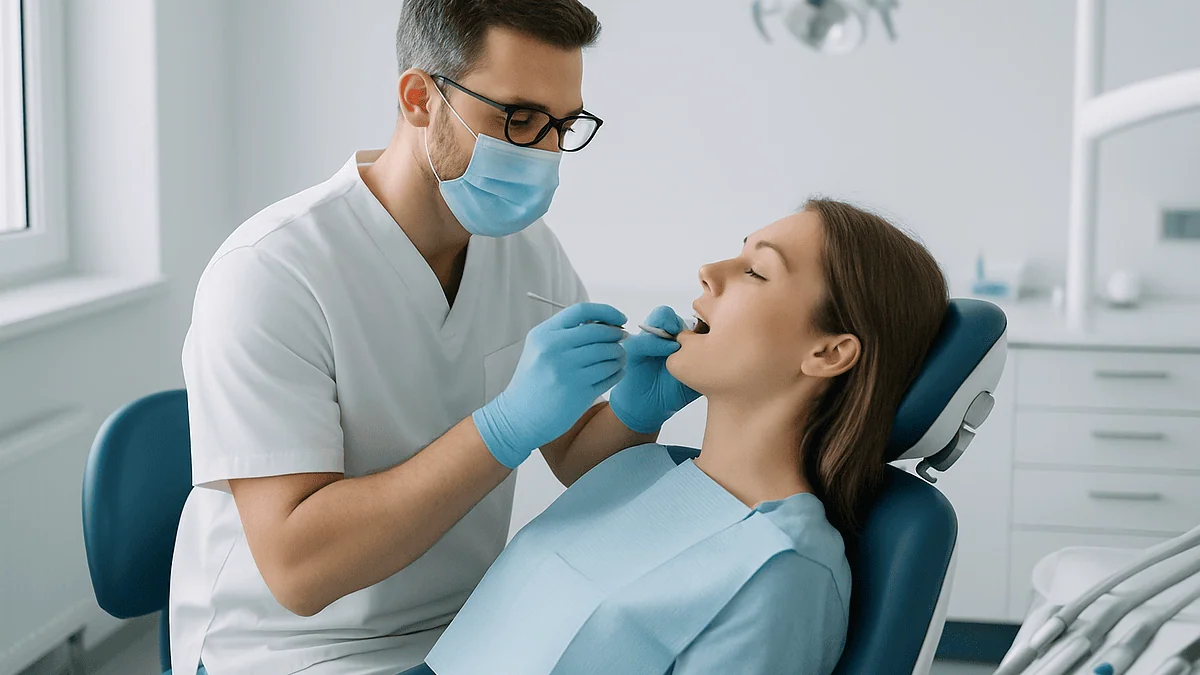
The moment usually arrives in a reclined chair, under a bright light, with a dentist saying something like: “So, we have two ways to fill this gap.” You nod, mouth full of cotton, while your brain scrambles to compare a procedure you’ve never had against another procedure you’ve never had.
Here’s what most comparison articles won’t tell you: the dentist has often already formed an opinion before you ask. Not because of preference or profit, but because your mouth has been quietly voting the whole time. The condition of the two teeth flanking the gap, the density of the bone underneath, whether you smoke, how your gums look: these details narrow the choice long before cost enters the conversation.
This article walks through those decision factors the way a clinician actually weighs them, with the trade-offs stated plainly. Some of them are irreversible, which is exactly why they deserve more than a pros-and-cons list.
Why would a dentist not recommend a bridge?
The most common reason is sitting right next to the gap: two perfectly healthy teeth. A traditional fixed bridge works by capping the teeth on either side of the missing one and suspending an artificial tooth between them. To fit those caps, the dentist must grind away a substantial layer of enamel from each neighbor, and enamel, once removed, never grows back. Cleveland Clinic notes that this reshaping is permanent; those teeth will need crowns for the rest of their lives.
Many dentists hesitate to make that trade when the neighboring teeth are untouched. Drilling into virgin enamel to solve a problem one tooth over feels, to a conservative clinician, like renovating two good rooms to fix a third. There’s also a biological cost that shows up years later: crowned abutment teeth can develop decay at the crown margins, and a minority eventually need root canal treatment because the preparation stressed the nerve inside.
Other red flags that steer a dentist away from a bridge include:
- Abutment teeth with large existing fillings, cracks, or gum disease that make them unreliable anchors
- A gap wider than one or two teeth, which overloads the supporting teeth
- A patient who struggles with flossing, since the area under a bridge traps plaque and demands diligent cleaning
None of this makes bridges bad. It makes them situational, which is the theme of this entire decision.
Is it better to have a bridge or an implant? The honest answer
If you forced a room of dentists to answer in one sentence, most would say: an implant is usually the more conservative long-term choice for a single missing tooth when conditions allow itand that qualifier is doing heavy lifting.
An implant replaces the tooth from the root up. A titanium post is placed into the jawbone, the bone fuses to it over several months (a process called osseointegration), and a crown is attached on top. The neighboring teeth are left completely alone. Mayo Clinic describes implant surgery as having a high success rate, and because the implant stimulates the jaw the way a natural root does, it helps preserve bone that would otherwise slowly shrink.
A bridge answers a different set of priorities. It requires no surgery, finishes in weeks rather than months, and puts those adjacent teeth to work, which is a genuine advantage when they’re already damaged and destined for crowns anyway.
So the honest framing isn’t “which is better?” but “which is better for this mouth, this timeline, this health history?” A 35-year-old nonsmoker with pristine neighboring teeth and dense bone presents one answer. A 70-year-old with two heavily filled molars flanking the gap and a heart condition that complicates surgery presents another. Both answers are correct. The rest of this article unpacks the variables that move the needle.
The two teeth next door: what a bridge really costs them
Picture the tooth on either side of your gap. Each is likely intact, or close to it. To anchor a traditional bridge, a dentist reduces both by roughly one to two millimeters on every surface, enough to seat a crown. That may not sound like much until you consider that enamel is only about two to two and a half millimeters thick at its thickest point. The preparation removes a meaningful share of the tooth’s protective armor.
What follows over the years is a slow accounting. Crown margins, the seam where porcelain meets tooth at the gumline, are vulnerable spots where plaque collects and decay can start invisibly. A cavity under a bridge abutment can’t be patched with a simple filling; it often means removing and remaking the entire bridge. And because the drilling sits close to the tooth’s nerve, some abutment teeth develop pulp inflammation long after the bridge is cemented, requiring root canal treatment through the crown.
There’s a structural issue, too. Three teeth’s worth of chewing force now travels through two roots. For sturdy teeth, that’s manageable. For teeth already weakened by large fillings, it accelerates wear and fracture risk.
None of this happens to every bridge patient, plenty of bridges serve faithfully for fifteen years or more. But dentists weigh these probabilities every time, which is why the health of the neighbors is usually the first question they answer, silently, before you’ve asked anything.
What an implant asks of your jawbone
An implant’s great advantage, independence from other teeth, comes with its own entry requirement: enough healthy bone to hold it. Think of it like setting a fence post. The post is only as stable as the ground around it.
Here’s the complication most people don’t learn until the consultation: jawbone begins shrinking soon after a tooth is lost. The bone existed to support a root; without one, the body gradually resorbs it. Wait several years to replace a tooth and the ridge may have narrowed or lost height, sometimes enough that the implant site needs rebuilding first. That’s where bone grafting comes in: a procedure Mayo Clinic notes can add several months of healing before the implant itself is even placed.
Once placed, the implant needs three to six months, on average, for bone to fuse to its titanium surface. This is quiet, invisible work. Rush it, and the implant can fail to integrate.
The bone question also explains a counterintuitive piece of timing advice: if you’ve just lost a tooth and are leaning toward an implant, sooner is often structurally easier than later. In some cases an implant can be placed the same day a tooth is extracted, preserving the socket’s bone. In others, the site needs to heal first. Either way, the jaw is on its own clock, and it doesn’t wait for you to finish deciding.
How long does each option take, start to finish?
Time is where the two options diverge most visibly, and for some patients it’s the deciding factor all by itself.
A traditional bridge typically takes two to three visits spread over a few weeks. Visit one: the abutment teeth are shaped, impressions or digital scans are taken, and a temporary bridge protects the prepared teeth. Visit two (sometimes three): the final bridge is fitted, adjusted, and cemented. From gap to finished smile, a month is a realistic expectation, sometimes less.
An implant is a marathon by comparison. The typical sequence: evaluation and imaging, implant placement surgery, three to six months of osseointegration, placement of the connector piece (abutment), then the final crown a few weeks later. Total time commonly runs four to nine months. Add a bone graft or a sinus lift, and the calendar can stretch past a year.
That said, the implant’s time is mostly waiting, not suffering. After the placement appointment, most people manage discomfort for a few days and then simply live their lives while bone does its slow work. Some practices offer temporary teeth for the interim, so you’re not walking around with a visible gap.
When speed genuinely matters: a front tooth before a wedding, a work situation, a patient who cannot tolerate a long treatment arc: the bridge’s compressed timeline is a legitimate clinical reason to choose it, not a consolation prize.
Bridge vs implant lifespan: what the numbers show
Longevity is where implants build their reputation, but the honest picture has more texture than “implants last forever.”
Fixed bridges typically serve five to fifteen years. Cleveland Clinic puts the range around five to ten years for many bridges, with careful hygiene stretching that considerably, well-maintained bridges lasting fifteen years or longer are not unusual. What usually ends a bridge’s life isn’t the bridge itself but decay or fracture in an abutment tooth beneath it.
Implants tell a different story. The titanium post, once fused to bone, can last decades, often the rest of a patient’s life. Long-term studies consistently report survival rates above 90 percent at the ten-year mark. The crown on top, however, is a wear item: it may need replacement after ten to fifteen years, a far simpler and cheaper fix than remaking a whole bridge.
| Traditional bridge | Single-tooth implant | |
|---|---|---|
| Typical treatment time | 2–3 visits over weeks | 4–9+ months |
| Surgery required | No | Yes |
| Adjacent teeth reshaped | Yes, permanently | No |
| Typical lifespan | 5–15 years | Post: decades; crown: 10–15 years |
| Preserves jawbone at the gap | No | Yes |
| Main failure mode | Decay or fracture of anchor teeth | Gum infection (peri-implantitis) |
Read across a thirty-year horizon, an implant often means one surgery and a crown replacement; a bridge may mean two or three remakes, each involving those anchor teeth again.
What does a 1-tooth bridge cost, and how does an implant compare?
Prices vary enormously by region, materials, and the complexity of your case, so treat any figure as a ballpark rather than a quote. With that caveat: in the United States, a traditional three-unit bridge (two crowns plus the suspended tooth) commonly runs somewhere in the range of $2,000 to $5,000. A single implant with its abutment and crown typically lands between $3,000 and $6,000, more if bone grafting or other preparatory work is needed.
On the sticker, the bridge usually wins. Two other layers complicate the math.
Insurance is the first. Many US dental plans cover a portion of bridgework as a standard restorative procedure, while implant coverage remains inconsistent, some plans cover part of it, others classify it as elective and pay nothing. Annual plan maximums, often modest, can also spread implant costs across benefit years. In England, NHS dental charges place bridges in the highest treatment band, while implants are generally available on the NHS only in limited clinical circumstances.
The second layer is replacement cost over time. A bridge that needs remaking every ten to fifteen years, at full price each time, can quietly overtake the implant’s upfront premium, especially if an abutment tooth eventually needs root canal treatment or extraction, escalating the whole situation.
A fair comparison, then, isn’t today’s invoice against today’s invoice. It’s the projected cost of each path over the decades you plan to keep chewing.
Do dentists do bridges anymore?
Absolutely, and the question reveals how thoroughly implant marketing has reshaped public perception. Bridges remain a standard, widely practiced restoration taught in every dental school and placed in dental offices every working day. NHS guidance still lists bridges among routine treatment options for missing teeth.
What has genuinely changed is the default. A generation ago, a bridge was the automatic answer to a single missing tooth, because implants were newer, costlier, and less predictable. As implant success rates climbed and long-term data accumulated, many dentists shifted their first recommendation toward implants for straightforward cases, largely to spare healthy neighboring teeth.
But the bridge never became obsolete; it became targeted. Dentists actively reach for one when:
- The adjacent teeth already have large fillings or damage and would benefit from crowns regardless
- Medical conditions or medications make surgery inadvisable
- Bone loss is severe and the patient declines grafting
- The patient needs the gap closed within weeks, not months
- Budget or insurance realities make implant treatment out of reach
There’s also a middle path worth knowing about: the resin-bonded bridge (sometimes called a Maryland bridge), which glues a replacement tooth to the backs of the neighbors with minimal or no drilling. It’s less durable and suits lighter-load positions like front teeth, but it preserves enamel, sometimes serving as a placeholder for a younger patient whose jaw is still growing and who can’t yet receive an implant.
So yes, dentists do bridges. They just do them on purpose now.
Health factors that tip the scale: smoking, diabetes, and gums
Two mouths with identical gaps can deserve opposite recommendations, and the reasons often live outside the mouth entirely.
Smoking is the big one for implants. Nicotine constricts blood vessels and impairs the healing that osseointegration depends on; research consistently shows higher implant failure rates among smokers than nonsmokers. A dentist won’t necessarily refuse to place an implant in a smoker, but the conversation changes, many will strongly encourage quitting, at minimum around the surgical and healing period.
Diabetes matters through the same mechanism: healing. Well-controlled blood sugar generally supports implant success at rates comparable to patients without diabetes, according to the balance of published evidence. Poorly controlled diabetes, by contrast, slows wound healing and raises infection risk, enough that a dentist may recommend a bridge instead, or postpone implant surgery until control improves in coordination with the patient’s physician.
Gum disease disqualifies nobody permanently, but it must be treated first, whichever option you choose. Active periodontal disease undermines bridge abutments and implants alike; an implant placed into infected, inflamed tissue courts early failure. Cleveland Clinic emphasizes healthy gums as a prerequisite for implant candidacy.
A few other factors dentists quietly weigh: medications that affect bone metabolism, a history of radiation therapy to the jaw, conditions that impair immune function, and heavy tooth-grinding, which stresses both restorations. None of these is automatically disqualifying, but each one shifts the odds, and good clinicians make decisions on odds, not optimism.
Daily life with each: cleaning, eating, and upkeep
Whichever you choose, you’ll live with it every day for years, so the maintenance differences deserve real attention, not a footnote.
A bridge introduces a cleaning challenge that surprises many patients: you can’t floss between the connected units the normal way, because they’re fused together. Instead, you clean underneath the suspended tooth using a floss threader, superfloss with a stiff end, tiny interdental brushes, or a water flosser. Skip this, and plaque accumulates in exactly the spot where decay can silently attack an abutment tooth. Cleveland Clinic identifies hygiene under the pontic as a key factor in how long bridges last. It takes an extra minute a day. That minute is not optional.
An implant crown, by contrast, stands alone like a natural tooth, regular brushing and ordinary flossing around it work fine. The catch is subtler: while an implant can never get a cavity (titanium and porcelain don’t decay), the gum and bone around it can become inflamed and infected, a condition called peri-implantitis that is a leading cause of late implant failure. The prevention is unglamorous and familiar: thorough daily hygiene and regular professional cleanings.
Eating with either restoration feels close to natural once healed. Implants transmit chewing force directly into bone, which many patients describe as the more “real” sensation. Bridges chew well too, though very sticky or hard foods deserve caution: the same caution, frankly, your natural teeth deserve.
When a bridge is the smarter call
Implants get the headlines, so it’s worth stating clearly: there are situations where a bridge is not the fallback but the genuinely better clinical answer.
The clearest case is when the neighboring teeth are already compromised. Suppose the tooth in front of your gap carries a large, aging filling and the tooth behind it has a crack the dentist has been watching. Both would benefit from crowns anyway. A bridge accomplishes three goals in one restoration, protecting both weakened teeth and filling the gap, with no surgery and no months of waiting. Placing an implant there would mean paying for three separate treatments to reach the same endpoint.
Surgery avoidance is the second strong case. Some patients take medications or manage conditions that make oral surgery riskier; others simply cannot face a surgical procedure, and that preference deserves respect. A bridge is a non-surgical solution with a century of clinical track record behind it.
Timeline pressure is the third. Weeks versus most of a year is not a trivial difference for a visible front tooth.
And there’s the bone problem in reverse: when years of resorption have left too little jaw for an implant, the choice becomes grafting (added surgery, cost, and months) or a bridge that elegantly sidesteps the bone question entirely, since it draws all its support from teeth.
A dentist recommending a bridge in these situations isn’t behind the times. They’re reading your mouth correctly.
When an implant earns its wait
Flip every condition from the previous section and the implant’s case becomes compelling.
Healthy neighboring teeth are the strongest argument. If the teeth beside your gap are intact, an implant lets them stay that way, no drilling, no crowns, no lifetime commitment to restorations they never needed. For a dentist trained to preserve tooth structure, this is close to a first principle.
Age and horizon matter too, in a direction that sometimes surprises people. A 30-year-old choosing a bridge is potentially signing up for three or four remakes over a lifetime, each one taxing the abutment teeth further. The same patient with an implant may be looking at one surgery and a couple of crown replacements across five decades. The younger you are, the more the implant’s durability compounds in your favor. (The reverse assumption, that older adults shouldn’t bother, doesn’t hold up either; healthy older patients have implant success rates comparable to younger ones. Health status matters far more than the number on a birthday card.)
Bone preservation is the quiet, long-term benefit. The jaw under a bridge’s suspended tooth keeps resorbing year after year, which can eventually create a visible dip in the gumline and complicate future treatment. An implant loads the bone the way a root does, signaling the body to maintain it.
Multiple missing teeth strengthen the implant case further: two implants can support a bridge of their own, replacing several teeth without touching a single natural one.
What happens if you replace nothing?
The third option, the one nobody advertises, is doing nothing, and it deserves an honest assessment rather than a scare story.
A missing tooth is not an emergency. Plenty of people live comfortably for years with a gap, particularly a back molar no one sees. But a mouth is a load-bearing structure in constant, slow motion, and a gap changes the physics. Over months and years, the teeth on either side can tilt and drift into the empty space. The opposing tooth, the one that used to meet the missing tooth when you bit down, can gradually erupt further out of its socket, having lost its counterpart. Bite forces redistribute onto fewer teeth, accelerating wear on the survivors.
Meanwhile, the bone beneath the gap resorbs steadily, as covered earlier. This is the part with a real deadline attached: the longer you wait, the more likely a future implant will require grafting first, adding cost and months. Tilted neighbors can also complicate a future bridge, since angled teeth make poor anchors.
Chewing efficiency drops too, sometimes pushing people to favor one side of the mouth or avoid certain foods, small adaptations that add up nutritionally and functionally over the years.
The practical takeaway isn’t panic; it’s timing. Deciding within months rather than years keeps every option open and every option simpler. “Waiting to decide” is itself a decision, and it quietly narrows your choices while you’re not looking.
When to see your dentist, and when it can't wait
Whether you’re weighing options, living with a gap, or already wearing a bridge or implant, certain situations call for a professional look rather than watchful waiting.
Schedule an appointment soon if you notice:
- A bridge that feels loose, rocks slightly, or clicks when you chew, often the first sign of trouble in an abutment tooth underneath
- Persistent bad taste or odor around a bridge, which can signal trapped decay or infection
- Gums around an implant that bleed easily, look red or puffy, or seem to be receding, early peri-implantitis is far easier to treat than advanced disease
- New sensitivity or ache in a tooth adjacent to a gap or under a crown
- A recently extracted tooth site you’ve been meaning to address, since the bone-loss clock is running
Seek prompt care, same day or urgent, for facial swelling, fever combined with mouth pain, an implant that suddenly feels mobile, or bleeding that doesn’t stop. Swelling that spreads toward the eye or neck, or any difficulty swallowing or breathing, is an emergency deserving immediate medical attention, not a dental appointment next week.
And a quieter recommendation: if a tooth has just been declared unsalvageable, ask about replacement options before the extraction. Decisions made at that moment, such as preserving the socket or placing an implant immediately, can save months of treatment and a grafting procedure later. The best consultations happen while all the choices are still on the table.
Frequently asked questions
Why would a dentist not recommend a bridge?
Most often because the teeth beside the gap are healthy. A traditional bridge requires permanently grinding down both neighbors to fit anchor crowns, sacrificing enamel that never regrows. Dentists may also advise against a bridge when those adjacent teeth are weakened by large fillings or gum disease, when the gap spans more than one or two teeth, or when a patient is unlikely to manage the extra flossing a bridge demands.
Is it better to have a bridge or an implant?
Neither is universally better; it depends on your mouth. An implant is usually preferred when the jawbone is adequate and neighboring teeth are healthy, because it spares them and helps preserve bone. A bridge makes more sense when adjacent teeth already need crowns, when surgery is inadvisable, or when time and budget are tight. Health factors like smoking, diabetes control, and gum condition also shift the recommendation.
What does a 1 tooth bridge cost?
In the United States, a traditional three-unit bridge, two anchor crowns plus the replacement tooth, commonly costs roughly $2,000 to $5,000, though prices vary widely by region, materials, and case complexity. Many dental plans cover a portion as standard restorative care. Keep in mind that bridges typically need remaking every 10 to 15 years, so the lifetime cost can exceed the initial price.
Do dentists do bridges anymore?
Yes, routinely. Bridges remain a standard restoration placed in dental offices every day and are still part of NHS treatment options in the UK. What changed is the default: implants are now often recommended first for straightforward single-tooth cases to spare healthy neighbors. Dentists actively choose bridges when adjacent teeth need crowns anyway, when surgery is risky, when bone is insufficient, or when speed and cost matter most.
How long does a dental bridge last?
Typically five to fifteen years, with meticulous hygiene pushing well-made bridges toward the upper end or beyond. The bridge itself rarely wears out first; the usual endpoint is decay or fracture in one of the anchor teeth beneath the crowns. Daily cleaning under the suspended tooth with a floss threader, interdental brush, or water flosser is the single biggest factor patients control in extending a bridge’s lifespan.
Does getting a dental implant hurt?
Less than most people expect. The placement is done under local anesthesia, so the procedure itself shouldn’t be painful, and many patients report soreness afterward comparable to a tooth extraction, typically managed for a few days with measures your dentist recommends. The months of healing that follow are generally uneventful; bone fuses to the implant without any sensation. Persistent or worsening pain after healing is not normal and warrants a prompt checkup.
Can I get an implant years after losing a tooth?
Often yes, but the site may need rebuilding first. Jawbone shrinks steadily once a tooth is gone, and after several years there may not be enough height or width to anchor an implant securely. In that case, bone grafting can restore the site, adding several months of healing before implant placement. Imaging at a consultation will show exactly what your bone allows, some long-standing gaps still qualify without grafting.
Does insurance cover a bridge better than an implant?
Frequently, yes, in the United States. Many dental plans cover a percentage of bridgework as standard restorative treatment, while implant coverage varies widely, some plans pay part, others classify implants as elective and pay nothing, and annual maximums can limit either benefit. In England, bridges fall under NHS dental charge bands, while implants are generally NHS-funded only in limited clinical circumstances. Always confirm your specific plan’s terms before deciding.
Can a bridge be replaced with an implant later?
Sometimes, but it’s rarely a clean swap. The bone under the bridge’s suspended tooth continues shrinking for as long as the bridge is worn, so a graft may be needed by the time you switch. The former anchor teeth, already reshaped, will still need crowns of their own. Some people do transition successfully when a bridge fails, but planning for an implant from the start is generally simpler than converting later.
Am I too old for a dental implant?
Age alone rarely disqualifies anyone. Studies show healthy older adults achieve implant success rates comparable to younger patients; what matters is overall health, healing capacity, gum condition, and bone quality, not the birth year. Dentists focus on factors like smoking, diabetes control, medications affecting bone, and the ability to maintain hygiene. Many people receive successful implants in their seventies and eighties. A thorough health review, not a number, decides candidacy.
References
This article is for general information only and is not a substitute for professional medical advice. Please consult a qualified doctor about your individual situation.

More from the Blog
The Dental Crown Procedure: Step by Step, From Preparation to Fitting
A dental crown procedure usually takes two visits spread over one to three weeks. At the first appointment, the dentist numbs the tooth, reshapes…

How Long Do Crowns Last? Material by Material, With Care Tips That Matter
Most dental crowns last about 10 to 15 years, and well-made, well-cared-for crowns often serve 20 years or longer. Gold and other metal crowns…

Crown vs Filling: How Dentists Decide When a Tooth Needs More
Dentists generally recommend a filling when a cavity is small and the tooth still has strong walls to support it. A crown becomes the…

Root Canal and Crown Cost: The Combined Bill, Explained Honestly
A root canal and crown done together typically fall within our guide range of EUR 300–850 for international patients treated in Turkey, compared with…
Dental Crown Cost: Zirconia, E-max and Porcelain Prices Compared
A single dental crown costs EUR 200-400 for zirconia and EUR 250-500 for E-max per tooth in our international guide range, compared with roughly…

Types of Dental Crowns: Zirconia, E-max, PFM and Gold: Compared Neutrally
Dentists commonly place four crown types: zirconia (exceptionally strong, increasingly natural-looking), E-max lithium disilicate (the esthetic favorite for front teeth), porcelain-fused-to-metal (a proven middle…