

Diet and Exercise After Appendectomy: Rebuilding Routine Once the Incisions Have Healed

Key Takeaways
- After an uncomplicated keyhole appendectomy, Mayo Clinic frames the initial activity limit at about 3–5 days, compared with 10–14 days after open surgery.
- NHS guidance describes a return to normal activity over roughly a couple of weeks after keyhole surgery and up to 4–6 weeks after open surgery.
- Diet usually returns to normal within days; a burst appendix, not the size of the incision, is the main reason food advances more slowly.
- Constipation is common because anesthesia, opioid-class pain relievers and reduced walking all slow the bowel, and straining pulls on fresh incisions.
- NHS guidance sets the adult fiber target at about 30 g a day, built up gradually alongside extra fluid rather than added all at once.
- Lifting rules exist to prevent incisional hernia; exhaling during lifts and keeping loads close to the body cuts abdominal pressure as much as the weight figure itself.
After an appendectomy, most people return to a normal diet within days, starting with fluids and light meals and adding fiber and protein as appetite returns. Gentle walking begins almost immediately. Strenuous exercise and heavy lifting are usually paused for roughly one to two weeks after keyhole surgery and longer after open surgery or a burst appendix, with the surgical team setting the final timeline.
The gym bag has been sitting by the door for eleven days. The incisions, three small ones low on the abdomen, have stopped stinging, the dressings are off, and the last of the hospital’s soup-and-crackers advice has faded into memory. What nobody handed over at discharge was a clear sense of what comes next: how much to eat, which foods still deserve caution, and when a brisk walk can safely turn back into a run.
Diet and exercise after appendectomy sit in an awkward gap. The surgery itself is one of the most common emergency operations in the world, yet the recovery advice people receive is often a single sentence about avoiding heavy lifting. This explainer fills that gap with what the evidence and major guidelines actually say, where they are vague, and what questions deserve a direct answer from your own surgical team.
What actually happens during an appendectomy, and why it shapes your recovery
An appendectomy is the surgical removal of the appendix, a finger-shaped pouch that hangs off the first part of the large intestine on the lower right side of the abdomen. Surgeons remove it because appendicitis, an inflamed appendix, can burst and spill bacteria into the abdominal cavity if left alone.
Two approaches exist. In laparoscopic surgery, also called keyhole surgery, the surgeon works through two or three cuts, each roughly the width of a fingertip, using a thin camera and long instruments. The abdomen is first inflated with carbon dioxide gas to create working space. In open surgery, a single longer cut is made over the appendix, which is more often needed when the appendix has already ruptured or when scarring from earlier operations makes keyhole work unsafe, according to Johns Hopkins Medicine.
Why does this matter for your plate and your training plan? Because two separate things are healing at different speeds. The bowel, briefly handled during surgery and slowed by general anesthesia, usually wakes up within a day or two, and your diet follows that pace. The abdominal wall, where muscle and fascia (the tough connective sheet that holds the abdomen together) were cut or stretched, takes weeks to regain full strength, and your exercise timeline follows that slower clock.
Keyhole surgery leaves smaller wounds in the abdominal wall, so activity limits tend to be shorter. MedlinePlus notes that most people leave the hospital within a day or two after an uncomplicated laparoscopic operation, while open surgery and a burst appendix usually mean a longer stay. Keep those two healing clocks in mind; almost every piece of advice below comes back to one of them.
Diet and exercise after appendectomy: the first 48 hours
The earliest hours set the tone. Once you are awake from anesthesia, nurses usually offer sips of water, then clear fluids, then a light meal as soon as you feel hungry and are not nauseated. The old practice of waiting for bowel sounds before allowing food has largely given way to feeding as tolerated, because early eating appears to help the gut resume normal rhythm rather than hinder it.
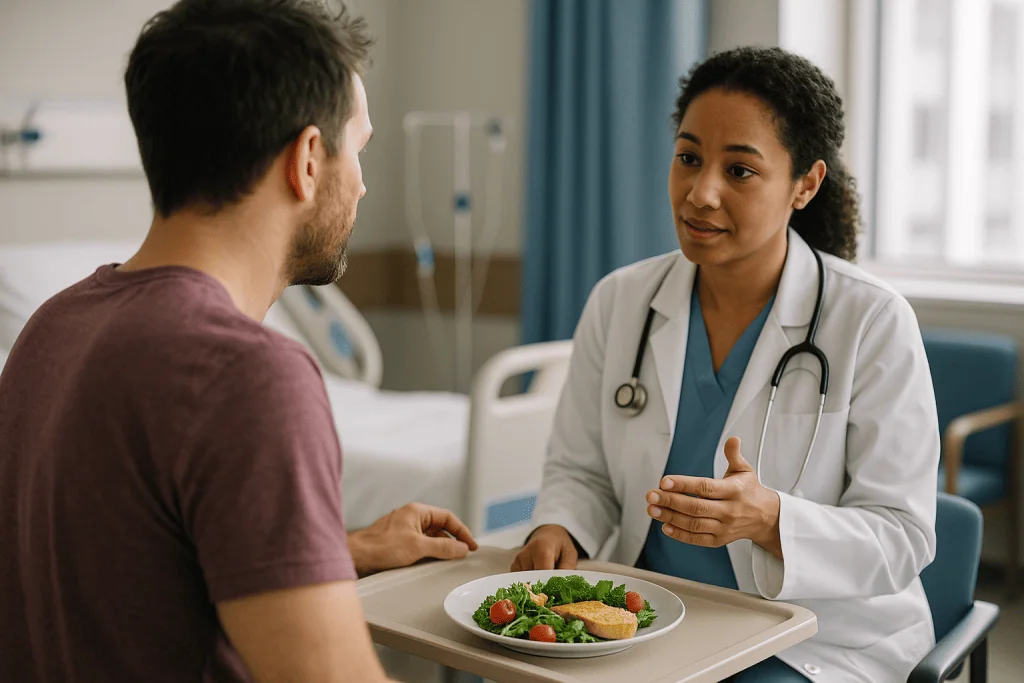
Nausea in the first day is common and is mostly a hangover from anesthetic drugs; it typically fades within hours. If a meal feels like too much, half a slice of toast or a few spoonfuls of yogurt is a reasonable start. Nobody wins a prize for finishing a hospital tray.
Movement starts the same day. Walking to the bathroom, then along the corridor, is usually encouraged within hours of waking. This is not about fitness. Walking helps the lungs expand, lowers the risk of blood clots in the legs, and nudges the bowel back into motion. Deep breathing, including coughing while holding a pillow against the abdomen, protects the lungs after anesthesia.
One oddity surprises many people: pain in the shoulder tip after keyhole surgery. The carbon dioxide used to inflate the abdomen can irritate the diaphragm, and that irritation is felt in the shoulder. It usually settles within a day or two, and walking tends to help it disperse.
Mayo Clinic advises limiting activity for roughly 3–5 days after a laparoscopic appendectomy and 10–14 days after an open one. Within that window, the aim is simple: eat small amounts often, walk several times a day, rest without lying flat for hours on end, and let the surgical team decide when the dressings come off.
What to eat after appendectomy in the first week
There is no official ‘appendectomy diet’, and that is good news. The job of food in the first week is to supply energy and protein for wound repair while keeping the bowel calm and regular. That describes an ordinary, slightly gentler version of a healthy diet, not a special regimen.
Think in small, frequent meals rather than three large ones. A full stomach presses against a sore abdominal wall, and large meals demand more work from a bowel that is still finding its pace. Foods that tend to sit well in the first days include:
- Soups and broths with soft vegetables or lentils
- Eggs, plain yogurt, cottage cheese and tofu for easily digested protein
- Oatmeal, rice, soft bread, pasta and potatoes
- Bananas, stewed apples, melon and other soft fruit
- Cooked rather than raw vegetables, at least until appetite feels normal
- Fish and poultry in modest portions once you are eating comfortably
Protein deserves a mention because wound healing uses it to build new tissue. A source of protein at each meal, from either animal or plant foods, is a sensible aim, and you can reach it with ordinary groceries rather than powders or supplements.
Fluids matter more than most people expect. Anesthesia, a few days of eating less and any pain medicine that causes drowsiness all push toward mild dehydration, which hardens stool. Water, diluted juice, milk and herbal teas all count. Cold drinks are fine; there is no evidence that temperature affects healing.
If a particular food triggers bloating or cramping, drop it for a few days and try again later. Most of these early intolerances fade as the bowel recovers. Persistent vomiting, or an inability to keep fluids down, is a different matter and belongs in the red-flag section below.
Why fiber and fluids matter more than any special healing food
Ask surgical nurses what bothers patients most in the first week, and constipation comes up before pain. Several factors line up against you at once. Anesthesia slows gut movement. Opioid-class pain relievers, if you were prescribed them, bind to receptors in the bowel wall and reduce the muscular waves that push stool along. You eat less, drink less and walk less than usual. The result is a predictable traffic jam.
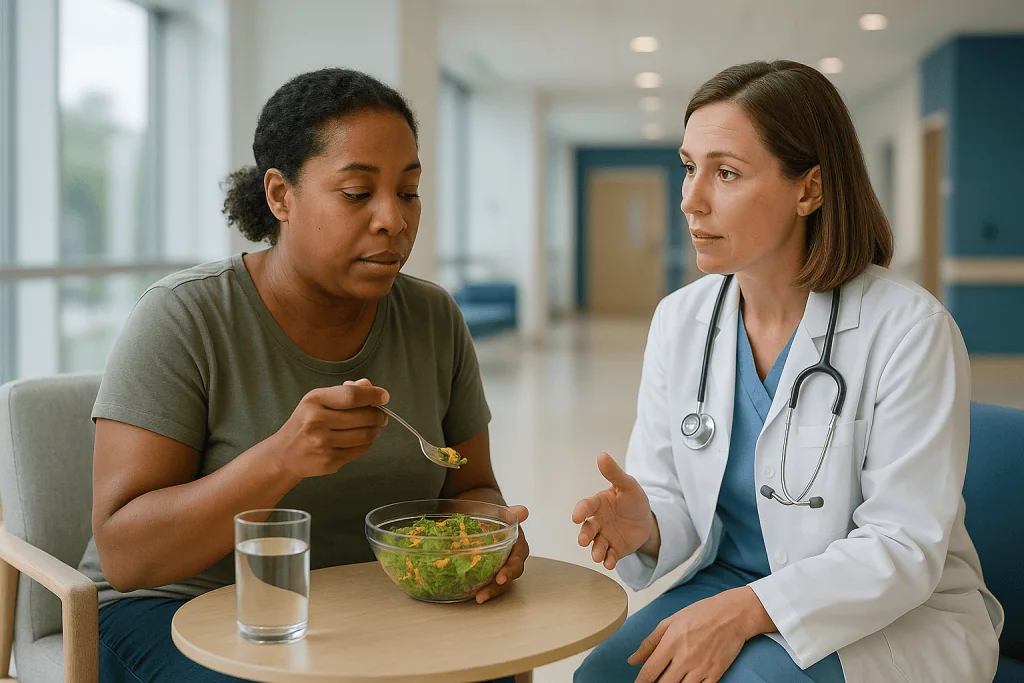
Straining on the toilet is more than unpleasant after abdominal surgery; it raises pressure inside the abdomen and pulls on fresh incisions. Preventing constipation is therefore part of wound care, not a side issue.
Fiber is the main tool. NHS guidance suggests about 30 g of fiber a day for adults, and notes that most adults manage only around 20 g. Rather than jumping to the target overnight, which can cause gas and cramping in a recovering bowel, build it over several days: oats at breakfast, a piece of fruit mid-morning, beans or lentils in a soup, vegetables with dinner, a few prunes or kiwi fruit in the evening.
Fiber without fluid can make things worse, because fiber works by holding water in the stool. Pair every increase in fiber with a deliberate increase in drinking.
Movement completes the trio. A ten-minute walk after each meal stimulates the bowel more reliably than any single food. If constipation persists despite fiber, fluids and walking, tell your surgical team or prescribing clinician; they may adjust pain medicine or suggest other measures, and that decision belongs with them rather than with a pharmacy shelf.
None of this requires special products. The most useful ‘healing foods’ after appendectomy are the same foods a dietitian would recommend on any ordinary week, eaten a little more deliberately.
Foods and habits that commonly cause trouble in early recovery
Nothing on a normal menu is forbidden after an uncomplicated appendectomy, but a few items earn a temporary pause because of how the recovering gut and abdominal wall respond to them.
Large, fatty meals are the usual culprit for early misery. Fat slows stomach emptying, so a heavy takeaway can leave you bloated and queasy for hours. Carbonated drinks add gas to an abdomen already stretched by surgical gas and slowed digestion. Very spicy food is not dangerous, but it can provoke cramping in a sensitive bowel during the first week.
Alcohol deserves a clear note. It dehydrates, it interacts with many pain relievers and anesthetic after-effects, and it dulls the judgment you need to notice warning signs. Most surgical teams ask patients to avoid it while taking prescribed pain medicine and until they are eating and moving normally; follow the specific instruction you were given.
Smoking slows wound healing by narrowing small blood vessels and reducing oxygen delivery to tissue. Any period of not smoking after surgery helps, and the surgical team can point you toward support if you want it.
Then there are the products marketed to speed recovery: high-dose vitamin regimens, collagen powders, ‘detox’ teas and anti-inflammatory supplement stacks. The evidence that any of these shortens healing in a well-nourished person is thin to absent. Some, including certain herbal products, can interact with prescribed medicines or increase bleeding risk. If you are considering one, raise it with your team first.
The habit that quietly causes the most trouble is skipping meals because eating feels like effort. A body repairing tissue needs fuel, and under-eating for a week prolongs fatigue. Small portions, eaten regularly, beat heroic fasting every time.
When can I exercise after appendectomy?
The honest answer is ‘immediately, if walking counts’, followed by ‘gradually, if you mean anything else’. Walking is both safe and useful from the first day, and it remains the foundation of recovery for the first couple of weeks.
Beyond walking, think of exercise returning in layers rather than on a single date. The first layer is daily life: climbing stairs, carrying light shopping, a 20- to 30-minute walk. Mayo Clinic frames the initial activity limit as about 3–5 days after keyhole surgery and 10–14 days after open surgery; after that window, most people without complications can rebuild toward normal daily activity.
The second layer is low-impact cardiovascular work: a stationary bike, an easy swim once the wounds are fully closed and dry, brisk walking that raises your breathing rate. Many teams are comfortable with this once incisions are healed and pain no longer needs regular medicine, often somewhere in the second to fourth week, though the exact point is a clinical judgment.
The third layer, the one that most needs patience, is anything that loads the abdominal wall: running, jumping, heavy lifting, contact sports, and direct core work such as crunches or planks. NHS guidance describes a return to normal activities over roughly a couple of weeks after keyhole surgery and up to 4–6 weeks after open surgery, with strenuous activity waiting until the team is satisfied the wounds have healed.
Fatigue often lingers longer than pain. A person who felt fine on day ten may feel wrung out after a short session on day twelve. That is a normal response to surgery, anesthesia and reduced food intake, not a sign of damage. Treat it as information: shorten the session, rest, try again in two days.
One rule serves across every layer: if an activity causes sharp pain at an incision, stop. Mild pulling or tightness is expected; sharp pain is not.
Lifting restrictions after appendectomy: what 'heavy' really means
Lifting advice after abdominal surgery exists for one reason: pressure. Every time you hoist something heavy, hold your breath and brace, pressure inside the abdomen spikes. Fresh incisions through the abdominal wall, including the small port sites from keyhole surgery, are weakest in the first weeks, and repeated pressure spikes can stretch the healing layer. The feared result is an incisional hernia, a bulge where bowel or fat pushes through a gap in the healed wall. It is uncommon after appendectomy, but it is the complication the lifting rules are designed to prevent.
Surgical teams usually express the limit in pounds or kilograms at discharge, and that figure is the one to follow. If you are trying to picture it, most discharge limits sit somewhere around the weight of a full bag of groceries, a small suitcase or a toddler. Dragging a wheelie bin, moving furniture, shoveling snow and carrying a loaded laundry basket upstairs all tend to exceed it.
Technique matters as much as the number. Breath-holding is the real pressure generator, so exhale as you lift, keep the object close to your body, and bend at the knees rather than folding at the waist. These are habits worth keeping long after the restriction lifts.
Duration follows the two healing clocks described earlier. After uncomplicated keyhole surgery, many teams relax the limit within a couple of weeks; after open surgery or a burst appendix, the restriction commonly runs several weeks longer, in line with the 4–6 week range in NHS guidance. Parents of young children, people with physical jobs and anyone who trains with weights should ask for a specific timeline and a written note if work requires it.
Returning to weight training works best as a progression rather than a date: body-weight movements first, then light loads with full exhalation, then a gradual climb over weeks. The surgical team decides when the first load is appropriate.
Laparoscopic vs open appendectomy: how the approach changes the timeline
People recovering from the two operations often compare notes and come away confused, because their timelines look nothing alike. The table below sets out the typical differences. Every figure is a published range, not a promise, and complications such as a burst appendix or infection push everything to the right.
| Recovery milestone | Laparoscopic (keyhole) | Open surgery |
|---|---|---|
| Incisions | Two or three small cuts | One longer cut, lower right abdomen |
| Hospital stay (uncomplicated) | Often within a day or two (MedlinePlus) | Usually longer, especially after rupture |
| Initial activity limit | About 3–5 days (Mayo Clinic) | About 10–14 days (Mayo Clinic) |
| Return to normal daily activity | Roughly a couple of weeks (NHS) | Up to 4–6 weeks (NHS) |
| Strenuous exercise and heavy lifting | After wound review, often from the second to fourth week | Commonly several weeks longer, set by the team |
| Diet progression | Fluids to light meals within a day; normal diet within days | Similar if uncomplicated; slower if the bowel is sluggish |
The diet row is the least different, which surprises many people. The bowel does not much care how it was reached; it cares whether it was exposed to infection and how long it was handled. That is why a burst appendix, not the size of the incision, is the main reason diet advances slowly.
The activity rows differ because of the abdominal wall. A single long incision through muscle and fascia needs more time to regain strength than three small port sites, and the risk of an incisional hernia is higher with the larger wound. Johns Hopkins Medicine notes that open surgery is more likely when the appendix has ruptured or scarring is present, which means open-surgery patients are often also managing a more serious underlying situation.
If your own timeline is slower than either column, that is not failure. Age, other medical conditions, the state of the appendix at surgery and simple individual variation all shift the ranges, and your surgeon’s assessment of your wound is more accurate than any table.
Appendectomy recovery time week by week
Recovery rarely feels linear from the inside, so a rough map helps. The phases below describe an uncomplicated recovery and draw on the NHS and Mayo Clinic ranges cited earlier. Open surgery and a burst appendix stretch each phase.
Days 1–3. Fluids and light meals, then whatever appeals in small portions. Several short walks a day. Shoulder-tip gas pain, bloating and tiredness are expected. Pain medicine, if prescribed, is usually needed most in this window.
Days 4–7. Appetite returns for most people, and fiber can be stepped up toward the usual daily target. Walks lengthen to 20–30 minutes. Many people after keyhole surgery manage light desk work or study. Lifting stays within the discharge limit. The first bowel movement, if it has not already happened, often arrives in this period, helped along by fiber, fluid and movement.
Week 2. Incisions are usually sealed and dressings are off. Diet is essentially normal. Low-impact cardio, such as a stationary bike or an easy swim once wounds are fully closed, becomes reasonable for many keyhole patients if the team agrees. Fatigue in the afternoon is still common.
Weeks 3–4. Most people after keyhole surgery feel close to normal in daily life. Open-surgery patients are often still within their activity restrictions. Jogging and light resistance work may begin for cleared keyhole patients; core-loading exercises generally wait a little longer.
Weeks 5–6 and beyond. This is the range where NHS guidance places the return to normal activity after open surgery. Heavy lifting, running and contact sports are typically reintroduced gradually here for open-surgery patients, and strength is rebuilt over the following weeks rather than reclaimed in a single session.
Treat the map as a guide to what to expect, not as a schedule to beat. The surgical team’s wound checks are the real milestones.
Who is usually cleared to progress, and who is usually asked to wait
Surgeons rarely clear ‘exercise’ as a single thing. They clear a person, based on how the wounds look, how the bowel is working and what the operation found. Knowing which group you fall into makes the advice far easier to interpret.
People who are commonly cleared to progress on the shorter timelines share a familiar profile: an uncomplicated laparoscopic appendectomy, an appendix that had not burst, incisions that are dry and without redness, a normal diet with regular bowel movements, and pain managed with little or no medicine by the end of the first week. For this group, the ranges in the table above tend to apply.
Others are usually asked to wait longer, for reasons that are about biology rather than willpower:
- A perforated appendix, abscess or peritonitis, which means a longer course of antibiotics and a bowel that was exposed to infection
- Open surgery, with its larger wound through the abdominal wall
- A surgical drain still in place, which rules out swimming and most training until it is removed
- A wound infection or wound that is still weeping, which delays anything that stretches the area
- Diabetes, long-term steroid use, a higher body weight or smoking, each of which slows tissue healing
- Older age or anemia after surgery, which prolong fatigue
- Blood-thinning medicines, which may change bruising and bleeding risk with vigorous activity; the prescribing clinician manages this
Children and teenagers recover quickly in general, but school sports and physical education deserve a specific conversation. Many pediatric teams give a written note stating when contact sports can resume, which schools often require.
Pregnancy is another situation where the plan is individualized; appendicitis can occur in pregnancy, and both diet and activity advice are set jointly by the surgical and obstetric teams.
If you are unsure which group you are in, ask directly. The question ‘was my appendix burst, and does that change my timeline?’ is one every surgeon can answer in a sentence.
Diet and exercise after appendectomy when the appendix had burst
A perforated appendix, meaning one that has burst, changes the recovery conversation. Bacteria from the bowel leak into the abdominal cavity, causing peritonitis, an infection of the membrane lining the abdomen, or forming an abscess, a walled-off pocket of pus. Mayo Clinic describes how an abscess may first be drained and treated with antibiotics, with the appendix removed later, and how open surgery becomes more likely once rupture has occurred.
For the bowel, infection means a slower restart. Postoperative ileus, a temporary state in which the bowel stops moving, is more common and lasts longer after peritonitis. Diet in this situation may stay at fluids for a few days, advancing to soft food only when gas and bowel movements return. Pushing solid food into a bowel that has not restarted causes vomiting and bloating, so the slower pace is protective rather than cautious for its own sake.
Antibiotics, which are usually continued for days after surgery, bring their own effects on the gut. Loose stools are common. The evidence that probiotic foods or supplements prevent antibiotic-associated diarrhea is mixed, and the picture varies by product and population; plain yogurt is a reasonable food to include if you enjoy it, but nobody should rely on it as treatment. Persistent watery diarrhea, especially with fever or abdominal pain, needs a call to the team.
Weight loss of a few pounds is common after a complicated course, driven by days of reduced eating and the energy cost of infection. Rebuilding it is a matter of regular meals with a protein source at each, not of forcing calories.
Exercise after a burst appendix follows the longer timelines in every respect. Drains, longer wounds and a longer recovery from infection all push strenuous activity toward the 4–6 week range and sometimes beyond, and the surgical team may schedule an additional wound review before clearing heavy lifting. Walking remains the right activity throughout.
What people often get wrong
Recovery folklore travels fast, and some of it works against you. These are the beliefs that most often need correcting.
‘You should eat bland food for weeks.’ After an uncomplicated appendectomy, a normal diet usually returns within days. Weeks of plain toast and broth starve the body of the protein and fiber it needs and make constipation more likely, not less.
‘Rest in bed heals faster.’ The opposite is closer to the truth. Walking from the first day lowers the risk of blood clots and chest infections, speeds bowel recovery and reduces stiffness. Rest means not training hard; it does not mean not moving.
‘Pain means something has gone wrong.’ Pulling, aching and tightness around incisions for a couple of weeks are expected. What matters is the pattern: pain that steadily improves is reassuring, pain that worsens after initially improving is not.
‘The appendix had a job, so digestion needs special support now.’ The appendix contains lymphoid tissue and may act as a reservoir for gut bacteria, but people live normal lives without it, and there is no evidence that a particular diet or supplement is needed to compensate.
‘Sit-ups will rebuild the core.’ Direct abdominal exercises are usually the last thing reintroduced, because they load the healing wall most. Walking, breathing well and gentle hip and back movement come first; crunches and planks wait for clearance.
‘A protein shake or vitamin stack shortens recovery.’ In a person eating ordinary meals, there is no good evidence that supplements accelerate wound healing. Food does the job.
‘Once home, a drink is fine.’ Alcohol interacts with pain medicine, dehydrates and masks warning signs. Follow the specific advice from your team, which usually means waiting until medicines are finished and eating is normal.
The thread connecting these myths is a habit of treating recovery as either fragile or trivial. It is neither. It is a predictable biological process that rewards steady eating, steady walking and patience with the abdominal wall.
Questions to ask your care team
Discharge conversations are short, and the questions that matter most tend to surface a week later, at home, with nobody to ask. Writing them down before a follow-up visit or a call to the surgical unit turns vague worry into usable answers. These are the ones that most directly shape diet and exercise after appendectomy.
- Was my appendix burst or intact, and does that change my recovery timeline?
- Which approach was used, keyhole or open, and how many incisions do I have?
- Is there anything about what you found during surgery that should slow my return to activity?
- What is my lifting limit, in a number I can picture, and for how many weeks?
- When can I expect to be cleared for running, swimming, weight training and contact sports?
- Is there any food I should avoid for now, and for how long?
- If I become constipated despite fiber, fluids and walking, what should I do and whom should I contact?
- How long will I be taking antibiotics or pain medicine, and what side effects should I expect?
- When can I shower, bathe and swim, and how should I care for the incisions?
- What signs mean I should call you, and what signs mean I should go to an emergency department?
- When is my follow-up appointment, and will anyone check the wounds before I return to strenuous activity?
- Do I need a note for work, school or a sports club, and what should it say?
Two more questions are worth asking if they apply. People with physically demanding jobs should ask for a staged plan rather than a single return date. Anyone managing diabetes, taking blood thinners or using long-term steroids should ask whether those conditions change the usual timelines, because they often do.
A good answer to any of these will be specific to you. If an answer sounds generic, it is fair to ask what in your own case supports it.
When to call your doctor
Most recoveries from appendectomy are uneventful, and the warning signs that matter are clear enough that you will not mistake them for ordinary soreness. MedlinePlus and NHS guidance both describe the same cluster of concerns, which point to infection, a bowel that has stopped working or a blood clot.
Contact your surgical team or doctor the same day if you notice:
- A fever, chills or shivering
- Abdominal pain that is getting worse rather than better, or new pain that spreads
- Redness, warmth, swelling or pus around an incision, or a wound edge that opens
- Repeated vomiting, or an inability to keep fluids down
- Increasing bloating with no gas or bowel movement for more than a day or two
- Diarrhea that is persistent, bloody or accompanied by fever
- Pain, swelling or tenderness in one calf, which can signal a clot
- Burning on passing urine or being unable to pass urine
Call emergency services or go to the nearest emergency department without waiting if you develop chest pain, sudden breathlessness, coughing up blood, heavy bleeding from a wound, fainting, or severe abdominal pain with a rigid, board-like abdomen. These can indicate a clot that has traveled to the lungs or a serious infection inside the abdomen, and both need urgent assessment.
Two softer signs deserve a call rather than a wait-and-see approach. A feeling of being generally unwell that worsens after you had started to improve is a classic early marker of infection. Pain that needs more medicine on day seven than it did on day four points the same way.
When in doubt, call. Surgical units expect these calls, and a five-minute conversation that turns out to be nothing costs far less than a delayed diagnosis. Every decision about reassessment, imaging or treatment rests with the clinicians who know your operation.
Frequently asked questions
What can I eat the first day after an appendectomy?
Most people start with sips of water and clear fluids, then move to a light meal as soon as they feel hungry and are not nauseated. Toast, yogurt, soup, eggs or plain rice are typical first choices. Small amounts eaten often sit better than one large tray. Nausea from anesthesia usually fades within hours, and there is no benefit to forcing food before appetite returns.
When can I exercise after appendectomy if it was keyhole surgery?
Walking is encouraged from the first day. Mayo Clinic places the initial activity limit at about 3–5 days after laparoscopic surgery, after which daily activity rebuilds. Low-impact cardio such as a stationary bike often becomes reasonable once incisions are sealed and pain no longer needs regular medicine. Running, heavy lifting and core work wait for clearance from the surgical team, commonly in the second to fourth week.
What are the lifting restrictions after appendectomy?
Your discharge paperwork should give a specific weight limit, and that figure is the one to follow. Most limits sit around the weight of a full grocery bag or a toddler. The restriction protects healing incisions from pressure spikes that can lead to an incisional hernia. After keyhole surgery it often lifts within a couple of weeks; after open surgery or a burst appendix it usually runs several weeks longer.
How long is appendectomy recovery time overall?
For an uncomplicated keyhole appendectomy, NHS guidance describes a return to normal activity over roughly a couple of weeks, while open surgery can take up to 4–6 weeks. A burst appendix, infection or a drain extends those ranges. Fatigue often lingers after pain has gone, and full strength for heavy lifting and sport is rebuilt gradually over the following weeks rather than reached on a single date.
What to eat after appendectomy to avoid constipation?
Build fiber gradually toward the NHS adult target of about 30 g a day using oats, fruit, vegetables, beans, lentils and whole grains, and increase fluids at the same time, since fiber needs water to work. Prunes and kiwi fruit are useful additions. Short walks after meals stimulate the bowel. If constipation persists despite these measures, tell your surgical team or prescribing clinician rather than self-treating.
Can I drink coffee or alcohol after an appendectomy?
Coffee in usual amounts is generally fine once you are eating and drinking normally, and it may even help the bowel get moving. Alcohol is different: it dehydrates, interacts with pain medicine and anesthetic after-effects, and can mask warning signs. Most surgical teams advise avoiding it until prescribed medicines are finished and you are eating and moving normally. Follow the specific instruction you were given.
When can I swim or take a bath after appendectomy?
Showering is usually allowed within a day or two, with incisions patted dry. Soaking in a bath, hot tub or pool generally waits until the wounds are fully closed and dry, with no scabs, weeping or drains, which is often around two weeks after keyhole surgery and longer after open surgery. Your surgical team can confirm at a wound check, and their timing takes precedence over any general range.
Is it normal to lose weight after an appendectomy?
Losing a few pounds is common, especially after a burst appendix or a longer hospital stay, because of days of reduced eating and the energy cost of infection and healing. It usually returns with regular meals that include a protein source each time. Rapid or continuing weight loss, or an appetite that does not recover after the first week or two, is worth raising with your doctor.
Does removing the appendix change digestion in the long term?
For the overwhelming majority of people, no. The appendix contains immune tissue and may serve as a reservoir for gut bacteria, but people without one digest food normally and need no special diet or supplements. Short-term changes such as constipation or loose stools after antibiotics usually settle within weeks. Lasting changes in bowel habit after recovery should be discussed with a doctor rather than attributed to the surgery.
When can I return to running or weight training after appendectomy?
Both load the abdominal wall, so they are usually the last activities cleared. After keyhole surgery many teams allow easy jogging and light resistance work from around the second to fourth week once wounds have healed; after open surgery the NHS range of up to 4–6 weeks applies. Start with body-weight movements, exhale on exertion, add load gradually, and stop if an incision hurts sharply.
References
- MedlinePlus: Appendectomy
- NHS: Appendicitis, Treatment
- NHS: How to get more fibre into your diet
- CDC: Adult Activity, An Overview
This article is for general information only and is not a substitute for professional medical advice. Please consult a qualified doctor about your individual situation.
Add us as a Preferred Source to see more of our trusted health content across Google Search, AI Overviews and Discover.

More from the Blog
Which Hemorrhoid Treatments Are Considered During Pregnancy and Which Wait Until After Birth?
During pregnancy, hemorrhoid care usually stays conservative: more fiber and fluid, avoiding straining, warm sitz baths, cold packs, and short courses of topical or…

How Does Digestion Change Without a Gallbladder? Bile Flow and Why Some Meals Feel Different
After gallbladder removal, the liver still makes bile, but it trickles into the small intestine continuously instead of being stored and released in a…

Life After Hemorrhoid Surgery: Fiber, Fluids, Stool Softeners and Sitz Baths as Routine
After hemorrhoid surgery, most surgical teams build recovery around four daily habits: fiber from food or a bulk-forming supplement, enough fluid to keep that…

Before Emergency Appendicitis Surgery: Fasting, IV Fluids and the Hours Before the OR
Preparation for emergency appendicitis surgery usually happens within hours, not days. Once appendicitis is suspected, patients are typically asked to take nothing by mouth,…

Bowel Habit Training and Pelvic Floor Exercises: Daily Routines in Fecal Incontinence Care
Pelvic floor exercises for bowel control strengthen and coordinate the muscles that close the anus, while bowel habit training uses timed toilet visits, unhurried…

How Achalasia Progresses: Why the Esophageal Valve Stops Relaxing and Food Backs Up
Achalasia progresses slowly, usually over years. Nerve cells in the wall of the esophagus are lost, so the lower esophageal sphincter stops relaxing and…