

Do Seeds Cause Appendicitis? Common Myths About the Appendix, Examined by Surgeons
Key Takeaways
- In a hospital series of 1,969 removed appendixes, a fruit seed was found in only one and plant fragments in seven, fewer than 1 in 200 cases.
- The usual trigger is a hardened fragment of stool called an appendicolith, or swollen lymph tissue in the appendix wall after an infection.
- Early appendicitis pain typically begins around the navel and migrates to the lower right abdomen over hours as inflammation reaches the abdominal lining.
- More than 5 percent of people in the United States develop appendicitis at some point, most often between about ages 10 and 30.
- Selected uncomplicated cases without an appendicolith can be treated with antibiotics first, which could not happen if a lodged seed were the cause.
- One major center advises limiting strenuous activity for about 3 to 5 days after laparoscopic appendectomy and 10 to 14 days after open surgery.
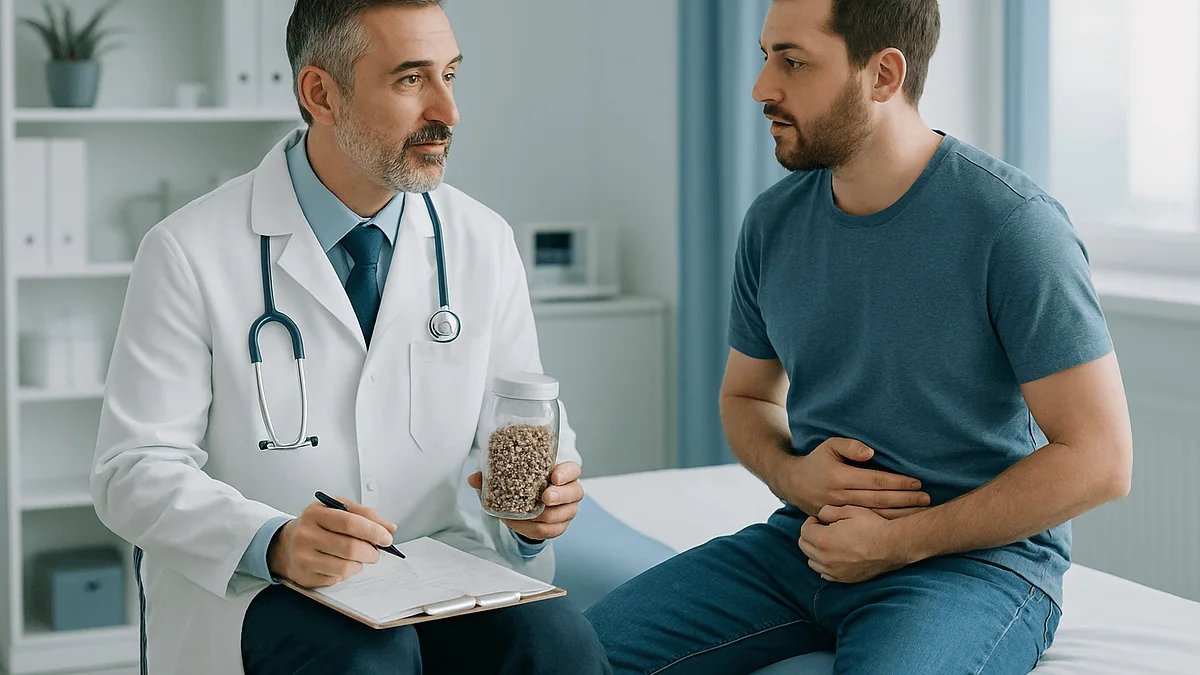
No. Mainstream evidence does not support the idea that seeds cause appendicitis. Appendicitis usually begins when the appendix is blocked by hardened stool, swollen lymph tissue or infection, not by a swallowed grape, guava or tomato seed. In a hospital series of nearly 2,000 removed appendixes, plant material was found in fewer than 1 in 200. Seeds are, at most, a rare curiosity rather than a cause.
A father stands at the kitchen counter, flicking black seeds out of a watermelon slice with the tip of a knife, one by one, before handing it to his seven-year-old. His own mother did the same for him. The reason was never written down anywhere, but everyone in the family knew it: swallow a seed and it lodges in your appendix. The question ‘do seeds cause appendicitis?’ has survived generations on exactly that kind of inherited certainty.
Surgeons hear a version of it almost every week, usually from a worried patient on a trolley who is already replaying what they ate. Grapes at a wedding. Guava from a market stall. A handful of chili seeds in a curry. The timing feels like proof.
It is not. This article walks through what the appendix actually does, what really blocks it, how surgeons diagnose and treat appendicitis, and which inherited beliefs are worth keeping and which belong with the watermelon rinds.
Do seeds cause appendicitis? What the evidence actually shows
Start with the single most useful number. A surgical team reviewed 1,969 appendixes removed over several years and looked specifically for food in each specimen. They found a fruit seed in one appendix and undigested plant fragments in seven. Put together, that is fewer than one in two hundred cases, and even in those few, the plant material was not proven to be the cause rather than an innocent bystander sitting in an already inflamed organ (PubMed).
Compare that with the main recognized trigger. Blockage by a small, hardened piece of stool, called an appendicolith (a calcified stool fragment the size of a pea or smaller), turns up far more often on scans and in pathology reports, and it is the finding that most reliably predicts a complicated course (Mayo Clinic, Cleveland Clinic).
The second useful fact is about anatomy. The appendix is a blind-ended pouch roughly the length of a finger, hanging off the first part of the large intestine. Its opening is narrow, and anything that reaches it has already travelled through the stomach and the entire small intestine. Seeds that survive that trip are generally either too large to enter a narrow opening or small enough to pass straight by. Most of what reaches the large intestine is liquid stool, which is the material that can thicken, harden and block the pouch.
So the honest answer to ‘do seeds cause appendicitis’ is that it is biologically possible for a foreign object to lodge in the appendix, it has been documented a handful of times in the medical literature, and it is not the reason appendicitis happens in any practical sense. Fear of seeds has no measurable effect on anyone’s risk.
What actually happens inside the appendix during appendicitis
Appendicitis is inflammation of the appendix, and the sequence of events is more mechanical than people expect. The pouch produces a small amount of mucus every day, which normally drains into the large intestine through that narrow opening. If the opening is blocked, mucus keeps being made but has nowhere to go. Pressure rises inside the closed pouch, the wall stretches, and the pain begins (NIH NIDDK).
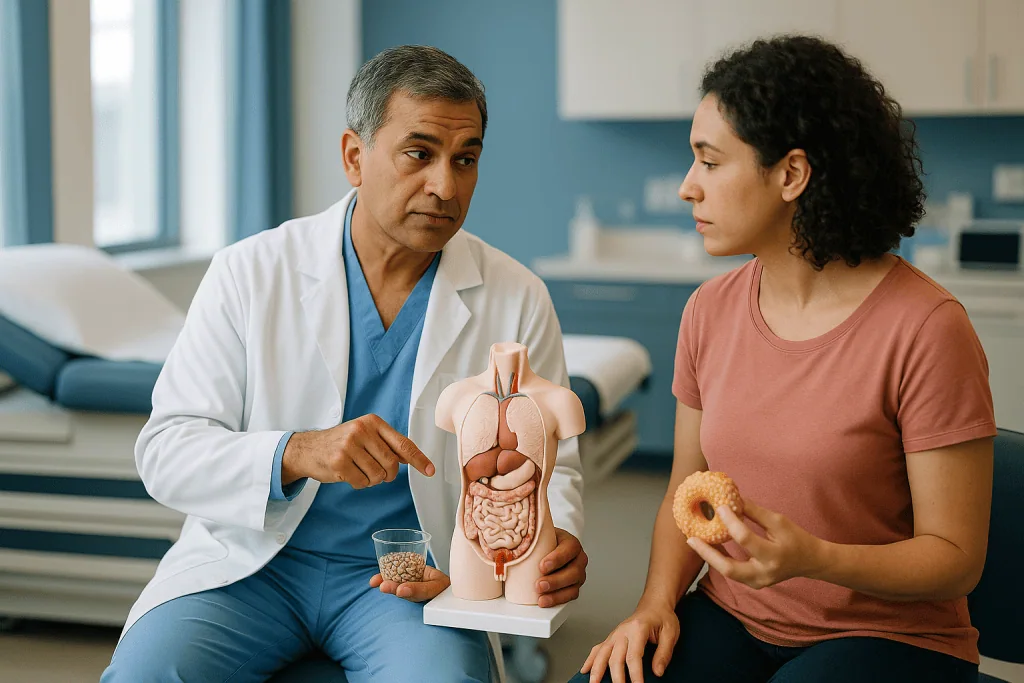
That early pain is dull and hard to place. Most people point to the area around the navel because the stretched appendix sends its first signals through nerves shared with the middle of the gut. Over hours, the rising pressure squeezes the small blood vessels in the appendix wall. Bacteria that live harmlessly in the bowel begin to multiply in the trapped mucus, the wall becomes infected and swollen, and the inflammation starts to irritate the lining of the abdomen next to it. At that point the pain typically moves to the lower right side and sharpens (Mayo Clinic).
If nothing is done, the starved, infected wall can weaken and tear. A perforated appendix (one that has burst) spills bowel contents into the abdominal cavity, which can lead to peritonitis, an infection of the abdominal lining, or a walled-off collection of pus called an abscess. These are the complications surgeons work to prevent, and they are the reason appendicitis is treated as urgent rather than something to sleep on (MedlinePlus).
Notice what is absent from that chain of events: nothing requires a seed. Any blockage will do, and the common ones are stool, swollen lymph tissue inside the wall, and, less often, parasites, a growth or scar tissue. The seed story describes a plausible mechanism attached to an improbable object.
Why the question 'do seeds cause appendicitis' refuses to go away
Myths survive when they feel explanatory, and this one has three things going for it. First, it matches the picture of a tube getting plugged, which is genuinely how appendicitis starts. Second, almost everyone has swallowed a seed in the day or two before any illness, so there is always a candidate to blame. Third, the organ has no obvious job, so a cause that is both specific and avoidable feels more satisfying than ‘a bit of stool hardened in the wrong place.’
The medical literature did not help. Case reports of unusual objects found in the appendix have been published for more than a century, and a single dramatic report tends to be remembered far longer than the thousands of ordinary cases that surround it. Older textbooks sometimes listed seeds among possible causes without saying how rare they were, and that caveat was lost in retelling.
Culture fills in the rest. In some families the forbidden seed is from a grape; in others it is guava, tomato, chili, orange or watermelon. The variation itself is a clue. If a particular seed truly caused the disease, the same seed would be blamed everywhere, and appendicitis rates would track the harvest. They do not. Appendicitis is seen across every diet in the world, in people who meticulously avoid seeds and people who eat them by the handful (WHO data on surgical burden; NIH NIDDK on prevalence).
There is a gentler reason the question matters. Parents who hear it from a surgeon are often relieved, not because they were wrong, but because it lifts a quiet guilt that they let a child eat the wrong fruit. Clearing the myth is part of good care.
Do grape seeds cause appendicitis? Guava, tomato, chili and watermelon seeds, examined
Grape seeds are the most searched version of the worry, so take them first. A grape seed is hard, smooth and a few millimeters across. It passes through the stomach largely unchanged, which is exactly why it is blamed, but that same hardness means it does not break into fibers that could clump. In the 1,969-case series described above, the one fruit seed found was a single specimen, and grape seeds were not identified as a pattern (PubMed). There is no credible evidence that grape seeds raise appendicitis risk.
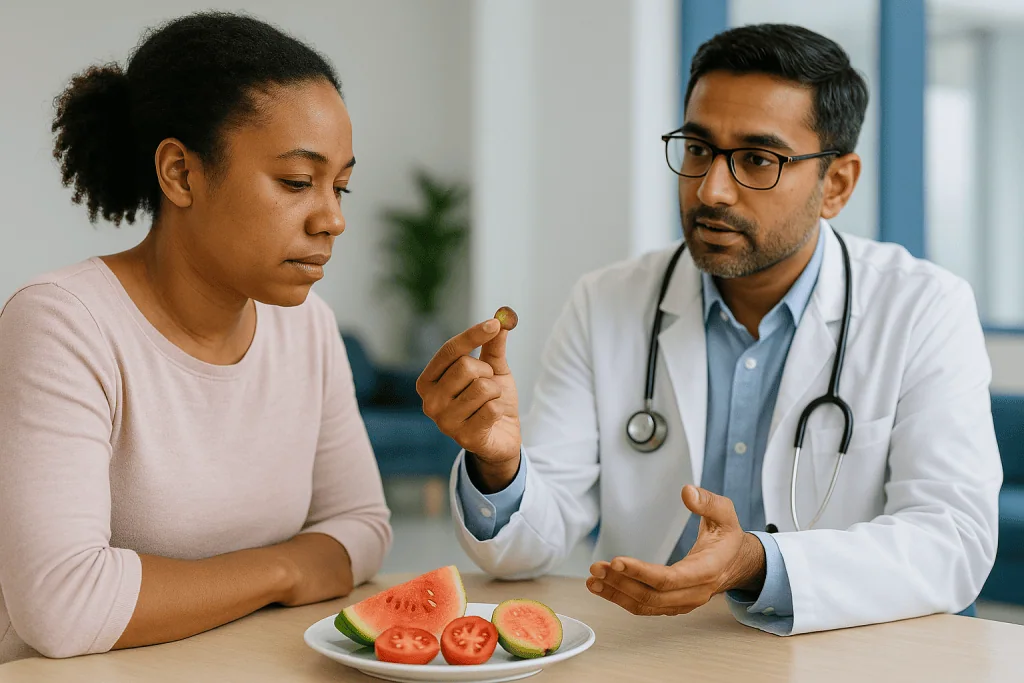
Guava seeds come up constantly in regions where the fruit is a daily snack. They are small, numerous and very hard, which makes them feel like perfect plugs. The same anatomy applies: they travel in liquid stool through a long bowel, and the appendix opening is a side door that most contents simply flow past. Population-level data do not show appendicitis clustering around guava-growing seasons or guava-eating communities.
Tomato, chili and cucumber seeds are soft, partially digested and far too small to obstruct anything. Watermelon seeds are larger but also smooth and, in practice, mostly spat out. Popcorn hulls and nut fragments belong to a related worry about diverticulitis, a different condition affecting small pouches in the colon wall; large cohort studies have not found that nuts, corn or popcorn increase that risk either, and many clinicians no longer advise avoiding them (Harvard Health).
The practical takeaway: no fruit or vegetable seed needs to be avoided to protect the appendix. The one group for whom seeds and small hard foods deserve caution is young children, and the reason is choking, which has nothing to do with the appendix at all.
What causes appendicitis, then? The triggers surgeons actually find
Ask a pathologist what they see when they open a removed appendix and the list is short. An appendicolith is the classic finding: a hard fragment of stool that has dried and sometimes calcified inside the pouch over weeks or months. It blocks the opening the way a pebble blocks a drain, and it is also the finding most linked with perforation, because a solid plug raises pressure faster than a soft one (Mayo Clinic).
Swollen lymph tissue is the second major cause and the usual one in children and teenagers. The appendix wall is rich in lymphoid tissue, the same immune tissue that swells in the tonsils during a cold. After a viral or bacterial infection anywhere in the gut or even the chest, that tissue can enlarge enough to squeeze the opening shut from the inside (Cleveland Clinic). This is why appendicitis sometimes follows a stomach bug or a sore throat by a week or two, and why it peaks between roughly ages 10 and 30, when immune tissue in the gut is at its most active (Mayo Clinic).
Less common causes include intestinal parasites in some parts of the world, inflammatory bowel disease affecting the nearby colon, scar tissue, and, rarely, a tumor at the base of the appendix that is found only when the specimen is examined. That last possibility is one reason surgeons send every removed appendix to the laboratory.
Appendicitis is common enough that none of this is exotic. More than 5 percent of people in the United States develop it at some point, and it is the most frequent cause of sudden abdominal pain needing surgery (NIH NIDDK). What the causes share is that they come from inside the body, not from the fruit bowl.
Who usually needs surgery straight away, and who is asked to wait
Once appendicitis is diagnosed, the next decision is timing, and it is made by the surgical team on the basis of the scan, the examination and the person in front of them. Nobody should read this section as a way to sort themselves into a category.
Prompt surgery is the standard path when the appendix is clearly inflamed, when there are signs it may have perforated, or when an appendicolith is seen on imaging, because that plug raises the chance of complications and of antibiotics failing (Mayo Clinic). Children, pregnant patients and older adults are also often moved toward early operation, in each case because the picture can change quickly and the cost of waiting is higher.
A short wait is sometimes the safer choice. If a scan shows a walled-off abscess that has already formed around a perforated appendix, operating into that inflamed mass can be harder and riskier than draining the collection, treating with antibiotics and removing the appendix weeks later once the swelling has settled. Surgeons call this an interval appendectomy, and it is a deliberate strategy rather than a delay (Cleveland Clinic).
Then there is the group with uncomplicated appendicitis, meaning an inflamed appendix with no perforation, no abscess and no appendicolith, who may be offered antibiotics first with surgery held in reserve. That route is discussed in its own section below. It is a shared decision, and a reasonable person can choose either.
Finally, some people are asked to wait because the diagnosis is not yet clear. Observation in hospital with repeat examinations over several hours is a legitimate, evidence-supported way to avoid operating on someone whose pain turns out to be something else. Waiting under supervision is not the same as being sent home.
What people often get wrong about the appendix
The seed story travels with a crowd of companions. Most are harmless; a couple can delay care. The table lays out the common ones and what the evidence says.
| What people say | What the evidence shows |
|---|---|
| Seeds get stuck and cause it | Plant material was found in fewer than 1 in 200 removed appendixes; stool, swollen lymph tissue and infection are the usual blockers (PubMed, Mayo Clinic) |
| The appendix is useless | It contains immune tissue and may act as a reservoir for helpful gut bacteria; people live normally without it (Cleveland Clinic) |
| Pain always sits in the lower right | It often starts around the navel and moves later; pregnancy and unusual anatomy can shift it elsewhere (NHS) |
| If you can still eat, it is not appendicitis | Appetite loss is common but not universal, and children in particular can present atypically (MedlinePlus) |
| A heating pad or laxative will settle it | Neither treats the blockage, and laxatives can worsen a weakened wall; the standard advice is to avoid both and seek assessment (Mayo Clinic) |
| Surgery is always the only option | Selected uncomplicated cases may be treated with antibiotics first, with surgery if symptoms return (Mayo Clinic) |
Two of these deserve emphasis. The belief that pain must be on the right can lead people to dismiss early central pain for a day, which is exactly the window in which treatment is simplest. And the laxative habit, well meant and widespread, is one that surgeons specifically warn against because it stimulates a bowel that is already under strain (Mayo Clinic).
The rest are mostly about reassurance. The appendix is not a vestigial time bomb; it is a small organ that occasionally gets blocked. Knowing that changes how calmly people respond when it does.
How surgeons tell appendicitis apart from a stomach bug
There is no single test for appendicitis, which is why a surgeon’s examination still matters in an age of scanners. The assessment usually layers several pieces of evidence rather than relying on one.
It begins with the story: where the pain started, where it went, how it changed with movement, and whether there was nausea, loss of appetite or fever. The examination then looks for tenderness in the lower right abdomen, pain when pressure is released rather than applied, and whether the abdominal muscles tighten involuntarily. Each finding nudges the probability up or down (NHS).
Blood tests add another layer. A raised white blood cell count and inflammatory markers support the diagnosis but cannot confirm it, because many infections do the same. A urine test helps rule out a kidney stone or urinary infection, which can imitate the pain, and a pregnancy test is routine in anyone who could be pregnant because an ectopic pregnancy must never be missed (Cleveland Clinic).
Imaging has changed the field. Ultrasound is often the first choice in children and in pregnancy because it uses no radiation, though it depends on the operator and can miss a deep-lying appendix. CT scanning is highly accurate in adults and shows whether an appendicolith, abscess or perforation is present, which directly shapes the treatment decision. MRI is used in pregnancy when ultrasound is inconclusive (Mayo Clinic).
What a scan will not show is a seed as the culprit, because seeds are not what it finds. When imaging reports a blockage, the object is almost always stool. Surgeons do not take a dietary history to hunt for fruit; they ask about diet mainly to plan safe anesthesia.
What happens during an appendectomy
An appendectomy (surgical removal of the appendix) is one of the most frequently performed emergency operations in the world, and the steps are well standardized. The person receives antibiotics before the operation to reduce infection risk, then a general anesthetic so they are fully asleep throughout (Johns Hopkins; Mayo Clinic).
Most operations are now laparoscopic, often called keyhole surgery. The surgeon makes a few small cuts in the abdomen, inflates it gently with carbon dioxide gas to create working space, and inserts a thin camera and slender instruments. The appendix is identified, its blood supply is sealed, the base is closed with staples or ties, and the organ is lifted out through one of the small openings, usually inside a retrieval bag so that it does not contact the wound. The abdomen is rinsed if there has been any spillage, the gas is released and the cuts are closed (Cleveland Clinic).
Open surgery uses a single larger incision over the lower right abdomen. It is chosen when the appendix has perforated with widespread infection, when scar tissue from earlier operations makes keyhole access unsafe, or when a laparoscopic operation needs to be converted partway through for the patient’s safety. Converting is a judgment call, not a failure (Mayo Clinic).
The removed appendix goes to the laboratory in every case. Pathologists confirm the inflammation and check for the rare unexpected finding, such as a small tumor, that would change follow-up.
Risks exist with any operation: wound infection, bleeding, a collection of pus inside the abdomen, injury to nearby bowel, blood clots and reactions to anesthesia. Rates vary with how advanced the appendicitis was, which is another argument for not waiting at home to see whether the seed theory holds.
Can antibiotics treat appendicitis without surgery?
Sometimes, for the right person, and with an honest conversation about trade-offs. This is one of the genuine shifts in general surgery over the past decade, and it comes with real evidence rather than folklore.
The logic is simple. If an inflamed appendix is not perforated and has no hard appendicolith blocking it, the infection in the wall can sometimes be controlled with antibiotics while the swelling settles and the opening reopens on its own. Randomized trials comparing antibiotics first with immediate surgery have found that a majority of people treated with antibiotics avoid an operation in the short term, while a meaningful minority go on to need surgery within months because symptoms return or do not resolve (Mayo Clinic).
The trade-off is between avoiding an operation now and accepting a real chance of a second episode later, with the uncertainty that carries. People with an appendicolith on CT are generally steered toward surgery because antibiotic failure is more likely in that group. Those who are pregnant, immunocompromised, very young or very old are usually not offered this route.
Antibiotics for appendicitis are given by vein at first, typically for a short period in hospital, and may continue by mouth afterward. The choice of drug, the duration and the decision to stop sit entirely with the treating team, who will tailor it to allergies, local resistance patterns and how the person responds. Readers should not change any prescribed antibiotic course on the basis of this article.
Why mention it in an article about seeds? Because the existence of a non-surgical path reinforces the real mechanism. If appendicitis were caused by a lodged object, antibiotics could never resolve it. The fact that they often do tells you the problem is inflammation and swelling, not a seed.
What the days and weeks after appendicitis usually look like
Recovery depends more on how advanced the appendicitis was than on the size of the incision, but the keyhole route does tend to be quicker. After an uncomplicated laparoscopic appendectomy, many people go home within a day or so, and some the same day (NHS). Walking the ward in the first hours is encouraged; it helps the bowel wake up, lowers the risk of clots in the leg veins and eases the shoulder-tip ache that the gas can leave behind.
The following days bring soreness around the cuts, some bloating, and tiredness that surprises people who expected to bounce back. Showering is usually allowed early, with wound dressings kept clean and dry. Diet restarts with fluids and light meals and builds back to normal as appetite returns. Pain relief is prescribed by the team and adjusted to the individual; the article will not describe it beyond that.
Activity guidance from one major center is to limit strenuous exertion for about 3 to 5 days after laparoscopic surgery and about 10 to 14 days after open surgery, then build up gradually, letting pain be the guide (Mayo Clinic). Desk work often resumes within a week or two; heavy lifting and contact sport wait longer, especially after an open incision, to protect the wound as it gains strength.
A perforated appendix changes the picture. Hospital stays stretch to several days, antibiotics continue for longer, a drain may be left in place, and the overall recovery is measured in weeks rather than days. Follow-up imaging is sometimes arranged to check that no abscess has formed.
Nothing about recovery involves avoiding seeds. People go back to grapes, guava and tomatoes exactly as before, and their risk of a problem in the stump that remains is small and not diet-related.
Can you prevent appendicitis? Fiber, diet and the limits of the evidence
The short, honest answer is that there is no proven way to prevent appendicitis, and anyone claiming otherwise is ahead of the evidence. What exists is a pattern that is suggestive but not conclusive, and it points in the opposite direction from the seed myth.
Observational studies over several decades have noted that appendicitis appears somewhat less common in populations eating high-fiber diets, and the proposed mechanism fits the biology: fiber keeps stool soft and moving, which could make hardened appendicoliths less likely to form (Cleveland Clinic). That is a hypothesis with some support, not a demonstrated cause and effect. Diets rich in fruit, vegetables, legumes and whole grains carry well-established benefits for heart and bowel health regardless, so there is no downside to eating that way (NHS). Many of those foods, incidentally, are full of seeds.
Hydration, regular physical activity and not ignoring constipation are reasonable general measures for the same reason. None has been shown in a trial to lower appendicitis rates, and it would be misleading to promise that they do.
What clearly does not help is avoiding seeds, nuts, corn or popcorn. The large cohort data that exist on those foods concern diverticular disease rather than the appendix, and even there they found no increased risk (Harvard Health). Removing them from a child’s diet in the name of the appendix trades real nutrition for imaginary protection.
The most effective thing anyone can do about appendicitis is not dietary at all. It is recognizing the pattern of pain early and seeking assessment before the appendix perforates, which turns a straightforward operation into a complicated one.
Questions to ask your care team
Decisions about appendicitis are made quickly, often late at night, and people frequently think of their questions only after the consent form is signed. Having a short list ready helps. These are the ones surgeons find most useful to be asked, and they can be put to any member of the treating team.
- How confident are you in the diagnosis, and what else could this be?
- Did the scan show an appendicolith, perforation or abscess, and how does that affect my options?
- Am I a candidate for antibiotics first, and what would make you recommend against it?
- If surgery is planned, will it be laparoscopic or open, and under what circumstances would that change during the operation?
- What are the specific risks for me, given my age, medications and other conditions?
- How long do you expect me to stay in hospital, and what would delay discharge?
- What should recovery look like week by week, and which symptoms at home would mean I should call?
- Will the removed appendix be examined, and how will I receive the result?
- When can I return to work, driving, exercise and lifting?
- Do I need a follow-up appointment, and who do I contact if something feels wrong before then?
Two things are worth saying about this list. First, it is fine to ask for a few minutes to think, or for a relative to be present, before consenting to a non-emergency plan. Second, it is fine to ask whether the seed you ate last week had anything to do with this. The team will say no, and hearing it directly tends to be more reassuring than reading it.
When to call your doctor
Appendicitis can look like an ordinary upset stomach for the first several hours, and the right response is not to diagnose it at home but to notice the features that mean it needs assessing today rather than tomorrow.
Seek urgent medical care, by contacting your doctor or going to an emergency department, if abdominal pain starts around the navel and moves to the lower right side; if pain worsens steadily over hours rather than coming and going; if it is made worse by coughing, walking or going over a bump in the car; or if pain is accompanied by fever, nausea, vomiting, loss of appetite or being unable to pass wind. Call emergency services if pain becomes severe and the abdomen feels rigid, if there is sudden relief followed by worsening pain and fever, or if someone becomes confused, very pale, faint or breathless, as these can signal perforation and infection spreading through the abdomen (NHS, MedlinePlus).
Pregnant people, children who cannot describe their pain clearly, older adults and anyone with a weakened immune system should be assessed early even when the picture is vague, because appendicitis in these groups is more easily missed and more often complicated (Cleveland Clinic).
After an operation, contact the surgical team or your doctor if a wound becomes red, hot, swollen or leaks fluid; if fever develops; if abdominal pain or bloating increases rather than settling; if vomiting prevents keeping fluids down; or if a calf becomes painful and swollen, which can indicate a clot.
While waiting to be seen, the standard advice is to avoid eating or drinking in case surgery is needed, and to avoid laxatives, enemas and heating pads. Do not take anything to mask the pain without medical advice, as it can make assessment harder. Every decision about treatment belongs to the team examining you.
Frequently asked questions
Do grape seeds cause appendicitis?
No. Grape seeds are hard and smooth, pass through the gut unchanged and have not been shown to block the appendix. In a review of nearly 2,000 removed appendixes, a fruit seed was found in a single specimen and grape seeds were not identified as a pattern. The real culprits are hardened stool and swollen lymph tissue, both of which arise inside the body rather than from food.
Do guava seeds cause appendicitis?
There is no credible evidence that guava seeds cause appendicitis. The seeds are small and hard, which makes them feel like plausible plugs, but they travel in liquid stool past the narrow side opening of the appendix like everything else. Appendicitis rates do not cluster in guava-eating regions or seasons. Guava is a nutritious fruit and does not need to be avoided to protect the appendix.
What causes appendicitis if not seeds?
Most cases begin with a blockage of the appendix opening by an appendicolith, a hardened fragment of stool, or by lymph tissue in the appendix wall that swells after a viral or bacterial infection. Less common causes include parasites, inflammatory bowel disease, scar tissue and rarely a growth at the base of the appendix. Trapped mucus then raises pressure, bacteria multiply and the wall becomes inflamed.
Can you prevent appendicitis with diet?
No diet has been proven to prevent appendicitis. Observational studies suggest it may be somewhat less common in populations eating plenty of fiber, possibly because softer stool makes appendicoliths less likely, but this is a hypothesis rather than a demonstrated cause. A high-fiber diet is worthwhile for general bowel and heart health anyway. Avoiding seeds, nuts, corn or popcorn offers no protection.
Can appendicitis be treated with antibiotics instead of surgery?
Sometimes. For uncomplicated appendicitis with no perforation, abscess or appendicolith on imaging, antibiotics first is an evidence-supported option, with surgery held in reserve if symptoms return. A meaningful minority of people treated this way later need an operation. The choice is made with the surgical team, who weigh scan findings, age, pregnancy, immune status and personal preference before recommending either path.
How long does recovery from an appendectomy take?
After an uncomplicated keyhole appendectomy many people go home within a day or so, and one major center suggests limiting strenuous activity for about 3 to 5 days, versus 10 to 14 days after open surgery. Desk work often resumes within a week or two. A perforated appendix lengthens the hospital stay to several days and extends recovery to weeks. Your team sets the timeline for your situation.
Can you live a normal life without an appendix?
Yes. The appendix contains immune tissue and may serve as a reservoir for helpful gut bacteria, but people who have it removed live entirely normally, with no dietary restrictions and no need for supplements. Digestion, immunity and bowel habits are not measurably affected in the long term. The small stump that remains after surgery rarely causes problems and is not influenced by what you eat.
Does eating popcorn or nuts cause appendicitis or diverticulitis?
No for both. The popcorn and nut worry mainly concerns diverticulitis, inflammation of small pouches in the colon wall, and large cohort studies found no increased risk from nuts, corn or popcorn; many clinicians no longer advise avoiding them. For the appendix, the evidence is even clearer: foreign plant material is found in fewer than 1 in 200 removed specimens and is not a recognized cause.
Are DO doctors real doctors, and can they treat appendicitis?
Yes. In the United States, a DO (Doctor of Osteopathic Medicine) is a fully licensed physician who completes medical school, residency and the same licensing examinations as an MD and can practice any specialty, including general surgery. A DO surgeon diagnoses and operates on appendicitis exactly as an MD surgeon does. The letters describe the degree, not a different standard of care.
Why does appendicitis pain start near the belly button?
The first signal comes from the stretched appendix wall, which sends pain through nerves shared with the middle part of the gut, so the brain places it vaguely around the navel. As inflammation reaches the lining of the abdomen next to the appendix, the pain becomes sharp and localizes to the lower right side. That shift over several hours is one of the clues surgeons look for.
References
- Appendicitis, NHS
- Appendicitis, NIH National Institute of Diabetes and Digestive and Kidney Diseases
- Appendicitis, Cleveland Clinic
- Appendicitis, MedlinePlus
This article is for general information only and is not a substitute for professional medical advice. Please consult a qualified doctor about your individual situation.

More from the Blog

How Is Pain Managed After an Appendectomy? Anesthesia Wear-Off, Gas Discomfort and Day One
Pain after appendectomy is usually managed with a layered plan: local anesthetic in the wounds, scheduled non-opioid pain relievers such as acetaminophen or an…

When Achalasia Symptoms Return After Treatment: Repeat Dilation, Redo Myotomy and Next Steps
Achalasia symptoms can return months or years after pneumatic dilation, Heller myotomy or POEM because the treated muscle can tighten again, scar tissue can…

Robotic Colorectal Surgery Recovery: Daily Walks, Small Meals and the Lifting Limit
Robotic colorectal surgery recovery usually means a hospital stay of a few days, then several weeks of gradual healing at home. Most care teams…

What Is Normal After Robotic Hernia Repair and What Signals Infection or Recurrence?
After robotic hernia repair, mild swelling, bruising, a firm ridge under the incisions, shoulder-tip gas pain and tiredness are common for one to two…

Helping a Family Member After Gallbladder Surgery: Meals, Movement and the First Night Home
Helping someone after gallbladder surgery mostly means covering three things for the first few days: small, low-fat meals that are easy to digest, short…
Hepatopancreatobiliary Surgery Explained: Liver Resection, Whipple and Bile Duct Operations
Hepatopancreatobiliary surgery procedures are operations on the liver, pancreas, gallbladder and bile ducts, most often for tumors, blockages or injuries. The main types are…