

Do Testosterone Boosters Work? What Trials Found, and the Side Effects Nobody Advertises

Key Takeaways
- A 2020 analysis of the 50 top-selling testosterone boosters found that only about one in four of their 109 ingredients had any randomized trial support for raising testosterone, while one in ten had data suggesting a fall.
- Zinc and vitamin D are the only common booster ingredients with consistent trial evidence, and they work only in men who are deficient, which a blood test can confirm.
- Multiple randomized trials of tribulus terrestris in healthy men found no change in testosterone, and longer trials of D-aspartic acid in trained men found no sustained rise.
- One week of sleep restricted to about five hours a night lowered daytime testosterone by 10 to 15 percent in a small study of young men, a larger effect than any herb has shown.
- The 2023 TRAVERSE trial of prescription testosterone gel in about 5,200 men found no excess of heart attacks or strokes but more atrial fibrillation, kidney injury and pulmonary embolism, and it tested no supplements.
- Products marketed for testosterone or muscle are among the most frequently found to contain undeclared steroids or SARMs, so a booster that produces rapid results should raise suspicion rather than reassurance.
Most over-the-counter testosterone boosters do not raise testosterone in a meaningful or lasting way. In randomized trials, popular ingredients such as tribulus and D-aspartic acid show no consistent effect, while zinc and vitamin D help only men who are deficient. A few small trials of ashwagandha and fenugreek show modest changes of uncertain clinical value. Men with symptoms should ask a clinician for a morning blood test rather than self-treat.
The locker-room scene is familiar now: a phone propped against a water bottle, a shirtless man on screen promising to “triple your T in thirty days” with a tub of capsules, and a quiet bloke on the next bench reaching for his own phone to search the question everyone is asking: do testosterone boosters work?
As of February 2026, that search is running hotter than it has in years. Two things lit the fuse. In 2023 a large cardiovascular safety trial of prescription testosterone, called TRAVERSE, reassured many clinicians, and in 2025 United States regulators rewrote the safety labeling on prescription testosterone products. Neither event had anything to do with herbal capsules sold online, but the supplement industry borrowed the glow, and a wave of “T-maxxing” videos did the rest.
So this is a good moment to separate three very different things: a prescription hormone studied in thousands of men, a blood level that drifts with age and sleep, and a shelf of products whose claims were written by marketers rather than trialists.
Do testosterone boosters work? The short, honest answer
Strip away the packaging and the phrase “testosterone booster” describes a dietary supplement, usually a blend of herbs, minerals and amino acids, sold with the claim that it raises the body’s own production of testosterone. Testosterone is the main male sex hormone, made mostly in the testicles, and it influences muscle, bone, red blood cells, mood and sex drive.
The most useful single study on this question looked at the products themselves rather than the theory. In 2020, researchers catalogued the 50 top-selling testosterone boosters sold online and traced every ingredient back to the published literature. Of 109 distinct components, roughly one in four had any randomized trial showing a rise in testosterone, and about one in ten had data pointing the other way, toward a fall. Nine out of ten products carried a claim to “boost” testosterone regardless. That is the gap between the label and the evidence, measured.
A randomized controlled trial, for anyone who needs the plain version, is a study in which volunteers are assigned by chance to the real product or a dummy pill, so the only difference between groups is the thing being tested. Trials of that quality are rare in this field, small when they exist, and often run in men who were deficient in a nutrient to begin with, which tells you little about a healthy 38-year-old who sleeps badly.
So the honest answer has two halves. For a man with normal levels, the best-studied boosters move the needle by nothing, or by an amount smaller than the day-to-day wobble in his own blood test. For a man who is genuinely deficient in zinc or vitamin D, correcting that deficiency can restore a lowered level, but that is nutrition repair rather than enhancement, and it is a conversation to have with a clinician who has seen a blood result.
What changed recently: the trial and the label that revived the question
Interest in anything with “testosterone” on the front rises and falls with the news about the prescription hormone, so it helps to know what the news actually was.
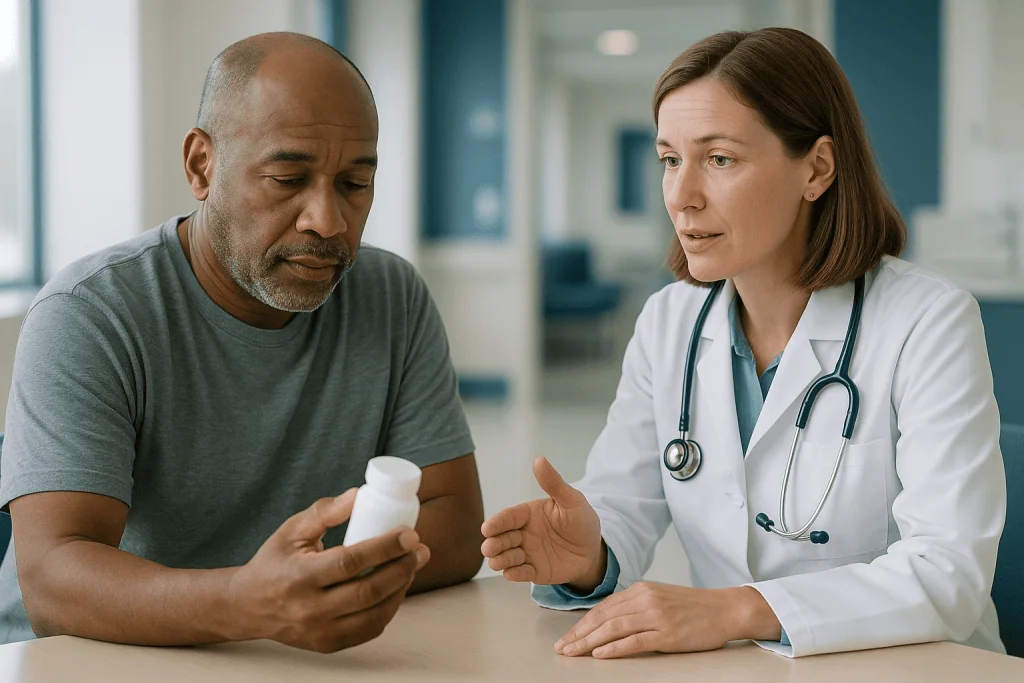
In June 2023 the TRAVERSE trial reported in the New England Journal of Medicine. It enrolled around 5,200 men aged 45 to 80 who had confirmed low testosterone with symptoms and who already carried a raised risk of heart disease. Half received prescription testosterone gel, half a placebo gel, for a median of just under two years. The headline result: the testosterone group did not have more heart attacks, strokes or cardiovascular deaths than the placebo group. That answered a safety question that had hung over treatment for a decade.
The same trial also recorded more episodes of atrial fibrillation (an irregular heart rhythm), acute kidney injury and pulmonary embolism (a blood clot in the lung) in the men on testosterone. Those findings are smaller in absolute numbers but they are real, and they are why the result is described as reassuring rather than clean.
In February 2025 the United States regulator followed by revising the class-wide labeling on prescription testosterone, removing older warning language about cardiovascular events and adding a warning about raised blood pressure. Clinicians read that as a recalibration, not a green light.
None of this involved a single herbal supplement. Yet in the months that followed, supplement marketing leaned on phrases like “now proven safe” as though the trial had tested their tubs. It had not. The evidence for prescription testosterone in diagnosed deficiency and the evidence for a fenugreek-and-zinc capsule in a healthy man live in different worlds, and the rest of this article keeps them apart.
What is a testosterone booster, exactly?
Walk the virtual shelf and the products fall into four rough families, and knowing which family a capsule belongs to tells you most of what you need to know about its evidence.
The first family is nutrient repletion: zinc, magnesium, vitamin D, sometimes boron. These are ordinary micronutrients. They have a clear mechanism when a man is deficient, because the enzymes and hormone-signaling steps that make testosterone need them, and almost no mechanism when he is not.
The second family is traditional herbs with a reputation for virility: fenugreek, tribulus terrestris, tongkat ali (also sold as longjack), maca and ashwagandha. Some have a few small trials; most are supported mainly by animal studies or centuries of folk use, which is not the same thing as evidence in men.
The third family is amino acids and their relatives, above all D-aspartic acid, promoted on the strength of one short study in untrained men that later trials failed to repeat.
The fourth family is the one to treat with real caution: hormone precursors and steroid-like compounds. DHEA, a hormone the adrenal glands produce naturally, is sold as a supplement in the United States but is a steroid hormone in its own right. Beyond it sit products that quietly contain selective androgen receptor modulators (SARMs, experimental drugs that mimic testosterone’s action on muscle) or outright anabolic steroids. These are not approved for sale as supplements, are not for self-use, and have been found in products labeled as natural.
Every family shares one regulatory fact: in the United States, dietary supplements do not have to prove effectiveness before sale, and manufacturers, not regulators, are responsible for safety. That is why a product can claim a 40 percent rise in testosterone on the front and carry no trial on the back.
What the evidence actually says, graded
Evidence comes in tiers, and the tier matters more than the headline. At the top sit systematic reviews and meta-analyses, which pool several randomized trials. Below them are single randomized trials, then observational studies that watch groups of people without assigning treatment, then animal and lab work, then expert opinion. Here is where the common boosters land.
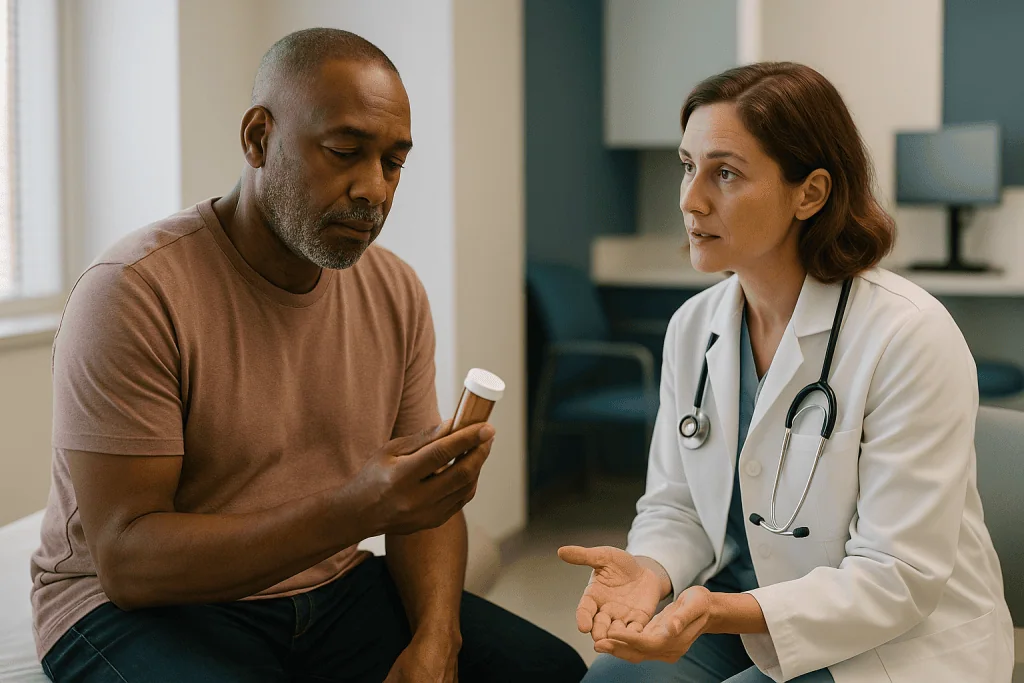
Zinc and vitamin D: moderate evidence for deficient men, consistent null results for everyone else. Small randomized trials in zinc-deficient men show testosterone recovering when the deficiency is corrected. Observational studies link low vitamin D with lower testosterone, but randomized trials giving vitamin D to men who were not deficient have mostly found no change. Correlation here is largely explained by the fact that heavier, less active men tend to have both lower vitamin D and lower testosterone.
Ashwagandha: low-to-moderate evidence of a modest rise. A handful of small randomized trials, mostly in stressed, overweight or subfertile men, report increases in measured testosterone compared with placebo. The trials are short, funded in several cases by ingredient suppliers, and the size of the change is of uncertain clinical meaning.
Fenugreek: low evidence. Trials are small and mixed; some report improved libido questionnaire scores more reliably than they report a hormone change.
Tribulus terrestris: good evidence of no effect. Several randomized trials in healthy and athletic men found no change in testosterone.
D-aspartic acid: evidence against sustained benefit. One short trial showed a rise; later, longer trials in resistance-trained men showed no change, and one found a fall.
Tongkat ali, maca, boron: insufficient evidence. Tiny trials, inconsistent methods, no reliable conclusion.
Read that list as a clinician would and the pattern is clear: the stronger the study design, the smaller the effect, right down to zero.
Testosterone booster ingredients compared: what trials found
A table cannot capture every nuance, but it can show at a glance why the marketing and the medicine disagree. “Evidence grade” below reflects study type and consistency, not the size of any marketing claim.
| Ingredient | Best available evidence | What trials found | Main caution |
|---|---|---|---|
| Zinc | Small randomized trials | Raises testosterone only when a deficiency is present | Excess long-term intake can lower copper levels |
| Vitamin D | Observational data plus several randomized trials | Link in observational studies; trials in non-deficient men mostly negative | Very high intake can raise blood calcium |
| Ashwagandha | A few small randomized trials | Modest rise reported in stressed or overweight men; short follow-up | Rare liver injury reports; drowsiness; thyroid interaction |
| Fenugreek | Small, mixed randomized trials | Inconsistent hormone change; some libido score improvement | Digestive upset; may affect blood sugar |
| Tribulus terrestris | Multiple randomized trials | No increase in testosterone in healthy men | Case reports of kidney and liver harm |
| D-aspartic acid | Several randomized trials | No sustained rise; one trial found a decrease in trained men | Irritability and headache reported |
| DHEA | Randomized trials in older adults | Little effect on testosterone in men; can raise estrogen | It is a steroid hormone; acne, hair loss, mood effects |
| Tongkat ali | Tiny trials, low quality | Unclear | Often found in adulterated products |
Two observations from the table deserve emphasis. First, the two ingredients with the most reliable evidence, zinc and vitamin D, work by fixing a deficiency that a clinician can diagnose with a blood test, which means a guess from the supplement aisle is the slow way to find out. Second, the ingredients with the loudest marketing, tribulus and D-aspartic acid, have the clearest evidence of doing nothing for a healthy man.
Is a falling testosterone level the same as low testosterone?
Here is the number that sells most boosters: after about age 30 to 40, average testosterone falls by roughly one percent a year. It sounds alarming until you notice that a man who starts in the comfortable middle of the normal range at 35 is still inside that range at 65.
Clinicians draw a sharp line between two situations. Hypogonadism is a medical condition in which the testicles, or the brain signals that drive them, fail to produce enough testosterone, confirmed by repeated low readings together with symptoms. Age-related decline, sometimes loosely called “andropause” or “male menopause,” is a gradual drift that most men experience without ever crossing into deficiency. The NHS is blunt on this point: the symptoms men attribute to the “male menopause” are more often explained by stress, poor sleep, depression, weight gain or other medical conditions than by a hormone shortfall.
That matters for the booster question because a supplement cannot fix a cause it was not designed to touch. A man who is sleeping five hours a night, drinking more than he used to and carrying extra weight around the middle may well have a testosterone reading toward the lower end. Each of those factors has its own effect on the hormone. Fix them and the number tends to move; swallow a capsule on top of them and the capsule gets the credit for whatever the lifestyle change did.
There is also a measurement wrinkle. Testosterone peaks in the morning and dips in the afternoon, varies from day to day, and falls temporarily during illness or after a very poor night. A single afternoon reading taken on a tired day can look worryingly low and be perfectly normal a week later. That is why guidelines ask for two separate morning samples before anyone uses the word deficiency.
Testosterone booster side effects nobody advertises
Marketing for these products rarely lists adverse effects, partly because supplements are not required to carry the same safety information as medicines. Yet case reports and the trials that exist describe a recognizable set of testosterone booster side effects, and they cluster by ingredient family.
Herbal blends most often cause digestive upset: nausea, loose stools, bloating. Fenugreek can give sweat and urine a maple-syrup odor and may lower blood sugar, which matters for anyone on diabetes treatment. Ashwagandha causes drowsiness in some men, can interact with thyroid and sedative medicines, and has been linked in published case reports to liver injury, usually reversible after stopping but serious in a few instances. Tribulus has its own small collection of kidney and liver case reports.
Minerals are safe at ordinary intakes and unsafe in excess. Long-term high zinc intake can suppress copper absorption, leading to anemia and nerve symptoms, and the 2020 product survey found several boosters delivering vitamins or minerals above the levels health agencies consider the upper tolerable limit.
Hormone-like products carry hormone-like effects. DHEA and any product that actually contains an androgen can produce acne, oily skin, scalp hair loss in men predisposed to it, irritability, disturbed sleep and, with androgens specifically, suppression of the body’s own production. That last one is counterintuitive and under-appreciated: when the brain senses testosterone arriving from outside, it dials down its signals to the testicles, which can shrink and make less sperm. Fertility can take months to recover after stopping, and in some men it does not fully return.
Finally, raised red blood cell count, a known effect of prescription testosterone called polycythemia, thickens the blood and raises clot risk. It has been reported in men using supplements later found to contain undeclared androgens. Anyone experiencing new symptoms while using a booster should stop and speak to a clinician rather than wait it out.
The contamination problem: when a natural booster contains a steroid
The most dangerous testosterone booster is the one that works, because in that case something in the bottle is probably a drug.
Regulators on both sides of the Atlantic routinely issue warnings about sports and sexual-enhancement supplements found to contain undeclared pharmaceutical ingredients: anabolic steroids, SARMs, aromatase inhibitors (prescription drugs that block the conversion of testosterone to estrogen), and even unapproved erectile dysfunction medicines. SARMs deserve a plain statement of status: they are investigational compounds that have not been approved as medicines for any use, they are not legal to sell as dietary supplements, and they are not for self-use. Reported harms include liver injury, raised cholesterol and the same shutdown of natural hormone production seen with steroids.
Adulteration is not a fringe problem. Independent testing of sports supplements has repeatedly found a meaningful minority containing substances not on the label, and products marketed for muscle gain or testosterone are over-represented. A man who notices his gym performance jump within two weeks of starting a “herbal” booster is right to be suspicious, not pleased.
There is a second, quieter version of the problem. Even when a product contains only what it says, the amount can vary wildly from the label, and proprietary blends legally hide how much of each ingredient is present. That makes any claim of a “clinically studied” ingredient hard to evaluate, because the trial may have used a form or quantity that bears no relation to the capsule.
Third-party certification programs exist that test batches for banned substances, and athletes subject to drug testing use them for exactly this reason. They reduce risk; they do not create evidence of benefit. A clean capsule that does nothing is still a capsule that does nothing.
Can lifestyle raise testosterone more than a supplement can?
If the question is which everyday factor moves the hormone most, the evidence points away from the supplement aisle and toward the bedroom, the kitchen and the bar.
Sleep first. In a small but widely cited experiment, healthy young men who were restricted to about five hours a night for a week saw their daytime testosterone fall by 10 to 15 percent, a drop of a size that would normally take a decade or more of aging. Untreated obstructive sleep apnea, where breathing repeatedly stops during sleep, is associated with lower testosterone, and treating it can help. No herb in any trial has produced an effect that reliably matches what a week of proper sleep reverses.
Weight second. Excess fat, particularly around the abdomen, converts testosterone into estrogen and dampens the brain’s signaling to the testicles. Observational studies consistently show lower testosterone in men with obesity, and intervention studies show that meaningful weight loss raises it, with the size of the rise tracking the amount of weight lost. This is one of the few lifestyle effects large enough to move a man from a borderline-low reading back into the normal range.
Alcohol third. Heavy drinking lowers testosterone through direct effects on the testicles and the liver; moderate intake has far less impact.
Exercise is more nuanced than the videos suggest. Resistance training produces a brief rise in testosterone after a session that returns to baseline within an hour or so, and the long-term effect on resting levels is modest. The benefits of training on muscle and mood are real and well documented; they just do not run mainly through the hormone.
Chronic stress, certain medicines (including opioid painkillers and some long-term steroid treatments) and uncontrolled diabetes all lower testosterone too, and all are things a clinician can address at the root.
Testosterone boosters vs prescription testosterone: not the same thing
The word “testosterone” on a supplement label does a lot of quiet work, borrowing the credibility of a prescription medicine that has been studied for decades. The two deserve to be unbundled.
Prescription testosterone therapy delivers the hormone itself, by gel, patch, injection or pellet, to men with confirmed hypogonadism. It does not persuade the body to make more; it supplies what is missing. In men with a genuine deficiency, randomized trials show improvements in sexual function, modest gains in muscle mass and bone density, and mixed results for energy and mood. In men with normal levels it has little to offer and the same risks.
Those risks are documented in a way that no booster’s are. Clinics monitoring men on treatment watch for a rising red blood cell count, worsening sleep apnea, acne, enlarged male breast tissue (gynecomastia), prostate growth with urinary symptoms, reduced sperm production and testicular shrinkage. TRAVERSE added the signals around atrial fibrillation, kidney injury and pulmonary embolism described earlier. Blood pressure is now a labeled concern. Treatment is a long-term commitment requiring blood tests and follow-up, and whether it is appropriate for any individual man is a decision that belongs with the clinician who has examined him.
Boosters sit in a different category entirely. They are not regulated as medicines, they are not monitored, and the trials behind them are small, short and often industry-funded. That cuts both ways: a booster probably cannot cause polycythemia on its own, because it probably cannot raise testosterone enough to do so, and a booster cannot replace treatment for a man who actually needs it.
One practical warning for men already on prescribed testosterone: adding a booster, especially one of unknown composition, can confuse monitoring blood tests and interact with the plan. Any change belongs in a conversation with the prescriber, not in a shopping basket.
Common myths about testosterone boosters, corrected
Viral claims travel faster than trials, so here are the ones clinicians hear most, set against the evidence.
“Every man over 30 is low and should boost.” Average levels fall slowly with age, but most men stay within the normal range for life. Population studies suggest that true, symptomatic deficiency affects a minority of middle-aged men, and the proportion rises mainly in those with obesity, diabetes or chronic illness. A birthday is not a diagnosis.
“If it raised testosterone in rats, it will in you.” Much of the booster literature is animal work. Rodents metabolize herbs differently and are given quantities relative to body weight that no man would take. Human trials of the same ingredients frequently find nothing.
“Natural means safe.” Several herbal ingredients have case reports of liver or kidney harm, and the biggest safety problem in the category is contamination with drugs that are anything but natural.
“Prescription testosterone was proven safe in 2023, so boosters are too.” TRAVERSE tested a pharmaceutical gel in men with diagnosed deficiency under medical monitoring. It said nothing about supplements, and it still found more atrial fibrillation and pulmonary embolism in the treated group.
“Low testosterone explains my tiredness.” Sometimes, but fatigue, low mood and reduced libido are far more often caused by sleep problems, depression, thyroid disease, anemia, medication side effects or simple overload. Testing settles it; guessing does not.
“More testosterone equals more muscle, so a booster builds muscle.” Muscle responds to large, sustained increases in testosterone of the kind only a drug produces. A booster that nudges a level by a few percent, if it does anything, is working within the normal daily fluctuation and will not show up in the mirror. The training and sleep that went with it might.
How is low testosterone actually diagnosed?
The route to a reliable answer is dull, cheap in effort and far more informative than any product review, and it starts with a conversation rather than a needle.
A clinician will first ask about symptoms. The ones most specific to deficiency are reduced sexual desire, fewer spontaneous erections and difficulty with erections; less specific ones include fatigue, low mood, reduced muscle strength, increased body fat and poor concentration. Because the non-specific list overlaps with depression, sleep disorders and thyroid problems, the history matters as much as the blood test.
The blood test itself has rules. Total testosterone is measured on a sample drawn in the morning, usually before mid-morning, when levels peak, and ideally fasting, because a meal can lower the reading. Many laboratories and guidelines treat readings below roughly 300 nanograms per deciliter as low, though the cutoff varies between labs and methods, and a result near the line is repeated on a separate day before anything is concluded. Levels are also lower during acute illness, so testing while recovering from flu is a waste of a sample.
If both readings are low, further tests follow: luteinizing hormone and follicle-stimulating hormone, the brain signals that drive the testicles, to work out whether the problem lies in the testicles or higher up; sometimes prolactin, iron studies or a sex hormone binding globulin level, which affects how much testosterone is free to act. In certain patterns, imaging of the pituitary gland is arranged.
Only after that work-up does the question of treatment arise, and it is answered together with the clinician, weighing fertility plans, cardiovascular history, sleep apnea, prostate health and preferences. A booster bought on the strength of a tired week skips every one of these steps and leaves the real cause untouched.
When to see a doctor
Two groups of men should book an appointment: those who are thinking about a booster because of symptoms, and those who are already taking one and have noticed something new.
Make a routine appointment if you have had reduced sexual desire or erectile difficulty for more than a few weeks, persistent low energy or low mood, unexplained loss of muscle or strength, or if you are planning a family and want to protect fertility. A morning blood test and a short history will tell you more than any amount of searching, and the same visit can pick up the thyroid, sleep and mood problems that so often masquerade as a hormone issue.
Seek prompt medical advice, within days, if while using any booster or hormone product you develop yellowing of the skin or eyes, dark urine, pale stools, pain under the right ribs or persistent nausea, all of which can signal liver injury; new acne, rapid hair loss, mood swings or aggression, which can indicate an undeclared androgen; reduced testicle size or a sudden fall in sperm quality; or enlarged, tender breast tissue.
Seek emergency care if you have chest pain, sudden breathlessness, a swollen painful calf, a racing or irregular heartbeat, severe headache, weakness on one side of the body or trouble speaking. These can be signs of a clot, a heart rhythm problem or a stroke, and they are not symptoms to monitor at home.
Men already on prescription testosterone should not stop, adjust or add to their treatment on the basis of anything they read, including this article. Bring the question to the prescriber, who knows the blood results and the history. The same applies to any booster taken alongside other medicines, particularly blood thinners, diabetes treatments, thyroid hormone or sedatives, where herbal interactions are plausible and under-studied.
What matters most if you are tempted to try one
Having read the trials, here is an opinion grounded in them. The question “do testosterone boosters work?” is the wrong first question, because it treats a symptom as a product category. The better question is “why do I feel this way?” and it has a method attached.
Start with the things that move the hormone most and cost nothing but discipline. Seven to nine hours of sleep, screened for apnea if you snore heavily or wake unrefreshed. Weight loss if you are carrying excess fat around the middle, because that is the single lifestyle change with the largest documented effect on testosterone. Alcohol kept moderate. Resistance training for the muscle and mood benefits it delivers directly, whatever it does to the hormone.
Get the blood test before the capsule, not after. If a clinician finds you are deficient in zinc or vitamin D, correcting that deficiency is sensible, evidence-based and very different from buying a blend of twelve herbs because a video told you to. If testosterone is genuinely and repeatedly low, you will be having a different conversation about causes and, possibly, prescription treatment, with monitoring attached.
If after all that you still want to try a single-ingredient supplement with some trial support, such as ashwagandha, do it with your clinician’s knowledge, from a batch-tested source, for a defined period, with an honest plan to stop if nothing changes or if anything unwelcome does. Avoid proprietary blends, avoid anything promising rapid muscle gain, and treat a dramatic effect as a red flag rather than a result.
The pattern across every well-designed study in this field is the same: the closer you look, the smaller the effect. Marketers know that, which is why they prefer you glance at the label and keep scrolling.
Frequently asked questions
Do testosterone boosters work for men with normal testosterone levels?
For men whose levels are already normal, the better-designed trials show no meaningful or lasting increase. Any small rise reported for ingredients such as ashwagandha falls within the normal day-to-day variation of a man’s own readings and has not been shown to change muscle, energy or sexual function. The benefits men notice after starting a booster usually track the sleep, training and diet changes they made at the same time.
What are the most common testosterone booster side effects?
Digestive upset is the most frequent complaint, followed by headache, drowsiness with ashwagandha and sleep disturbance or irritability with some blends. Less common but more serious reports include liver injury with ashwagandha and tribulus, copper deficiency from long-term high zinc intake, and acne, hair loss, mood change and reduced fertility when a product contains undeclared androgens. New symptoms after starting a booster warrant stopping and speaking to a clinician.
Can a testosterone booster lower sperm count or fertility?
A genuinely herbal booster is unlikely to, but a product that actually contains an androgen or steroid-like compound can suppress the brain signals that drive sperm production, shrinking the testicles and reducing sperm count. Recovery can take months after stopping and is not guaranteed in every man. Anyone planning a family should avoid unverified boosters and raise fertility with a clinician before considering any hormone-related product.
Does ashwagandha really raise testosterone?
A few small randomized trials, mainly in stressed, overweight or subfertile men, reported modest increases in measured testosterone compared with placebo over about two to three months. The evidence is graded low to moderate because the studies were small, short and in several cases funded by ingredient suppliers. Ashwagandha also carries rare case reports of liver injury and can interact with thyroid and sedative medicines, so use should be discussed with a clinician.
Is vitamin D a testosterone booster?
Only in men who are deficient. Observational studies link low vitamin D with lower testosterone, but randomized trials giving vitamin D to men with adequate levels have largely found no change in the hormone. The association is partly explained by shared causes such as excess weight and low activity. A blood test can show whether a deficiency exists, and correcting one has health benefits beyond any hormone effect.
How can I tell if a testosterone booster contains a hidden steroid?
You often cannot from the label, which is the problem. Warning signs include rapid strength or muscle gains within weeks, new acne, oily skin, hair shedding, irritability or reduced testicle size. Products marketed for muscle or testosterone are over-represented in regulatory alerts about undeclared steroids and SARMs. Third-party batch testing lowers the risk but does not prove benefit. Suspicious symptoms should prompt stopping the product and seeing a doctor.
What is the difference between testosterone boosters and testosterone replacement therapy?
Testosterone replacement therapy is a prescription medicine that supplies the hormone itself to men with confirmed deficiency, under blood-test monitoring, with documented benefits and risks. Boosters are dietary supplements that claim to stimulate the body’s own production, are not regulated as medicines, and rest on small, inconsistent trials. One does not substitute for the other, and whether therapy is appropriate is a decision for the treating clinician after a full work-up.
What did the TRAVERSE trial actually show about testosterone?
TRAVERSE, published in 2023, randomized around 5,200 men aged 45 to 80 with confirmed low testosterone and raised heart risk to prescription testosterone gel or placebo. Major cardiovascular events were no more common in the testosterone group, which reassured clinicians, but atrial fibrillation, acute kidney injury and pulmonary embolism occurred more often. The trial studied a pharmaceutical product in diagnosed deficiency and provides no evidence about supplements.
What are natural ways to increase testosterone without supplements?
The best-supported levers are sleep, weight and alcohol. Restricting sleep to about five hours a night lowered testosterone by 10 to 15 percent in one experiment, so adequate sleep and treatment of sleep apnea matter. Losing excess abdominal fat produces the largest documented lifestyle rise. Keeping alcohol moderate helps, and resistance training delivers muscle and mood benefits directly, even though its effect on resting testosterone is modest.
When should a man get his testosterone level tested?
Testing is reasonable when a man has persistent symptoms suggestive of deficiency, particularly reduced sexual desire, fewer spontaneous erections or erectile difficulty, especially alongside fatigue, low mood or loss of strength. The sample should be drawn in the morning, ideally fasting, when well, and repeated on a second day if low. Screening men without symptoms is not recommended by major guidelines, and a clinician should interpret the result in context.
References
This article is for general information only and is not a substitute for professional medical advice. Please consult a qualified doctor about your individual situation.

More from the Blog

Minoxidil for Beard Growth: Does It Work and What Are the Risks?
Minoxidil, a scalp hair-loss medicine, is not approved for the face, but one small randomized trial and many anecdotal reports suggest it can thicken…

Prolapsed Bladder: The Non-Surgical Options
A prolapsed bladder (cystocele) cannot be reversed without surgery, but many people manage it well non-surgically. Evidence-based options include supervised pelvic floor muscle training,…

Male Fertility Supplements: CoQ10, Zinc, Folate and What the Evidence Actually Supports
Male fertility supplements have mixed evidence. Small randomized trials suggest coenzyme Q10 and some antioxidant blends can modestly improve sperm concentration and motility, but…

Free Testosterone Levels: Why Total Testosterone Can Mislead and What the Ratio Means
Free testosterone is the small fraction, roughly 1 to 3 percent, of testosterone that is not bound to blood proteins and can act on…

Is Testosterone a Steroid? The Difference Between Hormone Therapy and Anabolic Abuse
Yes. Testosterone is a steroid by chemistry: a hormone built on the four-ring molecular skeleton that every steroid shares, and one the body makes…

How to Increase Testosterone Naturally: The Sleep, Training and Diet Levers With Evidence
Testosterone responds modestly to lifestyle. The strongest evidence supports losing excess body fat, sleeping seven to nine hours, resistance training several times a week,…