

Does Peripheral Vascular Disease Always Need Surgery? The Stepwise Path From Walking to Bypass

Key Takeaways
- Guidelines reserve PAD procedures for two situations: leg pain that limits daily life despite supervised exercise and medicines, or a threatened limb with rest pain, non-healing wounds or gangrene.
- A typical supervised exercise program, per the NHS, involves about two hours of structured walking a week for three months, and it improves walking distance by building collateral flow and muscle efficiency rather than by shrinking plaque.
- The ankle-brachial index compares ankle and arm blood pressure, and a ratio below about 0.9 generally points toward PAD, but an abnormal number alone is not a reason for surgery.
- The four Fontaine stages run from silent narrowing, through claudication, to rest pain and tissue loss; the last two are called chronic limb-threatening ischemia and are where procedures become urgent.
- Angioplasty and bypass are chosen by matching the tool to the artery: short lesions and higher surgical risk favor a catheter approach, while long or complex disease with a usable vein often favors bypass.
- PAD marks atherosclerosis throughout the body, so the medicines and walking that protect the leg are also the measures associated with lower heart attack and stroke risk.
No. Most people with peripheral artery disease are treated first with supervised walking, medicines that protect the arteries, and control of smoking, blood pressure, cholesterol and diabetes. A catheter procedure or bypass is usually considered only when leg pain limits daily life despite those steps, or when the leg itself is threatened by pain at rest, wounds that will not heal, or gangrene. The treating team decides case by case.
The man in the pharmacy line is doing something he has done for two years without naming it. He stops at the magazine rack, pretends to read a headline, and waits for the cramp in his calf to fade before walking the last 40 feet to the counter. His wife calls it “window shopping.” His doctor, last month, called it claudication and said the words “peripheral vascular disease.” On the drive home, one question crowded out all the others: does this mean an operation?
It is the question nearly everyone asks first, and it deserves a straight answer. When does PAD need surgery? Far less often than people fear, and almost never as the opening move. The condition has a well-mapped, stepwise path, and for most people the first step is a pair of walking shoes rather than an operating room.
What follows is that path, laid out honestly: where the walking works, where medicines earn their place, where a catheter procedure enters, and where a bypass becomes the right call.
Most people with PAD never see an operating room
Peripheral artery disease, often shortened to PAD and sometimes called peripheral vascular disease, is a narrowing of the arteries outside the heart, most commonly the ones supplying the legs. It is common. The CDC estimates that about 6.5 million people aged 40 and older in the United States live with it, and the NHS puts the figure at roughly 1 in 5 people over 60 having some degree of the condition. If every one of those people needed surgery, vascular units would be overwhelmed. They are not, because the disease is mostly managed the same way coronary disease is: by changing the conditions that made the arteries narrow in the first place.
Think of treatment as a ladder rather than a switch. The bottom rungs are lifestyle and medicines: stopping smoking, a structured walking program, and medicines that lower the risk of clots and slow the buildup of plaque. The middle rung is a catheter procedure, usually angioplasty with or without a stent, done through a needle puncture rather than an incision. The top rung is open bypass surgery, where a surgeon routes blood around a blocked segment using a vein or a synthetic tube.
Clinicians move up that ladder only when the rung below has failed to do its job, or when the leg is in enough danger that skipping rungs is justified. Guidelines from the American Heart Association and the NHS both frame it this way: revascularization, meaning any procedure that restores blood flow, is for people whose symptoms remain limiting despite exercise and medicines, or whose leg is threatened. That framing matters, because it turns a frightening either-or question into a sequence with clear decision points.
What is actually happening inside a narrowed leg artery
Atherosclerosis is the slow accumulation of cholesterol, calcium and inflammatory cells inside an artery wall, forming a plaque that narrows the channel. In the legs, that channel carries oxygen to muscles that have to work hardest when you walk. At rest, a narrowed artery may deliver enough. Ask the calf to push you up a slope and the muscle’s demand for oxygen outruns the supply, so it complains. That complaint is claudication: an ache, cramp or heaviness in the calf, thigh or buttock that starts with walking and, as the NHS describes it, usually settles within a few minutes of standing still.
The pattern is almost mechanical. The same distance tends to bring on the same pain, the same rest relieves it, and a hill or a cold day shortens the distance. That reproducibility is one reason clinicians can often recognize PAD from the story alone, before any test.
The key test is the ankle-brachial index, or ABI, which compares blood pressure at the ankle with blood pressure at the arm. In healthy arteries the two are similar. When leg arteries are narrowed, ankle pressure drops, and Cleveland Clinic notes that a ratio below about 0.9 generally points toward PAD. Ultrasound, CT or MR angiography then map where the narrowing sits and how long it runs.
Where it sits matters enormously for the surgery question. A short, focal narrowing in a large thigh artery behaves very differently from long, diffuse disease in the small arteries below the knee. The first may be an easy target for a balloon. The second may not be reachable by any procedure at all, which is why anatomy, not just symptoms, shapes every step of the decision.
First signs of peripheral artery disease and the four stages of PAD
The first signs of peripheral artery disease are often mistaken for aging, arthritis or simply being out of shape. Mayo Clinic lists the early clues: cramping in the legs with activity that eases with rest, coldness in one lower leg or foot compared with the other, slow-healing sores on toes or feet, a change in skin color or shininess, slower hair or nail growth on the legs, and a weaker pulse in the foot. Roughly half of people with PAD, the CDC notes, have no leg symptoms at all, which is why the condition so often surfaces during a check for something else.
To describe severity, vascular teams use staging systems. The most widely quoted, the Fontaine classification, has four stages, and Cleveland Clinic summarizes them as follows:
- Stage I: narrowing is present on testing, but there are no symptoms.
- Stage II: claudication, meaning pain on walking. Stage IIa is pain after more than about 200 meters (roughly 650 feet); Stage IIb is pain within a shorter distance.
- Stage III: pain in the foot or toes at rest, classically at night, often eased by hanging the leg over the side of the bed.
- Stage IV: tissue loss, meaning ulcers that will not heal or gangrene.
Stages III and IV together are called chronic limb-threatening ischemia, sometimes shortened to CLTI, and the name is literal: without restored blood flow, the limb is at risk. The reason staging matters for our question is simple. Stages I and II are managed overwhelmingly without surgery. Stages III and IV are where procedures move from optional to urgent. Knowing which stage you are in tells you which conversation you are actually having.
When does PAD need surgery? The three triggers doctors look for
Strip away the jargon and there are three situations in which a vascular team seriously considers restoring blood flow with a procedure, whether by catheter or by open bypass. The NHS and American Heart Association guidance both converge on them.
The first is lifestyle-limiting claudication that has not improved with a proper trial of supervised exercise and medicines. “Lifestyle-limiting” is a judgment the patient makes, not the doctor. If you cannot do your job, walk the dog, or get across a parking lot, that counts, even if your walking distance looks tolerable on paper. The word “proper” matters too: a few weeks of good intentions is not a trial; a structured program is.
The second trigger is rest pain, Fontaine Stage III. When a foot hurts while you are lying still, the artery is no longer meeting even the resting demand of the tissue. Exercise cannot fix that, because you cannot condition muscle that is starved at baseline.
The third is tissue loss: an ulcer that has not healed over weeks, a black or dusky toe, or infection in a poorly perfused foot. Wounds need oxygen to close. In Stage IV, revascularization is often the only way to give a wound a chance, and Mayo Clinic notes that the aim in these cases is preventing amputation.
There is a fourth, rarer scenario: acute limb ischemia, when a clot suddenly blocks a leg artery. That is an emergency covered in the red-flag section below.
Notice what is absent from the list. An abnormal ABI alone is not a trigger. Neither is a scan showing a blockage in someone who walks comfortably. Arteries are not plumbed for the sake of the picture; they are treated for the sake of the person.
PAD treatment without surgery: who is usually asked to wait, and why
Being told to wait can feel like being told you are not sick enough to matter. In PAD it means something closer to the opposite: you are in the stage where the least invasive treatment has the best chance of working, and where a procedure carries risks that your symptoms do not yet justify.
People with Stage I disease, found on testing but without symptoms, are almost always managed with risk-factor control alone. People with Stage II claudication are generally asked to complete a supervised exercise program and start protective medicines before any procedure is discussed. Both the NHS and Mayo Clinic describe this as the standard first-line approach, and it has a sound rationale. Claudication, uncomfortable as it is, is a relatively stable condition for many people; the leg is not in immediate danger, whereas every angioplasty and every bypass carries a small but real chance of bleeding, artery damage, infection or a heart event.
Waiting also tests a hypothesis. If walking and medicines transform your symptoms over three to six months, the question of surgery may simply dissolve. If they do not, you arrive at the procedure conversation with a documented trial behind you, which helps the team judge how much a procedure is likely to add.
Some people are asked to wait for a different reason: they are not yet fit enough for an operation, or a smoking habit would make a bypass graft far more likely to block. In those cases the delay is preparation, not dismissal. Improving the heart, lungs and circulation before an operation is part of the operation.
Who is not asked to wait? Anyone with rest pain, a non-healing wound or gangrene. In those stages, waiting is the risk.
Supervised exercise for PAD: why walking into the ache works
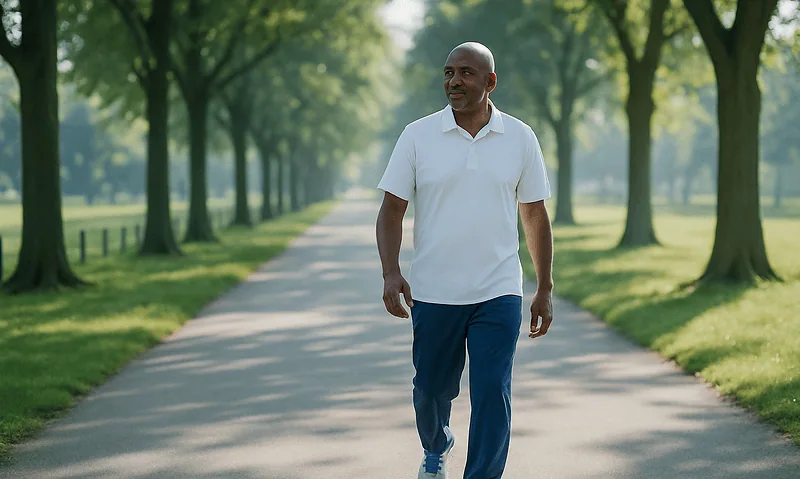
The single most evidence-backed non-surgical treatment for claudication is a supervised exercise program, and it works in a way that surprises people: you are asked to walk until the pain arrives, keep going a little further, rest until it fades, and repeat. The NHS describes a typical program as around two hours of supervised exercise a week for three months, and recommends that people continue exercising afterward.
Why would provoking pain help? Several mechanisms are proposed. Repeated demand appears to encourage small collateral vessels, natural detours around the blockage, to widen and carry more flow. Muscle cells adapt to extract oxygen more efficiently. Walking pattern and economy improve, so the same distance costs less effort. Blood vessel lining, the endothelium, becomes more responsive. None of these change the plaque itself, which is why an ABI often looks the same after training even when walking distance has doubled.
The word “supervised” is doing heavy lifting. Advice to “walk more” delivered in a five-minute appointment is not the same intervention as a program with a physiologist, a treadmill and a schedule. Mayo Clinic notes that supervised programs are the standard, with home-based structured programs as an alternative when supervised access is limited. If your team offers a program, it is worth taking seriously as treatment rather than as a suggestion.
Exercise also earns its place for a second reason. PAD is rarely confined to the legs; the same plaque tends to be forming in coronary and carotid arteries. Regular walking lowers blood pressure, improves blood sugar control and helps cholesterol, which protects the heart and brain even when the primary complaint is a calf. That double benefit is why exercise remains on the plan after a procedure, not instead of one.
Medicines for PAD: protecting the leg by protecting the whole circulation
Medicines in PAD serve two goals that people often conflate. The first is to lower the risk of heart attack, stroke and clots, because a person with narrowed leg arteries almost certainly has plaque elsewhere. The second, smaller goal is to improve walking distance. Most of the medicines you will hear about target the first.
Antiplatelet drugs make blood cells called platelets less likely to clump on the rough surface of a plaque, reducing the chance of a sudden clot in a leg, heart or brain artery. Statins lower LDL cholesterol and stabilize plaque, making it less likely to rupture. Blood pressure medicines protect artery walls from the constant strain that accelerates atherosclerosis. Diabetes medicines protect the small vessels of the foot, which is where PAD and diabetes do their worst combined damage. The NHS, Mayo Clinic and the American Heart Association all list these classes as core to PAD care regardless of whether a procedure is ever performed.
For walking distance specifically, a drug called cilostazol is prescribed in some settings. It works partly by relaxing artery walls and reducing platelet stickiness, and Mayo Clinic notes it can improve walking distance for some people, though it is not suitable for everyone, particularly those with certain heart conditions.
Two honest notes. Medicines protect, but they do not reopen a blocked artery, so they cannot substitute for revascularization when the limb is threatened. And the timeline is slow: statins and blood pressure control show their benefit over years, not weeks. Which medicines, at what point, and for how long are decisions for your prescribing clinician, who is weighing your kidneys, your bleeding risk and everything else you take. This article describes what the classes do; it does not tell you which to use.
Angioplasty and stents for PAD: the step before open surgery
When symptoms remain limiting despite a genuine trial of exercise and medicines, or when the leg is threatened, the next rung is usually an endovascular procedure. Endovascular means “from inside the vessel”: the clinician threads a thin tube through a small puncture, usually in the groin, and works within the artery under X-ray guidance rather than opening the leg.
Angioplasty inflates a small balloon at the narrowing to press plaque against the wall and widen the channel. A stent, a fine metal mesh tube, may be left in place to hold the artery open. Some balloons and stents carry a drug coating intended to slow the artery’s tendency to re-narrow. Atherectomy devices shave or drill plaque out. Which tool is used depends on where the lesion is and how it looks on imaging, and the NHS notes that angioplasty is usually done under local anesthetic, often with a short hospital stay.
The appeal is obvious: no large incision, faster recovery, and a lower immediate strain on the heart and lungs, which matters in a population that often has coronary disease too. The limitation is durability. Treated segments, particularly long ones or those in the thigh artery that bends with every step, can narrow again. Mayo Clinic and the NHS both note that repeat procedures are sometimes needed, and that the treated artery can re-block. Guideline-level evidence does not support a single durability figure that applies to everyone, so be cautious of anyone who quotes one.
Risks are real but uncommon: bleeding or bruising at the puncture, damage to the artery, a reaction to contrast dye affecting the kidneys, and, rarely, a clot or embolism. Your team should walk you through each in the context of your own anatomy. Angioplasty is not “minor” simply because the scar is small.
Bypass surgery for PAD: what the operation actually involves
A bypass does exactly what the name suggests. Rather than reopening a blocked segment, the surgeon creates a new route around it. Above the blockage, they sew one end of a graft into the artery; below it, they sew in the other end; blood now has a detour. The graft is ideally a vein taken from the same leg, most often the long saphenous vein that runs from ankle to groin, because living tissue tends to stay open longer than synthetic material, especially for bypasses that reach below the knee. When no suitable vein exists, a synthetic tube is used.
The operation is done under general or regional anesthetic and involves incisions at both ends of the graft, and along the leg if vein is harvested. It is a bigger physical event than angioplasty, and the NHS describes it as generally reserved for people whose blockages are long or hard to treat with a catheter, or in whom angioplasty has not worked or is unlikely to.
Where does it fit on the ladder? Bypass tends to be favored when disease is extensive, when a long-lasting result matters most, or when a good vein is available and the person is fit enough for surgery. Endovascular treatment tends to be favored for shorter lesions or for people whose overall health makes an operation risky. Many vascular teams now use hybrid approaches, combining both in one sitting.
Risks include wound infection, bleeding, graft blockage, heart attack or stroke during or after surgery, and complications from anesthesia. Grafts, like stents, can fail over time and require monitoring with ultrasound. The decision to operate rests with a vascular surgeon weighing your anatomy, your fitness and your goals, and it is reasonable to ask why bypass is being recommended over an endovascular option, or the reverse.
Angioplasty vs bypass vs no procedure: how the options compare
The choice among these paths is rarely a matter of one being “better” in the abstract. It is a match between a person, an artery and a goal. The table below summarizes how the mainstream sources cited in this article characterize each path. It is a starting point for conversation, not a substitute for the map of your own arteries.
| Approach | Typically considered for | What it involves | Main strengths | Main limitations |
|---|---|---|---|---|
| Exercise and medicines | No symptoms or claudication (Fontaine I–II) | Supervised walking, smoking cessation, antiplatelet, statin, blood pressure and diabetes control | No procedural risk; protects heart and brain; improves walking distance for many | Slow; needs sustained effort; cannot help a limb with rest pain or wounds |
| Angioplasty with or without stent | Limiting claudication despite first-line care; limb-threatening ischemia with suitable anatomy | Balloon, stent or plaque-removing device via a puncture, usually under local anesthetic | Short recovery; lower immediate strain on heart and lungs | Treated segments can re-narrow; repeat procedures sometimes needed; contrast and access-site risks |
| Bypass surgery | Long or complex blockages; failed endovascular treatment; limb-threatening ischemia in people fit for surgery | Vein or synthetic graft sewn around the blockage under general or regional anesthetic | Can treat disease a catheter cannot; vein grafts may offer durable flow | Larger operation; longer recovery; wound and cardiac risks; grafts can block |
Two things are worth reading between the lines. First, the top row never disappears. Whichever procedure someone has, exercise and medicines continue afterward, because they protect the new stent or graft and the rest of the circulation. Second, “considered for” is not “guaranteed for.” A person with limb-threatening ischemia and no reachable target vessel may be offered neither procedure, and honest teams will say so.
What the days and weeks after a PAD procedure usually look like
Timelines vary with the procedure, the person and the reason it was done, so treat what follows as typical ranges reported by mainstream sources, not a schedule anyone can promise you.
After angioplasty, the NHS notes that many people go home the same day or after a short stay. The puncture site is usually the main source of discomfort: bruising, tenderness, and instructions to avoid heavy lifting or strenuous activity for a short period so the artery seals. Walking is encouraged early. Some people notice warmer feet or an easier stride within days; others feel little immediate difference because the goal was wound healing rather than walking distance.
After bypass surgery, the picture is larger. Mayo Clinic and the NHS describe a hospital stay measured in days rather than hours, incisions that need care, leg swelling that can persist for weeks, and a gradual return to full activity over several weeks. Pain control, early mobilization to lower clot risk, and watching the wounds for redness, discharge or opening are the priorities. If a foot ulcer was the reason for surgery, the wound itself may take weeks to months to close even with good blood flow, and that is expected rather than a sign of failure.
Follow-up is not optional. Both stents and grafts are surveyed with ultrasound at intervals set by the vascular team, because re-narrowing often causes no symptoms until it is advanced. Medicines that protect the treated artery, usually including an antiplatelet and a statin, are typically continued long term; the exact plan is the prescriber’s call.
And the walking program starts again. A repaired artery is an opportunity to build the fitness that protects it, not a permission slip to stop moving.
What happens if PAD goes untreated? And the lifespan question
Two of the most searched questions about this condition are also the two people are most afraid to ask out loud. Here is what the evidence supports.
What happens if PAD goes untreated depends heavily on stage and on what “untreated” means. For someone with claudication who keeps smoking and takes no protective medicines, the leg disease may progress, but the more pressing danger is elsewhere. The American Heart Association and NHS both emphasize that PAD is a strong marker of atherosclerosis throughout the body, and that people with PAD carry a substantially higher risk of heart attack and stroke than people without it. The calf ache, in other words, is often the visible edge of a whole-body process. Untreated, the leg may worsen toward rest pain, non-healing wounds and, in the most severe cases, gangrene requiring amputation. Mayo Clinic notes this progression, and notes too that diabetes and smoking accelerate it.
On lifespan, honesty means resisting a number. Mainstream sources do not publish a single “average lifespan with PAD” because the figure would be meaningless: it would lump a 55-year-old with mild claudication who quits smoking and walks daily together with an 85-year-old with gangrene and heart failure. What the sources do say is that outcomes track the health of the whole cardiovascular system, and that the same measures that protect the leg, stopping smoking, statin and antiplatelet therapy, blood pressure and glucose control, and regular exercise, are the ones associated with lower cardiovascular risk generally.
The practical translation: a PAD diagnosis is a reason to take your heart seriously, starting now. That reframing is more useful than any statistic, and it is one you can act on this week.
What people often get wrong about PAD and surgery
Myths about PAD tend to cluster around the operating room, and several of them push people in exactly the wrong direction.
“If they found a blockage, they should fix it.” A blockage on a scan in someone who walks comfortably is not, by itself, a reason for a procedure. Guidelines from the NHS and American Heart Association reserve revascularization for limiting symptoms or a threatened limb. Treating pictures rather than people exposes you to procedural risk with little to gain.
“Walking will make it worse.” The reverse is true for claudication. Supervised exercise that deliberately provokes the ache is first-line treatment precisely because it improves walking distance. Pain at rest is a different matter and needs urgent review.
“A stent means I am fixed.” A stent opens one segment of one artery. It does not touch the plaque forming elsewhere, and the treated segment can re-narrow. Medicines, exercise and surveillance continue afterward.
“Bypass is a last resort you only get when things are hopeless.” Bypass is one tool among several, sometimes chosen early when anatomy favors it and a good vein is available. Timing is about matching the tool to the artery, not about desperation.
“It is just a leg problem.” PAD is a whole-circulation disease. The medicines your team recommends are often aimed at your heart and brain as much as your calf.
“Numb feet are safer than painful ones.” People with diabetes can lose protective sensation, so a foot with severe PAD may not hurt at all. The CDC and NHS both flag this as a reason for regular foot checks. A painless wound on a cold foot is a red flag, not a reassurance.
Questions to ask your care team
A vascular consultation is short and dense. Walking in with questions written down changes what you get out of it. These are the ones that tend to unlock the clearest answers.
- What stage is my PAD, and where exactly are the blockages? Ask them to show you on the scan. Location shapes every option.
- Am I in the group that should try exercise and medicines first, or is my leg threatened? This single question tells you which ladder rung you are standing on.
- Is there a supervised exercise program I can join, and if not, what does a structured home program look like?
- Which of my medicines are for my heart and brain, and which are for my walking? Knowing the purpose makes it easier to stay with them.
- If a procedure is recommended, why this one rather than the other? Ask what makes my anatomy better suited to angioplasty, bypass or a combination.
- What are the specific risks for someone like me, given my kidneys, my heart and my other conditions?
- What happens if we do nothing for now? A good answer will be honest about both the leg and the wider cardiovascular risk.
- How will you check whether the treatment is holding, and how often?
- What should I do about my feet day to day, especially if I have diabetes?
- Who do I call, and how quickly, if something changes?
None of these questions are challenges to your team’s judgment. They are the questions the team is already asking itself; you are simply asking to be in the room for the reasoning. The decision about whether and when to intervene remains theirs to recommend and yours to accept, and it is a better decision when both sides understand it.
When to call your doctor
Most of PAD unfolds slowly, which is exactly why the exceptions need to be spelled out. Some changes mean a routine call this week; a few mean emergency care now.
Call your care team promptly, within days, if your walking distance shortens noticeably over a few weeks, if you develop pain in the foot or toes at rest or at night, if a cut, blister or sore on your foot or lower leg has not started to heal within about two weeks, if one foot is persistently colder or paler than the other, or if you notice a new dusky, purple or black area on a toe. The NHS and Mayo Clinic both list these as signs that PAD may be progressing toward the limb-threatening stages, where earlier review widens the options.
Seek emergency care immediately, by calling emergency services, if a leg or foot suddenly becomes cold, pale or mottled, severely painful, numb or weak, or you cannot move the foot. Clinicians remember these as the “six Ps”: pain, pallor, pulselessness, paresthesia (pins and needles), paralysis and “perishing” cold. Together they suggest acute limb ischemia, a sudden blockage that can threaten the leg within hours. The same urgency applies to signs of a heart attack or stroke, such as chest pressure, sudden facial droop, arm weakness or slurred speech, which people with PAD are at higher risk of.
After a procedure, contact the team the same day for a wound that becomes red, hot, swollen or leaks fluid, a puncture site that bleeds or forms an expanding lump, a fever, or a foot that was warm after the procedure and has turned cold again.
If you are unsure whether something counts, that uncertainty is itself a reason to call. Vascular teams would far rather hear about a false alarm than meet a leg a day too late.
Frequently asked questions
When does PAD need surgery rather than exercise and medicines?
Surgery or a catheter procedure is usually considered when claudication still limits daily life after a genuine trial of supervised exercise and protective medicines, or when the leg is threatened by pain at rest, a wound that will not heal, or gangrene. An abnormal scan or ankle-brachial index in someone who walks comfortably is not, by itself, a reason to intervene. The vascular team weighs symptoms, anatomy and overall health together.
What are the first signs of peripheral artery disease?
The earliest sign is usually a cramp, ache or heaviness in the calf, thigh or buttock that appears with walking and eases within minutes of rest. Other early clues include one foot feeling colder than the other, slow-healing sores on the toes or feet, shiny or discolored skin, and slower hair or nail growth on the legs. About half of people have no leg symptoms at all, so PAD is often found during testing for something else.
What are the four stages of PAD?
The Fontaine classification describes four stages. Stage I is narrowing found on testing without symptoms. Stage II is claudication, split into IIa (pain after more than about 200 meters) and IIb (pain within a shorter distance). Stage III is pain in the foot or toes at rest, often at night. Stage IV is tissue loss, meaning ulcers or gangrene. Stages III and IV together are called chronic limb-threatening ischemia.
What happens if PAD goes untreated?
Untreated PAD can progress from claudication toward rest pain, non-healing wounds and, in severe cases, gangrene and amputation, with smoking and diabetes speeding that path. The larger risk is often elsewhere: PAD signals atherosclerosis throughout the body, and people with it carry a higher risk of heart attack and stroke. Managing risk factors and taking protective medicines addresses both the leg and the wider circulation.
What is the average lifespan for someone with peripheral artery disease?
There is no reliable single figure, and mainstream sources do not publish one, because outcomes vary enormously with age, stage, smoking, diabetes and heart health. What the evidence consistently shows is that PAD is a marker of cardiovascular risk, and that stopping smoking, statin and antiplatelet therapy, blood pressure and glucose control, and regular walking are associated with lower risk. Your own outlook is a conversation for your treating team.
Is PAD treatment without surgery really effective for leg pain?
For claudication, yes for many people. Supervised exercise is the first-line treatment in NHS and American Heart Association guidance, and it improves walking distance for a large share of participants by encouraging collateral vessels and more efficient muscle. It does not reopen the artery, so it cannot help a limb with rest pain or wounds. How much any individual improves cannot be promised, which is why a documented trial matters.
Is angioplasty for PAD considered surgery?
Technically it is a procedure rather than an operation. Angioplasty is done through a small puncture, usually in the groin, under local anesthetic, with a balloon and sometimes a stent placed inside the artery under X-ray guidance. Recovery is shorter than after bypass, but it still carries risks, including bleeding at the puncture, artery damage and kidney strain from contrast dye, and the treated segment can re-narrow over time.
Will I lose my leg if I have PAD?
Most people with PAD never face amputation. The risk concentrates in the limb-threatening stages, where there is rest pain, a non-healing wound or gangrene, and even then the goal of revascularization is to prevent it. The most protective steps are stopping smoking, controlling diabetes, checking your feet daily, and reporting any wound, color change or rest pain promptly so the team can act while options are widest.
Why is PAD more dangerous for people with diabetes?
Diabetes damages both large and small arteries and can blunt sensation in the feet, so a person may not feel a blister or cut. Combined with poor blood flow, small wounds can deepen and become infected without pain to warn anyone. The CDC and NHS both recommend regular foot checks for people with diabetes for this reason. Good glucose control and daily foot inspection are core parts of PAD care.
How long do stents or bypass grafts last in the legs?
It varies widely with the location and length of disease, the type of graft or stent, smoking status and how well medicines are continued, so no single figure applies to everyone. Both can re-narrow or block, sometimes without symptoms, which is why vascular teams schedule ultrasound surveillance afterward. Continuing antiplatelet and statin therapy as prescribed, stopping smoking and keeping up a walking program are the factors within a patient’s control.
References
- NHS: Peripheral arterial disease (PAD), treatment
- CDC: About Peripheral Arterial Disease
- Cleveland Clinic: Peripheral Artery Disease (PAD)
- MedlinePlus: Peripheral Arterial Disease
This article is for general information only and is not a substitute for professional medical advice. Please consult a qualified doctor about your individual situation.

More from the Blog

Blood Thinners and Heart Valve Treatment: What Your Cardiologist Reviews at Each Stage
Before valve surgery, most patients are asked to pause blood thinners for a short, planned window so the heart can be operated on safely,…

Blood Pressure, Alcohol and Caffeine: What Each Drink Does to Your Readings
Alcohol raises blood pressure in a dose-dependent way: more than about three drinks in one sitting lifts readings temporarily, and regular drinking above moderate…

Preparing a Child for the Fontan Procedure: Tests, a Dental Check and the Hospital Stay
Preparing a child for Fontan surgery usually involves a run of tests: an echocardiogram, often a cardiac catheterization or MRI, blood work and…

How Cardiorenal Syndrome Is Diagnosed: Kidney Tests, Echocardiography and Fluid Assessment
Cardiorenal syndrome is diagnosed by showing that heart dysfunction and kidney dysfunction are occurring together and influencing each other, rather than by any single…
Deep Vein Thrombosis Recovery Timeline: Swelling, Walking and the Months on Blood Thinners
A typical DVT recovery timeline runs in phases: anticoagulant medicine works within hours to stop the clot growing, leg pain and swelling usually ease…

When Does Hypertension Need Medication? How Doctors Weigh Readings, Risk and Lifestyle
High blood pressure usually needs medication when confirmed readings stay at or above 140/90 mm Hg, or at 130/80 mm Hg or higher in…