

Earwax Build Up With Hearing Aids or a Perforated Eardrum: Why Removal Needs an ENT
Key Takeaways
- Earwax is produced only in the outer third of the ear canal and normally travels outward on migrating skin, so wax pressed deep against the eardrum has almost always been pushed there.
- Hearing aids block the canal exit and irritate the skin into producing more wax, which is why impaction is a leading reason an aid seems to fail or whistle.
- The NHS advises that ears with a perforated eardrum should not be syringed or treated with over-the-counter drops, leaving microsuction and manual removal under magnification as the appropriate methods.
- Mayo Clinic reports most perforated eardrums heal within weeks, but some persist silently for years, so an examination, not memory, should decide whether water can safely enter your ear.
- Ear candling has no evidence of removing wax and has caused burns and eardrum injury, while cotton swabs act as a piston that compacts wax deeper into the narrowing canal.
- After removal, an aid tuned to a partly blocked ear may sound too loud; a quick settings review with your audiologist is more useful than adjusting the volume yourself.
If you wear hearing aids or have a perforated eardrum, earwax removal is usually best done by an ENT clinician or trained ear specialist rather than at home. Hearing aids block the ear's natural self-cleaning and make impaction more likely, while a hole in the eardrum means water irrigation and most ear drops are unsuitable. Specialists can see the canal directly and use microsuction or fine instruments under magnification.
She had already done everything the leaflet said. Wiped the hearing aids each night, changed the little wax filter, kept them out of the shower. And still the left one whistled, the world sounded like it was coming through a pillow, and a dull fullness sat behind her ear for most of a week. Then a friend mentioned a kit for rinsing out wax at home, and she nearly bought it, until she remembered the eardrum she had burst as a teenager and never thought about since.
That pause is the whole point of this article. Earwax removal with hearing aids is a genuinely different problem from earwax in an unaided ear, and a perforated eardrum changes the rules again. The two situations overlap more often than people expect, because hearing loss and old ear injuries tend to travel together.
What follows is the evidence on why the ear behaves this way, what an ENT clinician actually does, what you can safely do yourself, and what to leave alone.
What earwax is actually doing in your ear
Earwax has an undeserved reputation as dirt. It is a working substance. Glands in the outer third of the ear canal make cerumen, the medical name for earwax, by mixing an oily secretion with dead skin cells and a small amount of sweat. Cleveland Clinic describes it as a natural cleanser that traps dust and debris, keeps the skin of the canal from drying and cracking, and creates a slightly acidic, water-repellent environment that discourages bacteria and fungi.
The remarkable part is the conveyor belt. Skin in the ear canal grows outward from the eardrum toward the opening, roughly at the pace a fingernail grows. As it migrates, it carries wax with it. Jaw movement from chewing and talking nudges the whole mass along. In a typical ear, wax reaches the entrance, dries, flakes, and falls out without anyone noticing. Mayo Clinic notes that most people never need to do anything about their earwax at all.
Problems begin when that belt is jammed. Wax that cannot travel accumulates, dries, hardens and eventually plugs the canal. Clinicians call this impaction. Common contributors include narrow or unusually curved canals, hairy canals, skin conditions such as eczema, older age (wax becomes drier as glands change), and, crucially for this article, anything inserted into the ear on a regular basis. Cotton swabs, earplugs and hearing aids all sit exactly where the wax is supposed to exit.
Wax that reaches the canal opening is doing its job. Wax that is trapped deep inside, pressed against the eardrum, is a mechanical problem, and mechanical problems are what ENT clinics are equipped to handle.
Why hearing aids change the earwax equation
A hearing aid does two things the ear canal was never designed for. It blocks the exit, and it stimulates the glands.
Blocking is straightforward. A dome, an earmold or a completely-in-canal device occupies the space that wax would normally flake out of. Mayo Clinic lists hearing aids alongside earplugs as objects that interfere with the natural movement of wax. Over weeks the wax stacks up behind the device, and every insertion pushes it a little deeper. Some people also notice a dry, itchy canal; the plastic holds moisture against the skin and changes the local environment.
Stimulation is less obvious but real. The ear canal responds to a foreign body the way it responds to any irritant, by producing more secretion. So a hearing aid wearer can end up with more wax that has fewer routes out.
Then the wax fights back against the device. Cleveland Clinic and hearing-health resources at the NIH’s National Institute on Deafness and Other Communication Disorders (NIDCD) point out that wax is among the most common reasons a hearing aid seems to fail: it clogs the receiver opening, blocks the vent, muffles sound and causes feedback whistling because sound bounces off a wall of wax instead of reaching the eardrum. Many people assume the aid is broken when the ear is the issue.
There is one more layer. Someone with hearing loss may not register the gradual muffling that impaction causes, because their baseline is already reduced. The first signs are often indirect: the aid whistles, the volume seems to need turning up, or an audiologist comments during a routine check that the canal is full. That is why earwax removal with hearing aids is best treated as scheduled maintenance rather than an emergency response.
Perforated eardrum: what it is and why it rewrites the rules
The eardrum, or tympanic membrane, is a thin, roughly circular sheet of tissue that separates the ear canal from the middle ear. A perforated eardrum simply means there is a hole or tear in it. The NHS lists the usual causes: middle ear infection, sudden pressure change from flying or diving, a loud blast, a head injury, or something poked into the ear. Some perforations cause pain and a discharge; others are silent and are found years later on examination.
Mayo Clinic notes that most perforations heal on their own within weeks, though some take longer and a minority persist. A persistent hole leaves the middle ear open to the outside world, and that is precisely why wax removal has to change.
Consider the standard techniques. Softening drops are designed to sit in the canal and loosen wax; with a hole in the drum, liquid can pass into the middle ear, which the NHS advises against for oil-based and other over-the-counter drops. Irrigation with water is riskier still: fluid pushed into the middle ear can carry bacteria, cause pain and dizziness, and set up an infection. The NHS is explicit that people with a perforated eardrum should not have their ears syringed.
What remains are methods where a clinician can see exactly where the wax is and remove it under direct vision without fluid: microsuction and manual instrument removal. Both require magnification, a steady hand and training. Neither is a home technique.
Some people learn about their perforation only when an ENT clinician looks in before removing wax. That single glance is one of the strongest arguments for having a specialist do the job when your ear history is uncertain.
How is earwax removal with hearing aids done at an ENT clinic?
The visit usually begins with questions, not instruments. Expect to be asked about pain, discharge, dizziness, previous ear surgery, known perforations, and how your hearing aids fit. Bring the aids with you; the clinician may want to check the domes or molds for wax and for how deeply they sit.
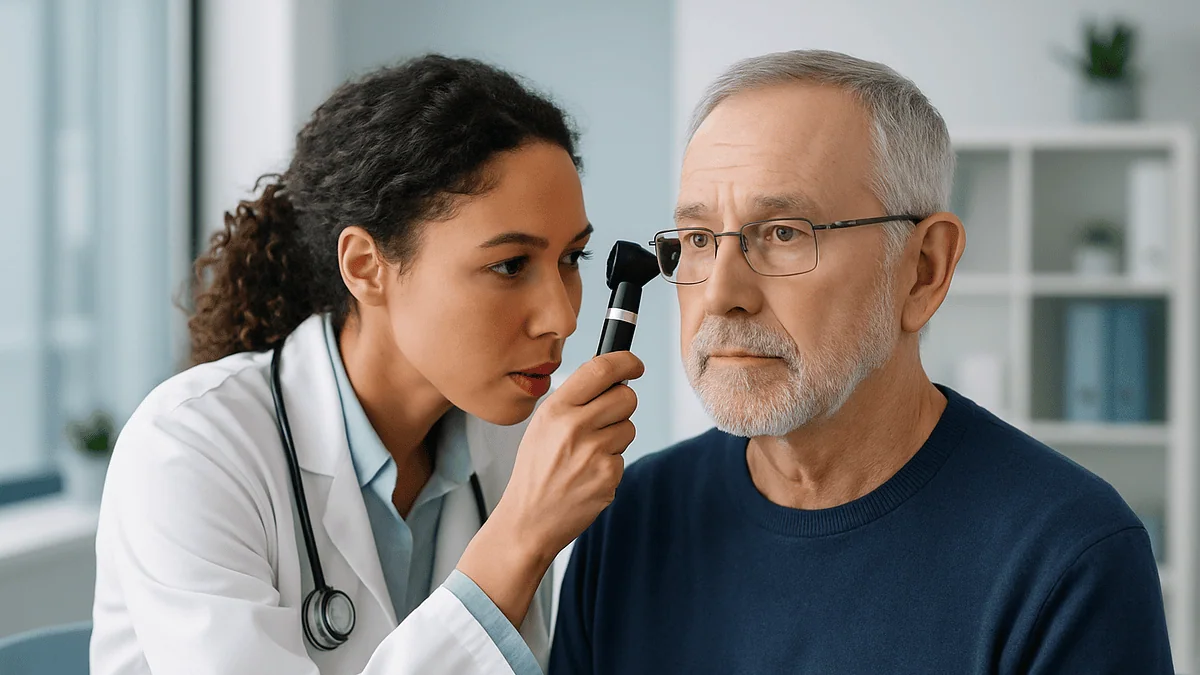
Next comes the look. Using an otoscope (a handheld lit magnifier) or, more commonly in specialist clinics, a binocular microscope or an endoscope, the clinician inspects the canal and, if visible, the eardrum. This step decides everything. If the drum is intact and the wax is soft, several methods are possible. If the drum is perforated, has a ventilation tube in it, or cannot be seen, fluid-based methods are set aside.
Microsuction is the technique most people associate with ENT. A fine sterile suction tip is guided into the canal under magnification and the wax is drawn out piece by piece. It is noisy, sometimes loud enough to startle, and can feel cold or ticklish. Brief dizziness is possible because the suction cools the canal and stirs the balance organ. Most sessions take a matter of minutes, though very hard wax may need a second appointment after softening, where softening is safe.
Manual removal uses small instruments such as a curette (a tiny scoop) or forceps to lift wax out. It suits wax near the entrance or firm plugs that can be hooked.
Irrigation, using a controlled-pressure electronic irrigator rather than a metal syringe, remains an option for intact eardrums and is offered in some primary care settings. Afterward the clinician re-examines the canal and drum, and this is the moment to ask what they saw. A clear description of the eardrum’s condition is one of the most useful pieces of information a hearing aid wearer can carry to their audiologist.
Who is usually offered removal, and who is asked to wait
Not every ear with wax in it needs clearing. Guidance from the NHS and Mayo Clinic is consistent: wax that causes no symptoms and does not block the view of the eardrum is generally left alone, because removal carries small risks of its own and the ear will usually manage.
Removal is typically offered when wax is causing hearing loss, fullness, earache, tinnitus (ringing or buzzing), itching or a sense of imbalance; when it prevents a hearing aid from working or an earmold from being fitted; or when a clinician needs to see the eardrum to diagnose something else. Hearing aid wearers sit in a particular category. Because impaction quietly degrades the performance of a device they depend on, many audiology services check canals at routine appointments and refer for removal before symptoms become obvious.
Who is steered toward a specialist rather than a general clinic? Anyone with a known or suspected perforation, a ventilation tube (grommet), previous ear surgery such as a mastoidectomy, a single hearing ear, recurrent ear infections, or a history of dizziness with earlier removal. People taking blood-thinning medicines are sometimes handled with extra care because the canal skin bleeds easily when nicked; decisions about those medicines rest entirely with the prescribing clinician and should never be made around a wax appointment.
Who is asked to wait? Someone with an active outer ear infection, with pain and swelling, is usually treated for the infection first so that instruments do not aggravate inflamed skin. Someone whose wax is very hard and whose eardrum is intact may be asked to soften it for a period first, in line with NHS advice, then return. And someone whose main complaint is hearing loss with a clear canal needs a hearing assessment, not removal.
The treating clinician makes these calls after looking. No article, including this one, can look.
Earwax removal methods compared: which suit hearing aid wearers and perforated eardrums
Methods differ in who can perform them, what they require of the eardrum, and what they risk. The table below summarizes mainstream guidance from the NHS, Mayo Clinic and Cleveland Clinic. It is a map, not a prescription; the right column for you depends on what a clinician sees.
| Method | Who performs it | Intact eardrum required? | Fit with hearing aid use | Main cautions |
|---|---|---|---|---|
| Softening drops (water- or oil-based) | Self, following product or clinician advice | Yes | Useful for maintenance; remove aids while drops sit | Not with perforation, tubes or discharge; may temporarily worsen muffling |
| Water irrigation (electronic irrigator) | Trained clinician | Yes | Acceptable when drum is intact | Dizziness, infection, rare drum damage; NHS advises against with perforation |
| Microsuction | ENT or trained ear-care specialist | No | Well suited; wax removed without fluid | Noise, brief dizziness, small risk of canal abrasion |
| Manual instruments (curette, forceps) | Trained clinician | No | Well suited for wax near entrance | Requires magnification; discomfort if canal skin is touched |
| Cotton swabs, hairpins, keys | Self | Not applicable | Counterproductive; pushes wax toward drum | Impaction, abrasion, perforation; discouraged by all major sources |
| Ear candling | Self or non-medical practitioner | Not applicable | No benefit | Burns, wax deposits, drum injury; no evidence of effect (Mayo Clinic) |
Two patterns stand out. First, the only methods appropriate for a perforated eardrum are the two that need a trained pair of hands and a magnified view. Second, the methods people reach for at home tend to be either harmless but limited (drops, for intact ears) or actively harmful (swabs, candles). The middle ground of at-home irrigation kits deserves particular caution for anyone who cannot be sure their eardrum is intact, which, for many adults with a history of infections or injury, means most of us.
Why don't doctors remove earwax anymore?
This question comes up constantly, and it reflects a real change in how care is organized rather than a change in medical opinion about wax.
For decades the default was for a family doctor or practice nurse to syringe the ear with warm water. That approach has retreated in many health systems for several connected reasons. Irrigation carries a small but well-documented risk of complications, including eardrum damage, infection and vertigo, and those risks rise when the clinician cannot see the eardrum beforehand. Manual metal syringes have largely been replaced by controlled-pressure irrigators, which require equipment and training that not every general practice maintains. And professional guidance has shifted toward looking first, then choosing a method, which favors settings with magnification and suction.
The NHS website now states plainly that earwax removal may not be available through general practice in every area, and directs people to pharmacists for advice about drops and to specialist ear-care services where removal is offered. The picture in the United States varies by practice and insurer, but the same trend toward audiology and ENT clinics handling routine wax is visible.
What this means for someone with hearing aids or a perforated eardrum is a mixed message. On one hand, the retreat of casual syringing is good news: the method least suited to your ear is being offered less. On the other, it can take more effort to reach the right service, and a gap in access is one reason people turn to home kits.
The honest summary is that doctors have not stopped caring about earwax. Care has moved to clinicians with the right tools, and the person with the most to gain from that shift is exactly the one whose ear needs a good look before anything is done.
How to remove earwax when you wear hearing aids: what is safe at home
The truthful answer is that you cannot remove impacted wax at home safely, and you should not try. What you can do is prevent impaction, soften wax to help it leave on its own, and recognize when to hand the job over.
Start with the ear itself. Leave the canal alone; nothing smaller than your finger belongs in it, a rule repeated by the NHS, Mayo Clinic and Cleveland Clinic. After a shower, dry the outer ear gently with a towel and let the canal air-dry before inserting aids. Moisture trapped behind a dome is a recipe for irritation and for wax that clings.
Softening drops are the only home measure with mainstream support, and only for people who know their eardrum is intact and have no ventilation tube, discharge or pain. The NHS describes using drops over a period of days to help wax loosen and fall out naturally. Take the hearing aids out while drops are in the ear and give the canal time to drain before reinserting, or the aid will simply reseal the softened wax. Ask a pharmacist or your clinician which type suits you; that decision is theirs, not this article’s.
If you have, or might have, a perforated eardrum, skip the drops altogether and ask for an examination. The same applies if drops leave you more muffled than before, which can happen when softened wax expands against the eardrum.
Build in a schedule. Many audiology services suggest a canal check at every hearing aid review, and people who impact repeatedly often benefit from planned removal at intervals rather than waiting for symptoms. Your audiologist and ENT clinician can agree that interval based on how quickly your ears fill. Prevention, in this case, is a calendar entry, not a gadget.
Hearing aid wax guard, domes and daily wiping: caring for the device
Wax that stays out of the ear canal often ends up in the hearing aid, so device hygiene and ear hygiene are two halves of the same routine. The NIDCD’s guidance on hearing aids emphasizes keeping devices clean and dry and following the manufacturer’s instructions for maintenance.
The wax guard is the small replaceable filter that sits over the speaker opening on most modern aids. It exists precisely because wax migrates toward the receiver. When sound suddenly weakens or an aid dies with a fresh battery or full charge, a clogged guard is a leading suspect. Changing it is usually a simple pull-and-push with the tool supplied; your audiologist can show you how and suggest how often, since that depends on how much wax your ears make.
Domes and earmolds collect wax and skin flakes on the outside. A soft, dry cloth or the small brush from your cleaning kit removes most of it. Wipe once a day, ideally at night, so wax does not harden overnight. Avoid water, alcohol wipes and solvents unless your provider has told you the parts are designed for them; moisture is the enemy of the electronics inside. Never poke the receiver opening with a pin or wire.
Watch the tubing on behind-the-ear models for cloudiness or beads of moisture, and store aids in a dry, ventilated case or a drying box overnight rather than in a bathroom cabinet.
Finally, notice patterns. If one aid needs its guard changed far more often than the other, that ear is producing or trapping more wax, and it is worth mentioning at your next check. The device is, in effect, a monitoring tool for the canal it lives in.
What the days and weeks after earwax removal usually look like
The first sensation is often startling clarity. Sounds are sharper, sometimes uncomfortably so, and your own voice may seem loud. For hearing aid wearers this can be disorienting in a different way: an aid tuned to compensate for a partly blocked ear may now seem too loud or too tinny. That is not a fault in the device. Give your ears a day or two, then ask your audiologist whether the settings need revisiting, particularly if the wax had been building for months.
Mild itching or a feeling of dryness in the canal is common for a few days, because the protective wax layer has been removed along with the plug. Resist the urge to scratch with anything. The skin restores its coating on its own.
Brief dizziness during or right after microsuction usually settles within minutes. A faint soreness where an instrument touched the canal wall can linger for a day. A trace of blood-tinged discharge on the day of removal is not unusual if the skin was abraded, but anything more than a trace, or discharge that continues, should be reported.
If softening drops were used beforehand in an intact ear, the canal may feel damp for a day. Keep aids out until the ear feels dry, then reinsert them clean.
Over the following weeks the conveyor belt restarts. How quickly the canal refills varies enormously between people, and no source can give a reliable interval for an individual. For someone whose ear was cleared after a long impaction, the second removal often comes sooner than they expect, because the underlying causes, the device and the canal shape, have not changed. Planning the next check while you are still in the clinic is a practical habit.
What people often get wrong about earwax and hearing aids
Myth one: earwax means an unclean ear. The opposite is closer to true. Wax is the ear cleaning itself, and people who scrub their canals tend to have more problems, not fewer, because scrubbing strips protection and pushes wax inward.
Myth two: cotton swabs are fine if you are careful. Every major source, from MedlinePlus to Mayo Clinic, advises against them. The canal narrows toward the eardrum, so a swab acts as a piston, compressing wax into a dense plug exactly where it is hardest to reach. Perforations from swabs are a familiar sight in ENT clinics.
Myth three: ear candling draws wax out by suction. Mayo Clinic notes there is no evidence that candling removes wax, and documented harms include burns, candle wax deposits in the canal and eardrum injury. The residue people see in the candle appears whether or not it is placed in an ear.
Myth four: a whistling hearing aid means it is broken. Feedback is frequently a symptom of a blocked canal reflecting sound back into the microphone. Check the ear before blaming the device.
Myth five: an old perforation must have healed, so irrigation is safe. Many heal, but some do not, and the person is often the last to know. Only an examination settles it.
Myth six: more wax means something is wrong. Wax production varies widely between healthy people, and hearing aid users legitimately produce more because of irritation. The issue is trapping, not volume.
Myth seven: if you cannot get an appointment, a home irrigation kit is the next best thing. For an intact eardrum in a healthy ear it may be low-risk; for anyone with uncertain ear history it is the method most likely to convert an inconvenience into an infection.
Hearing loss, Medicare and what is genuinely new in treatment
Wax questions travel with bigger ones, so it is worth addressing two that people search alongside this topic.
Coverage first. In the United States, Original Medicare has historically covered diagnostic hearing tests ordered by a clinician but not the hearing aids themselves or the exams to fit them. Some Medicare Advantage plans and private insurers offer hearing benefits, and rules change; the reliable step is to check your specific plan documents or speak with your audiologist’s office about what your coverage includes. This article does not deal with costs, and any figure you read online may already be out of date.
What is genuinely new? Over-the-counter hearing aids are now available in the US for adults who perceive mild to moderate hearing loss, a category described on the NIDCD hearing aids page. They widen access but do not replace a hearing assessment, and wax impaction is one reason an over-the-counter device can seem to fail. Cochlear implants remain the established option for severe to profound loss when aids no longer help; they involve surgery and are decided by a specialist team. Research into gene therapies for specific inherited forms of deafness has produced early results in small studies, and drugs aimed at regenerating inner ear hair cells are in trials. None of these is a proven treatment for the common age- and noise-related hearing loss most hearing aid users have, and no mainstream guideline currently recommends them for it.
The evidence-based advice for most people is unglamorous: keep the canal clear, keep the aid working, and protect the hearing you have from loud noise. The single most common cause of a sudden drop in aided hearing remains a plug of wax, which is treatable this week rather than in a future decade.
Questions to ask your care team about earwax removal
A wax appointment is short, and it is easy to leave without the information you actually need. These questions are worth writing down.
- Could you see my eardrum, and is it intact? If not intact, is the perforation new or old, and does it need follow-up?
- Which method did you use and why was it the right one for my ear?
- Is it safe for me to use softening drops between visits, and which type would you suggest?
- Is water irrigation ever an option for me, or should I avoid it permanently?
- How quickly does my canal seem to refill, and how often would you suggest a check?
- Do my hearing aid domes or molds sit deeper than ideal, and should my audiologist review the fit?
- Is the skin of my ear canal healthy, or are there signs of eczema or infection that need separate treatment?
- I take blood-thinning medicine; is there anything you need to know before instruments are used? (Never adjust the medicine yourself.)
- What symptoms after today’s removal would you want to hear about, and how do I reach the clinic?
- Can you send a summary to my audiologist so my hearing aid settings can be reviewed now that the canal is clear?
Notice that most of these are about the eardrum and the canal, not the wax. The wax is the reason you came; the examination is the value you take away. If your clinician volunteers that your drum looks healthy, or that it has a small dry perforation you never knew about, that single fact reshapes every future decision about drops, irrigation and swimming.
Decisions about method, interval and any medicine rest with your treating team. Your job is to give them the history and to leave with a clear plan.
When to call your doctor
Wax itself is rarely an emergency, but the ear does not announce whether the problem is wax, infection or something structural. Some signs warrant a prompt call to your clinician or ENT service rather than waiting for a routine slot.
Call promptly if you notice sudden hearing loss in one ear, particularly if it arrived over hours rather than weeks; sudden loss is treated as urgent by ENT services whatever the eventual cause. Do the same for severe or worsening ear pain, a discharge that is pus-like, bloody or foul-smelling, fever alongside ear symptoms, spinning dizziness or vomiting, facial weakness or drooping on one side, or a sharp increase in ringing. Pain, discharge and reduced hearing after any attempt at home removal, including drops, should be reported the same day, since these can signal a perforation or an infection behind the drum.
Seek care the same day if you have a known perforation or ear surgery in the past and water has entered the ear during swimming or a home rinse and you feel pain, pressure or dizziness afterward.
Arrange a non-urgent appointment if your hearing aid has begun whistling or sounding weak despite a fresh wax guard, if fullness or muffling has persisted for more than a few days, if softening drops have made the blockage feel worse, or if you have never had your eardrums examined and are considering any at-home method.
Children with hearing aids deserve a lower threshold for calling; they may not describe fullness or pain, and a change in behavior or in how they respond to sound is enough reason to have the canal checked.
This list is a prompt, not a diagnosis. Your treating team decides what needs looking at and when.
Frequently asked questions
How do you remove earwax when you wear hearing aids?
Impacted wax should be removed by a clinician who can see the canal, typically using microsuction or fine instruments. At home, keep the canal untouched, dry the outer ear before inserting aids, and, only if your eardrum is known to be intact, use softening drops as advised by a pharmacist or clinician with the aids removed. Schedule canal checks with your audiologist so wax is cleared before it degrades your hearing.
Is earwax removal with a perforated eardrum safe?
Yes, when done by a trained specialist using methods that involve no fluid. Microsuction and manual removal under magnification are the standard approaches for a perforated eardrum. The NHS advises against syringing and over-the-counter drops when there is a hole in the drum, because liquid can enter the middle ear and cause pain, dizziness or infection. Tell the clinician about any known perforation before anything is done.
What is microsuction earwax removal and does it hurt?
Microsuction uses a fine sterile suction tip guided under a microscope or endoscope to lift wax out of the canal without water. Most people describe it as loud and ticklish rather than painful, and it is generally finished within minutes. Brief dizziness can occur because the suction cools the canal. Very hard wax may need softening first, where that is safe, and a return visit.
Why don't doctors remove earwax anymore?
Care has shifted rather than stopped. Routine water syringing in general practice has declined because it carries small risks of eardrum damage, infection and vertigo, especially when the drum has not been inspected first. The NHS notes that wax removal may not be available through every general practice and points to pharmacists and specialist ear-care services. ENT and audiology clinics with magnification and suction now handle much of this work.
How often should you change a hearing aid wax guard?
It depends on how much wax your ears produce, so there is no single interval. A useful rule is to change it whenever sound weakens or stops despite a charged battery, and to inspect it during your daily wipe. Your audiologist can suggest a routine based on your ears. If one aid needs guards far more often than the other, mention it; that ear may be trapping wax.
Can I use ear drops if I have hearing aids?
Often yes, provided your eardrum is intact and you have no ventilation tube, discharge or pain. Remove the aids while drops sit in the ear and allow the canal to drain and dry before reinserting, otherwise the aid reseals the softened wax. The NHS describes drops as a way to help wax loosen over days. Ask a pharmacist or clinician which type suits you; if drops make muffling worse, stop and seek an examination.
Why does my hearing aid whistle when there is wax in my ear?
Feedback whistling happens when sound leaving the receiver bounces back to the microphone instead of traveling to the eardrum. A plug of wax acts as that reflecting wall. Wax on the dome or a clogged wax guard can produce a similar effect. Check the ear canal and the device before assuming the aid is faulty; many suspected malfunctions resolve once the canal is cleared.
Does Medicare cover hearing aids and earwax removal?
Original Medicare has generally covered clinician-ordered diagnostic hearing tests but not hearing aids or fitting exams; some Medicare Advantage and private plans include hearing benefits, and rules change. Coverage for wax removal as a medical procedure is separate from hearing aid coverage. Because details vary by plan and can change, confirm with your plan documents or your clinic’s billing office rather than relying on general articles.
What is the most recent treatment for hearing loss?
Over-the-counter hearing aids for adults with perceived mild to moderate loss are the most significant recent change in access, as described by the NIDCD. Cochlear implants remain the established option for severe loss. Gene therapies for certain inherited forms of deafness and drugs aimed at regenerating inner ear cells are in early research and are not proven treatments for common age- or noise-related loss.
How long does a perforated eardrum take to heal, and when can wax be removed?
Mayo Clinic and the NHS note that most perforations heal on their own within weeks, though some take longer and a minority remain open. Wax can be removed during healing by a specialist using dry methods such as microsuction; the important restriction is on water and drops, not on removal itself. Your ENT clinician will advise on timing and on keeping the ear dry while it heals.
References
- NHS: Earwax build-up
- NHS: Perforated eardrum
- Cleveland Clinic: Ear wax buildup and blockage
- NIH NIDCD: Hearing aids
This article is for general information only and is not a substitute for professional medical advice. Please consult a qualified doctor about your individual situation.

More from the Blog
Ear Tube Surgery Step by Step: What Happens in the Operating Room and How Long It Takes
Ear tube surgery (myringotomy with tympanostomy tube placement) is one of the shortest common operations. The procedure itself usually takes about 15 minutes per…

How Do ENT Specialists Find the Cause of Vertigo? Timing, Triggers and Hearing Clues
Vertigo is diagnosed mainly through a careful history and a hands-on examination rather than a single test. Clinicians ask how long spells last, what…

Stapedectomy Surgery Explained: How a Tiny Prosthesis Replaces the Fixed Stapes Bone
A stapedectomy treats hearing loss from otosclerosis, a condition in which the stapes, the smallest bone in the middle ear, becomes fixed and cannot…

Nasal Sprays vs Antihistamines for Allergic Rhinitis: What Each Controls and When Both Help
For allergic rhinitis, steroid nasal sprays and antihistamines control different parts of the reaction. Antihistamines act fast on sneezing, itching and runny nose but…

Allergic Rhinitis in Children and Teens: How Does Care Differ From Adult Treatment?
Allergic rhinitis in children is treated with the same building blocks used for adults: allergen avoidance, saline rinses, intranasal corticosteroid sprays, non-sedating antihistamines and,…

Tonsillectomy Recovery Day by Day: Throat Pain, Ear Discomfort and the Return to Normal Eating
Tonsillectomy recovery usually takes about 10 to 14 days. Throat pain is typically at its worst between roughly days 3 and 7, often with…