

Epilepsy Surgery Recovery: Headache, Scalp Numbness, Fatigue and the Weeks Before Normal Life

Key Takeaways
- Brain tissue has no pain receptors, so the headache after epilepsy surgery comes from the healing scalp, temporalis muscle, bone and dura, and typically eases over weeks rather than worsening.
- Mayo Clinic describes a typical hospital stay of three to four days and a return to work or school in about one to three months, with fatigue usually the last ordinary symptom to lift.
- Scalp numbness follows the cutting of fine sensory nerves at the incision; tingling and itching months later usually signal regrowth, and any lasting patch is generally small.
- In the randomized trial of temporal lobe surgery, 58% of operated participants were free of seizures impairing awareness at one year, compared with 8% on medical treatment alone.
- Anti-seizure medicines generally continue for at least a year or two after surgery, and any reduction is a gradual, clinician-led decision; abrupt stopping can trigger prolonged seizures.
- Seizures in the first days after surgery are interpreted differently from seizures months later, but any seizure over five minutes, or a first seizure after surgery, warrants an immediate call.
Epilepsy surgery recovery usually means three to four days in hospital, then a scalp headache and a numb patch around the incision that ease over weeks, and a deeper fatigue that often lingers for one to three months before many people return to work or school. Anti-seizure medicines generally continue for at least a year or two. Memory, mood and energy settle over months, and your surgical team sets the pace.
On the third morning after a temporal lobectomy, the question people ask is rarely about seizures. It is usually smaller and more insistent: why does the side of my head feel like it belongs to someone else, and why am I this tired when I have done nothing but lie down? The brain, it turns out, is the quietest part of the healing. It is the scalp, the chewing muscle and the skull that make themselves heard.
Epilepsy surgery recovery has a shape that few people are warned about in detail. The wound closes in a fortnight. The headache fades over weeks. The numbness and the fatigue take longer, and the mental adjustment to a life with fewer or no seizures can take the better part of a year. None of that means something has gone wrong.
This explainer walks through what is happening under the dressing, what the weeks usually look like, what the trials actually show about results, and the handful of signs that should send you to the phone rather than the sofa.
What happens during epilepsy surgery, and why recovery starts at the scalp
Most epilepsy operations are designed to remove or disconnect a small region of brain where seizures begin. Focal epilepsy means seizures start in one area rather than across the whole brain at once, and that is the type surgery targets. Drug-resistant epilepsy, the usual prerequisite, means seizures have continued despite fair trials of at least two suitable anti-seizure medicines (Mayo Clinic).
The commonest operation is a temporal lobectomy: removal of part of the temporal lobe, the region behind the temple that handles memory and some aspects of language. To reach it, the surgeon makes a curved incision in the scalp, lifts the temporalis muscle (the chewing muscle over your temple), removes a window of skull called a bone flap, and opens the dura, the tough membrane wrapping the brain. That sequence is a craniotomy. Once the seizure-generating tissue is removed, the dura is stitched, the bone flap is fixed back with small plates, and the muscle and scalp are closed in layers.
Smaller techniques exist. Laser interstitial thermal therapy threads a thin fiber through a hole about the width of a pencil and heats the target while an MRI scanner monitors the temperature. Disconnection operations cut the fibers along which seizures spread, without removing their source. Implanted neurostimulation devices send small electrical pulses to a nerve in the neck or to the brain itself and are generally offered when removal is not possible (Johns Hopkins Medicine).
One anatomical fact explains most of epilepsy surgery recovery: brain tissue has no pain receptors. Skin, muscle, bone and dura do. The headache, the numb patch, the stiff jaw and the sore neck are the layers on the way in complaining as they heal, not the brain protesting.
Who epilepsy surgery is usually for, and who is asked to wait
Surgery is not a first step. Guidelines and major centers describe it as an option once seizures have failed to respond to at least two appropriate medicines taken properly (Mayo Clinic; NHS). The World Health Organization estimates that up to 70% of people with epilepsy could live seizure-free with correct use of medicines alone, which leaves a substantial minority for whom the question of surgery is reasonable to raise (WHO).
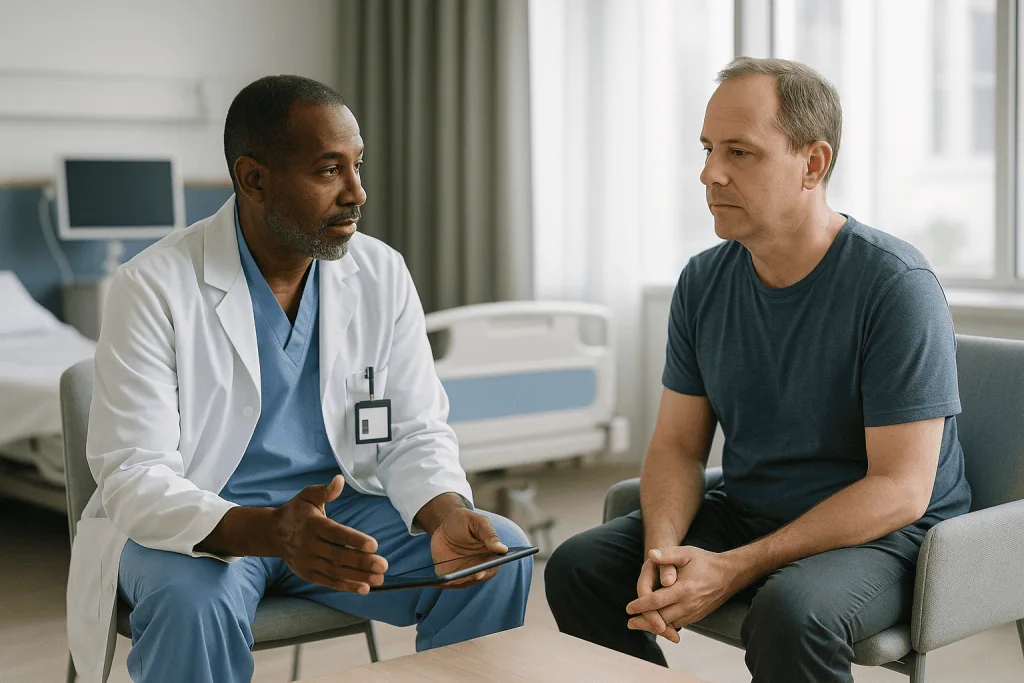
Before anyone is offered an operation, they go through a presurgical evaluation. That typically includes video EEG monitoring in hospital, where seizures are recorded on camera and on brain-wave tracings at the same time; a high-resolution MRI to look for a structural cause; and neuropsychological testing, a set of paper-and-computer tasks that map memory and language so the team knows what a given area of brain is doing. Some people also need intracranial EEG, in which electrodes are placed on or in the brain for a few days to pinpoint the source.
The people most often considered are those whose seizures reliably arise from one spot that can be removed without taking away speech, movement or a large share of memory. Children with a clear lesion are frequently evaluated early, because a developing brain adapts well and years of uncontrolled seizures carry their own cost (Johns Hopkins Medicine).
Others are usually asked to wait or offered different paths: those whose seizures start in several places, whose epilepsy is generalized from the outset, whose focus sits inside essential language or motor cortex, or who have not yet completed the medicine trials the evaluation requires. For them, options include further medicine adjustments, dietary therapy such as the ketogenic diet (mainly used in children, NHS), or neurostimulation. Every one of those judgments belongs to the multidisciplinary epilepsy team, weighing your scans and your goals together.
Epilepsy surgery recovery week by week
Recovery is rarely linear. Most people describe good days scattered among flat ones, with the trend improving over months rather than days. The table below gathers typical ranges from published patient guidance; your team will adjust every one of them to your operation and your health.
| Phase | What is common | Typical range and source |
|---|---|---|
| In hospital | Monitoring, pain relief, first walks, possible EEG, swelling and bruising around the eye | 3–4 days (Mayo Clinic) |
| First two weeks | Incision healing, sleepiness, headache easing, jaw stiffness, scalp numbness most noticeable | Wound review at first follow-up visit (Mayo Clinic) |
| Weeks 2–6 | Energy returning in steps, tingling as nerves recover, light activity resumes | Weeks to months (NHS) |
| 1–3 months | Return to work or school for many people; driving still governed by seizure-free rules | 1–3 months (Mayo Clinic) |
| 3–12 months | Memory, word-finding and mood settling; repeat neuropsychological testing | Several months (NHS) |
| 1–2 years and beyond | Medicine review if seizure-free, long-term follow-up | At least 1–2 years on medicines (Mayo Clinic) |
Two patterns are worth knowing in advance. First, the wound heals far faster than you do; a closed scar at two weeks tells you nothing about how much reserve your body has rebuilt. Second, the milestones people care about most, driving and working, depend on more than physical healing. Return to work reflects concentration and stamina. Driving reflects the law in your jurisdiction, which requires a seizure-free interval and, in many places, a formal notification to the licensing authority (NHS). Neither is a reward for effort; both are markers the team and the calendar decide together.
Why the headache after epilepsy surgery is mostly scalp and muscle
Think of the incision as a road cut through four layers of tissue, each with its own nerve supply. The skin edges are sore where they were stitched. The temporalis muscle was lifted off the bone and is now knitting back, and every time you chew or yawn it pulls on that healing edge. The bone flap sits in a ring of raw bone. The dura, which is richly supplied with pain fibers, was opened and closed. Any one of those would give you a headache; together they explain why the first week can feel like the worst tension headache of your life, concentrated on one side.

The brain itself did not register the surgery, because it has no pain receptors. That is why the pain tends to be surface-level and mechanical: worse with movement of the jaw, with lying on the operated side, with bending forward, and often better with rest, cold packs and the pain relief your team prescribes. Which medicines are used, and for how long, is a decision for the surgical team, who will also tell you which common over-the-counter painkillers to avoid because of bleeding risk in the early weeks.
Over the following weeks the character of the headache usually changes. Sharp incisional pain gives way to a dull, tight band, then to an occasional ache on tired days. Some people also notice sensitivity to weather or to pressing on the scalp. Mayo Clinic lists headache among the expected early effects rather than the complications, and that framing is fair for the great majority.
Two features should change your response. A headache that worsens steadily rather than easing, or one that arrives suddenly and severely, is not the ordinary post-craniotomy pattern and needs a same-day call. A headache that is much worse when upright and relieved by lying flat can point to a leak of spinal fluid through the wound and also needs review. The red-flag section below lists these in full.
Scalp numbness, tingling and the ache when you chew
Numbness is the symptom people are least prepared for and the one that outlasts almost everything else. The scalp is supplied by several fine sensory nerves that run upward from the forehead, the temple and the back of the head. A curved incision around the temple inevitably cuts across some of them, and the skin beyond the cut, typically a patch above and behind the scar, loses sensation. Touching it feels like touching someone else’s head.
Sensory nerves in the skin do regrow, but slowly, from the cut end outward. The first sign of recovery is usually not feeling returning but odd sensations arriving: tingling, prickling, itching, a crawling feeling, or brief electric twinges when you brush your hair. These are unpleasant but are generally interpreted as the nerve fibers finding their way back. Some people regain almost normal sensation; others keep a small permanently numb or oversensitive patch. Neither outcome affects the result of the operation, and your team can tell you what they expect for your incision.
The jaw is the other surprise. Because the temporalis muscle was lifted to reach the skull, the muscle is stiff and sore, and many people find they cannot open their mouth fully or chew anything firm for a while. Soft foods early on, gentle opening exercises once your team approves them, and patience usually see this off over weeks. Rarely, tightness persists, and physiotherapy can help.
Finally, the scar and the bone flap. You may feel a shallow ridge where the bone edges meet, small bumps from the fixation plates, and occasionally a soft click. The plates are designed to stay; the bone heals across the gap over months. Hair grows back along the shaved strip, and the scar tends to fade toward a pale line that hair conceals in most incision designs (Johns Hopkins Medicine).
Fatigue after brain surgery: why tiredness outlasts the wound
People expect pain after brain surgery. They rarely expect to be floored by a flight of stairs six weeks later. Yet fatigue is the symptom most likely to still be present when the scar is invisible, and it has several overlapping causes rather than one.
The general anesthetic and the hospital stay disrupt sleep for days. Tissue healing itself consumes energy: the body is rebuilding muscle, bone and skin. Anti-seizure medicines, which act by damping the excitability of nerve cells, often cause drowsiness as a side effect, and doses are sometimes adjusted around surgery, so the two effects blur together. Most distinctively, the brain is reorganizing. After a region is removed or disconnected, neighboring networks take on new patterns of activity, and the effort of thinking, concentrating and finding words in that period is real and measurable in neuropsychological testing.
There is also the emotional weight. Years of living around seizures, followed by a major operation and an uncertain wait to see whether it has worked, would tire anyone. Low mood and anxiety, both common after epilepsy surgery, present partly as exhaustion.
The practical response is pacing rather than pushing. Short walks from the first days home, a nap when you need it, and a gradual increase in activity work better than a heroic week followed by a collapse. Sleep deprivation is one of the best-documented seizure triggers (NHS), so protecting a regular sleep pattern is a medical task, not an indulgence. Mayo Clinic gives one to three months as a typical window for returning to work or school, and many people describe stamina catching up with the rest of them somewhere in that range. If fatigue deepens rather than lifts, or comes with persistent low mood, tell your team; it may point to a medicine effect or a treatable depression rather than slow healing.
Seizures in the first weeks: what they do and don't mean
A seizure in the days after surgery feels like a verdict. Usually it is not. Freshly operated brain tissue is swollen and irritable, blood and fluid around the site can provoke abnormal electrical activity, and medicines may have been paused for anesthesia or adjusted afterward. For these reasons, epilepsy teams commonly interpret seizures in the immediate postoperative period differently from seizures that occur months later, once healing is complete. What they tell you about your specific seizure will depend on when it happened, what it looked like and what your EEG shows.
Auras are another source of confusion. An aura is the brief warning sensation some people get at the start of a seizure: a rising feeling in the stomach, a taste, a wave of déjà vu. Some people continue to notice fleeting auras after surgery even when full seizures have stopped. Whether that counts as a seizure, and what it implies, is a conversation for your neurologist, who may classify outcomes using scales that distinguish disabling seizures from auras alone.
Practical steps are the same as before surgery. Keep a written or phone diary of anything that might have been a seizure: time, duration, what you or others noticed, whether you had slept and taken your medicine. Do not adjust your medicines yourself; the team decides. Anyone living with you should know basic seizure first aid: protect the head, do not restrain, turn on the side afterward, time it.
Emergency thresholds do not change after surgery. The NHS advises calling emergency services for a seizure lasting longer than five minutes, for seizures following one another without recovery, for injury during a seizure, or for breathing difficulties afterward (NHS). In the first weeks a first seizure after surgery also warrants a same-day call to the team even if it stops on its own, because they may want to check the wound, the scan and the medicine levels.
Memory, words and mood: the quieter side of recovery
The temporal lobe is not only where many seizures start. It also houses the hippocampus, central to laying down new memories, and, on the language-dominant side, regions involved in naming things. Removing tissue there carries a known trade-off, which is precisely why neuropsychological testing happens before the operation: the team is measuring what you stand to lose as well as what you stand to gain.
After a dominant-side temporal lobectomy, some people notice that names and specific words take longer to surface, or that new information does not stick as well for a while. Mayo Clinic lists memory and language changes among the recognized risks, and the landmark randomized trial of temporal lobe surgery recorded verbal memory decline in a minority of operated participants (Wiebe and colleagues, PubMed). For many people the change is modest and improves over months as networks adapt; for some it is lasting. Formal retesting, usually within the first year, shows the real picture better than anxious self-observation does.
Vision can change too. The fibers carrying the upper outer part of the visual field pass through the temporal lobe, and a small blind area in that quadrant is a known effect that most people do not notice in daily life but that can matter for driving assessments (Mayo Clinic).
Mood deserves equal billing. Depression and anxiety are more common in people with epilepsy than in the general population, and the months after surgery can stir them up rather than settle them, even when seizures stop. Some people describe a strange grief for the identity they built around their condition, or pressure to be instantly well now that the visible problem is gone. None of this is weakness. It is a documented part of epilepsy surgery recovery, and it responds to the same things other depression responds to: naming it early, talking therapy, and medical review where needed.
Anti-seizure medicines after surgery: why they usually continue
Many people assume the operation replaces the tablets. In practice it usually sits alongside them, at least for a while. Anti-seizure medicines (the class formerly called antiepileptic drugs) work by calming overexcitable nerve cells, most commonly by acting on the ion channels that fire an impulse or on the brain’s main inhibitory chemical messenger. Removing the seizure focus does not instantly undo the tendency of surrounding tissue to fire abnormally, and the postoperative brain is, if anything, more irritable in the short term.
The standard approach described by Mayo Clinic is to continue medicines for at least a year or two after surgery. If you have remained seizure-free over that time, your neurologist may discuss whether a gradual reduction is reasonable, weighing your seizure type, your EEG, the cause of your epilepsy and how disruptive a recurrence would be to your life and your driving. Some people come off medicines entirely; others reduce to fewer or lower doses; some continue indefinitely. There is no single correct endpoint, and the decision belongs to the prescribing clinician in conversation with you.
Two practical points matter during recovery. Side effects such as drowsiness, dizziness and slowed thinking overlap heavily with the fatigue and fogginess of healing, and it can be impossible to tell which is which without your team’s help; do not try to solve that by skipping doses. And medicines are sometimes adjusted around the operation itself, so make sure you leave hospital with a clear written schedule and a named contact for questions.
Above all, never stop or change an anti-seizure medicine on your own initiative, however well you feel. Abrupt withdrawal is a well-recognized trigger for prolonged seizures (NHS). If you want fewer medicines, that is a legitimate goal to raise at every follow-up, and a good team will treat it as part of the plan rather than an interruption to it.
Epilepsy surgery success rate: what the trials actually show
People searching “is epilepsy surgery successful” deserve a number with its source attached, not reassurance. The best-known evidence is a randomized trial of 80 adults with drug-resistant temporal lobe epilepsy, half assigned to surgery and half to continued medical treatment. At one year, 58% of the surgical group were free of seizures that impaired awareness, compared with 8% of the medical group. Quality-of-life scores were also better in the surgical group (Wiebe and colleagues, New England Journal of Medicine, PubMed). That trial concerned one operation for one type of epilepsy, and results for other procedures and locations differ.
Several things sit behind that headline figure. Success is broader than seizure freedom: fewer seizures, milder seizures, fewer medicines and a lifted driving ban all count for the people living them. Disconnection operations and neurostimulation are generally offered with the aim of reducing seizures rather than stopping them (Johns Hopkins Medicine). Seizure freedom at one year is not a guarantee for life; some people who do well early have seizures return years later, which is one reason follow-up continues.
Risks are part of the same ledger. Mayo Clinic lists infection, bleeding, stroke, memory and language problems, changes in vision and mood changes among possible complications. In the trial above, one surgical participant had a small stroke with sensory effects. These events are uncommon but real, and your team should quantify them for your operation.
Which brings us to the question people ask most quietly: is there a way to heal from epilepsy? The honest answer is that epilepsy is best thought of as a tendency that can be controlled, sometimes to the point where it stops shaping your life. The WHO notes that up to 70% of people achieve seizure freedom with medicines alone, and for a well-selected minority, surgery adds a further route to long-term seizure control (WHO). Language of permanent elimination is avoided in guidelines for good reason; “controlled” is both more accurate and, for most people, entirely good enough.
Life after epilepsy surgery: driving, work, exercise, showers and travel
Recovery becomes real in small permissions. Here is what patient guidance typically says about the ones people ask about most; your team’s instructions override all of it.
Wound care and washing. Most surgeons allow gentle hair washing once the incision is sealed and any staples or stitches are removed, usually at the first follow-up. Until then, keep the wound dry and do not pick at scabs. Avoid hair dyes and hats that rub the scar until you are told otherwise.
Activity. Walking from the first days home is encouraged; it helps sleep, mood and circulation. Heavy lifting, straining and contact sports wait until the bone flap has knitted, a matter of months, and your surgeon will say when. Swimming and cycling depend on both the wound and your seizure situation.
Work and study. Mayo Clinic gives one to three months as a typical window for returning to work or school. Concentration and stamina, not the scar, usually decide the date. A phased return, with shorter days at first, suits most people better than a full week straight away.
Driving. Laws require a period free of seizures before you may drive, and in many places you must notify the licensing authority about both your epilepsy and your surgery (NHS). The interval varies by jurisdiction and by whether auras or medicine changes count. Ask your neurologist for the rule that applies to you, and do not drive in the meantime.
Travel and flying. Cabin pressure changes are not generally a problem once the wound has healed and your surgeon has cleared you, but the fatigue of long journeys and disrupted sleep can be. If you travel in the first months, carry a written medicine list and a summary of your operation, keep medicines in hand luggage, move your legs and stay hydrated on long flights to reduce clot risk, and arrange where you would be seen if something went wrong. Follow-up visits and scans should be booked before you go, not after.
What people often get wrong about epilepsy surgery recovery
Myth: a headache means something has gone wrong inside the skull. Nearly always it means the scalp, muscle and dura are healing, because the brain itself does not feel pain. The pattern to watch is direction: easing over days is expected, worsening or sudden severe pain is not.
Myth: fatigue at two months means the operation failed or I am not trying hard enough. Tiredness is the longest-lasting ordinary symptom, and the one to three months Mayo Clinic gives for returning to work reflects that. Pacing beats pushing.
Myth: if I am seizure-free, I can stop the medicines. Guidance is to continue for at least a year or two, and any reduction is a planned, gradual, clinician-led process (Mayo Clinic). Sudden withdrawal risks prolonged seizures (NHS).
Myth: surgery is a last resort after decades of trying everything. Evaluation is generally recommended once two suitable medicines have failed (Mayo Clinic; NHS). Delay carries its own costs in injury, mood, education and employment, which is why children with a clear lesion are often assessed early.
Myth: a seizure in the first week means the surgery did not work. Early seizures from irritated, swollen tissue are interpreted differently from seizures months later. Report them; do not draw conclusions from them.
Myth: numbness is permanent, or numbness means nerve damage that will spread. Scalp sensory nerves cut at the incision regrow slowly; tingling is usually a sign of recovery, and any lasting patch is generally small and stable.
Myth: once the stitches are out, recovery is over. The wound closes in about two weeks; the bone heals over months; memory, word-finding and mood settle over up to a year; the medicine plan runs longer still. Judging yourself by the scar sets you up to feel behind.
Myth: the goal is to be who you were before epilepsy. Many people find they are someone slightly different, and that is not failure. Adjusting to a life no longer organized around seizures is a recognized part of recovery worth talking about.
Questions to ask your care team
Bring these to the pre-operative consultation and again to the first follow-up. Write the answers down; the weeks after surgery are not a reliable time to remember details.
- Which operation are you recommending for me, and why that one rather than a smaller procedure or neurostimulation?
- What did my video EEG, MRI and neuropsychological testing show about where my seizures start and what that area is doing?
- For my specific operation, what are the chances of seizure freedom, of a meaningful reduction, and of no change, and what evidence are those figures based on?
- What are the specific risks to my memory, language and vision, and how will you measure any change afterward?
- How long will I be in hospital, and what will the first week at home usually look like?
- What kind of headache should I expect, what pain relief will I be given, and which common painkillers should I avoid?
- Where will my scalp be numb, and what is the realistic outlook for sensation returning?
- Will my anti-seizure medicines change around the operation, and when will we first review whether they can be reduced?
- What should I do if I have a seizure in the first days or weeks, and how will you interpret it?
- When can I wash my hair, lift my children or shopping, exercise, return to work and, under the law that applies to me, drive?
- Who do I call, day or night, if something worries me, and what number do I use?
- Is psychological support available before and after surgery, and how do I access it?
- When will my follow-up scans, EEG and neuropsychological retesting happen?
A useful last question: what would make you, as my team, want to see me sooner than the scheduled visit? The answer is usually a short list, and it is the same list as the next section.
When to call your doctor
Most of epilepsy surgery recovery is uncomfortable rather than dangerous, and the ordinary course is headache, numbness and fatigue that improve week on week. A small number of symptoms break that pattern and need prompt attention. Call your surgical team the same day, or use emergency services where indicated, if you notice any of the following.
- Fever, chills, or an incision that becomes increasingly red, swollen, warm, painful or leaks pus: possible wound infection.
- Clear or watery fluid dripping from the wound or from the nose, especially when you lean forward: possible leak of the fluid that surrounds the brain, which needs urgent assessment.
- A headache that gets steadily worse instead of better, a sudden severe headache, or a headache with persistent vomiting or increasing drowsiness.
- New weakness or numbness in the face, arm or leg, slurred or jumbled speech, sudden confusion, or a sudden change in vision: treat as a possible stroke and call emergency services (American Heart Association).
- Difficulty waking, or a level of sleepiness that alarms the people around you.
- A seizure lasting longer than five minutes, repeated seizures without recovery between them, injury during a seizure, or breathing problems afterward: call emergency services (NHS). Any first seizure after surgery should also be reported to your team the same day.
- Pain, swelling or warmth in one calf, or sudden breathlessness or chest pain: possible blood clot, more likely after any operation and period of reduced mobility.
- Deepening low mood, hopelessness, or any thoughts of harming yourself: contact your team or a crisis line without delay; this is common enough after epilepsy surgery to be expected and treated.
Trust the trend. Symptoms that are slowly easing are almost always healing. Symptoms that are new, escalating or frightening deserve a call, and no team would rather hear about a false alarm late than early. Whatever the outcome, the decisions about scans, medicines and next steps remain with the clinicians who know your operation.
Frequently asked questions
How long does it take to recover from epilepsy surgery?
Most people spend three to four days in hospital, feel the incision heal over about two weeks, and return to work or school within one to three months, according to Mayo Clinic patient guidance. Fatigue, scalp numbness and changes in memory or word-finding can take several months longer to settle, and the NHS describes full recovery in terms of weeks to months. Medicines usually continue for at least a year or two while the team assesses results.
What is temporal lobectomy recovery time compared with other epilepsy operations?
Temporal lobectomy is a full craniotomy, so recovery follows the ranges above: a few days in hospital and one to three months before work or school (Mayo Clinic). Laser ablation uses a pencil-width opening and generally means a shorter stay and less scalp and jaw soreness, though the brain-level healing and medicine timeline are similar. Neurostimulation implants involve smaller wounds but a longer period of device adjustment. Your team will give ranges specific to your procedure.
Is epilepsy surgery successful?
For carefully selected people it often is, but the number depends on the operation. In a randomized trial of temporal lobe surgery, 58% of the surgical group were free of seizures impairing awareness at one year, versus 8% with medicines alone (Wiebe and colleagues, PubMed). Disconnection and neurostimulation procedures aim to reduce rather than stop seizures. Results vary with the cause, the MRI findings and the location, and your team should quote figures for your case.
What happens during epilepsy surgery?
Under general anesthesia, the surgeon opens the scalp, lifts the chewing muscle, removes a window of skull and opens the dura, the brain’s tough covering, then removes or disconnects the tissue where seizures begin, guided by the maps made during evaluation. The bone is fixed back with small plates and the layers are closed. Smaller variants use a laser fiber through a tiny opening, or implant a stimulation device instead of removing tissue (Johns Hopkins Medicine).
Is there a way to heal from epilepsy?
Epilepsy is best understood as a tendency that can be controlled rather than erased. The WHO estimates up to 70% of people could become seizure-free with appropriate medicines, and for a well-selected minority whose seizures resist medicines, surgery offers a further route to long-term seizure control. Some people eventually reduce or stop medicines under supervision; others remain on them. Guidelines avoid promising permanent elimination, and “controlled” is the more accurate word.
Why do I still have a headache weeks after epilepsy surgery?
Because the layers cut to reach the brain, the scalp, the temporalis muscle, the bone edges and the dura, all have pain fibers and heal at different speeds. Muscle and bone in particular ache for weeks, especially with chewing, yawning or lying on that side. A headache that is slowly easing is expected. One that worsens steadily, arrives suddenly and severely, or is much worse when upright needs a same-day call to your team.
Will the scalp numbness after epilepsy surgery go away?
Often largely, sometimes not completely. The incision cuts fine sensory nerves that supply the scalp, leaving a numb patch above and behind the scar. These nerves regrow slowly from the cut end, and tingling, itching or brief electric sensations over the following months usually mark that recovery. Some people are left with a small permanently numb or oversensitive area. It does not affect the result of the operation, and your surgeon can describe what to expect for your incision.
Why am I so tired after epilepsy surgery?
Several things stack up: recovery from anesthesia, the energy cost of healing bone and muscle, disrupted sleep, the drowsiness that anti-seizure medicines can cause, the effort of a brain reorganizing after tissue is removed, and the emotional weight of a major operation. Fatigue is typically the last ordinary symptom to lift, which is why Mayo Clinic gives one to three months before many people return to work. Deepening tiredness with low mood should be reported.
Can I stop my medicines if I am seizure-free after surgery?
Not on your own. Guidance is to continue anti-seizure medicines for at least a year or two after surgery, after which your neurologist may discuss a gradual, supervised reduction if you have remained seizure-free (Mayo Clinic). Stopping abruptly is a recognized trigger for prolonged seizures (NHS). Wanting fewer medicines is a reasonable goal to raise at every follow-up, but the timing and the plan belong to the prescribing clinician.
What is life after epilepsy surgery like at six months?
By six months most people have healed physically, are back at work or study, and have a clearer sense of whether seizures have stopped or reduced. Fatigue has usually lifted, though some notice lower stamina on long days. Memory and word-finding changes, if present, are being assessed with formal testing. Driving depends on the seizure-free interval your law requires. Mood adjustment to a life no longer organized around seizures is common and worth discussing with the team.
References
- NHS: Epilepsy, treatment
- World Health Organization: Epilepsy fact sheet
- Wiebe S et al. A randomized, controlled trial of surgery for temporal-lobe epilepsy (PubMed)
This article is for general information only and is not a substitute for professional medical advice. Please consult a qualified doctor about your individual situation.
Add us as a Preferred Source to see more of our trusted health content across Google Search, AI Overviews and Discover.

More from the Blog

When Does Nerve Compression Need Peripheral Nerve Surgery Rather Than Therapy or Splinting?
Peripheral nerve surgery is usually considered when a compressed nerve keeps worsening despite several weeks to months of splinting, activity changes and therapy, when…

How Can Families and Schools Support a Child With Tourette Syndrome Day to Day?
Families and schools support a child with Tourette syndrome best by treating tics as involuntary, not as misbehavior: avoid commenting on or punishing tics,…

Before Peripheral Nerve Surgery: Nerve Studies, Medication Review and the Questions Asked
Preparing for peripheral nerve surgery usually involves three strands: nerve conduction studies and electromyography to confirm which nerve is injured and how badly, a…

How Nerve Conduction Studies and EMG Confirm CIDP and Shape the Treatment Plan
A nerve conduction study for CIDP measures how fast and how completely electrical signals travel along peripheral nerves, while EMG records muscle activity through…

CBIT vs Habit Reversal Training for Tourette Syndrome: What Each Behavioral Therapy Involves
Habit reversal training (HRT) is the core behavioral technique for tics: learning to notice the urge before a tic and performing a gentle competing…

Drooling in Your Sleep: Why It Happens, What Reduces It and When It Points to a Problem
Drooling in your sleep usually happens because swallowing slows during sleep while saliva keeps flowing, and when you lie on your side or breathe…