Craniotomy
A craniotomy is a surgical procedure in which part of the skull is temporarily removed so a neurosurgeon can operate directly on the brain. It is used to treat brain tumors, aneurysms,…
Quick answer
A craniotomy is brain surgery in which a neurosurgeon temporarily removes a section of the skull, called a bone flap, to reach and treat the brain, then replaces the bone. It is used for brain tumors, aneurysms, bleeding, severe epilepsy, and abscesses. Recovery often takes several weeks to months, depending on the underlying condition.
What is craniotomy?
A craniotomy is a type of brain surgery in which a neurosurgeon (a doctor who operates on the brain, spine, and nerves) temporarily removes a section of the skull, called a bone flap, to reach the brain underneath. After the surgeon has finished the work inside the head, the bone flap is put back in place and secured, usually with small metal plates and screws. The word comes from cranium, meaning skull, and -otomy, meaning to cut into.
A craniotomy is not a treatment in itself. It is the opening that allows the surgeon to perform a specific operation on the brain. The conditions for which craniotomy surgery is commonly used include:
- Brain tumors, both cancerous and non-cancerous, to remove all or part of the growth or to take a tissue sample (a biopsy)
- Brain aneurysms, which are weak, bulging spots in a blood vessel wall that may be closed with a tiny clip
- Arteriovenous malformations (AVMs), which are abnormal tangles of blood vessels
- Bleeding inside the skull (hemorrhage or hematoma), often after a head injury or a burst blood vessel
- Severe epilepsy that does not respond to medicines, when the area causing seizures can be safely removed
- Brain abscesses, which are pockets of infection
- Skull fractures that press on the brain
- Placement of devices, such as electrodes for deep brain stimulation used in movement disorders
In many hospital groups, including Acibadem, the craniotomy procedure is planned and carried out by the neurosurgery department, often working together with neurology, oncology, radiology, and intensive care teams.
Who is a candidate
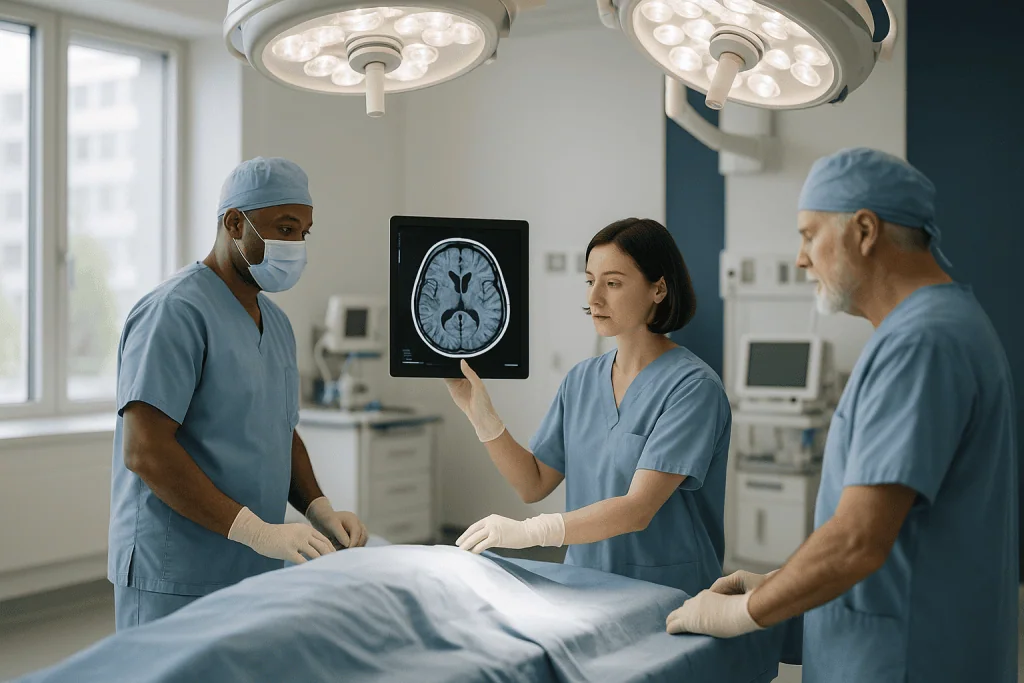
A craniotomy is usually recommended when a problem inside the skull needs to be reached directly and cannot be treated safely or effectively by less invasive means. Your doctor may suggest it if imaging tests such as an MRI (magnetic resonance imaging) or CT (computed tomography) scan show a lesion, bleed, or vessel abnormality that is causing symptoms, is growing, or poses a serious risk if left untreated.
Factors that surgeons weigh when deciding whether craniotomy is appropriate include:
- The location of the problem and how close it lies to areas that control speech, movement, vision, or memory
- Your general health, age, and ability to tolerate general anesthesia (medicine that keeps you fully asleep)
- Whether alternatives exist, such as radiation therapy, endovascular treatment (procedures done through blood vessels using thin tubes), or careful monitoring
- The expected benefit compared with the potential harm
A craniotomy may not be suitable when the lesion is in a part of the brain where surgery would very likely cause severe, permanent damage, when a person is too unwell to undergo a long operation, when a blood-clotting problem cannot be corrected, or when a less invasive option is expected to work just as well. In some cases of advanced cancer that has spread widely, surgery may not change the overall outcome and other care may be more appropriate. These decisions are individual, and a second opinion is reasonable when the choice is not clear-cut.
How the procedure works
Every craniotomy is tailored to the person and the condition, but the general steps are similar.
Before the operation
You will have detailed brain imaging, blood tests, and often a heart check. Many centers use image-guided navigation, in which scans are loaded into a computer system that helps the surgeon locate the target precisely. If the lesion lies near important brain areas, the team may map those areas beforehand with specialized MRI or by testing brain function during surgery.
During the operation
- Most craniotomies are done under general anesthesia. In an awake craniotomy, you are sedated but woken during part of the operation so the team can ask you to speak or move while they work near language or movement areas. This helps protect those functions.
- Your head is positioned and held still in a padded frame. A strip of hair is usually shaved along the planned incision, although some surgeons shave very little.
- The surgeon makes an incision in the scalp and folds the skin back.
- Using a specialized drill and saw, the surgeon cuts a section of bone and lifts it away. The tough membrane covering the brain, called the dura, is then opened.
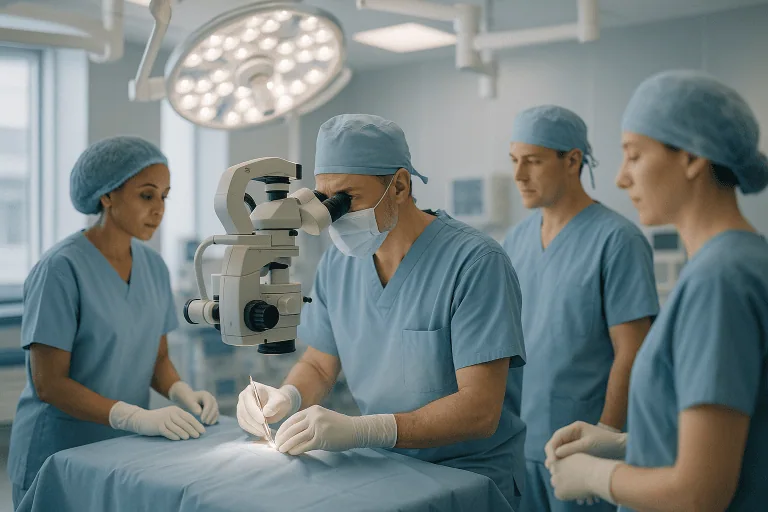
- The planned treatment is carried out, for example removing a tumor, clipping an aneurysm, or draining a blood clot. Surgical microscopes and magnification are commonly used.
- The dura is closed with stitches, the bone flap is returned and fixed with small plates and screws, and the scalp is closed with sutures or staples. A temporary drain is sometimes left in place.
The operation typically lasts several hours, with the exact time depending on the complexity of the problem.
After the operation
You will wake in a recovery area or an intensive care unit, where nurses check your alertness, movement, speech, and pupils frequently. A follow-up scan is often done within the first day or two. You may have a head bandage, an intravenous line, and a urinary catheter for a short period.
Preparation for craniotomy surgery
Careful preparation lowers the chance of complications and helps you recover more smoothly. Your care team will give instructions specific to you, but common steps include:
- Medication review. Tell your doctor about every medicine and supplement you take. Blood thinners such as aspirin, clopidogrel, or warfarin are usually stopped for a period before surgery, but only under medical direction. Some herbal products can also affect bleeding.
- Fasting. You will typically be asked not to eat or drink for a set number of hours before general anesthesia.
- Smoking and alcohol. Stopping smoking as early as possible before surgery improves wound healing and lung function. Alcohol should be limited.
- Pre-operative tests. Blood tests, an electrocardiogram (a recording of the heart’s electrical activity), and updated brain imaging are standard.
- Hair and skin. Wash your hair with a medical shampoo if instructed. Avoid hair products on the day of surgery.
- Practical arrangements. Plan for time off work, help at home, and transport, because you will not be able to drive for some weeks afterward.
- Questions and consent. Make sure you understand the goal of the operation, the alternatives, and the main risks before you sign the consent form.
Recovery and aftercare after craniotomy
Craniotomy recovery varies widely depending on the reason for surgery, your age and health, and whether any complications occur. The following timeline is a general guide only.
In the hospital
Many patients stay in the hospital for several days to about a week. The first night is often spent in intensive care for close monitoring. Headache, swelling around the eyes, and tiredness are common in the first days and are usually managed with pain relief and rest. Physical therapists and speech therapists may assess you early, and you will be encouraged to sit up and walk short distances as soon as it is safe.
The first few weeks at home
- Fatigue is very common and can last for weeks. Short, frequent rests help.
- Keep the incision clean and dry as instructed. Staples or sutures are typically removed at a clinic visit about one to two weeks after surgery.
- Avoid heavy lifting, strenuous exercise, bending with your head down, and contact sports until your surgeon clears you.
- Do not drive until your doctor says it is safe. This is especially important if you have had a seizure or have been prescribed anti-seizure medicine.
- Take medicines as directed, including any steroids to reduce brain swelling or anti-seizure drugs, and do not stop them suddenly.
Longer-term recovery
Many people return to light daily activities within a few weeks and to work in roughly six to twelve weeks, though this depends heavily on the type of job and the underlying condition. Some people notice changes in concentration, memory, mood, or word-finding for a time; these often improve gradually and may benefit from rehabilitation. If the surgery was for a tumor or a vascular condition, ongoing follow-up with scans and possibly additional treatment will be part of your plan. Full recovery of energy and stamina can take several months.
Craniotomy risks and side effects
A craniotomy is major surgery, and although modern techniques have made it considerably safer, it carries real risks. Your surgeon will discuss which of these apply most to your situation.
General surgical risks include infection of the wound or bone flap, bleeding, blood clots in the legs or lungs, pneumonia, and reactions to anesthesia.
Risks specific to brain surgery include:
- Brain swelling in the days after surgery
- Bleeding inside the skull, which occasionally requires a second operation
- Seizures, either new or more frequent
- Stroke, if blood flow to part of the brain is disturbed
- Leakage of cerebrospinal fluid (the clear fluid that surrounds the brain) through the wound
- Weakness, numbness, problems with speech, vision, balance, or memory, which may be temporary or, less commonly, permanent, depending on the area operated on
- Changes in mood, behavior, or thinking
- Hydrocephalus, a buildup of fluid in the brain that may need a drainage device
Common, usually temporary side effects include headache, nausea, a numb or tight feeling around the scar, jaw stiffness if the incision was near the chewing muscles, and fatigue. Very rarely, a craniotomy can be life-threatening. The overall risk depends greatly on the condition being treated, its location, and your general health, so the figures quoted in general sources may not reflect your own situation.
Results and outlook
The outcome of a craniotomy depends mainly on the reason it was done rather than on the opening of the skull itself. For non-cancerous tumors that can be fully removed, surgery is often curative. For cancerous tumors, removing as much as is safely possible can relieve pressure, improve symptoms, and make other treatments such as radiation or chemotherapy more effective, although further therapy is usually needed. Clipping an aneurysm that has not ruptured generally removes the future risk of bleeding from that aneurysm. In epilepsy, some people become seizure-free and others have fewer seizures; results vary with the type and location of the seizure focus.
Neurological function often improves as swelling settles over weeks to months, and rehabilitation can help with residual difficulties. Your surgeon is the best source of information about what is realistic in your case, and it is reasonable to ask how the procedure is expected to change your symptoms, your prognosis, and your need for other treatments.
Cost considerations
The overall cost of a craniotomy varies considerably, and no single figure applies to everyone. The main factors that influence the total include:
- Complexity and length of surgery, including the need for awake techniques, intraoperative monitoring, navigation systems, or a surgical microscope
- Length of hospital stay, particularly the number of nights in intensive care
- Implants and materials, such as titanium plates, aneurysm clips, or synthetic dura patches
- Imaging before and after surgery, and laboratory analysis of removed tissue
- Anesthesia and surgical team fees
- Follow-up care, including clinic visits, repeat scans, rehabilitation, and any further treatment such as radiation
- Management of complications, should they occur
Insurance coverage, public health systems, and hospital pricing policies differ widely. Asking for an itemized estimate in advance and clarifying what is included can help you understand the likely financial picture.
Frequently asked questions
What is the difference between craniotomy vs craniectomy?
In a craniotomy, the section of skull that is removed is replaced at the end of the same operation. In a craniectomy, the bone is deliberately left out for a period, usually to give a severely swollen brain room to expand after a major injury or stroke. The bone, or a custom implant, is put back in a later operation called a cranioplasty once the swelling has resolved.
How long does a craniotomy procedure take?
Most craniotomies take several hours, commonly in the range of three to six, although simpler procedures may be shorter and complex tumor or vascular operations may take longer. The time also includes positioning, anesthesia, and closing the wound, so the period you are away from the ward will be longer than the surgery itself.
How long is craniotomy recovery?
Many patients spend several days to a week in the hospital and then need roughly six to twelve weeks before returning to work, with some variation depending on the job and the underlying condition. Fatigue and difficulty concentrating often persist for weeks. Full recovery of stamina can take several months, and people who need further treatment or rehabilitation may take longer.
Is a craniotomy painful?
You will be asleep and feel nothing during the operation. Afterward, headache and scalp soreness are common but are usually controlled with prescribed pain relief. The brain itself does not have pain receptors, so most discomfort comes from the scalp, muscles, and bone. Numbness or tingling around the scar may last for months as the nerves heal.
Will I have a visible scar or a dent after craniotomy surgery?
The incision is usually placed behind the hairline where possible, and hair typically regrows over the scar. Small plates hold the bone flap in position, and in many cases the contour of the skull is smooth. Some people notice a slight ridge or depression along the edge of the bone flap, and the area may feel different to the touch.
What are the main craniotomy risks I should ask about?
Useful questions include how close the lesion is to areas controlling speech, movement, or vision; the estimated chance of new weakness or speech difficulty; the risk of infection, bleeding, and seizures; and whether an awake craniotomy or other protective measures are planned. Your surgeon can explain how these general risks apply to your specific case.
Can I fly or travel after a craniotomy?
Most surgeons advise waiting until the wound has healed and the follow-up scan is satisfactory before flying, often several weeks. Travel plans should be discussed with your team, especially if you need further treatment or have had seizures, and you should carry a summary of your surgery and medications when you travel.
When to see a doctor
You should be assessed by a specialist if you have symptoms that may point to a problem inside the skull, such as a new or steadily worsening headache, especially one that wakes you at night or is worse in the morning; seizures; unexplained weakness or numbness on one side of the body; difficulty speaking or understanding speech; changes in vision; persistent vomiting without another cause; or noticeable changes in personality, memory, or balance. These symptoms have many possible causes and do not mean you need surgery, but they warrant medical evaluation.
After a craniotomy, seek urgent medical attention if you develop any of the following:
- A severe headache that suddenly worsens or does not respond to your prescribed pain relief
- A seizure, or a new seizure if you have had them before
- New or worsening weakness, numbness, confusion, drowsiness, or difficulty speaking
- Fever, chills, or increasing redness, swelling, warmth, or pus at the wound
- Clear or watery fluid leaking from the incision, nose, or ear
- Repeated vomiting
- Pain, swelling, or redness in a leg, or sudden shortness of breath or chest pain, which can signal a blood clot
- A stiff neck with fever or sensitivity to light
These signs may indicate bleeding, infection, swelling, or fluid leakage and should be checked promptly. If in doubt about any symptom after surgery, it is safer to ask your care team than to wait.
Preparation
- Tell your care team about all medicines and supplements, especially blood thinners, which are usually paused under medical direction. Fast as instructed before general anesthesia and stop smoking as early as possible. Complete pre-operative blood tests, heart checks, and brain imaging. Arrange time off work, help at home, and transport, since you will not be able to drive for some weeks.
Aftercare
- Keep the incision clean and dry and attend the clinic visit for suture or staple removal. Rest frequently, avoid heavy lifting and strenuous activity, and do not drive until cleared by your doctor. Take prescribed medicines, including any steroids or anti-seizure drugs, exactly as directed. Seek urgent care for worsening headache, seizures, fever, wound discharge, or new weakness or confusion.
Medically reviewed by the Acıbadem International Medical Board September 8, 2026
See our medical review board →
Update history
- PublishedSeptember 8, 2026
- Medical review approvedSeptember 8, 2026
- Last content updateSeptember 8, 2026
References2
From the Acibadem Blog

Flying Home After a Craniotomy: How Long International Patients Usually Stay and Why
Most surgical teams ask patients to avoid flying after craniotomy until a follow-up scan shows any trapped air has cleared, the wound has healed,…

Life After a Craniotomy: Hair Regrowth, Scars, Driving and Long-Term Neurosurgery Follow-Up
Life after craniotomy usually means a hospital stay of several days, a scar hidden under regrowing hair within a few months, fatigue that eases…

What Happens During a Craniotomy: From Skin Incision to Replacing the Bone Flap
During a craniotomy, a surgeon makes a scalp incision, drills small holes in the skull and cuts between them to lift out a piece…

How Long Does Craniotomy Recovery Take? Hospital Days, Staple Removal and Returning to Work
Craniotomy recovery time depends heavily on why the surgery was done, but a hospital stay of roughly three to seven days is typical, skin…

Open Brain Surgery: What It Means, What to Expect and When to See a Specialist
Open brain surgery, usually called a craniotomy, is an operation in which a surgeon temporarily removes a section of skull to reach the brain…

Brain Surgery Recovery: A Week-By-Week Timeline and What Speeds It Up
Brain surgery recovery usually means a hospital stay of a few days to about a week, followed by six to twelve weeks of gradually…