Astrocytoma
Learn what an astrocytoma brain tumor is, common astrocytoma symptoms, how grades are assigned, how it is diagnosed, and the treatment options doctors may consider.
Quick answer
An astrocytoma is a brain tumor that starts in astrocytes, star-shaped support cells in the brain and spinal cord. Astrocytomas are graded 1 to 4 based on how fast they grow. Symptoms include headaches, seizures, weakness, and vision or speech changes. Treatment often involves surgery, sometimes followed by radiation therapy and chemotherapy.
What is astrocytoma?
An astrocytoma is a type of brain tumor that starts in cells called astrocytes. Astrocytes are star-shaped support cells in the brain and spinal cord. They belong to a larger family of cells called glial cells, which is why an astrocytoma is also described as a glioma (a tumor that grows from glial cells). An astrocytoma brain tumor forms when these cells begin to grow and divide in an uncontrolled way.
Astrocytomas are among the most common tumors that begin in the brain itself, as opposed to cancers that spread to the brain from another part of the body. They can develop at almost any age. Some types, such as pilocytic astrocytoma, are seen mainly in children and young adults and usually grow slowly. Other types are more common in adults and can grow more quickly. Astrocytomas can appear in many parts of the brain, including the cerebrum (the large upper part of the brain that controls thought and movement), the cerebellum (the area at the back of the head that helps with balance), the brainstem, and, less often, the spinal cord.
Doctors describe astrocytomas by grade, which reflects how abnormal the cells look under a microscope and how fast the tumor is likely to grow. Astrocytoma grades run from 1 to 4. Grade 1 and grade 2 tumors are often called low-grade and tend to grow slowly. Grade 3 and grade 4 tumors are called high-grade and tend to grow faster and behave more aggressively. Modern classification also looks at genetic features of the tumor cells, such as a change in a gene called IDH, because these features help predict how the tumor is likely to behave and which treatments may be most useful. In most hospitals, including Acibadem, care for these tumors is coordinated by neurosurgery together with neuro-oncology, radiation oncology, and pathology teams.
Astrocytoma symptoms
Astrocytoma symptoms depend on where the tumor is, how large it is, and how quickly it is growing. Some tumors cause symptoms because they press on nearby brain tissue. Others raise the pressure inside the skull or cause swelling in the surrounding brain. Common symptoms include:
- Headaches, especially ones that are new, worsening, or worse in the morning or when lying down
- Seizures (sudden bursts of abnormal electrical activity in the brain that can cause shaking, staring spells, or loss of awareness)
- Nausea and vomiting, particularly when combined with headache
- Weakness or numbness in an arm, a leg, or one side of the face or body
- Problems with speech, such as difficulty finding words or understanding others
- Vision changes, including blurred or double vision or loss of part of the visual field
- Balance and coordination problems or unsteady walking
- Changes in memory, thinking, personality, or behavior
- Unusual drowsiness or confusion
Low-grade astrocytomas often grow slowly, so symptoms may develop gradually over months or even years. In many cases, the first sign of a slow-growing tumor is a seizure in a person who has never had one before. High-grade tumors tend to cause symptoms that appear and worsen over weeks rather than months. In children, tumors in the cerebellum or brainstem may cause clumsiness, headaches with vomiting, eye movement problems, or a head tilt. In very young children, an enlarging head size or delayed development may be noticed. None of these symptoms is specific to astrocytoma; many have other, more common explanations, which is why medical evaluation is needed to find the cause.
Causes and risk factors
In most people, the exact cause of an astrocytoma is not known. The tumor begins when changes, called mutations, occur in the DNA of astrocytes. These changes allow the cells to grow and divide when they normally would not and to avoid the signals that would usually make abnormal cells die. Researchers have identified several of these genetic changes, such as mutations in the IDH1 or IDH2 genes, loss of a gene called ATRX, and changes in the TP53 gene, but why these mutations happen in a particular person is usually unclear.
A few risk factors are widely accepted:
- Age: pilocytic astrocytomas are more common in children and young adults, while higher-grade astrocytomas are more common in middle-aged and older adults.
- Previous radiation to the head: people who received radiation therapy to the brain, often for another cancer in childhood, have a somewhat higher risk of developing a glioma years later.
- Inherited genetic syndromes: rare conditions such as neurofibromatosis type 1, tuberous sclerosis, and Li-Fraumeni syndrome raise the risk of astrocytoma and other tumors.
- Family history: having a close relative with a glioma slightly increases risk, although most astrocytomas occur in people with no family history.
Many people worry about mobile phone use, head injuries, diet, or exposure to power lines. Large studies have not established a clear link between these factors and astrocytoma. Astrocytomas are not contagious and are not caused by anything a person did or failed to do.
Diagnosis
Diagnosing an astrocytoma usually begins with a neurological examination. A doctor will check vision, hearing, strength, sensation, reflexes, coordination, and thinking. If the examination or the symptoms raise concern about a brain tumor, imaging is the next step.
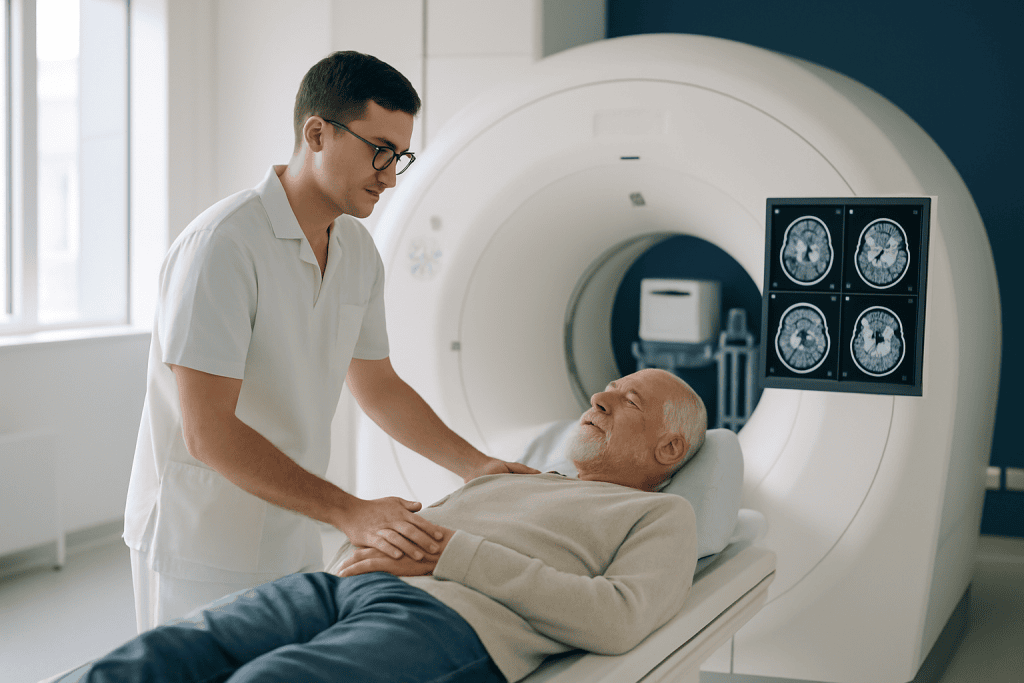
- Magnetic resonance imaging (MRI): MRI uses magnets and radio waves to create detailed pictures of the brain. It is the main test for finding and describing a brain tumor. A contrast dye is often injected into a vein to make the tumor and its borders easier to see. Special MRI techniques may also be used to study blood flow, chemical makeup, and the pathways of nerve fibers near the tumor.
- Computed tomography (CT): a CT scan uses X-rays and is often the first test done in an emergency because it is fast. It can show swelling, bleeding, or a mass, but MRI gives more detail.
- Biopsy: a biopsy means removing a small piece of the tumor so that a pathologist can examine it under a microscope. It may be done with a thin needle guided by imaging (a stereotactic biopsy) or as part of surgery to remove the tumor. A biopsy is the only way to confirm that a mass is an astrocytoma and to determine its grade.
- Molecular and genetic testing: the tumor tissue is tested for specific changes, including IDH mutation, a marker called 1p/19q codeletion, and MGMT promoter methylation. These results are now part of the formal diagnosis and help guide treatment decisions.
Other tests are sometimes used depending on the situation. An electroencephalogram (EEG), which records the brain’s electrical activity, may be performed in people who have had seizures. Eye examinations and hearing tests can help map how the tumor is affecting function. In some cases, a lumbar puncture (spinal tap) is used to check whether tumor cells have spread into the fluid around the brain and spinal cord, although this is less common with astrocytomas than with some other tumor types. The final diagnosis combines what is seen on imaging, under the microscope, and in the molecular tests, following the World Health Organization classification of central nervous system tumors.
Astrocytoma treatment options
Astrocytoma treatment is individualized. The plan depends on the tumor’s grade and molecular features, its location, its size, the person’s age and general health, and the symptoms it is causing. Most people are cared for by a team that includes a neurosurgeon, a neuro-oncologist (a doctor who specializes in tumors of the nervous system), a radiation oncologist, a pathologist, nurses, and rehabilitation specialists.
- Observation: for some small, slow-growing, low-grade tumors that cause few or no symptoms, doctors may recommend regular MRI scans rather than immediate treatment. This is sometimes called active surveillance. Treatment is started if the tumor grows or symptoms develop.
- Surgery: when it is safe to do so, surgeons aim to remove as much of the tumor as possible without damaging important areas of the brain. This is often the first treatment for both low-grade and high-grade astrocytomas. Techniques such as intraoperative imaging, brain mapping, and awake surgery may be used to protect speech, movement, and other functions. Some tumors, such as those deep in the brainstem, cannot be removed safely, and a biopsy alone may be performed. Surgical care is typically provided through a hospital’s neurosurgery department.
- Radiation therapy: radiation uses high-energy beams to damage tumor cells. It is commonly recommended after surgery for high-grade astrocytomas and for low-grade tumors that could not be fully removed or that have features suggesting a higher risk of growth. Treatment is usually given in daily sessions over several weeks.
- Chemotherapy: chemotherapy uses medicines that kill or slow the growth of rapidly dividing cells. Temozolomide, an oral medicine, is frequently used for higher-grade astrocytomas, often together with radiation and then for several months afterward. Other drug combinations may be used for certain tumor types or in children.
- Targeted therapy: newer medicines act on specific genetic changes in tumor cells. For example, drugs that block the abnormal IDH protein have been developed for certain IDH-mutant low-grade gliomas, and drugs targeting BRAF changes may be used for some pediatric low-grade astrocytomas. Whether these options are suitable depends on the molecular test results.
- Supportive medications: corticosteroids such as dexamethasone can reduce brain swelling and relieve symptoms. Anti-seizure medicines are prescribed for people who have had seizures. Other medicines help with nausea, pain, fatigue, or mood.
- Rehabilitation: physical therapy, occupational therapy, and speech and language therapy help people regain strength, coordination, daily skills, and communication after surgery or during treatment. Neuropsychological support can help with memory and concentration difficulties.
Clinical trials, which are research studies testing new treatments, may be an option for some people, especially those with high-grade tumors or tumors that have returned after treatment. Your doctor may discuss whether a trial is appropriate. Treatment plans are often adjusted over time based on follow-up imaging and how the person is responding.
Living with astrocytoma and outlook
The outlook for a person with an astrocytoma varies widely. The astrocytoma survival rate depends heavily on the grade of the tumor, its molecular features, its location, how much of it could be removed, the person’s age, and their overall health. In general, low-grade astrocytomas, particularly grade 1 pilocytic astrocytomas in children, are associated with a good long-term outlook, and many people live for many years or are effectively cured after complete surgical removal. Grade 2 tumors may remain stable for long periods but can grow or change into a higher grade over time, so long-term monitoring is important. High-grade astrocytomas, especially grade 4 tumors, are more difficult to control, and treatment often aims to slow the disease, relieve symptoms, and maintain quality of life for as long as possible.
Survival statistics that appear online are averages drawn from large groups of people and cannot predict what will happen to any one individual. Your treatment team is best placed to discuss what the numbers may mean in your particular situation. Follow-up usually involves regular MRI scans, typically every few months at first and then less often if the tumor remains stable.
Living with an astrocytoma affects daily life in practical ways. Many people need to stop driving after a seizure or surgery, at least temporarily, according to local regulations. Fatigue is common during and after treatment. Changes in memory, concentration, mood, or personality can be difficult for the person and for family members. Support from rehabilitation specialists, social workers, counselors, and patient support groups can help. Caregivers also benefit from support, since caring for someone with a brain tumor can be demanding. Palliative care, which focuses on comfort and quality of life, can be helpful at any stage of the illness and is not only for the end of life.
Frequently asked questions
Is an astrocytoma brain tumor cancer?
Astrocytomas are considered a form of brain cancer, although they behave very differently depending on grade. Grade 1 tumors grow slowly and rarely spread, so some doctors describe them as benign, meaning non-cancerous, in their behavior. Higher-grade astrocytomas are malignant, meaning they grow into surrounding tissue and are more aggressive. Even low-grade tumors are followed closely because they can change over time.
What are the different astrocytoma grades?
Astrocytoma grades range from 1 to 4. Grade 1 includes pilocytic astrocytoma, which is most common in children. Grade 2 is a slow-growing diffuse astrocytoma. Grade 3 tumors show more abnormal, faster-dividing cells. Grade 4 is the most aggressive grade and includes glioblastoma. Current classification also uses genetic markers, such as IDH status, alongside the grade to describe the tumor more precisely.
What are the first astrocytoma symptoms people notice?
Early astrocytoma symptoms often include headaches that are new or different from usual, seizures, and gradual changes in speech, vision, strength, or balance. Some people notice subtle personality or memory changes first. Because these symptoms can have many causes, they do not mean a person has a tumor, but persistent or worsening neurological symptoms should always be evaluated by a doctor.
What does astrocytoma treatment usually involve?
Astrocytoma treatment commonly starts with surgery to remove as much of the tumor as safely possible. Depending on the grade and molecular features, radiation therapy and chemotherapy may follow. Some low-grade tumors are monitored with regular scans rather than treated immediately. Medicines to control seizures and swelling, along with rehabilitation therapy, are important parts of care for many people.
What is the astrocytoma survival rate?
There is no single astrocytoma survival rate because the outlook differs so much by grade, tumor genetics, location, age, and treatment response. Low-grade tumors, particularly in children, often have a favorable long-term outlook. High-grade tumors are more serious and harder to control. Published statistics reflect large groups of people and past treatments, so they cannot predict an individual’s course. Your medical team can explain what is known for your specific type.
Can an astrocytoma come back after treatment?
Yes, astrocytomas can return, or recur, even after apparently successful treatment. This is because tumor cells can extend into surrounding brain tissue beyond what is visible on scans or removed during surgery. Low-grade tumors may also recur as a higher grade. For this reason, long-term follow-up with regular MRI scans is standard, and further surgery, radiation, or medication may be considered if the tumor returns.
Can astrocytoma be prevented?
There is no known way to prevent astrocytoma. Most cases occur without any identifiable cause, and known risk factors such as age, inherited syndromes, and prior radiation therapy cannot be changed. People with a genetic syndrome that raises tumor risk may be offered regular monitoring so that any tumor is found early, but this does not prevent one from forming.
When to see a doctor
Many of the symptoms described on this page have common, harmless causes, but some warning signs need prompt medical attention. Seek emergency care right away if you or someone near you experiences any of the following:
- A first-ever seizure, or a seizure that lasts more than five minutes or repeats without recovery in between
- A sudden, severe headache unlike any headache experienced before, especially with vomiting, stiff neck, or confusion
- Sudden weakness, numbness, or drooping on one side of the face or body
- Sudden difficulty speaking, understanding speech, or seeing
- Loss of consciousness, extreme drowsiness, or difficulty waking
- New confusion or a marked change in behavior that develops over hours
Arrange a non-urgent appointment with a doctor if you have headaches that are becoming more frequent or severe over weeks, headaches that are worse in the morning or that wake you from sleep, gradual changes in vision, balance, memory, or personality, or persistent nausea without an obvious cause. People who have already been diagnosed with an astrocytoma should report new or worsening symptoms to their treatment team, since these may signal swelling, tumor growth, or side effects of treatment that can often be managed if addressed early.
Medically reviewed by the Acıbadem International Medical Board September 8, 2026
See our medical review board →
Update history
- PublishedSeptember 8, 2026
- Medical review approvedSeptember 8, 2026
- Last content updateSeptember 8, 2026