

Fat Grafting vs Dermal Fillers for the Face: Longevity, Downtime and Who Suits Each
Key Takeaways
- Hyaluronic acid fillers are typically expected to last about 6 to 18 months according to the NHS, with mobile areas such as the lips fading faster than deep cheek placement.
- A variable share of transferred fat is resorbed in the first months, which is why surgeons often place extra volume and sometimes plan a second session from the start.
- Hyaluronic acid filler can be dissolved with the enzyme hyaluronidase, while fat and collagen-stimulating fillers cannot, making reversibility a decisive difference for first-time volume treatment.
- Visible facial swelling after fat grafting usually lasts around two to three weeks, and the donor site can stay bruised and swollen for several weeks, per MedlinePlus's liposuction guidance.
- Both fat and fillers carry a rare risk of blocking a facial artery; sudden skin blanching, mottling, severe pain or any vision change after injection is an emergency.
- Grafted fat is living tissue that can grow or shrink with body weight and continues to age, so it is better described as long-lasting than as permanent.
Fat grafting moves a person's own fat from one body area to the face, and the portion that survives can last for years, but it is surgery with weeks of swelling and less predictability. Dermal fillers are injected gels that typically last around 6 to 18 months, need little downtime and can be adjusted or, for hyaluronic acid types, dissolved. Neither is universally better; the choice depends on anatomy, goals and health.
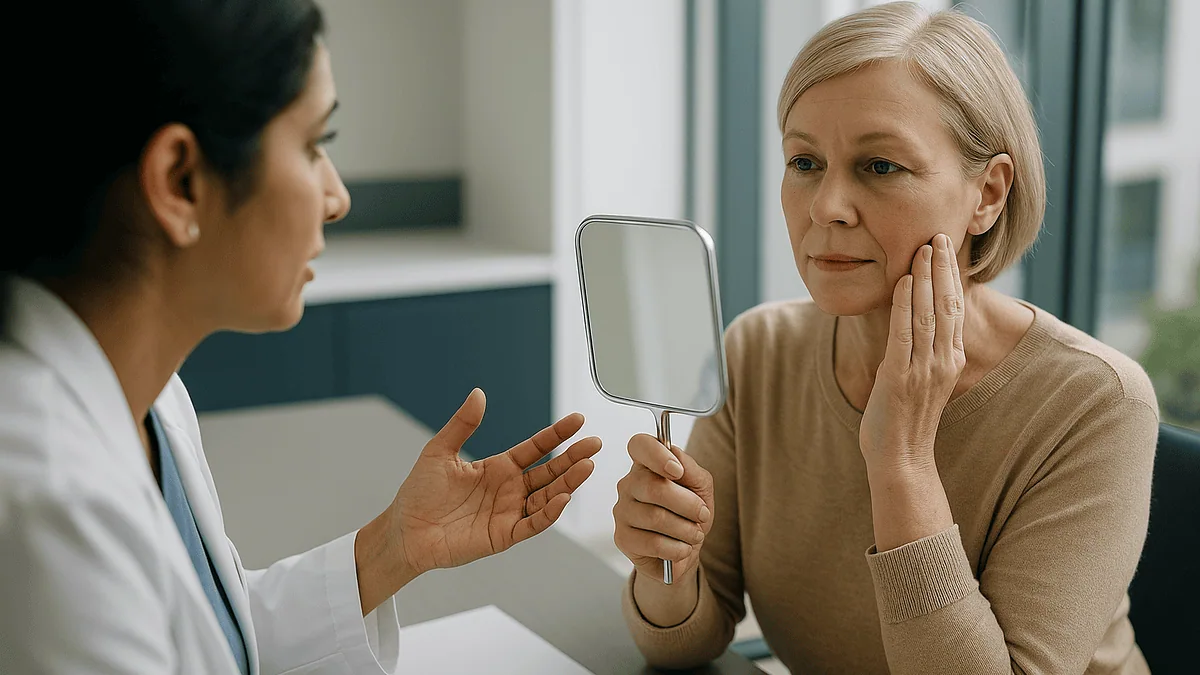
The photograph that started it was not a bad one. It was a candid from a nephew’s graduation, taken in flat afternoon light, and the woman in it looked tired in a way she did not feel. Not older, exactly. Hollow. The cheeks that used to catch light now cast a small shadow, and the corners of the mouth had begun to tug downward as if weighted.
She did what most people do next: she typed fat grafting vs fillers into a search bar and got a wall of confident answers, half of them from people selling one or the other. Some promised permanence. Others promised no downtime. Very few explained what actually happens to a gel, or to a living cell, once it is placed under the skin of a moving face.
This article is the version of that conversation she deserved: what each option involves, what the evidence supports about how long results tend to last, what recovery honestly looks like, and who tends to be steered toward one, the other, both, or neither.
Fat grafting vs fillers: two ways to restore volume that behave nothing alike
Both procedures answer the same complaint. As faces age, the fat pads that sit over the cheekbones, under the eyes and beside the mouth shrink and slide, the bone beneath loses some of its projection, and the skin drapes over less scaffolding. Restoring volume can soften shadows and, in the right hands, make a face look rested rather than “done.”
Here the resemblance ends. A dermal filler is a manufactured gel, most commonly made of hyaluronic acid, a sugar molecule that occurs naturally in skin and holds water. It is injected in a clinic visit and gradually broken down by the body over months. Fat grafting, also called autologous fat transfer (autologous simply means taken from your own body), is a surgical procedure: fat is harvested from the abdomen, flanks or thighs with a thin tube, processed, and reinjected into the face in small threads. The fat that establishes a blood supply becomes living tissue that ages with you.
That single difference, gel versus living cells, explains almost everything else in the comparison. Gel is predictable in volume and can be dissolved if it is hyaluronic acid; fat is unpredictable in how much survives but is not designed to disappear. Gel involves a needle-prick recovery; fat involves two operative sites and weeks of swelling. Gel is repeated; fat is, ideally, done once or twice.
Cleveland Clinic’s overview of dermal fillers and MedlinePlus’s description of liposuction, the harvesting step of fat grafting, are useful neutral starting points for readers who want the clinical vocabulary without the marketing.
How dermal fillers work: what actually happens during a filler appointment
A filler visit is short, but the decisions inside it are not. The practitioner first assesses where volume has been lost and what is causing the shadow: a deflated cheek, a bony hollow under the eye, or a fold created by descent rather than deficit. Filling a fold that is caused by sagging tissue above it tends to look heavy, which is why a good assessment sometimes redirects product to the cheek rather than the crease.
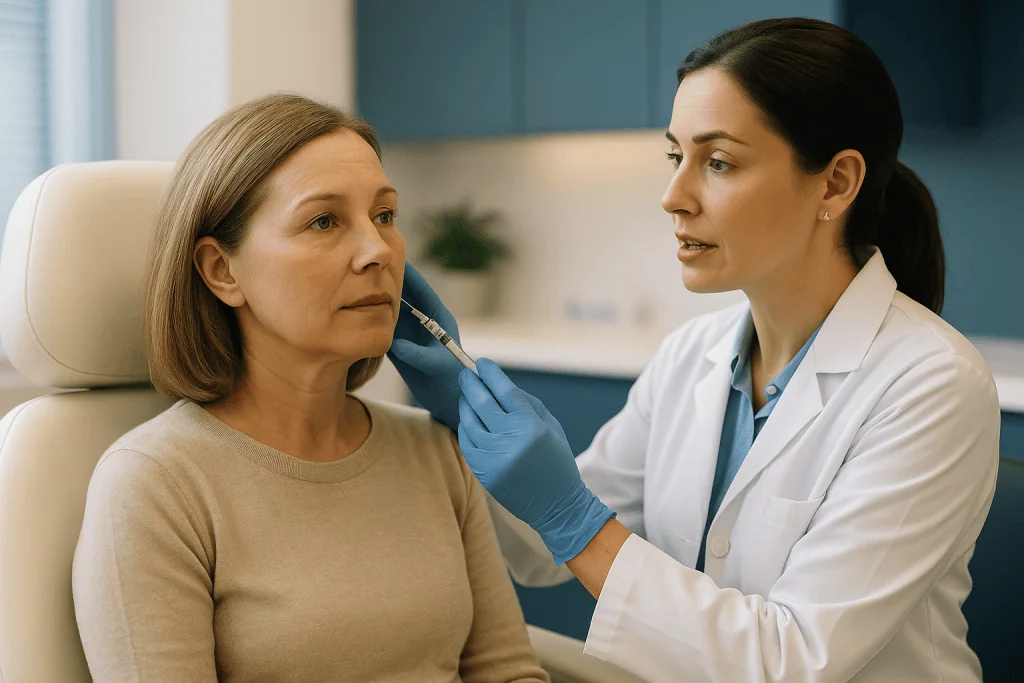
Numbing is usually topical cream, a local anesthetic mixed into the product, or both. The gel is then placed with a needle or a cannula, a blunt-tipped flexible tube that slides between tissue planes rather than piercing through them and is often chosen in areas with important blood vessels. Placement depth matters: deeper placement on bone gives structural lift, while superficial placement smooths fine lines. Mold-and-check is part of the process; the practitioner massages the product and looks at the face from several angles before deciding whether to add more.
Hyaluronic acid fillers are the most used class because they attract water, feel soft, and can be dissolved with hyaluronidase, an enzyme that breaks the gel apart. Other classes exist. Calcium hydroxylapatite and poly-L-lactic acid work partly by stimulating the body to lay down its own collagen, a slower and less reversible effect. None of these is described here as a recommendation; which class, if any, suits a particular face is a decision for the treating clinician.
The NHS notes that dermal fillers are not permanent and that results are typically expected to fade over months rather than years, which is why most people who like the effect return for maintenance.
How facial fat transfer works: harvest, processing and placement
Fat grafting is best understood as three procedures in one session. The first is a small liposuction. Under local anesthesia with sedation, or general anesthesia depending on the extent, the surgeon injects a fluid into the donor area to numb it and shrink blood vessels, then draws out fat through a thin cannula. MedlinePlus describes this harvesting step, including that donor sites are commonly the abdomen, hips or thighs and that the volumes removed for facial work are small compared with body-contouring liposuction.
The second step is processing. Raw aspirate contains fat cells, blood, anesthetic fluid and ruptured oil. Surgeons separate the usable fat by letting it settle, spinning it gently, or filtering and rinsing it. The goal is intact fat cells in as little fluid as possible, because damaged cells will not survive and excess fluid causes early swelling that misleads everyone about the result.
The third step is placement, and it is where technique shows. Fat is injected in many tiny threads, each thin enough that surrounding tissue can feed it. Fat cells have no blood supply of their own on arrival; they survive by diffusion for the first days and then by growing new capillaries into the graft. Cells placed in a clump starve in the middle. That is why surgeons layer fat through multiple planes and passes rather than depositing a single bolus.
A concept patients should hear clearly at consultation: a portion of every graft is resorbed in the first months. Published series report a wide range of survival between individuals and techniques, which is why surgeons often place slightly more than the final volume they hope to see and why a second session is sometimes planned from the outset.
How long does fat grafting last compared with fillers?
This is the question that drives most searches, and the honest answer has two halves.

For hyaluronic acid fillers, the NHS gives a typical range of about 6 to 18 months, with product thickness, placement depth and the mobility of the area all affecting how quickly the body breaks it down. Lips and the lines around the mouth, which move constantly, tend toward the shorter end; deep cheek placement tends toward the longer end. Collagen-stimulating fillers are generally described as lasting longer than hyaluronic acid, though their effect builds gradually and depends on the individual’s collagen response. Cleveland Clinic’s dermal filler overview frames all of these as temporary treatments that require repeat sessions to maintain.
For fat, the timeline is a curve rather than a range. Early volume is inflated by swelling and by fat that has not yet declared whether it will live. Over roughly the first three to six months, non-surviving cells are cleared and swelling resolves, so the face appears to lose volume. What remains at that point has a blood supply and is expected to persist much as native fat does, which is why surgeons describe surviving graft as long-lasting rather than permanent: it still ages, shifts with body weight and follows the same slow deflation as the rest of the face.
Two caveats keep this honest. First, the fraction that survives cannot be promised to any individual; systematic reviews indexed on PubMed describe substantial variability between studies and patients. Second, “lasts longer” is only an advantage if the result is the one you wanted. A slightly overfilled cheek from a filler is a months-long problem. The same overfill from fat may need surgical correction.
Facial fat transfer downtime versus filler downtime: the days and weeks after
Recovery is where the two options diverge most sharply for real life, so it helps to walk through a calendar.
After fillers, most people leave with mild redness and some puffiness at injection points. The NHS lists swelling, bruising, tenderness and itching as common short-term effects that usually settle within days. Bruising is the main cosmetic nuisance and is more likely in people who take blood-thinning medicines or supplements, which is a conversation to have with the prescribing clinician beforehand, never a reason to stop anything on your own. Many people return to work the same or next day and simply avoid heavy exercise and firm pressure on the area for a short period as advised.
Fat grafting follows a surgical rhythm. The face is typically quite swollen for the first one to two weeks, often more than people expect, because the surgeon has placed extra volume and the tissue has been tunneled through many times. Bruising can be pronounced around the eyes and jawline. The donor site is its own small recovery: MedlinePlus notes that after liposuction, bruising and swelling can persist for several weeks and that the final contour may take months to become apparent, with a compression garment commonly worn over the harvested area for comfort and to limit swelling.
Most people feel presentable, if still a little full, at around two to three weeks after facial fat grafting, and social confidence usually returns before the true result is visible. The face keeps changing for months as swelling clears and non-surviving fat is absorbed. Judging the outcome earlier than the surgeon advises is the most common source of premature disappointment.
Who suits fat grafting, who suits fillers, and who is usually asked to wait
Suitability is less about age than about anatomy, goals and appetite for surgery.
Fillers are often favored when the volume deficit is modest, when the person wants to preview an effect before committing to anything lasting, when precision matters more than quantity (a tear trough or a single asymmetric spot), or when downtime simply is not available. They also suit people whose weight fluctuates, since fat grafts can enlarge or shrink with body weight while a gel does not.
Fat grafting tends to enter the conversation when volume loss is broad and involves several regions at once, when the person is already having facial surgery such as a facelift and fat can be placed during the same anesthetic, when a history of reacting to fillers makes an autologous material appealing, or when someone has decided that years of maintenance visits are not for them. It requires a suitable donor site; very lean individuals may have too little accessible fat.
Both procedures usually involve a pause for people who are pregnant or breastfeeding, who have an active skin infection near the treatment area, or who have an unstable medical condition. Fat grafting adds surgical considerations: smoking impairs the tiny blood vessels grafts depend on and is commonly a reason to defer, and uncontrolled diabetes, bleeding disorders and certain medicines raise operative risk. Mayo Clinic’s guidance on preparing for cosmetic surgery emphasizes disclosing every medicine and supplement and having realistic expectations discussed openly before booking.
Anyone with a very recent significant life change, or who feels pressured by another person to alter their face, is often gently asked to wait as well. Time is not a complication.
Fat transfer vs filler at a glance: a side-by-side table
Tables flatten nuance, so treat this one as a map rather than a verdict. Every row has exceptions that a face-to-face assessment can uncover.
| Feature | Dermal fillers | Facial fat grafting |
|---|---|---|
| Material | Manufactured gel, most often hyaluronic acid | Your own fat, harvested and reinjected |
| Setting | Clinic visit, topical or local numbing | Operating setting; local with sedation or general anesthesia |
| Typical duration | About 6 to 18 months for hyaluronic acid types (NHS) | Surviving graft persists long term; early partial resorption expected |
| Predictability of volume | High: what is injected is what stays until it degrades | Moderate: survival varies between people and sites |
| Reversibility | Hyaluronic acid can be dissolved with an enzyme; other classes cannot | Not dissolvable; correction may require surgery |
| Downtime | Hours to a few days of swelling or bruising | Roughly two to three weeks of visible swelling; donor site heals over weeks |
| Serious risk profile | Rare vascular occlusion, including vision loss | Anesthetic and surgical risks plus rare fat embolism and vascular injury |
| Effect of weight change | None on the gel itself | Grafted fat can grow or shrink with body weight |
| Maintenance | Repeat sessions to maintain | Often one to two sessions; ages naturally afterward |
The row that people underweight when deciding is reversibility. The row they overweight is duration. A face is not a bathroom renovation where longer-lasting is automatically better; it is closer to a haircut that grows out, where a mistake you can undo is worth a great deal.
What are the downsides of fat grafting?
Enthusiasm for fat grafting is understandable. It is your own tissue, it can last, and it treats several areas in one sitting. The downsides deserve equal airtime.
Unpredictability comes first. Because a variable share of the graft is resorbed, the surgeon is estimating a moving target. Under-correction may need a second procedure. Over-correction, particularly around the eyes where skin is thin, can leave contour irregularities or a fullness that does not match the rest of the face. Fat placed in someone who later gains weight can enlarge disproportionately in the treated area; the reverse happens with weight loss.
Palpable lumps and oil cysts occur when fat is placed in clumps and the center dies. They may soften with time or massage, but some persist and require aspiration or excision. Asymmetry between sides is possible when survival differs, as it often does.
Then there are the surgical realities. MedlinePlus lists the general risks of liposuction, which apply to the donor site: bleeding, infection, fluid collections, numbness, contour irregularity and reactions to anesthesia. Small facial scars at the entry points usually fade but are permanent. Rare but serious complications include injury to facial blood vessels or nerves, and fat embolism, in which fat enters a blood vessel and travels to the lungs, eyes or brain. Systematic reviews indexed on PubMed describe these severe events as uncommon and largely associated with injection technique and anatomy, which is one reason surgeons use blunt cannulas and low-pressure injection near vessel-rich zones.
Fat grafting also asks more of you: a surgical facility, a longer recovery, a compression garment, and patience while the result declares itself over months. For some people that trade is welcome. For others, it is a compelling reason to start with filler.
What are the risks of dermal fillers, and how rare are the serious ones?
Fillers sit on the “low downtime” side of the ledger, and that can make them sound risk-free. They are not.
Common, self-limiting effects are the ones the NHS lists: redness, swelling, bruising, tenderness and itching at the injection sites, usually settling within days. Small lumps or slight asymmetry can occur, particularly in thin-skinned areas, and hyaluronic acid can produce a bluish tint if placed too superficially under the eyes. These are irritating rather than dangerous and are often correctable.
Delayed reactions are less common. Firm nodules can appear weeks to months after injection, sometimes after an unrelated illness or dental work; the mechanism is thought to involve the immune system reacting to the product. Infection at the site is possible with any injection and is why practitioners cleanse skin and ask about active cold sores or acne before treating.
The serious complication is vascular occlusion, where filler enters or compresses an artery and blocks blood flow to skin, causing pain, blanching or mottled discoloration within minutes to hours and, if untreated, tissue death and scarring. When the affected vessel connects to the circulation of the eye, vision loss can result, and it is often irreversible. Harvard Health’s discussion of fillers is direct about this: the risk is rare, but it is real, and it is one reason the same publication stresses treatment by an appropriately trained medical professional in a setting equipped to recognize and manage complications promptly.
Hyaluronic acid products can be dissolved with hyaluronidase in an emergency, which is a meaningful safety advantage and part of why that class dominates. Non-dissolvable fillers and fat share the disadvantage that a vascular event cannot be reversed the same way.
Can you undo or adjust the result if you do not like it?
Ask this before anything is injected, because the answers differ so much that they can settle the whole decision.
Hyaluronic acid filler is the most adjustable option available. If a cheek looks too full or a lip too heavy, the practitioner can inject hyaluronidase, an enzyme that breaks down hyaluronic acid, and the gel softens or disappears over hours to days. The enzyme also acts on the body’s own hyaluronic acid, so a brief period of slight deflation is possible before natural levels recover, and allergic reactions to the enzyme are possible though uncommon. Small touch-ups to add volume are equally straightforward. Cleveland Clinic describes this adjustability as one of the main reasons people often start with this class of filler when trying volume restoration for the first time.
Collagen-stimulating fillers cannot be dissolved. Lumps or overcorrection are managed with massage, time, sometimes injected anti-inflammatory medicines under a clinician’s direction, and occasionally excision. This is why they are usually reserved for people who have already learned how their face responds to added volume.
Fat is at the far end of the spectrum. Surviving fat is living tissue. Reducing it means small-volume liposuction of the face, direct excision through a hidden incision, or injections intended to shrink fat cells, each with its own recovery and its own risk of irregularity. Adding fat means another harvest. None of this is impossible, but every correction is a procedure rather than a visit.
Framed this way, the comparison shifts from “which lasts longer” to “how confident are we in the plan.” People who are certain about the look they want, who have often previewed it with filler first, are the ones for whom fat’s permanence is an advantage rather than a gamble.
Is face fat grafting worth it? How to weigh value without a price tag
This article does not give costs, because prices vary by region, facility, anesthesia type and how many areas are treated, and any figure printed here would mislead more people than it helped. Your care team can provide an itemized estimate. What can be offered is a way to think about value that survives contact with real life.
Start with total exposure, not one procedure. Someone who enjoys filler results and maintains them for a decade will attend many appointments, each with its own small recovery and small risk. Someone who has fat grafting may have one operation, a longer recovery, and a result that then ages with them, possibly with a planned second session. Neither path is cheaper or safer in the abstract; they distribute time, risk and money differently.
Consider also what you are buying. Filler buys precision, reversibility and the option to change your mind as fashions and your face evolve. Fat buys durability, the possibility of treating many regions at once, and freedom from a product that will need replacing. Ask yourself which of those you value and which you would regret losing.
Finally, account for the outcome you cannot see in advance. The variability in fat survival is not a flaw in any one surgeon; it is biology, and it means a perfect fat result cannot be guaranteed on the first attempt. Mayo Clinic’s guidance on cosmetic surgery is blunt that people who expect a procedure to transform their life, rather than a feature, are more likely to be disappointed. “Worth it” is therefore a question you answer for yourself after a consultation in which the surgeon has described what fat is likely to do for your specific face, not what it did in a curated gallery.
What people often get wrong about fat grafting vs fillers
Myths in this field are rarely outright lies. Most are half-truths worn smooth by repetition.
“Fat is natural, so it is safer.” Fat is your own tissue and cannot cause a foreign-body reaction, which is genuinely reassuring. But it is delivered through surgery, with anesthesia, a donor site and the same rare but serious vascular risks that any injected volume carries near facial arteries. Natural describes the material, not the risk profile.
“Fat grafting is permanent.” Surviving fat is long-lasting, but it is alive, which means it changes with weight, continues to age, and still sits on bone and skin that keep changing. A fat result at year ten is not the fat result at year one.
“Fillers stretch the skin so you look worse when they wear off.” Hyaluronic acid degrades gradually and the skin’s own hyaluronic acid turns over constantly. There is no good evidence from mainstream sources that appropriately placed filler leaves a face worse than it would have been without treatment; what people perceive as worsening is usually the underlying aging that was masked.
“More product means a better result.” Faces read as overfilled long before they read as young. Practitioners who add volume in small increments across visits are not being stingy; they are respecting the fact that light and shadow, not bulk, create the impression of youth.
“Fat grafting replaces a facelift.” Volume addresses deflation. Sagging is a separate problem of tissue descent. Adding fat to a face that primarily needs lifting can make it look heavier. Many surgeons combine the two precisely because they solve different things.
“Anyone can inject.” Both procedures carry the risk of blocking a facial artery. Harvard Health is explicit that training and the ability to recognize and manage complications matter more than the product used.
Questions to ask your care team before choosing fat transfer or filler
A good consultation should feel like a shared diagnosis of the problem rather than a pitch for a solution. These questions help keep it that way.
- Looking at my face specifically, is the change I dislike mainly volume loss, tissue descent, skin quality or a combination? Which of those would each option address, and which would it leave alone?
- If you recommend filler, which class and why? Is it dissolvable, and do you keep hyaluronidase on hand?
- If you recommend fat, where would you harvest from, roughly how much would you place, and what is your usual approach to the expected partial resorption? How often do your patients need a second session?
- What does your own experience suggest about survival in the specific areas we are discussing, and how does that compare with what published reviews report?
- What anesthesia would be used, where would the procedure take place, and what emergency provisions are in place?
- What are the earliest warning signs of a vascular complication, and what should I do if I notice them after hours?
- How will my result look at one week, one month and six months, and when would you consider it settled enough to judge?
- Which of my current medicines and supplements do you want to know about, and who will advise me on them? (Never adjust anything without the prescriber’s instruction.)
- If I dislike the result, what are the realistic correction options for each choice?
- Would you advise me to wait, and if so, why?
Notice what is missing: any question about which option is “best.” That word does not survive an honest assessment of a real face. The decision, including whether to proceed at all, sits with you and the treating team together.
When to call your doctor after fat grafting or fillers
Most recoveries are uneventful, and some swelling, bruising and tenderness are expected after either procedure. A few signs are different in kind and should prompt an immediate call to the treating team or, if they are unreachable, urgent medical care.
After either procedure, seek help right away for: severe or worsening pain out of proportion to the treatment; skin that turns white, dusky, purple or develops a lace-like mottled pattern, especially if it is cold or painful, since this can signal that a blood vessel is blocked; any change in vision, including blurring, loss of part of the visual field or double vision; sudden difficulty speaking, facial weakness or confusion; and new or spreading redness with warmth, fever or pus, which may indicate infection.
After fat grafting specifically, add: shortness of breath, chest pain or a rapid heartbeat, which are emergency signs regardless of cause; heavy bleeding from a donor or facial site that does not stop with gentle pressure; a rapidly enlarging, tense swelling at either site; or calf pain and swelling, since any surgery under anesthesia raises the risk of a blood clot.
Less urgent but worth a same-week call: a lump that appears or grows weeks after treatment, persistent numbness, asymmetry that is not improving as swelling settles, or an overall result that worries you. Practitioners would far rather see a concern early than late, and the vascular events above are time-critical: outcomes are better when treatment begins within hours.
Keep the after-hours contact details you were given somewhere you can find them quickly, and do not attempt to treat a suspected vascular problem yourself, with heat, massage or anything else. Call.
Frequently asked questions
How long will fat grafting last?
Fat that survives the first few months is expected to persist long term, because it establishes a blood supply and becomes living tissue. Early volume, however, includes swelling and cells that will not survive, and published reviews report wide variation in how much graft remains between individuals. Surviving fat also changes with body weight and continues to age, so the result evolves rather than staying fixed.
What are the downsides of fat grafting?
The main downsides are unpredictable survival, which can leave under- or over-correction and asymmetry; the possibility of lumps or oil cysts; a longer recovery with weeks of swelling; a donor site with its own healing; and surgical and anesthetic risks. Rare but serious complications include vascular injury and fat embolism. Corrections are procedures rather than quick adjustments because fat cannot be dissolved.
How much does a fat transfer usually cost?
This publication does not print prices, because fees vary widely with region, facility type, anesthesia, the number of facial areas treated and whether a second session is planned. Ask the treating team for a written, itemized estimate that includes facility and anesthesia charges and clarifies how any touch-up would be handled, so you can compare the full picture rather than a headline figure.
Is face fat grafting worth it?
It can be for people with broad volume loss, a suitable donor site, tolerance for a surgical recovery and clear, realistic goals, especially when combined with other facial surgery. It is a poorer fit for those seeking a preview, a precise small correction, or an easily reversible result. Because survival varies, the value depends on how well the plan matches your anatomy, which only a consultation can assess.
What is the difference between fat transfer vs filler for the cheeks?
Filler in the cheeks is a manufactured gel placed at a clinic visit, adjustable and, if hyaluronic acid, dissolvable, typically lasting months. Fat transfer is surgery using your own harvested fat; surviving cells last long term but the amount that survives varies. Cheeks tolerate both reasonably well because tissue is thicker there, which is one reason they are a common starting area.
How long is facial fat transfer downtime?
Most people have pronounced facial swelling and bruising for roughly one to two weeks and feel socially presentable at around two to three weeks, though subtle fullness persists longer. The donor site can remain bruised and swollen for several weeks according to MedlinePlus, often with a compression garment. The final result takes months to settle as swelling clears and non-surviving fat is absorbed.
What are the main fat grafting face risks compared with fillers?
Fat grafting adds anesthetic and surgical risks, donor-site complications, lumps, asymmetry and rare fat embolism to the vascular occlusion risk shared with fillers. Fillers carry fewer procedural risks but can cause delayed nodules, infection and, rarely, arterial blockage leading to skin loss or vision loss. Hyaluronic acid filler has the safety advantage of being dissolvable in an emergency, which fat does not.
Can you combine fat grafting and fillers?
Yes, many practitioners use both, often placing fat for broad structural volume and reserving filler for fine, precise adjustments or areas where fat survival is less reliable. Some people also use filler first to preview a look before committing to fat. Sequencing and timing between the two should be planned by the treating team, since swelling from one can obscure judgment of the other.
Does fat grafting to the face change if I gain or lose weight?
It can. Grafted fat cells behave like fat cells elsewhere in the body, enlarging with weight gain and shrinking with weight loss, sometimes disproportionately to the surrounding face. This is why surgeons often prefer a stable weight before surgery and why people with fluctuating weight are sometimes steered toward fillers, which are unaffected by body weight.
How soon can I judge the result of fat grafting or fillers?
Filler results are largely visible once swelling settles within days, with final refinement over about two weeks. Fat grafting takes far longer: early fullness is misleading, and the true result usually emerges over roughly three to six months as non-surviving fat is absorbed. Surgeons generally ask people not to judge or request corrections before that point.
References
- NHS: Dermal fillers
- Cleveland Clinic: Dermal Fillers
- MedlinePlus: Liposuction
- PubMed, systematic reviews of facial fat grafting retention and complications
This article is for general information only and is not a substitute for professional medical advice. Please consult a qualified doctor about your individual situation.

More from the Blog
What Pectoral Augmentation Results Look Like Over Time: Realistic Expectations for Men
Pectoral augmentation results change for months after surgery. In the first week the chest usually looks swollen, high and tight; over 6 to 12…

What Are the Risks of Aesthetic Genital Surgery? Infection, Wound Healing and Sensation
Aesthetic genital surgery carries the general risks of any operation, including bleeding, infection and reactions to anesthesia, plus risks specific to this area: wound…

How Arm Liposuction Is Performed: Incision Points, Cannula Passes and Time Under Anesthesia
Arm liposuction removes fat from the upper arm through two or three small skin openings, usually near the elbow crease and the back fold…

Laser Liposuction Recovery: Compression Garment Days, Walking Early and Returning to Work
Laser liposuction recovery typically involves wearing a compression garment for several weeks, walking gently from the first day to lower clot risk, and returning…

How BBL and Lipofilling Is Performed: Liposuction, Fat Purification and Careful Transfer
A BBL lipofilling procedure reshapes the buttocks with a person's own fat in three stages. Liposuction removes fat from areas such as the abdomen,…

Mommy Makeover vs Staged Surgeries: Is One Combined Operation the Safer Choice for You?
Neither path is automatically safer. A mommy makeover combines abdominal and breast procedures under one anesthetic, which means a single recovery but a longer…