

Gastric Sleeve Pre-Op Checklist: The Preoperative Diet, Smoking and Medicines to Adjust

Key Takeaways
- The pre-op diet targets the liver, not the scale: cutting carbohydrate drains liver glycogen and the water bound to it, shrinking the organ the surgeon must lift to reach your stomach.
- Slips in the final days undo more than slips in week one, because liver glycogen and water rebuild within hours of a carbohydrate-heavy meal.
- Nicotine from any source, including vapes and pouches, narrows blood vessels and starves the healing staple line of oxygen, which is why many programs test for it and postpone if positive.
- Insulin, sulfonylureas and SGLT2 inhibitors are the diabetes classes most often reviewed before a liquid diet, because they can cause dangerously low glucose or ketoacidosis when intake falls.
- Clear liquids are ones you can see through, such as broth and water; milk and most protein shakes are full liquids, and confusing the two in the fasting window can cancel surgery.
- The most urgent post-operative red flags are a persistently fast heart rate, fever with worsening abdominal or left-shoulder pain, breathlessness or chest pain, and a swollen painful calf.
A gastric sleeve pre-op diet is a short, structured, lower-calorie plan, often built around protein shakes, broth and sugar-free liquids, that most bariatric programs ask patients to follow for roughly one to two weeks before surgery. Its main purpose is to shrink the liver and make the operation safer. Alongside the diet, teams typically ask patients to stop smoking and review blood thinners, diabetes medicines and supplements with the prescribing clinician.
The shake is vanilla, the cup is the same one you have used for years, and the fridge behind you is unusually empty. Two weeks from now a surgeon will remove most of your stomach, and tonight your job is simply to drink this and not open the crisps. It feels small. It is not.
People preparing for a sleeve gastrectomy tell us the surgery itself is not the part they worry about. The waiting is. The gastric sleeve pre op diet, the request to give up cigarettes, the list of medicines a nurse asked about in a five-minute phone call, all of it lands in the same fortnight, and much of the advice online contradicts itself.
This explainer walks through what the evidence actually supports: why the liver matters more than the number on the scale, what “no smoking” really means for healing, which medicine groups need a conversation before the anesthetic, and which warning signs deserve a phone call rather than a wait.
What actually happens in a gastric sleeve, and why the weeks before matter
A sleeve gastrectomy, the formal name for gastric sleeve surgery, removes roughly three quarters of the stomach and leaves a narrow tube about the size and shape of a banana. It is usually done laparoscopically, meaning through several small cuts with a camera and long instruments rather than one large incision. The stomach that remains holds far less, and removing the larger portion also takes away much of the tissue that produces ghrelin, a hormone that drives hunger, which is why appetite often changes after surgery, according to Mayo Clinic.
Here is the part that rarely makes it into a search result. The surgeon has to lift the left lobe of the liver out of the way to reach the stomach. In people with a higher body weight, the liver is frequently enlarged and fatty, which makes it heavy, slippery and prone to bleeding when it is retracted. A big liver turns a routine step into a difficult one and can, in some cases, mean the operation is abandoned or converted to open surgery.
That single anatomical fact explains most of what you are asked to do beforehand. The pre-op diet is aimed at the liver. The smoking rules are aimed at the staple line, the long row of surgical staples that seals the new stomach and must heal without leaking. The medicine review is aimed at bleeding, blood sugar and how safely you go to sleep and wake up.
Think of the preparation period less as a test of willpower and more as pre-surgical engineering. Every request has a mechanism behind it, and the rest of this article works through them one by one.
What is the gastric sleeve pre op diet, and what is it for?
The gastric sleeve pre op diet is a temporary, clinician-supervised eating plan that sharply lowers calories and carbohydrates for a defined stretch before surgery. Programs design it differently, but the physiological goal is consistent: reduce liver volume and trim the layer of fat inside the abdomen that surrounds the stomach and intestines.

Why does eating less shrink a liver within days? The liver stores glycogen, a packed form of glucose, and each gram of glycogen holds several grams of water with it. When carbohydrate intake drops, those stores are used up and the water leaves with them, so the organ physically gets smaller. Over a longer stretch, the fat within liver cells starts to reduce as well. The NHS describes this pre-operative diet as a way of making surgery easier and safer rather than as a weight-loss target in itself.
There is a second, quieter benefit. The plan is a rehearsal. For the first weeks after a sleeve you will live on liquids and then purees, sip slowly, and separate drinks from meals. Practicing those habits while your stomach is still intact means the first post-operative week feels familiar rather than frightening.
What the diet is not: a crash diet you are free to improvise, a fasting challenge, or a place to prove anything. Very low-calorie eating without supervision can cause dizziness, constipation, low blood sugar in people on certain diabetes medicines, and electrolyte disturbances. The reason the plan comes from a dietitian is that it has to be low enough in energy to shrink the liver while still delivering enough protein, fluid and salt to keep you safe on the operating table.
What is the 2 week pre op diet for gastric sleeve? A typical structure
Ask five programs to describe their two-week plan and you will hear five variations, which is itself the most useful thing to know. Some ask for a full liquid diet for the entire period. Others use a lower-carbohydrate, high-protein plan of ordinary food for the first stretch and switch to liquids only for the last few days. A few begin the restriction further out for patients with a very enlarged liver. Your team’s version wins over anything online, including this one.
That said, most plans share a skeleton. The Cleveland Clinic notes that patients are commonly asked to follow a specific diet, often liquid-based, in the weeks before a sleeve to shrink the liver and reduce surgical risk. Typical building blocks look like this:
- Protein shakes or ready-made high-protein drinks chosen for low sugar, spaced across the day.
- Clear broths and soups without solid pieces, which add fluid and salt.
- Sugar-free gelatin, ice pops and flavored water for variety.
- Water as the main drink, taken steadily between shakes.
- Sometimes a small allowance of non-starchy vegetables or lean protein early in the plan, depending on the program.
The rhythm matters as much as the contents. Dietitians usually spread intake across four to six small servings rather than two large ones, partly to blunt hunger and partly because that is exactly how you will eat afterward.
Expect the first three or four days to be the hardest. Cravings, a dull headache and irritability are common as carbohydrate intake drops and the body adjusts. Most people report that hunger settles noticeably after that early window, though that is experience rather than a guarantee. If it does not settle, or if you feel faint, that is a call to the dietitian, not a reason to quietly push through.
What not to eat 7 days before surgery
The final week is where programs converge. Whatever flexibility existed earlier tends to disappear, because this is the window in which liver glycogen and water fall fastest and the anesthetic team wants an empty, predictable stomach.
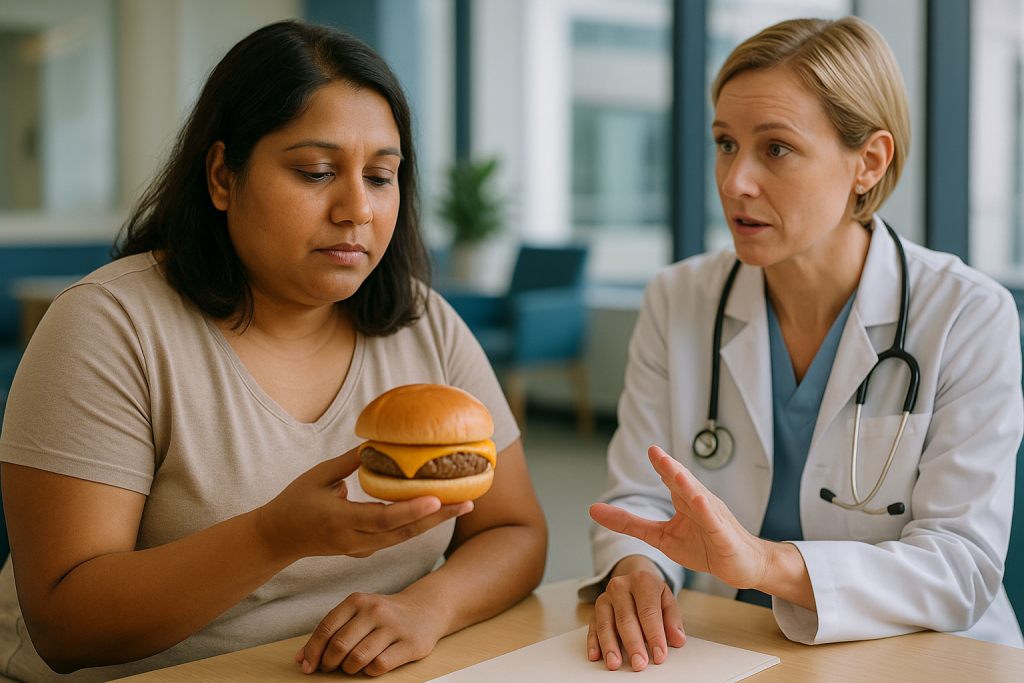
Foods and drinks that almost every plan removes in the last seven days:
- Bread, rice, pasta, potatoes and cereals, the concentrated carbohydrates that refill liver glycogen within hours.
- Sugar in any form, including fruit juice, regular soda, honey and sweetened yogurt.
- Fried and fatty foods, which slow stomach emptying and add energy without protein.
- Alcohol, which the liver must process and which interacts with anesthetic and pain medicines.
- Carbonated drinks, which many programs ask you to drop now because they stretch the stomach and are discouraged after a sleeve.
- Solid food entirely in the last two to three days, in plans that finish with a clear-liquid phase.
Caffeine sits in a gray zone. Some teams permit black coffee or tea, others ask you to taper it to avoid a withdrawal headache on top of everything else. Ask rather than assume.
Why so strict about carbohydrates specifically, rather than simply calories? Because a single carbohydrate-heavy meal can restore much of the glycogen and water you spent days losing. The liver can regain volume quickly, which is the physiological reason a “last supper” in the final week undoes more than a similar slip in week one.
A note on the words “clear liquid”: it means anything you can see through at room temperature, such as broth, water, sugar-free gelatin and light-colored electrolyte drinks. Milk, cream soups and most protein shakes are full liquids, not clear ones. The distinction becomes critical in the last day, when anesthesia fasting rules apply, and getting it wrong can postpone your operation.
What can you drink on a bariatric pre op liquid diet?
Fluid is the part of the plan people underestimate. When food volume falls, so does the water that comes packaged in it; a plate of vegetables is mostly water, a protein shake is not much more. Add the mild diuretic effect of using up glycogen, and dehydration becomes the most common reason people feel awful on a liquid diet. Headaches, lightheadedness when standing and dark urine are usually fluid problems before they are anything else.
Most dietitians set a daily fluid target, and the way to hit it is steady sipping rather than large glasses, which again mirrors post-operative life. Water is the backbone. Sugar-free flavored water, herbal tea and diluted electrolyte drinks help if plain water becomes tedious. Broth contributes salt, which matters when intake is low and you are losing sodium in urine.
Protein deserves its own word. The point of the shakes is not flavor, it is preserving muscle while you are in a steep energy deficit, and supporting wound healing afterward. Check the label for sugar and choose products your dietitian recognizes; a “protein” drink sold as a meal replacement can carry as much sugar as a dessert.
Things to leave out:
- Alcohol, for liver, anesthetic and judgment reasons.
- Sugary drinks and juice, which refill glycogen.
- Fizzy drinks, which many programs want gone before surgery because they are discouraged for months afterward.
- Large amounts of caffeine, which can worsen dehydration and sleep.
One practical rule of thumb from experienced bariatric nurses: if your urine is pale yellow and you are not dizzy when you stand up, your fluid intake is probably close to right. If either changes, phone the team the same day. Feeling faint on a pre-op plan is a solvable problem, not a badge of commitment.
Can I cheat on my bariatric pre-op diet? An honest answer
Yes, people do, and the honest answer about consequences has two parts.
The first part is physiological. A small deviation early in the plan, a piece of fruit on day two, is unlikely to change your liver in any meaningful way. A carbohydrate-heavy meal in the final days is different, because glycogen and water return to the liver quickly and the organ can regain volume that took most of a week to lose. Surgeons describe the difference between a soft, smaller liver and a swollen, fragile one as the difference between a straightforward retraction and a tense fifteen minutes.
The second part is procedural, and it is the one people underestimate. Some surgeons test for a fatty, enlarged liver at the start of the operation and will convert to a different approach or, occasionally, stop and reschedule if the anatomy is unsafe. Fasting breaches in the final hours are even less negotiable. Anesthetic teams treat food or non-clear liquid in the stomach as a risk of aspiration, meaning stomach contents entering the lungs while you are unconscious, and they will cancel a case rather than take that risk. The NHS is explicit that surgery can be delayed if fasting instructions are not followed.
So what do you do after a slip? Tell the team. Not because you will be scolded, but because the plan can be adjusted and the anesthetist needs accurate information. Hiding a slip is the only genuinely dangerous version.
Our editorial view: framing this as “cheating” sets people up to fail. You are not being tested. You are preparing an organ. Plan for the hard evenings in advance, remove trigger foods from the house, and treat the first four days as a physical adjustment rather than a moral one. Most people who struggle do so from hunger and dehydration that a phone call to a dietitian could fix.
What is the 30-minute rule for bariatric surgery, and should you practice it now?
The “30-minute rule” is a habit most bariatric programs teach for life after surgery: do not drink during meals, and leave a gap of roughly half an hour before and after eating before you sip fluids again. The exact number varies by program, and it is guidance rather than a law of physiology, but the reasoning is consistent.
After a sleeve, the new stomach holds a small volume. If you drink with a meal, liquid takes up space that food would otherwise occupy, so you eat less protein and feel full on water. Fluid also washes food through the narrow tube faster, which can shorten how long you feel satisfied and, in some people, trigger discomfort or nausea. Keeping meals and drinks apart lets the small stomach do one job at a time.
Why mention it in a pre-op article? Because habits are much easier to build while your stomach is intact and the stakes are low. Patients who arrive at their first post-operative appointment already used to separating drinks from meals, sipping slowly and stopping when comfortably satisfied tend to describe the early weeks as less bewildering. That is clinical experience rather than trial evidence, but it costs nothing to try.
Practical ways to rehearse during the pre-op weeks:
- Put the water bottle down while you have a shake or soup, and pick it up again later.
- Take small sips rather than gulps, even of plain water.
- Sit down for every shake instead of drinking on the move.
- Notice where “comfortably satisfied” sits for you; after surgery, one bite past it will be uncomfortable.
Programs also commonly ask patients to stop drinking through straws and to avoid fizzy drinks well before the operation, both to reduce gas and stretching of the new stomach. If your team has not mentioned these, ask; if they have a different version of the rule, theirs applies.
Why you are asked to stop smoking before bariatric surgery
Of everything on the pre-op list, smoking is the item surgeons feel most strongly about, and the mechanism explains why. Nicotine narrows small blood vessels, and carbon monoxide from smoke displaces oxygen from red blood cells. Healing tissue needs oxygen-rich blood, and the staple line that seals the new stomach is exactly the kind of tissue that suffers when supply is reduced. A leak from that staple line is one of the most serious complications of a sleeve, and reduced blood flow is one of the factors that raises the risk.
The effects extend beyond the stomach. Smokers have more chest infections and breathing problems around a general anesthetic, wounds that heal more slowly, and a higher rate of ulcers at the healing edge of the stomach afterward. The NHS advises stopping smoking before any operation because it lowers the chance of complications and speeds recovery, and Mayo Clinic lists stopping tobacco among the standard preparations for a sleeve gastrectomy.
How long before? Programs differ, and the honest summary is that the longer, the better, with several weeks being a common minimum and many surgeons preferring longer. Some teams check a urine or blood marker for nicotine and postpone surgery if it is positive. That is not punitive; it reflects how much the staple line depends on blood flow.
Three points people often get wrong:
- Vaping and nicotine pouches still deliver nicotine, which still constricts vessels. Many programs treat them the same as cigarettes.
- Nicotine replacement products are a gray area. Some teams allow them in the run-up, others prefer to avoid nicotine entirely. Ask before starting one.
- Stopping is expected to continue afterward. Smoking after a sleeve is linked to ulcers and poor healing for as long as you do it.
If quitting feels impossible on top of a liquid diet, say so. Stop-smoking support, including behavioral counseling and medicines prescribed by your clinician, can be arranged; it is a routine part of pre-habilitation, not an admission of failure.
Which medicines usually need a review before gastric sleeve surgery?
No one should stop, start or change a prescribed medicine because of an article, including this one. What follows describes the classes that anesthetists and surgeons routinely ask about and why, so your conversation with the prescribing clinician is a better one.
| Medicine group | Why it matters before a sleeve | What typically happens |
|---|---|---|
| Anticoagulants and antiplatelets (blood thinners, including aspirin) | Raise bleeding risk at the staple line and port sites | Prescriber decides whether and when to pause, sometimes with a bridging plan |
| NSAIDs such as ibuprofen and naproxen | Bleeding risk pre-op; ulcer risk in the new stomach long-term | Often paused before and avoided after; alternatives discussed |
| Insulin and sulfonylureas | Low blood sugar risk when calories drop sharply | Doses usually reviewed during the pre-op diet and on fasting day |
| SGLT2 inhibitors | Risk of ketoacidosis during fasting and surgery | Commonly held for a period before the operation |
| GLP-1 receptor agonists | Slow stomach emptying, raising aspiration concern under anesthesia | Anesthetist often asks for a hold; timing set by the team |
| Blood pressure and heart medicines | Some are continued, some paused on the morning of surgery | Individual instructions from the anesthetic team |
Diabetes medicines deserve the earliest conversation. A liquid diet cuts carbohydrate dramatically, and a medicine that was well matched to your old intake can push glucose too low. Insulin, sulfonylureas and the SGLT2 class are the usual focus; metformin is often handled differently. Anyone checking glucose at home should expect to check more often during the pre-op weeks and to have clear thresholds for calling.
Blood thinners are the other non-negotiable discussion. Stopping them without a plan risks a clot; continuing them unchecked risks bleeding. The right answer depends on why you take them, and only the prescriber can weigh that.
Bring every bottle, box and inhaler to your pre-assessment appointment, including over-the-counter items. Then follow the written instructions you are given, not your memory of a conversation.
Supplements, herbal remedies and contraception: the items people forget to mention
When a nurse asks what you take, most people list prescriptions and stop. The items that cause trouble are often the ones on the kitchen windowsill.
Several common supplements affect clotting or interact with anesthetics. Fish oil, vitamin E, garlic, ginkgo and ginger are all associated with increased bleeding tendency. St John’s wort alters how the liver processes many drugs, including some anesthetic and pain medicines. Kava and valerian can deepen sedation. The NHS advises telling the team about herbal remedies and supplements as well as prescribed medicines precisely because these interactions are easy to miss. Most programs ask for a pause on non-essential supplements for a period before surgery; the length is set by your team.
Weight-loss supplements and “fat burners” deserve a specific warning. Many contain stimulants that raise heart rate and blood pressure, which is not what an anesthetist wants to discover on the table. Declare them and expect to be asked to stop.
Combined hormonal contraception and hormone replacement therapy sit in a different category. Estrogen increases clotting risk, and so does abdominal surgery and reduced mobility afterward. Some teams ask patients to switch methods or pause estrogen-containing products in the weeks before and after surgery; others manage the risk with clot-prevention injections and early walking. This is a decision for the prescribing clinician, and it has an obvious corollary: if you pause contraception, you need another method, and pregnancy is generally advised against for a period after bariatric surgery while weight is changing rapidly and nutrition is being re-established. Ask how long your team recommends.
Finally, vitamins. Paradoxically, the one supplement group you may be asked to start rather than stop is a bariatric multivitamin, because deficiencies of iron, vitamin B12, vitamin D and folate are common before surgery and harder to correct afterward. Your team will usually check levels at pre-assessment and advise from there.
Who is usually offered a sleeve, and who is usually asked to wait
Sleeve gastrectomy is generally considered for adults with severe obesity, defined by body mass index thresholds that vary slightly between guidelines, especially when weight-related conditions such as type 2 diabetes, sleep apnea or high blood pressure are present and structured non-surgical approaches have not achieved enough. MedlinePlus describes it as an option when other methods have not worked, always alongside a long-term commitment to changed eating and activity. Body mass index, or BMI, is a ratio of weight to height used as a screening measure rather than a verdict on health.
Being eligible on paper is not the same as being ready, and the pre-op period exists partly to check the difference. Teams commonly ask patients to wait, or postpone a date, when:
- Nicotine testing is positive, because of staple-line healing risk.
- Blood sugar or blood pressure is poorly controlled and can be improved first.
- A recent chest infection, cold with cough, or other acute illness would raise anesthetic risk.
- Untreated sleep apnea has not yet been assessed, since it affects how safely you breathe under sedation.
- Active substance misuse or an unstable mental health condition needs support in place first.
- Pregnancy is possible or planned in the near future.
- The pre-op diet has not been followed and the liver is expected to be enlarged.
A postponement can feel like rejection. In practice it is the team using the same evidence that will keep you safe on the day. The Mayo Clinic notes that candidates are assessed for readiness, including whether they can commit to the lifelong follow-up the procedure requires.
Alternatives exist and should be part of the conversation: gastric bypass, which reroutes the intestine as well as reducing the stomach; adjustable gastric banding, now used less often; endoscopic procedures; and structured medical programs, including prescription weight-management medicines. None of these is better for everyone. The right choice depends on your health conditions, reflux history, and what you and your team decide together.
The final 48 hours and the first days after: what the timeline usually looks like
Two days out, most plans have moved to liquids only. Your pre-assessment letter will state a precise time after which you may not eat, and a later time after which you may not drink even clear fluids. The NHS explains that fasting is required because food or drink in the stomach can be brought up while you are unconscious and reach the lungs. Modern anesthetic practice usually allows clear fluids closer to the operation than solid food, but the exact cut-offs are yours to follow, not to average against a website.
Other common instructions in that window: shower with an antiseptic wash if provided, remove nail polish and jewelry, take only the morning medicines you were specifically told to take, and arrive with a list of what you did and did not take. Pack loose clothing, slip-on shoes, lip balm, and your own chewing gum only if your team permits it.
Afterward, the first hours are about waking up, managing pain, and walking. Nurses will get you out of bed early because moving is the single most effective thing you can do against blood clots, alongside the compression devices and clot-prevention injections most programs use. Expect shoulder-tip pain from the gas used to inflate the abdomen, which walking also eases.
Many people go home within a day or two, according to Cleveland Clinic, though this varies with your health and how the operation went. The first two weeks or so at home are usually liquids, then purees, with soft food introduced over the following weeks and ordinary textures returning gradually over a period of one to two months. Each step is a test: the new stomach tolerates a texture, or it tells you clearly that it does not.
Fatigue, mood dips and a strange indifference to food are common in the early weeks. They are not signs that something has gone wrong, but they are worth mentioning at follow-up.
What people often get wrong about preparing for a gastric sleeve
“The pre-op diet is about losing weight before surgery.” Weight does fall, but the target is the liver. A person who loses little on the scale yet follows the low-carbohydrate plan closely may have a smaller, safer liver than someone who lost more weight on a plan heavy in fruit and starch.
“One big meal the night before the diet starts doesn’t count.” Early slips matter least and late slips matter most, because glycogen and liver water rebuild within hours. If you are going to be human, be human in week one, not in the final three days.
“Vaping isn’t smoking.” Nicotine is the vessel-constricting problem, whatever delivers it. Most programs treat vaping and nicotine pouches the same way as cigarettes for pre-op purposes.
“I’ll stop my blood thinner myself to be safe.” Stopping an anticoagulant without a plan swaps a bleeding risk for a clot risk, and clots after abdominal surgery are exactly the complication teams are trying to prevent. This decision belongs to the prescriber.
“Supplements are natural, so they don’t matter.” Several common ones thin the blood or alter anesthetic metabolism. Declare everything.
“Clear liquids means anything that isn’t solid.” Milk, cream soups and most protein shakes are not clear liquids. Confusing the two in the last hours can cancel an operation.
“Once the surgery is done, the hard part is over.” The sleeve is a tool that changes capacity and hunger signaling. The MedlinePlus summary is blunt that results depend on lasting changes to eating and activity, and that the procedure carries risks including leaks, bleeding, reflux and nutritional deficiency. Preparation is where those lasting changes begin, which is why teams care so much about the two weeks that feel, from the inside, like an inconvenient prelude.
Questions to ask your care team before the date
Pre-assessment appointments are short and the list of instructions is long. Arriving with questions written down changes the quality of the conversation. These are the ones experienced bariatric nurses wish more people asked.
- How long is my pre-op diet, exactly what does it consist of, and is any of it flexible in the first week?
- Which of my medicines do I keep taking, which do I pause, and from what date? Can I have that in writing?
- I take a diabetes medicine or insulin: how should I adjust monitoring during the liquid diet, and what glucose readings should prompt a call?
- I take a blood thinner: who is managing the pause and restart plan, and is bridging needed?
- Do you test for nicotine, and how are vaping or nicotine replacement products handled?
- Which supplements should I stop, and when should I start a bariatric multivitamin?
- What are the precise fasting times for food and for clear fluids, and what counts as clear?
- Should I pause estrogen-containing contraception or hormone therapy, and what should I use instead?
- What is your protocol for preventing blood clots, and how soon will I be walking?
- What symptoms after discharge should make me phone the ward, and which should send me straight to emergency care?
- How long is the liquid stage after surgery, and when do I see the dietitian again?
- If my surgery is postponed, what most commonly causes that in your program, so I can avoid it?
Two habits help. Ask for a single written sheet with your personal medicine instructions, because verbal advice about which pill to skip on the morning of surgery is easy to misremember. And ask for a named contact or phone line for the pre-op weeks, so a dizzy spell on day three of the diet becomes a five-minute call rather than a weekend of worry. The NHS describes weight-loss surgery as a program of care rather than a single event, and the pre-op period is your first chance to use that program.
When to call your doctor: red-flag signs before and after gastric sleeve surgery
Most of the pre-op period is uncomfortable rather than dangerous, but a few situations need a same-day call rather than patience.
During the pre-op diet, contact your team promptly if you have:
- Fainting, near-fainting or severe dizziness on standing, which can signal dehydration or low blood sugar.
- Shaking, sweating, confusion or a glucose reading below the threshold your team gave you, particularly if you take insulin or a sulfonylurea.
- Persistent vomiting, or an inability to keep fluids down for more than a few hours.
- A new cough, fever, chest infection or other illness in the week before surgery, because anesthetic plans may change.
- Any slip in the diet or fasting instructions in the final days; the anesthetist needs to know.
After surgery, the signs that matter most are those of a staple-line leak, bleeding or a blood clot. Mayo Clinic and MedlinePlus both list these among the serious complications. Seek urgent or emergency care for:
- Fever, or a heart rate that stays fast at rest, especially with worsening abdominal pain or pain in the left shoulder that is not settling.
- Severe or increasing abdominal pain, a rigid or swollen abdomen, or feeling suddenly very unwell.
- Chest pain, breathlessness or coughing up blood, which can indicate a clot in the lungs.
- A painful, swollen or warm calf.
- Vomiting blood or black, tarry stools.
- Redness, spreading warmth or pus at a wound, or a wound that opens.
- Inability to swallow liquids at all, or signs of dehydration such as very dark urine and dizziness.
These lists are for recognizing urgency, not for self-diagnosis. If something feels wrong and is not on this page, the correct response is still the same: phone the bariatric team or, if it is severe or sudden, emergency services. Every decision about your diet, your medicines and your operation date sits with the clinicians who know your history, and they would far rather hear from you early.
Frequently asked questions
What is the 2 week pre op diet for gastric sleeve surgery?
It is a lower-calorie, low-carbohydrate plan, usually built around protein shakes, broth and sugar-free liquids, that many programs ask patients to follow for roughly two weeks before surgery. Its purpose is to shrink the liver and reduce fat inside the abdomen so the operation is safer. Some programs use liquids throughout, others allow lean protein and vegetables early on. Your team’s written plan overrides any general description.
Can I cheat on my bariatric pre-op diet without consequences?
Small slips early in the plan rarely matter much, but carbohydrate-heavy meals in the final days can quickly re-enlarge the liver, and any breach of fasting rules in the last hours can lead to cancellation because of aspiration risk under anesthesia. Always tell your team about a slip so the plan can be adjusted safely.
What should I not eat 7 days before gastric sleeve surgery?
Most programs remove bread, rice, pasta, potatoes, sugar, fruit juice, fried and fatty foods, alcohol and fizzy drinks in the final week, and switch to liquids only in the last few days. Concentrated carbohydrates are the main target because they refill liver glycogen within hours. Follow your own team’s list, which may be stricter.
What is the 30-minute rule for bariatric surgery?
It is a common program habit of not drinking during meals and leaving a gap of about half an hour before and after eating before sipping fluids again. Liquid otherwise fills the small new stomach and pushes food through faster. The exact number varies by program, and many teams suggest practicing it before surgery.
What can I have on a bariatric pre op liquid diet?
Typically water, low-sugar protein shakes, clear broth, sugar-free gelatin and ice pops, herbal tea and diluted electrolyte drinks. Steady sipping across the day helps avoid the dehydration that causes most headaches and dizziness on the plan. Alcohol, sugary drinks and usually carbonated drinks are excluded. Ask your dietitian about caffeine, since teams differ.
How long before bariatric surgery should you stop smoking?
As early as possible. Guidelines and surgical teams advise stopping before any operation because smoking impairs healing and raises chest complications, and bariatric programs often set a minimum of several weeks, some longer, with nicotine testing before the date. Vaping and nicotine pouches are usually treated the same way. Ask your team for their specific timeline.
Do I need to stop blood thinners before gastric sleeve surgery?
Anticoagulants and antiplatelet medicines, including aspirin, raise bleeding risk and are almost always reviewed before surgery, but whether and when to pause them depends on why you take them. Stopping without a plan can cause a clot. The prescribing clinician and surgical team decide the schedule, sometimes with a temporary bridging medicine.
How are diabetes medicines handled during the pre-op diet?
Sharply reduced carbohydrate intake can make insulin and sulfonylureas cause low blood sugar, and SGLT2 inhibitors carry a ketoacidosis risk around fasting and surgery, so these classes are commonly adjusted or held. Patients are usually asked to check glucose more often and given clear thresholds for calling. Only your prescriber should change your regimen.
Which supplements should I stop before gastric sleeve surgery?
Fish oil, vitamin E, garlic, ginkgo and ginger can increase bleeding, St John’s wort alters how anesthetic and pain medicines are processed, and stimulant weight-loss products can affect heart rate and blood pressure. Most teams ask for non-essential supplements to be paused for a period before surgery and may ask you to start a bariatric multivitamin instead.
Why would my gastric sleeve surgery be postponed?
Common reasons include a positive nicotine test, poorly controlled blood sugar or blood pressure, an acute chest infection, untreated sleep apnea awaiting assessment, possible pregnancy, or a pre-op diet that was not followed and a liver expected to be enlarged. A postponement reflects the team applying the same safety evidence that protects you on the day.
References
- NHS – Having surgery: Preparing for surgery
- Cleveland Clinic – Gastric Sleeve Surgery (Sleeve Gastrectomy)
- MedlinePlus – Vertical sleeve gastrectomy
This article is for general information only and is not a substitute for professional medical advice. Please consult a qualified doctor about your individual situation.

More from the Blog

Questions to Ask Your Doctor After a Metabolic Syndrome Diagnosis: Reading Your Lab Report
After a metabolic syndrome diagnosis, ask your doctor which three or more of the five criteria you met (waist size, triglycerides, HDL cholesterol, blood…

Drains, Dressings and Compression: The First Weeks After a Post-Bariatric Body Lift
After a post-bariatric body lift, closed suction drains usually stay in until daily fluid output falls to a low level set by the surgeon,…

How Gastric Band Adjustments Work: The Fill Port, Saline and Finding the Right Restriction
Lap band adjustments work by changing the amount of sterile saline inside an inflatable silicone ring placed around the top of the stomach. A…

Gastric Bypass Revision: Reasons a Bypass Is Revised and What the Second Operation Involves
Gastric bypass revision surgery is a second operation that repairs, adjusts or converts an existing Roux-en-Y gastric bypass. Surgeons consider it when a complication…

Scars After Bariatric Contouring: Where They Sit, How They Fade and How to Care for Them
Scars after bariatric contouring are long and permanent because large amounts of loose skin are cut away, but they are planned to sit where…

Bariatric Surgery Recovery Milestones: Hospital Days, First Walks and Returning to Work
A typical bariatric surgery recovery timeline unfolds in stages: a hospital stay of about 1 to 3 days, short assisted walks within hours of…