

Gummy Bear Implants: What Form-Stable Silicone Really Means (and Who They Suit)
Key Takeaways
- “Form-stable” describes extra cross-linking in silicone gel, which lets a gummy bear implant hold its shape even when the outer shell tears.
- Breast implants are not lifetime devices: regulators report roughly one in five augmentation patients has implants removed or replaced within 8 to 10 years.
- Silicone ruptures are usually silent, so U.S. guidance calls for ultrasound or MRI around years five to six after surgery, then every two to three years.
- The rare lymphoma BIA-ALCL is linked overwhelmingly to textured implant surfaces, which is why most modern gummy bear implants are smooth and round.
- Shaped teardrop cohesive implants carry a rotation risk of roughly 1 to 3 percent that round implants cannot have, and blinded studies show observers often cannot tell the two results apart.
- Cosmetic augmentation is rarely insured, but U.S. law requires group health plans that cover mastectomy to also cover implant-based breast reconstruction.
Gummy bear implants are breast implants filled with highly cohesive, form-stable silicone gel that holds its shape even if the outer shell tears, much like the candy they are nicknamed for. They remain in wide use, tend to feel firmer than softer gels, are not lifetime devices, and may suit people with thinner breast tissue or those prioritizing shape retention over maximum softness.
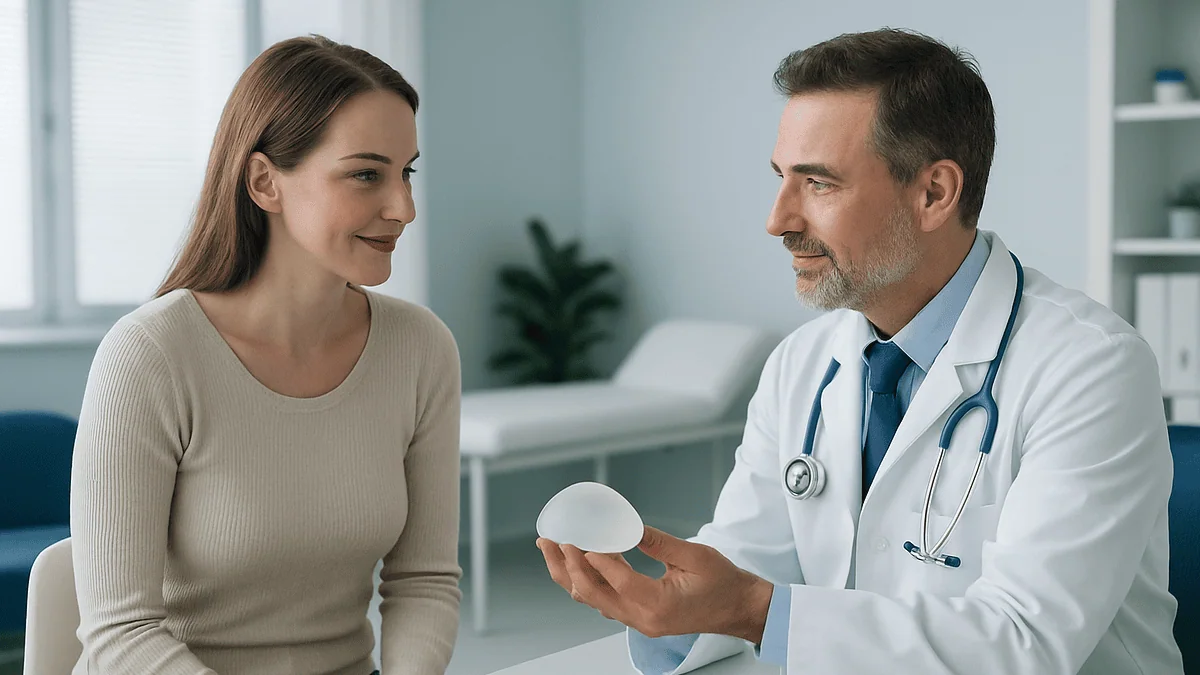
In many plastic surgery consult rooms there is a party trick: the surgeon takes a demonstration implant, slices it clean in half, and hands one piece over. Nothing leaks. Nothing sags. The gel just sits there, holding its dome like a halved dessert. That small piece of theater is the entire sales pitch behind the nickname everyone knows.
The nickname, though, is doing a lot of work. “Gummy bear” is not a medical term, not a brand, and not a yes-or-no category. It describes a spectrum of gel cohesiveness that varies by product line, and it comes bundled with real trade-offs, firmness, incision length, and in some designs the possibility of the implant rotating out of position.
So before the candy metaphor makes the decision for you, it is worth understanding what the chemistry actually does, what the evidence says about look and feel, and who genuinely benefits.
What are gummy bear implants?
Gummy bear implants are silicone breast implants filled with a highly cohesive gel, silicone processed so that it behaves less like a thick liquid and more like a soft solid. Squeeze one and it springs back. Cut one open and the gel stays put rather than oozing, which is where the candy comparison comes from.
These devices are sometimes called fifth-generation silicone implants. The first highly cohesive, shaped versions cleared U.S. regulatory approval between 2012 and 2013, though European and Latin American surgeons had used them for years before that. Since then, cohesiveness has crept into nearly every silicone implant on the market; modern “standard” gels are considerably more cohesive than the devices of the 1990s.
Two things follow from that. First, the label is fuzzy: manufacturers offer several tiers of gel firmness, and only the firmest tiers are truly “form-stable.” Second, the marketing question, gummy bear or not?, is less useful than the clinical questions a surgeon actually weighs: how cohesive should the gel be for your tissue, should the implant be round or teardrop-shaped, smooth or textured, and placed above or below the chest muscle. The nickname flattens all of that into candy. The consultation should un-flatten it.
What does “form-stable” actually mean?
Silicone gel is a tangle of long polymer chains. Chemists control its firmness by adding cross-links, molecular bridges that tie neighboring chains together. Few cross-links produce a soft, syrupy gel; many cross-links produce a gel that holds a defined shape under gravity. Form-stable means exactly what it sounds like: stand the implant upright on a table and it keeps its contour instead of slumping into a puddle-like mound, the way a low-cohesion implant does.
That property matters in two situations. Inside the body, a form-stable gel resists collapsing in the upper portion of the implant, which is why shaped, teardrop versions can maintain a tapered upper slope. And if the outer silicone shell ever tears, the gel tends to hold together rather than migrating into surrounding tissue, one reason regulators still recommend removing a ruptured implant, but with less urgency around gel spread than older devices warranted.
The physics cuts both ways. Cross-linking that keeps a shape also resists your fingertips. The firmest gels are noticeably less compressible than softer cohesive gels, and a stiffer, pre-filled device generally needs a slightly longer incision to place without damaging it. Form stability is a trade, not a free upgrade: you exchange some softness and a bit of incision length for shape retention.
Gummy bear implants vs. regular implants: what’s the difference?
Every breast implant is a silicone shell; what varies is the filling and how it behaves. The comparison below reflects the categories most surgeons discuss, described by mainstream sources such as Mayo Clinic and the NHS.
| Feature | Saline | Standard cohesive silicone | Form-stable (“gummy bear”) |
|---|---|---|---|
| Fill | Sterile salt water | Soft cohesive gel | Highly cross-linked, firm gel |
| Feel | Firmest ripple risk; can feel water-like | Softest, most fluid movement | Firm, springy, holds contour |
| If the shell tears | Deflates visibly; body absorbs saline | Gel may stay in the capsule; rupture often silent | Gel holds together; rupture also often silent |
| Incision | Shortest (filled after insertion) | Moderate | Slightly longer (pre-filled, stiffer) |
| Rupture detection | Obvious size change | Usually needs ultrasound or MRI | Usually needs ultrasound or MRI |
Notice what the table does not show: a clear winner. Saline announces its own failure but ripples more in thin tissue. Softer gels feel most natural to the touch but hold shape least. Form-stable gels keep their architecture at the cost of squeeze. The right column for you depends on your tissue thickness, your priorities, and your tolerance for monitoring, which is precisely why this is a planning conversation, not a product pick.
Do they still use gummy bear implants?
Yes, cohesive gel is now the mainstream, not a niche. Most silicone implants placed today sit somewhere on the cohesive spectrum, and the firmer, form-stable tiers remain available and widely used in both cosmetic augmentation and post-mastectomy reconstruction.
What has genuinely changed is the surface and the shape. The original gummy bear generation was heavily marketed as a teardrop-shaped, textured device: the texturing acted like gentle Velcro to keep the asymmetric shape from rotating. In 2019, one manufacturer’s textured implants were withdrawn from the worldwide market after health authorities linked certain textured surfaces to a rare lymphoma called breast implant-associated anaplastic large cell lymphoma (BIA-ALCL). Textured device use fell sharply in the United States afterward, and with it went much of the shaped-implant market, since a smooth teardrop implant can spin.
The practical result: the phrase survives, but the typical modern “gummy bear” is a smooth, round implant with a highly cohesive fill. Shaped, textured versions from other manufacturers are still legally available and some surgeons use them in selected reconstruction cases, weighing the rotation and lymphoma considerations openly. If a surgeon proposes a textured device, the honest move is to ask why that surface for your anatomy, and to expect a specific, documented answer rather than a shrug.
Do gummy bear implants look and feel more natural?
Here the marketing runs ahead of the evidence, and it is worth saying so plainly. The claim is that a teardrop-shaped, form-stable implant recreates a natural breast slope, fuller at the bottom, tapered on top, better than a round device. It is intuitive. It is also surprisingly hard to prove.
Several published studies have shown plastic surgeons photographs of augmentation results and asked them to identify which patients received shaped versus round implants. Their accuracy has repeatedly hovered near chance. The likely explanation is mechanical: once a soft round implant is upright inside the body, gravity settles its gel downward and it takes on a teardrop distribution anyway. The shaped device’s theoretical advantage shrinks in a living, moving chest.
Feel is a different story, and the trade-off is real. Cross-linking that gives form stability also gives firmness; the most cohesive gels are measurably stiffer than softer cohesive gels, and people with very little natural breast tissue will notice that more, because there is less of their own tissue softening the surface. Where firm gels genuinely earn their keep is rippling, visible wrinkling of the implant edge, most common with saline in thin patients. A denser gel wrinkles less. Natural, in other words, depends on whether your eye or your hand is the judge.
What happens if a gummy bear implant ruptures?
The gel largely stays where it is: that is the point of cohesiveness. When a form-stable implant’s shell tears, the cross-linked fill tends to hold together inside the scar-tissue capsule your body naturally builds around any implant, rather than dispersing into breast tissue the way older, runnier gels sometimes did.
The catch is that you probably will not know. Because nothing deflates and the gel does not move, silicone ruptures are frequently “silent”: no pain, no visible change, discovered only on imaging. Mayo Clinic notes that a ruptured silicone implant may cause no symptoms at all, or only subtle ones: a change in breast size or shape, firmness, or mild discomfort over time.
That is why the U.S. Food and Drug Administration recommends routine surveillance for silicone implants: an ultrasound or MRI around five to six years after surgery, then every two to three years thereafter, even when everything feels fine. When a rupture is confirmed, the standard advice is removal, usually with replacement if you want it, since a torn shell can eventually contribute to inflammation or capsular contracture even when the gel behaves itself.
Two budgeting notes follow. Surveillance imaging is rarely covered by insurance after cosmetic surgery, and neither is revision, factor both into the lifetime cost, not just the surgical quote.
How long do gummy bear implants last?
Plan on 10 to 20 years, and know that no implant, cohesive or otherwise, is a lifetime device. That phrasing comes straight from U.S. regulators, who also note that roughly one in five people who get breast implants for augmentation has them removed or replaced within 8 to 10 years, most often for cosmetic reasons or complications rather than rupture.
Shell failure is a wear phenomenon: the risk of rupture is low in the first years and climbs as the device ages, which is exactly why the surveillance imaging schedule stretches across decades. Highly cohesive implants have shown reassuring durability in the ten-year manufacturer studies required for approval, but they have not been proven to outlast standard cohesive gels over a lifetime: the honest summary is that all modern silicone shells fail slowly and unpredictably, and the gel type mainly changes what happens after the tear, not whether it occurs.
Reasons people return to the operating room, in rough order of frequency:
- Size or style change by choice
- Capsular contracture (tightening of scar tissue around the implant)
- Implant malposition, including rotation of shaped devices
- Rupture found on imaging
- Changes after weight shifts, pregnancy, or aging tissue
A useful mental model: you are not buying a result, you are starting a maintenance relationship, one that includes imaging appointments and, statistically, at least one more operation.
How much does a gummy bear implant cost?
Expect a total, all-in figure well into four figures, and often five in major U.S. metropolitan markets. Cosmetic breast augmentation is essentially never covered by insurance, so the entire stack lands on you: the surgeon’s fee, the anesthesia provider, the operating facility, the implant pair itself, surgical garments, and follow-up visits. Highly cohesive and shaped implants typically cost more per pair than saline, which nudges the total upward.
For a citable anchor, the NHS states that breast enlargement in the United Kingdom generally costs about £3,500 to £8,000, plus the cost of consultations and follow-up care. U.S. totals commonly run higher once facility and anesthesia fees are added, and quotes vary widely by region and surgeon experience, which is why comparing a single line-item “surgeon’s fee” across practices is misleading. Ask every practice for the complete figure in writing.
Reconstruction is the important exception. Under the U.S. Women’s Health and Cancer Rights Act of 1998, group health plans that cover mastectomy must also cover breast reconstruction, including implants and surgery on the opposite breast for symmetry. MedlinePlus’s breast reconstruction resources outline what that coverage includes.
One budgeting principle deserves italics it cannot have: the purchase price is the down payment. Surveillance imaging every two to three years and a probable future revision belong in the arithmetic from day one.
Are gummy bear implants worth it?
Worth it compared to what, no surgery, or a different implant? Those are separate questions, and conflating them is how people end up disappointed.
Against other implants, the honest ledger reads like this. You gain shape retention, less rippling in thin tissue, and a gel that stays put if the shell tears. You give up some softness, accept a slightly longer incision, pay more, and, if you choose a shaped version, take on a rotation risk that round implants simply cannot have. For a person with very little natural breast tissue, that trade often favors the firmer gel, because rippling is their most visible failure mode. For a person with generous natural tissue who prizes a soft feel, a less cohesive gel may serve better, and the “gummy” label adds cost without adding much.
Against no surgery, the calculus involves the whole maintenance relationship: surveillance imaging, a likely reoperation within a decade or two, and the small but real risks every implant carries. Long-term satisfaction in published follow-up studies is generally high, yet reoperation is common, both facts are true at once.
Here is the opinion this article has earned: the variable that most determines whether you will be glad you did this is not gel cohesiveness. It is the match between implant, tissue, and expectation: a planning problem, solved in a consultation chair, not a product aisle.
Who do gummy bear implants suit best?
Certain anatomies get the most from a form-stable gel, and it is worth naming them specifically rather than gesturing at “anyone who wants natural results.”
- Thin tissue coverage. People with little natural breast tissue or low body fat show every flaw an implant has. Firmer gels ripple and wrinkle less, so the implant edge is less likely to become visible or palpable.
- Post-mastectomy reconstruction. With most or all breast tissue removed, the implant provides nearly the entire shape. Form stability helps the reconstructed breast hold a contour, which is why cohesive devices are a mainstay in implant-based reconstruction.
- Shape-retention priorities. Someone who cares more about a stable, predictable silhouette over years than about maximum softness is choosing exactly what cross-linking delivers.
- Correcting specific contour problems. In revision surgery, visible rippling, upper-pole collapse, switching to a firmer gel is a common, targeted fix.
The mirror-image list matters just as much. A poor match includes people who rank a soft, mobile feel above all else; those who want the shortest possible incision, which saline still wins; anyone unwilling to commit to periodic MRI or ultrasound surveillance; and cost-sensitive patients for whom the price premium buys a benefit their tissue would have hidden anyway. Shaped versions add one more filter: if the idea of a 1-to-3 percent chance of rotation requiring surgical repositioning bothers you, stay round.
What are the risks of gummy bear implants?
Most risks are simply breast implant risks, shared across every fill type. Mayo Clinic and the NHS list the recurring cast: capsular contracture, where the scar capsule tightens and hardens the breast; infection; changes in nipple or breast sensation, which may be temporary or lasting; implant malposition; rupture; and the general likelihood of further surgery over a lifetime.
Two issues deserve fuller, calmer treatment.
BIA-ALCL. Breast implant-associated anaplastic large cell lymphoma is a rare cancer of the immune system that develops in the fluid and capsule around an implant, typically years after surgery, and usually announces itself as sudden swelling. The overwhelming majority of cases have occurred with textured surfaces: the reason one manufacturer’s textured line was withdrawn worldwide in 2019. Published risk estimates vary widely by implant type and country, from roughly one in several thousand to one in tens of thousands for textured devices. Caught early, it is usually curable with surgery to remove the implant and capsule. It is not the same disease as breast cancer.
Systemic symptoms, often called breast implant illness. Some people with implants report fatigue, joint pain, brain fog, and similar symptoms. Research has not established a causal mechanism or a diagnostic test, yet some patients report improvement after implant removal, and U.S. regulators now require patient decision checklists and boxed warnings that describe these reports. Uncertainty, stated honestly, is the current state of the evidence.
Shaped cohesive implants add rotation, discussed above. None of this is a reason for alarm; all of it is a reason for informed consent that actually informs.
What is recovery and long-term care like?
The early recovery is unremarkable in the best sense. Most people manage soreness and swelling with rest and their surgeon’s aftercare plan, return to desk work within about a week, and hold off on strenuous exercise and heavy lifting for four to six weeks. The NHS notes that full recovery from breast enlargement takes around six weeks, with a supportive post-surgical bra worn day and night at first. Implants also settle, expect the final shape to declare itself over roughly three months, with cohesive devices sometimes riding high early before dropping into position.
Long-term care is where implants differ from most cosmetic procedures, and it deserves a checklist mindset:
- Surveillance imaging. Ultrasound or MRI around years five to six, then every two to three years, to catch silent rupture.
- Mammograms continue. Implants do not exempt you from breast cancer screening. Tell the scheduler and technologist you have implants; facilities use implant-displacement views to image the tissue around the device.
- Keep your device card. You will receive the manufacturer, style, size, and serial numbers after surgery. Every future clinician will want them.
- Breastfeeding is usually possible. Many people with implants nurse successfully, particularly with incisions placed in the fold under the breast; incisions around the areola carry a somewhat higher chance of affecting milk supply.
Think of it as owning a device, because you do, one with a service schedule.
When to see a doctor
Cohesive gel changes what a problem looks like, silent rather than dramatic, so knowing the specific warning signs matters more, not less.
Contact your surgeon or another clinician promptly if you notice any of the following, at any point after surgery, including many years later:
- Sudden swelling or enlargement of one breast, especially arriving over days: this is the classic presentation of a late fluid collection and the symptom most associated with BIA-ALCL
- New pain, redness, warmth, or fever, which can signal infection
- A change in breast shape, firmness, or implant position, or a breast that feels progressively harder, possible capsular contracture or rupture
- A new lump in the breast or armpit, which always warrants evaluation regardless of implants
- A rash or skin change over the breast that does not resolve
- An abnormal finding on any routine imaging, even without symptoms
In the first weeks after surgery, add the standard surgical red flags: wound separation, spreading redness, foul drainage, or bleeding. And keep the routine appointments even when nothing feels wrong: the whole logic of scheduled ultrasound or MRI is that the most common silicone implant failure produces no symptoms at all. A quiet implant is not automatically a healthy one; a checked implant is.
Frequently asked questions
How much does a gummy bear implant cost?
Expect a total in the mid four figures to low five figures in the United States, since cosmetic augmentation is almost never covered by insurance. The NHS cites roughly £3,500 to £8,000 for breast enlargement in the UK. The full bill includes surgeon, anesthesia, facility, and the implant pair, cohesive devices cost more than saline, plus lifetime extras such as surveillance imaging and any future revision surgery.
Are gummy bear implants worth it?
They are most worth it for people with thin tissue coverage or reconstruction needs, where firmer gel visibly reduces rippling and holds shape. For someone with ample natural tissue who prizes a soft feel, the premium buys less benefit. Published follow-up studies show generally high satisfaction with modern silicone implants alongside a meaningful reoperation rate, so the honest answer depends on your anatomy, priorities, and tolerance for long-term maintenance.
How long do gummy bear implants last?
Roughly 10 to 20 years is a realistic expectation, and no breast implant is a lifetime device. Regulators note that about 20 percent of augmentation patients have implants removed or replaced within 8 to 10 years, most often by choice or for complications like capsular contracture rather than rupture. Shell failure risk rises as the device ages, which is why imaging surveillance continues for as long as you have the implants.
Do they still use gummy bear implants?
Yes, highly cohesive gel is now standard across most silicone implants. What declined sharply after 2019 is the textured, teardrop-shaped version, following the worldwide withdrawal of one manufacturer’s textured line over its association with the rare lymphoma BIA-ALCL. Today the typical gummy bear implant is a smooth, round device with a firm cohesive fill, while shaped textured implants remain available for selected cases, mainly in reconstruction.
What is the difference between gummy bear and regular silicone implants?
The degree of gel cross-linking. Regular cohesive silicone is softer and moves more fluidly; form-stable gel is firmer, holds its contour under gravity, and stays together if the shell tears. Practically, gummy bear implants ripple less in thin tissue but feel firmer, need a slightly longer incision because the stiffer pre-filled device is harder to insert, and cost more per pair. Both types share the same rupture surveillance requirements.
Can a gummy bear implant rupture without me knowing?
Yes, and that is the norm rather than the exception. Because the cohesive gel holds together and nothing deflates, silicone ruptures are often completely silent, causing no pain or visible change. That is why the FDA recommends an ultrasound or MRI around five to six years after surgery and every two to three years afterward. A confirmed rupture is generally treated with removal, usually with replacement if you want it.
Can I breastfeed with gummy bear implants?
Usually, yes. Many people with breast implants breastfeed successfully, and cohesive gel does not change that picture. The main variable is the incision: cuts in the fold beneath the breast or in the armpit rarely disturb milk ducts and nerves, while incisions around the areola carry a somewhat higher chance of reducing supply or sensation. If future breastfeeding matters to you, raise it during surgical planning so incision placement reflects it.
Do gummy bear implants affect mammograms?
They can obscure some breast tissue, but screening continues on the normal schedule. Tell the facility you have implants when booking; technologists use implant-displacement views, which gently push the implant back to image more tissue. Rupture from mammogram compression is very rare with modern shells. Implants do not raise breast cancer risk, so skipping screening because of them trades a manageable imaging challenge for a genuinely dangerous blind spot.
Will I need to replace gummy bear implants every 10 years?
Not automatically: there is no fixed expiration date requiring routine swaps. Implants stay in place as long as imaging shows an intact shell and you have no complications. What is true is that most people eventually need another operation for rupture, capsular contracture, malposition, or a change of preference, and the odds accumulate with time. The schedule that is fixed is surveillance imaging, not replacement.
Do gummy bear implants cause BIA-ALCL?
The evidence points to textured surfaces, not cohesive gel itself. BIA-ALCL is a rare immune-system cancer arising in the capsule and fluid around an implant, overwhelmingly reported with textured devices; risk estimates range from about one in several thousand to one in tens of thousands for those surfaces. Smooth round cohesive implants, the most common modern gummy bear type, carry far lower reported risk. Sudden one-sided swelling warrants prompt evaluation.
References
- NHS: Breast enlargement (implants)
- MedlinePlus: Breast Reconstruction
- MedlinePlus: Plastic and Cosmetic Surgery
This article is for general information only and is not a substitute for professional medical advice. Please consult a qualified doctor about your individual situation.

More from the Blog
Capsular Contracture: Why It Happens, the Four Grades, and When to See Your Surgeon
Capsular contracture occurs when the scar tissue that naturally forms around a breast implant tightens and squeezes it, making the breast feel firm, look…

Nipple Reconstruction Surgery vs 3D Nipple Tattooing: What Each Option Restores
Nipple reconstruction surgery rebuilds a raised nipple from the skin of the reconstructed breast, restoring shape and some projection but not sensation. 3D nipple…

The Two Weeks Before Breast Reduction: Imaging, Medication Review and Practical Planning
Preparing for breast reduction surgery in the final two weeks usually means completing any imaging your surgeon has requested, reviewing every prescription, over-the-counter medicine…

Breast Lift Scars and Daily Life After Mastopexy: Sleeping, Sports Bras and Sun Protection
Breast lift scars are permanent, but they usually change a great deal. Most fade from raised and pink to flat, pale lines over roughly…

Healing After Nipple Reconstruction: Protective Dressings, Bras to Avoid and the First Weeks
Nipple reconstruction recovery is usually gentler than earlier breast surgery. Most people wear a protective dressing or shield for the first weeks, choose soft…

Breast Fat Transfer vs Implants: Volume, Feel, Scars and Which Goals Each Option Suits
Fat transfer moves your own fat, taken by liposuction, into the breast for a modest, soft increase with only tiny needle-entry scars, but part…