

Gut Health and Weight: What the Microbiome Does, and Does Not, Do to Body Fat

Key Takeaways
- Randomized trials of probiotics for weight loss report average differences of under one kilogram over 8–12 weeks, and the effect disappears when supplementation stops.
- Three randomized trials transplanting stool from lean donors into adults with obesity found changes in gut bacteria but no change in body weight.
- The only microbiome-based therapies approved by US regulators, licensed in 2022 and 2023, are for preventing recurrent C. difficile infection, not for weight.
- Short-chain fatty acids made when bacteria ferment fiber trigger the gut hormones GLP-1 and PYY, which is the real link between the microbiome and appetite, but the pulses are far smaller than those from prescription medicines.
- US dietary guidance works out to roughly 25–38 grams of fiber a day, while average adult intake is about 15 grams, and closing that gap is the intervention with the strongest evidence for both microbiome diversity and weight.
- Direct-to-consumer microbiome stool tests have no validated healthy reference range, and identical samples sent to different laboratories have returned different conclusions.
Gut bacteria influence appetite hormones, energy harvest from food and low-grade inflammation, but in humans their effect on body fat appears modest and indirect. Randomized trials of probiotics show average weight differences of under a kilogram, and fecal transplants from lean donors have not produced weight loss. The strongest evidence links a fiber-rich, minimally processed diet to both a healthier microbiome and easier weight management.
Three things collided this year. Short videos promising a ‘gut reset’ for a flatter stomach collected hundreds of millions of views. Supplement shelves filled with probiotic capsules labeled for metabolism. And a generation of prescription weight-management medicines that act on gut hormones left many people asking an obvious question: if a hormone made in the intestine can quiet appetite, can the bacteria living there do something similar on their own? That is why gut health and weight loss has become one of the fastest-rising nutrition searches as of September 2025.
The question is reasonable, and the biology behind it is real. Gut microbes do make molecules that nudge the same hormone pathways. The gap sits between what happens in a mouse cage or a test tube and what happens on a bathroom scale.
Our view, after reading the trials rather than the captions: the microbiome matters for metabolic health, probably matters a little for weight, and responds best to the same habit that helps weight anyway, which is eating more plants and fiber. Nothing sold in a capsule has matched that in a randomized trial.
Why gut health and weight loss is trending right now
Interest in the microbiome has been building for two decades, but 2025 added accelerants. The first is the sheer visibility of gut-hormone medicines. Once millions of people learned that a hormone called GLP-1, made by cells in the intestinal lining, can slow stomach emptying and dampen appetite, the next question wrote itself: can food or bacteria raise GLP-1 naturally? Content creators answered with confidence that the research does not share.
The second accelerant is commercial. Probiotic and ‘synbiotic’ products now carry metabolism language on the label, and direct-to-consumer stool tests promise a personalized map of your bacteria. Neither category is reviewed for effectiveness before sale in the United States, because dietary supplements and wellness tests sit outside the approval process that medicines go through.
The third is genuine scientific momentum. Regulators have licensed the first microbiome-based therapies, albeit for a serious intestinal infection rather than weight, and that milestone has been stretched online into ‘bacteria can now be prescribed for fat loss’. They cannot.
A short vocabulary note before we go further, because the rest of this article grades claims by the quality of their evidence. A randomized controlled trial is a study in which participants are assigned by chance to an intervention or a comparison group; it is the strongest design for proving cause and effect. Observational data describes patterns in groups of people without assigning anything, so it shows association but not causation. Expert opinion sits below both. When we say a finding is ‘strong’, ‘moderate’ or ‘preliminary’, that is the scale we mean.
Held against that scale, the gut health and weight loss conversation is top-heavy: enormous public attention resting on a narrow base of small, short human trials. That does not make the topic unimportant. It makes honest sorting essential.
What is the gut microbiome, in plain terms?
The gut microbiome is the community of bacteria, viruses, fungi and other microbes living in your digestive tract, together with all of their genes. By one widely cited estimate the average adult carries about 38 trillion bacterial cells, roughly matching the number of human cells in the body, with the vast majority packed into the colon.
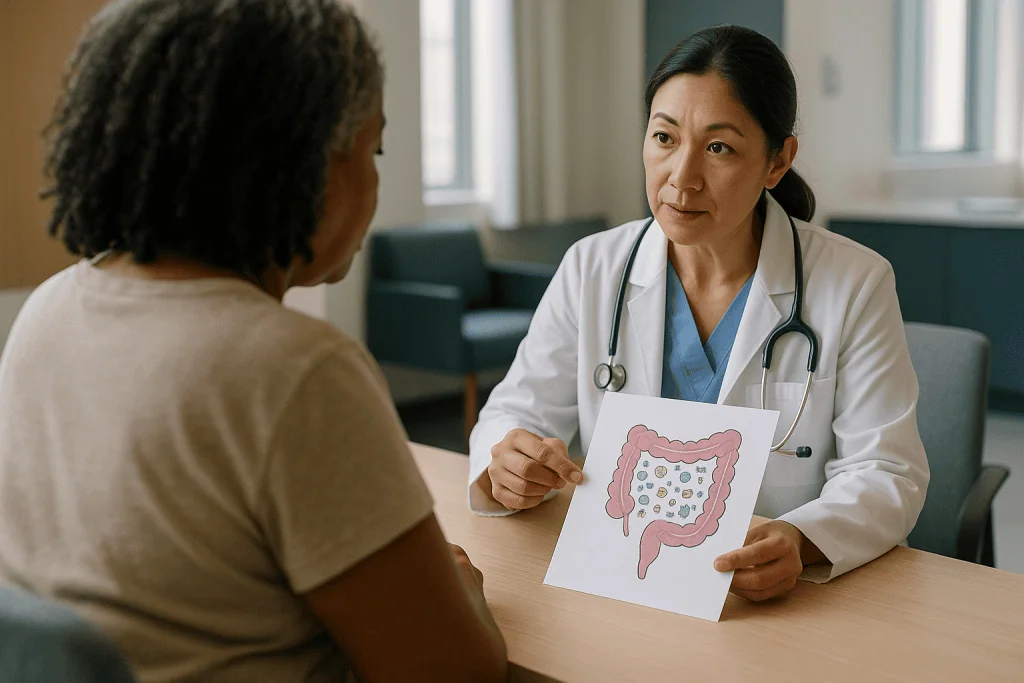
Those microbes are not freeloaders. They ferment fibers that human enzymes cannot break down, manufacture vitamin K and several B vitamins, help train the immune system, modify bile acids, and crowd out harmful organisms by occupying space and nutrients. Cleveland Clinic describes the healthy gut microbiome as a diverse ecosystem rather than a single ‘good’ strain, and diversity is the measure researchers return to most often.
Each person hosts several hundred species in a mix as individual as a fingerprint. That mix is shaped by how you were born, what you were fed as an infant, the antibiotics you have taken, where you live, and above all what you eat. Diet moves the needle quickly: a well-known 2014 study found that switching volunteers between a plant-based and an animal-based diet altered the composition of their gut bacteria within three to four days.
You will also meet the word dysbiosis, which simply means an imbalance in that community. The catch is that scientists have not agreed on what a ‘balanced’ microbiome looks like. There is no reference range the way there is for blood glucose or cholesterol. A pattern common in one healthy population can be rare in another equally healthy one. Keep that in mind when a test report declares your bacteria ‘out of balance’; it is comparing you with a database, not with a medical standard.
What changed recently
The modern story began with animals. In 2006, researchers transferred gut bacteria from obese mice into germ-free mice and watched the recipients gain more body fat than mice given bacteria from lean donors. In 2013, a similar experiment used bacteria from human twins who differed in weight; the mice took on the donor twin’s body composition, though the effect depended heavily on what the mice ate.
Human trials have been more sobering. A 2012 Dutch study gave lean-donor stool to men with metabolic syndrome and found a short-term improvement in insulin sensitivity but no change in weight. Two American randomized trials published in 2020, each with just over twenty participants, delivered lean-donor material in capsules and reported no meaningful change in body weight at twelve weeks.
Guidelines moved too. In 2020 the American Gastroenterological Association concluded that for most digestive conditions the evidence does not support routine probiotic use, a position the NIH’s National Center for Complementary and Integrative Health summarizes on its probiotics page.
Then came regulation. In November 2022 and April 2023, the US Food and Drug Administration approved the first two microbiota-based therapies, one given rectally and one as an oral capsule. Both are licensed solely to prevent recurrence of Clostridioides difficile infection in adults who have already been treated with antibiotics. Neither has any weight indication.
Finally, the research base on food has grown. A 2021 Stanford trial in 36 adults found that ten weeks of eating more fermented foods increased microbial diversity and lowered several inflammatory markers; body weight was not an endpoint. As of September 2025, no probiotic, prebiotic or microbiome product is approved by any major regulator for weight loss. Everything marketed that way is a dietary supplement, sold without pre-market proof of benefit.
How could gut bacteria influence body fat? The main mechanisms
Four pathways are reasonably well mapped, mostly in animals and in short human studies.

Energy harvest. When bacteria ferment fiber, they produce short-chain fatty acids, small molecules called acetate, propionate and butyrate. Your body absorbs these and uses them for fuel, contributing an estimated 5–10 percent of daily energy. Some bacterial profiles extract more energy from the same meal than others. This was the headline from the 2006 mouse work, and it is the mechanism most often cited online. In humans the measured differences are small and vary with diet.
Appetite hormones. The same short-chain fatty acids bind to receptors on L-cells in the intestinal lining, prompting release of GLP-1 and PYY, two hormones that slow stomach emptying and signal fullness to the brain. This is the real link between the microbiome and the current medicine era. The difference is scale and duration: the pulses triggered by a fibrous meal are far smaller and briefer than the sustained levels produced by a prescription medicine.
Inflammation and the gut barrier. Certain bacteria carry a cell-wall component called lipopolysaccharide. If the gut lining becomes more permeable, small amounts can reach the bloodstream and provoke low-grade inflammation, which in turn interferes with insulin signaling. Diets high in saturated fat and low in fiber increase this ‘metabolic endotoxemia’ in rodents; human data are mostly observational.
Bile acid signaling. Microbes chemically modify bile acids, and the modified versions act on receptors that influence energy expenditure and glucose handling. This is elegant biology, but almost entirely from animal models so far.
Harvard Health frames the overall picture as a two-way conversation between gut and brain, which is accurate. The honest summary is that every arrow in that diagram exists, and none has yet been shown to move human body weight in a way that outweighs calories, genetics, sleep and activity.
What the evidence actually says, graded by strength
Here is the ledger, strongest evidence first.
Strong (randomized trials in humans). Diets high in fiber and whole plant foods improve body weight, blood glucose and blood lipids, and they also shift gut bacteria toward greater diversity and more short-chain fatty acid producers. Weight loss achieved by any method, including bariatric surgery, changes the microbiome. In other words, the causal arrow runs clearly from diet to microbiome and from weight to microbiome. The reverse arrow, microbiome to weight, is where the evidence thins.
Moderate (large observational cohorts). People with lower microbial diversity tend to carry more body fat and show more insulin resistance; a 2013 Danish study of 292 adults found that those with a low bacterial gene count had more adiposity and inflammation. Children exposed to repeated antibiotic courses in infancy have slightly higher body mass later in childhood in several cohorts. Association, not proof.
Weak or inconsistent. Probiotic supplements for weight loss. Meta-analyses pooling dozens of small trials typically find average differences of roughly half a kilogram to a kilogram over 8–12 weeks, with wide variation between strains and many industry-funded studies. The much-repeated ‘Firmicutes to Bacteroidetes ratio’ as a marker of obesity has not held up consistently in human data.
Preliminary. Single-strain approaches such as a pasteurized form of the bacterium Akkermansia muciniphila, tested in one 2019 trial of 32 adults over three months, improved some metabolic markers. Promising, unreplicated at scale.
Negative so far. Transplanting stool from lean donors into people with obesity. Three randomized trials, no weight loss.
Our reading: the microbiome is a contributor to metabolic health, not a controller of body weight. Total energy intake, genetics, sleep, physical activity and certain medicines explain far more of the variation between people than their bacteria do.
Do probiotics help with weight loss?
A probiotic is a live microorganism that, when consumed in adequate amounts, is intended to confer a health benefit. The definition sounds precise. The products are not. Two capsules on the same shelf may contain different species, different strains within a species, and bacterial counts that differ a thousandfold, and effects are strain-specific in the way that ‘dog’ tells you little about whether the animal herds sheep.
The NIH Office of Dietary Supplements, which maintains a detailed fact sheet on probiotics, summarizes the weight literature cautiously: some trials of specific strains report small reductions in body weight or fat, others report none, and the studies are short, small and heterogeneous. The NHS puts it more bluntly, noting that most probiotics are sold as foods rather than medicines and that evidence for benefit outside a few digestive conditions is limited.
Three practical facts matter more than any single trial. First, the average effect, where one exists, is under a kilogram, which is within the week-to-week fluctuation of most adults. Second, most supplemental bacteria do not take up residence; they pass through within days, so any effect ends when the capsule does. Third, the strongest evidence for probiotics is for shortening infectious diarrhea and reducing antibiotic-associated diarrhea, not for anything metabolic.
Safety is generally reassuring in healthy adults. The exceptions are people who are immunocompromised, critically ill, or have a central venous catheter, in whom rare bloodstream infections with probiotic organisms have been reported, and premature infants, in whom product safety has been questioned. Anyone in those groups should ask their clinician before taking any live-bacteria product.
Where does that leave the shopper? If a probiotic yogurt or fermented food fits your diet, enjoy it for the food. If a capsule is being sold to you for weight, the evidence does not justify the promise.
Does gut health affect belly fat specifically?
Visceral fat is the fat stored deep in the abdomen around the liver and intestines, as distinct from the subcutaneous fat just under the skin. It is the type most strongly linked to type 2 diabetes and heart disease, which is why ‘belly fat’ claims carry such pull.
The gut-to-visceral-fat argument rests on inflammation. If bacterial products leaking through a compromised gut lining promote low-grade inflammation, and inflammation promotes visceral fat storage and insulin resistance, then improving the barrier should help. In mice, each of those steps has been demonstrated. In people, the chain is supported mainly by observation: in a UK twin cohort, lower microbial diversity was associated with more visceral fat on imaging, independent of total body weight.
Interventional data are thin. A handful of Japanese trials gave a specific Lactobacillus strain in fermented milk for about twelve weeks and measured abdominal fat by CT scan; they reported visceral fat reductions in the region of 4–5 percent, with no change in the control group. The trials were small, funded by the manufacturer, and have not been widely replicated by independent groups. That is ‘interesting’, not ‘established’.
Fiber has a steadier record. In observational cohorts, every additional 10 grams of daily soluble fiber has been associated with a slower accumulation of visceral fat over five years, and randomized trials of high-fiber diets reduce waist circumference alongside weight.
The unglamorous truth is that no bacterial strategy targets abdominal fat selectively. Visceral fat is, if anything, the first depot to shrink when overall fat is lost through diet, activity or medical treatment, because it is metabolically active and readily mobilized. A gut-friendly diet helps that process; a ‘belly-fat probiotic’ adds little that the diet did not already do.
Fiber, prebiotics and short-chain fatty acids: the strongest lever
If the microbiome has one reliable dial, it is fiber. A prebiotic is a food component that human enzymes cannot digest but gut bacteria can ferment; inulin from onions and chicory, resistant starch from cooled potatoes and legumes, and beta-glucan from oats are familiar examples. Feed those to the colon and bacteria convert them into short-chain fatty acids, the molecules that fuel the cells of the colon lining, tighten the gut barrier and trigger fullness hormones.
Most people are nowhere near the target. US dietary guidance works out to about 14 grams of fiber per 1,000 calories, or roughly 25 grams a day for women and 38 for men; average adult intake is around 15 grams. The NHS sets a single target of 30 grams. Closing that gap is where diet studies consistently find both microbiome and weight benefits.
Why does fiber help weight when it contains almost no usable calories? Three reasons stack up. Fibrous foods take longer to chew and empty from the stomach more slowly, so meals feel larger. Short-chain fatty acids stimulate GLP-1 and PYY release, extending fullness after the meal. And fiber displaces more energy-dense foods on the plate. Randomized trials of simply adding more fiber, without other rules, have produced modest but real weight loss over a year.
Variety matters as much as quantity. A large observational project found that people eating 30 or more different plant foods a week had more diverse gut bacteria than those eating ten or fewer; different fibers feed different species. Count herbs, spices, nuts, seeds, legumes and whole grains, not just vegetables.
One caution: increase gradually. A sudden jump from 15 to 35 grams can cause gas and bloating for a week or two while the bacterial population adjusts. Drink water, spread fiber across the day, and the symptoms usually settle.
Gut tests, cleanses and fecal transplants: what actually works?
Three products ride the trend. They deserve separate verdicts.
Direct-to-consumer microbiome tests. These sequence bacterial DNA in a stool sample and return a report with scores and food recommendations. The technology is real; the interpretation is not ready. There is no agreed healthy reference range, a single person’s results shift from day to day and between bowel movements, and studies sending identical samples to different laboratories have returned different conclusions. Mayo Clinic and other mainstream sources note that the tests cannot yet diagnose any condition or reliably guide diet. Treat them as curiosity, not clinical data.
‘Gut cleanses’ and colonics. Products marketed to flush toxins or reset the gut have no supporting trials. Laxative-based cleanses cause rapid water loss that reads as weight on the scale and returns within days. Colonic irrigation carries documented risks of dehydration, electrolyte disturbance and, rarely, bowel perforation. The colon does not need cleansing; it needs feeding.
Fecal microbiota transplantation. This means transferring processed stool from a screened donor into a recipient’s gut, by colonoscopy, enema or capsule, to reestablish a healthy community. It is highly effective for recurrent C. difficile infection and is the basis of the two therapies approved in 2022 and 2023. For weight, the randomized trials to date have been negative. Outside an approved indication or a registered clinical trial, the procedure is investigational, not for sale, and not for self-use. Do-it-yourself transplants described online have transmitted serious infections; US regulators issued safety alerts in 2019 after transfer of drug-resistant bacteria caused severe illness and one death in clinical settings with inadequate screening.
Spending in this category buys mostly hope. The intervention with the best evidence remains the one that costs the least attention: what goes on the plate three times a day.
Is there a link between gut health and skin?
The ‘gut-skin axis’ is the idea that intestinal bacteria influence the skin through immune signaling, inflammation and the metabolites that circulate in the blood. The concept is biologically plausible, and the evidence is real but patchy.
Acne. The best-supported connection is dietary rather than bacterial. Observational studies and a few small randomized trials link high-glycemic-load diets to more acne, and lower-glycemic eating to modest improvement. Whether the microbiome mediates that effect is unproven.
Eczema (atopic dermatitis). Here the evidence has a specific shape. Giving certain probiotics to pregnant women and infants at high risk of allergy has reduced the incidence of eczema in some trials, which is why one international allergy body conditionally supports the approach for prevention. For treating existing eczema, systematic reviews find little or no benefit.
Rosacea. Small studies have reported higher rates of small intestinal bacterial overgrowth in people with rosacea, and improvement after that overgrowth was treated. The studies are few and small; grade them preliminary.
Psoriasis. People with psoriasis show altered gut bacterial profiles in observational research, consistent with its nature as a systemic inflammatory condition. No microbiome-directed treatment has been shown to improve it.
The practical overlap with weight is encouraging. The same diet that supports a diverse microbiome, rich in plants and low in refined carbohydrate and ultra-processed food, is the diet with the most support for skin. What the evidence does not support is the claim that a skin problem is ’caused by gut imbalance’ and fixed with a supplement. A persistent, painful, spreading or scarring rash needs a clinician, not a capsule; we return to specific red flags in the final section.
Gut health and weight loss at a glance: what helps the microbiome versus what helps weight
The table below is the summary we wish every supplement label carried. ‘Microbiome effect’ means a measurable change in bacterial composition or diversity in human studies; ‘weight effect’ means a measurable change on the scale in randomized trials.
| Approach | Microbiome effect | Weight effect | Evidence grade |
|---|---|---|---|
| High-fiber, plant-rich diet (25–38 g fiber/day) | Increases diversity and short-chain fatty acid producers | Modest, sustained loss; smaller waist | Strong (randomized trials) |
| Fermented foods (yogurt, kefir, kimchi) | Increased diversity, lower inflammatory markers in a 10-week trial | Not studied as an endpoint | Moderate for microbiome, none for weight |
| Probiotic supplements | Transient; most strains do not colonize | Average under 1 kg, inconsistent | Weak |
| Prebiotic supplements (inulin, resistant starch) | Reliable rise in specific bacteria | Small changes in appetite; weight data mixed | Weak to moderate |
| Microbiome stool tests | Describe, do not change | None shown | Insufficient |
| Fecal transplant from lean donors | Donor bacteria engraft for weeks to months | None in three randomized trials | Negative; investigational only |
| ‘Gut cleanses’ and colonics | Temporary disruption | Water loss only | No supporting evidence |
| Regular physical activity | Increases diversity independent of diet | Established | Strong |
Two patterns jump out. Everything in the ‘strong’ rows is a habit rather than a product. And the interventions most aggressively marketed for weight sit in the bottom half of the table, where the evidence is weakest or absent.
That does not mean the bottom rows are worthless science. Prebiotic supplements and single-strain products are legitimate research subjects, and the next decade may move some of them up a row. It means that today, in September 2025, nobody can honestly sell them as weight-loss tools.
Common myths about gut health and weight loss
Myth: your Firmicutes to Bacteroidetes ratio decides whether you are lean or heavy. This came from early mouse studies and a few small human ones. Larger human datasets have found the ratio inconsistent, sometimes reversed, and heavily influenced by the laboratory method used. It is not a diagnostic marker.
Myth: probiotics ‘melt fat’ or ‘boost metabolism’. No probiotic has been shown to increase resting energy expenditure in people. The best trials show weight differences under a kilogram over a few months, and effects fade when supplementation stops.
Myth: a thin person’s bacteria will make you thin. The mouse experiments are real; the human trials are negative. Three randomized studies of lean-donor fecal transplant found changes in bacteria, some metabolic markers, and no weight loss.
Myth: a gut cleanse removes toxins and belly fat. The liver and kidneys handle toxins. Cleanses remove water and stool, which returns within days, and colonics carry real risks.
Myth: a stool test can tell you exactly what to eat. Without validated reference ranges, test-based diet plans are educated guesses dressed as precision. No trial has shown they outperform generic high-fiber advice.
Myth: gut bacteria explain why you cannot lose weight. The microbiome accounts for a small share of the differences between people. Energy intake, genetics, sleep, physical activity, stress, certain medicines and medical conditions such as hypothyroidism explain far more. Blaming bacteria can delay a useful conversation with a clinician.
Myth: apple cider vinegar, ‘gut shots’ and detox teas reset the microbiome. Vinegar may blunt the glucose rise after a meal slightly; it does not reshape bacterial communities. Many detox teas contain laxatives.
A fair rule of thumb: if a claim moves effortlessly from a mouse to a marketing slogan, ask whether a human randomized trial sits in between. For most of the above, none does.
What to eat for gut health and weight management
The encouraging news is that two goals converge on one plate. Here is how we would build it, in order of evidence.
Make plants the majority. Aim for 30 or more different plant foods a week, counting legumes, whole grains, nuts, seeds, herbs and spices alongside vegetables and fruit. Mediterranean-style eating patterns, tested in large randomized trials, improve cardiometabolic risk and increase short-chain fatty acid producing bacteria.
Hit the fiber target gradually. Add roughly five grams every few days until you reach 25–38 grams. Oats at breakfast, a serving of beans or lentils at lunch, and vegetables at dinner get most people there.
Include fermented foods if you enjoy them. Yogurt with live cultures, kefir, sauerkraut, kimchi and miso delivered measurable diversity gains in the one rigorous trial to date. Treat them as food, not medicine.
Keep protein at each meal. Protein is the most satiating macronutrient and protects muscle during weight loss; it does not harm the microbiome when paired with fiber.
Limit ultra-processed foods and alcohol. Emulsifiers and some sweeteners alter bacteria in animal studies and in small human experiments; the human weight link runs mainly through excess calories. Alcohol reduces diversity and adds energy.
Move and sleep. Exercise increases microbial diversity independently of diet, and short sleep raises hunger hormones the next day. Both are weight interventions with microbiome side benefits.
The non-negotiable for fat loss remains an energy deficit, created through portion awareness, food choice and activity, and sustained over months rather than weeks. A gut-friendly pattern makes that deficit easier to live with because fiber and protein blunt hunger. It does not replace the deficit.
For people whose weight affects their health, prescription medicines and surgery are legitimate, evidence-based options. Those decisions belong to you and your clinician, not to a supplement label or a video.
When to see a doctor
Most gut-health curiosity is harmless. Some symptoms are not, and they are easy to mislabel as ‘just my gut’ when a trend is on your mind. Please contact a clinician promptly, or seek urgent care, if you notice any of the following.
- Unintentional weight loss of more than about 5 percent of body weight over 6–12 months, or rapid unexplained weight gain.
- Blood in the stool, black tarry stool, or persistent rectal bleeding.
- Diarrhea lasting more than two weeks, or any diarrhea with fever, severe cramping or dehydration, especially within two months of taking antibiotics, which can signal C. difficile infection.
- Severe or persistent abdominal pain, repeated vomiting, or difficulty swallowing.
- A change in bowel habit lasting several weeks, particularly after age 45, or at any age with a family history of bowel cancer.
- Night sweats, persistent fatigue, or anemia found on a blood test.
- A rash that is rapidly spreading, blistering, painful, accompanied by fever, or affecting the eyes or mouth; a skin problem that is scarring or not improving after several weeks of basic care.
Several groups should talk to a clinician before starting any live-bacteria product or a major diet change: people who are pregnant or breastfeeding, people with a weakened immune system or a central venous catheter, anyone with inflammatory bowel disease or a history of bowel surgery, and anyone taking medicines for diabetes, blood pressure or blood thinning, because weight change and dietary shifts can alter how those medicines work.
If you are on a prescribed weight-management or diabetes medicine, do not stop, pause or adjust it on the basis of anything you read about gut bacteria. Any change belongs to the prescribing clinician, who can weigh your full history.
Finally, if weight is affecting your health or your mood and the usual advice is not working, that is itself a reason for an appointment. Thyroid disorders, sleep apnea, depression and several medicines can all drive weight change, and each is treatable in ways no probiotic is.
Frequently asked questions
Does gut health affect weight loss?
Modestly and indirectly. Gut bacteria influence appetite hormones, energy extraction from food and low-grade inflammation, but human trials show these effects are small compared with total energy intake, genetics, sleep and activity. The clearest causal relationship runs the other way: changing your diet or losing weight reliably changes the microbiome, whereas changing the microbiome has not reliably produced weight loss.
What is the best probiotic for weight loss?
No probiotic has strong evidence for weight loss. Meta-analyses of small randomized trials find average differences of roughly half a kilogram to one kilogram over a few months, with results varying by strain and often funded by manufacturers. Benefits fade once supplementation stops. The NIH Office of Dietary Supplements describes the evidence as limited and inconsistent, so no single product can honestly be called best.
Can gut bacteria cause belly fat?
Observational studies link lower bacterial diversity with more visceral fat, the deep abdominal fat tied to diabetes and heart disease, but that is association rather than proof. The proposed mechanism is bacterial products promoting low-grade inflammation. A few small manufacturer-funded trials of one strain reported visceral fat reductions of about 4–5 percent over twelve weeks, which has not been widely replicated.
Is there a connection between gut health and skin?
Yes, though the evidence is uneven. Certain probiotics given during pregnancy and infancy have reduced eczema risk in high-risk children in some trials, while probiotics for treating existing eczema show little benefit. High-glycemic diets are linked to acne, and small studies connect rosacea with small intestinal bacterial overgrowth. No microbiome product is proven to treat any skin condition.
Can a fecal transplant help me lose weight?
Not based on current evidence. Three randomized trials transplanting stool from lean donors into adults with obesity found no meaningful weight loss, although some metabolic markers shifted briefly. Fecal transplantation is approved only for recurrent C. difficile infection. Outside that indication or a registered clinical trial it is investigational, not for sale, and do-it-yourself versions have transmitted serious infections.
Are gut microbiome tests worth it for weight loss?
Not yet. These tests accurately sequence bacterial DNA, but there is no validated healthy reference range, results vary from day to day, and different laboratories have returned different interpretations of identical samples. No trial has shown that test-based diet plans produce more weight loss than standard high-fiber advice. They remain interesting rather than clinically useful.
How much fiber should I eat for gut health and weight management?
US guidance works out to about 14 grams per 1,000 calories, roughly 25 grams a day for women and 38 for men; the NHS recommends 30 grams. Most adults eat around 15 grams. Increase by about five grams every few days to limit bloating, spread fiber across meals, and aim for variety, since different fibers feed different bacterial species.
Do fermented foods help with weight loss?
They have not been tested for weight as a primary outcome. The most rigorous trial, in 36 adults over ten weeks, found that eating more yogurt, kefir, kimchi and similar foods increased bacterial diversity and lowered several inflammatory markers. Those are reasonable health benefits, and fermented foods can fit easily into a weight-management diet, but no trial has shown they move the scale.
Does taking antibiotics make you gain weight?
In adults, a course of antibiotics temporarily reduces bacterial diversity, which usually recovers within weeks to months, and there is no good evidence of lasting weight gain. In infants, several observational cohorts link repeated early antibiotic courses with slightly higher body mass in childhood, but these studies cannot prove cause. Antibiotics should always be taken as prescribed when they are needed.
Can improving gut health replace weight-loss medicine?
No. A fiber-rich diet raises gut hormones such as GLP-1 in small, brief pulses after meals, whereas prescription medicines produce sustained levels and have shown substantial weight loss in large randomized trials. Diet and microbiome-friendly habits support any weight plan, but decisions to start, stop or change a prescribed medicine belong solely to the prescribing clinician.
References
- Probiotics: What You Need To Know, NIH National Center for Complementary and Integrative Health
- Gut Microbiome, Cleveland Clinic
- Probiotics, NHS
This article is for general information only and is not a substitute for professional medical advice. Please consult a qualified doctor about your individual situation.

More from the Blog

When Does Diverticulitis Need Surgery? Abscesses, Repeat Attacks and Complications
Diverticulitis needs surgery in a minority of cases: when a pouch perforates and infection spreads through the abdomen, when an abscess cannot be drained…
How Long Does the Gut Take to Heal With Celiac Disease? What Follow-Up Usually Shows
Symptoms of celiac disease often ease within weeks of removing gluten, but the intestinal lining heals more slowly. Children's small intestines typically recover within…

How Soon Can You Walk, Drive and Lift After Gallbladder Surgery for Cholecystitis?
After keyhole gallbladder removal for cholecystitis, most people are walking within hours, driving after about a week once they can perform an emergency stop…

Ulcerative Colitis Flares: When Bleeding, Fever or Severe Pain Means Contacting Your Team Today
Contact your inflammatory bowel disease team the same day if an ulcerative colitis flare brings six or more bloody stools in 24 hours, a…

When Is ERCP Needed? Stuck Gallstones, Duct Narrowing and Bile Leaks Explained
ERCP is needed when a problem in the bile or pancreatic ducts has to be treated, not just seen. The commonest reasons are gallstones…

Dehydration During Gastroenteritis: The Signs That Mean It Is Time for Urgent Care
During gastroenteritis, dehydration becomes urgent when you cannot keep fluids down, pass little or no urine for eight hours or more, feel dizzy or…