

How Often Should You Change Your Toothbrush? Sooner Than You Think
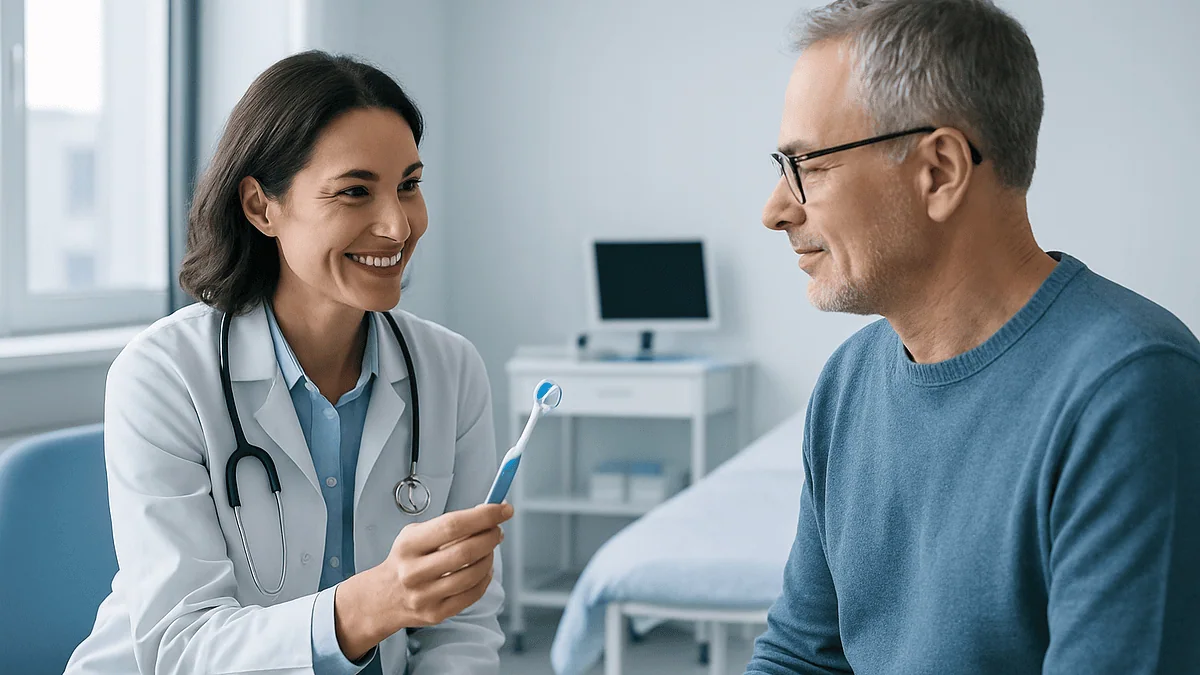
Key Takeaways
- Replace manual toothbrushes and electric brush heads every three to four months, or immediately once bristles splay, whichever comes first.
- Worn bristles remove measurably less plaque along the gumline and between teeth, the exact zones where gingivitis and cavities begin.
- A toothbrush that frays in under two months usually signals excessive brushing pressure, which also contributes to gum recession over time.
- Electric brush heads often wear faster than manual brushes because their shorter bristles endure thousands of movements per minute.
- Evidence that your own toothbrush reinfects you after strep or a cold is weak, so post-illness replacement is a cheap precaution rather than a necessity.
- Airtight caps and closed containers trap moisture and encourage microbial growth; store brushes upright, in open air, with heads not touching.
Replace your toothbrush, or your electric brush head, every three to four months, and sooner if the bristles look frayed, splayed, or discolored. Worn bristles remove measurably less plaque, particularly along the gumline where it matters most. Many people keep a brush twice as long as recommended, and replacing one after a contagious illness is a reasonable, low-cost precaution.
Take a look at the toothbrush in your bathroom cup right now. If the bristles fan outward like a tiny broom that lost an argument with the floor, it has already told you everything you need to know. Most of us just aren’t listening.
Here’s the uncomfortable math: a toothbrush is supposed to serve for roughly 90 to 120 days. Ask around, and you’ll hear about brushes that survived a full year, a cross-country move, and two birthdays. Dental surveys and clinic anecdotes suggest the average brush stays in service far past its useful life, quietly getting worse at the one job it has.
The good news is that this is one of the cheapest fixes in all of preventive health. A few dollars, four times a year, buys back the cleaning power you’ve been slowly losing. Let’s walk through what the evidence actually says, and where the folklore ends.
The short answer: every three to four months
Mainstream dental guidance converges on a simple benchmark: swap your toothbrush, or the head of your electric brush, every three to four months. Sources such as MedlinePlus and the Cleveland Clinic repeat this figure not because nylon expires on a schedule, but because that’s roughly how long bristles hold their shape under twice-daily use.
Do the arithmetic and the number starts to make sense. Two minutes of brushing, twice a day, adds up to about two hours of scrubbing per month. By month three, your brush has endured six hours of friction against enamel, gum tissue, and toothpaste abrasives. Nylon filaments bend, the tips round off or split, and the tuft pattern that engineers designed to reach between teeth gradually collapses.
Two caveats keep the rule honest. First, three to four months is a ceiling, not a target; if your bristles look worn at week eight, the brush is done at week eight. Second, the calendar assumes normal technique. People who bear down hard, brush more than twice daily, or clean around braces and bridges chew through bristles faster and should judge by condition rather than by date.
A practical trick: tie replacement to something you already notice. The start of each season works neatly, since four seasons a year maps onto the three-month rhythm almost perfectly. Some brushes also include indicator bristles, a band of colored filaments that fades to signal wear, which takes the guesswork out entirely.
Why worn bristles matter more than germs
When people worry about an old toothbrush, they usually worry about bacteria. That’s understandable, but it’s the less important half of the story. The bigger problem is mechanical: a worn brush simply cleans worse.
Dental plaque is a biofilm, a sticky, organized layer of bacteria that adheres to teeth and hugs the gumline. Rinsing doesn’t remove it, and toothpaste alone doesn’t remove it. What removes it is physical disruption from bristle tips flexing against tooth surfaces at the right angle. Research comparing new and worn brushes has found that frayed bristles remove less plaque, with the deficit most pronounced along the gum margin and between teeth, precisely the zones where gum inflammation and cavities tend to begin.
Picture the difference. A fresh bristle stands upright, and its tip does the work, slipping slightly under the gumline and into grooves. A splayed bristle lies at an odd angle, so its side skates across the tooth like a squeegee held flat against glass. You feel the sensation of brushing. You’re just not getting the result.
As for the germ question: yes, used toothbrushes harbor microbes, including bacteria from your own mouth. Health agencies have not linked normal toothbrush use to illness in healthy people, and your mouth was never sterile to begin with. Rinsing the brush and letting it air-dry handles the hygiene side for most households. The wear side is the one only a replacement can fix.
What does a worn-out toothbrush actually look like?
You don’t need a magnifying glass, though under one the evidence is dramatic: frayed tips, split filaments, bristles bent at the base. To the naked eye, watch for these signals:
- Splaying. Bristles flare outward instead of standing in tidy tufts. This is the classic sign and the most reliable one.
- Matting. Tufts clump together or lean in one direction, like grass after a rainstorm.
- Discoloration. Bristles that have gone yellowish or dingy, or a colored indicator band that has faded roughly halfway, both point to end of life.
- Buildup at the base. A pale residue where bristles meet the head is dried toothpaste and organic debris. It’s hard to rinse out and a sign the brush has been around a while.
- Odor. A brush that smells musty even after rinsing has been retaining moisture and material it shouldn’t.
One subtle point deserves emphasis: a brush can be functionally worn before it looks dramatic. Bristle tips round off and lose their cleaning edge earlier than the visible splay appears. That’s why the calendar and the visual check work best together. If the brush looks fine at three months, replace it anyway. If it looks rough at six weeks, don’t wait for permission from the calendar.
And a brush that appears pristine after four months of claimed twice-daily use raises a different question, worth asking honestly: is it actually being used for a full two minutes?
Is it okay to change a toothbrush every month?
Perfectly okay, and in a few situations, genuinely sensible. There’s no such thing as replacing a toothbrush too often from a health standpoint. A fresh brush cleans at full effectiveness, full stop.
Monthly replacement earns its keep in specific circumstances:
- Heavy-handed brushers. If your bristles splay within weeks, a monthly swap keeps you working with a functional tool while you retrain your technique with lighter pressure.
- Braces and orthodontic appliances. Brackets and wires shred bristles noticeably faster than bare teeth do. Many people in orthodontic treatment find their brushes wear out in four to eight weeks.
- During and after illness. Some people prefer a fresh brush once they recover from a cold, flu, or strep throat. The evidence that your own brush reinfects you is thin, but the swap is cheap peace of mind.
- Weakened immune systems. Households managing chemotherapy, organ transplant recovery, or other immune-compromising conditions are often advised to be more conservative about brush hygiene generally.
The honest downsides are cost and waste, not health. Twelve brushes a year instead of four triples your plastic footprint for a modest cleaning benefit if your bristles were still in good shape. For most people with gentle technique and healthy mouths, monthly replacement is overkill, but it’s harmless overkill. If it helps you stay motivated, or if the categories above describe you, go ahead without guilt.
Can I use the same toothbrush for 6 months?
You can, in the sense that nothing dramatic will happen on day 181. You shouldn’t, in the sense that you’ll spend roughly half of those six months brushing with a degraded tool.
Here’s the honest trajectory. For the first two to three months, a quality brush performs close to its design intent. Somewhere in the third or fourth month, depending on your pressure and frequency, bristle tips round off, filaments begin to splay, and plaque removal declines, most sharply along the gumline. By month six, nearly every brush shows visible wear, and studies of used brushes consistently find that this level of fraying corresponds to poorer cleaning, especially between teeth.
What does that mean in practice? Plaque left along the gum margin doesn’t take a holiday. Within days it triggers gingivitis, the early, reversible stage of gum inflammation that shows up as redness, puffiness, and bleeding when you brush or floss. Left undisturbed for longer stretches, plaque mineralizes into tartar, which no toothbrush of any age can remove; that takes a professional cleaning.
So the six-month brush isn’t a catastrophe. It’s a slow leak. You’re doing the work, spending the two minutes twice a day, and quietly collecting less of the benefit. Given that a replacement brush costs less than most cups of coffee, the three-to-four-month rhythm is one of the best value propositions in home health. If six months has been your habit, simply cutting that interval in half puts you inside the guideline.
Can I use the same toothbrush for 2 years?
No researcher has run a formal trial of two-year-old toothbrushes, for the same reason no one studies driving with two flat tires: the mechanics are already clear. But let’s take the question seriously, because plenty of brushes really do last that long in the wild.
A brush at 24 months has absorbed something on the order of 45 to 50 hours of scrubbing. Its bristle architecture is gone. The filaments are splayed, flattened, and frayed at the tips, which means they no longer reach into the gumline crevice or the tight contacts between teeth. Functionally, you’re wiping the broad, easy surfaces of your teeth, the ones least likely to develop problems anyway, while the vulnerable zones go largely untouched.
Two secondary issues compound the problem. Frayed, split bristle ends can be rougher on gum tissue than intact rounded tips, an unwelcome trait for anyone with gum recession or sensitivity. And two years of moisture cycles leave organic buildup at the bristle base that rinsing can’t clear.
The trap here is false reassurance. Teeth cleaned poorly don’t usually hurt right away. Gum disease is famously quiet in its early stages, and cavities between teeth can grow unseen for months. Someone using a two-year-old brush may feel fine and conclude the brush is fine. The feedback simply arrives late, often at a dental visit as bleeding scores, tartar, or a filling that could have been avoided. If your brush has celebrated a birthday, let alone two, replace it today and reset the clock.
How do dentists recommend toothbrush changes?
Professional guidance is refreshingly consistent, and it rests on two triggers rather than one: time and condition, whichever comes first. Here’s the consensus picture drawn from mainstream sources such as the Cleveland Clinic, MedlinePlus, and the NHS:
| Situation | When to replace |
|---|---|
| Manual toothbrush, typical use | Every 3 to 4 months |
| Electric or battery brush head | Every 3 months, often sooner |
| Bristles frayed or splayed | Immediately, regardless of age |
| Child’s toothbrush | Check monthly; often before 3 months |
| After strep throat or similar contagious illness | Reasonable precaution once recovered |
| Brush dropped on the floor or used by someone else | Replace it |
Notice the philosophy behind the table. Dentists aren’t treating the toothbrush as a biohazard on a countdown timer; they’re treating it as a precision tool with a service life. The three-month figure exists because that’s when the tool typically stops performing to spec, not because something sinister happens to it.
Notice, too, what’s absent: any suggestion that a premium brush earns a longer lifespan. Bristle wear is driven by hours of use and pressure, not by price. An expensive handle with worn bristles cleans no better than a bargain one in the same condition.
Many hygienists suggest anchoring the habit to your dental checkups. If you’re seen twice a year and replace your brush at each visit plus once in between, you land almost exactly on the recommended cadence without ever consulting a calendar.
Do electric toothbrush heads follow the same rule?
They do, and arguably a slightly stricter one. Mainstream guidance puts electric and battery-powered brush heads on a roughly three-month replacement cycle, and there are mechanical reasons to lean toward the early end of that window.
Electric brush heads typically carry shorter bristles than manual brushes, so the same amount of tip wear consumes a larger share of each filament’s working length. The heads also move fast; oscillating and sonic models put bristles through thousands of movements per minute, concentrating wear into every brushing session. A head that has logged three months of twice-daily use has done an enormous amount of work.
The deceptive part is the handle. The motor hums along exactly as it did on day one, the timer still buzzes at two minutes, and everything feels normal. That steady performance can lull you into thinking the whole system is fine when the only part that touches your teeth is spent. Judge the head by its bristles, never by the motor.
Helpfully, most major brands build indicator bristles into their heads, colored filaments that fade with use as a visual replacement cue. When the color has faded about halfway, the head is due. A worthwhile note for households: a well-maintained electric brush handle can last years, so the ongoing cost of ownership is really the heads. Buying replacement heads in multipacks makes the three-month rhythm easier to sustain, since the next head is already waiting in the drawer instead of on a shopping list.
Should you replace your toothbrush after being sick?
This is where honesty matters more than folklore, because the advice you’ve heard is stronger than the evidence behind it.
The theory sounds airtight: you were sick, your brush touched your mouth, therefore the brush could reinfect you. The research is less dramatic. Studies examining toothbrushes after strep throat have generally failed to show that the bacteria persist on brushes in a way that causes reinfection, and your immune system, having just fought off a given cold virus, typically retains short-term defenses against that exact strain. Respiratory viruses also fare poorly on dry bristles; most lose viability within hours to a day or two on dry surfaces.
So is post-illness replacement pointless? Not quite. A few scenarios shift the calculus:
- Shared storage. If family brushes stand together in one cup with heads touching, one person’s illness can plausibly reach another’s brush. Separate the brushes, and consider replacing after illness runs through the house.
- Weakened immunity. For anyone immunocompromised, the cost-benefit tilts firmly toward replacement.
- Wet, covered brushes. Microbes survive far longer in trapped moisture. A brush kept in a closed travel cap during an illness is a better candidate for the trash.
The bottom line reads like this: replacing your toothbrush after strep, flu, or a bad cold is a cheap, harmless precaution with weak evidence behind it, not a medical necessity. If it makes you feel better, do it. Just don’t let a mid-illness brush swap substitute for the habits that actually matter, like not sharing brushes at all.
Bristles fraying fast? You may be brushing too hard
A toothbrush that looks exhausted after six weeks is sending you a message, and it’s usually not about the brush. Premature splaying is the classic fingerprint of excessive pressure.
The instinct is understandable. Scrubbing a pan harder gets it cleaner, so scrubbing teeth harder should too. But plaque is soft, roughly the consistency of wet flour, and it yields to light, well-angled bristle contact. Force beyond that adds no cleaning benefit while introducing real costs: over time, aggressive brushing contributes to gum recession, exposing sensitive root surfaces, and can abrade enamel near the gumline, especially when paired with a stiff brush.
A few recalibrations help:
- Choose soft bristles. Dental guidance broadly favors soft-bristled brushes for exactly this reason. Medium and hard bristles offer no proven cleaning advantage for everyday use.
- Hold the handle like a pencil, not a hammer. A fingertip grip physically limits how much force you can apply.
- Angle, don’t grind. Aim bristles at roughly 45 degrees toward the gumline and use short, gentle strokes or small circles rather than aggressive sawing.
- Let electric brushes work. If you use one, hold it against each tooth and let the head do the moving. Many models include pressure sensors that light up or pause when you push too hard; treat that signal as coaching, not nagging.
Watch your next brush as a diagnostic. If it still splays within two months despite a lighter touch, mention it at your next dental visit, since your hygienist can watch your technique and spot what a mirror can’t.
Kids' toothbrushes wear out faster, here's why
Anyone who has watched a five-year-old brush their teeth knows the toothbrush leads a hard life. Children chew bristles while thinking, scrub with enthusiasm untethered from technique, and occasionally use the brush to clean things that are not teeth. The result: kids’ brushes routinely wear out well before the three-month mark.
The stakes are worth taking seriously. Tooth decay is one of the most common chronic conditions of childhood, and the CDC notes that a substantial share of children develop cavities in their baby teeth, teeth that matter more than their temporary status suggests, since they hold space for permanent teeth and support speech and nutrition. A splayed, chewed brush handicaps a child who is still developing brushing skill in the first place.
A practical routine for parents:
- Inspect monthly. Make a quick bristle check part of the first-of-the-month routine. Chewed or flared bristles mean replacement now, not at the quarter mark.
- Use turnover as motivation. A new brush in a favorite color or character is a genuinely useful bribe. Novelty measurably improves enthusiasm in young brushers, at least for a while, and a fresh brush every couple of months keeps that lever available.
- Keep supervising. Health guidance generally recommends that adults assist or supervise brushing until around age 7 or 8, when children develop the dexterity to do a thorough job alone.
One more note: if a child’s brush shows bite marks through the bristle base, that’s chewing, not brushing, and it’s worth a gentle coaching conversation along with the replacement.
How to store a toothbrush so it lasts and stays clean
Storage won’t extend the three-to-four-month bristle lifespan, but poor storage can shorten a brush’s hygienic life considerably. The guiding principle is simple: microbes love moisture, so your job is to help the brush dry.
- Rinse thoroughly after each use. Run the head under the tap and flick off excess water to clear toothpaste and debris from the bristle base.
- Stand it upright, head up, in open air. An upright brush drains and dries between uses. A brush lying flat in a drawer stays damp far longer.
- Skip the airtight cap at home. Sealed covers and closed containers trap humidity and give microbes a friendlier environment, the opposite of what you want. Ventilated covers exist for travel; at home, open air wins.
- Keep brush heads from touching. In a shared family cup, leave space between brushes so one person’s mouth flora doesn’t migrate to another’s bristles.
- Never share a toothbrush. Sharing transfers saliva, bacteria, and potentially blood-borne exposure through micro-abrasions in gums. It’s one of the few absolute rules in this topic.
Then there’s the toilet question. Flushing does generate an aerosol plume, and studies have detected droplets traveling several feet from the bowl. Whether this has ever made anyone sick via a toothbrush remains unproven, and health agencies don’t treat it as a documented hazard. Still, the countermeasures cost nothing: close the lid before flushing, and store your brush as far from the toilet as your bathroom allows. Cheap insurance against a risk that’s plausible even if unconfirmed.
After travel, give a capped, damp-stored brush an honest look. If it spent a week sealed and moist, replacing it is reasonable.
Do toothbrush sanitizers, covers, and boiling actually help?
The toothbrush accessory aisle runs ahead of the evidence, so let’s sort the useful from the theatrical.
UV sanitizers. These devices do reduce microbial counts on brush heads; that much is measurable. What’s missing is any demonstrated health benefit. No credible research shows that people who sanitize their brushes get fewer cavities, less gum disease, or fewer infections than people who simply rinse and air-dry. Your mouth hosts hundreds of bacterial species by design, and recontamination begins with the first post-sanitizing brushstroke. If a sanitizer gives you peace of mind, it appears harmless. It is not, on current evidence, necessary.
Boiling, microwaving, and the dishwasher. Skip all three. Nylon bristles deform under high heat, and a heat-warped brush is a worn-out brush you paid extra energy to ruin. Manufacturers and health sources alike advise against it.
Antiseptic rinse soaks. Briefly swishing a brush head in an antiseptic mouth rinse can reduce surface microbes, and it won’t hurt. Reusing the same soaking solution across days, however, defeats the purpose. Like sanitizers, this falls under optional, not evidence-required.
Covers and caps. Covered here already, but worth repeating: airtight covers trap moisture and can make the microbial picture worse, not better. Ventilated travel caps are the exception for suitcases.
The honest hierarchy looks like this: replacement on schedule matters most, air-drying and separate storage matter next, and everything else is garnish. No gadget rescues a brush with splayed bristles, and no splayed brush is redeemed by being the most sanitized worn-out tool in the bathroom.
When a toothbrush problem is really a dentist problem
A fresh toothbrush fixes exactly one thing: worn bristles. Some of what people blame on an old brush is actually a signal from the mouth itself, and those signals deserve professional eyes.
Make a dental appointment rather than another trip to the drugstore if you notice any of the following:
- Gums that bleed regularly during brushing or flossing, or that look red, puffy, or receding. Occasional bleeding can accompany a technique change; persistent bleeding is a hallmark of gum disease and warrants evaluation.
- Bad breath that a new brush, flossing, and tongue cleaning don’t resolve within a couple of weeks. Persistent halitosis can point to gum disease, decay, dry mouth, or conditions beyond the mouth entirely.
- Sensitivity or pain when you brush, or lingering discomfort with hot, cold, or sweet foods. These can indicate exposed roots, enamel erosion, or a developing cavity.
- Loose adult teeth, sores that don’t heal within two weeks, or white or red patches anywhere in the mouth. These need prompt professional assessment.
- Brushes that fray within weeks despite a genuinely light touch, which may reflect a technique issue a hygienist can correct in one visit.
Routine checkups matter here too. Most guidance suggests professional cleanings and exams on a schedule your dentist tailors to your risk, commonly every six months, because tartar and early gum disease are things no home tool addresses. If a symptom in the mouth comes with fever, facial swelling, or difficulty swallowing, treat it as urgent and seek medical care the same day. A toothbrush is preventive equipment. Symptoms are a different conversation, and they belong with a professional.
Frequently asked questions
Is it okay to change a toothbrush every month?
Yes, monthly replacement is completely safe and sometimes sensible. It makes particular sense if you brush with heavy pressure, wear braces that shred bristles quickly, or simply prefer a fresh brush after an illness. The only real downsides are extra cost and plastic waste, since a gently used one-month-old brush still has plenty of cleaning life left. For most people, three to four months is the practical sweet spot.
Can I use the same toothbrush for 6 months?
It’s not recommended. By six months, nearly all brushes show visible fraying, and worn bristles remove noticeably less plaque, especially along the gumline. Nothing catastrophic happens on a specific day, but you spend roughly half that period brushing with a degraded tool while plaque accumulates in the areas most prone to gum inflammation and decay. Cutting the interval to three or four months restores full cleaning effectiveness for a trivial cost.
Can I use the same toothbrush for 2 years?
No. After two years, a brush has absorbed dozens of hours of scrubbing, and its bristle structure is essentially gone. Splayed, frayed filaments can no longer reach the gumline crevice or between teeth, and split bristle ends can be rougher on gum tissue than intact rounded tips. Because early gum disease and cavities are often painless, the damage from ineffective brushing tends to show up quietly, usually at a dental visit.
How do dentists recommend toothbrush changes?
Dental guidance uses two triggers: replace every three to four months, or sooner whenever bristles look frayed, splayed, or discolored, whichever comes first. Electric brush heads follow roughly a three-month cycle, and children’s brushes often need replacing earlier because kids chew and scrub aggressively. Many hygienists suggest anchoring the habit to twice-yearly dental visits, replacing at each checkup plus once in between, which lands almost exactly on the recommended schedule.
Should I replace my toothbrush after a cold, flu, or strep throat?
It’s a reasonable precaution, though the evidence behind it is weak. Studies haven’t clearly shown that your own toothbrush reinfects you, partly because your immune system retains defenses against the strain you just fought off, and respiratory viruses survive poorly on dry bristles. Replacement makes more sense if brushes share a cup with heads touching, if someone in the household is immunocompromised, or if the brush was stored damp under a cover.
Do electric toothbrush heads need replacing as often as manual brushes?
Yes, roughly every three months, and sometimes sooner. Electric heads usually have shorter bristles, so the same wear consumes more of each filament’s working length, and oscillating or sonic movements concentrate thousands of strokes into every session. Don’t judge the head by the motor, which performs identically whether the bristles are new or spent. Most brands include colored indicator bristles; when the color fades about halfway, the head is due.
How can I tell my toothbrush is worn out if it still looks okay?
Use the calendar as your backup, because bristle tips round off and lose their cleaning edge before visible splaying appears. If the brush is past three to four months, replace it regardless of appearance. Fading indicator bristles, dinginess, buildup at the bristle base, or a musty smell after rinsing are additional clues. A brush that looks pristine after months of genuine twice-daily, two-minute use is actually unusual.
Does rinsing my toothbrush in hot water or mouthwash make it last longer?
No. Rinsing addresses surface debris and microbes, but a toothbrush’s lifespan is determined by physical bristle wear, which no cleaning method reverses. A brief antiseptic rinse soak is harmless and reduces surface microbes, though no research shows a resulting health benefit. Avoid boiling water, microwaves, and dishwashers entirely, since high heat warps nylon bristles and effectively destroys the brush you were trying to preserve.
Is it bad to share a toothbrush with a partner or family member?
Yes, don’t do it, even occasionally. Sharing transfers saliva and oral bacteria directly, including species linked to tooth decay and gum disease, and brushing can cause tiny gum abrasions that create a route for blood-borne exposure. This is one of the firmest rules in oral hygiene. If someone borrows your brush, replace it. Keeping family brushes stored with heads separated prevents the accidental version of the same problem.
What's the best way to store a toothbrush between uses?
Rinse it well, flick off excess water, and stand it upright in open air with the head up, keeping it from touching other brushes. Skip airtight caps and closed containers at home, since trapped moisture encourages microbial growth; ventilated covers are fine for travel. Closing the toilet lid before flushing and storing the brush away from the toilet are sensible, no-cost precautions against aerosol droplets, even though a proven health risk hasn’t been documented.
References
This article is for general information only and is not a substitute for professional medical advice. Please consult a qualified doctor about your individual situation.

More from the Blog
What Laser Assisted Dental Procedures Can and Cannot Do: Realistic Results by Treatment Type
Laser dental treatment results depend on the procedure. For soft-tissue work such as gum reshaping, tongue-tie release and small biopsies, lasers cut precisely with…
Gum Graft vs Bonding for Gum Recession: Covering the Root or Protecting It
A gum graft and dental bonding address gum recession differently. A graft moves or places soft tissue to cover the exposed root and rebuild…

What Happens During SRP: Numbing, Cleaning Below the Gumline and Smoothing the Roots
Scaling and root planing is a deep cleaning for gum disease performed by a dentist or dental hygienist. After the gums are numbed with…

After Bleeding Gums Treatment: Brushing, Flossing and Mouthwash Routine That Protects Healing
After bleeding gums treatment, the routine that protects healing is gentle but complete: brush twice a day for about two minutes with a soft…

Planning Laminate Veneers Abroad: Visits, Temporary Veneers and Follow-Up
Laminate veneers usually require at least two clinical visits spaced about one to two weeks apart: one to prepare the teeth and fit temporary…
How to Keep Teeth Clean During Orthodontics: Brushing Around Brackets and Aligners
Cleaning teeth with braces means brushing for about two minutes twice a day with fluoride toothpaste, angling the brush above and below each bracket,…