

Why a Cleaning Comes Before Teeth Whitening: Checking Enamel, Gums and Old Fillings
Key Takeaways
- A professional cleaning removes only extrinsic stain on the tooth surface; it cannot lighten the yellow or gray pigment that comes from the dentin beneath the enamel.
- Whitening gel oxidizes colored molecules inside the tooth, so plaque and tartar left on the surface block the gel and leave darker patches where deposits sat.
- Peroxide does not change the shade of composite fillings, crowns, veneers or bonding, which is why dentists map visible restorations before whitening and usually replace them afterward to match.
- The NHS advises against whitening during pregnancy or breastfeeding because safety data are limited, and against whitening by anyone who is not a registered dental professional.
- Post-whitening sensitivity is usually temporary and, according to Cleveland Clinic guidance, tends to settle within a few days; a single tooth that hurts far more than the rest may have a crack or leaking filling.
- NHS guidance places whitening results at anywhere from a few months to about 3 years, with smoking and frequent staining drinks shortening that range and regular cleanings helping to maintain it.
A professional cleaning usually comes before teeth whitening because whitening gel works on clean enamel, not on plaque and tartar, and because the dentist uses the visit to check for cracked or eroded enamel, inflamed or receding gums, and old fillings or crowns that will not change color. Clearing those issues first lets whitening work evenly and lowers the risk of sensitivity or gum irritation.
The booking page offered two options side by side: a routine cleaning, or a whitening session. Maya hovered over the second one. Her sister’s wedding was six weeks away, she had been drinking a lot of coffee, and a cleaning sounded like a detour. Then the receptionist asked a question she had not expected: when was your last exam?
That question sits at the center of almost every honest conversation about cleaning before teeth whitening. Whitening is a chemical treatment applied to living tissue. It does not know the difference between healthy enamel and a hairline crack, between a firm gum line and one that is sore and receding, between natural tooth and a twenty-year-old composite filling. A dentist does, and the cleaning visit is where that knowledge gets used.
This article walks through what actually happens at that first appointment, what the dentist is looking for, how whitening gel behaves on a clean versus a coated tooth, and how the days afterward usually feel. The decisions stay with your dental team; the goal here is to make their reasoning visible.
What happens during a cleaning before teeth whitening?
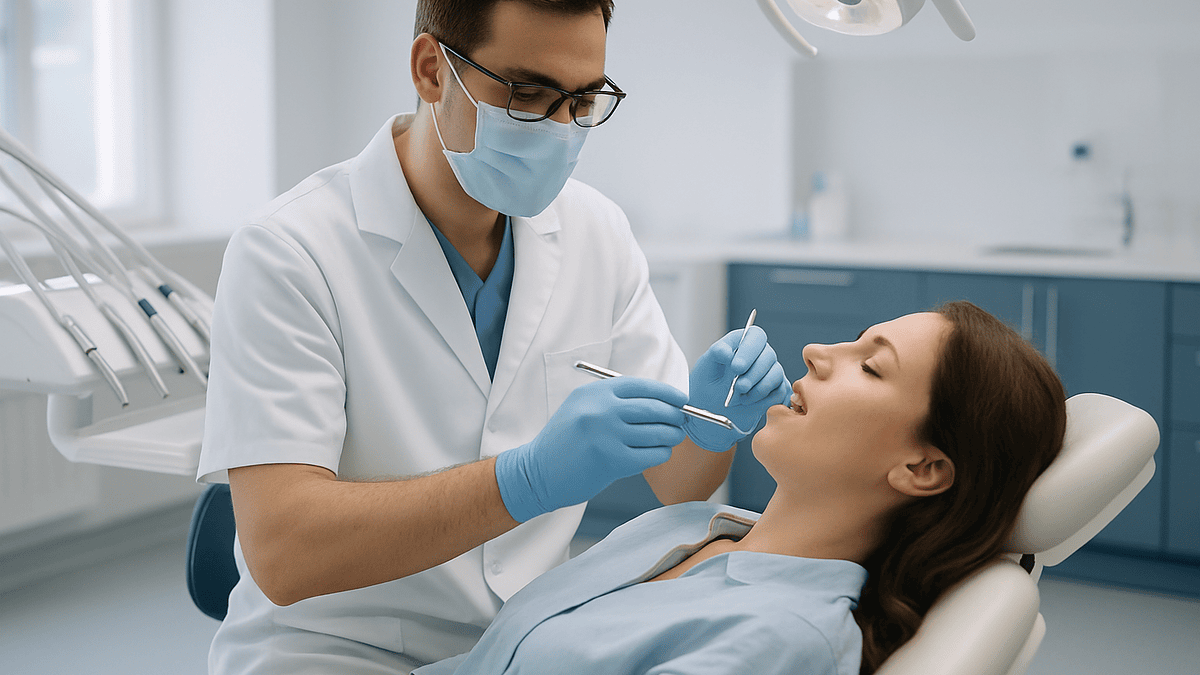
A professional cleaning, sometimes called a scale and polish, has two jobs. The first is mechanical: a hygienist or dentist removes plaque, the soft film of bacteria that builds up daily, and tartar, which is plaque that has hardened into a mineral crust that a toothbrush cannot shift. The second job is diagnostic, and it is the one most people overlook.
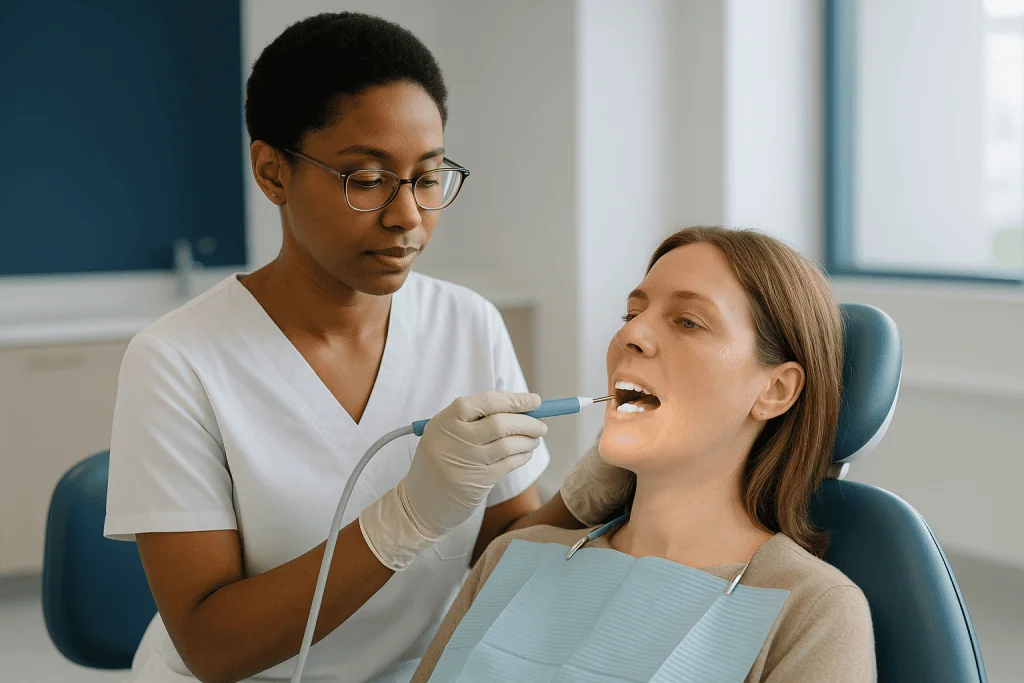
During the scaling step, a fine instrument, either hand-held or ultrasonic, works along the gum line and between teeth where tartar collects. Scaling can feel scratchy and occasionally sharp, particularly where gums are inflamed. Polishing follows, using a mildly abrasive paste on a rotating cup. The paste removes surface stain from coffee, tea, tobacco and red wine, which is why teeth often look brighter immediately afterward. The NHS describes this routine care and notes that how often you need it depends on your individual risk, with recommended intervals ranging from every 3 months to every 2 years (NHS, Healthy teeth and gums).
The diagnostic part happens in parallel. While cleaning, the clinician is probing pocket depths around each tooth, noting bleeding points, feeling for rough margins on fillings, checking for enamel wear, and looking at the overall color pattern. Many practices also take radiographs at this visit if none are recent, because decay between teeth and under old restorations is invisible to the eye.
In practice, the cleaning appointment is the dentist’s chance to say yes, your mouth is ready for whitening, or not yet, here is what needs attention first. Skipping it means the whitening gel is applied to a surface no one has examined.
Does a dental cleaning whiten teeth by itself?
Partly, and the distinction matters because it shapes expectations. Polishing removes extrinsic stain, meaning color that sits on the outside of the enamel. Tannins from tea, pigments from coffee and tobacco tar bind to the pellicle, a thin protein film on the tooth surface, and over months that layer darkens. Scrape and polish it away and the tooth returns to its natural shade. For some people, especially those whose teeth were never deeply discolored, that natural shade is bright enough and no further treatment is wanted.
What a cleaning cannot do is change intrinsic color. Intrinsic color comes from within the tooth: the dentin underneath the enamel is naturally yellowish, enamel thins and becomes more translucent with age, and certain medicines taken in childhood or trauma to a tooth can leave a gray or brown cast deep in the structure. MedlinePlus lists these causes of abnormal tooth color, including aging, injury and some medications (MedlinePlus, Tooth abnormal colors).
Whitening targets that intrinsic layer. The peroxide in whitening gel breaks down into reactive oxygen molecules that pass through enamel and break apart the larger colored compounds in dentin into smaller, less pigmented pieces. Polish and peroxide therefore work on different layers of the same tooth, which is exactly why they are usually sequenced: polish first to remove the surface layer, then whiten to reach what remains.
So the honest answer to a common search question, does dental cleaning whiten teeth, is that it brightens by subtraction. It takes away what was added. It does not lighten the tooth’s own pigment, and if your discoloration is intrinsic, a cleaning alone will likely disappoint.
How teeth whitening actually works on a clean tooth
Picture enamel as a dense, mineral honeycomb. It looks solid, but at a microscopic level it has pores and channels that allow small molecules to pass through. Whitening relies on that. Hydrogen peroxide, or carbamide peroxide, which slowly releases hydrogen peroxide, is placed against the tooth. Oxygen radicals diffuse inward and oxidize chromogens, the colored organic molecules lodged in enamel and dentin, so they reflect more light and look lighter. The Cleveland Clinic summarizes this mechanism in its overview of whitening methods (Cleveland Clinic, Teeth whitening).
Now add a layer of plaque and tartar on top. Tartar is porous and mineralized but it is not tooth; peroxide spends itself oxidizing bacteria and debris on the surface instead of diffusing into enamel. Where tartar is thick, usually along the lower front teeth and the gum line of the upper molars, the gel never reaches the tooth at all. The result is a patchwork: whitened enamel in clean zones, unchanged color under the crust. Once the tartar is eventually removed, the darker band remains.
There is a second reason a clean tooth responds better. Whitening gel is held against the teeth in a tray or isolated with a protective barrier. Tartar deposits create gaps and ledges where gel pools against the gum instead of the tooth. Gum tissue exposed to peroxide blanches, stings and can ulcerate. Removing the deposits lets the tray or barrier seat evenly.
Finally, cleaning smooths the surface. A polished tooth stains more slowly afterward, because pigment has fewer rough spots to cling to. Cleaning before teeth whitening is, in that sense, both preparation and maintenance.
Checking enamel: cracks, erosion and thin spots before whitening
Enamel is the hardest substance in the body and it does not regrow. That makes the pre-whitening enamel check one of the most consequential parts of the visit. The dentist is looking for three things.
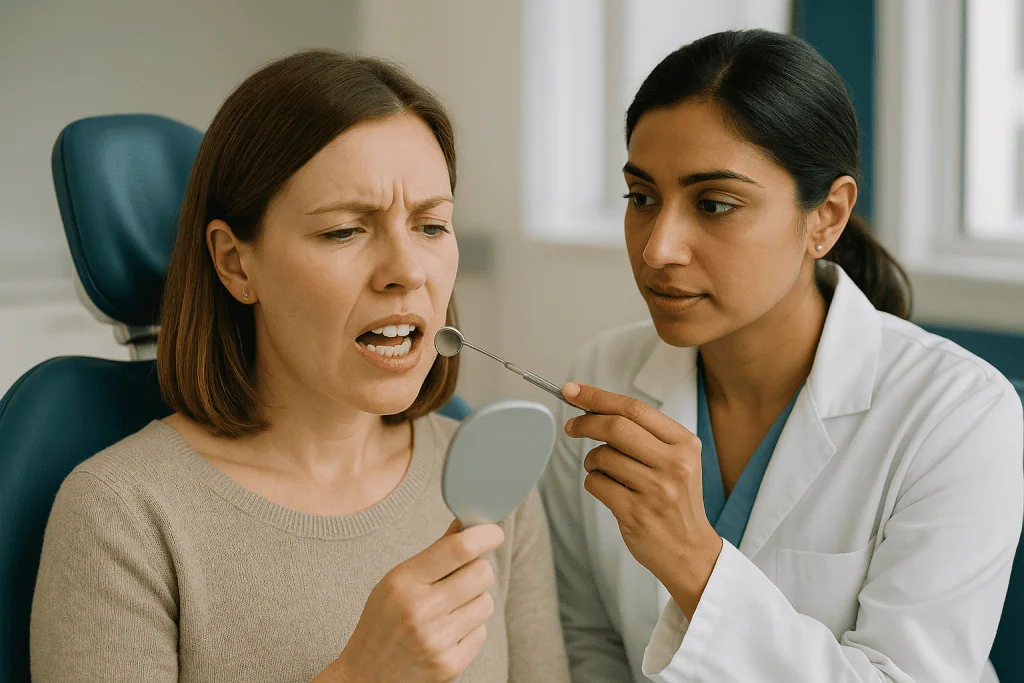
The first is erosion, which is enamel dissolved by acid rather than worn by bacteria. Frequent acidic drinks, reflux and eating disorders all thin enamel, often on the inner surfaces of upper front teeth and the chewing surfaces of molars. Eroded enamel is thinner, so the yellow dentin beneath shows through, and peroxide reaches the dentin and the nerve-rich pulp faster. Whitening eroded teeth tends to produce sharper sensitivity and uneven results.
The second is cracks. Craze lines are tiny vertical fractures in enamel, common in adults and usually harmless. Deeper cracks, from grinding, a hard bite on an olive stone or an old large filling, behave differently. Whitening gel can seep into a crack, concentrating peroxide against dentin and causing a localized, sometimes intense, zing. Transillumination, shining a light through the tooth, helps the dentist spot these.
The third is exposed dentin at the gum line. Dentin contains thousands of microscopic tubules leading to the nerve. The Mayo Clinic explains that worn enamel and exposed tooth roots are the usual reasons teeth become sensitive to cold, heat, sweet or touch (Mayo Clinic, Sensitive teeth). Peroxide on exposed dentin is the most common source of whitening discomfort.
None of these findings automatically rules whitening out. They change the plan: a lower-strength approach over a longer period, a desensitizing step beforehand, protective covering of exposed areas, or a decision to restore a cracked tooth first. Your dentist weighs this; the point is that someone has looked.
Checking gums: why inflamed or receding gums should be treated first
Gum disease is common and frequently silent. The NIH’s dental research institute notes that it begins as gingivitis, a reversible inflammation driven by plaque, and can progress to periodontitis, where the supporting bone and tissue are damaged (NIH NIDCR, Periodontal (gum) disease). Bleeding when brushing, redness and puffiness along the gum line are the early signs, and many people with them feel no pain at all.
Whitening on top of inflamed gums creates two problems. Inflamed tissue is fragile and already has a disrupted surface barrier, so peroxide that contacts it stings more and is more likely to cause white patches or small ulcers. Bleeding gums also leak fluid into the whitening tray or around the barrier, diluting the gel and lifting it off the enamel. Results are weaker and the experience is worse.
Recession is the other gum concern. When the gum line pulls back, it exposes the root surface, which has no enamel. Root surfaces are covered by cementum, a softer, more porous material that does not whiten the way enamel does and transmits sensation readily. Whitening a tooth with significant recession typically lightens the crown but leaves a darker, yellow collar at the root, and it can cause lasting sensitivity in that band.
The cleaning visit addresses the first problem directly. Scaling removes the plaque and tartar driving gingivitis, and gums that bleed on probing today often tighten and stop bleeding within a few weeks of thorough cleaning and improved home care, according to NHS guidance on gum disease (NHS, Gum disease). For recession, the dentist decides whether exposed roots need covering with a protective material during whitening, whether to leave those areas untreated, or whether whitening is a poor fit for now.
Checking old fillings, crowns and veneers: what will not change color
Here is the fact that surprises the most people: peroxide does not whiten restorations. Composite resin fillings, porcelain crowns, veneers and bonding are manufactured materials with a fixed shade. They were color-matched to your teeth on the day they were placed. Whiten the natural teeth around them and the match is broken. A front filling that was invisible for a decade becomes a visibly darker island on a lighter tooth. The Cleveland Clinic makes this point plainly in its whitening overview (Cleveland Clinic, Teeth whitening).
The cleaning visit is where the dentist maps these. A mouth with no restorations on the front teeth is simple. A mouth with a bonded chip on a central incisor, a crown on a lateral incisor and composite patches at the gum line of the canines needs a conversation before any gel is applied. The usual sequence is to whiten first, let the shade stabilize, and then replace visible restorations to match the new color. Replacing them beforehand to a lighter shade is guesswork.
Old fillings raise a second issue. Margins, the junction where filling meets tooth, can become leaky over years. A leaky margin is a channel into the tooth, and peroxide reaching dentin through that channel causes sharp sensitivity. Dark staining around a margin may also signal decay underneath, which the dentist wants to treat before whitening, not after. Radiographs taken at the cleaning visit are the usual way to see this.
A worn amalgam, the silver-colored filling, does not change with whitening either, but it can appear more noticeable once surrounding enamel lightens. People sometimes mistake that contrast for the filling having darkened. It has not; the backdrop moved.
Who is usually a good candidate, and who is usually asked to wait
Whitening suits a fairly specific person: an adult with healthy gums, intact enamel, few or no visible restorations on the front teeth, and discoloration that is yellow or light brown rather than gray. Yellow shades, which usually come from aging and surface stain, respond best to peroxide. Gray or blue tones, often from tetracycline exposure in childhood or from a tooth that died after injury, respond slowly or unevenly.
Several groups are routinely asked to wait or to consider alternatives:
- People with untreated gum disease, until bleeding has settled after cleaning and home care.
- Anyone with active decay, a cracked tooth or a leaking filling, until those are repaired.
- Those with marked sensitivity, who may benefit from a desensitizing period before any peroxide is used.
- People who are pregnant or breastfeeding, for whom the NHS advises against whitening because safety data are limited (NHS, Teeth whitening).
- Children and adolescents, whose enamel is still maturing and whose pulp chambers are larger, which raises sensitivity risk.
- Anyone with many front-tooth restorations, because the color mismatch will be obvious and may require replacing work that is otherwise sound.
A single tooth that has darkened after root canal treatment sits in its own category. It may respond to internal whitening, where the dentist places peroxide inside the tooth rather than on the surface, but that is a separate procedure with its own assessment.
These are not absolute rules. A dentist may proceed with modifications, such as covering exposed roots or spacing out shorter sessions. What they are, consistently, is reasons the cleaning and exam happen first. Each item on that list is found during the exam, not during whitening.
How long after a cleaning should you whiten your teeth?
People ask this expecting a precise number, and the honest answer is that the interval is driven by what the cleaning found rather than by the calendar.
When the exam shows healthy gums, sound enamel and no leaking restorations, many dentists are comfortable whitening within days of the cleaning, and some schedule the two in the same visit. The logic is simple: the enamel has just been polished, the surface is free of pellicle, and the gel will diffuse evenly.
There are two reasons to allow a short gap. Scaling can leave gums slightly tender for a day or two, particularly where tartar was heavy, and applying peroxide to tissue that has just been instrumented increases stinging. Polishing paste also removes the pellicle, which is part of the tooth’s natural buffer; dentists who prefer a brief pause argue that allowing the pellicle to re-form reduces the initial sensitivity spike. Evidence here is mostly clinical experience rather than large trials, so you will hear different advice from different clinicians, and both positions are reasonable.
When the cleaning finds gingivitis, the picture changes. The NHS notes that gum inflammation typically improves over a few weeks once plaque is controlled (NHS, Gum disease), and dentists generally want bleeding to have stopped before whitening begins. A follow-up check confirms it.
When the cleaning finds decay, cracks or a failing filling, whitening waits until those are repaired and settled, which can mean weeks. That delay is not a sales tactic. It is the difference between whitening a stable tooth and whitening one that is about to need work anyway.
Whatever the interval, the sequence stays the same: clean and examine, treat what needs treating, then whiten.
Cleaning, whitening and whitening toothpaste: what each actually does
Three things get lumped together under the word whitening, and they are not interchangeable. The table below separates them by mechanism, by what they can and cannot change, and by the limits of the evidence.
| Approach | How it works | What it changes | What it cannot do |
|---|---|---|---|
| Professional cleaning (scale and polish) | Mechanical removal of plaque, tartar and surface stain; exam of gums, enamel and restorations | Extrinsic stain; gum health; identifies problems before whitening | Lighten the tooth’s intrinsic color |
| Peroxide whitening (dentist-supervised, in-office or custom trays) | Oxygen radicals diffuse through enamel and break up colored molecules in dentin | Intrinsic yellow and light brown discoloration | Change the color of fillings, crowns or veneers; reliably lift gray or banded stains |
| Whitening toothpaste | Mild abrasives and, in some, low-level chemical agents remove surface stain with daily brushing | Extrinsic stain, gradually | Change intrinsic color; match the effect of peroxide treatment |
The Mayo Clinic’s assessment of whitening toothpaste is worth quoting in spirit: these pastes can remove surface stains and may make teeth appear slightly lighter, but they do not change the natural color of the tooth or lighten deeper stain (Mayo Clinic, Whitening toothpaste). That is consistent with how they are formulated; abrasives work on the outside.
Where this becomes practical is in matching the tool to the problem. If a cleaning restores the brightness you wanted, you are done, and whitening toothpaste may help hold that result. If the cleaning reveals that the color you dislike is coming from inside the tooth, no amount of polishing or abrasive paste will reach it, and peroxide is the relevant conversation to have with your dentist.
What to do before a teeth cleaning and whitening appointment
Preparation is modest, but a few things make the visit smoother.
Brush and floss as usual on the morning of a cleaning. There is no benefit in scrubbing harder than normal to impress the hygienist; tartar does not come off with a toothbrush regardless of effort, and over-brushing can leave gums raw for the scaling. Eat beforehand if you like, then rinse. If you take blood-thinning medication or have a heart condition that has required antibiotic cover in the past, tell the practice when you book; the dentist decides whether anything changes and whether to liaise with your physician. Never adjust a prescribed medicine on your own before a dental visit.
For the whitening session itself, a frequent question is whether to brush right before. Most dentists prefer a gentle brush an hour or more beforehand rather than immediately before the gel goes on. Brushing abrades the pellicle and can leave the gum margin slightly inflamed, both of which increase stinging when peroxide is applied. If you are using take-home trays, the same principle applies: clean teeth, but not freshly scrubbed gums.
Bring a note of any sensitivity you already experience, where it is and what triggers it. That information shapes how the dentist isolates the gums, whether a desensitizing agent is used first, and how long the gel stays on. If you have had a reaction to peroxide products before, including mouth rinses, say so.
Finally, think about timing in your own life. Whitening is best scheduled at a point when you can be patient with the aftercare, avoid heavily pigmented foods for a short period and tolerate a day or two of possible sensitivity. The week of a big event, when you are drinking red wine and espresso in quantity, is rarely ideal.
The days and weeks after whitening: sensitivity, porous enamel and staining
Two things dominate the first days after whitening: sensitivity and the question of how long teeth stay porous.
Sensitivity is the most common side effect. It shows up as brief, sharp responses to cold air or water, sometimes as spontaneous zings with no trigger. The mechanism is peroxide reaching dentin tubules and irritating the pulp. The Cleveland Clinic notes that this sensitivity is usually temporary and tends to settle within a few days of finishing treatment (Cleveland Clinic, Teeth whitening). Toothpaste formulated for sensitive teeth, used as your dentist suggests, often helps. Gum irritation, appearing as white patches or soreness where gel touched tissue, likewise usually resolves within days.
On porosity: whitening temporarily disrupts the pellicle and slightly opens enamel’s microstructure, which is why clinicians commonly advise avoiding strongly pigmented foods and drinks, such as coffee, tea, red wine, curry and tomato sauce, for roughly the first day or two. This advice is widespread and sensible, but the research behind a specific cut-off is thin, and some laboratory studies have questioned how much difference the restriction makes. Treat it as low-cost caution rather than a hard rule, and follow whatever your own dentist specified.
Over the following weeks, the shade settles. Teeth often look chalky or extra bright immediately after a session because of temporary dehydration of the enamel; they rehydrate within days and the final color is slightly darker than that first impression. This is normal and not a sign the treatment failed.
Longer term, the NHS reports that whitening results typically last from a few months to up to about 3 years, with heavy smoking and frequent staining drinks shortening that window (NHS, Teeth whitening). Regular cleanings during that period remove the new surface stain that otherwise creeps back and dulls the result.
Risks, side effects and alternatives in plain language
Dentist-supervised whitening is widely used and, in healthy mouths, generally well tolerated. The risks are real but mostly short-lived, and they are the reason the pre-whitening exam exists.
Tooth sensitivity is the main one, affecting a substantial share of people during treatment and typically fading afterward, as described above. Gum irritation from gel contact is the second. Less common problems include uneven results where tartar or restorations were present, over-whitening that leaves teeth looking translucent at the edges, and, with unsupervised or repeated heavy use, enamel surface changes. The NHS warns specifically against whitening performed by anyone who is not a registered dental professional and against unregulated products, because of the risk of burns to gums and damage to enamel (NHS, Teeth whitening).
Alternatives depend on what the cleaning revealed:
- If stain was extrinsic, cleaning alone plus a maintenance routine may be enough.
- If a single tooth is dark after root canal treatment, internal whitening is a distinct option your dentist can assess.
- If discoloration is gray, banded or deep, or front teeth already carry many restorations, bonding, veneers or crowns change color and shape in ways peroxide cannot. These are more invasive and permanent, and they carry their own trade-offs.
- If the concern is mainly sensitivity, a period of desensitizing care followed by gentler, slower whitening is often considered.
No option is right for everyone, and none should be chosen from a brochure. The decision belongs in a conversation with the dentist who has examined your mouth, who can tell you which category your discoloration falls into and which risks apply to you specifically.
What people often get wrong about cleaning before teeth whitening
Several durable myths circulate on this topic. Correcting them saves money, enamel and disappointment.
“A cleaning is just an upsell before whitening.” The cleaning is the exam. It is where cracked enamel, bleeding gums and leaking fillings get found. Whitening without it means treating a surface no one has checked.
“The 3-3-3 rule is dental guidance.” The 3-3-3 rule, usually described as brushing three times a day for three minutes, three minutes apart from eating, or some variant, is an informal mnemonic with no standing in professional guidelines. The NHS recommends brushing twice a day for about 2 minutes with fluoride toothpaste, last thing at night and on one other occasion (NHS, Healthy teeth and gums). Brushing more often or harder than that does not whiten teeth and can wear enamel and gums.
“Charcoal, lemon juice or baking soda whiten safely at home.” Charcoal and baking soda are abrasives; they remove surface stain by scratching and can thin enamel over time. Lemon juice is acid; it erodes enamel outright. None of them reach intrinsic color. Thinner enamel looks yellower, not whiter, because dentin shows through.
“Whitening toothpaste does what a whitening session does.” It does not, as the Mayo Clinic’s review of these products explains; it removes surface stain only (Mayo Clinic, Whitening toothpaste).
“Whitening will lighten my old fillings too.” It will not, and the mismatch afterward is one of the most common complaints from people who skipped the exam.
“The brighter the first day, the better the result.” First-day brightness is partly dehydration. The true shade appears after the enamel rehydrates.
Questions to ask your care team before whitening
A good pre-whitening conversation is specific. These questions tend to produce the most useful answers, and a dentist who welcomes them is a dentist worth listening to.
- Is my discoloration mostly on the surface, or is it coming from inside the tooth? Which parts of my teeth do you expect to respond, and which do you not?
- What did the cleaning and exam show about my gums? Is there bleeding or recession that should settle or be protected before whitening?
- Did you find any enamel erosion, cracks or exposed root surfaces, and how do they change the plan?
- Which of my fillings, crowns or bonding are on visible teeth, and will they need replacing afterward to match?
- Are there signs of decay or leaking margins on the radiographs that should be treated first?
- Given my mouth, which whitening approach do you suggest, and why that one rather than the alternatives?
- What sensitivity should I expect, how long does it usually last in your experience, and what should I do if it is worse than expected?
- How long should I avoid staining foods afterward, and what is that advice based on?
- How long do you expect the result to hold, and what maintenance keeps it?
- Is there any reason, medical or dental, that I should not whiten at all right now?
Bring your own medical history to this conversation too: pregnancy or breastfeeding, reflux, a history of eating disorders, grinding, and any medicines you take. Each can affect enamel, gums or the safety of proceeding, and your dentist cannot factor in what they do not know.
One further point is worth raising directly. If the practice offers whitening without an examination first, or someone outside a dental practice offers it, ask who will check your enamel, gums and restorations. The answer tells you most of what you need to know.
When to call your doctor or dentist
Most whitening-related discomfort is mild and fades within days, and most post-cleaning tenderness settles in a day or two. Some signs, though, should prompt a call to your dentist rather than waiting it out. If a dental practice is unreachable and symptoms involve breathing, swallowing or spreading swelling, seek urgent medical care.
Contact your dentist promptly if you notice any of the following during or after cleaning or whitening:
- Severe or throbbing tooth pain that persists beyond a few days, or pain that wakes you at night, which can point to a cracked tooth or pulp inflammation rather than ordinary sensitivity.
- Sensitivity in one specific tooth that is far worse than the others, especially if that tooth has an old filling or a known crack.
- Gum tissue that stays white, blistered or ulcerated for more than a few days, or gum pain that is worsening rather than improving.
- Bleeding from the gums that continues or increases well after the cleaning, particularly if you take blood-thinning medication.
- Swelling of the gum, face or jaw, a bad taste, fever or a pimple-like bump on the gum, which can signal infection under a tooth or old restoration.
- A filling or crown that feels loose, rough or has come away after treatment.
- Any reaction such as lip swelling, rash or difficulty breathing after contact with whitening gel, which needs urgent care.
Routine follow-up matters as well. If sensitivity has not settled within the timeframe your dentist described, or if the color result is patchy, that is worth a review rather than a second round of whitening on your own. The treating team can distinguish between a normal settling period and a problem that needs attention, and that judgment, like every other decision in this process, belongs with them.
Frequently asked questions
Do you really need a cleaning before teeth whitening?
In most cases, yes, because the cleaning doubles as the examination that decides whether whitening is safe and likely to work. Scaling removes tartar that blocks whitening gel, polishing removes surface stain, and the dentist checks enamel, gums and restorations while doing so. Whitening without that step means applying peroxide to a tooth surface no one has assessed.
Does a dental cleaning whiten teeth on its own?
It brightens teeth by removing surface stain from coffee, tea, wine and tobacco, so many people see a lighter shade immediately afterward. It does not change the tooth’s intrinsic color, which comes from the dentin under the enamel. If your discoloration is yellow from aging or gray from an old injury, a cleaning alone will not shift it.
How long after a cleaning should you whiten your teeth?
It depends on what the cleaning finds rather than on a fixed number of days. With healthy gums and sound enamel, many dentists whiten within days or even at the same visit. If gums were bleeding, they usually want inflammation to settle, which the NHS describes as taking a few weeks with good plaque control. Decay or cracks are repaired first.
Is it okay to brush your teeth before whitening?
Yes, but most dentists prefer a gentle brush an hour or more before rather than immediately beforehand. Brushing just before the gel is applied can abrade the protective pellicle and leave the gum margin slightly inflamed, both of which increase stinging. Follow the specific instructions from the dentist supervising your whitening.
What is the 3-3-3 rule for teeth?
The 3-3-3 rule is an informal mnemonic, usually meaning brush three times a day for three minutes, with variations about timing after meals. It is not professional guidance. The NHS recommends brushing twice a day for about 2 minutes with fluoride toothpaste. Brushing more often or harder does not whiten teeth and can wear enamel and irritate gums.
How long are teeth porous after whitening?
Whitening temporarily disrupts the pellicle and slightly opens the enamel’s microstructure, which is why many dentists advise avoiding strongly pigmented foods and drinks for roughly the first day or two. The evidence behind a precise cut-off is limited and some studies question how much difference it makes, so treat it as low-cost caution and follow your own dentist’s advice.
What to do before going for a teeth cleaning?
Brush and floss normally, eat if you wish, and tell the practice about any medicines you take, especially blood thinners, and any heart conditions. Do not scrub harder than usual; tartar will not come off with a toothbrush and over-brushing leaves gums raw. Bring a note of any sensitive teeth and any previous reactions to dental products.
Will whitening change the color of my old fillings or crowns?
No. Composite fillings, porcelain crowns, veneers and bonding are manufactured materials with a fixed shade, and peroxide does not affect them. Once surrounding enamel lightens, those restorations can stand out as darker patches. Dentists usually whiten first, let the shade settle, and then discuss replacing visible restorations to match the new color.
Why do my gums need to be healthy before whitening?
Inflamed gums are fragile and sting or ulcerate more easily when peroxide touches them, and bleeding dilutes the gel and lifts it off the enamel. Receding gums expose root surfaces that do not whiten like enamel and transmit sensation readily. Treating gingivitis with cleaning and home care first makes whitening more comfortable and the result more even.
What to do before teeth whitening if my teeth are already sensitive?
Tell your dentist exactly where the sensitivity is and what triggers it, because exposed dentin or cracked enamel are the usual causes and both change the whitening plan. Options the dentist may consider include a period of desensitizing care first, protecting exposed areas, or a gentler, slower approach. Do not start whitening products on your own in the meantime.
References
This article is for general information only and is not a substitute for professional medical advice. Please consult a qualified doctor about your individual situation.

Planning This Treatment in Turkey
Our full guide for international patients: techniques, hospital stay, recovery and cost.
More from the Blog

How Fiber Application Works in One Visit: Bonding the Fiber Into Composite Resin
A fiber reinforced composite procedure adds a ribbon of glass or polyethylene fiber inside tooth-colored composite resin so the restoration resists bending and cracking.…
How Digital Planning Maps Tooth Movement Before Clear Aligners Are Made
Clear aligner digital planning starts with a 3D scan of the teeth, often alongside X-rays, from which software separates each tooth and lets the…
How Long Does Sensitivity Last After Restorative Dental Treatment? Numbness and Temporaries
Mild sensitivity after restorative dental work, such as a filling or crown, is common and usually eases over a few days to a few…

Flying After a Tooth Extraction: How Long to Wait and How to Protect the Clot
Most dental teams prefer that you avoid flying for at least 24 hours after a simple tooth extraction, and many suggest 48 to 72…
Wisdom Teeth Removal Myths: Age Limits, Face Shape and Other Claims Worth Correcting
Most wisdom teeth removal myths do not hold up to the evidence. There is no upper age limit for extraction, although healing tends to…

What Happens in Orofacial Myology Sessions: Posture Checks, Exercises and Progress Reviews
Myofunctional therapy sessions are short, structured appointments with a trained therapist who checks how your tongue, lips and jaw rest and move, teaches targeted…