

How to Get Clear Skin: What Actually Works, According to Dermatology Trials
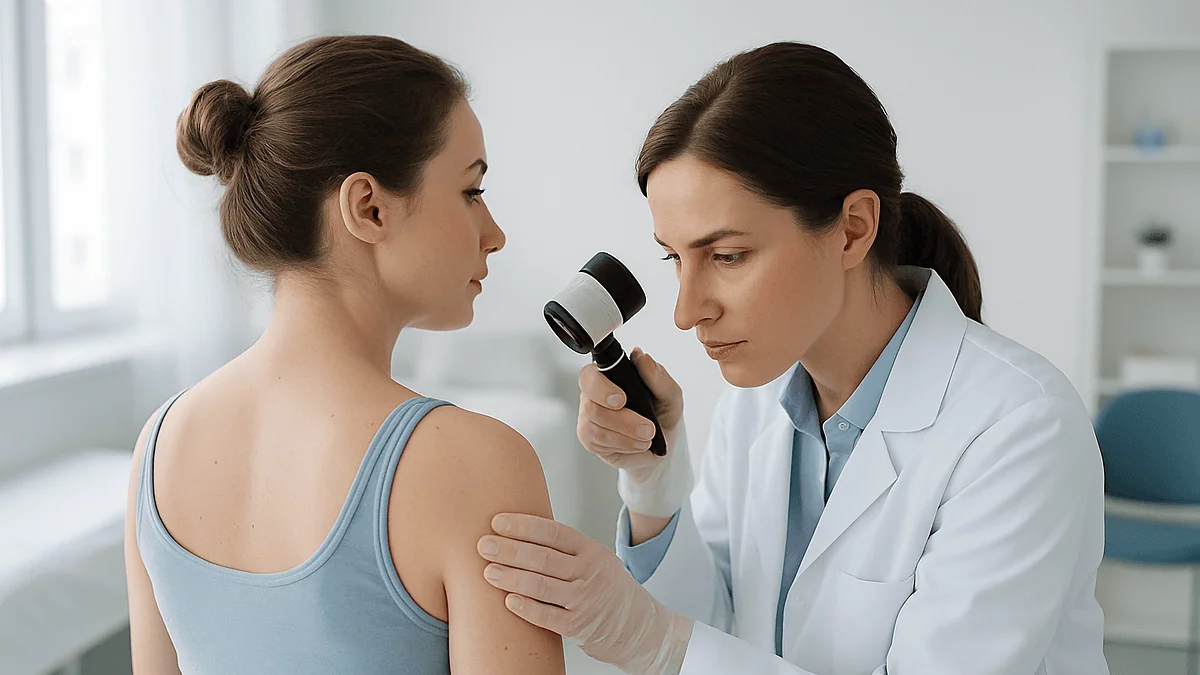
Key Takeaways
- A visible pimple began forming about eight weeks earlier as a microscopic plug, which is why no routine can change breakout rates in seven days.
- Benzoyl peroxide and the retinoid adapalene are both available over the counter in the US and carry the strongest randomized trial evidence for mild acne.
- The 2024 US dermatology guideline recommends against using topical or oral antibiotics alone because of bacterial resistance; they should be paired with benzoyl peroxide.
- Small randomized trials link low-glycemic eating with fewer lesions, while the dairy and stress links rest on observational data only.
- Daily sunscreen is the most reliable way to fade post-acne dark marks, because each unprotected day re-stimulates pigment.
- Deep painful nodules, any scarring, or no improvement after three months of consistent care are the signals to stop experimenting and see a clinician.
Dermatology trials show that clear skin comes mainly from treating acne consistently: a gentle cleanser, benzoyl peroxide, an adapalene retinoid, daily sunscreen, and patience of about 8 to 12 weeks. Stronger prescription options, including oral antibiotics, hormonal therapy and isotretinoin, exist for moderate or severe acne. Diet, sleep and stress play smaller supporting roles, and any persistent, painful or scarring breakouts deserve a clinician's assessment.
The video runs 41 seconds. A teenager holds a cleanser to the camera, promises a glass-smooth face by next Sunday, and ends with a before-and-after shot lit from two different windows. As of September 2026 that clip, and thousands like it, is one reason searches for how to get clear skin are climbing again. The back-to-school season brings its usual spike, the seven-day challenge format keeps resurfacing, and the 2024 update to the main US dermatology guideline for acne is still filtering into everyday advice, with its stronger emphasis on combining treatments rather than chasing a single hero product.
Most of that advice is not wrong so much as incomplete. It skips the mechanism, the timeline and the evidence grade, which are exactly the parts that decide whether a routine works for you.
So this is the honest version: what randomized trials support, what only observational studies hint at, what is folklore, and the signs that mean a mirror and a drugstore shelf are no longer enough.
What does clear skin actually mean, medically?
Ask a dermatologist for clear skin and they will quietly translate the request. Skin that is free of lesions, even in tone, and not inflamed is a reasonable goal. Skin that is poreless, shadow-free and identical to a filtered photo is not a biological state. Pores are the openings of hair follicles and sebaceous glands, the tiny oil-producing structures attached to each follicle, and every square inch of your face has hundreds of them.
In practice, the vast majority of people searching this phrase are dealing with acne, the condition that develops when those follicles become blocked and inflamed. The NHS estimates that about 95 percent of people aged 11 to 30 are affected to some extent, so acne is closer to a life stage than an abnormality. Adult acne, particularly in women, persists well past that window for a meaningful minority.
Clear skin therefore has two parts. The first is active control: fewer new comedones (clogged pores, either closed whiteheads or open blackheads) and fewer inflamed papules, pustules or deeper nodules. The second is recovery: fading the flat dark or red marks left behind, known as post-inflammatory hyperpigmentation and erythema, and preventing the pitted or raised scars that follow repeated deep inflammation.
Why does the distinction matter? Because the treatments differ. A product that stops new breakouts will not erase a six-month-old dark spot, and a brightening serum will not calm a cystic flare. Much of the frustration behind viral routines comes from using a recovery tool to solve a control problem, or the other way around. The sections that follow keep the two jobs separate.
What changed recently in acne treatment guidance
Three dated developments explain why the professional advice you hear in 2026 sounds different from the advice of a decade ago.
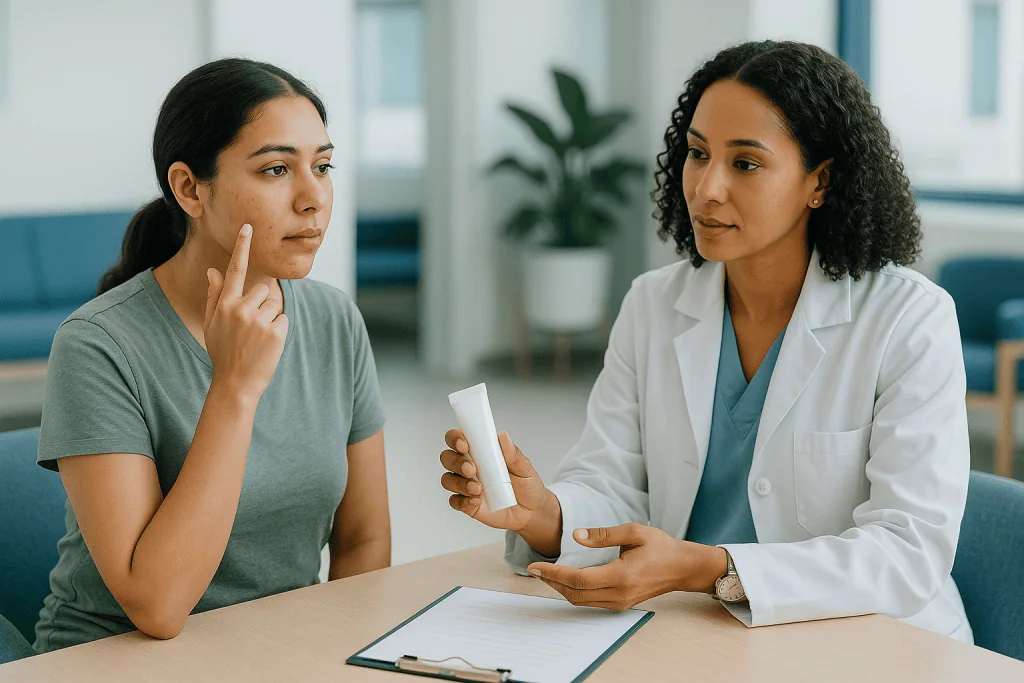
In August 2020 the US Food and Drug Administration approved clascoterone cream (Winlevi), the first topical treatment that works by blocking androgen receptors in the skin. Androgens are hormones, present in all sexes, that stimulate oil production. Until then, hormone-directed therapy for acne meant oral medicines only.
In October 2023 the FDA approved the first fixed-dose triple combination gel, which pairs clindamycin, adapalene and benzoyl peroxide in one tube (Cabtreo). Its approval trials showed higher clearance rates than any two of the three ingredients together, reinforcing a principle that now runs through every reputable source: acne has several causes, so single-ingredient routines tend to underperform.
In January 2024 the American Academy of Dermatology published its updated guidelines of care for acne. The headline changes were strong recommendations for benzoyl peroxide, topical retinoids and, for moderate to severe disease, oral doxycycline and isotretinoin; conditional recommendations for newer agents such as clascoterone and for spironolactone; and a clear recommendation against using topical or oral antibiotics on their own, because of bacterial resistance. The guideline also concluded that evidence on diet remains too limited to support firm rules.
Patient-facing references have followed suit. Mayo Clinic’s current treatment page and the NHS acne pages both describe combination therapy as the standard route and both set expectations of several weeks to months before results, a framing that quietly contradicts the seven-day promise. Nothing in these updates is dramatic. The real change is a shift in emphasis from finding the one perfect product to layering two or three mechanisms and giving them time.
What the evidence actually says about how to get clear skin
Evidence in skin care comes in tiers, and the tier matters as much as the finding. A randomized controlled trial (RCT) assigns people to a treatment or a comparison by chance, which is the fairest way to show cause and effect. Observational studies track what people already do and look for patterns, which can reveal links but not prove them. Expert opinion fills the gaps.
At the top tier, with multiple RCTs behind them, sit benzoyl peroxide, topical retinoids (vitamin A derivatives such as adapalene and tretinoin that normalize how skin cells shed inside the pore), topical combinations of the two, azelaic acid, oral tetracycline-class antibiotics for limited courses, combined oral contraceptives for women, and isotretinoin for severe disease. These are the treatments that consistently reduce lesion counts in trials lasting 12 weeks or longer.
In the middle tier, with smaller or shorter trials, you find salicylic acid washes, niacinamide, and low-glycemic diets. The diet trials are real but small, mostly 10 to 12 weeks, and have not been replicated at scale.
At the lower tier, supported mainly by observational data, are links between acne and dairy, especially skim milk, and between acne and psychological stress. Those associations show up repeatedly, but they cannot tell you whether cutting milk will clear your face.
Finally, there is a large category of popular advice with no controlled evidence at all: drinking extra water, toothpaste on spots, lemon juice, cold showers, and most seven-day protocols. Some are harmless, several are irritating, and none have been shown to beat a plain cleanser and sunscreen.
An honest routine builds from the top tier down. That principle shapes every recommendation in this article.
Why does acne form? The four-step mechanism behind every breakout
Understanding the pipeline makes product labels far less confusing, because every effective treatment interrupts one of four steps.
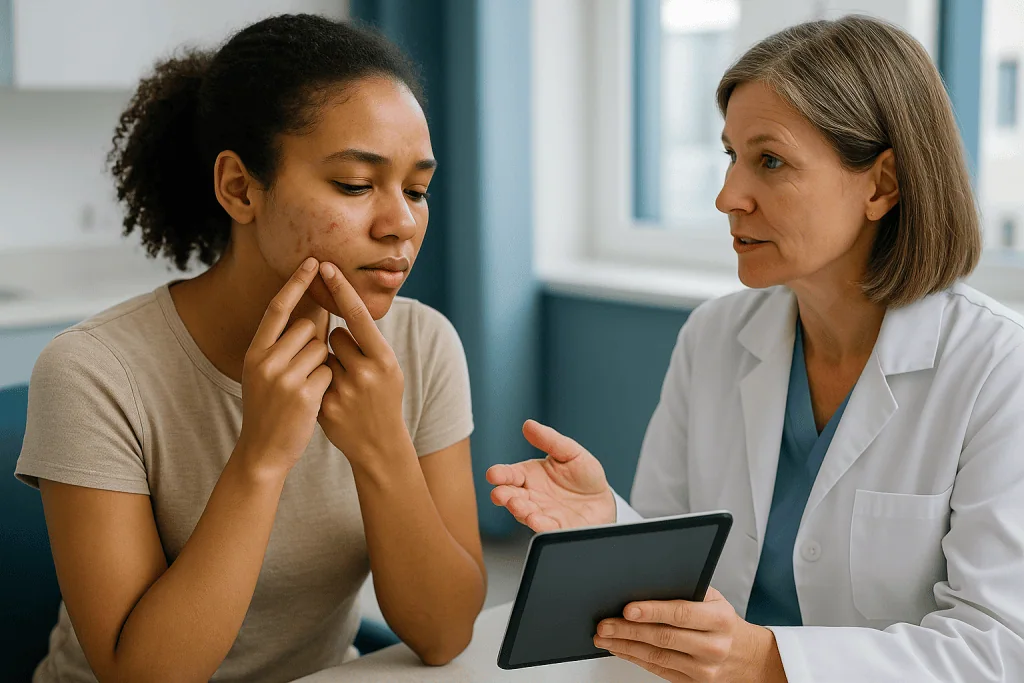
Step one is excess sebum, the oily substance the sebaceous glands secrete to keep skin supple. Androgens drive production, which is why acne so often begins at puberty and flares with hormonal shifts. Step two is abnormal shedding inside the follicle: dead skin cells that should flake away instead clump together and plug the opening. The result is a microcomedone, invisible to the eye, which may grow into a whitehead or a blackhead. A blackhead looks dark because the plug oxidizes on contact with air, not because it holds dirt.
Step three is bacterial growth. Cutibacterium acnes, a bacterium that lives harmlessly on everyone’s skin, thrives in the oxygen-poor, oil-rich environment of a blocked pore. Step four is inflammation: the immune system reacts to the overgrowth and to the follicle wall stretching and rupturing, producing the red papules, pus-filled pustules and, in deeper cases, nodules and cysts.
Now map treatments onto those steps. Retinoids and salicylic acid target step two by normalizing shedding and clearing plugs. Benzoyl peroxide targets step three by releasing oxygen that kills C. acnes, and it has the distinct advantage that bacteria do not develop resistance to it. Antibiotics target steps three and four. Hormonal therapies, including combined oral contraceptives, spironolactone and clascoterone, target step one. Isotretinoin is the only treatment that acts on all four, which is why it is reserved for severe or scar-prone acne.
This is the reasoning behind combination therapy: two products aimed at different steps outperform two products aimed at the same one, and one product aimed at a step your acne does not depend on may do little at all.
How to get clear skin with an over-the-counter routine trials support
For mild acne, the kind with scattered comedones and a handful of inflamed spots, trial-backed treatment is available without a prescription in the United States, and the routine is simpler than most influencers would like.
Morning: wash with a gentle, non-foaming cleanser, apply a benzoyl peroxide gel or wash to affected areas, moisturize if you need to, and finish with a broad-spectrum sunscreen labeled noncomedogenic, meaning formulated not to block pores. Evening: cleanse, apply a pea-sized amount of adapalene gel to the whole acne-prone area rather than individual spots, and moisturize.
Two details decide whether this works. The first is coverage. Retinoids prevent new comedones from forming, so dotting them onto existing pimples misses the point; they belong on the whole zone where you break out. The second is tolerance. Both ingredients cause dryness, peeling and stinging in the first weeks, which is the moment most people quit. Starting every other night, using a plain moisturizer, and avoiding scrubs and toners during the adjustment period reduces drop-out without reducing benefit. Mayo Clinic’s guidance notes that benzoyl peroxide bleaches fabric, so white pillowcases are a practical investment.
Salicylic acid, a beta-hydroxy acid that dissolves the oily plug inside pores, is a reasonable alternative cleanser or spot treatment for people who cannot tolerate the first two, with weaker but real evidence. Azelaic acid helps both breakouts and the dark marks they leave, and is well tolerated during pregnancy, though that decision belongs to your clinician.
What this routine does not include is as important: no physical scrubs, no alcohol-heavy toners, no stacking of three acids, and no face washing more than twice daily. Irritated skin produces more inflammation, not less.
Which prescription acne treatments have the best trial evidence?
When over-the-counter care has had a fair trial, usually 8 to 12 weeks, and acne remains moderate or severe, a clinician has a wider toolkit. The table summarizes the mainstream options, what they target and how strong the supporting evidence is. It is a map for a conversation, not a menu; every choice here, including how long to use it, belongs to the prescribing clinician.
| Treatment | Targets | Evidence strength | Typical role |
|---|---|---|---|
| Topical retinoid (adapalene, tretinoin, tazarotene) | Follicle plugging | Strong; multiple RCTs | Foundation of most regimens, all severities |
| Benzoyl peroxide | Bacteria, some inflammation | Strong; multiple RCTs | Partner to retinoids and antibiotics; no resistance |
| Topical clindamycin (in combination) | Bacteria, inflammation | Strong in combination; not recommended alone | Inflamed mild to moderate acne |
| Azelaic acid | Plugging, bacteria, dark marks | Moderate to strong | Sensitive skin, pregnancy, pigmentation |
| Oral doxycycline or minocycline | Bacteria, inflammation | Strong; limited-duration courses | Moderate to severe inflammatory acne, always with benzoyl peroxide |
| Combined oral contraceptive | Androgen-driven oil | Strong; RCTs in women | Women with hormonal patterns |
| Spironolactone | Androgen-driven oil | Moderate; mostly observational, some RCTs | Adult women; off-label in the US |
| Clascoterone cream | Androgen-driven oil (topical) | Moderate; two phase 3 RCTs | Hormonal component, any sex |
| Isotretinoin | All four steps | Strong | Severe, nodular or scarring acne; strict pregnancy prevention |
Two rows deserve a note. Spironolactone is prescribed off-label for acne in the United States; the evidence for it is encouraging and growing, and whether it suits a given patient is a judgment for the treating clinician. Isotretinoin is highly effective and also a potent teratogen, a substance that causes birth defects, which is why it is dispensed under a mandatory monitoring program with blood tests and, for anyone who can become pregnant, strict contraception requirements.
Can you really clear skin in 7 days? What a week can and cannot do
Seven days is the viral promise and the biology does not cooperate. A microcomedone takes roughly eight weeks to develop into a visible lesion, which means the breakout you see today began forming in the summer. Any routine started this morning is working on pimples that will surface in the fall.
What can a week genuinely achieve? Inflammation can calm. A benzoyl peroxide product applied daily reduces bacterial load within days, so red, angry spots often look flatter and less sore by the weekend. A single inflamed pimple treated early with a leave-on product will usually shrink within three to five days on its own schedule, with or without a trick. Stopping an irritant, whether a harsh scrub, a new fragranced product or a heavy pomade along the hairline, can produce a visible improvement in redness in about the same window.
What a week cannot achieve is a change in the rate of new breakouts. Mayo Clinic and the NHS both tell patients to expect four to eight weeks before improvement and up to three months for the full effect of a topical regimen. Trials measuring lesion counts are usually designed around 12 weeks for precisely this reason.
Many seven-day transformations rely on three things: lighting, the natural waxing and waning of acne, and the fact that a person who was previously using nothing now uses a basic routine. The last of these is real and worth celebrating. It simply does not mean the routine is finished.
A better frame is the three-week rule for irritation, the eight-week rule for breakouts, and the three-month rule before deciding a treatment has failed. Patience here is not passive; it is the dose.
How can I get clear skin naturally? Diet, sleep and stress
The word natural usually means without medicines, and the honest answer is that lifestyle changes can modestly help, rarely enough on their own for established acne, and never as quickly as the internet suggests.
Diet has the best evidence of the three, and even that is thin. Glycemic load describes how much a meal raises blood sugar; several small randomized trials, typically 10 to 12 weeks long, found that a low-glycemic eating pattern reduced lesion counts compared with a higher-glycemic diet, possibly by lowering insulin and related growth signals that stimulate oil glands. Observational studies, including large surveys of adolescents, link higher dairy intake, particularly skim milk, with acne. The association is consistent but does not prove cause, and whey protein supplements have a similar observational signal. The NHS summarizes the position carefully: there is little evidence that any specific food causes acne, while a balanced diet is sensible regardless. Chocolate has been studied repeatedly with mixed, mostly negative results.
Stress is linked to acne in observational studies, including the much-cited pattern of flares during university exam periods. The proposed mechanism involves cortisol and related hormones nudging oil production and inflammation. No trial has shown that a stress-reduction program clears acne, though sleep and stress care are worth pursuing for every other reason.
Water is the perennial claim. Hydration keeps the skin barrier comfortable, and no controlled study shows that drinking more water reduces breakouts.
The practical reading: eat in a way that keeps blood sugar steady, notice whether heavy dairy or protein shakes coincide with flares for you, protect sleep, and treat the skin itself with the evidence-based products above. Natural and medical are allies here, not rivals.
Why is Korean skin so clear? Separating habits from genetics and marketing
The question comes up so often it deserves a serious answer rather than a product list. Several factors overlap, and only some of them are transferable.
Habit is the transferable part. Daily sunscreen use is far more normalized in South Korea than in the United States, applied year-round and reapplied, and ultraviolet light is the single biggest driver of uneven tone, textural roughness and the darkening of post-acne marks. A cultural emphasis on gentle, layered hydration rather than aggressive exfoliation also means fewer people are walking around with a compromised skin barrier, the outer layer of lipids and cells that keeps water in and irritants out.
Genetics and skin type are not transferable. Melanin levels, pore size, sebum output and how skin scars are all partly inherited, and population averages differ. Sun-related aging also presents differently across skin tones, with pigment changes more common than deep wrinkling in many East Asian skin types.
Selection is the part nobody mentions. The faces you see are actors, idols and influencers, filmed with professional lighting and, often, professional dermatology care. Acne is common in Korea at the same ages it is common everywhere; it simply does not appear on screen.
Finally, marketing. Multi-step routines are a successful export, and there is no trial showing that ten steps beat three. Several popular Korean-market ingredients, including niacinamide, centella and snail mucin, have limited or small-study evidence for soothing and barrier support, which is useful, but none replaces a retinoid or benzoyl peroxide for acne.
Borrow the sunscreen discipline and the gentleness. Leave the ten steps, and the comparison to a lit studio, behind.
How can a 14 year old get clear skin? Clear skin for teenagers
Fourteen is close to the peak age for new acne, because androgen levels rise sharply through puberty and the sebaceous glands respond. That is worth saying plainly to any teenager who believes their skin is a verdict on their hygiene or their character. It is neither.
The evidence-based routine is the same as for adults, with a few adjustments. Twice-daily washing with a gentle cleanser, benzoyl peroxide in the morning, adapalene at night, and sunscreen before school. Teenage skin is often oilier, so a lightweight, oil-free moisturizer is usually enough, and a foaming cleanser may be better tolerated than it would be on an adult face. Over-the-counter adapalene is approved in the United States for ages 12 and up, and the trials that supported it included adolescents.
Three teenage-specific pitfalls deserve attention. Sports and school band mean helmets, chin straps and instrument rests pressing on the same patch of skin for hours; the friction and occlusion produce a recognizable pattern of breakouts, and washing the face and the equipment after practice helps. Hair products, especially heavy waxes and oils, migrate onto the forehead and temples. And the urge to scrub harder, wash more often or dab toothpaste onto a spot is strongest at this age; all three worsen inflammation.
Parents can help most with two things: funding the two inexpensive active products and treating a dermatology visit as routine rather than dramatic. Deep, painful nodules, acne that is leaving pits or dark marks, or a teenager whose mood and social life are visibly shrinking around their skin are all reasons to book an appointment early. Early effective treatment is the best-documented way to prevent permanent scarring.
What is the best skincare routine for clear skin? Morning, night, and what to skip
The routine below is the version that survives contact with the evidence. It has four steps in the morning and three at night, and every step earns its place.
- Morning cleanse: lukewarm water and a gentle cleanser, fingertips only, patted dry.
- Morning treatment: benzoyl peroxide on acne-prone areas, allowed to dry.
- Morning moisturizer: optional, fragrance-free, noncomedogenic.
- Morning sunscreen: broad spectrum, every day, reapplied if you are outdoors.
- Night cleanse: same cleanser; a second pass if you wore sunscreen and makeup.
- Night treatment: adapalene over the whole breakout zone, after the skin is fully dry.
- Night moisturizer: a plain cream, layered over or sandwiched around the retinoid if irritation is a problem.
Timing matters more than brand. Applying a retinoid to damp skin increases stinging. Benzoyl peroxide and adapalene can be used in the same day, but splitting them between morning and night limits irritation and is how most combination trials were structured. Sunscreen goes on last in the morning and is the single most reliable step for fading dark marks, since each unprotected day re-darkens them.
Things to skip: physical scrubs, cleansing brushes on active acne, alcohol toners, DIY masks with lemon or baking soda, and any product promising to shrink pores, which have no muscles and cannot be shrunk. Spot patches made of hydrocolloid, a moisture-absorbing dressing, are harmless and can discourage picking.
Build in a change rule: introduce one new product at a time, give it three weeks, and judge irritation separately from breakouts. A routine you can sustain on a tired Tuesday beats a perfect routine you abandon by Friday.
Common myths about clear skin, corrected by the evidence
Viral advice tends to recycle the same handful of claims. Here is where each one stands.
Acne means you are not washing enough. False. Acne starts below the surface, in the follicle. Washing more than twice a day strips the barrier and increases irritation; Mayo Clinic specifically advises against over-washing and scrubbing.
Toothpaste dries out a pimple. Toothpaste contains fluoride, flavoring and detergents that commonly cause irritant dermatitis on facial skin. Any apparent benefit comes from the same drying effect you could get from a product designed for the job.
Sun exposure clears acne. A tan can temporarily camouflage redness, and ultraviolet light has a short-lived anti-inflammatory effect. The trade is poor: UV thickens the outer skin layer, which can worsen plugging, darkens every post-acne mark, and raises skin cancer risk over a lifetime.
Popping a spot speeds healing. Squeezing pushes the follicle contents deeper and ruptures the wall, converting a surface pustule into a deeper inflamed lesion with a higher chance of scarring.
Makeup causes acne, so stop wearing it. Heavy, occlusive products can contribute. Noncomedogenic formulas have not been shown to worsen acne, and removing makeup fully each night matters more than avoiding it.
Chocolate and greasy food cause breakouts. Controlled studies on chocolate are mixed and mostly negative. The dietary signal that exists points to high glycemic load and dairy, and it is modest.
Natural products are gentler. Essential oils, citrus and witch hazel are among the most common causes of allergic and irritant reactions in skin-care products. Natural describes origin, not safety.
You will outgrow it, so do nothing. Many people do, but scarring that forms in the meantime does not resolve on its own.
Dark spots and acne scars: the part of clear skin people forget
Once breakouts are under control, what remains is a map of where they used to be. Two distinct problems hide under the word scar, and the distinction decides what helps.
Post-inflammatory hyperpigmentation is a flat brown or gray mark left when inflammation stimulates melanin production; post-inflammatory erythema is its pink or red cousin, caused by dilated small blood vessels. Neither involves lost tissue, and both fade with time, typically over months. Daily sunscreen is the single most effective step, because ultraviolet light re-stimulates melanin and resets the clock. Topical retinoids, azelaic acid and, under a clinician’s direction, prescription lightening agents all have trial evidence for speeding the process. Dark marks are more persistent in deeper skin tones, where the same inflammation produces more pigment.
True scars involve a change in texture. Atrophic scars are depressions where collagen was lost, described by shape as ice-pick, boxcar or rolling. Hypertrophic and keloid scars are raised, from excess collagen, and are more common on the chest, back and jawline. No cream reverses structural scarring. Procedures with evidence include microneedling, chemical peels, laser resurfacing and, for individual deep scars, surgical techniques or filler, and the choice depends on scar type, skin tone and budget of time rather than any single best option.
The strongest message from scar research is upstream: the longer inflammatory acne goes undertreated, the more scarring accumulates. People who seek effective treatment early have measurably less scarring years later. That is the most compelling argument against waiting out a six-month breakout with hope and a spot patch.
When to see a doctor about acne
Most mild acne responds to the over-the-counter routine described above, given 8 to 12 weeks. Book an appointment with a primary care clinician or dermatologist if any of the following apply.
- Deep, painful lumps under the skin (nodules or cysts), which rarely respond to topical products and carry the highest scarring risk.
- Any pitting, raised scarring or spreading dark marks, however mild; scarring is far easier to prevent than to repair.
- No meaningful improvement after about three months of consistent over-the-counter treatment, or acne that is getting worse despite it.
- Acne that appears suddenly in adulthood, or alongside irregular periods, excess facial or body hair, or hair thinning, which can signal an underlying hormonal condition that needs evaluation.
- Breakouts that began after starting a new medicine; never stop a prescribed medicine on your own, but do tell the prescriber.
- Acne on the chest, back or shoulders that is widespread, since these areas scar readily and are hard to treat without prescription options.
- Signs of skin infection: spreading warmth, swelling, fever, or lesions that drain pus repeatedly.
- Severe burning, swelling, blistering or hives after applying a product, which suggests an allergic or irritant reaction rather than normal adjustment.
- Low mood, anxiety, social withdrawal or any thoughts of self-harm linked to your skin. Acne has a well-documented effect on mental health, and that alone justifies treatment.
If you are already on a prescription, report persistent headaches, visual changes, severe joint pain, unexplained bruising, dark urine, yellowing of the skin or eyes, or mood changes promptly, and seek urgent care for any possible pregnancy while taking isotretinoin. Every adjustment, including whether to continue, combine or stop a treatment, is a decision for the clinician who prescribed it.
Frequently asked questions
How can I get clear skin naturally?
Lifestyle habits help modestly but rarely clear established acne alone. Small randomized trials suggest a lower-glycemic diet can reduce lesions over about 12 weeks, and observational studies link heavy dairy intake and stress with flares. Daily sunscreen, gentle cleansing, adequate sleep and not picking are the natural steps with the clearest payoff. For persistent breakouts, pairing those habits with evidence-based topical treatment works better than either alone.
How can I clear my skin in 7 days?
You can calm inflammation in a week, not change how often you break out. Applying benzoyl peroxide daily reduces bacteria within days, so red spots often flatten by the weekend, and stopping an irritating scrub or product shows quickly. New comedones take roughly eight weeks to form, so Mayo Clinic and the NHS advise expecting four to eight weeks for improvement and up to three months for full results.
Why is Korean skin so clear?
Daily sunscreen habits, gentle hydration-focused routines, genetics and selection all contribute. Year-round sun protection limits uneven tone and dark marks, and avoiding harsh exfoliation protects the skin barrier. Inherited skin type also matters, and the faces seen on screen are professionally lit and cared for. No trial shows multi-step routines outperform a simple regimen; the sunscreen discipline is the transferable lesson.
How can a 14 year old get clear skin?
The same evidence-based basics apply: a gentle cleanser twice daily, benzoyl peroxide in the morning, over-the-counter adapalene at night, and sunscreen. Adapalene is approved in the US from age 12. Teenagers should also watch for friction from helmets and chin straps, hair products on the forehead, and the urge to scrub. Painful nodules, scarring or a low mood about skin are reasons for an early doctor visit.
Does drinking water give you clear skin?
No controlled study shows that drinking more water reduces acne. Adequate hydration supports general health and may make dry skin feel more comfortable, but acne develops inside the follicle from oil, shed cells and bacteria, none of which respond to water intake. Treat water as part of a healthy routine, not as a skin treatment, and direct your effort at proven topical ingredients.
Does diet cause acne?
Diet appears to influence acne modestly rather than cause it. Several small randomized trials found that low-glycemic eating patterns reduced lesion counts over 10 to 12 weeks, and large observational studies associate dairy, particularly skim milk, with acne. Chocolate studies are mostly negative. The NHS notes there is little proof that specific foods cause acne, so dietary changes are a supporting measure, not a substitute for treatment.
How long does benzoyl peroxide take to work?
Inflamed spots often look calmer within a few days because benzoyl peroxide kills Cutibacterium acnes quickly, but reducing the number of new breakouts takes four to eight weeks of daily use, with full effect by about three months. Dryness and peeling in the first weeks are expected and usually settle. Ask a clinician or pharmacist about product choice if irritation is severe or you have sensitive skin.
Is adult acne different from teenage acne?
Partly. Adult acne, especially in women, tends to cluster around the jawline and chin, flare with the menstrual cycle, and involve deeper inflamed lesions rather than blackheads. The same topical treatments remain first-line, but hormone-directed options such as combined oral contraceptives, spironolactone and clascoterone are more often considered. Sudden adult-onset acne with irregular periods or excess hair warrants a medical evaluation.
Can I use a retinoid and benzoyl peroxide together?
Yes, and combination trials show the pair works better than either alone. Most studies and clinicians split them, benzoyl peroxide in the morning and adapalene at night, to limit irritation and avoid any loss of potency from mixing older retinoid formulations. Start the retinoid every other night, use a plain moisturizer, and raise persistent burning or peeling with a pharmacist or clinician.
Does sunscreen cause breakouts?
Some heavy or fragranced formulas can contribute to clogged pores, but sunscreen itself is not a cause of acne, and daily use is the most effective way to fade post-acne dark marks. Choose a broad-spectrum product labeled noncomedogenic and oil-free, apply it as the last morning step, and remove it fully at night. Mineral and lightweight gel formulas suit most acne-prone skin.
References
This article is for general information only and is not a substitute for professional medical advice. Please consult a qualified doctor about your individual situation.

More from the Blog
Peptides in Skincare: What Signal Peptides Do and What the Studies Show
Peptides in skincare are short chains of amino acids applied topically to signal skin cells, most often to encourage collagen production or soften expression…

Why Is Cellulitis Not Improving? Spreading Redness, Fever and When to Contact Your Care Team
Cellulitis usually begins to improve within about 48 hours of starting antibiotics, although redness can spread slightly at first. When it keeps worsening after…

Why Does Shingles Appear Years After Chickenpox? How Herpes Zoster Is Diagnosed and Treated
Shingles appears years after chickenpox because the varicella-zoster virus never leaves the body. After the childhood infection clears, it lies dormant in nerve-root clusters…

Cellulitis When You Have Diabetes or Lymphedema: Why Care Is Monitored More Closely
Cellulitis with diabetes or lymphedema is monitored more closely because high blood sugar weakens the immune response, nerve damage can hide early pain, reduced…
Is Coconut Oil Good for Your Skin? Where It Helps, Where It Clogs
Coconut oil moisturizes dry body skin well: small clinical trials found virgin coconut oil hydrated as effectively as mineral oil and improved mild-to-moderate eczema…
What a Scalp Injection Session for Alopecia Areata Involves: Comfort, Timing and Repeat Visits
Alopecia areata scalp injections are corticosteroid shots placed just under the skin of a bald patch to calm the immune attack on hair follicles.…