

How to Relieve IBS Pain, and How Long Flare-Ups Last
Key Takeaways
- IBS pain comes from abnormal gut muscle contractions and a nervous system that reports normal stretching as pain, which is why scans and blood tests usually look normal.
- The NHS notes IBS flare-ups can last days, weeks, or months, and short flares almost always follow an identifiable trigger such as a heavy meal, alcohol, or a stressful stretch.
- Fat is the single biggest dietary amplifier of cramping during a flare because it strengthens the gut contraction that follows every meal.
- The NIDDK reports that soluble fiber, from oats, flaxseed, or psyllium, is more helpful in IBS than insoluble bran-type fiber, which tends to increase gas.
- Medicines that act on gut-brain signaling typically take several weeks to show benefit, so judging them after a few days is a common reason they appear to fail.
- Weight loss, rectal bleeding, night-time diarrhea, fever, or new symptoms after about age 50 fall outside the IBS pattern and need a medical assessment rather than home care.
To ease IBS pain quickly, most guidance points to the same low-risk steps: warmth on the abdomen, slow diaphragmatic breathing, gentle movement or a change of position, sipping water instead of caffeine or alcohol, and small bland meals until the cramping settles. Flare-ups vary widely; the NHS notes IBS symptoms can last days, weeks, or months at a time, and they usually ease without lasting harm.
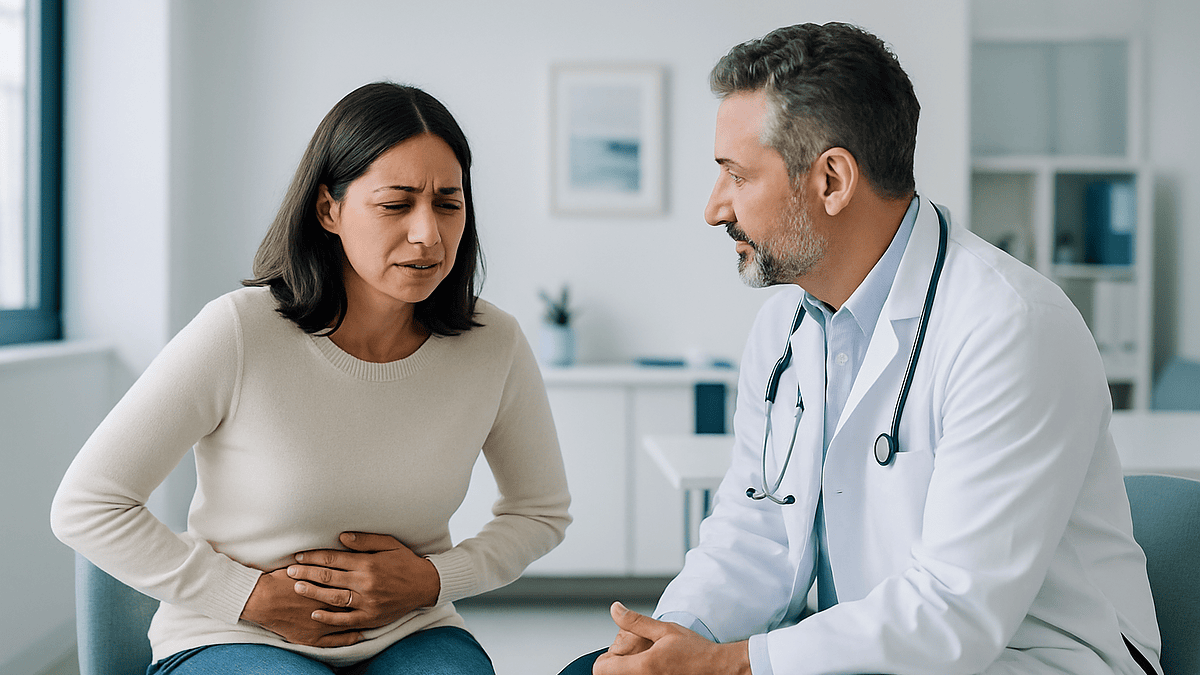
The pain rarely arrives at a convenient moment. It shows up in the second half of a work meeting, or twenty minutes after a restaurant lunch you chose carefully, or at 2 a.m. when there is nobody to ask what to do. A dull ache low in the belly tightens into a cramp, the cramp turns into a wave, and the wave brings that urgent, distracted feeling that makes every other thought impossible.
People who live with irritable bowel syndrome describe this with remarkable consistency, and yet the internet still treats it as a nuisance to be joked about or a mystery to be solved with a single product. Neither is fair. IBS is common, it is real, and the pain has a biology that can be worked with.
This article is about two practical questions that get asked far more often than they get answered honestly: what genuinely helps in the first hour of a flare, and how long you should expect one to last.
What does IBS pain actually feel like, and how bad can it get?
Ask ten people with IBS to describe their pain and you will hear ten versions of the same story. A cramping or gripping sensation, usually below the navel. Sometimes a spreading fullness that makes the waistband feel two sizes too small. Sometimes a sharp twist that stops you mid-sentence. The Cleveland Clinic and Mayo Clinic both describe the hallmark as recurrent abdominal pain that is tied to bowel habits, and that usually shifts, at least partly, after a bowel movement or after passing gas.
How bad is it? Honest answer: it ranges from a background nag to pain severe enough that people cancel plans, leave events early, or sit in a parked car until it passes. Severity is not a measure of danger, though. Intense IBS pain is still functional pain, meaning the gut is behaving abnormally without being structurally damaged. That distinction is reassuring, but it does not make the pain any less real, and clinicians take it seriously.
The pattern matters more than the intensity. Diagnostic criteria used by gastroenterologists, and summarized by the Cleveland Clinic, look for pain on average at least one day a week over the previous three months, linked to a change in stool frequency or form. Pain that wakes you from sleep, that steadily worsens over weeks, or that is not related to bowel habits at all does not fit the usual IBS picture and deserves a proper assessment rather than self-management.
Why does IBS hurt when nothing shows up on tests?
The most frustrating sentence a person with IBS hears is some version of your results are normal. Normal scans and normal blood work do not mean nothing is wrong. They mean the problem is in how the gut functions and how it talks to the brain, not in its structure.
Two mechanisms do most of the work. The first is altered motility: the muscular wall of the intestine contracts too strongly, too weakly, or out of rhythm, which produces cramping and shifts stool too fast or too slow. The second is visceral hypersensitivity, the medical term for a gut that reports ordinary stretching and gas as pain. The National Institute of Diabetes and Digestive and Kidney Diseases (NIDDK) describes IBS as a disorder of gut-brain interaction for exactly this reason. Signals that most people never notice reach conscious awareness turned up to full volume.
Layered on top are changes in the gut microbiome, low-grade immune activation in some people, and a nervous system that has learned to anticipate pain. Stress does not invent the pain, but it can lower the threshold at which the gut reports it, which is why a bad week at work and a bad week for your bowel so often coincide.
This is also why IBS is common rather than rare. The NIDDK notes that studies suggest it affects about 12 percent of people in the United States, and that women are up to two times more likely than men to be diagnosed. A condition that widespread is not a personal failing or an imaginary complaint. It is a well-characterized pattern of gut behavior.
How to relieve IBS pain instantly: what actually works in the first hour
Instantly is a strong word, and it is worth being candid: nothing switches off a cramping intestine like a light. What you can do is shorten the wave and lower its peak, and several simple measures earn their place because they are low risk and consistent with how the gut works.
| What to try | Why it may help | What the evidence shows |
|---|---|---|
| Warmth on the lower abdomen | Heat relaxes smooth muscle and dampens pain signaling from the skin and gut | Widely recommended for cramping pain; limited formal trials in IBS, but low risk |
| Slow diaphragmatic breathing | Shifts the nervous system toward its calming branch, which eases gut tension | Relaxation techniques are listed by the NIDDK among mental health approaches that help IBS |
| Gentle walking or a change of position | Helps move trapped gas and encourages normal motility | NHS and Mayo Clinic advise regular activity for IBS; short-term relief is plausible |
| Sipping plain water | Supports stool consistency without stimulating the gut the way caffeine or fizz can | Fluids are a core NHS dietary recommendation |
| Small, bland, low-fat food | Fat and large meals amplify the gut contractions that follow eating | NHS advises regular, unhurried meals and avoiding fatty, processed food |
Notice what is missing from that table: anything that promises to work in minutes. If a product makes that claim for IBS pain, the evidence has not caught up with the marketing. The honest goal in the first hour is comfort, calm, and not feeding the flare. Everything else, from fiber adjustments to prescription options, works on a timeline of days to weeks, which is the next several sections.
Does heat, breathing, or position help IBS cramps?
Heat first, because it is the measure people reach for instinctively and then wonder whether it is doing anything. A warm compress or hot-water bottle wrapped in a towel, or a warm bath, works on two fronts. Warmth relaxes the smooth muscle of the abdominal wall and, indirectly, the gut beneath it, and it competes with pain signals at the level of the spinal cord, which is why a warm hand on a sore belly has soothed people for centuries. The formal trial evidence in IBS is thin, but the risk is close to zero if the heat source is not hot enough to redden the skin.
Breathing gets dismissed as fluffy, which is a shame, because the mechanism is concrete. The gut is richly wired to the parasympathetic nervous system, the branch that governs rest and digestion. Slow breathing that lets the abdomen rise on the inhale, roughly half the speed you would breathe while talking, nudges the body toward that state. The NIDDK lists relaxation training among the mental health therapies with a place in IBS care. Try it lying on your side with knees drawn up, a position that eases pressure on the abdomen and often helps gas move.
Movement is the third piece. Lying perfectly still feels protective during a cramp, but a slow walk around the room or a few minutes of gentle stretching frequently does more. The NHS recommends regular physical activity for IBS generally, and in the moment, movement helps shift gas that is stretching the bowel wall.
None of these are cures. They are ways to ride out a wave with less suffering, and they cost nothing.
What should I eat during an IBS flare-up?
The instinct during a flare is either to stop eating entirely or to eat something comforting and heavy. Both tend to backfire. Skipping meals lets the gut become erratic and often sets up a bigger reaction when you finally eat. Heavy, fatty food triggers a stronger post-meal contraction, the very reflex that produces cramping.
A calmer approach follows the NHS pattern: regular meals, eaten slowly, without long gaps. Keep portions modest. Choose foods that are cooked rather than raw, low in fat, and low in the fermentable sugars that gas-producing gut bacteria love. Practical examples include plain rice or oats, peeled and cooked vegetables such as carrots or zucchini, a ripe banana, eggs, lean poultry or fish prepared simply, and plain crackers or sourdough-style bread if wheat is not a known trigger for you.
Fiber deserves nuance. If your flare leans toward constipation, soluble fiber from oats, ground flaxseed, or a psyllium-husk supplement can soften stool without the gas burst that bran and other insoluble fibers often cause; the NIDDK notes research suggests soluble fiber is the more helpful kind in IBS. If your flare leans toward diarrhea, ease off high-fiber and high-fruit foods for a day or two and rebuild gradually.
Fluids matter in both directions. Water and herbal teas, sipped through the day, support stool consistency. Peppermint tea earns a mention because peppermint relaxes intestinal smooth muscle, and the NIDDK lists peppermint oil among approaches with some supporting research, though the tea is a gentler and less studied form.
Eat what feels safe, eat it on schedule, and resist the urge to experiment while things are inflamed. Reintroduce variety once the gut has settled.
What should I avoid eating while my gut is flaring?
Avoidance lists for IBS tend to sprawl until nothing is left. The useful version is short and grounded in mechanism.
Fat is the biggest lever. Rich, fried, or creamy food produces a stronger gastrocolic reflex, the surge of gut contraction that follows a meal, and in a hypersensitive gut that surge registers as pain. The NHS advises cooking homemade meals from fresh ingredients and avoiding fatty, processed, and spicy food during symptoms.
Caffeine and alcohol both speed the gut and irritate its lining. The NHS suggests limiting tea and coffee to no more than three cups a day and cutting back on alcohol and carbonated drinks. During a flare, less than that is reasonable.
Sugar alcohols such as sorbitol, common in sugar-free gum and mints, draw water into the bowel and ferment; the NHS specifically flags them for people whose IBS leans toward diarrhea. Large amounts of fruit work similarly, which is why the NHS caps fresh fruit at about three portions a day.
Gas-forming foods are worth a temporary pause: beans, lentils, onions, garlic, cabbage-family vegetables, and large servings of wheat. These are healthy foods, and most people can bring them back once the flare passes, so treat this as a pause, not a ban.
- Fried and creamy dishes
- Coffee, energy drinks, alcohol, fizzy drinks
- Sugar-free sweets containing sugar alcohols
- Big servings of beans, onions, garlic, cabbage-family vegetables
- Very large meals of any kind
A food diary over several weeks, which the NHS also recommends, will tell you which of these are personal triggers and which are innocent bystanders. Most people find their list is shorter than they feared.
How long does an IBS flare-up last?
This is the question people most want a number for, and the honest range is wide. The NHS states that IBS symptoms may last for days, weeks, or months at a time, and that the condition is usually lifelong, with periods of improvement and periods of flare. That is a frustrating answer, but it is the truthful one, and the range tells you something useful: the length of a flare is influenced by what is feeding it.
Short flares, lasting hours to a day or two, typically follow an identifiable trigger such as a heavy meal, a stressful event, alcohol, poor sleep, or a rushed schedule that disrupted normal bowel habits. Remove the trigger and the gut usually settles as the meal is digested and the nervous system calms.
Longer flares, running a week or more, tend to have multiple overlapping drivers: a stretch of stress plus irregular eating plus disrupted sleep, or a recent stomach bug that has left the gut extra sensitive. Some people notice flares tied to menstrual cycles or travel. These take longer because the underlying sensitivity has been ratcheted up, not just because of one bad lunch.
Flares that last for months, or that shift the pattern of your symptoms in a new direction, are the ones to discuss with a clinician rather than wait out. Not because IBS itself becomes dangerous with duration, but because a change in pattern is the moment to confirm that IBS is still the right explanation. Mayo Clinic guidance is explicit that new or changing symptoms warrant reassessment.
Pattern-tracking helps here. A simple note of when symptoms started, what preceded them, and when they eased will, over a few months, give you a personal answer far more accurate than any general figure.
What are the common symptoms of an IBS flare-up?
A flare is not just more pain. It is usually a cluster of changes arriving together, and recognizing the cluster helps you respond early rather than late.
The NHS and Mayo Clinic describe the core set consistently: abdominal pain or cramping that is related to bowel movements, bloating that often worsens through the day, a change in stool frequency, and a change in stool form, whether looser, harder, or alternating between the two. Many people notice excess gas, a sense of incomplete emptying after the toilet, or mucus in the stool. Urgency, the sudden need to find a bathroom, is common during diarrhea-predominant flares.
Less obvious companions often ride along. Fatigue and poor sleep are frequently reported. Nausea can accompany bloating. Backache is not unusual when the lower abdomen is cramping. The NHS also notes that IBS can affect mood and that symptoms sometimes worsen with stress and anxiety, which creates a loop that is worth naming so it can be interrupted.
What a typical IBS flare does not include is fever, bleeding, or weight loss. Those belong to a different list, covered later in this article, and their absence during a flare is quietly reassuring.
Clinicians also group IBS by predominant bowel habit. The Cleveland Clinic describes constipation-predominant, diarrhea-predominant, and mixed types. Knowing your usual type helps because a flare in one type calls for slightly different food and fluid choices than a flare in another, and because a sudden switch from one type to another is one of the changes worth mentioning at your next appointment.
What triggers an IBS flare-up in the first place?
Triggers are personal, but they fall into recognizable families, and almost everyone with IBS will recognize themselves in at least two.
Food is the most visible family because the timing is easy to spot. Large meals, high-fat meals, and foods rich in fermentable carbohydrates top the list, along with caffeine, alcohol, and carbonated drinks, all flagged by the NHS and Mayo Clinic. The catch is that reactions can arrive hours after eating, so the culprit is not always the most recent meal.
Stress is the second family, and the mechanism is more than mood. Stress hormones directly alter gut motility and lower the pain threshold of the gut wall. Mayo Clinic notes that people with IBS commonly experience worse symptoms during periods of stress, while emphasizing that stress aggravates rather than causes the condition.
Disrupted routine is the third and most underrated. Travel, shift work, skipped meals, and broken sleep all unsettle the gut’s daily rhythm. Hormonal shifts across the menstrual cycle are a well-recognized trigger for many women. A recent bout of gastroenteritis can leave the gut hypersensitive for weeks or months afterward; both Mayo Clinic and the NIDDK identify prior severe infection as a risk factor.
Some medications, including certain antibiotics, can alter gut bacteria and provoke symptoms, which is a conversation to have with whoever prescribed them rather than a reason to stop a treatment on your own.
The point of knowing your triggers is not to eliminate all of them, which is neither possible nor healthy. It is to notice when several stack up at once and to be gentler with your gut during those stretches.
How do medicines for IBS work, and how fast?
Medication is part of IBS care for many people, and the decision about whether and what to use belongs with the prescribing clinician, who knows your history. What is useful to understand in advance is the logic: different drug classes target different parts of the problem, and they work on different clocks.
Antispasmodic medicines relax the smooth muscle of the bowel wall. The NHS lists them as an option for cramping, and because they act on the muscle directly, any effect on a given episode tends to be felt within the same day, though they are often taken ahead of meals rather than in the middle of a wave.
Medicines that adjust bowel habit work on stool rather than pain. Laxatives, including bulk-forming fiber preparations, soften and move stool over days. Anti-diarrheal medicines slow gut transit within hours. Pain often improves as a secondary effect once bowel habit normalizes, which can take a week or more of consistent use.
A third group targets the gut-brain connection. Certain antidepressants, used at lower doses than for mood, dampen the nerve signaling that makes the gut oversensitive. Both the NHS and NIDDK describe this approach. These do not act quickly; benefit typically builds over several weeks, and stopping early because nothing happened in the first days is a common reason they appear not to work.
Probiotics sit in a gray zone. The NHS suggests trying one for at least a month before judging, and the evidence varies widely between strains.
Whatever is chosen, the realistic expectation is a reduction in frequency and severity rather than the disappearance of symptoms. That is worth saying plainly, because disappointment with medication often comes from expecting a cure for a condition that is managed rather than cured.
Can the low FODMAP diet stop flare-ups?
The low FODMAP diet has become the best-known dietary approach for IBS, and it deserves both respect and caveats.
FODMAPs are a group of short-chain carbohydrates, the fermentable sugars and fibers found in foods such as onions, garlic, wheat, certain fruits, legumes, and lactose-containing dairy. They are poorly absorbed in the small intestine, draw water into the bowel, and are fermented by bacteria in the colon, producing gas. In a hypersensitive gut, that stretch and gas is experienced as pain and bloating. Reducing them reduces the stimulus. The NIDDK and NHS both describe the diet as an option, and the NHS advises trying it under the guidance of a dietitian.
The important structure is that it is a three-phase process, not a permanent diet. A restriction phase lasting a few weeks establishes whether symptoms improve. A reintroduction phase then tests individual FODMAP groups one at a time to find which ones you actually react to. A personalization phase settles on a long-term pattern that excludes only the true triggers. People who skip the reintroduction phase end up on an unnecessarily narrow diet, which carries nutritional costs and can crowd out the fibers that feed beneficial gut bacteria.
Does it stop flares? It reduces their frequency and severity for many people, particularly those with bloating and diarrhea. It does not switch off the underlying sensitivity, and stress-driven or hormone-driven flares can still happen on a perfectly managed diet.
Approached properly, with professional support and a firm plan to reintroduce foods, it is one of the more evidence-supported tools available. Approached as an indefinite list of forbidden foods, it can do more harm than good.
Does stress really cause IBS pain, or is that a myth?
Telling someone their gut pain is stress-related has, historically, been a way of dismissing it. That history makes people bristle at the word, and rightly so. The accurate statement is more interesting: stress does not cause IBS, but stress changes how the gut behaves and how loudly it reports discomfort, and that effect is physiological, not imaginary.
The gut and brain communicate constantly through the vagus nerve, the hormonal system, and immune signaling. Under stress, the body diverts resources from digestion, alters the pace of the bowel, and increases the sensitivity of the nerves lining it. Someone without IBS may notice a fluttering stomach before a presentation. Someone with IBS, whose gut is already tuned to a lower threshold, may get cramping and urgency. Same mechanism, different volume setting.
This is why psychological therapies have a legitimate, evidence-based place in IBS care alongside diet and medication, not instead of them. The NIDDK lists cognitive behavioral therapy, gut-directed hypnotherapy, and relaxation training among the approaches with supporting research. The NHS notes that a referral for talking therapy may be offered if symptoms have not improved after twelve months of other treatment. These therapies work by retraining the nervous system’s response to gut sensations, effectively turning the volume back down.
None of this means you should feel guilty for being stressed or blame a flare on your own state of mind. It means that sleep, regular movement, and time that is genuinely restorative are part of gut care, and that a flare during a hard stretch of life is the gut doing what an oversensitive gut does, not evidence that you failed to manage it.
When to see a doctor about IBS pain
Most IBS flares can be managed at home, and knowing that is part of managing them well. There are, however, features that fall outside the IBS pattern and should prompt a medical appointment rather than another round of self-care.
Seek care promptly if abdominal pain comes with any of the following. The NHS and Mayo Clinic identify these as signs that need assessment: unexplained weight loss, bleeding from the rectum or blood in the stool, a hard lump or swelling in the abdomen, persistent diarrhea that wakes you at night, unexplained vomiting, difficulty swallowing, or pain that is not relieved by passing gas or having a bowel movement. Fever alongside gut symptoms, or a new onset of these symptoms after about age 50, also sits outside typical IBS and warrants a proper evaluation. Iron-deficiency anemia found on a blood test is another prompt for investigation.
Beyond red flags, see a clinician if your usual pattern changes in a way you cannot explain, if symptoms are affecting work, sleep, or relationships, or if what used to help has stopped helping. IBS is diagnosed partly by pattern and partly by excluding other conditions, and a shift in pattern is the moment to revisit that exclusion.
Call emergency services or go to an emergency department for severe, sudden abdominal pain that makes it hard to stand, pain with a rigid abdomen, heavy rectal bleeding, or chest pain and breathlessness alongside gut symptoms. Those are not IBS presentations.
For everyone else: a diagnosed, stable IBS pattern with a flare that matches your usual symptoms is a home-management situation. Knowing the difference is what lets you manage it calmly.
How to treat an IBS flare-up: a realistic three-day plan
Advice scattered across an article is easier to act on when it is stitched into a sequence. Here is what a sensible response to a typical flare looks like, drawn from the guidance above.
Day one is about not making it worse. Apply warmth to the abdomen, breathe slowly, and move gently rather than lying rigid. Eat small, plain, low-fat meals on a regular schedule rather than skipping them. Drink water; leave coffee, alcohol, and fizzy drinks alone. If you use prescribed medication for flares, take it as your clinician directed, and note the time symptoms began and what preceded them.
Day two is about steadying the rhythm. Keep meals regular and modest. If constipation dominates, add soluble fiber gently; if diarrhea dominates, hold back on fruit and high-fiber foods a little longer. Protect sleep. A short walk, even ten minutes, does more for a sluggish or spasming gut than a day on the sofa.
Day three is about reading the trend. Most trigger-driven flares are easing by now. If yours is, begin reintroducing your normal foods one at a time rather than all at once. If it is not easing, look for stacked triggers, such as stress plus poor sleep plus disrupted meals, and address whichever you can.
Keep the longer view in mind. The NHS is clear that IBS is usually a lifelong condition, managed through diet, lifestyle, and, where needed, medication and psychological therapy. A flare is not a setback in that plan; it is the condition doing what it does, and each one you handle calmly teaches you something about your own pattern.
Bring that pattern, and any red flags, to your clinician. The treatment decisions sit with the team who knows your history, but the day-to-day knowledge of your own gut is yours, and it is more valuable than any general rule.
Frequently asked questions
How can I relieve IBS pain instantly?
No method switches IBS pain off in seconds, but warmth on the lower abdomen, slow deep breathing, gentle walking, and sipping water usually shorten and soften a cramping wave. Lying on your side with knees drawn up can help gas move. Avoid caffeine, alcohol, and heavy food until it passes. These steps carry almost no risk and work with the gut’s own physiology rather than against it.
How do I treat an IBS flare-up at home?
Keep meals small, plain, low in fat, and regular rather than skipping them. Stay hydrated with water, pause caffeine and alcohol, and use heat and gentle movement for cramps. Adjust fiber to your pattern: soluble fiber for constipation, less fruit and roughage briefly for diarrhea. Protect your sleep and note what preceded the flare. If you have prescribed medication for flares, use it as your clinician advised.
How bad is IBS pain?
It ranges from a dull background ache to cramping severe enough to interrupt work, sleep, and social plans. Severity does not signal danger, because IBS is a disorder of gut function rather than structural damage, but that does not make the pain any less real. Pain that steadily worsens, wakes you from sleep, or is unrelated to bowel habits does not fit the usual IBS pattern and should be assessed.
What should I eat during an IBS flare-up?
Choose cooked, low-fat, gentle foods in modest portions: plain rice or oats, peeled cooked vegetables, ripe banana, eggs, simply prepared poultry or fish. Eat on a regular schedule rather than fasting, since long gaps make the gut erratic. Sip water or peppermint tea through the day. Hold off on fried, creamy, spicy, and gas-forming foods until symptoms settle, then reintroduce variety gradually.
What are the common symptoms of an IBS flare-up?
Abdominal pain or cramping tied to bowel movements, bloating that builds through the day, and a change in stool frequency or form, whether looser, harder, or alternating. Gas, urgency, mucus in the stool, and a feeling of incomplete emptying are common. Fatigue, nausea, and low mood often accompany a flare. Fever, bleeding, and weight loss are not typical IBS features and need medical attention.
How long does an IBS flare-up usually last?
The NHS notes that IBS symptoms can last days, weeks, or months at a time. Flares following a single trigger, such as a heavy meal or a stressful day, often ease within a day or two. Longer flares usually reflect several overlapping drivers, including stress, disrupted sleep, irregular eating, or a recent stomach bug. A flare lasting months or changing your usual pattern warrants a clinician’s review.
Does heat help IBS pain?
A warm compress, hot-water bottle wrapped in a towel, or warm bath relaxes abdominal and gut smooth muscle and competes with pain signals at the spinal cord, which is why it feels soothing. Formal trial evidence in IBS is limited, but the risk is negligible if the heat is not intense enough to redden skin. It is a comfort measure, not a treatment for the underlying condition.
Can stress cause an IBS flare-up?
Stress does not cause IBS, but it changes how the gut behaves and how sensitively it reports discomfort, so it commonly triggers or worsens flares. Stress hormones alter bowel motility and lower the gut’s pain threshold. This is why psychological therapies such as cognitive behavioral therapy and gut-directed hypnotherapy have an evidence-based place in IBS care alongside dietary and medical approaches.
Does the low FODMAP diet cure IBS?
No. It reduces the frequency and severity of symptoms for many people, especially bloating and diarrhea, by cutting fermentable carbohydrates that stretch a sensitive gut. It does not remove the underlying sensitivity, so stress- or hormone-driven flares can still occur. It is designed as a temporary restriction followed by structured reintroduction, ideally with a dietitian, not as a permanent list of banned foods.
When should I see a doctor about IBS pain?
See a clinician promptly if pain comes with unexplained weight loss, rectal bleeding, a lump or swelling in the abdomen, diarrhea that wakes you at night, unexplained vomiting, fever, or new symptoms starting after about age 50. Also book an appointment if your usual pattern changes or symptoms disrupt daily life. Sudden severe pain, a rigid abdomen, or heavy bleeding needs emergency care.
References
- NHS – Irritable bowel syndrome (IBS): Diet, lifestyle and medicines
- NHS – Irritable bowel syndrome (IBS): Symptoms
- NIH NIDDK – Irritable Bowel Syndrome (IBS)
- Cleveland Clinic – Irritable Bowel Syndrome (IBS)
This article is for general information only and is not a substitute for professional medical advice. Please consult a qualified doctor about your individual situation.

More from the Blog

Chills Without Fever: What Your Body Might Be Signaling
Chills without a fever usually mean the body is losing heat or reacting to signals that mimic cold. Common causes include cold exposure, anxiety,…

How to Tell If You Have Appendicitis, and Whether It Can Go Away on Its Own
Appendicitis usually begins as a dull ache around the belly button that, over several hours, sharpens and settles in the lower right abdomen, often…

Food Poisoning Symptoms: The Timeline by Culprit and When It Is Serious
Food poisoning symptoms, nausea, vomiting, stomach cramps, diarrhea, and sometimes fever, usually begin between 30 minutes and 3 days after eating contaminated food, depending…

Heat Exhaustion vs Heat Stroke: The Difference That Saves Lives
Heat exhaustion causes heavy sweating, clammy skin, dizziness, nausea, and weakness, but the person still thinks clearly. Heat stroke is a medical emergency: body…

Is Hepatitis B Curable, and Does It Go Away?
Hepatitis B is not yet curable in the way many infections are, but it often goes away on its own. Most healthy adults who…
Is Ulcerative Colitis Hereditary or Autoimmune?
Ulcerative colitis is both: it has a hereditary component and it is driven by an immune system attacking the lining of the colon. Genes…