

How to Remove Plaque: What Works at Home and What Needs a Dentist
Key Takeaways
- Plaque begins mineralizing into tartar within roughly 24 to 72 hours, so daily removal is a race against a chemical clock, not a hygiene formality.
- A toothbrush reaches only about 60 percent of each tooth's surface, floss or interdental brushes are the sole tools for the remaining 40 percent.
- Nothing safe dissolves tartar at home: its calcium phosphate mineral is chemically similar to enamel, so any acid strong enough to remove one erodes the other.
- Spit out toothpaste but skip the water rinse afterward, rinsing washes away the concentrated fluoride that keeps working on enamel (NHS guidance).
- Pooled trials found powered toothbrushes removed about one-fifth more plaque at three months, yet a manual brush used well for two full minutes still beats a powered brush used carelessly.
- A hard fragment flaking off behind your lower front teeth is often a tartar chip, not broken tooth, and it is a cue to book a cleaning, not proof the problem resolved.
Soft dental plaque comes off at home: brush gently for two minutes twice a day with a fluoride toothpaste and clean between teeth once daily with floss or small interdental brushes. Once plaque hardens into tartar, which can begin within a day or two, no home method removes it safely; only professional scaling by a dentist or hygienist can.
Run your tongue across your teeth right now. If it glides, you brushed recently. If it drags, that faint wool-sweater fuzz, you are feeling plaque, a living film of bacteria that started rebuilding itself within hours of your last brushing. Everyone has it. Every single day.
The internet is full of confident advice about it, too: baking soda pastes, coconut oil swishing, apple cider vinegar rinses, even mail-order metal scrapers that promise a hygienist’s results from your bathroom mirror. Some of that advice is harmless. Some of it quietly damages enamel. And almost none of it distinguishes between the film you can manage tonight and the hardened deposits that no kitchen ingredient will ever touch.
That distinction, soft versus mineralized, home job versus professional job, is the whole story. Get it right and your daily routine becomes remarkably effective. Get it wrong and you can scrub for years while the real problem calcifies under your gumline.
What is dental plaque, exactly?
Plaque is not leftover food, though food feeds it. It is a biofilm: a structured, sticky community of bacteria living in a self-made matrix of sugars and proteins, according to the Cleveland Clinic. Your mouth hosts hundreds of bacterial species, and they are opportunists: within minutes of a cleaning, saliva proteins coat your enamel in a thin layer called the pellicle, and bacteria begin anchoring to it. Give them a few hours and they have built a neighborhood; give them a day and it is a city with its own defenses.
That matrix matters more than people realize. It shields the bacteria inside from rinses, from saliva’s natural cleansing, even from some of your immune response. This is why swishing anything, water, mouthwash, oil, cannot substitute for mechanical cleaning. Biofilms have to be physically disrupted, the way you would scrub a slippery film off a cutting board rather than just splashing it.
When you eat sugars and refined starches, plaque bacteria ferment them into acids. Those acids sit against enamel, pulling out minerals in a process that, repeated often enough, becomes a cavity. Along the gumline, the bacterial buildup itself irritates tissue, and gums answer with inflammation: redness, puffiness, bleeding when you floss. That early stagegingivitisis common, and here is the genuinely hopeful part: it is reversible with consistent plaque removal, as the National Institute of Dental and Craniofacial Research notes.
Plaque vs. tartar: what's the difference?
Think of plaque as wet cement and tartar as the sidewalk. Plaque is soft, nearly invisible, and yields to a toothbrush bristle. But saliva is rich in calcium and phosphate, the same minerals that make enamel hard, and those minerals steadily seep into any plaque left in place. Within roughly 24 to 72 hours, the film begins to calcify into tartar, also called dental calculus. Once that happens, it is bonded to the tooth and beyond the reach of any brush.
| Plaque | Tartar (calculus) | |
|---|---|---|
| Texture | Soft, sticky, fuzzy-feeling | Hard, crusty, rough to the tongue |
| Appearance | Colorless to pale yellow, hard to see | Yellow, brown, or gray; visible deposits |
| Timeline | Re-forms within hours of brushing | Begins mineralizing in 1–3 days |
| Favorite spots | All tooth surfaces, especially the gumline | Behind lower front teeth, outer upper molars, below the gumline |
| Removal | Toothbrush, floss, interdental brushes | Professional scaling only |
Tartar’s rough surface is its own multiplier: it gives fresh plaque an ideal texture to grip, so deposits grow on deposits. It also creeps below the gumline, where it drives the deeper inflammation of periodontitis. That two-to-three-day mineralization window is, in my view, the single most useful fact in oral hygiene: it explains exactly why once-daily flossing and twice-daily brushing are the standard, not arbitrary rituals.
Can I scrape plaque off my own teeth?
Soft plaque, yes: that is precisely what your toothbrush and floss are doing, and they do it well. Hardened tartar with a metal scaler you bought online? Please don’t, and the reasons are mechanical, not territorial.
Dental scalers are genuinely sharp instruments. Hygienists train for years to use them at the correct angle, with tactile feedback, on teeth they can actually see. Working blind in your own mouth, it is remarkably easy to gouge enamel (scratches that then collect more plaque), lacerate gum tissue, or wedge a chunk of tartar down beneath the gumline, trading a visible problem for a hidden, more serious one. A slip can also injure the delicate tissue between teeth in a way that leads to gum recession, which does not grow back.
There is a subtler problem, too. Tartar you can see is usually the smaller share of the job. The deposits that do the most damage sit below the gumline, where no mirror-and-scraper session will reach them, and where professionals may use scaling and root planing to clean the root surfaces. Removing the visible crust while leaving the hidden portion gives a false all-clear.
So draw the line where the evidence draws it: at home, disrupt soft plaque daily with bristles and floss. Anything hard enough to need a metal instrument is, by definition, a professional’s job, and a routine, inexpensive one at that.
What dissolves plaque naturally?
Here is the honest chemistry: nothing safe dissolves tartar, because tartar is made of calcium phosphate: a close mineral cousin of your enamel. Any acid strong enough to dissolve one attacks the other. That single fact sorts most home remedies instantly.
- Baking soda has real, if modest, support, as a mild abrasive in toothpaste, studies suggest it helps mechanically remove soft plaque and it neutralizes acids. It does not dissolve anything hardened.
- Oil pulling (swishing coconut or sesame oil) has weak, small-study evidence for reducing plaque bacteria. Major dental bodies consider it unproven as anything more than a possible add-on. It is not a substitute for brushing, and no study shows it removes tartar.
- Vinegar and lemon juice are the remedies to actively avoid. Their acidity softens enamel; the plaque stays, the tooth erodes. Regular acid rinses are a documented cause of enamel erosion.
- Fruit peels, activated charcoal, hydrogen peroxide swishesno credible evidence for plaque or tartar removal, and charcoal’s abrasiveness raises its own enamel concerns.
What genuinely limits plaque “naturally” is less glamorous: mechanical cleaning, saliva flow (chewing sugar-free gum after meals stimulates it), drinking water instead of sipping sweet drinks, and spacing sugars into mealtimes rather than grazing. The Cleveland Clinic and NHS land in the same place: the bristle beats the potion, every time. If a product or remedy claims to melt tartar away at home, that claim contradicts basic mineral chemistry, and you can safely keep your money.
Can hardened plaque break off teeth?
It can, and it startles people every time. Tartar builds up most heavily behind the lower front teeth, directly opposite the salivary ducts under your tongue, which bathe that spot in mineral-rich saliva. A thick ledge can form there, and occasionally a flake chips off while you are flossing, chewing something crunchy, or just running your tongue along your teeth. Some people, feeling a hard fragment in their mouth, understandably fear they have broken a tooth. Often it is a piece of calculus, typically yellowish or brownish, irregular, and lighter than tooth material.
A breakaway chip is not good news in disguise. The deposit rarely detaches cleanly; what remains is a rough, jagged base that collects new plaque even faster than smooth enamel would. The gum tissue around the site has usually been inflamed for a while, and the fracture can leave a sharp edge that irritates your tongue.
Treat a flaked-off piece of tartar as a message, not a solution: enough calculus has accumulated to become brittle and break under everyday forces. That is a clear cue to book a professional cleaning, where the remaining deposits, including whatever extends below the gumline, can be removed properly and the surface smoothed so plaque has less to grab.
Can hardened plaque go away on its own?
No, and it is worth being unambiguous, because this hope keeps people waiting when they should be booking. Once plaque mineralizes into calculus, it is chemically bonded to the tooth surface. Your body has no mechanism to dissolve it; in fact, your body keeps building it, because every hour of saliva flow delivers more calcium and phosphate to the deposit’s surface. Left alone, tartar grows. It never shrinks.
Brushing harder does not help either, and this is where good intentions cause real harm. Scrubbing aggressively at a calcified ledge will not budge it, but it can abrade enamel at the gumline and push gum tissue into recession. If your gums have receded, the exposed root surface is softer than enamel and even more vulnerable: a bad trade for zero tartar removed.
What can go away on its own timeline is the inflammation around the deposits, once they are professionally removed. Gums are forgiving tissue at the gingivitis stage: bleeding and puffiness commonly settle within days to a couple of weeks of a thorough cleaning plus consistent home care, per NIDCR. So the realistic sequence is this: a hygienist removes what has hardened, you prevent the next batch from ever reaching the 72-hour mineralization mark, and your gums do the healing. Two of those three jobs are yours.
How to remove plaque from teeth at home: the routine that actually works
The effective routine is short, specific, and mostly about angles and patience rather than products.
Brush twice a day, two minutes each time, with a fluoride toothpaste. Two minutes is longer than it sounds, most people who guess come in under one. Hold the brush at roughly a 45-degree angle to the gumline, where plaque concentrates, and use short, gentle strokes or small circles rather than long sawing motions. Soft bristles, light pressure; you are wiping off a film, not sanding a deck. Cover every surface, outer, inner, chewing, and give the inside of the lower front teeth deliberate attention, since that tartar hotspot is the easiest zone to rush past.
Spit, don’t rinse. This NHS advice surprises people: rinsing with water right after brushing washes away the concentrated fluoride you just applied, cutting short its remineralizing work. Spit out the excess and leave the rest.
Clean between your teeth once a day with floss or interdental brushes, more on why below.
Replace your brush (or brush head) about every three months, or sooner once bristles splay; frayed bristles remove measurably less plaque.
Timing has one nuance worth knowing: after acidic food or drink, citrus, soda, wine, enamel is temporarily softened. Waiting a while before brushing, or brushing before the acidic meal instead, avoids scrubbing softened enamel. Modest adjustments, consistently applied, beat heroic occasional efforts by a wide margin. Plaque rebuilds daily; the routine has to match its schedule, not yours on a motivated Monday.
Is flossing really necessary to remove plaque?
Your toothbrush, used perfectly, cleans about 60 percent of each tooth’s surface. The other 40 percent, the tight contact areas between teeth, is exactly where bristles cannot reach and, not coincidentally, where cavities between teeth begin and where gum disease often gets its first foothold. Interdental cleaning is not an optional upgrade to brushing; it is the only tool addressing nearly half the job.
An honest note about the evidence, because you may have seen headlines claiming flossing is unproven: long-term clinical trials on floss are fewer and weaker than you might expect, largely because running decades-long controlled studies on flossing is impractical. What the evidence does show is that interdental cleaning reduces gingivitis and plaque in the short term, the mechanism is straightforward, and the risk is essentially zero. Every major health body, the NHS, the CDC, the Cleveland Clinic, continues to recommend daily cleaning between teeth. Absence of large trials is not evidence of absence.
Technique quick wins: curve the floss into a C-shape hugging each tooth and slide gently below the gumline rather than snapping straight down. If floss frustrates you, small interdental brushes are at least as effective where they fit, and many people find them easier; water flossers help too, particularly around dental work and braces, though they are best as a complement rather than a full replacement for mechanical cleaning. Bleeding at first usually signals inflamed gums, not damage, with daily cleaning it typically fades within a week or two. If it persists, that is a dentist conversation.
Are electric toothbrushes better at removing plaque?
Modestly, yes, with a large asterisk about technique. Pooled clinical trials have found that powered toothbrushes remove more plaque than manual brushes, on the order of a fifth more at three months, with a corresponding reduction in gum inflammation. That is a real effect, but it is not a chasm, and a manual brush wielded carefully for a full two minutes outperforms an expensive powered brush waved around for forty seconds.
Where powered brushes earn their keep is in compensating for human habits. Built-in two-minute timers fix the most common failure, quitting early. Pressure sensors curb aggressive scrubbing, which protects gums and enamel. The small oscillating or vibrating head does the fine motor work, which is a genuine advantage for children, for anyone with arthritis or limited dexterity, and frankly for all of us at 11 p.m.
If you use a manual brush and your dental checkups are consistently clean, there is no evidence-based reason to switch. If your hygienist keeps finding buildup in the same spots, or brushing feels like a chore you cut short, a powered brush is one of the few oral-care purchases with trial data behind it. Either way, the fundamentals do not change: soft bristles, gentle pressure at the gumline, two full minutes, twice a day. The motor is a helper, not a loophole.
Does mouthwash remove plaque?
Not meaningfully, and understanding why saves you from expecting the wrong things of a rinse. Plaque is a biofilm anchored in a protective matrix; liquid flowing past it cannot pull it off the tooth any more than rinsing a greasy pan under cold water degreases it. Removal requires friction, which is why bristles and floss remain non-negotiable.
That said, mouthwash is not useless. Antiseptic rinses can reduce the bacterial load in the mouth and help with gingivitis when used alongside brushing and flossing, and fluoride rinses add a remineralizing boost for people at higher cavity risk. The NHS frames it well: a rinse can be a useful extra, never a substitute. Some stronger antiseptic rinses are intended only for short-term use under professional guidance, since extended use can cause staining and taste changes, another reason to treat rinses as targeted tools rather than daily insurance.
One timing rule most people get backwards: do not rinse with mouthwash immediately after brushing, because you will wash away the toothpaste’s concentrated fluoride. Use it at a different time of day, after lunch, for instance. And if you are reaching for mouthwash primarily to fight persistent bad breath, note that chronic halitosis is frequently a plaque and gum-health signal; masking it postpones the fix. A rinse freshens the room, so to speak. It does not clean the floor.
What feeds plaque, and can diet slow it down?
Plaque bacteria run on fermentable carbohydrates, and the variable that matters most is not how much sugar you eat but how often. Each sugary exposure triggers an acid episode at the tooth surface lasting roughly half an hour before saliva neutralizes it. Eat dessert with dinner and you get one episode; sip a sweetened coffee across the whole morning and you get a rolling series of them, keeping enamel under near-continuous attack. The same logic applies to grazing on crackers and chips, refined starches break down into sugars right there in your mouth.
Practical moves with evidence behind them:
- Confine sweets and sugary drinks to mealtimes rather than spreading them through the day.
- Drink water between meals; if it is fluoridated tap water, it is quietly doing remineralization work too.
- Chew sugar-free gum after eating: the stimulated saliva flow buffers acid and delivers minerals back to enamel.
- Be wary of “healthy” acid sources: constant sipping of lemon water or kombucha bathes teeth in acid regardless of virtue.
One myth to retire gently: crunchy apples and carrots do not “clean your teeth.” They are excellent foods and chewing them boosts saliva, but no food scrubs plaque off: the biofilm is stickier than that. Saliva itself deserves the real credit as your built-in defense system, which is why chronic dry mouth (common with age and as a side effect of many medications) raises plaque and cavity risk noticeably. If your mouth is persistently dry, mention it at your next checkup; it changes the prevention math.
How do dentists remove plaque and tartar?
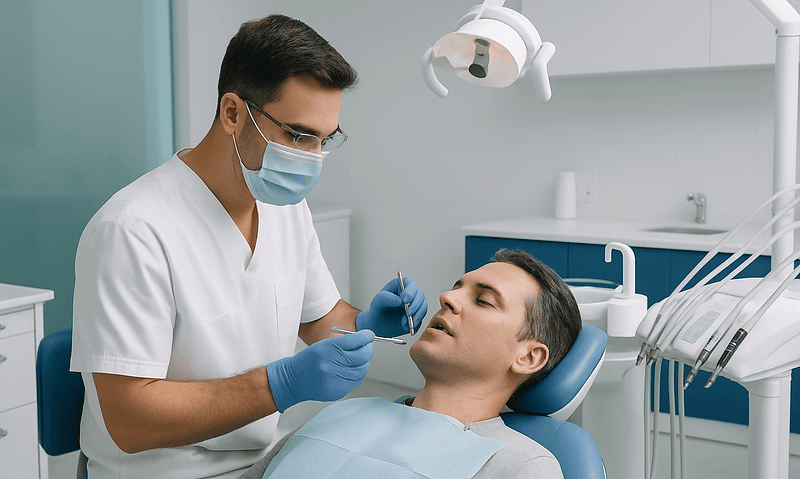
The professional cleaning most people know is called scaling, and it works by physics your bathroom cannot replicate. A hygienist typically uses two kinds of instruments. Ultrasonic scalers vibrate their tips tens of thousands of times per second while spraying a fine water mist; the vibration shatters calcified deposits off the tooth and the water flushes the debris away. Hand scalers and curettes, precisely angled instruments, then handle the fine work, feeling along each surface for remaining roughness the way a sculptor checks stone. Polishing follows, smoothing the enamel so new plaque has less texture to grip.
When tartar has migrated below the gumline, the procedure deepens into scaling and root planing, sometimes called a deep cleaning. The clinician cleans the root surfaces within the gum pockets and smooths them so gum tissue can reattach snugly. Local numbing is often used, and the work may be split across visits. According to NIDCR, this is a first-line approach for periodontitis, frequently paired with closer follow-up.
How often you need professional cleaning is genuinely individual. The familiar every-six-months rhythm suits many people, but those with a history of gum disease, diabetes, dry mouth, or fast tartar formation may be advised to come every three to four months, while some low-risk patients stretch longer. The honest answer is that your own buildup rate, which your hygienist can literally see and measure, should set the schedule, not a universal calendar.
When to see a dentist about plaque and your gums
Routine checkups catch plaque problems before they announce themselves, but certain signs mean you should book promptly rather than wait for the next scheduled visit:
- Gums that bleed regularly when you brush or floss, or that look red, shiny, or puffy along the margins
- Bad breath or a bad taste that persists despite consistent brushing and flossing
- Visible yellow, brown, or gray deposits along the gumline, or a hard fragment that has chipped off a tooth
- Gums pulling away from teeth, teeth looking longer, or new sensitivity near the gumline
- Any loose adult tooth, a change in how your bite fits together, or pain and swelling in the gums
The stakes escalate quietly, which is exactly why timing matters. Gingivitis, inflammation without permanent damage, is reversible with a professional cleaning and daily care. Periodontitis, the next stage, involves loss of the bone and ligament anchoring your teeth, and that loss does not reverse; it can only be halted. Nearly half of adults over 30 show some form of gum disease, per CDC estimates, and most of them are unaware, because the early stages rarely hurt.
Seek care urgently, same day if possible, for facial swelling, a gum abscess, fever with mouth pain, or a tooth that is suddenly loose after no injury. Those can signal infection that needs prompt treatment. And if it has simply been more than a year since anyone with a bright light looked inside your mouth, that alone is a reason to book: bleeding-free gums at home do not guarantee a clean bill below the gumline.
Does plaque affect more than your teeth?
Increasingly, the evidence says your mouth does not keep its problems to itself, though it is worth stating precisely what has and has not been shown. Chronic gum disease means a persistent supply of bacteria and inflammatory signals with access to the bloodstream, and researchers have documented associations between periodontitis and several conditions elsewhere in the body.
The diabetes connection is the best established, and it runs both ways: high blood sugar makes gum disease more likely and more severe, while gum inflammation appears to make blood sugar harder to control. Mayo Clinic and NIDCR both describe this two-way relationship, and treating gum disease has been associated with modest improvements in blood sugar measures in some studies.
Heart disease requires more careful wording. People with gum disease do have higher rates of cardiovascular disease, but the two conditions share risk factors, smoking chief among them, and the evidence has not established that gum disease causes heart problems or that treating gums prevents them. An association, honestly labeled, is still a reasonable nudge: the habits that protect your gums cost little and carry no downside.
Pregnancy adds one more entry: gum disease has been linked in observational research to preterm birth and low birth weight, which is why routine dental care during pregnancy is encouraged rather than postponed. None of this should frighten anyone: it should simply reframe two minutes with a toothbrush as whole-body maintenance rather than cosmetic upkeep.
Frequently asked questions
Can I scrape plaque off my own teeth?
You can and should remove soft plaque with a toothbrush and floss: that is exactly what they are for. What you should not do is use metal dental scalers at home on hardened tartar. Without training and visibility, it is easy to gouge enamel, cut gum tissue, cause recession, or push deposits below the gumline where they do more damage. Hardened buildup is a routine job for a hygienist, not a bathroom-mirror project.
What dissolves plaque naturally?
Nothing safe dissolves plaque or tartar, biofilms must be physically disrupted, and tartar’s mineral is chemically similar to enamel, so acids strong enough to attack it also erode teeth. Baking soda in toothpaste has modest evidence as a mild abrasive, and sugar-free gum boosts protective saliva. Skip vinegar, lemon juice, and charcoal, which risk enamel damage without removing hardened deposits. Mechanical cleaning remains the only proven at-home approach.
Can hardened plaque break off teeth?
Yes, chips of tartar occasionally flake off, most often from behind the lower front teeth where salivary ducts drive heavy buildup. People sometimes mistake the fragment for a piece of broken tooth. A breakaway chip leaves a rough base that collects new plaque even faster, and it signals that enough calculus has accumulated to become brittle. Treat it as a prompt to schedule a professional cleaning.
Can hardened plaque go away on its own?
No. Once plaque calcifies into tartar, it bonds to the tooth, and your body has no mechanism to dissolve it, saliva actually keeps adding minerals, so deposits grow rather than shrink. Brushing harder cannot remove it and risks enamel wear and gum recession. Only professional scaling removes tartar. The good news: once it is gone, early gum inflammation typically settles within days to weeks of consistent home care.
How long does it take plaque to turn into tartar?
Mineralization can begin within about 24 hours and is well underway by 48 to 72 hours if plaque stays undisturbed. That window explains standard hygiene advice: brushing twice daily and cleaning between teeth once daily keeps disrupting the film before it can calcify. Buildup speed varies between people, saliva chemistry, dry mouth, smoking, and diet all influence how quickly deposits harden.
Does baking soda remove plaque?
It can help with soft plaque as a mild abrasive, and toothpastes containing baking soda have shown modest plaque-removal benefits in studies. It also neutralizes mouth acids. What it cannot do is remove hardened tartar or replace fluoride’s role in strengthening enamel. If you like it, a fluoride toothpaste that includes baking soda is a reasonable choice; scrubbing with straight baking soda adds little and skips the fluoride.
Does mouthwash remove plaque?
No, plaque is a biofilm anchored to the tooth, and liquid rinsing past it cannot pull it off; removal requires friction from bristles and floss. Antiseptic rinses can reduce bacteria and help gum inflammation as an add-on, and fluoride rinses support enamel. Use mouthwash at a separate time of day, not right after brushing, so you do not rinse away the toothpaste’s fluoride.
Why does tartar build up behind my bottom front teeth?
Because major salivary ducts open directly beneath your tongue, that area is constantly bathed in calcium- and phosphate-rich saliva: the exact minerals that calcify plaque into tartar. The inner surfaces of the lower front teeth are also easy to rush past when brushing. Give that zone deliberate attention: angle the brush vertically behind those teeth and use the tip of the head in small strokes.
How often should I get a professional cleaning?
It depends on how quickly you build tartar and your gum health history. Twice a year suits many people, but those with prior gum disease, diabetes, dry mouth, or fast calculus formation are often advised to come every three to four months, while some low-risk patients can go longer. Your hygienist can see and measure your actual buildup rate, which is a better guide than any universal schedule.
Is bleeding when I floss a sign I should stop?
Usually the opposite. Bleeding gums most often signal inflammation from plaque along the gumline, gingivitis, and gentle daily interdental cleaning typically calms it within a week or two as the gums heal. Stopping lets plaque mature and inflammation worsen. If bleeding continues beyond two weeks of consistent, gentle care, or gums are swollen and painful, see a dentist, since persistent bleeding can indicate deeper gum disease.
References
- Cleveland Clinic: Dental Plaque
- NHS: How to keep your teeth clean
- NIH NIDCR: Periodontal (Gum) Disease
- MedlinePlus: Tooth Decay
This article is for general information only and is not a substitute for professional medical advice. Please consult a qualified doctor about your individual situation.

More from the Blog

Tooth Extraction Healing Timeline: The Socket From the First Day to the Fourth Week
After a tooth extraction, a blood clot forms in the socket within the first day, soft granulation tissue replaces it over the following week,…
Bringing Old X-Rays and Records to a Dental Anatomy Assessment: Why History Helps Planning
Bringing old X-rays and records to a dental anatomy assessment gives the clinician a timeline rather than a single snapshot. Prior radiographs, periodontal charts,…
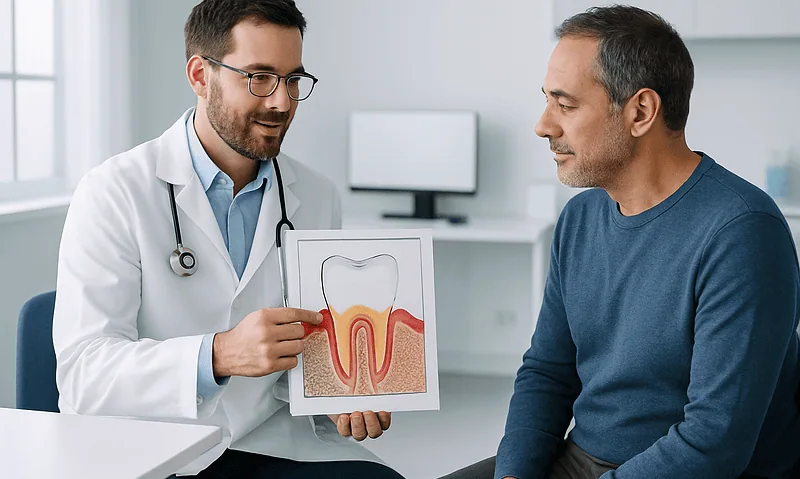
How Periodontal Disease Develops Below the Gumline and Why SRP Deep Cleaning Is Planned
Periodontal disease begins when bacterial plaque collects along the gumline, inflames the gums (gingivitis) and, if it persists, spreads below the gum to destroy…
Before Clear Aligners Start: Digital Scans, Cavities to Treat and the Aligner Plan
Before starting clear aligners, an orthodontist or dentist usually completes a full dental exam, X-rays, photographs and a digital scan of both jaws. Any…

Canker Sore vs Cold Sore: How to Tell Them Apart in Ten Seconds
Location is the fastest clue. Canker sores are shallow, round ulcers with a white or yellow center that form inside the mouth, on the…
Is a Dental Spa Right for Anxious Patients? Comfort Care Without Cutting Corners
A dental spa can suit many anxious patients when the comfort features sit on top of standard clinical care rather than replacing it. Warm…