

IPL Photorejuvenation Results: Why Spots Darken Before They Fade and How Sessions Build
Key Takeaways
- Treated sun spots typically turn darker and form fine crusts within days, then flake away over one to two weeks as the skin sheds the heated pigment.
- Mayo Clinic cites two to three sessions as typical for age spots, and Cleveland Clinic describes courses of about three to six spaced roughly a month apart.
- IPL targets two pigments, melanin in brown spots and hemoglobin in vessels, which is why brown and red concerns can be addressed in the same session.
- Tanned or darker skin reduces the contrast IPL relies on and raises the risk of burns and lasting color changes, so clinicians commonly ask tanned patients to wait.
- Melasma behaves differently from sun spots and can rebound darker after heat-based treatment, so it is usually managed with sun protection and topical therapy first.
- The cleared spots do not usually return, but new ones form with ongoing sun exposure, so daily broad-spectrum sunscreen is what preserves the result.
IPL photorejuvenation results usually appear gradually. Treated brown spots often turn darker and coffee-ground-like for several days before flaking away over one to two weeks, because the light heats pigment that the skin then sheds. Redness and vessels fade more slowly. Most people need a short series of sessions spaced about a month apart, with the final look judged weeks after the last one.
Four days after her first session, a patient sent her dermatology nurse a slightly panicked photo. The freckles across her cheekbones, the ones she had hoped to soften, looked darker than ever, like flecks of instant coffee stuck to her skin. Had something gone wrong? The nurse’s reply was short: this is what working looks like.
That moment is so common it deserves a proper explanation, because IPL photorejuvenation results follow a pattern that almost nobody is warned about in enough detail. Spots darken before they fade. Redness improves in steps rather than in one leap. Session two often looks more impressive than session one, and the true picture is only clear a month after the last visit.
This explainer walks through what the light is doing under the surface, why the timeline looks the way it does, who tends to be a candidate and who is asked to wait, and which changes deserve a phone call rather than patience.
What IPL photorejuvenation results actually depend on
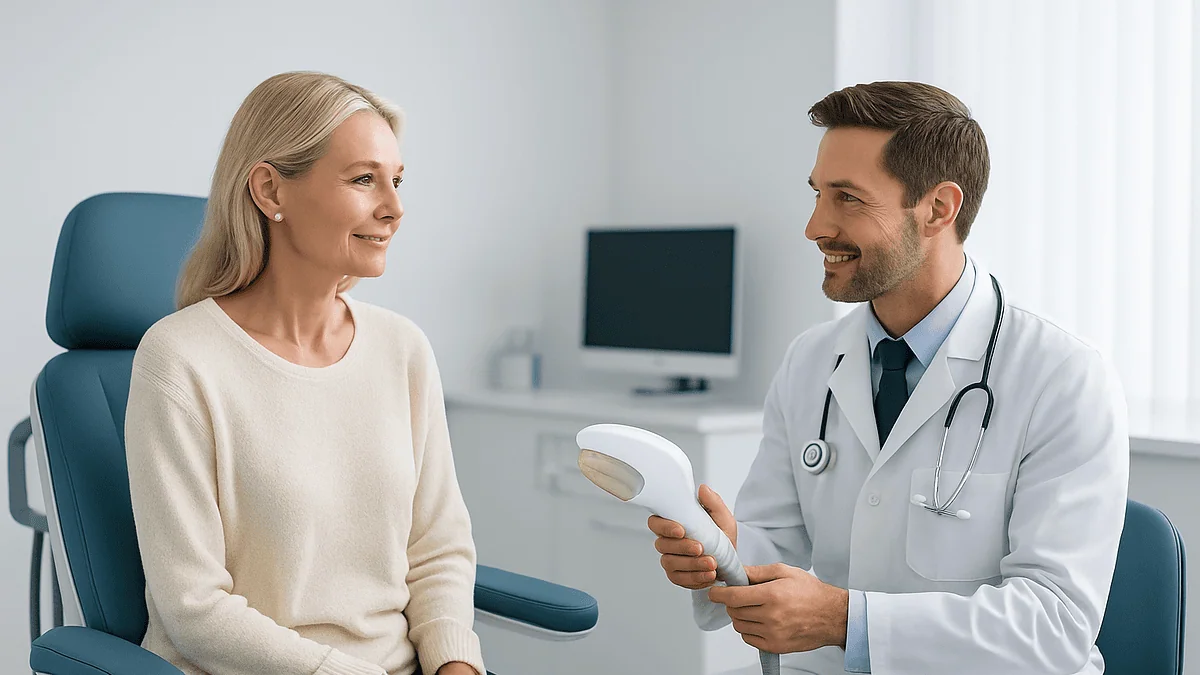
IPL stands for intense pulsed light: a device that flashes a broad band of visible and near-infrared light onto the skin through a hand-held window. Photorejuvenation is the name for using that light to even out color, mainly brown spots and redness, rather than to remove hair. Unlike a laser, which fires a single wavelength, IPL releases many wavelengths at once and uses glass filters to block the parts of the spectrum the operator does not want, according to Cleveland Clinic.
The physics rests on a simple idea. Certain molecules in skin, called chromophores, soak up light and turn it into heat. The two that matter here are melanin, the brown pigment made by cells called melanocytes, and hemoglobin, the red protein inside blood vessels. When a pulse hits a sun spot, the concentrated melanin heats faster than the pale skin around it. When a pulse hits a dilated vessel, the hemoglobin warms the vessel wall. Each target is damaged selectively, while the surrounding tissue, which contains far less of the chromophore, is largely spared. Dermatologists call this selective photothermolysis: heating a target selectively so the body can clear it.
Results therefore depend on contrast. A dark spot on pale skin gives the light an obvious target; a faint spot on tanned skin does not. Vessel results depend on how close to the surface the vessels sit and how large they are. Cleveland Clinic notes that IPL works best for people with lighter skin tones and superficial pigment, precisely because the light can pick the target out of the background.
A single session lasts roughly 20 to 30 minutes for the face, per Cleveland Clinic, and most of the visible change unfolds afterward, not in the chair. That lag is the whole story of the next several sections.
Why do IPL spots get darker before they fade?
The darkening is not new pigment. It is the old pigment, cooked. When melanin absorbs a pulse of light, the heat coagulates it and the cells holding it, and the spot immediately takes on a deeper, matte, grayish-brown tone. Over the next day or two the damaged pigment is pushed upward as the epidermis, the outermost layer of skin, keeps renewing itself from below. The result is the classic look patients describe as coffee grounds, pepper flecks or tiny scabs sitting right where the spots were.
What happens next is ordinary skin turnover. Cleveland Clinic explains that treated dark spots typically become darker at first and then flake off, usually over one to two weeks. Nothing is peeled or scrubbed; the crusts lift when they are ready and reveal skin closer in tone to the surrounding area. Spots on the face generally clear faster than spots on the chest, hands or forearms, which have a slower turnover and thinner, less forgiving skin.
Two practical points follow from the mechanism. First, picking a flake off early removes the crust before the skin beneath has finished healing, which raises the risk of a pink or brown mark that outlasts the original spot. Second, the darkening itself is the sign the light found its target. Spots that never darken at all may have been too faint, too deep or too similar in color to the surrounding skin for the chosen settings to affect them, and that is useful information for the next session’s plan.
Not every dark patch is a good target, however. Some are melasma, a hormonally driven pigmentation that behaves very differently, and one section below is devoted to why.
How many IPL sessions does it take, and why results build
One session rarely finishes the job, and the reason is anatomical rather than commercial. Each pulse can only heat the pigment and vessels that are dense enough and shallow enough to absorb it at that setting. The most obvious spots respond first. Fainter spots, smaller vessels and deeper pigment need another pass, often at a slightly different filter or energy chosen once the operator has seen how the skin behaved the first time.
Published patient guidance gives a consistent range. Mayo Clinic notes that laser and intense pulsed light treatment for age spots usually takes two to three sessions. Cleveland Clinic describes a typical course of about three to six treatments spaced roughly a month apart, with the number depending on the concern and the skin. Redness and vessels generally sit at the higher end; a handful of well-defined sun spots may sit at the lower end.
The month-long gap is deliberate. The skin needs time to shed the coagulated pigment, for treated vessels to be reabsorbed and for any lingering pinkness to settle, so the operator can see what remains and treat only that. Compressing the schedule does not speed the biology; it mostly increases irritation.
Results build in a second way too. As the densest spots clear, the overall complexion looks more even, so the remaining lighter spots become the new most-visible feature and become better targets in turn. Many people report that the second or third session is the one where friends notice. That is the expected shape of the curve, not a sign the first session underperformed.
The final assessment belongs a few weeks after the last session, when the skin has finished sloughing and calming. Judging the series before then is like judging a cake at the halfway mark of baking.
Who IPL photorejuvenation is usually for, and who is asked to wait
The typical candidate has sun-related changes on lighter skin: scattered brown spots (often called age spots, liver spots or solar lentigines), diffuse pinkness, small visible vessels on the nose or cheeks, or the mottled red-and-brown pattern on the neck and chest sometimes called poikiloderma. Mayo Clinic lists intense pulsed light among the standard options for age spots, alongside creams, chemical peels, cryotherapy and lasers.
Skin tone shapes the conversation because melanin is both the target and the bystander. In deeper skin tones the surrounding skin contains a great deal of melanin, so the light struggles to tell spot from background and the risk of burns, blistering and long-lasting dark or light patches rises. Cleveland Clinic states plainly that IPL is generally not recommended for people with darker skin, and that people who are tanned should not be treated until the tan has faded. This is a safety judgment, not a value judgment; other devices and topical strategies are usually discussed instead.
Several groups are commonly asked to wait or to choose a different approach:
- Anyone with a recent tan or planned sun exposure, because a tan raises the melanin content of the whole treatment field.
- People taking medicines that make skin more light-sensitive, which a clinician must review individually.
- Those with active cold sores, infections or inflamed skin in the treatment area.
- People who are pregnant, for whom most cosmetic light treatments are postponed as a precaution rather than because of proven harm.
- People with melasma as the main concern, discussed separately below.
A history of keloid or raised scarring, recent isotretinoin use, or a pigmented lesion that has changed shape or color also prompt a pause. Any spot that looks different from its neighbors deserves a medical examination before any light touches it, because IPL is a cosmetic treatment and cannot diagnose or treat skin cancer. The decision always rests with the treating clinician after examining the skin in person.
IPL photorejuvenation results week by week: a summary table
Timelines vary with the area treated, the concern and individual healing, but the sequence itself is remarkably consistent. The table below summarizes what patient-facing sources such as Cleveland Clinic and Mayo Clinic describe, expressed as typical ranges rather than promises.
| Stage | Typical window | What brown spots usually do | What redness and vessels usually do |
|---|---|---|---|
| Immediately after | First few hours | Turn a shade darker, sometimes gray-brown | Skin looks flushed, like mild sunburn; mild swelling possible |
| Early days | Days 1–3 | Crusts or “coffee grounds” form on the surface | Flush settles over hours to a few days; small vessels may look darker |
| Shedding | Roughly days 5–14 | Flakes lift on their own; face clears before chest or hands | Treated vessels begin to fade as the body reabsorbs them |
| Between sessions | About 3–4 weeks | Remaining lighter spots become the next targets | Baseline pinkness often looks calmer; assessment for next pass |
| After the series | Several weeks after the last session | Final tone is judged once shedding and pinkness have fully settled | Cumulative reduction becomes apparent; maintenance plan discussed |
Three caveats keep the table honest. Body sites heal on their own schedule, and the chest and hands can lag the face by a week or more. Redness from rosacea tends to recur over time regardless of treatment, so the “after” stage is often a plateau rather than an end point. And no row in this table should be read as a guarantee: the ranges come from general guidance, and a clinician who has seen the skin is the only person who can say which row a given patient is likely to sit in.
What IPL photofacial recovery time usually looks like in the first two weeks
The good news about IPL is that there is no wound in the usual sense. The epidermis stays intact, so most people return to work the same day or the next, and Cleveland Clinic describes recovery as minimal compared with ablative lasers that remove the surface layer. What follows is less “recovery” than a predictable shedding cycle.
The first evening usually brings a warm, sunburn-like flush and, in some people, puffiness around the cheeks or under the eyes. Cleveland Clinic notes this typically lasts from a few hours to a few days. Cool compresses and a bland moisturizer are the standard comfort measures; anything exfoliating, acidic or fragranced is commonly paused until the skin calms. Makeup is often permitted once the skin surface is intact and cool, though the treating team’s instruction takes precedence.
Days two through five are the coffee-ground phase. Spots feel slightly rough, almost sandy, under a fingertip. The skin may look worse in photographs than it feels, which is why the patient in the opening scene sent her panicked message on day four rather than day one. Gentle cleansing and leaving the crusts alone are the only tasks.
Somewhere between the end of the first week and the end of the second, the flakes lift. Face first, then neck, then chest and hands. The skin under each flake is typically pink for a short while before it blends in.
Sun protection is not optional during this window. Freshly treated skin is more vulnerable to ultraviolet light, and new exposure can undo the pigment work or create fresh dark marks. CDC guidance recommends broad-spectrum sunscreen of SPF 15 or higher (many clinicians advise SPF 30 or higher), reapplied every two hours outdoors, alongside shade and a wide-brimmed hat. Sweaty workouts, saunas and hot showers that flush the skin are usually kept brief for a few days because heat aggravates the pinkness.
Does IPL help rosacea redness and visible vessels?
Rosacea is a long-term skin condition that causes persistent flushing, redness and sometimes bumps and visible vessels, most often across the central face. NHS guidance lists intense pulsed light and laser treatment among the options for the redness and visible blood vessels of rosacea, typically alongside prescribed topical or oral medicines that address the bumps and inflammation. The light targets hemoglobin in dilated vessels, warming and closing them so the body gradually reabsorbs them.
Expectations here differ from the sun-spot story in three ways. First, the visible change is slower and subtler. There is no dramatic darken-then-flake moment; instead, the background pink looks a shade calmer after each session, and specific threadlike vessels (telangiectasia, meaning permanently dilated small vessels) may briefly look darker or purplish before fading. Second, more sessions are usually needed, toward the higher end of the range Cleveland Clinic describes. Third, rosacea does not stop being rosacea. IPL treats the visible vessels that exist now; it does not switch off the tendency to form new ones. NHS and Cleveland Clinic both frame these treatments as ways to manage and control the condition, with repeat sessions expected over time.
Triggers still matter afterward. The everyday flush from heat, alcohol, spicy food, stress and sun is driven by the nervous system and inflammation, not by the individual vessels that were treated, so trigger management continues to sit at the center of rosacea care.
Flushing that appears with fever, joint pain, eye grittiness or a rash elsewhere on the body needs medical review before any cosmetic treatment, because some conditions mimic rosacea. A clinician, not a device, decides whether the redness is a cosmetic target or a sign of something that needs a different plan.
Why melasma is the exception, not the rule
Melasma is a common pigmentation condition that produces symmetrical brown or gray-brown patches on the cheeks, forehead, upper lip and jawline. MedlinePlus describes it as being driven by hormonal shifts, such as pregnancy or hormonal contraception, and worsened by sun exposure. Cleveland Clinic adds that heat and visible light, not only ultraviolet, can aggravate it.
That last detail is the problem. IPL works by heating pigment, and melasma’s melanocytes are already overactive and hair-trigger sensitive. Heating them can prompt a rebound, so a patch that lightened briefly returns darker weeks later. The classic darken-then-flake sequence, so reassuring for sun spots, can be a warning sign in melasma. This is why experienced clinicians examine the pattern of pigmentation before treating, and why a patient who says “my spots came back worse” after light treatment elsewhere is often describing undiagnosed melasma.
Standard melasma care, per Cleveland Clinic and MedlinePlus, starts with rigorous daily sun protection, including mineral sunscreens that block visible light, and prescription lightening creams that slow melanin production; chemical peels are sometimes added. Energy devices, when used at all, are used cautiously, at low settings, by clinicians who specialize in pigment, and with the understanding that maintenance is lifelong.
Telling melasma apart from ordinary sun spots is not always easy by eye. Sun spots are discrete, well-edged dots that sit where the sun hits hardest and do not care about hormones. Melasma is a blotchy map with feathered edges that often darkens in summer and during pregnancy and fades a little in winter. Some people have both. A dermatologist may use a handheld ultraviolet lamp called a Wood’s lamp to gauge how deep the pigment sits, and that assessment shapes whether IPL is on the table at all. The decision belongs to the examining clinician.
Skin tone, tanning and settings: why the same machine gives different results
Two people can sit under the same device on the same afternoon and walk out with different outcomes, and the variable that explains most of the gap is background melanin. The classification clinicians use is the Fitzpatrick scale, a six-step ladder from skin that always burns and never tans to skin that never burns and always tans deeply. IPL’s selectivity depends on the spot being darker than its surroundings, so the paler the background, the greater the contrast and the wider the safety margin.
A tan erases that margin. Even a light summer glow raises the melanin content of the whole treatment field, so the light is absorbed everywhere instead of preferentially in the spots. Cleveland Clinic advises avoiding sun exposure and tanning in the weeks before a session and states that tanned skin should not be treated. Self-tanning lotions count too: the pigment they deposit sits in the very layer the light is aimed at.
Operators adjust three levers. The filter decides which wavelengths reach the skin; a higher cut-off removes the shorter wavelengths that melanin absorbs most greedily, which is safer for deeper tones but less effective on faint spots. The energy setting decides how much heat is delivered per pulse. The pulse structure, including how the energy is split into sub-pulses and how long the pauses between them last, lets the target heat while the surrounding skin cools. A cautious first session at conservative settings is standard, with adjustments made once the skin’s reaction has been observed. That conservatism is a feature, because the most serious IPL complications, burns and long-lasting light or dark patches, come from overtreatment rather than undertreatment.
This is also why the number of sessions is a range and not a fixed figure. Lower, safer settings on a given skin type may mean one or two additional passes to reach a similar end point. The clinician sets the pace; the skin sets the limits.
What people often get wrong about IPL results
Myth: the darkening means the treatment burned me. In ordinary sun spots, temporary darkening followed by flaking is the intended sequence. A burn looks and feels different: blistering, open or weeping skin, sharp pain or a sharply outlined rectangular mark matching the device window. The next section spells out those warning signs.
Myth: one session should clear everything. Mayo Clinic cites two to three sessions as typical for age spots, and Cleveland Clinic describes courses of about three to six for broader concerns. Faint spots and fine vessels often need more than one pass by design.
Myth: IPL is a laser. It is a filtered flash lamp with many wavelengths, which is what allows it to address brown and red targets in one session. Lasers use one wavelength and are often more precise for a single stubborn target. Neither is universally better.
Myth: results are permanent. The specific spots and vessels that are cleared do not usually return, but the skin keeps aging and the sun keeps shining. New spots form, rosacea produces new vessels, and Cleveland Clinic notes that maintenance sessions are common.
Myth: darker skin just needs a stronger setting. The opposite is true. More background melanin means less selectivity and more risk; Cleveland Clinic generally advises against IPL for darker skin tones, and other approaches are usually offered instead.
Myth: IPL treats melasma like any other brown patch. As described above, heat can worsen melasma, so it is treated with caution and different tools.
Myth: IPL removes wrinkles or tightens skin. Its effect on texture is modest at best, and it does nothing structural for sagging. The evidence supports its use for color, meaning pigment and redness, and people expecting a lifting effect are usually disappointed.
Myth: sunscreen is only needed on treatment day. Fresh pigment forms fastest in newly treated skin, so daily protection is what protects the investment of time.
IPL side effects, risks and the alternatives your team may mention
Most side effects are mild and short-lived. Cleveland Clinic lists redness, swelling, a stinging or sunburn-like sensation, temporary darkening of spots and, less commonly, bruising, blistering, crusting and changes in skin color. The color changes are the ones that matter most: post-inflammatory hyperpigmentation, meaning new dark marks left after skin inflammation, and hypopigmentation, meaning pale patches where pigment cells were damaged. Both are more likely with darker or tanned skin and with aggressive settings, and both can take months to fade; pale patches sometimes persist.
Rare but serious problems include burns from overlapping pulses or mismatched settings, scarring, and cold sore outbreaks in people prone to them, since the heat can reactivate the virus. Eye protection is mandatory for both patient and operator because the flash is intense enough to damage the retina. Hair in the treatment field can be lightened or thinned, which is why eyebrows and hairlines are carefully avoided during photorejuvenation.
Alternatives depend on the target. For brown spots, Mayo Clinic describes prescription lightening creams that slow melanin production over several weeks to months, chemical peels, cryotherapy (freezing individual spots with liquid nitrogen), microdermabrasion and lasers, including fractional and Q-switched types. For redness and vessels, vascular lasers that fire a single wavelength strongly absorbed by hemoglobin are the usual comparison, and NHS guidance mentions both laser and IPL for rosacea. For melasma, topical therapy and sun protection remain the foundation.
No option is free of trade-offs. Creams are slow and can irritate; peels and lasers carry their own pigment risks; cryotherapy can leave pale dots. The right sequence, and whether IPL belongs in it, is a judgment the examining clinician makes with the patient after weighing skin type, the specific lesions, medical history and how much downtime is acceptable.
How to keep IPL results once you have them
The spots that flake away after a series are gone, but the skin that produced them is the same skin, exposed to the same sun. Long-term IPL photorejuvenation results therefore depend far more on what happens in the years afterward than on the device.
Daily broad-spectrum sunscreen is the single most effective habit, and the evidence behind it is not cosmetic but medical. CDC notes that ultraviolet exposure is the main preventable cause of skin cancer and recommends SPF 15 or higher, applied generously and reapplied at least every two hours and after swimming or sweating, with shade during peak hours and clothing that covers skin. The same steps that lower cancer risk slow new pigment formation. For people prone to melasma, Cleveland Clinic points out that visible light contributes too, which is why tinted mineral sunscreens containing iron oxides are often suggested.
Retinoids, a class of vitamin A derivatives available over the counter and by prescription, speed cell turnover and help distribute pigment evenly; Mayo Clinic lists them among standard age-spot treatments. Whether one is appropriate, and when to pause it around sessions, is a question for the treating team rather than a decision to make alone.
Maintenance sessions are common. Cleveland Clinic notes that many people return periodically, often annually, as new spots and vessels appear. That is not treatment failure; it is the skin doing what skin does. Rosacea in particular tends to produce new vessels over time, so periodic touch-ups are part of managing it.
One more habit protects results: watching the skin. A spot that looks different from its neighbors, changes shape or color, itches, bleeds or refuses to heal is a reason for a medical skin check, not another cosmetic session. IPL is for cosmetic color; it is never a substitute for a doctor’s eyes.
Questions to ask your care team before and between sessions
The most useful consultations are the ones where the patient arrives with specific questions and leaves with specific answers written down. These are the questions that tend to shape realistic expectations.
- Which of my spots and vessels are good IPL targets, and which would you treat another way or leave alone?
- Could any of these patches be melasma, and how did you check?
- Have you examined every spot in the area for features that need medical follow-up before we treat cosmetically?
- Given my skin type and any recent sun, is now a safe time, or should I wait?
- How many sessions do you anticipate for my particular pattern, and how far apart?
- What settings will you start with, and what would make you adjust them?
- What should I stop using before and after, and for how long, including any prescription creams or medicines that increase light sensitivity?
- What does the darken-and-flake phase usually look like on my skin, and how long does it typically last on the areas we are treating?
- What sunscreen approach do you recommend after treatment, and does it need to block visible light?
- Which changes after a session are expected, which mean I should call, and how do I reach you out of hours?
- What alternatives would you consider if my skin does not respond as hoped?
Between sessions, the conversation shifts. Bringing photographs taken in consistent light on the same day each week gives the operator a clear record of which spots shed, which lightened only partly and where any new pinkness or darkening appeared. Reporting a cold sore, new medicine, sun exposure or pregnancy since the last visit is essential, because any of these can change the plan. And if the skin is not behaving the way it was described, asking directly whether the response is within the expected range is the fastest way to catch a problem early. The treating team’s judgment governs every step; the patient’s job is to make sure that judgment is well informed.
When to call your doctor
Most IPL aftereffects are mild and settle on their own, but a short list of changes should prompt a same-day call to the treating clinician rather than a wait-and-see approach.
- Blisters, open or weeping skin, or areas that look raw, particularly in sharply outlined rectangles matching the treatment window; these suggest a burn rather than the expected crusting.
- Pain that worsens after the first day instead of easing, or pain out of proportion to what was described.
- Spreading redness, warmth, swelling, pus or yellow crusting, or a fever, which can signal infection in treated skin.
- Clusters of small painful blisters on or near the lip or nose, the pattern of a cold sore outbreak, which needs prompt treatment.
- Any eye symptom after a session, including pain, light sensitivity, blurred vision or a dark spot in vision, given the intensity of the flash.
- Hives, facial swelling, wheezing or difficulty breathing, which are signs of an allergic reaction and require emergency care.
- New pale patches or dark marks that persist beyond the expected shedding window, especially if they are enlarging.
Separate from procedure aftercare, some skin changes warrant a medical examination regardless of any cosmetic plan. Mayo Clinic advises having a spot evaluated if it is black, has grown quickly, has an irregular border, shows an unusual mix of colors, or bleeds, itches or is tender. Those features are not IPL targets; they are reasons to see a doctor first. No cosmetic treatment should proceed on a lesion that has not been assessed, and if a spot changes character after treatment, the clinician needs to see it in person.
When in doubt, call. Clinicians would far rather review a photo of normal coffee-ground crusting than miss a burn or infection in its first day. The decision about what needs treatment, and how, always rests with the treating team.
Frequently asked questions
Is it normal for IPL spots to get darker before they fade?
Yes, for ordinary sun spots that is the expected sequence. The light heats the melanin in each spot, which turns darker and rises to the surface as fine crusts, then flakes away over roughly one to two weeks according to Cleveland Clinic. Darkening that is accompanied by blistering, open skin or sharp pain is different and should be reported to the treating clinician the same day.
How many IPL sessions do most people need for sun spots and redness?
Mayo Clinic notes that laser and intense pulsed light treatment for age spots usually takes two to three sessions, while Cleveland Clinic describes a typical course of about three to six treatments spaced roughly a month apart. Redness and small vessels generally need more passes than a few well-defined brown spots. The exact number depends on skin type, the concern and how the skin responds to the first session.
What is the usual IPL photofacial recovery time?
Most people return to normal activities the same or next day because the skin surface stays intact. Cleveland Clinic describes redness and mild swelling lasting from a few hours to a few days, followed by a crusting phase in which brown spots look like coffee grounds before flaking off within about one to two weeks. Chest and hands can take longer than the face to finish shedding.
Can I pick or exfoliate the dark flakes after IPL?
No. The crusts are heated pigment that the skin is pushing out on its own schedule, and removing them early exposes skin that has not finished healing. That raises the chance of a lingering pink or brown mark that outlasts the original spot. Gentle cleansing, a bland moisturizer and patience are the standard approach, and the flakes lift by themselves once the skin beneath is ready.
Does IPL for rosacea redness work, and does the redness come back?
NHS guidance lists intense pulsed light and laser treatment among options for the redness and visible vessels of rosacea. The light heats hemoglobin in dilated vessels so the body reabsorbs them, and change is gradual over several sessions. Rosacea itself remains, so new vessels and everyday flushing from triggers such as heat or alcohol can return over time, which is why periodic maintenance and trigger management are part of the plan.
Why did my spots come back darker after light treatment?
The most common explanation is that the patches were melasma rather than ordinary sun spots. Melasma is a hormone-sensitive pigmentation that Cleveland Clinic notes is aggravated by heat and visible light, so heating it can prompt a rebound. New sun exposure after treatment and post-inflammatory hyperpigmentation are other causes. A dermatologist can assess the pattern and depth of the pigment before any further treatment is considered.
Can IPL be done on darker skin tones?
Cleveland Clinic states that IPL is generally not recommended for people with darker skin tones, because the surrounding skin contains a great deal of melanin and the light cannot distinguish spot from background well. That lowers effectiveness and raises the risk of burns and long-lasting light or dark patches. Clinicians usually discuss other approaches, such as topical therapy, chemical peels or lasers designed for deeper skin tones, instead.
How soon after a tan or holiday can IPL be done?
Tanned skin is not treated, per Cleveland Clinic, because a tan raises melanin across the whole treatment area and removes the contrast that makes IPL selective and safe. Clinicians typically ask patients to avoid sun exposure, tanning beds and self-tanners for a period before each session and to let any tan fade fully. The treating team decides when the skin is ready based on its appearance in person.
Are IPL results permanent?
The specific spots and vessels that clear during a series usually do not return, but the skin continues to age and to receive sun, so new spots and vessels form over time. Cleveland Clinic notes that maintenance sessions are common. Daily broad-spectrum sunscreen, shade and protective clothing, as recommended by CDC for skin cancer prevention, are also what slows new pigment and protects the result.
What is the difference between IPL and a laser for brown spots?
IPL is a filtered flash lamp that emits many wavelengths at once, which lets it address brown pigment and red vessels in the same session. A laser fires a single wavelength and is often more precise for one stubborn target, such as a deep or isolated spot. Mayo Clinic lists both among standard treatments for age spots. Which is appropriate depends on skin type, the lesions and the clinician’s assessment.
References
This article is for general information only and is not a substitute for professional medical advice. Please consult a qualified doctor about your individual situation.

More from the Blog
How to Prepare for Microneedling: Sun, Retinoids and the Two Weeks Before Your Session
Preparing for microneedling usually means keeping the skin out of strong sun and free of sunburn or tan for the two weeks beforehand, pausing…
Surface Reconstruction Recovery: Early Supervised Walking, Physical Therapy and Milestones
Surface reconstruction recovery after ocular surface surgery usually unfolds in stages: the corneal surface layer re-covers over days, comfort and light sensitivity settle over…

Before Aesthetic Filling: Blood Thinners, Alcohol and Supplements Your Doctor Will Review
Before dermal fillers, clinicians typically review anything that increases bruising or bleeding: prescribed anticoagulants and antiplatelet drugs, over-the-counter anti-inflammatory painkillers, supplements such as fish…
Reconstruction After Cancer or Infection: How Grafts, Flaps and Staged Surgery Are Planned
Reconstructive surgery after cancer or infection rebuilds tissue removed by a tumor operation or destroyed by infection, using skin grafts, flaps of tissue moved…

Why Hands Show Age Early: Volume Loss, Visible Veins and Sun Spots and How Each Is Treated
Hands show age early because their skin is thin, has very little fat beneath it, and spends decades in sunlight without protection. Over time…
Hand Rejuvenation Recovery: Swelling, Bruising and Why Heavy Hand Use Waits a Few Days
After hand filler, mild swelling, tenderness and some bruising across the back of the hand are common and typically ease over several days to…