

Is Obesity a Willpower Problem? Common Myths and What Medicine Actually Says

Key Takeaways
- The WHO estimates that roughly 1 in 8 people worldwide live with obesity, a population-level shift that cannot be explained by a global loss of self-discipline.
- After weight loss, leptin falls, ghrelin rises and the body burns fewer calories than expected for its new size, a documented biological response rather than a lapse in effort.
- Class III obesity means a BMI of 40 or above; it is a clinical category tied to treatment eligibility, not a measure of character.
- The NHS and Mayo Clinic describe the strongest effects of sleeve gastrectomy and gastric bypass as hormonal, lowering hunger signals and boosting gut fullness hormones, rather than purely mechanical.
- Modern weight-loss medicine classes such as GLP-1 receptor agonists mimic gut hormones that signal fullness, and the NHS notes weight commonly returns when they are stopped, which is why they are framed as long-term therapy.
- Losing around 5% of starting weight measurably improves blood pressure and blood sugar according to the NHS, making it a realistic first goal at any age or class.
No. Mainstream medical evidence does not treat obesity as a willpower problem. Body weight is regulated by genes, appetite hormones, sleep, medicines, health conditions and the food environment, and the body actively defends its weight by raising hunger and lowering energy use after weight loss. Self-control matters at the margins, but it operates inside a biological system most people never chose.
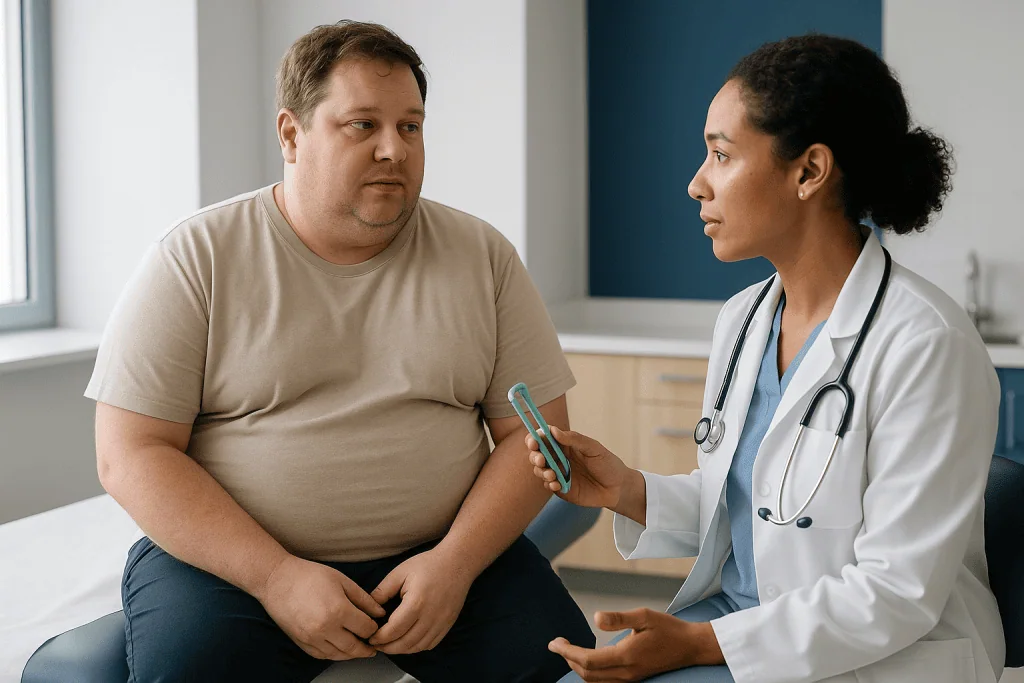
Picture a man in his late forties sitting in a waiting room with a folder of old diet printouts on his lap. Low-carb, two years ago. A points program before that. A gym membership he used faithfully for eight months. Each one worked for a while, then the weight crept back, and each time a quiet voice told him the failure was personal. He has come to ask about surgery, but what he really wants to ask is whether he is simply weak.
That question, is obesity a willpower problem, sits underneath almost every conversation about weight. It shapes how people treat themselves, how strangers treat them, and sometimes how clinicians speak to them. It also happens to be a question that physiology has answered fairly clearly.
This explainer walks through what the body does when weight changes, why so many honest efforts stall, what Class III obesity means, and how medicines and weight-loss surgery fit into treatment. Nothing here replaces the judgment of a treating team, but it should make that waiting-room conversation less lonely.
Is obesity a willpower problem? What the evidence actually shows
The honest answer is that willpower is real, limited, and nowhere near the whole story. Health agencies that study obesity, including the NHS, the WHO and the NIH, describe it as a complex, long-term condition shaped by genetics, hormones, environment, sleep, medicines and other illnesses. None of them lists “poor character” as a cause.
Consider the scale first. The WHO estimates that in a recent global survey year roughly 1 in 8 people worldwide were living with obesity, and that adult obesity has more than doubled over the past few decades. Human genes have not changed in that time, and it is implausible that billions of people simultaneously lost their self-discipline. What changed was the environment: cheaper energy-dense food, larger portions, more sitting, less sleep. When a whole population shifts together, the explanation lies in the system, not in individual failings.
Then look at what happens inside one person. Harvard Health describes the body’s tendency to defend a particular weight range: after weight loss, hunger hormones rise, fullness signals fade and the body burns fewer calories than a person of the same new size who was never heavier. That is not a motivational problem. It is a thermostat doing its job.
Where does willpower fit? It helps people start a plan, keep appointments, choose a walk over the couch on a tired evening. Those choices matter and deserve credit. But they are made against a biological headwind that varies enormously between people, which is why two friends can follow the identical diet with very different results. Medicine’s position, in plain terms, is this: effort is necessary, effort is rarely sufficient, and blaming people for a regulated physiological trait is both inaccurate and harmful.
Is obesity a disease? How doctors define and measure it
Most major medical bodies now treat obesity as a chronic disease, meaning a long-term condition that tends to persist or recur and benefits from ongoing care rather than a one-time fix. The WHO defines it as abnormal or excessive fat accumulation that presents a risk to health, and the NHS describes it as a condition that raises the chance of type 2 diabetes, heart disease, some cancers, sleep apnea and joint problems.
The everyday screening tool is body mass index, or BMI, a number calculated from weight and height. For adults, the WHO and CDC use the same thresholds: 25 to 29.9 is classed as overweight and 30 or above as obesity. BMI is useful for populations and as a starting point, but it has well-known blind spots. It cannot tell muscle from fat, it may misjudge risk in people of different ethnic backgrounds, and it says nothing about where fat is stored.
That last point matters because fat around the abdomen and organs behaves differently from fat under the skin. The NHS therefore also uses waist measurement alongside BMI to judge health risk, and many clinicians look at blood pressure, blood sugar, cholesterol and liver tests before deciding how urgently weight needs attention.
Calling obesity a disease is not a way of telling people they are broken. It is a way of saying the condition has recognizable biology, predictable complications and treatments with evidence behind them, which is exactly how medicine approaches high blood pressure or asthma. Nobody asks a person with asthma to simply breathe harder. The disease framing moves obesity into that same clinical conversation, where it belongs.
What are the underlying factors that contribute to severe obesity?
People searching for the causes of obesity usually expect a single culprit. Medicine instead finds a stack of overlapping influences, and severe obesity typically reflects several acting at once over years.
Genes come first. Harvard Health notes that studies of twins and adopted children show body weight runs strongly in biological families even when children are raised apart, and researchers have identified many gene variants that nudge appetite, fullness and fat storage. Rare single-gene conditions can cause severe obesity from early childhood, but far more often dozens of small variants add up.
Hormones and brain signaling come next. Leptin, made by fat cells, tells the brain how much energy is stored; ghrelin, from the stomach, drives hunger. In many people with obesity these signals become blunted or mistimed, so the brain behaves as though stores are low.
Then there are medicines and other illnesses. The NHS lists an underactive thyroid, Cushing’s syndrome and polycystic ovary syndrome as conditions that can promote weight gain, along with some antidepressants, antipsychotics, steroids, and certain diabetes and epilepsy medicines. Nobody should stop these on their own, but a review with the prescriber is reasonable.
Sleep, stress and the wider environment complete the picture. The NIH describes short or disrupted sleep as a consistent correlate of weight gain, and chronic stress alters cortisol and eating patterns. Add neighborhoods where fresh food is scarce, long commutes, shift work, and advertising engineered to trigger appetite, and the picture is clear: severe obesity is usually the product of biology meeting an environment that pushes hard in one direction. Pointing at willpower ignores every other factor on the list.
What is Class III obesity? Understanding the classes and why they matter
Class III obesity is the clinical term for a BMI of 40 or above. It replaced the older phrase “morbid obesity,” which many people found stigmatizing and which also implied, wrongly, that a number alone determines health. The classes exist because risk rises in steps rather than all at once, and because treatment guidelines, including those used by the NHS, use them to decide who is offered what.

| Category (adults) | BMI range | How clinicians typically use it |
|---|---|---|
| Healthy weight | 18.5–24.9 | Routine preventive care |
| Overweight | 25–29.9 | Lifestyle guidance; closer attention if waist or blood tests raise concern |
| Class I obesity | 30–34.9 | Structured lifestyle program; medicines may be considered |
| Class II obesity | 35–39.9 | As above; surgery may be discussed if a related condition is present |
| Class III obesity | 40 and above | All options including surgery assessed by a specialist team |
Thresholds are from WHO and CDC definitions; the treatment column reflects NHS criteria and varies by country and individual circumstances.
A few caveats keep this table honest. The NHS advises that people of South Asian, Chinese, Middle Eastern, Black African or African-Caribbean background face raised health risks at lower BMI, so some clinicians lower the cutoffs when assessing them. A very muscular person can land in a higher class without carrying excess fat. And someone with Class I obesity and poorly controlled diabetes may need more urgent care than someone with Class III obesity and normal blood work.
What the classes do reliably is signal how strongly biology is likely to resist change. At a BMI above 40, the hormonal defense of weight tends to be powerful, which is one reason guidelines reserve the most intensive treatments for this group rather than expecting resolve alone to close the gap.
How weight regulation actually works: set points, hunger hormones and metabolism
Here is the mechanism that undermines the willpower story. The brain, mainly a region called the hypothalamus, monitors how much energy the body has stored and adjusts hunger and energy use to keep that amount roughly stable. Scientists call the defended range a set point, though it behaves more like a settling point that can drift upward over years and is reluctant to drift back down.
When a person eats less and loses weight, several things happen at once. Leptin falls because there is less fat to make it, which the brain reads as a famine signal. Ghrelin rises, so hunger becomes louder and more frequent. Fullness hormones from the gut, including GLP-1 and peptide YY, respond less strongly to meals. Harvard Health summarizes the result plainly: after weight loss the body burns fewer calories than expected for its new size, a phenomenon often called metabolic adaptation.
Those shifts do not fade after a few weeks. Studies cited by the NIH and Harvard Health have tracked elevated hunger signals a year or more after dieting ends. The person is not imagining that they feel hungrier than before; their physiology has been retuned to recover lost weight.
This also explains why “eat less, move more” is true in the way “spend less than you earn” is true. It describes the arithmetic but says nothing about the forces acting on the numbers. The energy balance equation holds, yet the body adjusts both sides of it in response to what you do. Every successful weight-loss approach, from structured lifestyle programs to medicines to surgery, works to the extent that it changes those signals rather than simply asking a person to ignore them.
Is it hard being overweight? What weight stigma does to health
People sometimes type this question into a search bar late at night, and the answer deserves respect: yes, often, and not only because of physical symptoms. Carrying extra weight can mean breathlessness on stairs, joint pain, poor sleep and the practical frustrations of seats, clothing and medical equipment designed for smaller bodies. The NHS lists these day-to-day effects alongside longer-term risks.
The harder part is frequently social. Weight stigma, meaning negative judgments and unfair treatment based on body size, shows up in workplaces, schools, families and, uncomfortably, in healthcare settings. Research summarized by the NIH and Harvard Health links experienced stigma with higher stress hormone levels, avoidance of medical appointments, disordered eating and, counterintuitively, further weight gain. Shame does not shrink anyone. It tends to drive the very behaviors it claims to correct.
This is where the willpower myth does real damage. If obesity is a character flaw, then mockery looks like motivation and medical treatment looks like cheating. People delay care, skip screenings and accept being spoken to carelessly because they believe they deserve it. Clinicians who absorb the myth may offer a brusque “lose some weight” instead of a structured plan, which the NHS and WHO both identify as inadequate care.
A useful reframe comes from how medicine treats other chronic conditions. Nobody expects a person with high blood pressure to be ashamed of a reading; they expect a plan. Treating obesity the same way, with measurable goals, follow-up and honest discussion of options, is not softness. It is simply what evidence-based care looks like, and it tends to produce better engagement than blame ever has.
How can I lose weight at 40? What changes with age
Many people notice that strategies which worked at 25 stall at 40, and they conclude that discipline has slipped. More often, the body has changed. Muscle mass begins a slow decline in midlife, and because muscle burns more energy at rest than fat, resting energy use drifts downward. Harvard Health and the NIH both describe this age-related shift, along with hormonal changes around perimenopause and menopause that favor abdominal fat storage.
Life also gets busier. Forties often mean caregiving in two directions, longer desk hours, shorter sleep and more eating on the move. Each of these nudges weight upward through the mechanisms described earlier, independent of any lapse in resolve.
What does the evidence support at this age? The same fundamentals, with a few emphases:
- Resistance exercise two or more days a week, which the AHA and NHS recommend for all adults, matters more in midlife because it protects the muscle that keeps energy use up.
- Sleep of roughly 7 to 9 hours, the range the CDC advises for adults, since short sleep raises hunger hormones.
- A medicine review, because this is the decade when blood pressure, mood and diabetes medicines are often started, and some promote weight gain.
- Screening for thyroid problems and, where symptoms suggest it, hormonal changes.
The NHS frames a realistic early goal as losing around 5% of starting weight, an amount that measurably improves blood pressure and blood sugar even though it may look modest on a scale. Setting that target, rather than a return to a college-era weight, aligns expectations with what biology at 40 can reasonably deliver, and it gives the treating team a clear point at which to review whether more intensive options belong in the conversation.
How weight-loss medicines work, and what they do not do
Medicines for obesity are not appetite-suppressing stimulants of the kind that gave the field a poor reputation decades ago. The classes in mainstream use today act on the same signaling systems that defend weight. The decision to prescribe any of them, and which one, rests entirely with a clinician who knows the person’s history.
The most discussed class is the GLP-1 receptor agonists. GLP-1 is a hormone released by the gut after eating that tells the brain the body is fed and slows stomach emptying. These medicines mimic it, so fullness arrives sooner and lasts longer and the constant background pull toward food quiets. A newer group acts on GLP-1 together with a second gut hormone, GIP. An older class, lipase inhibitors, works in the digestive tract by reducing how much fat from a meal is absorbed. Each class has side effects and exclusions that a prescriber will weigh.
The NHS describes a shared principle across these treatments: they are offered alongside, not instead of, changes to eating and activity, and they are reviewed after an initial period of months to confirm a meaningful response before continuing. The NHS also notes that weight commonly returns when such medicines are stopped, which is consistent with the set-point biology described earlier and is why many guidelines describe them as long-term therapy for a long-term condition.
What these medicines do not do is supply willpower in a pen or pill, and that framing misses the point. They do not make a person virtuous; they lower the hormonal volume that was drowning out ordinary intentions. That is a pharmacological statement about appetite regulation, not a moral one, and it is the clearest everyday evidence that obesity was never a character test to begin with.
How weight-loss surgery works: a hormonal reset, not a shortcut
Bariatric surgery, the clinical term for operations that treat obesity by altering the stomach or intestine, is often imagined as a mechanical fix: make the stomach smaller so the person physically cannot overeat. That was the thinking decades ago. Modern understanding, summarized by the NHS and Mayo Clinic, is that the most durable effects are hormonal.
The two most common procedures illustrate this. In a sleeve gastrectomy, the surgeon removes a large portion of the stomach, leaving a narrow tube. The part removed happens to produce most of the body’s ghrelin, so hunger signaling drops sharply. In a gastric bypass, a small stomach pouch is created and connected further down the small intestine, so food reaches the lower gut quickly. That early arrival triggers a strong release of GLP-1 and related fullness hormones, which is why blood sugar in people with type 2 diabetes often improves within days of surgery, before significant weight has been lost. Gastric banding, which places an adjustable ring around the upper stomach, is now used less often in many centers because its effects are mainly mechanical and less sustained.
Both main procedures are usually performed by keyhole technique, through several small incisions, under general anesthesia. Mayo Clinic notes that most people spend one to two nights in hospital.
Surgery carries real risks: bleeding, leaks at staple lines, blood clots, infection, gallstones, nutrient deficiencies and, with bypass, dumping syndrome, where sugary food passes too quickly into the intestine and causes flushing, cramps and faintness. Lifelong vitamin supplementation and follow-up are standard. The NHS is clear that surgery is a tool that reshapes the biology of appetite, that weight can still be regained, and that it is offered after careful assessment, never as a quick exit.
Who is weight-loss surgery usually for, and who is usually asked to wait
Eligibility rules differ between health systems, but the logic is similar everywhere and reflects how strongly biology resists change at higher weights. In England, NHS criteria generally require a BMI of 40 or more, or a BMI between 35 and 40 together with a weight-related condition such as type 2 diabetes or high blood pressure that could improve with weight loss. The NHS also lists lower thresholds for people of certain ethnic backgrounds and for those with recently diagnosed type 2 diabetes. US programs use broadly comparable BMI bands.
Candidates are usually asked to show that they have tried structured, non-surgical approaches, that they understand the lifelong changes involved, and that they are fit enough for a general anesthetic. Most are seen by a team that includes a surgeon, a dietitian, a physician and often a psychologist, because success depends as much on preparation and follow-up as on the operation itself.
Some people are usually asked to wait, or are advised against surgery for now:
- Those with an active, untreated eating disorder, since surgery can worsen it.
- Those with uncontrolled psychiatric illness or active substance misuse, until stable support is in place.
- Those who are pregnant or planning pregnancy within the next year or so, because rapid weight loss and nutrient shifts affect a developing baby.
- Those with severe heart or lung disease that makes anesthesia unsafe until optimized.
- Those who cannot commit to lifelong supplements and follow-up, perhaps for practical reasons the team can help address.
Being asked to wait is not a judgment about effort. It usually means the team wants to fix something that would make surgery riskier or less likely to help. The final decision in every case belongs to the person and their treating team together.
What the first weeks and months after weight-loss surgery usually look like
Recovery follows a fairly predictable arc, though individuals vary and the surgical team’s instructions always take precedence over any general description.
The first days center on moving and sipping. Walking begins within hours of waking to lower the risk of blood clots in the legs, and fluids are introduced in very small amounts. Mayo Clinic notes that most people leave hospital after one to two nights. Pain is usually manageable, and tiredness is normal as the body adjusts to a sharply reduced intake.
Diet then progresses in stages. The NHS describes a typical pattern: liquids only for the first days to a couple of weeks, then pureed food, then soft food, with a gradual return to ordinary textures over roughly six weeks. Portions remain small, meals are eaten slowly, and drinking is separated from eating so the small stomach is not overwhelmed. Many people are surprised by how quickly fullness arrives and how little they think about food.
Returning to work and normal activity depends on the job. The NHS suggests that most people are back to usual activities within a few weeks, while heavy lifting waits longer. Hair thinning, mood swings and food intolerances can appear in the early months and usually settle.
Weight loss is fastest in the first months and slows over the first one to two years, after which some regain is common; Mayo Clinic and the NHS both describe this plateau and partial rebound as expected rather than as failure. Follow-up appointments, blood tests for vitamins and minerals, and ongoing dietitian contact continue for life. People who stay engaged with that follow-up tend to do better, which is one more reason the team, not the operating room alone, defines the outcome.
What people often get wrong about obesity and willpower
Correcting a few persistent myths does more good than any amount of encouragement.
Myth: thin people have more self-control. Studies summarized by Harvard Health find that people with obesity do not show weaker self-regulation on neutral tasks. What differs is the strength of appetite signals they face. Anyone would struggle to stay quiet in a room where the fire alarm never stops.
Myth: a calorie is a calorie, so it is all about quantity. The arithmetic of energy balance is true, but foods differ in how full they make you, how fast they digest and how they affect hormones. The NHS emphasizes food quality alongside quantity for exactly this reason.
Myth: if you regain weight, the diet failed because you quit. Metabolic adaptation and rising hunger after weight loss are documented physiology. Regain is the expected response of an untreated chronic condition, which is why guidelines talk about long-term management rather than a finish line.
Myth: medicines and surgery are cheating. Nobody describes blood pressure tablets as cheating. These treatments change the hormonal signals that made weight loss so difficult. Using them under medical supervision is treatment, not evasion.
Myth: Class III obesity means someone has given up. A BMI above 40 usually reflects years of strong genetic and hormonal pressure, often alongside medicines or conditions that promote weight gain. It is a clinical category, not a verdict.
Myth: shaming people motivates them. Evidence reviewed by the NIH points the other way: stigma raises stress, drives avoidance of care and is associated with further weight gain.
Myth: it is too late to make a difference. The NHS notes that losing even around 5% of body weight improves blood pressure and blood sugar at any age and any starting class.
Questions to ask your care team about obesity treatment
A good consultation leaves a person understanding their own biology and their options, not just a number. These questions help steer the conversation, whether the appointment is with a family physician, a specialist or a surgical team.
- Which of my current medicines could be contributing to weight gain, and are there alternatives worth discussing with the prescriber?
- Should I be tested for thyroid problems, sleep apnea, polycystic ovary syndrome or other conditions that affect weight?
- Given my BMI, waist measurement and blood results, how urgent is weight loss for my health specifically, and what would a realistic first goal be?
- What structured lifestyle support is available to me, and how will we measure whether it is working?
- Am I someone for whom weight-loss medicines are appropriate, what class would you consider, how long would an initial trial be, and what would make you stop or continue it?
- Do I meet the criteria for weight-loss surgery, and if so, which procedure would you consider for me and why?
- What are the specific risks of that procedure for someone with my medical history?
- What would the follow-up schedule look like over the first two years, and for life?
- What happens if I regain weight after treatment? Is that a reason to stop, or a signal to adjust?
- How will we handle the mental health side, including stress eating, body image and any history of disordered eating?
- Who do I call, and when, if something feels wrong between appointments?
Write the answers down or bring someone who can. The point is not to test the clinician but to make sure every decision, from a first dietitian referral to a surgical date, is one you understand and have chosen together with the team treating you.
When to call your doctor: red-flag signs during obesity treatment
Most of the time, managing weight is a slow, steady process with plenty of room to raise questions at routine visits. Some situations should not wait for the next scheduled appointment.
After weight-loss surgery, seek urgent medical help, including emergency services where appropriate, for:
- Fever, a racing heart, worsening abdominal pain or pain spreading to the shoulder, which can signal a leak or infection.
- Vomiting that will not stop, inability to keep fluids down, or signs of dehydration such as dizziness and very dark urine.
- A swollen, warm or painful calf, or sudden breathlessness or chest pain, which can indicate a blood clot.
- Black or bloody stools, or vomiting blood.
- Severe weakness, confusion, numbness or vision changes months later, which may point to a vitamin deficiency.
While taking weight-loss medicines, contact the prescribing clinician promptly for:
- Severe or persistent abdominal pain, especially radiating to the back, with or without vomiting.
- Yellowing of the skin or eyes, or pale stools.
- Racing heartbeat, fainting, or a rash with swelling of the face or throat.
- Any new or worsening low mood or thoughts of self-harm.
At any stage, speak to a doctor soon if you notice:
- Rapid, unexplained weight gain or loss.
- Loud snoring with pauses in breathing or extreme daytime sleepiness.
- Increasing thirst and urination, blurred vision or slow-healing wounds.
- Eating that feels out of control, or restricting, purging or exercising in ways that frighten you.
None of these signs means something is definitely wrong, and this list is not a tool for diagnosing yourself. It is a prompt to pick up the phone. The treating team would far rather hear about a false alarm than miss a real one, and every decision about what to do next belongs with them.
Frequently asked questions
Is obesity a willpower problem or a medical condition?
Medical bodies including the WHO, NHS and NIH classify obesity as a chronic medical condition, not a willpower problem. Body weight is regulated by genes, appetite hormones, sleep, medicines and the food environment, and the body actively resists weight loss by increasing hunger and lowering energy use. Personal effort matters, but it works within a biological system that varies greatly between people and that nobody chose.
Is obesity a disease, and why does that framing matter?
Yes, most major health organizations describe obesity as a chronic disease. The framing matters because it moves obesity into the same clinical approach used for high blood pressure or asthma: measurable goals, evidence-based treatments and long-term follow-up. It also helps reduce the stigma that research links to avoidance of care, higher stress and further weight gain, none of which help anyone lose weight.
What is Class III obesity?
Class III obesity is a BMI of 40 or higher, using WHO and CDC thresholds. It is the category at which guidelines such as those used by the NHS consider the full range of treatments, including weight-loss surgery. It replaced the term morbid obesity, which many found stigmatizing. Clinicians also weigh waist measurement, blood tests and ethnic background, since BMI alone does not capture individual risk.
What are the main causes of obesity?
Obesity results from several overlapping causes rather than one. Genes influence appetite and fat storage, hormones such as leptin and ghrelin regulate hunger, and conditions like an underactive thyroid or polycystic ovary syndrome can promote gain. Some antidepressants, antipsychotics, steroids and diabetes medicines contribute. Short sleep, chronic stress and an environment full of cheap, energy-dense food complete the picture described by the NHS and NIH.
Is it hard being overweight?
Yes, often in ways that go beyond physical symptoms like breathlessness or joint pain. Weight stigma in workplaces, families and healthcare settings is linked in research summarized by the NIH to higher stress, avoidance of medical care and further weight gain. Recognizing obesity as a regulated biological condition rather than a character flaw is one of the most practical steps toward getting good care.
How can I lose weight at 40 when old methods stop working?
Muscle mass and resting energy use decline in midlife, and hormonal changes shift fat toward the abdomen, so earlier approaches often stall. Evidence supports resistance exercise at least twice weekly, 7 to 9 hours of sleep as the CDC advises, a review of medicines that may promote weight gain, and screening for thyroid or sleep problems. The NHS frames around 5% weight loss as a realistic, health-improving first goal.
Why does weight come back after dieting?
Because the body defends its previous weight. After weight loss, leptin falls, ghrelin rises, fullness hormones respond less to meals, and energy use drops below what the new size would predict, a process Harvard Health calls metabolic adaptation. These signals can persist for a year or more. Regain reflects the biology of an untreated chronic condition, not a failure of character, which is why guidelines emphasize long-term management.
How do weight-loss medicines work?
The main modern classes act on appetite signaling. GLP-1 receptor agonists mimic a gut hormone that tells the brain the body is fed and slows stomach emptying, so fullness arrives sooner. Lipase inhibitors reduce fat absorption in the gut. The NHS describes these as additions to lifestyle change, reviewed after an initial period of months, and notes weight often returns when they stop. Prescribing decisions rest with the clinician.
Does weight-loss surgery just make the stomach smaller?
No. While the stomach is reduced, the NHS and Mayo Clinic describe the most durable effects as hormonal. Sleeve gastrectomy removes the part of the stomach that makes most ghrelin, lowering hunger. Gastric bypass delivers food quickly to the lower intestine, boosting GLP-1 and improving blood sugar often before much weight is lost. Lifelong supplements, follow-up and the possibility of regain remain part of the picture.
Who qualifies for weight-loss surgery?
Criteria vary by health system. NHS guidance generally requires a BMI of 40 or above, or 35 to 40 with a weight-related condition such as type 2 diabetes, after structured non-surgical approaches have been tried. Lower thresholds may apply for some ethnic backgrounds. People with untreated eating disorders, unstable mental illness or planned pregnancy are often asked to wait. A multidisciplinary team makes the final decision together with the patient.
References
- NHS: Obesity
- NHS: Weight loss surgery
- WHO: Obesity and overweight fact sheet
- NIH NIDDK: Factors affecting weight and health
This article is for general information only and is not a substitute for professional medical advice. Please consult a qualified doctor about your individual situation.

More from the Blog

When a Sleeve Gastrectomy Needs Revision: Re-Sleeve, Conversion to Bypass and Why
Sleeve gastrectomy revision options include re-sleeving a stretched stomach, converting the sleeve to a Roux-en-Y gastric bypass, which is usually favored when acid reflux…

Who May Be a Candidate for a Gastric Balloon? What the Bariatric Team Evaluates First
Gastric balloon candidates are usually adults whose body mass index falls roughly between 30 and 40, who have tried structured diet and activity changes…

Sleeve Gastrectomy (Gastric Sleeve) Eligibility: What the Team Weighs Beyond BMI
Sleeve gastrectomy eligibility usually starts with body mass index, commonly a BMI of 40 or higher, or 35 and above with a weight-related condition…

Metabolic Syndrome Myths: Why It Is Not Only About Weight and Not Only About Sugar
Metabolic syndrome is a cluster of at least three linked measures: a large waist, raised blood pressure, high triglycerides, low HDL cholesterol and raised…

Who May Be Considered for Gastric Banding Today? Where the Adjustable Band Still Fits
Adults may be considered for adjustable gastric banding when body mass index is 40 or higher, or 35 to 39.9 with a weight-related condition…

Who Is Assessed for Medical Obesity Treatment? Health Factors Doctors Weigh Beyond BMI
Doctors assess adults for medical obesity treatment when body mass index reaches 30, or 25 to 29.9 alongside a weight-related condition such as type…