

Sleeve Gastrectomy (Gastric Sleeve) Eligibility: What the Team Weighs Beyond BMI

Key Takeaways
- NIDDK and the NHS describe surgical consideration from a BMI of 40, or 35 with a weight-related condition, with assessment possible from 30 in specific circumstances such as recent-onset type 2 diabetes.
- At 200 pounds, BMI ranges from about 29 at 5 ft 10 in to about 39 at 5 ft 0 in using the CDC formula, so the weight alone cannot answer an eligibility question.
- A sleeve removes roughly 80 percent of the stomach, including much of the tissue that produces the hunger hormone ghrelin, and the change is permanent.
- Severe reflux or Barrett's esophagus often leads teams to recommend a gastric bypass over a sleeve, because the sleeve can worsen acid reflux while a bypass usually improves it.
- Most deferrals cite modifiable factors such as smoking, unstable blood sugar or an untreated eating disorder, and come with a route back to reassessment.
- The NHS describes a typical hospital stay of one to three days, four to six weeks of recovery, a staged return to solid food over about six weeks, and avoiding pregnancy for roughly 12 to 18 months afterward.
Sleeve gastrectomy eligibility usually starts with body mass index, commonly a BMI of 40 or higher, or 35 and above with a weight-related condition such as type 2 diabetes, but the number is only the opening question. Care teams also weigh reflux history, other illnesses, anesthesia risk, past weight-loss efforts, mental health, eating patterns and readiness for lifelong follow-up before recommending or deferring surgery.
The clinic letter arrives folded in thirds, and the first thing most people do is hunt for a number. Not the appointment time. The BMI. Somewhere along the way, the question “am I a candidate?” collapsed into a single figure on a chart, and a lot of people walk into their first consultation having already decided the answer for themselves, in either direction.
Surgeons and dietitians tend to see it differently. To them, sleeve gastrectomy eligibility is a conversation that begins with BMI and then moves quickly into territory the chart cannot show: whether heartburn keeps you upright at night, how your blood sugar has behaved over the past year, what your kidneys and heart can tolerate under anesthesia, and how you have eaten through the hard weeks of your life.
This explainer walks through that wider conversation, what tends to move a team toward yes, what tends to move it toward not yet, and what the evidence actually supports when people compare the sleeve with other operations.
Why sleeve gastrectomy eligibility is more than a BMI cutoff
Body mass index, or BMI, is your weight in kilograms divided by the square of your height in meters. It is a population screening tool, designed to sort large groups of people into risk bands, and it does that job reasonably well. What it cannot do is tell a surgeon how much of your weight is muscle, how your liver is coping, or whether a smaller stomach will help or harm a person who already has severe acid reflux.
That is why guideline bodies frame BMI as a threshold for consideration, not a ticket. The National Institute of Diabetes and Digestive and Kidney Diseases describes surgery as an option a doctor may recommend when BMI sits at 40 or above, or at 35 or above alongside a serious weight-related health problem, and it lists a string of other factors that shape the final decision, including whether a person has tried other approaches and understands what surgery involves. The NHS uses similar thresholds and adds two further conditions that catch people off guard: being fit enough for anesthesia and surgery, and committing to long-term follow-up.
Think of it as three overlapping circles. One is the size of the health problem, which BMI and related conditions describe. Another is safety, which is about what your body can tolerate during and after an operation. The third is fit, meaning whether this particular procedure, with its particular strengths and trade-offs, matches your history. A person can sit comfortably inside the first circle and still be steered elsewhere because of the other two.
Holding all three in mind makes the rest of the process less mysterious. The blood tests, the endoscopy, the psychology appointment, the sleep study: each one is checking a different circle, and none of them is a hurdle placed there to discourage you.
What BMI thresholds actually mean for gastric sleeve requirements
Two numbers dominate any conversation about gastric sleeve requirements. The first is 40. The second is 35, paired with a condition that obesity is known to cause or worsen: type 2 diabetes, high blood pressure, obstructive sleep apnea (a disorder in which the upper airway repeatedly collapses during sleep), fatty liver disease or severe joint disease among them. The NHS lists these thresholds in almost exactly those words, and NIDDK does the same for adults in the United States.
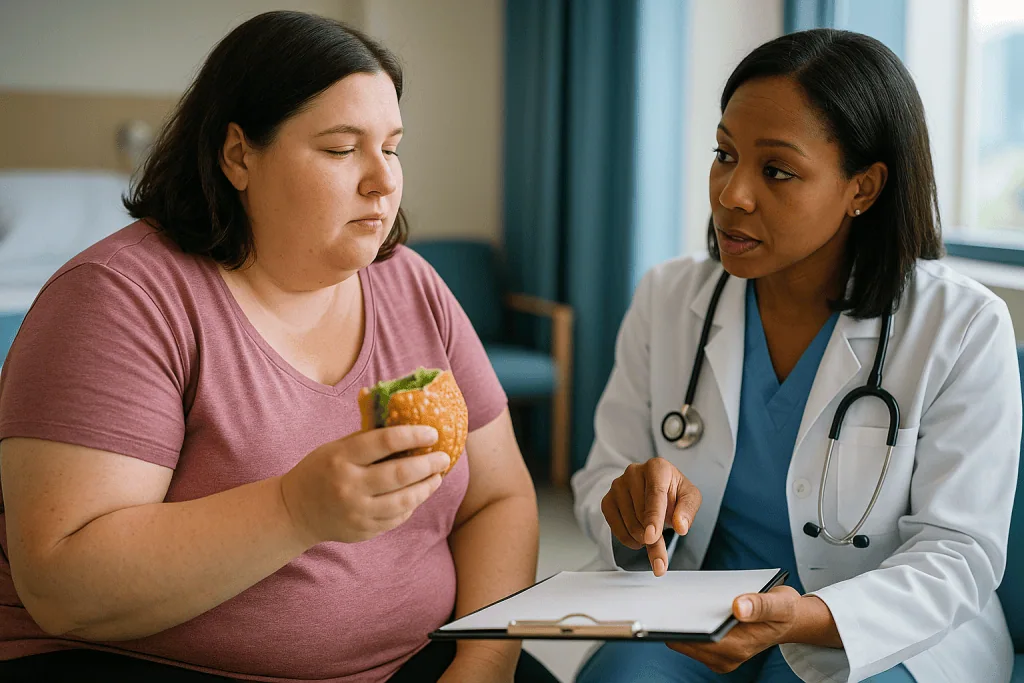
Below those figures, the picture is changing. The NHS notes that people with a BMI between 30 and 35 who have recently developed type 2 diabetes may be assessed for surgery, and that people of Asian family background may be considered at a lower BMI than the general population, because metabolic risk rises at a lower body weight in that group. NIDDK likewise notes that some people with a BMI of 30 or more and difficult-to-control type 2 diabetes may be considered. What no mainstream guideline does is treat these lower bands as automatic; they open the door to an evaluation, nothing more.
It is worth knowing how BMI is measured in practice, because it trips people up. Teams use the height and weight recorded in clinic, not what you remember from a driver’s license or a wedding day. Clothing and shoes come off or are accounted for. Some programs record BMI at the first visit and track it through the pathway rather than judging you on a single reading.
One more subtlety. The thresholds refer to where you are at assessment, not where you were at your heaviest. A person who has lost weight through an intensive program and dipped just under a threshold is not disqualified by that success; teams look at the trajectory, the conditions that remain, and the likelihood of regain. The chart is the beginning of the story, and clinicians read the whole page.
Can I get a gastric sleeve at 200 pounds?
People ask this constantly, and the honest answer is that 200 pounds tells a surgeon almost nothing on its own. BMI depends on height, and the CDC’s adult formula makes the arithmetic plain: weight in pounds multiplied by 703, divided by height in inches squared. Run 200 pounds through that formula and the results scatter across four different risk categories.
| Height | BMI at 200 lb | Where that sits on the CDC adult scale |
|---|---|---|
| 5 ft 0 in | About 39 | Obesity, just under the 40 threshold |
| 5 ft 4 in | About 34 | Obesity, just under the 35 threshold |
| 5 ft 7 in | About 31 | Obesity, lower band |
| 5 ft 10 in | About 29 | Overweight range |
So a person of shorter stature at 200 pounds may meet the standard threshold once a related condition is factored in, while a taller person at the same weight would generally fall outside the range described by NIDDK and the NHS and would usually be directed toward non-surgical options first.
Notice how often the number lands just under a cutoff. That is exactly where the “beyond BMI” part of the assessment matters most. A BMI of 34 with well-documented type 2 diabetes that has not responded to medication, or with sleep apnea requiring nightly breathing support, reads very differently from a BMI of 34 with no related conditions. Teams are weighing the burden of illness, not rounding a decimal.
If you are near a threshold, the most useful thing you can bring to a consultation is a clear medical history: diagnoses, how long you have had them, what has been tried, and how your weight has moved over the years. That record, more than the reading on the scale, is what a multidisciplinary team will actually deliberate over.
How a sleeve gastrectomy works: what actually happens in the operating room
A sleeve gastrectomy is an operation that removes a large portion of the stomach and leaves behind a narrow, banana-shaped tube. Mayo Clinic describes the surgeon removing roughly 80 percent of the stomach, most of it the stretchy outer curve that expands after a big meal. What remains holds far less food, and the remaining pouch is stapled closed along its new edge.
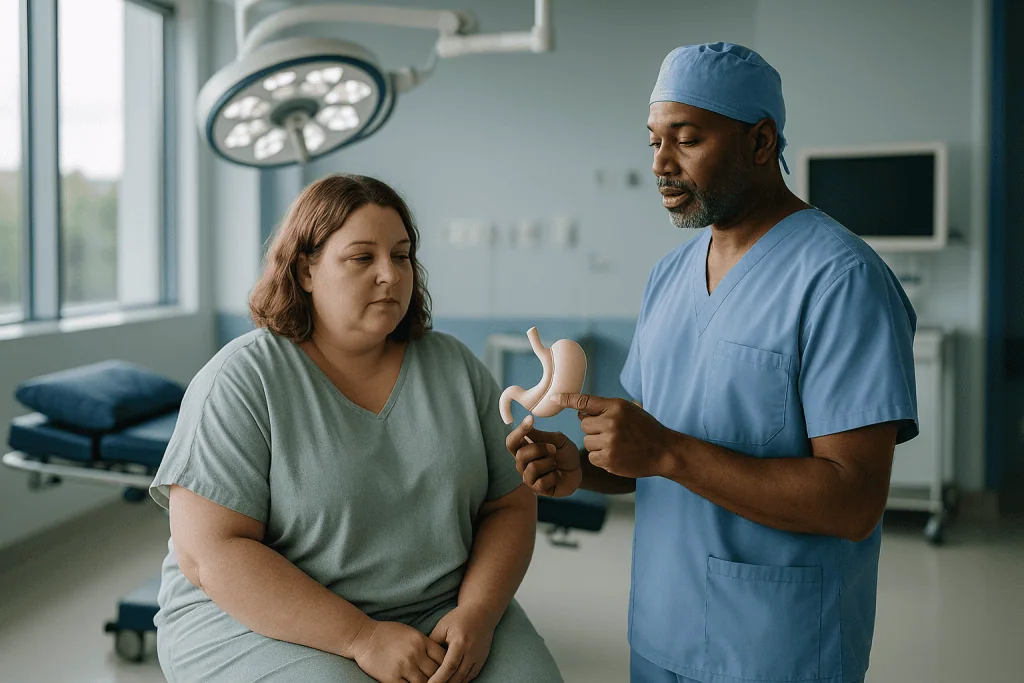
Nearly all sleeves are done laparoscopically, meaning through several small incisions with a camera and long instruments, rather than one large cut. Under general anesthesia, the surgeon frees the stomach from its attachments, places a sizing tube along the inner curve as a guide, then staples and divides the stomach alongside it. The detached portion is removed through one of the incisions. Unlike a gastric bypass, nothing is rerouted; food still travels the same path from esophagus to stomach to small intestine.
Two things change afterward. The obvious one is capacity: a much smaller stomach fills quickly, so meals become small by necessity. The less obvious one is hormonal. The portion of stomach that is removed produces much of the body’s ghrelin, a hormone that signals hunger to the brain. NIDDK notes that sleeve surgery affects gut hormones involved in appetite and blood sugar, which is part of why many people describe feeling less hungry rather than merely unable to eat as much.
The operation is permanent. Removed stomach does not grow back, and the sleeve cannot be reversed, though it can in some cases be converted to a different procedure later if problems arise. That permanence is one reason evaluation is thorough. A team is not asking whether you can tolerate a few days of surgery; it is asking whether a smaller stomach and a changed relationship with food will serve you for decades.
Who is usually a candidate for a gastric sleeve, and who is usually asked to wait
The profile that most often moves a team toward recommending surgery combines several features at once. A BMI in the ranges described by NIDDK and the NHS. One or more weight-related conditions that have persisted despite treatment. A documented history of structured attempts at weight loss through diet, physical activity and sometimes medication. No medical problem that would make general anesthesia unusually dangerous. A realistic understanding of the operation. And, in the NHS’s phrasing, a commitment to long-term follow-up, including the changes in eating and the vitamin and mineral supplementation that come with a permanently smaller stomach.
NIDDK also notes that surgery may be an option for some adolescents with severe obesity, though pediatric pathways involve specialized teams, growth considerations and family involvement that differ from adult programs.
“Asked to wait” is not the same as “turned down,” and it is the more common outcome when something is unresolved. Typical reasons a team defers rather than declines include:
- Blood sugar, blood pressure or other conditions that are not yet stable enough for a safe operation.
- Active smoking or nicotine use, which impairs healing along the staple line and raises anesthetic risk.
- An untreated eating disorder, active substance use, or a mental health condition not currently well supported.
- Untreated severe reflux or findings on endoscopy that need further work-up first.
- Pregnancy, or plans for pregnancy in the near future.
- Simply not having completed the preparatory program the team considers essential.
Most of these are fixable, and programs generally say so plainly. A person told to stabilize blood pressure, stop smoking or complete a nutrition course is being given a route back to the table, not shown the door. The team’s job is to make the operation as safe as it can be on the day it happens.
What disqualifies you from a gastric sleeve?
Hard, permanent disqualification is rarer than people fear. Most programs distinguish between conditions that make surgery inadvisable for now and the smaller group of situations where the balance of risk and benefit is unlikely to tip in favor of any bariatric operation.
In the second group sit problems that make general anesthesia or major abdominal surgery dangerous regardless of the potential gains: severe heart failure or advanced lung disease that has not been optimized, uncontrolled bleeding disorders, active cancer under treatment, and end-stage organ disease outside of a coordinated transplant pathway. Severe, untreated psychiatric illness that prevents someone from understanding or consenting to the procedure also belongs here, as does ongoing dependence on alcohol or drugs. The NHS summarizes the safety principle simply: a person must be generally fit enough to have anesthesia and surgery.
A separate category is not about surgery in general but about the sleeve specifically. Because the sleeve narrows the stomach and can raise pressure inside it, Mayo Clinic lists gastroesophageal reflux disease, or GERD, the chronic backward flow of stomach acid into the esophagus, among the operation’s longer-term risks. People with severe existing reflux, or with Barrett’s esophagus, a change in the lining of the lower esophagus caused by long-standing acid exposure, are often steered toward a gastric bypass instead, which tends to relieve reflux rather than aggravate it. That is not disqualification from surgery; it is a different recommendation.
Then there are the modifiable factors covered in the previous section: smoking, unstable diabetes, an eating disorder in its active phase, or a missing piece of the preparatory work. These account for most “no” letters, and nearly all of them come with a path forward.
What almost never disqualifies anyone is a number that is a point or two shy of a threshold. Teams deliberate on the whole picture, and the decision about whether to operate, defer or redirect always rests with the surgeons and clinicians who have examined you.
Is it hard to get approved for a gastric sleeve? Inside the evaluation
“Hard” is the wrong frame. “Thorough” is closer. The evaluation exists because the operation is irreversible and because the people who do best are the ones whose medical and practical groundwork was laid before the first incision. Programs vary, and payers in the United States often add their own documentation requirements, but the clinical components are remarkably consistent across guideline-based services.
A surgical consultation reviews your history, examines you and discusses which operation fits. Blood work checks blood sugar, iron, vitamin levels, kidney and liver function, and clotting. Many programs arrange an upper endoscopy, a camera examination of the esophagus and stomach, to look for reflux damage, ulcers or infection with Helicobacter pylori, a stomach bacterium that is usually treated before surgery. A sleep study is common when apnea is suspected, because untreated apnea complicates anesthesia. Heart and lung assessment scales with age and existing conditions.
Alongside the medical work runs the dietetic and psychological assessment: a dietitian reviews how you eat now and what the post-surgery diet demands; a psychologist or similar clinician screens for depression, binge eating and other patterns that benefit from support before and after surgery. The NHS frames the goal as ensuring people are ready for the lifelong changes involved, not as a test to pass.
The pathway takes time. Between appointments, test results and preparatory sessions, people commonly describe it as a process of months rather than weeks, and specific durations depend on the program and on what the tests reveal. A finding on endoscopy or an abnormal result adds steps.
Two things make the process feel less like an obstacle course. Ask at the outset for the full list of components so nothing surprises you, and treat each result as information the team is gathering to protect you, because that is what it is.
Reflux, diabetes and other conditions that shift the sleeve gastrectomy eligibility calculation
Some conditions make a team more inclined to recommend surgery; others make the sleeve specifically a less attractive choice; a few do both. Understanding which is which explains a lot of otherwise puzzling advice.
Type 2 diabetes is the clearest example of a condition that strengthens the case. NIDDK notes that metabolic surgery can improve blood sugar control and that some people with a BMI of 30 or more and hard-to-control diabetes may be considered. The mechanism is partly weight loss and partly the hormonal shift described earlier. It is also why diabetes management is reviewed closely before surgery: blood sugar that swings widely raises the risk of infection and slow healing, so the team may want it steadier first.
Reflux runs the other way. The sleeve turns a roomy stomach into a high-pressure tube, and Mayo Clinic lists GERD among its long-term risks. Mild heartburn does not usually change the plan, but frequent symptoms, a large hiatal hernia (part of the stomach pushing up through the diaphragm), or inflammation seen on endoscopy may lead a team to recommend repairing the hernia at the same time or to favor a bypass instead.
Sleep apnea strengthens the case for surgery yet complicates it. Weight loss often improves the condition, but untreated apnea makes anesthesia riskier, so people are typically established on treatment first. Fatty liver disease works similarly: a strong reason to act, and a reason for the anesthetist to look carefully at liver function beforehand.
Kidney disease, prior abdominal operations with scarring, inflammatory bowel disease and conditions requiring long-term anti-inflammatory painkillers, which irritate the stomach lining, each prompt a specific conversation. None automatically ends the process. Each changes what the team wants to know, and sometimes which operation it puts forward.
The psychological and eating-pattern assessment, and why it is not a judgment
Nothing in the pathway produces more anxiety than the psychology appointment, and nothing is more widely misunderstood. Its purpose is not to decide whether you deserve surgery. It is to identify anything that would make the years afterward harder than they need to be, and to arrange support for it.
The clinician typically asks about mood, anxiety, past trauma, alcohol and substance use, and how you eat, with particular attention to binge eating (consuming large amounts in a short time with a sense of loss of control) and night eating. These matter for practical reasons. A sleeve physically limits volume at any one sitting, but it does not prevent frequent grazing on soft, calorie-dense foods, and it does not treat the distress that can drive eating. People whose eating is closely tied to emotion often benefit from working on that before surgery, when there is time and no post-operative pressure.
Alcohol comes up for a second reason. After bariatric surgery, alcohol is absorbed faster and peaks higher, and Mayo Clinic and NIDDK both flag changes in alcohol tolerance as something to expect. A history of problem drinking does not automatically rule out surgery, but the team will want to understand it and plan around it.
The assessment also checks the plainest thing of all: that you understand what the operation does and does not do, and that you have people around you for the first weeks. Someone facing surgery alone, in the middle of a crisis, may be asked to wait until circumstances are steadier, not because they are unsuitable but because timing affects safety.
Almost everyone gets through this stage. Where a concern emerges, the usual response is a referral for support and a planned return, with the decision about timing resting with the treating team.
Gastric sleeve vs bypass: do you lose weight faster with one?
The comparison people most want settled is the one the evidence answers least cleanly. Both the sleeve and the Roux-en-Y gastric bypass, an operation that creates a small stomach pouch and reroutes the small intestine so food bypasses most of the stomach and the first section of intestine, produce substantial weight loss and improvement in weight-related conditions. NIDDK notes that gastric bypass may lead to greater weight loss than the sleeve for some people and has stronger effects on gut hormones, while the sleeve is a technically simpler operation with no rerouting. Neither is universally faster or better; trials comparing them show overlapping results, and the differences that do exist are modest at the population level and unpredictable for any individual.
| Feature | Sleeve gastrectomy | Roux-en-Y gastric bypass |
|---|---|---|
| What changes | Around 80 percent of stomach removed; digestive path unchanged | Small pouch created; small intestine rerouted |
| Reversibility | Not reversible | Technically reversible, rarely done |
| Effect on reflux | Can worsen GERD | Usually improves GERD |
| Nutrient absorption | Less affected; lifelong supplements still needed | More affected; closer monitoring for deficiencies |
| Dumping syndrome (rapid emptying causing nausea, cramps, sweating) | Uncommon | More common |
| Typical steer | Often first choice when reflux is not a problem | Often favored with severe reflux or type 2 diabetes |
What tips the choice, in practice, is the fit described throughout this article: reflux history, diabetes, prior abdominal surgery, medication needs and the surgeon’s judgment about your anatomy. The team may present one operation as the better match for you, and that reasoning is worth hearing in full.
Alternatives the team may discuss before or instead of surgery
Every guideline-based program treats surgery as one option within a range, and the NHS states plainly that people are generally expected to have tried other methods first. Understanding those methods helps you read your own pathway.
Structured lifestyle programs remain the foundation. These combine dietary change, physical activity and behavioral support, usually with a dietitian or trained coach, over an extended period. On their own they produce modest average weight loss, and NIDDK is candid that many people regain weight over time, which is part of why surgery exists as an option for severe obesity. They still matter, because the habits built in a program are the same ones that make life after a sleeve work.
Prescription weight-management medicines are a second tier. The class most discussed in recent years mimics gut hormones that regulate appetite and blood sugar, slowing stomach emptying and reducing hunger signals to the brain. Others act on appetite pathways in the brain or reduce fat absorption. Whether a medicine is appropriate, which one, and for how long are decisions for the prescribing clinician, who weighs your other conditions, side effects and how you respond over the first months. Some programs use medication before surgery; some people use it instead; some need it afterward if weight returns.
Endoscopic procedures, such as a temporary balloon placed in the stomach, and other operations, including the bypass and the less common duodenal switch, complete the menu. An adjustable gastric band, once widespread, is now less often offered because of longer-term problems, a shift NIDDK describes.
Asking your team why they favor surgery over these alternatives, or the reverse, is not second-guessing them. It is the conversation the evaluation is designed to have.
What the following days and weeks usually look like after a sleeve
Eligibility conversations turn practical the moment someone asks how long recovery takes, and it helps to know the outline before deciding. The NHS advises that a hospital stay of one to three days is usual after weight-loss surgery, and that most people need around four to six weeks to recover before returning to normal activities. MedlinePlus similarly describes a short stay of about one to two days for a laparoscopic sleeve, with a return to usual activities over the following weeks. Those are typical ranges, not promises; your team will give you a plan based on how the operation went.
In hospital, the early hours are about walking, breathing exercises and sipping. Nausea is common as the swollen new stomach settles. Pain is usually managed with medicines chosen by the team, and getting up to move soon after surgery is part of preventing blood clots.
Eating rebuilds in stages. The NHS outlines a progression from liquids only in the first weeks, to pureed food, then soft food, and finally regular textures, typically over about six weeks. Portions are tiny, meals are slow, and drinking with food is discouraged because liquid fills the sleeve before nutrition does. A dietitian guides each step.
Supplements begin early and continue for life, because a smaller stomach reduces intake of iron, vitamin B12, calcium and other nutrients. Blood tests at intervals check levels. The NHS also advises avoiding pregnancy for roughly 12 to 18 months after surgery, while weight is changing rapidly and nutrition is being stabilized.
Follow-up appointments in the first year are frequent and then settle into a long-term rhythm. This is the commitment the eligibility criteria kept mentioning, and it is where the operation’s benefits are protected or lost.
Risks the team weighs against benefit
Any honest eligibility discussion includes the ways a sleeve can go wrong, because those risks are precisely what the pre-operative assessment tries to minimize. Mayo Clinic groups them into short-term surgical risks and longer-term consequences.
In the short term, the concerns are those of any major laparoscopic abdominal operation: bleeding, infection, adverse reactions to anesthesia, blood clots in the legs or lungs, and breathing problems, particularly in people with sleep apnea or lung disease. Specific to the sleeve is a leak along the staple line, where stomach contents escape into the abdomen. It is uncommon but serious, and it is the reason teams are strict about smoking, blood sugar control and the early warning signs covered in the final section.
Longer term, Mayo Clinic lists gastroesophageal reflux, narrowing of the sleeve (a stricture), bowel obstruction, hernias at incision sites, gallstones as weight falls quickly, low blood sugar episodes, malnutrition and vomiting. Vitamin and mineral deficiencies develop quietly when supplements lapse, which is why follow-up blood tests are not optional extras.
Weight regain deserves plain mention. A sleeve stretches somewhat over years, and habits reassert themselves under stress. Some people regain a portion of what they lost; a smaller number are later offered conversion to a bypass or another procedure. Programs that continue dietetic and psychological support over the long run exist because the operation changes the stomach, not the whole of life.
Against these sit the benefits documented in mainstream sources: substantial weight loss for most people, improvement or remission of type 2 diabetes, sleep apnea and high blood pressure in many, and better mobility and quality of life. Whether that balance favors surgery for you is the judgment the team is making when it weighs everything beyond the BMI.
What people often get wrong about sleeve gastrectomy eligibility
Some myths travel faster than guidelines. A few worth retiring:
“You have to fail at dieting to qualify.” Programs ask about previous attempts to understand your history and to be sure you have had access to structured support, not to make you prove failure. The NHS language is about having tried other methods; it is not a scorecard.
“If your BMI is under 40 you have no chance.” Both NIDDK and the NHS describe eligibility from a BMI of 35 with related conditions, and both describe circumstances in which people from 30 upward may be assessed. The lower bands lead to an evaluation, not a refusal.
“Surgery is the easy way out.” The pathway takes months, the diet afterward is restrictive and staged, supplements are lifelong, and follow-up continues for years. Severe obesity is a chronic disease with strong biological drivers, and choosing an effective treatment for it is not a shortcut.
“The sleeve is always the safer, simpler option, so everyone should start there.” It is technically simpler than a bypass, but for someone with severe reflux or Barrett’s esophagus it may be the wrong operation. Simplicity in the operating room is not the same as the right fit for a person.
“You lose weight and then you are done.” Eating patterns, alcohol tolerance, mental health and nutrition all change after surgery. People who stay connected to their team tend to catch problems early; those who disappear from follow-up are the ones clinicians worry about most.
“Getting turned down means never.” Most deferrals cite modifiable reasons and come with a route back. Ask what would need to change, and by when.
Questions to ask your care team
A consultation goes better when you arrive with questions that draw out reasoning rather than yes-or-no answers. These tend to open the most useful conversations:
- Based on my BMI, my medical conditions and my history, do I fall within the range your program considers for surgery, and which parts of my picture strengthen or weaken the case?
- Why are you recommending a sleeve rather than a bypass or another option, and would my reflux history or diabetes change that?
- What tests will I have before a decision is made, and what results would lead you to ask me to wait?
- Are there things I should address now, such as smoking, blood sugar control or sleep apnea treatment, that would make the operation safer?
- What does the preparatory program involve, how long does it usually run in your service, and who will I see along the way?
- What is the typical hospital stay and recovery period in your program, and what does the staged diet look like week by week?
- Which supplements will I need for life, how often will my blood be tested, and what happens if a deficiency develops?
- How does your team support people who regain weight or develop reflux years later?
- What are the warning signs in the first weeks that mean I should call immediately?
- If I am asked to wait or am not offered surgery, what alternatives will you help me pursue, and can I be reassessed later?
Write the answers down, or bring someone who will. The team makes the final recommendation, and it should be able to explain every step of how it got there.
When to call your doctor
Before surgery, contact the team promptly if a new symptom appears during the evaluation period: chest pain or pressure, breathlessness at rest, fainting, sudden severe heartburn, black or bloody stools, unexplained weight loss, or a change in mood that feels unmanageable. These may alter the plan and are better known before an anesthetic than after.
After a sleeve gastrectomy, some discomfort, fatigue and nausea are expected. Certain signs are not. Mayo Clinic and MedlinePlus advise seeking urgent care for symptoms that may indicate a staple-line leak, bleeding, a blood clot or infection. Call your surgical team, or seek emergency care if they cannot be reached, for any of the following:
- Fever, especially with chills or a racing heart
- Severe or worsening abdominal pain, or pain spreading to the shoulder
- Persistent vomiting, or inability to keep down liquids
- Shortness of breath, chest pain, or a new cough
- Swelling, pain or warmth in one leg
- Redness, spreading warmth, or pus at an incision
- Vomiting blood, or black or bloody stools
- Dizziness, fainting, or passing very little urine
In the months and years afterward, report frequent heartburn, food getting stuck, tingling or numbness in hands and feet, unusual tiredness or hair loss, and any return of binge eating, heavy drinking or low mood. Each has a treatable cause, and each is easier to manage early. Your treating team remains the right place for every decision about your care, before and long after the operation.
Frequently asked questions
What disqualifies you from gastric sleeve surgery?
Permanent disqualification is uncommon and usually involves conditions that make anesthesia or major surgery unsafe, such as unstable severe heart or lung disease, uncontrolled bleeding disorders, active cancer treatment, or untreated severe psychiatric illness or substance dependence. Far more often, people are asked to wait while smoking, blood sugar or an eating disorder is addressed. Severe reflux may redirect the recommendation toward a bypass rather than rule out surgery.
Can I get a gastric sleeve at 200 pounds?
It depends entirely on your height and health conditions. Using the CDC formula, 200 pounds is a BMI of about 39 at 5 ft 0 in, about 34 at 5 ft 4 in and about 29 at 5 ft 10 in. Shorter people at that weight with a related condition such as type 2 diabetes may fall within the ranges NIDDK and the NHS describe; taller people generally would not, and the team decides case by case.
Is it hard to get approved for a gastric sleeve?
The process is thorough rather than adversarial. Expect a surgical consultation, blood tests, often an endoscopy and a sleep study, and dietetic and psychological assessments, spread over months. Most people who meet the BMI and health-condition thresholds and complete the preparatory steps are offered surgery or a clear plan toward it. Insurance documentation requirements in the United States can add steps but do not change the clinical criteria.
Do you lose weight faster with a gastric sleeve or bypass?
Neither operation is reliably faster for an individual. NIDDK notes that gastric bypass may produce greater weight loss for some people and has stronger effects on gut hormones, while the sleeve is technically simpler and does not reroute the intestine. Trial results overlap considerably. Teams usually choose based on fit, particularly reflux history and diabetes, rather than on speed of weight loss.
What are the basic gastric sleeve requirements for adults?
Guideline-based programs generally look for a BMI of 40 or more, or 35 or more with a weight-related condition, along with previous structured attempts at weight loss, fitness for anesthesia and a commitment to lifelong follow-up. The NHS also notes that people with a BMI of 30 to 35 and recent-onset type 2 diabetes, or people of Asian family background at lower BMIs, may be assessed. Each program confirms its own criteria.
Does acid reflux stop me from having a sleeve gastrectomy?
Mild heartburn usually does not, but frequent or severe reflux changes the conversation. Mayo Clinic lists GERD among the sleeve’s long-term risks because the narrowed stomach raises internal pressure. Teams commonly arrange an endoscopy, may repair a hiatal hernia during surgery, or may recommend a gastric bypass instead, which tends to improve reflux. The choice rests with the surgical team after reviewing your findings.
How long does it take to recover from a gastric sleeve?
The NHS describes a usual hospital stay of one to three days and around four to six weeks before returning to normal activities, with MedlinePlus giving similar ranges for laparoscopic sleeve surgery. Food progresses from liquids to pureed, soft and then regular textures over roughly six weeks. These are typical ranges, not guarantees, and your team will adjust the plan to how your recovery is going.
Can a gastric sleeve be reversed?
No. The removed portion of the stomach, around 80 percent according to Mayo Clinic, cannot be restored, so the sleeve is permanent. In some situations, such as severe reflux or significant weight regain, a sleeve can later be converted to a gastric bypass or another procedure. Permanence is one reason the eligibility evaluation is thorough and why teams want reflux and eating patterns understood beforehand.
Will I need to take supplements for life after a sleeve?
Yes. A much smaller stomach reduces intake of nutrients including iron, vitamin B12, calcium and vitamin D, and NIDDK and the NHS both describe lifelong supplementation and regular blood tests as standard after bariatric surgery. Which supplements, in what form and how often you are tested are decided by your treating team. Lapsed supplements are a common cause of deficiencies that develop quietly years later.
Can teenagers have sleeve gastrectomy?
NIDDK notes that metabolic and bariatric surgery may be an option for some adolescents with severe obesity, typically when weight-related conditions are already present. Pediatric pathways run through specialized programs that consider growth, development, family support and readiness, and involve careful preparation and long-term follow-up. Whether surgery is appropriate for a particular young person is a decision for that specialist team together with the family.
References
- NIDDK – Potential Candidates for Metabolic and Bariatric Surgery
- NIDDK – Types of Metabolic and Bariatric Surgery
- NHS – Weight loss surgery: Who can have it
- MedlinePlus – Vertical sleeve gastrectomy
This article is for general information only and is not a substitute for professional medical advice. Please consult a qualified doctor about your individual situation.

Planning This Treatment in Turkey
Our full guide for international patients: techniques, hospital stay, recovery and cost.
More from the Blog
When a Sleeve Gastrectomy Needs Revision: Re-Sleeve, Conversion to Bypass and Why
Sleeve gastrectomy revision options include re-sleeving a stretched stomach, converting the sleeve to a Roux-en-Y gastric bypass, which is usually favored when acid reflux…

Who May Be a Candidate for a Gastric Balloon? What the Bariatric Team Evaluates First
Gastric balloon candidates are usually adults whose body mass index falls roughly between 30 and 40, who have tried structured diet and activity changes…
Is Obesity a Willpower Problem? Common Myths and What Medicine Actually Says
No. Mainstream medical evidence does not treat obesity as a willpower problem. Body weight is regulated by genes, appetite hormones, sleep, medicines, health conditions…

Metabolic Syndrome Myths: Why It Is Not Only About Weight and Not Only About Sugar
Metabolic syndrome is a cluster of at least three linked measures: a large waist, raised blood pressure, high triglycerides, low HDL cholesterol and raised…

Who May Be Considered for Gastric Banding Today? Where the Adjustable Band Still Fits
Adults may be considered for adjustable gastric banding when body mass index is 40 or higher, or 35 to 39.9 with a weight-related condition…

Who Is Assessed for Medical Obesity Treatment? Health Factors Doctors Weigh Beyond BMI
Doctors assess adults for medical obesity treatment when body mass index reaches 30, or 25 to 29.9 alongside a weight-related condition such as type…