

Knee Pain Causes: Why Knees Hurt (and Why It Differs in Women)
Key Takeaways
- Patellofemoral pain, which flares on stairs and after long sitting, is the leading cause of front-of-knee pain in younger women and usually stems from hip and thigh muscle imbalance rather than joint damage.
- Female athletes tear the ACL at higher rates than males in the same sports, most often without contact, and neuromuscular warm-up programs have been shown to lower that risk.
- Morning stiffness that eases within about thirty minutes suggests osteoarthritis, while stiffness lasting more than an hour and involving several joints points toward inflammatory arthritis.
- A hot, red, rapidly swollen knee, especially with fever, can signal joint infection and requires same-day medical evaluation.
- Gout becomes far more common in women after menopause and can present as a sudden, intensely painful swollen knee overnight.
- Complete rest weakens the quadriceps within days; guidelines favor modifying aggravating activities while continuing strengthening and low-impact exercise.
Knee pain in women most often comes from patellofemoral (front-of-knee) pain, osteoarthritis, tendon or bursa irritation, meniscus wear, or ligament injury. Women see certain problems more often than men, including kneecap-tracking pain and ACL tears, likely due to differences in hip and knee alignment, muscle balance, and possibly hormones. Sudden swelling, inability to bear weight, fever, or a locked knee warrant prompt medical evaluation.
It usually starts on the stairs. Not the way up, oddly, but the way down, when the kneecap seems to grind against something and a dull ache settles behind it for the rest of the evening. There was no fall, no twist on a soccer field, no dramatic moment to point to. Just a knee that, one week, started making itself known.
That story is remarkably common, and it is told disproportionately by women. In clinics, front-of-knee pain in a teenage runner, a swollen joint in a woman in her fifties, and a torn ligament in a college basketball player look like three unrelated problems. They are not. A handful of anatomical, hormonal and lifestyle threads run through all of them.
This guide pulls on those threads, one at a time, and tries to be honest about where the evidence is solid and where it is still a working theory.
What causes knee pain in females without any injury?
Most knee pain never involves a memorable injury. The knee is a hinge that carries the whole body across roughly a million steps a year for an active person, and it fails the way any hardworking mechanism fails: gradually, at the points of greatest friction.
The usual suspects when there is no trauma fall into a few groups. Patellofemoral pain, where the kneecap does not glide cleanly in its groove, is the leading cause of front-of-knee ache in younger and middle-aged women. Osteoarthritis, the slow thinning of the cartilage that cushions the joint, dominates after fifty. Tendons and bursae, the small fluid sacs that reduce friction, become irritated with repetitive kneeling, squatting or a sudden jump in activity. Meniscus tears in older adults often happen with nothing more dramatic than rising from a chair, because the cartilage has already worn thin.
Less common but important are inflammatory conditions such as rheumatoid arthritis, gout, and infection, which typically announce themselves with warmth, redness and swelling rather than a simple ache. Referred pain from the hip or lower back can also land in the knee, which is why a good clinician examines the joints above and below.
The pattern matters more than the label. Pain with stairs and sitting points one way; morning stiffness that eases in an hour points another; a hot, swollen knee overnight points somewhere urgent. The sections that follow sort those patterns out.
Why do women's knees hurt more often than men's?
Women report knee pain more often than men across almost every age group, and several factors likely contribute. Start with the skeleton. A wider pelvis, on average, changes the angle at which the thigh bone meets the shin, sometimes called the Q-angle. A larger angle can pull the kneecap slightly outward as the quadriceps contract, increasing pressure on one side of its cartilage.
Muscle balance is the second piece. Studies of movement patterns show that women, on average, land from jumps with the knees more inward and rely more on the quadriceps and less on the hamstrings and hip muscles to control the leg. That combination loads the front of the knee and the anterior cruciate ligament in ways that matter over thousands of repetitions.
The third piece is joint laxity. Women tend to have more ligament looseness, which may allow slightly more movement inside the joint. Whether hormones drive this, and how much it affects injury risk, is still an active research question rather than a settled fact.
Then there is the simple matter of who lives longer. Osteoarthritis is strongly age-related, and women outnumber men in the age groups where it is most common. Knee osteoarthritis is also more prevalent and often more severe in women in population studies, though the reasons remain incompletely understood.
None of these differences is destiny. They tilt the odds, and most of them respond to strengthening and movement retraining.
Patellofemoral pain: why the front of the knee aches on stairs
Picture the kneecap as a small boat riding in a shallow channel on the end of the thigh bone. When the surrounding muscles pull evenly, it glides straight. When the outer thigh muscles overpower the inner, or the hip muscles let the thigh rotate inward, the boat drifts against the channel wall. Repeat that a few thousand times and the cartilage underneath gets sore.
That is patellofemoral pain syndrome, and it explains the classic complaint: a dull ache around or behind the kneecap that flares on stairs, squats, and after sitting through a long movie. Some people notice grinding or a feeling that the knee might give way, though true instability is rare. Swelling is usually absent or minimal.
It is particularly common in adolescent girls and young women, especially with running, jumping sports, or a rapid increase in training. Cleveland Clinic notes that it is sometimes called runner’s knee for that reason, though plenty of people who never run develop it.
The encouraging part is that patellofemoral pain is fundamentally a mechanics problem, and mechanics can be retrained. Structured strengthening of the hip abductors and quadriceps, adjusting training volume, and addressing footwear or foot alignment form the backbone of care. Imaging is often unremarkable and is not usually needed to make the diagnosis. Recovery tends to be measured in weeks to months rather than days, and consistency with exercises predicts results better than any single technique.
Is knee pain a sign of arthritis? Osteoarthritis explained
Osteoarthritis is the most common form of arthritis and the leading cause of chronic knee pain in adults over fifty. The cartilage that caps the ends of the bones gradually roughens and thins, the bone underneath responds by thickening and forming spurs, and the joint lining can become inflamed. The result is pain with activity, stiffness after rest that eases within about thirty minutes, and a joint that may feel swollen or creak with movement.
Women are more likely than men to develop knee osteoarthritis, and it often affects both knees. Risk rises with age, previous knee injury, and body weight, because the knee absorbs forces well above body weight during stairs and squats. Genetics play a role too; the condition runs in families.
Two myths deserve retiring. First, osteoarthritis is not simply wear and tear that exercise makes worse. Regular, moderate movement improves symptoms and function in most people; inactivity weakens the muscles that protect the joint. Second, an X-ray showing arthritis does not dictate how much pain someone feels. Plenty of people have significant changes on imaging and mild symptoms, and vice versa.
The NIH’s arthritis institute lists staying active, strengthening the muscles around the joint, maintaining a comfortable weight, and using supportive footwear as first-line approaches. Medications, when used, are chosen by a clinician based on the individual’s other health conditions, and injections or surgery are reserved for cases where those measures are not enough.
What disease starts with knee pain? Inflammatory and systemic causes
Occasionally a sore knee is the opening line of a story about the whole body. Rheumatoid arthritis, an autoimmune condition in which the immune system attacks the joint lining, affects women roughly two to three times as often as men according to the NIH. It typically involves several joints symmetrically, with morning stiffness lasting well over an hour, fatigue, and sometimes low-grade fever. The knee can be an early site.
Gout, a buildup of uric acid crystals, is more common in men but rises sharply in women after menopause. It produces an abruptly hot, red, exquisitely tender joint, often overnight. The big toe is the classic location, but the knee is a frequent second.
Psoriatic arthritis can appear years after skin psoriasis, or occasionally before it. Reactive arthritis follows certain infections. Lupus, more common in women, frequently causes joint pain. Lyme disease, in regions where it occurs, can present as a single swollen knee weeks after an unnoticed tick bite.
Then there is septic arthritis, an infection inside the joint. It is uncommon but a true emergency: a hot, swollen, intensely painful knee, often with fever and an inability to move the joint. Untreated, it can destroy cartilage within days.
The thread connecting these is inflammation that does not behave like mechanical pain. Warmth, redness, swelling that arrives fast, stiffness that outlasts breakfast, other joints joining in, or symptoms elsewhere in the body all shift the conversation from mechanics to medicine.
Why are ACL tears more common in female athletes?
Ask an athletic trainer at a girls’ soccer or basketball program what injury keeps them awake, and the anterior cruciate ligament comes up quickly. The ACL runs diagonally through the center of the knee and stops the shin from sliding forward or rotating too far. Female athletes tear it at a higher rate than male athletes in the same sports, a difference Mayo Clinic and others attribute to a mix of anatomy, muscle control and possibly hormones.
Most ACL tears in women are non-contact. The athlete plants a foot to change direction or lands from a jump, the knee buckles inward, and there is a pop, rapid swelling within hours, and a sense that the knee will not hold. Nobody touched them.
The mechanics behind that moment are the same ones discussed earlier: landing with straighter knees and more inward collapse, greater reliance on the quadriceps over the hamstrings, and a narrower notch in the femur through which the ligament passes. Each of these is more common, on average, in women.
This is also the area with the strongest prevention evidence. Neuromuscular training programs, which teach athletes to land softly with bent knees and hips and strengthen the hamstrings and hip muscles, have been shown to reduce ACL injury rates in female athletes when done consistently as part of warm-ups. The programs take about fifteen minutes and require no equipment. For a young athlete, that is arguably the most valuable fifteen minutes of practice.
Do hormones, pregnancy or menopause affect knee pain?
This is where honesty about evidence matters most, because the internet is full of confident claims. Here is what is reasonably established and what is not.
Estrogen receptors exist in ligaments, cartilage and muscle, so a biological mechanism for hormonal influence is plausible. Some studies suggest ACL injury risk fluctuates across the menstrual cycle, with higher risk in the days around ovulation when estrogen peaks. Other studies find no clear pattern. The honest summary is that a hormonal effect on ligament laxity is possible but has not been confirmed strongly enough to guide training decisions.
Pregnancy brings changes that are better understood. Body weight rises, the center of gravity shifts forward, and hormones that loosen the pelvic ligaments for birth also loosen other joints somewhat. Knee discomfort in later pregnancy is common and usually resolves after delivery. It is a mechanical load issue more than a joint disease.
Menopause is where the arthritis picture changes. Rates of hand and knee osteoarthritis climb in women after menopause, and gout, previously rare in women, becomes far more common. Whether falling estrogen directly accelerates cartilage loss or whether age and body composition changes explain the trend is debated. Hormone therapy has not been shown to reliably prevent or treat osteoarthritis, and it is not prescribed for that purpose.
The practical takeaway is that hormones set some of the background conditions, but the modifiable factors remain muscle strength, movement quality, activity level and weight.
Where does it hurt? A map of knee pain by location
Location is one of the most useful clues a clinician has, and it is worth knowing before an appointment. Pressing around the knee with a finger and noticing exactly where it is tender narrows the possibilities considerably.
| Where it hurts | Common causes | Typical pattern |
|---|---|---|
| Front, around or behind the kneecap | Patellofemoral pain, patellar tendinopathy, kneecap arthritis | Worse on stairs, squats, after sitting; grinding sensation |
| Inner (medial) side | Medial meniscus tear, MCL sprain, pes anserine bursitis, osteoarthritis | Pain with twisting, tenderness along joint line, possible catching |
| Outer (lateral) side | Iliotibial band syndrome, lateral meniscus tear, LCL sprain | Sharp pain with running, especially downhill or after a set distance |
| Back of the knee | Baker’s cyst, hamstring tendinopathy, meniscus tear | Fullness or tightness, worse with full bending; cyst may be felt as a lump |
| Below the kneecap | Patellar tendinopathy, Osgood-Schlatter in adolescents, infrapatellar bursitis | Pain with jumping or kneeling, tender bump on the shin bone |
| Whole knee, diffuse | Osteoarthritis, inflammatory arthritis, infection | Swelling, warmth, stiffness; may involve other joints |
A few cautions. Pain can shift as the body compensates, and two problems can coexist; a woman with kneecap pain may also have a Baker’s cyst from underlying arthritis. Pain that seems to come from the knee but cannot be reproduced by pressing on it may originate in the hip or lower back, a pattern well known in orthopedic practice. Children and adolescents with knee pain deserve a hip examination for exactly this reason.
Knee pain at night or after sitting: what the pattern tells you
Timing is the second great clue. The knee behaves differently depending on what is wrong with it, and paying attention to when it complains is genuinely diagnostic.
Pain that appears after prolonged sitting and eases once you start walking, sometimes called the theater sign, is a hallmark of patellofemoral pain. The kneecap sits compressed against the femur with the knee bent, and standing up releases it.
Stiffness first thing in the morning that loosens within about half an hour is typical of osteoarthritis. Stiffness lasting more than an hour, especially with several joints involved, leans toward inflammatory arthritis.
Pain that builds through the day with activity and settles with rest is the classic mechanical pattern of osteoarthritis or tendon overload. Pain that wakes you at night, or persists at rest regardless of activity, deserves more attention. Advanced arthritis can do this, but so can inflammation, infection, and, rarely, bone problems, so persistent rest pain is a reason to be examined rather than to wait.
Swelling that appears within an hour or two of a twist or fall often means bleeding inside the joint from a ligament tear or fracture. Swelling that develops over a day or more after activity points to irritation of the joint lining or a meniscus tear.
Locking, where the knee gets stuck and will not fully straighten, usually means a loose fragment of cartilage or meniscus is caught in the joint. Giving way, where the knee buckles, may reflect ligament damage or simply pain inhibiting the muscles. Both warrant assessment.
What kind of knee pain should I worry about? When to see a doctor
Most knee pain is not dangerous and improves over days to weeks with sensible activity modification. Some is not, and the difference is usually visible if you know what to look for.
Seek care urgently, the same day, if you cannot bear weight on the leg, the knee looks visibly deformed, there is a hot, red, swollen joint with or without fever, the pain came on suddenly and severely, the knee is locked and will not straighten, or there is numbness or coldness in the foot below. Mayo Clinic and the NHS list these as red flags because they can indicate fracture, dislocation, joint infection, or a serious ligament injury.
A second group of symptoms is less urgent but should still prompt an appointment within days: swelling that persists more than a few days, pain that has not improved after two to three weeks of rest and gentle activity, repeated episodes of giving way, an unexplained lump behind the knee, or knee pain accompanied by fatigue, rash, or pain in other joints.
One caution specific to swelling. A swollen, painful calf below a sore knee, especially after travel, surgery or immobility, can represent a blood clot rather than a knee problem and needs prompt evaluation.
Everything else, the ache on stairs or the stiffness after gardening, can reasonably be watched for a couple of weeks while you adjust activity. If it is not clearly improving by then, a clinician can examine the joint and decide whether imaging or a referral is needed. Waiting months with a knee that keeps swelling is the pattern most likely to lead to avoidable damage.
What to avoid when you have knee pain?
The instinct with a sore knee is to protect it completely, and that instinct is usually wrong. Total rest for more than a couple of days weakens the quadriceps quickly, and weak quadriceps are one of the strongest predictors of ongoing knee pain and progression of osteoarthritis. The goal is to avoid the specific things that aggravate, not movement itself.
Deep squats and lunges under load, especially with the knee drifting inward, compress the kneecap heavily and are worth pausing during a patellofemoral flare. Running downhill and descending long flights of stairs do the same. Kneeling on hard surfaces irritates the bursae at the front of the knee; gardeners and people who work on floors know this well.
Sudden increases in training volume are a leading cause of tendon problems. A common guideline in sports medicine is to raise weekly mileage or load gradually rather than in jumps, and to build in rest days.
Worn-out or unsupportive shoes change how the foot strikes the ground and how the knee lines up above it. High heels shift weight forward onto the front of the knee and shorten the calf muscles, which can aggravate kneecap pain when worn daily.
Ignoring persistent swelling is the mistake with the highest cost. A knee that keeps filling with fluid is telling you something inside is irritated or damaged, and pushing through it rarely ends well.
One last thing to avoid is self-diagnosis from imaging results. An MRI in a middle-aged adult almost always shows something, and many of those findings are incidental. Symptoms and examination, not pictures, should drive decisions.
What actually helps knee pain? What the evidence supports
Across the major guidelines, from the NHS to the NIH, the first-line advice for most knee pain is strikingly consistent and strikingly unglamorous: move, strengthen, and manage load. It works because it addresses the mechanics that caused the problem, not just the sensation.
Strengthening deserves top billing. The quadriceps act as the knee’s shock absorber, and the hip abductors and external rotators control whether the thigh rotates inward. Targeted exercise for both, done several times a week for at least six to twelve weeks, consistently reduces pain in patellofemoral syndrome and osteoarthritis in clinical trials. Physical therapists tailor these programs; the exercises themselves are simple.
Low-impact aerobic activity such as walking, cycling and swimming maintains fitness and joint nutrition without pounding. Cartilage has no blood supply and relies on movement to circulate the fluid that feeds it.
Weight matters for the load-bearing knee, and even modest reductions in body weight reduce pain and slow progression in osteoarthritis according to research summarized by the NIH. This is a mechanical fact, not a judgment, and it applies alongside strength work rather than instead of it.
Footwear with adequate cushioning and support, and in some cases shoe inserts, can improve alignment. Ice or heat can ease symptoms temporarily. Over-the-counter pain relievers can reduce discomfort while exercise does the structural work, but the choice and duration belong to a pharmacist or clinician who knows your other health conditions.
Injections and surgery have specific roles for specific problems, such as a mechanically locked knee or advanced arthritis, and are decisions made with an orthopedic specialist after conservative measures have had a fair trial.
How is knee pain diagnosed? What to expect at the appointment
A good knee assessment is mostly conversation and hands, not machines. Expect to be asked when the pain started, what makes it worse and better, whether the knee swells or locks, what you do for work and exercise, and whether other joints hurt. Bring the shoes you wear most; they carry evidence.
The examination involves watching you walk and squat, pressing along the joint lines and around the kneecap, checking how far the knee bends and straightens, and performing specific maneuvers that stress each ligament and the meniscus. The hip and lower back are usually checked as well, because they can refer pain to the knee.
Imaging is ordered when it will change management. X-rays show bone and the space between bones, which is enough to diagnose osteoarthritis and rule out fractures. MRI shows soft tissue, ligaments, meniscus and cartilage, and is reserved for suspected tears, unexplained swelling, or when surgery is being considered. Ultrasound can assess tendons, bursae and Baker’s cysts. Blood tests are used when inflammatory or infectious causes are suspected.
If the joint is swollen, a clinician may draw fluid with a needle. The appearance and laboratory analysis of that fluid can distinguish infection, gout, and inflammatory arthritis from mechanical irritation quickly, and removing fluid often relieves pain immediately.
Most patients leave a first appointment with a working diagnosis, a home exercise plan or a physical therapy referral, and a timeline for follow-up. That timeline is typically six to twelve weeks for mechanical problems, because tendons and muscles adapt slowly. Improvement by then is the expected course; lack of improvement is the signal to look deeper.
Frequently asked questions
What causes knee pain in females without any injury?
The most common causes are patellofemoral pain from kneecap mistracking, osteoarthritis, tendon or bursa irritation from repetitive kneeling or activity increases, and meniscus wear in older adults. Women are more prone to kneecap-related pain because of hip and knee alignment and muscle balance differences. Less commonly, inflammatory conditions such as rheumatoid arthritis or gout cause knee pain with warmth and swelling and no injury at all.
What disease starts with knee pain?
Several conditions can first appear as knee pain. Rheumatoid arthritis, psoriatic arthritis, lupus and gout may begin in the knee before other joints join in. Lyme disease can present as a single swollen knee weeks after a tick bite. Joint infection, though uncommon, starts with a hot, swollen, very painful knee. In adolescents, hip problems sometimes cause pain felt only in the knee, which is why the hip is examined too.
What kind of knee pain should I worry about?
Worry about pain with an inability to bear weight, visible deformity, a hot red swollen joint, fever, a knee locked and unable to straighten, or numbness below the knee. These need same-day care. Swelling lasting more than a few days, repeated giving way, pain at rest or at night, or pain not improving after two to three weeks should also be assessed by a clinician rather than watched further.
What to avoid when you have knee pain?
Avoid complete rest beyond a day or two, because quadriceps weakness worsens knee pain quickly. During flares, limit deep loaded squats, downhill running, long stair descents and kneeling on hard surfaces. Avoid sudden jumps in training volume, worn-out shoes and daily high heels. Most importantly, do not ignore a knee that keeps swelling, and do not self-diagnose from MRI findings, which often show incidental changes.
Why do women get more knee pain than men?
On average, women have a wider pelvis and a larger angle between thigh and shin, which can pull the kneecap outward. They also tend to land with knees more inward and rely more on quadriceps than hamstrings, loading the front of the knee and the ACL. Greater ligament laxity and longer life expectancy, which raises osteoarthritis exposure, add to the difference. Hormonal effects are plausible but not firmly established.
Does menopause cause knee pain?
Menopause is associated with rising rates of knee osteoarthritis and a sharp increase in gout among women, so knee pain does become more common after this transition. Whether falling estrogen directly accelerates cartilage loss or whether age and body composition changes explain most of the trend is still debated. Hormone therapy has not been shown to reliably prevent or treat joint disease and is not prescribed for that purpose.
Is knee pain in women a sign of arthritis?
It can be, particularly after fifty, when osteoarthritis becomes the leading cause of chronic knee pain and affects women more often than men. Clues include stiffness after rest that eases within about thirty minutes, pain that builds with activity, creaking, and mild swelling. In younger women, knee pain is far more likely to be patellofemoral pain or tendon irritation. A hot, swollen joint or prolonged morning stiffness suggests inflammatory arthritis and needs medical review.
Why does my knee hurt when I go down stairs?
Descending stairs compresses the kneecap against the thigh bone under high force while the knee bends and the quadriceps work hard to control the drop. If the kneecap tracks slightly off center, a pattern more common in women, the cartilage beneath it becomes irritated, producing the classic patellofemoral ache. Osteoarthritis of the kneecap joint causes the same symptom in older adults. Hip and quadriceps strengthening usually improves it over several weeks.
Can knee pain come from the hip or back?
Yes. Nerves that supply the hip and lower back also reach the knee, so problems in those areas can be felt as knee pain, sometimes with nothing tender to find in the knee itself. This is well recognized in adolescents with hip conditions and in adults with hip arthritis or spinal nerve irritation. If knee pain cannot be reproduced by pressing or moving the knee, the hip and back deserve examination.
How long does knee pain take to get better?
Mechanical knee pain from overuse or kneecap mistracking typically improves over six to twelve weeks with consistent strengthening and activity adjustment, because muscles and tendons adapt slowly. Simple sprains often settle within a few weeks. Osteoarthritis is long-term, but symptoms can improve substantially with exercise and weight management. If pain has not clearly improved after two to three weeks of sensible self-care, a clinician should assess it.
References
This article is for general information only and is not a substitute for professional medical advice. Please consult a qualified doctor about your individual situation.

More from the Blog
Shoulder, Elbow, Wrist or Hand: How Upper Limb Surgery Is Planned for Each Joint
Upper limb surgery covers operations on the shoulder, elbow, wrist and hand, from nerve releases and tendon repairs to fracture fixation and joint replacement.…
Life After Adult Reconstruction Surgery: Why High-Impact Sport Is Limited and What Replaces It
After adult reconstruction surgery, the orthopedic term for hip and knee replacement, most care teams advise a long-term shift away from running, jumping and…
How Foot Surgery Is Performed: Bunion Correction, Fusion and Tendon Repair Step by Step
Foot surgery is usually performed as a day procedure under a nerve block, spinal or general anesthetic. The surgeon makes one or more small…
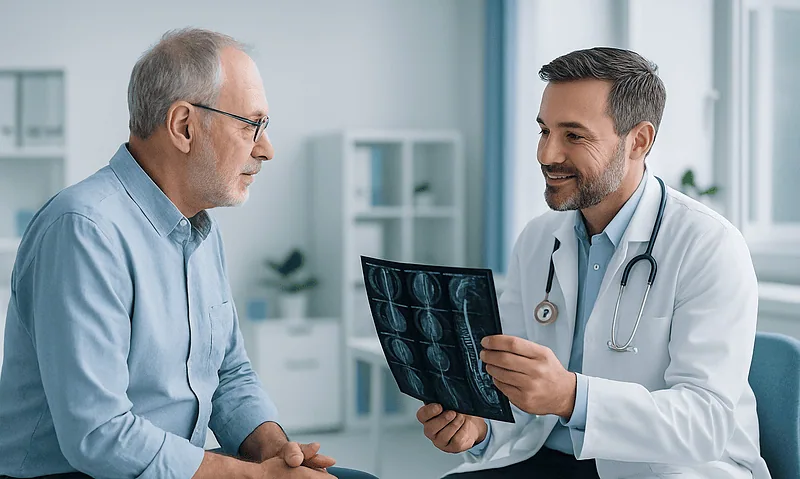
Which Scans Come Before Deformity Correction? Standing X-Rays, CT and Gait Analysis
Before a limb deformity correction, surgeons usually order full-length standing X-rays of both legs to measure alignment under body weight, and add a CT…
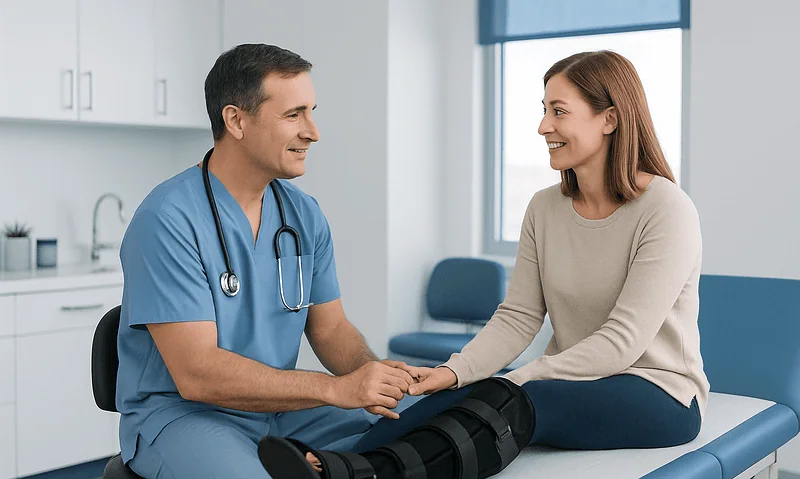
Hallux Rigidus Surgery Recovery: Surgical Boots, Weight-Bearing Rules and Back to Shoes
Hallux rigidus surgery recovery time depends on the operation. After a cheilectomy, which trims bone spurs, most people wear a stiff-soled boot for about…
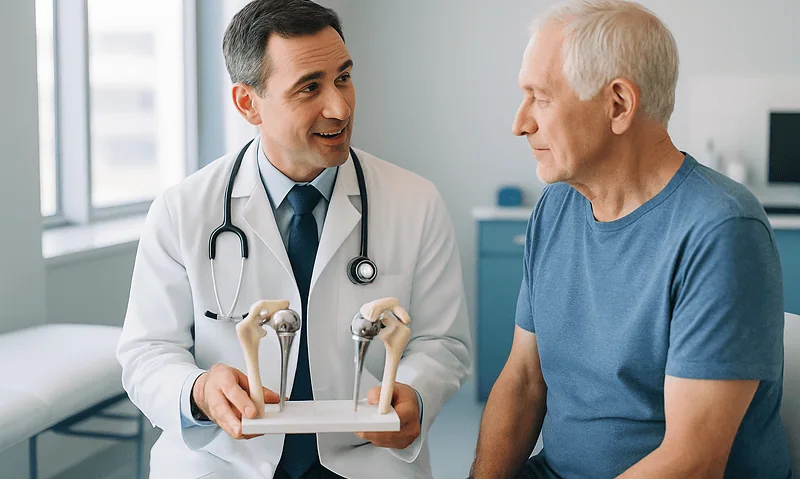
Anatomic vs Reverse Shoulder Prosthesis: How the Rotator Cuff Decides the Design
An anatomic shoulder prosthesis reproduces the natural ball-and-socket and relies on an intact rotator cuff to center and move the joint. A reverse shoulder…