

Leukemia Chemotherapy in Phases: Induction, Consolidation and Maintenance Explained

Key Takeaways
- Leukemia is not staged from I to IV like solid tumors; the “stages” people search for are the phases of treatment, and the disease itself is classified by cell type and genetic features.
- Induction in acute lymphoblastic leukemia typically lasts about four weeks and aims for remission, defined conventionally as fewer than 5 percent blasts in the bone marrow with normal blood production restored.
- Consolidation exists because a marrow in remission can still contain millions of leukemia cells invisible to a microscope, which is why minimal residual disease testing now guides the intensity of this phase.
- Maintenance in ALL continues for about two years with chemotherapy taken by mouth at home, bringing total treatment to roughly two to three years, while acute myeloid leukemia usually stops after consolidation.
- The “five phases” described in some pediatric ALL protocols are subdivisions of the same three jobs, not additional kinds of treatment.
- During the low-count weeks after intensive chemotherapy, a fever is treated as an emergency because neutrophils, the bacteria-fighting white cells, are close to zero and infections can spread within hours.
Leukemia chemotherapy is usually delivered in phases. Induction aims to clear the bone marrow of leukemia cells and reach remission; consolidation uses further chemotherapy to destroy cells that may survive undetected; maintenance, used mainly in acute lymphoblastic leukemia, continues lower-intensity treatment for around two years. Acute myeloid leukemia typically uses induction and consolidation only. The exact plan depends on the leukemia type and the treating team.
On the whiteboard in a hospital room, a nurse has drawn three boxes in blue marker. The first is labeled “induction” and has today’s date circled. The other two are empty, waiting. The patient in the bed, a 34-year-old who felt tired for six weeks and thought it was work stress, keeps looking at those empty boxes and asking the same question: how long does all of this take?
Search for leukemia chemotherapy phases explained and you will find plenty of lists, but few of them answer the question people are really asking, which is what each phase is for, why the treatment does not simply stop once the blood counts look normal, and what daily life looks like in between.
This explainer walks through the three classic phases used in acute lymphoblastic leukemia, shows how acute myeloid leukemia follows a shorter rhythm, and separates the ideas that hold up in the evidence from the ones that circulate in waiting rooms.
What are the three stages of chemotherapy for leukemia?
Ask a hematologist to sketch a treatment plan for acute lymphoblastic leukemia and you will usually see three words: induction, consolidation and maintenance. Leukemia is a cancer of the blood-forming cells in the bone marrow, the spongy tissue inside bones where blood is made. Chemotherapy is medicine that kills rapidly dividing cells. The three phases are not three different diseases or three different intensities of the same thing; they are three jobs, done in order.
Induction is the opening move. Its purpose is to bring the leukemia into remission, meaning the marrow is producing normal blood again and leukemia cells can no longer be found by standard tests. Consolidation, sometimes called intensification, follows straight afterward and aims to destroy the cells that almost certainly remain but are too few to detect. Maintenance is the long, gentler stretch that keeps the disease from returning while the body gets on with ordinary life.
One point of vocabulary matters here, because it causes real confusion. Many cancers are described in stages, from I to IV, based on how far a tumor has spread. Leukemia is not staged that way. It is a disease of the blood, so it is everywhere from the first day; instead, it is classified by type and by genetic features of the cells. When people search for the “stages” of leukemia chemotherapy, they nearly always mean the phases of treatment described in this article, not a measure of how advanced the disease is. Your team may use “stage,” “phase” or “block” interchangeably. If a word on your treatment calendar is unclear, ask what job that particular block is meant to do.
Leukemia chemotherapy phases explained: why treatment comes in waves
Why not give one overwhelming course and be done? The answer lies in how leukemia behaves and how the body tolerates its treatment.
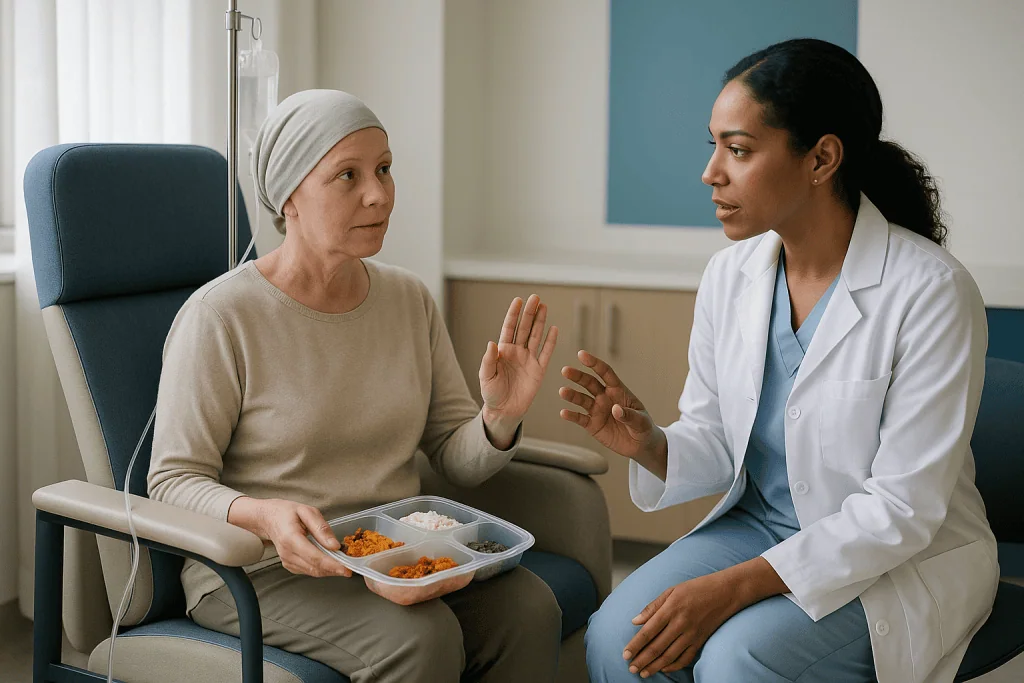
Leukemia cells, often called blasts, are immature white blood cells that never finish developing. They crowd the marrow, pushing out the cells that would normally become red cells, platelets and infection-fighting white cells. At diagnosis the number of abnormal cells in the body is enormous, and chemotherapy does not remove them all at once. Each course kills a proportion of the cells present. Even a very effective first course leaves behind survivors, and those survivors are, on average, the cells least sensitive to the medicines just used.
That biology drives the phased design. Induction uses a combination of medicines with different mechanisms so that cells resistant to one are caught by another. Consolidation then switches to other combinations, changing the angle of attack. Maintenance uses lower-intensity treatment over a long period to catch slow-growing cells as they wake up and divide.
The body’s side of the equation matters just as much. The same medicines that clear blasts from the marrow also suppress the healthy cells trying to regrow there. After an intensive course, blood counts fall and then recover over a few weeks. That recovery time is not wasted; it is built into the plan. The gaps between courses are when infection risk is highest and when transfusions may be needed, but they are also when healthy marrow reclaims its space.
So the waves are a deliberate strategy: hit hard, let the body recover, hit again from a new direction, then keep steady pressure. Understanding that logic makes the long calendar feel less arbitrary.
Induction chemotherapy for leukemia: what the first weeks aim to do
Induction begins quickly after diagnosis, often within days, because acute leukemia progresses fast and the marrow is failing. Its single goal is remission. In acute lymphoblastic leukemia (ALL), the initial induction block typically lasts about four weeks, according to the National Cancer Institute’s summary of childhood ALL treatment; adult protocols follow a similar shape. In acute myeloid leukemia (AML), the NHS describes induction as a period of intensive chemotherapy usually requiring a hospital stay of several weeks.
The medicines used in ALL induction commonly include a corticosteroid, which is a hormone-type drug that kills lymphoid cells directly, alongside chemotherapy agents from several classes that interfere with cell division in different ways. AML induction relies on different combinations suited to myeloid cells. Which specific agents are chosen, and in what schedule, is decided by the treating team from the leukemia’s type, its genetic features and the patient’s overall health. This article does not describe doses or schedules, because those decisions belong with the prescribing clinician.
Induction is the most intensive phase and the one with the closest monitoring. The leukemia cell count falls rapidly, which can release large amounts of cellular contents into the blood. The team watches for this with frequent blood tests and gives fluids and protective medicines as needed. Blood counts drop to very low levels before they recover, so infection prevention becomes the main daily preoccupation.
For most patients with ALL, induction also includes the first treatment aimed at the central nervous system: chemotherapy delivered directly into the fluid around the spinal cord by lumbar puncture, a procedure in which a thin needle is placed between the lower back bones. The brain and spinal fluid are protected from most medicines in the bloodstream, so leukemia cells can hide there. Treating that space early is standard practice in ALL.
What actually happens in the hospital during induction
The room from the opening scene fills quickly. A central line, a thin tube placed in a large vein and left in for months, is usually inserted early so that chemotherapy, fluids, antibiotics and blood samples all pass through one access point rather than through repeated needle sticks.
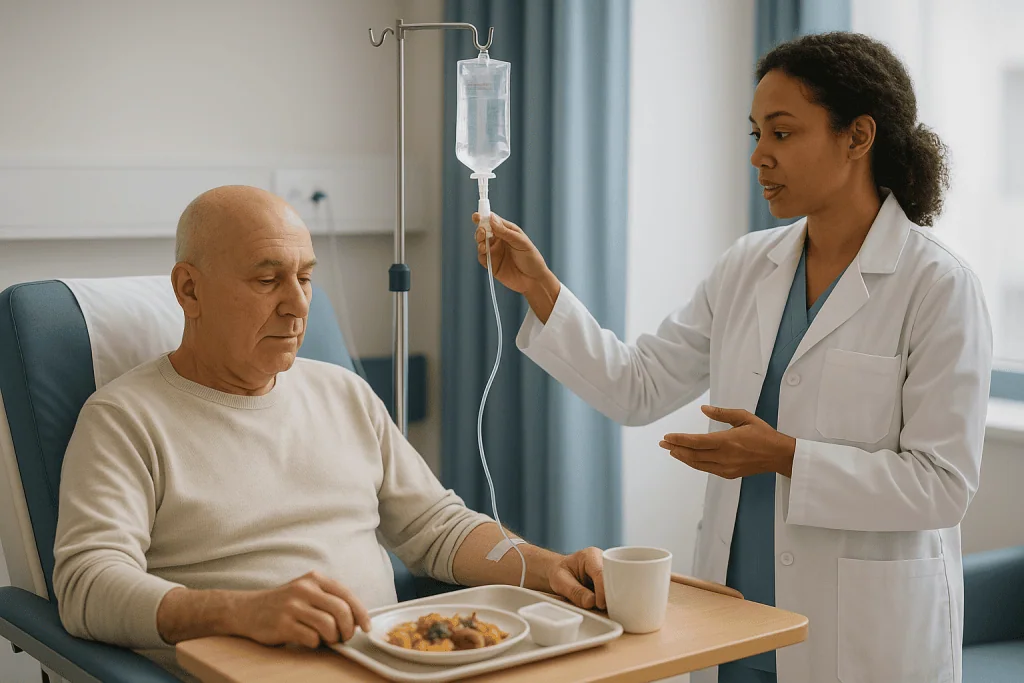
Days settle into a pattern. Blood is drawn early, and the results steer the day: a low platelet count may mean a transfusion, a fever triggers cultures and intravenous antibiotics, a falling potassium level means supplements. Chemotherapy arrives at scheduled times, some as brief injections through the line, some as infusions running for hours. Anti-nausea medicine is given before and after, and modern regimens control sickness far better than most people expect.
Neutropenia is the word that shapes the stay. Neutrophils are the white blood cells that fight bacteria, and chemotherapy drives their count close to zero for a stretch of the phase. During that window, an ordinary fever is treated as an emergency because infections can spread fast without neutrophils to contain them. Visitors are asked to stay away if unwell, fresh flowers may be discouraged, and food handling rules tighten.
Fatigue is near universal. Mouth soreness, hair thinning and changes in taste are common. Steroids, when used, can bring mood swings, disturbed sleep, a ravenous appetite and raised blood sugar. None of these mean the treatment is failing; they mean the medicines are doing what they do.
Somewhere in the second or third week, counts hit their lowest point and then, cell by cell, begin to climb. A bone marrow sample, taken with a needle from the back of the hip under local anesthetic, is usually scheduled near the end of the phase to see what has grown back. That result decides what the next box on the whiteboard will contain.
What does remission mean, and how is it measured?
“Remission” is one of the most misunderstood words in cancer care. It does not mean the leukemia is gone. It means that, by the tests available, it can no longer be found at the levels that define active disease.
The conventional definition of complete remission in acute leukemia, as set out in the National Cancer Institute’s treatment summaries, requires that fewer than 5 percent of the cells in a bone marrow sample are blasts, that normal blood cells are being produced again, and that there are no leukemia cells in the bloodstream or elsewhere. Under a microscope, a marrow in remission looks broadly normal.
Here is the catch. A marrow with under 5 percent blasts can still contain millions of leukemia cells, because the total number of cells in the body is vast. Microscopy simply cannot see them. This is why the phrase minimal residual disease, often shortened to MRD, has become central to modern leukemia care. MRD refers to leukemia cells that survive treatment at levels too low for a microscope but detectable with sensitive laboratory techniques, such as flow cytometry (which tags cells with fluorescent markers) or genetic tests that look for the leukemia’s specific DNA signature.
MRD testing after induction is now routine in ALL and increasingly used in AML. An MRD-negative result is reassuring; an MRD-positive result tells the team that residual disease persists and often leads to a more intensive consolidation plan, consideration of a stem cell transplant or newer targeted or immune-based therapies. The result is a signpost, not a verdict, and the team interprets it alongside the leukemia’s genetic features.
Remission, then, is the end of induction’s job and the reason consolidation exists. Reaching it is a genuine milestone, and it is also the moment the plan turns toward what the tests cannot see.
Consolidation: why treatment continues after the marrow looks clean
Patients often describe consolidation as the phase that makes the least intuitive sense. They have just been told the marrow is in remission. They feel better than they have in months. And now more chemotherapy, sometimes as intensive as induction?
The rationale follows directly from the previous section. Without further treatment, the residual cells that remain after induction will regrow, and historical experience from the era before consolidation was standard shows that relapse followed quickly. Consolidation aims to reduce those hidden cells to a level from which regrowth is unlikely.
In ALL, consolidation is usually delivered as a series of blocks over several months, according to the NHS. Each block uses a different combination of medicines from those used in induction, exploiting the principle that cells resistant to one class may be vulnerable to another. Continued treatment directed at the spinal fluid runs alongside. Some blocks are given as an outpatient with visits every few days; others require short admissions, especially when high-intensity medicines need monitoring or when counts are expected to fall sharply.
In AML, consolidation typically consists of a small number of further intensive courses given over several months, with each course followed by a recovery period of a few weeks while counts return. The NHS notes that this phase is frequently delivered on a day-unit basis with admission if problems arise.
For some patients, consolidation takes a different form: an allogeneic stem cell transplant, in which the patient’s marrow is replaced with blood-forming cells from a donor. This is generally reserved for leukemias with high-risk genetic features or a poor MRD response, because it carries substantial risks of its own. Whether a transplant is part of consolidation is one of the most consequential decisions the team makes, and it deserves a full conversation rather than a footnote.
Maintenance chemotherapy for ALL: the long, quieter stretch
Maintenance is the phase that distinguishes ALL from almost every other cancer treatment. Where most chemotherapy ends within months, ALL maintenance runs for about two years after consolidation, according to the NHS, bringing total treatment time to roughly two to three years, a range also given by the Mayo Clinic. Children, teenagers and adults all follow this broad pattern, with protocol-specific differences in length that the team will explain.
Why so long? Some leukemia cells sit dormant, dividing rarely. Intensive chemotherapy targets cells in the act of dividing, so a dormant cell can sleep through induction and consolidation. Maintenance keeps a low, steady level of chemotherapy in the body so that when a dormant cell finally wakes and divides, medicine is waiting. The agents used are mainly antimetabolites, which are drugs that mimic the building blocks of DNA and jam cell division. They are taken by mouth at home, with periodic pulses of other medicines and occasional lumbar punctures during the early part of the phase in many protocols.
Life in maintenance looks far closer to normal. Most people return to school or work. Hair grows back. Hospital visits shrink to a clinic appointment and a blood test at intervals set by the team, with the tablet strength adjusted to keep blood counts in a target range. Infection risk is lower than during intensive phases but not gone, and fevers still need prompt assessment.
The quiet can be its own challenge. Adherence, meaning taking the medicine exactly as prescribed for the full duration, is essential, and it is hard to sustain across two years when you feel well. Studies summarized by the National Cancer Institute link inconsistent maintenance with higher relapse risk. If side effects, cost or simple fatigue are making the schedule difficult, that is a conversation to have with the team rather than a reason to quietly skip.
Why AML, CML and CLL follow different rhythms
The three-phase model is the standard architecture of ALL treatment. Other leukemias borrow parts of it or discard it entirely, and knowing which type you have tells you which calendar applies.
Acute myeloid leukemia (AML) arises from the myeloid line of blood cells rather than the lymphoid line. Its treatment, as summarized by the National Cancer Institute and the NHS, has two phases: remission induction and post-remission therapy, which is another name for consolidation. Long maintenance has historically not been part of standard AML care, although newer oral medicines are being studied and used in selected situations as ongoing therapy after intensive treatment. A stem cell transplant is more often part of AML consolidation than ALL consolidation, again depending on genetic risk. The whole intensive pathway commonly spans several months rather than years.
Chronic myeloid leukemia (CML) is a different story altogether. It is driven by a single well-characterized genetic change, and it is treated mainly with targeted tablets called tyrosine kinase inhibitors, which block the faulty signal that drives the cancer. There is no induction and no consolidation in the classic sense; treatment is continuous and often long-term.
Chronic lymphocytic leukemia (CLL) frequently needs no treatment at diagnosis at all. Many people are monitored with periodic blood tests for years, an approach known as watch and wait, and treatment starts only when the disease causes symptoms or falling counts. When treatment does begin, it usually involves targeted medicines or immunotherapy rather than phased intensive chemotherapy.
The practical lesson: if a friend or relative had leukemia and their experience does not match yours, it may simply be a different disease sharing a name. Comparing calendars across types tends to generate worry without insight. Compare only within your own diagnosis, and even then, expect your protocol to differ in details.
The phases side by side: a comparison table
Timelines below are typical ranges drawn from the NHS and National Cancer Institute summaries cited at the end of this article. Individual protocols vary, and the treating team’s calendar always takes precedence over any table.
| Phase | Main aim | Where it usually happens | Typical duration (ALL) | Typical duration (AML) | What is checked |
|---|---|---|---|---|---|
| Induction | Reach remission; restore normal blood production | Inpatient | About 4 weeks | Several weeks in hospital | Blood counts, bone marrow at end of phase, MRD |
| Consolidation (intensification / post-remission) | Destroy residual, undetectable leukemia cells | Mix of day unit and short admissions | Several months in blocks | A few intensive courses over several months | Counts between courses, MRD, transplant suitability |
| Maintenance | Prevent relapse from dormant cells | Home, with clinic visits | About 2 years | Not standard; used in selected situations | Regular counts, tablet strength adjusted |
| CNS-directed therapy | Treat or prevent leukemia in spinal fluid | Alongside the above | Through induction and consolidation, sometimes into early maintenance | Only when the spinal fluid is involved | Spinal fluid samples at lumbar puncture |
Two features of the table deserve emphasis. First, the total treatment time for ALL, two to three years, is dominated by maintenance, the least intensive phase; the truly demanding stretch is measured in months. Second, AML compresses everything into that demanding stretch and then, for most patients, stops. Neither pattern is “more” or “less” treatment in any meaningful sense. They reflect two diseases with different biology, and the phases exist to serve the biology rather than the other way around.
Where the table says “several” rather than a number, that is deliberate: the sources give ranges, and pinning a single figure to your situation is something only your team can do.
How many rounds of chemo do you need for leukemia?
This is among the most common questions typed into a search bar after diagnosis, and it does not have a single honest number. The reason is partly vocabulary and partly biology.
A “round” or “cycle” is a period of treatment followed by a period of recovery. A phase is a larger unit with a specific aim, and it may contain one cycle or several. Induction in ALL is generally one block of about four weeks, according to the National Cancer Institute, but consolidation is delivered as multiple blocks, and maintenance runs as continuous therapy with periodic pulses rather than discrete rounds. Counting rounds across the whole pathway therefore produces a number that varies from protocol to protocol and does not describe intensity well.
In AML, the count is easier to picture: induction usually consists of one or two intensive courses, and consolidation adds a small number of further courses, according to the NHS. The exact number depends on how quickly remission is reached, the genetic risk group and whether a transplant replaces part of consolidation.
People also ask about “the five phases of chemotherapy.” That framing comes from some pediatric ALL protocols, which subdivide the middle of treatment into named blocks, for example induction, consolidation, interim maintenance, delayed intensification and maintenance. These are refinements of the same three ideas, not an extra two kinds of treatment. Your protocol may use three labels or five; the underlying logic is identical.
What matters more than the tally is the plan for checking progress. Ask the team when marrow and MRD tests are scheduled and how the results could change the calendar. A phase that goes well may shorten a later one; a slow response may lengthen or intensify it. The number of rounds is an output of that process, not a fixed input.
Who is usually offered phased chemotherapy, and who is asked to wait?
Intensive, phased chemotherapy is the standard approach for most people with acute leukemia who are fit enough to tolerate it. Fitness here is not about age alone. Teams assess heart and kidney function, liver health, other medical conditions and day-to-day physical capacity, because induction places heavy demands on all of them.
Children and younger adults with ALL almost always receive the full induction, consolidation and maintenance pathway. Older adults with ALL often receive the same structure with intensity adjusted, or increasingly with immune-based and targeted medicines added to or replacing parts of the chemotherapy backbone. In AML, the choice between intensive induction and lower-intensity treatment is one of the central decisions, and the National Cancer Institute’s summaries note that fitness and genetic risk group both weigh heavily.
Some people are asked to wait, or offered a different route, for good reasons. Those with an active serious infection at diagnosis may have chemotherapy delayed for days while it is controlled. People whose leukemia carries specific genetic changes may start with targeted medicines aimed at that change, either alone or alongside chemotherapy. Anyone whose organ function would make the standard medicines dangerous is offered a modified or lower-intensity plan.
Clinical trials are a mainstream part of leukemia care, not a last resort. Many patients, especially children, are treated within trials that compare refinements of the standard phases. Enrolling does not mean receiving experimental treatment instead of proven treatment; it usually means receiving the standard pathway with one carefully tested variation and closer monitoring.
Chronic leukemias, as described earlier, are often not treated with phased chemotherapy at all. A person with CLL who feels well and has stable counts is typically observed rather than treated, and that observation is an active, evidence-based choice, not neglect.
Every one of these decisions sits with the treating team, weighed against the individual’s wishes and circumstances.
What the following days and weeks usually look like
Timelines below describe common patterns from the NHS and National Cancer Institute; your own will differ in the particulars.
The first week after starting induction is often dominated by logistics and side effects of the disease itself rather than the medicines: transfusions to correct anemia and low platelets, antibiotics for any infection present at diagnosis, and the adjustment to a hospital routine. Steroid effects, where steroids are used, appear within days.
Weeks two and three are the trough. Blood counts fall to their lowest, and this is when fevers, mouth sores and profound tiredness cluster. Many people describe these weeks as the hardest of the whole pathway. Hair loss typically begins two to three weeks after the first chemotherapy dose.
By week four, counts are usually recovering. A bone marrow test checks for remission, and MRD results follow over the next days. Most people go home around this point, with a schedule of clinic visits, blood tests and instructions on fever.
The following months, in consolidation, alternate between treatment blocks and recovery. Energy returns partially between blocks and dips again after each. Appointments are frequent. Infection precautions continue. For AML, this stretch is the final phase for most patients, and the end of consolidation marks the transition to follow-up.
For ALL, maintenance then stretches over about two years, according to the NHS. Visits thin out. Tablets are taken at home. Many people return to work or school within the first months of maintenance, and stamina rebuilds gradually over the year. Follow-up after treatment ends involves periodic blood tests, most frequent in the first two years, with the interval lengthening over time.
Emotionally, the pattern is rarely a straight line. The end of intensive treatment can bring relief and, unexpectedly, anxiety, because the safety net of constant monitoring loosens. Naming that in advance helps.
What people often get wrong about leukemia chemotherapy phases
“Remission means it is over.” Remission is the goal of induction, not the end of treatment. It means the disease is undetectable by standard tests, and consolidation exists precisely because undetectable is not the same as absent.
“Maintenance is optional because I feel fine.” Feeling well during maintenance is expected and is not evidence that the medicine is unnecessary. The National Cancer Institute’s summaries link inconsistent adherence to higher relapse risk. Difficulties with the schedule should be raised with the team, never solved by quietly stopping.
“Being sent home means my case is mild.” Discharge after induction reflects recovering counts and a stable condition, not a lighter diagnosis. Some consolidation blocks are delivered as an outpatient specifically because the medicines and monitoring allow it.
“Leukemia has stages like other cancers.” Leukemia is classified by type and genetics, not by spread. The “stages” people find online are usually the phases of treatment.
“Chemotherapy is always the same.” Induction and maintenance are so different in intensity and side effects that patients often struggle to believe they are both chemotherapy. Anti-nausea care has also changed enormously, and the vomiting many people picture from older portrayals is far from typical now.
“A transplant is what happens when chemotherapy fails.” A stem cell transplant is one form of consolidation, chosen for specific genetic risk features or MRD results, frequently in first remission. It can be part of the plan from the start rather than a rescue.
“Diet or supplements can replace a phase.” Good nutrition supports recovery, but there is no evidence that any diet, supplement or alternative therapy clears leukemia cells or substitutes for consolidation or maintenance. Some supplements interact with chemotherapy; every product should be mentioned to the team before use.
“Children and adults get completely different treatment.” The phase structure is shared. Intensity, specific agents and duration are tailored, and adult protocols have increasingly borrowed from pediatric ones.
Questions to ask your care team
Consultations during induction are often short and packed. Writing questions down before each one helps, and so does asking a companion to take notes. The list below is a starting point rather than a script; pick the ones that matter to you.
- Which type of leukemia do I have, and what genetic features did the tests show? How do those affect the phases you are planning?
- Which phase am I in now, what is its specific aim, and how will we know it has worked?
- When are my bone marrow and minimal residual disease tests scheduled, and how might the results change the calendar?
- Is a stem cell transplant being considered as part of consolidation? If so, what is the reasoning, and when would that decision be made?
- Which parts of treatment will happen in hospital and which at home or on a day unit?
- Roughly how long is each phase expected to last for someone with my type and risk group, and what could shorten or lengthen it?
- Are there clinical trials relevant to my situation, and what would taking part involve?
- Which side effects should I expect in this phase, which need same-day contact, and what is the exact number to call out of hours?
- What does treatment to protect my brain and spinal fluid involve, and how often?
- Are there fertility considerations I should discuss before the next phase begins?
- Who is my main point of contact, and how do I reach the team between appointments?
- What support is available for the practical side: work or school, transport, mental health, family?
Notice that none of these questions asks for a prediction of outcome. Teams can and will discuss prognosis when asked, but the questions that most improve daily life are the ones about the plan, the checkpoints and the lines of communication.
When to call your doctor
Every leukemia team gives patients a direct phone line for a reason: during chemotherapy, problems that would be minor in a healthy person can become serious within hours. The threshold for calling should be low in every phase, and lowest during the weeks after intensive treatment when neutrophil counts are at their bottom.
Contact the team immediately, at any hour, or seek emergency care if you notice any of the following, which the NHS and the Mayo Clinic identify as warning signs during leukemia treatment:
- A temperature at or above the threshold your team has given you, or feeling shivery, hot or unwell even without a confirmed fever. Do not take fever-reducing medicine to see if it settles first; call.
- Shortness of breath, chest pain, or a new cough.
- Bleeding that does not stop, blood in urine or stool, black stools, or a sudden spread of small red or purple spots on the skin.
- Severe headache, confusion, drowsiness, a stiff neck, or new weakness in an arm or leg.
- Persistent vomiting or diarrhea, inability to keep fluids down, or signs of dehydration such as passing very little urine.
- Redness, swelling, pain or discharge around a central line or any wound.
- Pain, swelling or warmth in one calf, which can signal a blood clot.
- A severe rash, swelling of the face or lips, or difficulty swallowing after any medicine.
Less urgent but still worth a same-day call: mouth sores that stop you eating or drinking, new bruising, sudden fatigue markedly worse than usual, or any side effect that is interfering with taking maintenance medicine as prescribed.
None of these signs means treatment has failed. Most reflect the expected effects of chemotherapy on blood counts, and most are managed quickly when reported early. The single most protective habit in the whole pathway is calling the team when something changes rather than waiting for the next appointment. Every decision about how to respond rests with them.
Frequently asked questions
What are the three stages of chemotherapy for leukemia?
The three phases are induction, consolidation and maintenance. Induction aims to bring the leukemia into remission, meaning the bone marrow is making normal blood and leukemia cells cannot be found by standard tests. Consolidation gives further chemotherapy to destroy cells that survive undetected. Maintenance, used mainly in acute lymphoblastic leukemia, continues lower-intensity treatment for about two years to prevent relapse from dormant cells.
What are the different stages of chemotherapy for leukemia, and do they differ by type?
Yes, they differ. Acute lymphoblastic leukemia uses induction, consolidation and maintenance, plus treatment directed at the spinal fluid. Acute myeloid leukemia usually uses induction and consolidation only, sometimes with a stem cell transplant as part of consolidation. Chronic myeloid leukemia is treated with continuous targeted tablets rather than phases, and chronic lymphocytic leukemia is often monitored without treatment until symptoms appear.
What are the 5 phases of chemotherapy?
The five-phase framing comes from some pediatric ALL protocols that subdivide treatment into induction, consolidation, interim maintenance, delayed intensification and maintenance. These are refinements of the same three ideas: reach remission, destroy residual cells, prevent relapse. Whether your protocol uses three labels or five, the underlying logic is identical, and your team can map its own block names onto these categories.
How many rounds of chemo do you need for leukemia?
There is no single number. In ALL, induction is typically one block of about four weeks, consolidation involves multiple blocks over several months, and maintenance runs continuously for about two years, so counting rounds is not very meaningful. In AML, induction usually involves one or two intensive courses followed by a small number of consolidation courses. Genetic risk, response to treatment and whether a transplant is planned all change the total.
Is induction chemotherapy for leukemia always done in hospital?
Usually, yes. Induction for acute leukemia is the most intensive phase, blood counts fall to very low levels, and complications such as infection or bleeding need rapid treatment, so a hospital stay of several weeks is typical according to the NHS. Later phases are often delivered on a day unit or at home. Some lower-intensity regimens for older or less fit patients are given largely as outpatients.
Why does maintenance chemotherapy for ALL last so long?
Some leukemia cells sit dormant and divide only rarely. Intensive chemotherapy targets dividing cells, so dormant cells can survive induction and consolidation. Maintenance keeps a steady low level of chemotherapy in the body over about two years so that medicine is present whenever a dormant cell wakes and divides. Evidence summarized by the National Cancer Institute links inconsistent maintenance with higher relapse risk.
What does remission mean in leukemia treatment?
Complete remission conventionally means fewer than 5 percent of bone marrow cells are blasts, normal blood cells are being produced again, and no leukemia is detectable elsewhere by standard tests. It does not mean the disease is gone; a marrow in remission can still hold many leukemia cells too few to see. Sensitive minimal residual disease tests measure these and help the team plan consolidation.
Why do I need lumbar punctures during leukemia chemotherapy?
The brain and spinal fluid are shielded from most medicines in the bloodstream, so leukemia cells can hide there and cause relapse later. In ALL, chemotherapy is given directly into the spinal fluid through a lumbar puncture, a needle placed between the lower back bones, at intervals through induction and consolidation. The same procedure lets the team check the fluid for leukemia cells.
Does acute myeloid leukemia have a maintenance phase?
Traditionally no. Standard AML treatment, as described by the National Cancer Institute and the NHS, consists of induction followed by consolidation, sometimes including a stem cell transplant. Long-term maintenance chemotherapy has not been part of routine care, although newer oral medicines are being used as ongoing therapy in selected situations. Whether any continuing treatment is appropriate is a decision for the treating team based on genetic risk and response.
What happens if induction does not achieve remission?
The team reassesses rather than simply repeating the same course. Options typically include a second induction using different medicines, targeted or immune-based therapies matched to the leukemia’s genetic features, enrollment in a clinical trial, or moving toward a stem cell transplant once the disease is controlled. Bone marrow and minimal residual disease results guide the choice, and the plan is individual to each patient.
References
- NHS: Acute lymphoblastic leukaemia: Treatment
- NHS: Acute myeloid leukaemia: Treatment
- MedlinePlus: Leukemia
This article is for general information only and is not a substitute for professional medical advice. Please consult a qualified doctor about your individual situation.

More from the Blog
How a Stomach Cancer Tumor Board Decides Between Surgery First and Chemotherapy First
A stomach cancer tumor board is a scheduled meeting where surgeons, medical and radiation oncologists, radiologists, pathologists and nurse specialists review one patient's scans,…

Reading Your Radiation Therapy Plan: Fractions, Fields and Questions Worth Asking
A radiation therapy plan lists how many sessions (fractions) you will have, the areas being treated (fields), and the nearby structures the team is…
Endometrial Cancer in Women Who Want Children: When Fertility-Sparing Care Is Discussed
Fertility-sparing treatment for endometrial cancer is a closely monitored alternative to hysterectomy that oncologists discuss only in a narrow situation: a low-grade endometrioid tumor…

Neck Dissection Recovery: Drains, Shoulder Stiffness and the Exercises That Restore Movement
Recovery after a neck dissection usually involves a suction drain for the first several days, tightness and numbness in the neck, and some degree…
Follow-Up After Liver Cancer Treatment: What Repeat Imaging and Blood Tests Track
After liver cancer treatment, follow-up usually combines repeat imaging (contrast CT or MRI, sometimes ultrasound) with blood tests such as alpha-fetoprotein and liver function…

When Is a Small Kidney Tumor Watched, and When Is Surgery Recommended?
Small kidney tumors, generally under 4 cm, are often monitored with periodic scans because many grow slowly and some are benign. Surgery, usually a…