

Life in the Weeks After SBRT: Fatigue Patterns, Activity and When Follow-Up Scans Happen

Key Takeaways
- SBRT is usually finished in one to five sessions, so nearly all of its side effects appear after treatment has ended rather than during it.
- Fatigue typically builds over the first one to two weeks, plateaus, then improves gradually over weeks to months; the shape of the curve is steadier than most people expect.
- Early side effects are tied to the treated site: cough after lung SBRT, urinary urgency after prostate SBRT, a brief pain flare after spine SBRT.
- External beam radiation leaves no radioactivity in the body, so being around children and pregnant family members is safe immediately afterward.
- Regular moderate activity, such as walking, is one of the better-supported ways to shorten treatment-related fatigue, scaled to your own baseline.
- First follow-up scans are deliberately scheduled months later because early images often show inflammation and scarring that can mimic growth.
Life after SBRT treatment is usually quieter than people expect, but not effect-free. Tiredness often builds over the first one to two weeks, peaks, then eases over several weeks to a few months. Site-specific effects, such as cough, swallowing discomfort or urinary irritation, follow a similar arc. Gentle daily activity is generally encouraged, and follow-up scans are typically scheduled a few months later, because tumors change slowly.
The last session takes eleven minutes. You lie still on a narrow table while a machine arcs around you, a technician says “all done” through the speaker, and then you walk out into an ordinary afternoon. No bandage. No bed. Somebody asks how you feel, and the honest answer is: more or less the same as this morning, which is strangely unsettling when you have just had a focused, high-intensity treatment aimed at a tumor.
That gap between what happened and how you feel is the first thing to understand about life after SBRT treatment. Stereotactic body radiation therapy packs its work into a handful of sessions, so the body’s response tends to arrive on a delay, in a pattern that is predictable once you know what to watch for.
This guide walks through that pattern week by week: how the fatigue usually behaves, what counts as sensible activity, which effects belong to which treatment site, and why your care team waits months, not days, before ordering a scan.
How SBRT actually works, in plain language
Stereotactic body radiation therapy, usually shortened to SBRT, is a way of delivering radiation to a small, precisely mapped target from many angles at once. Each beam on its own is modest; where the beams converge, the combined effect is intense. Healthy tissue nearby receives far less than the tumor does, which is the whole point of the design.
“Stereotactic” simply means that the target is located in three-dimensional space using imaging, and the treatment machine is steered to that map. Before the first session, a planning scan is taken with you in the exact position you will hold during treatment. Small marks on the skin, a molded cushion or a body frame help the team reproduce that position each time. Some centers also place tiny markers near the tumor so the machine can track it as you breathe.
According to Mayo Clinic, SBRT is typically completed in one to five sessions, compared with the daily sessions over several weeks used in conventional radiation. Fewer sessions does not mean a smaller total effect; it means the effect is concentrated. The radiation damages DNA inside tumor cells, and because many cancer cells repair DNA poorly, they tend to stop dividing and die over the following weeks and months.
That last phrase matters. Nothing is removed on the day. The tumor is still there when you leave, and it may look nearly unchanged on an early scan. What has happened is biological, not mechanical, and biology takes time to show itself.
Different sites get different plans. Lung SBRT accounts for breathing motion; spine SBRT shapes the beams tightly around the spinal cord; prostate SBRT may use a spacer or markers. The principle stays the same, but the day-to-day aftermath depends heavily on where the target sits, which is why this article keeps returning to treatment site.
Who SBRT is usually for, and who is usually asked to wait
SBRT is generally considered for tumors that are small, well defined and limited in number. Mayo Clinic describes its use for cancers of the lung, liver, pancreas, prostate, kidney, spine and other sites, often when surgery is not a good fit because of other health conditions, or when a patient prefers a non-surgical option after discussion with the team. It is also used for a small number of metastases, where the aim may be local control rather than treating the whole body.
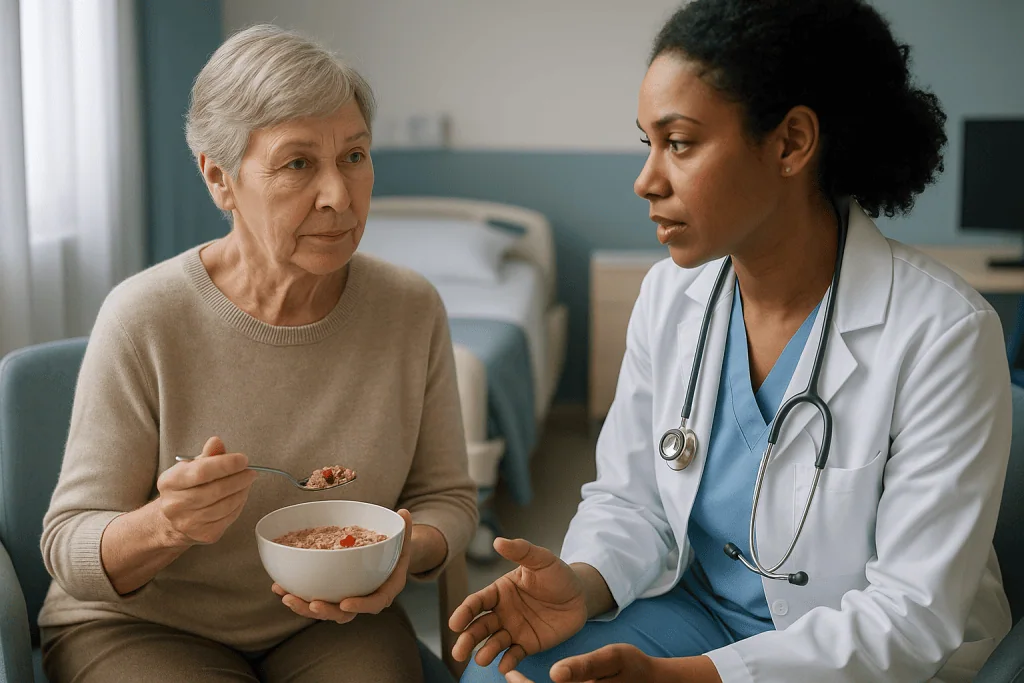
The pattern of the cancer matters as much as its type. A single well-outlined lesion is easier to target safely than disease that is diffuse or sits against a sensitive structure such as the bowel, spinal cord or a major airway. Tumor size is a practical limit too, because the larger the target, the more healthy tissue inevitably receives a meaningful share of the beam.
People are sometimes asked to wait, or offered something else, for reasons that have little to do with the tumor itself:
- A recent biopsy, lung infection or flare of an inflammatory condition that needs to settle first.
- Breathing that is too irregular for the planning scan to capture a reliable target, which can sometimes be improved with coaching or a breath-hold technique.
- Prior radiation to the same region, where cumulative exposure to nearby organs has to be calculated carefully.
- Ongoing systemic therapy where the timing of the two treatments needs coordination.
None of these is a verdict. They are scheduling and safety decisions, and they belong to the radiation oncologist, the referring specialist and the planning physicists working together. If you have been told to wait, it is reasonable to ask what specifically needs to change and roughly how the team will know when it has.
Why life after SBRT treatment feels different from conventional radiation
People who have watched a relative go through six or seven weeks of daily radiation often brace for the same experience. Life after SBRT treatment usually runs on a different clock, and knowing why helps the first fortnight make sense.
Conventional radiation spreads smaller daily amounts over weeks, so side effects accumulate gradually alongside the sessions; by the final week, skin, mucous membranes and energy are often at their lowest. SBRT finishes before most of that cumulative process begins. The NHS notes that radiotherapy side effects commonly develop during or shortly after treatment and can continue for weeks after the last session; with SBRT, nearly all of that arc happens after you have stopped coming in.
This has three practical consequences. First, you may feel almost normal on your final treatment day and worse ten days later, which is expected rather than alarming. Second, the treated volume is smaller, so effects tend to be more localized: a cough after lung SBRT, urinary urgency after prostate SBRT, a sore patch of skin over a treated rib. Whole-body depletion is less typical, though fatigue remains the most common complaint across sites, according to the National Cancer Institute.
Third, because the sessions are so few, there is less time to build the routine that longer courses create. People on daily radiation often develop a rhythm of rest, snacks and check-ins with the same nursing team. After SBRT, you are home with a phone number and a follow-up appointment that may feel very far away. Writing down what you notice each day, even in a line or two, gives you something concrete to bring to that appointment and makes the waiting feel less passive.
Fatigue after SBRT: what the pattern usually looks like
Fatigue after SBRT rarely arrives on day one. More often it creeps in toward the end of the first week, deepens over the second, and then plateaus before slowly lifting. The NHS describes radiotherapy tiredness as something that can build up during treatment and last for several weeks or months afterward; the National Cancer Institute similarly notes that radiation-related fatigue often improves gradually over the weeks and months after treatment ends, and that it is not the same as ordinary tiredness.
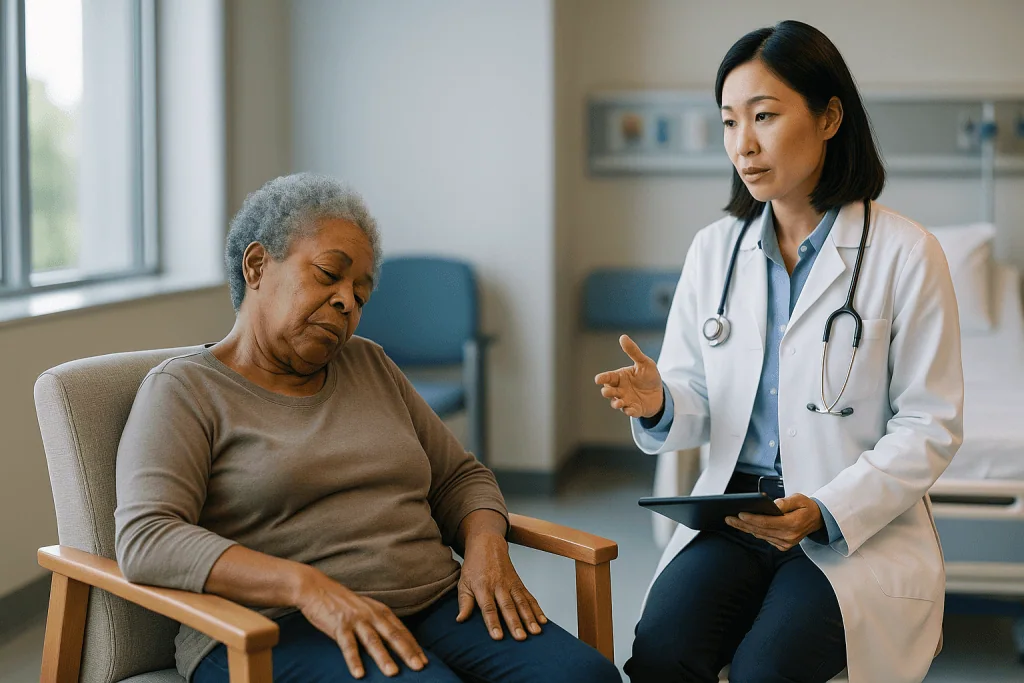
What people notice is not only sleepiness. Mayo Clinic describes cancer-related fatigue as a persistent sense of physical, emotional or mental exhaustion that is out of proportion to activity and not fully relieved by rest. In practice it looks like running out of concentration halfway through an email, or needing to sit down after carrying groceries that used to be effortless.
Why does it happen? The precise mechanism is still being worked out, but several contributors are well recognized: the inflammatory response to tissue injury, disrupted sleep, reduced activity, anemia in some people, pain, low mood and, where it applies, other treatments running at the same time. SBRT adds a specific wrinkle. Because the body’s repair work in the treated area peaks a week or two after the sessions, the energy cost of that repair peaks then too.
A few things reliably shape the curve. Fatigue tends to be milder when the treated volume is small and the site is peripheral, such as a rib or an outer lung lesion, and more noticeable with central or abdominal targets. It is often worse in people who were already deconditioned or who cut back activity sharply out of caution. And it is usually steadier, not spiking day to day, which is one reason tracking it in a notebook can be reassuring: the line goes up, flattens, then comes down.
SBRT side effects timeline by treatment site
Most early effects are tied to the organ in the beam path rather than to radiation in general. The table below summarizes what the National Cancer Institute and the NHS list as common site-related effects, and roughly when each tends to appear. Timings are typical ranges, not promises, and your own team will give you a sheet specific to your plan.
| Treated site | Common early effects | Usual onset | Later effects to be aware of |
|---|---|---|---|
| Lung | Dry cough, mild shortness of breath, chest wall ache, skin pinkness | Days to 2 weeks | Radiation pneumonitis (lung inflammation), typically weeks to a few months after treatment |
| Liver or pancreas | Nausea, reduced appetite, fatigue, mild upper abdominal discomfort | Days to 2 weeks | Changes in liver blood tests; rarely, stomach or bowel irritation |
| Prostate | Urinary frequency and urgency, burning, looser stools, rectal irritation | 1–3 weeks | Bowel or urinary changes that persist; erectile changes that develop over months |
| Spine or bone | Temporary pain flare, fatigue, skin redness over the area | First week | Vertebral fracture risk in a treated segment; nerve symptoms if swelling occurs |
| Kidney or adrenal | Nausea, fatigue, flank ache | Days to 2 weeks | Gradual change in kidney function on blood tests |
Two rows deserve a note. A pain flare after spine SBRT is a short-lived increase in pain at the treated level caused by swelling; it is common, usually brief, and your team may have a plan for it in advance, so ask before you go home. Radiation pneumonitis after lung SBRT is less common but important, which is why a new cough with fever or breathlessness weeks later should always be reported rather than waited out.
What the table cannot show is how mild most of these are for most people. Many notice one or two items from their row at a low level and nothing else.
What the first two weeks after SBRT usually look like
Day one is often an anticlimax. You may feel a little wrung out from lying still, perhaps a touch of nausea if the abdomen was treated, but most people drive home or are driven home and eat dinner as usual. Skin in the beam path may be faintly pink by evening, like mild sun exposure, and MedlinePlus advises washing the area gently with lukewarm water and a mild soap, patting it dry and avoiding scrubbing, perfumed products or anything that rubs.
Days three to seven are when the delayed response begins. This is the stretch where a dry cough starts after lung treatment, where urinary urgency shows up after prostate treatment, and where tiredness becomes a daily companion rather than an occasional one. A short nap after lunch, kept to twenty or thirty minutes so it does not wreck the night’s sleep, is a reasonable response. So is a walk, even a short one, which many people find clears the fog better than another hour on the sofa.
Days eight to fourteen are typically the trough. Energy is at its lowest, local effects at their most noticeable, and the temptation to assume something has gone wrong is strongest. Most of the time nothing has. The body is doing the repair work the treatment set in motion.
A few practical anchors for these two weeks:
- Keep fluids steady, especially after pelvic or abdominal treatment, where loose stools or urinary irritation can quietly dehydrate you.
- Eat smaller, more frequent meals if appetite dips; protein at each sitting helps tissue repair.
- Note your symptoms daily with a simple 0 to 10 score so the trend is visible.
- Keep the team’s contact number where you can find it without searching.
If your plan included anti-nausea or anti-inflammatory medicine, take it as prescribed and raise any questions with the prescriber rather than adjusting on your own.
Weeks three to eight: the quiet stretch where effects settle
Somewhere around the third week, most people notice the slope changing. The cough is still there but less insistent; the trips to the bathroom thin out; a morning that used to need a nap can be managed with a cup of tea. The NHS frames this as the gradual phase of recovery, with tiredness that can persist for weeks or months but usually keeps improving.
This is also the period when the follow-up conversation shifts from “how are you coping?” to “what is the plan?” Blood tests may be ordered for liver, kidney or bone marrow function depending on the site treated. Your team may ask about specific delayed effects: breathlessness on stairs after lung SBRT, bowel habit after prostate SBRT, pain at the treated level after spine SBRT. Honest answers, including “it is better but not back to normal,” are the most useful thing you can bring.
Activity tends to expand naturally in this window. Many people return to desk work or light duties in week two or three, and to heavier physical work later, though no fixed number applies to everyone and your team’s guidance comes first. What helps is adding load gradually: a longer walk this week, a few flights of stairs next week, carrying lighter bags before heavier ones. Fatigue that has plateaued often starts to fall faster once activity creeps up, a pattern the National Cancer Institute highlights in its advice on managing treatment-related tiredness.
One thing to watch for is a second dip. A small number of people feel steadily better and then, around weeks four to eight, develop a new cough, low-grade fever or fresh breathlessness after lung treatment. That timing fits radiation pneumonitis, lung inflammation that is treatable but should be assessed promptly. Improvement followed by a clear reversal is always worth a phone call, whatever the site.
Activity and exercise after SBRT: how much is reasonable?
The old advice to rest until you feel better has quietly been replaced. The National Cancer Institute and Mayo Clinic both describe regular, moderate physical activity as one of the better-supported ways to reduce cancer-related fatigue, and there is no general reason SBRT changes that. The treated area is small, nothing has been cut, and the rest of the body benefits from being used.
How much is reasonable depends on where you started. For a general adult target, the American Heart Association recommends at least 150 minutes of moderate activity a week, such as brisk walking, spread across most days. Nobody expects that in week two after treatment. A sensible way to think about it is percentages of your own baseline: perhaps a quarter of your usual activity in the first week, a half by the third, building toward your former level as the fatigue lifts. Walking is the workhorse because it is adjustable minute by minute.
Site-specific cautions are worth naming. After spine or bone SBRT, your team may limit lifting, twisting or high-impact exercise for a period, because the treated segment can be structurally weaker while it heals. After lung SBRT, breathlessness is a pacing signal rather than a stop sign, but a sudden drop in exercise tolerance should be reported. After prostate SBRT, some people prefer low-impact options for a few weeks while urinary and bowel symptoms settle; cycling can aggravate perineal discomfort and is often postponed.
Listen to the day after, not only the day of. If a walk leaves you pleasantly tired, it was about right. If you are flattened for twenty-four hours, it was too much, and the answer is to shorten rather than stop. Swimming is usually fine once any treated skin is intact and your team agrees; chlorine on broken skin is best avoided.
What not to do after radiation treatment
Most of the “don’ts” after SBRT are about protecting the treated skin and avoiding things that mask or worsen a developing problem. They are fewer than people fear.
Skin in the beam path behaves like mildly sunburned skin for a few weeks. MedlinePlus advises against hot water, harsh soaps, scrubbing, adhesive tape, heating pads, ice packs and tight clothing over the area, and recommends keeping it out of direct sun. Shaving over treated skin should be done carefully with an electric razor, if at all. Many centers ask that you avoid creams or deodorants on the area unless the team has approved them; check before applying anything new.
Beyond skin, a short list covers most situations:
- Do not stop prescribed medicines, including blood thinners or steroids, without speaking to the prescriber; some are part of your post-treatment plan.
- Do not treat a new fever as a minor cold, especially in the weeks after lung or abdominal SBRT, when inflammation of nearby organs can present that way.
- Do not start a supplement or herbal product on your own; the NIH Office of Dietary Supplements notes that some products interact with cancer treatments or affect liver function, and the team should know what you take.
- Do not push through chest pain, sudden breathlessness or new leg swelling in the name of staying active.
- Do not skip the follow-up because you feel well. Feeling well is common and is not the same as being assessed.
Alcohol and smoking deserve a sentence each. Alcohol can worsen nausea and dehydration after abdominal treatment and disturb sleep when fatigue is already a problem; moderation is sensible. Smoking slows tissue repair and raises the risk of lung complications, and anyone treated for a lung or airway tumor will be encouraged to stop, with support available through the team.
How to stay strong during SBRT recovery: food, sleep and pacing
Staying strong is less about heroics and more about three unglamorous habits that reinforce each other.
Food first. Tissue repair consumes protein, and appetite often dips exactly when the body needs it. The National Cancer Institute suggests small, frequent meals and snacks rather than three large ones, with a protein source at each. Eggs, yogurt, beans, fish, nut butters and milk-based drinks are easy to tolerate. If nausea is a problem after abdominal treatment, bland, cool foods tend to go down more easily than hot, strongly scented ones. Fluids matter as much as calories; aim for pale urine as a simple check, and tell the team if you cannot keep liquids down.
Sleep second. Fatigue and insomnia are an unkind pair: the more exhausted you feel, the longer you lie awake. Mayo Clinic’s advice on cancer fatigue includes keeping a consistent wake time, limiting daytime naps to short ones, keeping screens out of the last hour before bed and getting daylight early in the day. Pain, cough and bathroom trips can all break sleep, and each has a potential fix worth raising with your team rather than enduring.
Pacing third. People who recover with the least frustration tend to plan their day around energy rather than tasks. Put the thing that matters most in your best window, often mid-morning, and accept that the afternoon may be for lighter work. Spread chores across the week instead of clustering them. Say yes to offers of help with the heavy or boring jobs so your energy goes to the things only you can do.
Emotional strength belongs here too. The weeks after a short, intense treatment can feel oddly empty, and low mood is common. A nurse, counselor or support group through your treatment center is a normal part of care, not an admission of weakness.
When do SBRT follow-up scans happen, and what do they show?
The single most common question in the weeks after treatment is “when will I know if it worked?” The honest answer is that the first scan is usually scheduled months rather than weeks away, and that even then the picture may be ambiguous.
Mayo Clinic explains that the effect of stereotactic radiation develops over time, as damaged tumor cells gradually lose the ability to divide; a tumor can take months to shrink and some never shrink fully but simply stop growing. Scanning too early tends to show swelling, inflammation and scar formation around the treated area, which can look larger or more active than before. In the lung in particular, the normal reaction to SBRT can produce a patch of dense tissue on CT that is easy to mistake for growth. Radiologists who read these scans know the pattern, but it is one reason teams prefer to wait.
Typical follow-up is therefore a first imaging visit some months after treatment, then intervals that lengthen as findings stay stable. The exact schedule depends on the site, the type of cancer, whether other treatments are running and what your team is tracking. CT is common for lung and abdominal sites, MRI for spine and liver, PET-CT when metabolic activity needs clarifying, and blood markers such as PSA after prostate treatment, where the number is expected to fall gradually over many months rather than immediately.
What a scan “shows” is usually described in cautious language: stable, decreased, treatment effect, or indeterminate. Indeterminate is not a euphemism for bad; it means the picture cannot yet be separated from healing, and the usual response is to repeat the scan after an interval. If that uncertainty is hard to live with, say so. Your team can explain exactly which features they are watching and what would change their mind.
What people often get wrong about life after SBRT treatment
A few misconceptions come up so often that they are worth tackling directly.
“I feel fine, so the treatment must not have been strong enough.” Feeling well on the day is the norm. The radiation did its work on cellular DNA; the body’s response, and any symptoms, unfold over the following weeks. Comfort on day one tells you nothing about the biology.
“I am radioactive and should keep away from children.” External beam radiation, which is what SBRT is, leaves no radiation in the body. The NHS is explicit that it is safe to be around other people, including children and pregnant women, immediately afterward. Only certain internal treatments carry precautions, and SBRT is not one of them.
“The tumor should be gone on the first scan.” As described above, early scans often show inflammation and scarring that can look worse before they look better. Stability is frequently the goal, and shrinkage, when it happens, takes months.
“Rest is the best medicine for fatigue.” Rest has a role, but prolonged inactivity tends to deepen fatigue. The National Cancer Institute lists regular moderate exercise among the better-supported strategies for treatment-related tiredness.
“Any new symptom means the cancer is spreading.” Most new symptoms in the first two months are treatment effects following a known timeline. They should still be reported, because some, such as pneumonitis, need attention, but the default explanation is healing, not progression.
“SBRT has no side effects because it is so targeted.” Targeting reduces side effects; it does not eliminate them. Organs next to the target still receive some exposure, which is why the table earlier is organized by site.
The thread running through all of these is timing. SBRT compresses the treatment and stretches out the response, and most confusion disappears once that is understood.
Questions to ask your care team before you go home
The ten minutes after your final session are a good moment to ask questions, because the answers shape the next two months. If you have already left, these are worth a phone call or a message through the patient portal.
- Which side effects are expected for my treatment site, and in roughly which week should I expect each to start and settle?
- Is there a symptom that would make you want to hear from me the same day, and what number do I use out of hours?
- Do I have any specific limits on lifting, twisting, driving or exercise, and for how long?
- When is my first follow-up scan or blood test, what type will it be, and what will you be looking for?
- How should I care for the skin in the treatment area, and which products are fine to use?
- If I develop a pain flare, cough or nausea, is there something already prescribed for it, and when should I use it?
- Are any of my regular medicines or supplements something you would like me to review with you?
- Who coordinates my care now: the radiation oncology team, my original specialist or my primary care doctor?
- Is there a nurse, dietitian, physiotherapist or counselor I can contact during recovery?
- How will the results of my first scan be communicated, and how soon after it is done?
Two habits make these conversations more useful. Bring someone with you, or put the call on speaker with a family member listening, because people reliably remember less than half of what is said in a medical appointment. And write the answers down in the same notebook you use for symptoms, so the plan and the reality sit on facing pages.
If an answer is “it depends,” ask what it depends on. That is often where the most honest information lives.
When to call your doctor
Most of what happens in the weeks after SBRT follows the gentle curve described above and can wait for a scheduled check-in. A short list of signs should not wait. Contact your treatment team the same day, or use emergency services where the symptom is severe, if you notice any of the following, drawn from guidance published by the National Cancer Institute and the NHS on radiation side effects:
- A temperature of 38°C (100.4°F) or higher, shivering or feeling suddenly unwell, particularly if you are also receiving chemotherapy or immunotherapy.
- New or worsening shortness of breath, a cough that is sharply worse, chest pain, or coughing up blood after lung or chest treatment.
- Severe or escalating pain that your usual measures do not touch, especially at a treated spine level.
- New weakness, numbness or tingling in the arms or legs, trouble walking, or loss of bladder or bowel control after spine treatment; these need urgent assessment.
- Vomiting that prevents you keeping fluids down for more than a day, black or bloody stools, or severe abdominal pain after liver, pancreas or kidney treatment.
- Inability to pass urine, or heavy blood in the urine, after prostate or pelvic treatment.
- Skin in the treatment area that breaks down, weeps, or becomes hot and increasingly painful.
- A swollen, painful calf, or sudden breathlessness with chest discomfort, which can indicate a blood clot.
- Confusion, a severe headache, or a seizure.
A simple rule covers the gray areas: if a symptom is new, getting worse rather than better, or frightening you, call. Teams would far rather reassure you over the phone than see a problem late. Keep the daytime and out-of-hours numbers somewhere you can find them without searching, and tell whoever answers that you have recently completed SBRT, the site treated and the date of your last session.
Every decision about what a symptom means, and what to do next, rests with the clinicians who know your plan.
Frequently asked questions
How long does fatigue after SBRT last?
Fatigue after SBRT often starts toward the end of the first week, peaks in the second, and then eases gradually over several weeks to a few months, according to NHS and National Cancer Institute guidance on radiotherapy tiredness. The range is wide, and people who stay lightly active tend to report a shorter course, but your team can judge whether your pattern is typical.
What is a typical SBRT side effects timeline?
Skin pinkness and mild tiredness can appear within days; site-specific effects such as cough, nausea or urinary urgency usually show up in the first one to three weeks; most settle over the following month or two. Delayed effects, including lung inflammation after chest treatment, can appear weeks to months later, which is why new symptoms after a period of improvement should be reported.
When are SBRT follow-up scans usually done?
Follow-up imaging is generally scheduled some months after treatment, with intervals that lengthen as findings remain stable. Mayo Clinic notes that the effect of stereotactic radiation develops over months, and early scans can show swelling and scarring that mimic growth. The precise schedule depends on the cancer, the site and the other treatments you are receiving, and is set by your team.
What not to do after radiation treatment?
Avoid hot water, harsh soaps, scrubbing, adhesive tape, heat or ice packs and direct sun on treated skin, as MedlinePlus advises. Do not stop prescribed medicines or start supplements without speaking to your team, do not dismiss a fever as a cold in the weeks after lung or abdominal treatment, and do not skip follow-up because you feel well.
How do I stay strong during radiation therapy recovery?
Three habits do most of the work: protein with each small, frequent meal; a consistent sleep schedule with short daytime naps only; and daily walking that grows a little each week. Planning important tasks for your best energy window and accepting help with heavy chores keeps strength where it matters. Emotional support through your center is part of recovery, not an extra.
Am I radioactive after SBRT?
No. SBRT is external beam radiation, which passes through the body and leaves nothing behind. The NHS states that it is safe to be around other people, including children and pregnant women, straight after treatment. Precautions about contact apply only to certain internal radiation treatments, which are different procedures from SBRT.
Can I exercise in the first week after SBRT?
Usually yes, within limits set by your team. Gentle walking is generally encouraged from the start and is one of the better-supported ways to limit fatigue. Site-specific cautions apply: lifting and twisting may be restricted after spine or bone treatment, and cycling is often postponed after prostate treatment while symptoms settle.
What are the main disadvantages of radiation therapy such as SBRT?
The drawbacks are real but site-dependent: fatigue, skin irritation, inflammation of nearby organs such as the lung or bowel, a temporary pain flare after spine treatment, possible long-term changes in urinary, bowel or sexual function after pelvic treatment, a small fracture risk in treated bone, and the fact that results take months to assess. Your team can weigh these against alternatives for your situation.
What are the pros and cons of radiation after a lumpectomy?
Radiation after breast-conserving surgery aims to reduce the chance of the cancer returning in the treated breast; the trade-offs include skin changes, tiredness and, less commonly, effects on the chest wall, lung or heart depending on the side treated. SBRT is not the standard approach for the whole breast, and whether a shorter or partial-breast course suits you is a decision for your oncology team.
Why does my scan after SBRT look worse before it looks better?
Radiation triggers inflammation and scar formation around the treated area, which can appear denser, larger or more active on early CT or PET imaging. In the lung, this reaction is well recognized by radiologists reading post-SBRT scans. Your team interprets these changes alongside your symptoms and repeats imaging over time rather than relying on a single early picture.
References
This article is for general information only and is not a substitute for professional medical advice. Please consult a qualified doctor about your individual situation.

More from the Blog

How Neck Cancer Treatment Is Planned When Lymph Nodes Are Involved
When neck cancer involves lymph nodes, a multidisciplinary team plans treatment after biopsy, imaging and staging establish how many nodes are affected, their size,…
How Ureteroscopy With Biopsy Confirms a Ureteral Tumor and Sets the Treatment Plan
Ureteroscopy with biopsy passes a thin telescope through the bladder into the ureter so a urologist can see a suspected tumor directly, collect urine…
Before Breast Cancer Treatment Begins: Imaging, Biopsy Review and Staging Tests Explained
Before breast cancer treatment begins, most people have a diagnostic mammogram and ultrasound, sometimes a breast MRI, and a needle biopsy whose tissue is…

What Remission Means in Leukemia and How Blood Counts and Marrow Checks Track It
In leukemia, remission means tests can no longer find the disease at a set level of sensitivity; it is a description of what the…

How Treatment Differs Between Acute and Chronic Lymphocytic Leukemia
Acute lymphocytic leukemia (ALL) is treated urgently with intensive, phased chemotherapy and targeted drugs that usually run for about two to three years, often…

Who May Be Considered for a Bone Marrow Transplant: Disease Stage, Age and Organ Fitness
A bone marrow transplant is usually considered for people whose blood cancer, marrow failure or inherited blood disorder is unlikely to be controlled by…