

Living With Peripheral Neuropathy: Foot Care, Balance Training and Daily Safety

Key Takeaways
- Peripheral neuropathy affects an estimated 1 in 10 people aged 55 or over according to the NHS, and diabetes is its most common cause in the United States.
- Loss of feeling is more dangerous than pain in daily life, because it silences the warning that would otherwise stop a blister becoming an ulcer.
- Damaged heat-sensing nerves mean bath water, heating pads and radiators are a documented cause of burns; test water with an elbow or thermometer.
- Balance depends on eyes, inner ear and foot sensation, so people with neuropathy are most unsteady in the dark, where two of the three fail at once.
- The CDC reports more than one in four adults aged 65 and older falls each year, and most falls happen at home where lighting and loose rugs can be changed.
- Excess supplemental vitamin B6 can itself cause sensory neuropathy, while correcting a genuine B12 deficiency is one of the few changes that may allow nerve recovery.
Living with peripheral neuropathy is usually a matter of protecting what you cannot fully feel and strengthening what you can still control. Daily foot inspection, well-fitted shoes, checked water temperatures, balance and strength training, good lighting at home, and steady management of any underlying cause such as diabetes or low vitamin B12 form the core of safe daily life. Any new wound, sudden weakness or rapidly spreading numbness should be reported to your care team promptly.
The first sign, for many people, is not pain. It is a sock. A woman in her sixties described pulling off her shoe one evening and finding a pebble that had been there since the morning walk. She had not felt it once. That small discovery is often the moment living with peripheral neuropathy stops being an abstract diagnosis and becomes a practical question: how do you look after a body part that has stopped reporting in?
Nerves in the feet and hands are the body’s outermost sentries. When they fail, the alarm system goes quiet just where the world is hardest on us: the soles that carry every step, the fingers that test bath water. The consequences are rarely dramatic on any single day. They accumulate.
The encouraging part, borne out by the mainstream evidence, is that most of the harm neuropathy causes in daily life is preventable with habits rather than heroics. This guide sets out what those habits are, why they work, and where the honest limits lie.
What is actually happening when you are living with peripheral neuropathy?
Peripheral neuropathy means damage to the peripheral nerves, the cables that run from the spinal cord out to the skin, muscles and organs. The National Institute of Neurological Disorders and Stroke (NINDS) estimates that more than 20 million people in the United States have some form of it, and the NHS notes it becomes more common with age, affecting an estimated 1 in 10 people aged 55 or over.
Each nerve fiber is a long, thin extension of a single cell, wrapped in an insulating sheath called myelin. Damage can hit the fiber itself, the insulation, or the tiny blood vessels that feed both. Long fibers suffer first, which is why symptoms typically begin in the toes and creep upward in what clinicians call a stocking-and-glove pattern.
Three kinds of fiber can be affected, and the mix shapes what a person experiences. Sensory fibers carry touch, temperature, pain and position sense; damage here produces numbness, tingling, burning or an unreliable sense of where the foot is in space. Motor fibers drive muscles; damage brings weakness, cramps and, over time, changes in foot shape. Autonomic fibers regulate sweating, blood pressure and digestion; damage can leave feet dry and cracked or make blood pressure drop on standing.
Causes are many. The Mayo Clinic lists diabetes as the most common in the United States, alongside alcohol use, vitamin deficiencies (particularly B12), chemotherapy, autoimmune disease, infections, kidney disease, inherited conditions and pressure injuries. In a meaningful share of cases no cause is found, and the neuropathy is labeled idiopathic.
Understanding the mechanism matters for daily life because it explains the two central risks: injuries you do not feel, and falls you cannot catch. Nearly everything that follows in this article is designed around those two facts.
Can I live a normal life with peripheral neuropathy?
For most people, yes, though the honest version of that answer needs a qualifier: a normal life with some deliberate routines built in. Peripheral neuropathy itself is not usually life-threatening. The Cleveland Clinic and NHS both describe it as a condition that is managed rather than reversed in most cases, and one whose outlook depends heavily on the underlying cause and how well that cause is controlled.
Where a cause can be corrected, nerves sometimes recover. NINDS notes that peripheral nerve fibers can regrow if the nerve cell body has survived, but the process is slow and uneven, and recovery is far from guaranteed. Neuropathy from a vitamin B12 deficiency may improve once the deficiency is treated; neuropathy from long-standing diabetes tends to stabilize rather than resolve when glucose control improves. Chemotherapy-related neuropathy may ease over months after treatment ends, or may persist.
What shifts most people’s quality of life is not the sensation in their toes but what happens around it. Untreated foot wounds, sleep broken by burning pain, a fall that fractures a wrist, growing reluctance to leave the house: these are the things that shrink a life. Each is addressable.
People who do well tend to share a few traits. They inspect their feet daily and treat that as unremarkable as brushing teeth. They keep moving, with an eye on safety. They report changes early instead of waiting to see. They stay engaged with the team managing the underlying cause. None of this requires special talent. It requires accepting that the feet now need a chaperone.
Work, travel, exercise, hobbies and intimacy all remain on the table for most people. Some will need adaptations, such as a different shoe, a night light, a walking pole on rough ground. Adaptations are not defeat. They are how the condition is lived with rather than lived under.
Who this daily-care approach is for, and who is usually asked to wait
The routines in this article are the general, guideline-level foundations of care for anyone with an established diagnosis of peripheral neuropathy, whatever the cause. Foot inspection, protective footwear, balance work and home safety appear in NHS, Mayo Clinic and Cleveland Clinic guidance because they apply almost universally.
They are especially relevant if you have diabetes, since the combination of numb feet and reduced blood flow raises the risk of ulcers that heal slowly. They also matter if you take medicines that lower blood pressure, have vision problems, live alone, or have already had one fall, because each of those stacks risk on top of the neuropathy.
Some people are usually asked to hold off on parts of this plan, or to do them only under supervision, until a clinician has looked:
- Anyone with an open sore, blister or area of redness or warmth on the foot should not start a new walking or exercise program until a clinician has assessed the wound. Pressure on a damaged area can turn a small break in the skin into a deep ulcer.
- People whose numbness or weakness came on rapidly, over days rather than months, need urgent assessment before anything else. Fast-moving neuropathy can signal conditions that need specific treatment.
- Those with significant motor weakness, foot drop (difficulty lifting the front of the foot) or frequent falls should have balance exercises prescribed and supervised by a physical therapist rather than started alone.
- People with autonomic symptoms such as dizziness on standing may need their blood pressure evaluated before standing-balance work is safe.
Being asked to wait is not the same as being told nothing can be done. It usually means the team wants to fix the more urgent problem first or tailor the plan so it helps rather than harms. The decision about what to start, and when, sits with the clinicians who know your case.
How do I check my feet every day when I can't feel them well?
The daily foot check is the single most useful habit in peripheral neuropathy foot care, and it takes about as long as brushing your teeth. Its purpose is simple: your eyes take over the job your nerves have stopped doing. The NHS and Cleveland Clinic both recommend it for anyone with numb feet, and diabetes guidance treats it as essential.

Choose a fixed time, ideally in the evening when shoes come off, and a fixed place with good light. Sit down. Look at the top of each foot, then the sole, then between every toe. A small mirror on the floor, or a phone camera, handles the underside if bending is difficult. If eyesight is poor, ask a family member to do the looking; this is not a task to skip because it is awkward.
You are looking for anything that has changed since yesterday: a red patch, a blister, a cut, a crack in dry skin, swelling, an area that feels warmer than the other foot, a change in color, an ingrown or thickened nail, or drainage on a sock. Compare feet side by side; the other foot is your best reference.
Run a hand over the skin as well. Neuropathy often dries the feet because the nerves that control sweat glands are damaged, and dry skin cracks. Cracks are doorways for infection. A plain, unscented moisturizer applied to the tops and soles, but not between the toes where trapped moisture encourages fungal growth, is standard advice from the Cleveland Clinic and NHS.
Keep nails trimmed straight across and not too short. If you cannot see or reach your feet easily, or if nails are thick, a podiatrist should manage them. The same applies to corns and calluses: home blades and medicated corn plasters are discouraged in numb feet because they can wound skin you cannot feel.
If you find something new, do not wait to see whether it improves. Cover it with a clean dressing, stay off it as much as you can, and contact your care team the same day.
Shoes, socks and bath water: the everyday protection that matters most
Most neuropathy foot injuries are not dramatic accidents. They are ordinary friction, heat and pressure that a healthy foot would have complained about in seconds. Blocking those three is where the everyday gains lie.
Start with the water. Nerves that sense heat are among the first to go, so a bath that feels pleasantly warm to a numb foot can scald it. The NHS advises checking water temperature with your elbow or a thermometer before stepping in, and never warming feet against radiators, heating pads or hot water bottles. Cold is a risk too; numb feet in winter can develop frostnip without any warning sensation.
Then the shoes. A neuropathic foot needs a shoe that is wide and deep enough to leave the toes untouched, closed at the toe and heel, with a firm sole thick enough to stop a nail or thorn coming through, and a smooth interior lining. Shop in the afternoon when feet are at their largest. New shoes should be worn for short periods at first and the feet inspected afterward for pressure marks. Shake every shoe out before putting it on; the pebble in the opening story is not a rare event.
Going barefoot, even indoors, is one of the most consistent things clinicians ask people with neuropathy to stop. Carpet hides pins, a dropped earring or a splinter, and a kitchen floor hides broken glass. Slippers with a proper sole, not soft-soled socks, are the indoor compromise.
Socks deserve more thought than they get. Seamless or flat-seamed socks reduce friction blisters. Socks that are too tight can mark and constrict; those that bunch inside the shoe rub. Change them daily and check the inside for blood or discharge, which is often the first clue to a wound you did not feel.
None of this is glamorous. All of it is what a foot would do for itself if it could.
Balance exercises for neuropathy: what actually helps and why
Balance depends on three information streams: what your eyes see, what your inner ear reports about head movement, and what the nerves in your feet and joints say about where the ground is. Peripheral neuropathy degrades the third. The brain must then lean harder on the other two, which is why people with neuropathy often feel far less steady in the dark or on uneven ground, when vision and the feet are both compromised at once.
Balance training works by teaching the brain to make better use of the information it still has, and by strengthening the hip and ankle muscles that make quick corrections when you start to tip. The Mayo Clinic and NINDS both note that regular exercise can help maintain muscle strength and reduce fall risk in people with neuropathy, and physical therapy is a standard part of management.
A supervised program from a physical therapist is the ideal starting point, particularly for anyone with weakness or a history of falls. Typical elements include:
- Standing with feet together, then on one foot, initially holding a counter and progressing to fingertip contact only.
- Heel-to-toe walking along a line, with a wall within reach.
- Sit-to-stand repetitions from a firm chair to build the thigh and hip strength that catches a stumble.
- Ankle circles and calf raises, which keep the joints mobile and maintain the small muscles of the foot.
- Gentle weight shifts and reaching tasks that challenge stability in a controlled way.
Tai chi has a reasonable evidence base for fall prevention in older adults generally, and is often recommended because it trains slow, deliberate weight transfer. Whether any specific program reduces falls in neuropathy specifically is less firmly established, and the honest position is that the strongest evidence is for general balance and strength training rather than a single named method.
Safety rules matter more here than anywhere: exercise in shoes, near something stable to hold, in good light, and never on the day a new foot wound appears. Progression should be slow. Falling during a balance exercise defeats the purpose.
How do I make my home safer when living with peripheral neuropathy?
Falls are the injury most likely to change the course of daily life with neuropathy. The CDC reports that more than one in four adults aged 65 and older falls each year, and that falls are the leading cause of injury in this age group; numb feet, weakness and poor night vision add to that baseline risk. Most falls happen at home, and most are preventable with unremarkable changes.
Light comes first, because the eyes now do the work the feet used to. Fit night lights along the route from bed to bathroom and switch them on every night. Put lamps within reach of the bed so no one crosses a dark room. Brighter bulbs on stairs and in hallways help; so does a contrasting strip on the edge of each step.
Clear the floor. Loose rugs are the classic culprit; either remove them or fix them down with non-slip backing. Electrical cords should run along walls, not across walkways. Pets, grandchildren’s toys and stacks of magazines all find their way underfoot. A daily glance at the floor before bed is worth adopting alongside the foot check.
Bathrooms concentrate risk: water, hard surfaces and the need to stand on one leg. Grab bars beside the toilet and in the shower, a non-slip mat inside and outside the tub, and a shower chair if standing is unsteady are standard recommendations. A raised toilet seat can help anyone whose thigh strength has weakened.
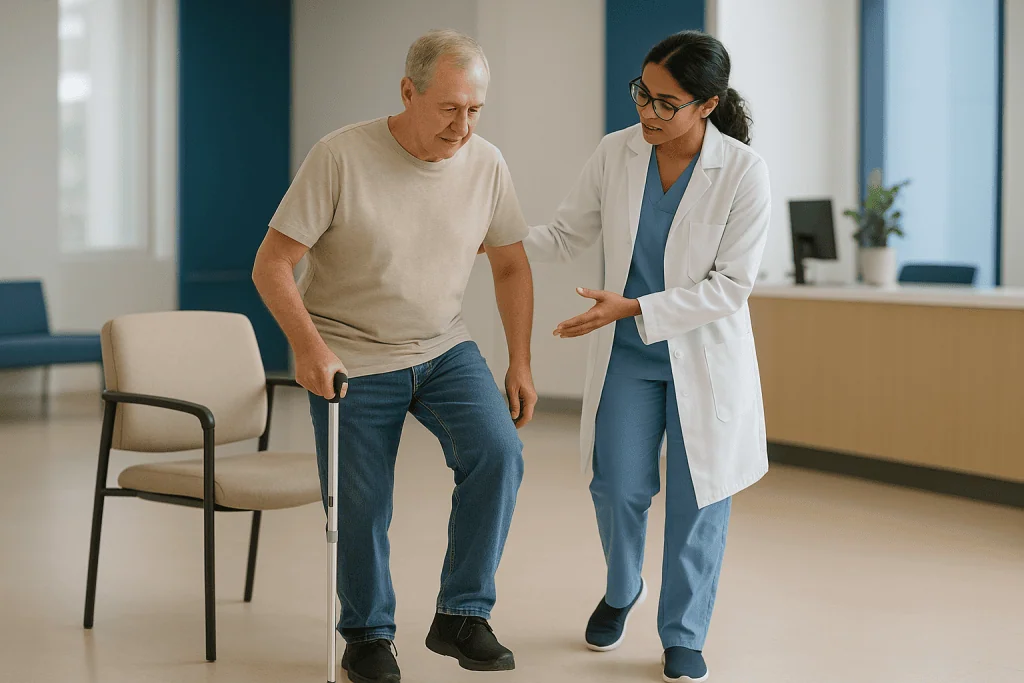
Stairs deserve a handrail on both sides. Outside, keep paths clear of leaves and ice, and consider a walking pole or cane on uneven ground; an occupational therapist can assess whether a mobility aid is appropriate and how to use it correctly, since an ill-fitted cane can worsen balance.
Get up slowly. If blood pressure drops on standing, a common feature when autonomic nerves are involved, sit on the edge of the bed for a minute before rising. Dizziness plus numb feet is a fall waiting for a floor.
Why is neuropathy worse at night?
Ask a room of people with neuropathy when their symptoms peak and most will say bedtime. Burning, tingling and electric jolts that were background noise during the day become the loudest thing in a quiet room. The Cleveland Clinic notes that neuropathic pain often feels worse at night, and several mechanisms are thought to combine.
The first is attention. During the day the brain is busy, and nerve signals from damaged fibers compete with conversation, work and movement. Lying still in the dark, those same signals have no competition. Nothing about the nerves has changed; the volume knob on awareness has.
The second is temperature. Damaged nerves are sensitive to temperature shifts, and a cool bedroom, cold feet or, conversely, feet that heat up under heavy blankets can all provoke firing. Some people find a light blanket or a bed cradle that lifts the covers off the feet reduces contact sensitivity, which clinicians call allodynia, meaning pain from a touch that should not hurt.
The third is circadian rhythm. The body’s natural anti-inflammatory hormone levels are lowest in the small hours, and pain perception in many chronic conditions follows a daily cycle. Poor sleep then feeds back: tired people feel pain more intensely the next day, and the cycle tightens.
Practical steps are mostly about breaking the loop rather than eliminating the sensation. Keep the room at a steady, comfortable temperature. Settle the feet before bed with a lukewarm, elbow-tested foot soak and a moisturizer, then dry thoroughly. Keep a consistent sleep and wake time. Avoid alcohol in the evening; it fragments sleep and is itself a nerve toxin. A gentle stretch or a short walk earlier in the evening helps some people.
If night pain is stealing sleep more nights than not, tell your care team. Sleep loss is a legitimate treatment target in its own right, and clinicians have options they can consider, some of which are covered in the medicines section below.
What diet is recommended for neuropathy in the feet?
There is no single diet proven to repair nerves, and any plan sold as one should be treated with suspicion. What mainstream evidence does support is narrower and more useful: eat in a way that controls the causes of neuropathy and avoids making it worse.
For the many people whose neuropathy stems from diabetes, glucose control is the dietary lever that matters most. The Mayo Clinic identifies steady blood sugar as the main way to slow progression of diabetic nerve damage. That generally means a pattern built on vegetables, whole grains, legumes, fruit, lean protein and unsaturated fats, with limited refined carbohydrates and sugary drinks. A registered dietitian can tailor this; the specifics depend on your medicines and targets.
Vitamin B12 deserves particular attention. Deficiency causes neuropathy directly, and the NIH Office of Dietary Supplements notes that older adults, people who eat little or no animal produce, and those taking certain long-term medicines for diabetes or stomach acid are at higher risk because absorption falls. B12 comes from meat, fish, eggs, dairy and fortified foods. Whether you need testing or supplementation is a question for your clinician, not a supplement aisle.
Alcohol is a direct nerve toxin and also depletes B vitamins. The NHS lists heavy drinking among the common causes of peripheral neuropathy, and cutting back or stopping is one of the few dietary changes with a clear mechanistic link to slowing damage.
A caution runs the other way. Taking large amounts of supplemental vitamin B6 over time can itself cause a sensory neuropathy, according to the NIH Office of Dietary Supplements. More is not better with nerves; a food-first approach is safer than stacking supplements.
Beyond that, the evidence for specific nutrients such as alpha-lipoic acid or acetyl-L-carnitine is mixed and of variable quality. They are studied, not established. If you are curious about any of them, raise it with your care team so it can be weighed against your other medicines rather than added quietly.
Where medicines fit in living with peripheral neuropathy, and where they don't
People are often surprised to learn that no widely used medicine repairs damaged peripheral nerves. What medicines can do falls into two groups: treating the underlying cause, and quieting the pain signals that damaged nerves generate. Understanding the difference saves a good deal of frustration.
Cause-directed treatment depends entirely on the diagnosis. Diabetes management, B12 replacement for a deficiency, immune therapies for autoimmune neuropathies, or adjusting a medicine that is itself causing nerve damage all belong here. These decisions sit with the prescribing team and are highly individual.
Pain-directed treatment is what most people mean when they ask about neuropathy medicine. The Mayo Clinic describes several classes used for neuropathic pain: certain anti-seizure medicines, certain antidepressants (used here for their effect on pain pathways rather than mood), and topical preparations applied to the skin. Ordinary over-the-counter pain relievers tend to work poorly for nerve pain because the pain is generated by the nerve itself rather than by inflamed tissue.
These medicines share a few features worth knowing. They act on how nerve signals are transmitted or processed, not on the damage. They are usually introduced gradually, and clinicians generally judge whether they are helping over a period of weeks rather than days. Benefit is partial for most people; a meaningful reduction in pain, better sleep, and more comfortable walking are realistic aims, while complete numbness of the pain is not. Side effects such as drowsiness or dizziness can, in themselves, increase fall risk, which is why the prescribing clinician weighs them against the balance concerns discussed earlier.
Non-drug approaches sit alongside. Physical therapy, transcutaneous electrical nerve stimulation (a device delivering mild electrical pulses through the skin), and psychological approaches for chronic pain are all listed in mainstream guidance, with evidence that ranges from moderate to limited.
Never change, stop or add a medicine on the basis of an article. If something is not working, or side effects are troubling, that conversation belongs with the person who prescribed it.
What the first weeks of a new routine usually look like
Most people leave a neuropathy appointment with a list rather than a single instruction. The realistic way to absorb it is in layers. The table below sets out how the daily-safety habits described in this article typically settle in; the timeframes are typical patterns described in mainstream guidance, not promises, and your own team may sequence things differently.
| Habit | What it protects against | How it usually settles in |
|---|---|---|
| Daily foot inspection | Unfelt wounds becoming ulcers | Feels tedious for the first week or two, then becomes automatic when tied to a fixed cue such as removing shoes |
| Protective footwear indoors and out | Punctures, pressure sores, stubbed toes | New shoes are broken in over short wears; feet checked after each wear for redness |
| Water temperature checks | Scalds | Immediate; a bath thermometer or elbow test needs no learning curve |
| Balance and strength exercises | Falls, muscle loss | Started under supervision if possible; gains in steadiness are typically gradual over weeks to months of regular practice |
| Home lighting and trip-hazard removal | Night-time falls | A single afternoon’s work for most homes, then a nightly glance |
| Cause-directed care (glucose, B12, alcohol) | Progression of nerve damage | Ongoing; any nerve recovery, where it happens at all, is slow and measured in months |
The first week is usually about logistics: buying a mirror, moving a lamp, finding socks without seams. The second and third weeks are about noticing how often you would previously have gone barefoot to the kitchen. By the end of the first month most people report the routines have stopped feeling like a medical regime and started feeling like housekeeping.
Symptoms themselves rarely change in that window, and that is worth saying plainly so it does not feel like failure. The point of these weeks is not to feel different. It is to stop things getting worse while cause-directed treatment does whatever it can, and to build the steadiness that keeps you upright on a bad day.
What people often get wrong about peripheral neuropathy
Misunderstandings about this condition are common, and some of them cause real harm. A few deserve direct correction.
“If it doesn’t hurt, it’s fine.” The opposite is closer to the truth. Loss of feeling is the more dangerous symptom because it removes the warning system. A painless foot with a blister is a higher-risk situation than a painful foot with intact skin. Inspection, not sensation, is the safety check.
“Neuropathy only happens to people with diabetes.” Diabetes is the most common cause, but the Mayo Clinic lists more than 100 types of peripheral neuropathy with causes ranging from vitamin deficiency and alcohol to chemotherapy, autoimmune disease, kidney disease, infections and inherited conditions. A substantial group has no identifiable cause.
“I should rest my feet as much as possible.” Inactivity weakens the muscles that protect balance and worsens circulation. Guidance from NINDS and the Mayo Clinic encourages regular, safe exercise. The goal is protected movement, not stillness.
“Warming numb feet is soothing and harmless.” Heating pads, hot water bottles and radiators are a well-documented source of burns in neuropathic feet, precisely because the skin cannot report when it is too hot. Warmth should come from socks and movement, not applied heat.
“Supplements can rebuild nerves.” Correcting a genuine deficiency, such as B12, can help nerves recover where the cell body has survived. Taking extra vitamins without a deficiency has no established benefit, and excess supplemental B6 can cause neuropathy, according to the NIH Office of Dietary Supplements.
“Nothing can be done, so there’s no point reporting changes.” Early reporting is how ulcers are caught while they are small, how a reversible cause is found before damage is fixed, and how a fall risk is addressed before the fall. It is the single behavior with the largest influence on how this condition plays out in daily life.
Questions to ask your care team
A good appointment is one you leave understanding your own situation better than you did walking in. Neuropathy is broad enough that generic advice only goes so far; these questions help make it specific to you.
- Do we know what is causing my neuropathy, and are there tests still worth doing to find out?
- If there is a cause, how much of the damage might improve if it is treated, and over roughly what period?
- Which nerve fibers are mainly affected in my case: sensory, motor, autonomic, or a mix? What does that mean for my risks?
- How often should my feet be professionally examined, and should I be seeing a podiatrist routinely?
- Would a referral to a physical therapist or occupational therapist for balance assessment and home safety be appropriate for me?
- Do any of my current medicines increase my fall risk or could any be contributing to nerve damage?
- Should my vitamin B12 be checked, and is my alcohol intake something we should discuss?
- If we try a medicine for nerve pain, how will we judge whether it is working, and roughly how long should that take?
- What specific changes in my feet or my walking should prompt me to contact you before my next scheduled visit?
- Is there anything about my work, driving or hobbies that I should adapt for safety?
Take notes, or bring someone who will. Ask for the names of anything unfamiliar to be written down. If the answers involve numbers, such as targets for blood sugar or a follow-up interval, ask what they mean for you rather than accepting them as abstractions.
You are entitled to ask what the evidence says and where it runs out. A clinician who tells you honestly that something is uncertain is giving you better information than one who promises results.
When to call your doctor
Most of living with peripheral neuropathy is steady and unhurried. A few situations are not, and knowing them in advance removes the temptation to wait and see.
Contact your care team the same day if you notice any new break in the skin of the foot, including a blister, cut, crack or ulcer; any area of redness, warmth or swelling, especially if the other foot looks different; discharge, blood or an unpleasant smell from the foot or a sock; or a nail that has become painful, discolored or is lifting. In a numb foot with reduced circulation, infection can spread beneath skin that looks only mildly wrong on the surface.
Seek urgent medical attention, without waiting for a routine appointment, if any of the following occur:
- Weakness, numbness or tingling that spreads rapidly, over hours or days, or that moves up from the feet toward the trunk.
- Sudden difficulty walking, new foot drop, or a fall that leaves you unable to bear weight.
- Trouble with breathing or swallowing, or a face that droops on one side.
- Loss of bladder or bowel control.
- A foot or toe that turns dark, cold or pale, which can indicate a blocked blood supply.
- A foot wound accompanied by fever, chills or feeling generally unwell.
Rapidly progressing neuropathy in particular can signal conditions that need prompt, specific treatment, and NINDS and the NHS both flag it as a reason for immediate assessment.
Less urgently, but still worth a call, are night pain that regularly prevents sleep, dizziness on standing, side effects from a nerve-pain medicine, or a growing fear of falling that is keeping you at home. Each is a legitimate reason to be seen and each has options.
Every decision about what these signs mean, and what to do about them, rests with the team who knows your history. Their job is easier, and your outcome safer, when they hear early.
Frequently asked questions
Can I live a normal life with peripheral neuropathy?
Most people do, with routines added rather than activities removed. Peripheral neuropathy is usually managed rather than reversed, and its effect on daily life depends less on the numbness itself than on preventing what follows it: unfelt foot wounds, falls, and lost sleep. Daily foot checks, protective shoes, balance training and steady management of the underlying cause let most people keep working, traveling and exercising with sensible adaptations.
What are the symptoms of nerve damage in peripheral neuropathy?
Symptoms depend on which nerve fibers are affected. Sensory damage commonly produces numbness, tingling, burning, or pain from light touch, usually starting in the toes and spreading upward. Motor damage brings weakness, cramps or changes in foot shape. Autonomic damage can cause dry cracked skin, dizziness on standing or digestive changes. Only a clinician can confirm the diagnosis and its cause; any new or rapidly changing symptoms should be assessed promptly.
Why is neuropathy worse at night?
Night pain is very common and is thought to reflect several factors rather than any worsening of the nerves. With fewer distractions, the brain notices nerve signals that were background noise during the day. Cooler temperatures and contact with bedding can trigger sensitive fibers. Natural daily hormone rhythms also lower pain thresholds overnight. Steady room temperature, a consistent sleep schedule, avoiding evening alcohol and lifting covers off the feet help some people.
What diet is recommended for neuropathy in the feet?
No specific diet has been shown to repair nerves. What helps is eating to control the cause: for diabetes, a pattern that keeps blood sugar steady; for everyone, adequate vitamin B12 from meat, fish, eggs, dairy or fortified foods; and limiting or avoiding alcohol, which is a direct nerve toxin. Large amounts of supplemental vitamin B6 can cause neuropathy, so a food-first approach is safer than adding supplements without medical advice.
What does good peripheral neuropathy foot care look like day to day?
Inspect both feet in good light every evening, including the soles and between the toes, using a mirror if needed. Look for redness, blisters, cracks, swelling, warmth or discharge. Wash and dry carefully, moisturize the tops and soles but not between toes, and keep nails trimmed straight across or have a podiatrist do it. Wear closed, well-fitting shoes with socks at all times, and never walk barefoot.
Which balance exercises for neuropathy are safe to start at home?
The safest starting point is a program set by a physical therapist, especially if you have weakness or have fallen. Common elements include standing with feet together and then on one leg while holding a counter, heel-to-toe walking along a wall, sit-to-stand repetitions from a firm chair, and calf raises. Always exercise in shoes, in good light, near something stable, and pause if a new foot wound appears.
Does peripheral neuropathy get worse over time?
It depends on the cause and how well that cause is controlled. Neuropathy from untreated diabetes or ongoing heavy alcohol use tends to progress; neuropathy from a corrected vitamin B12 deficiency may improve. Chemotherapy-related neuropathy sometimes eases after treatment ends. Nerves regrow slowly and only if the nerve cell body has survived, so any recovery is measured in months and is not guaranteed. Your care team can give a view based on your diagnosis.
Why can't I feel hot water on my feet, and is that dangerous?
Yes, it is one of the more common ways people with neuropathy are injured. The small nerve fibers that sense temperature are often among the first damaged, so water that would scald a healthy foot may feel merely warm or not register at all. Test bath and shower water with an elbow or a thermometer before stepping in, and avoid heating pads, hot water bottles and radiators near the feet.
Can peripheral neuropathy cause falls even if I don't feel dizzy?
It can. Balance relies partly on the nerves in the feet reporting where the ground is and how your weight is shifting. When that information is degraded, the brain has less warning to correct a stumble, particularly in the dark or on uneven surfaces where vision cannot compensate. Weakness in the ankles and feet adds to the risk. Good lighting, clear floors, handrails and regular balance training all help.
Do medicines for neuropathy repair the nerves?
No widely used medicine repairs damaged peripheral nerves. Medicines fall into two groups: those treating the underlying cause, such as diabetes management or vitamin replacement, and those quieting the pain signals that damaged nerves produce, including certain anti-seizure medicines, certain antidepressants and topical preparations. Pain medicines typically offer partial relief judged over weeks, and can cause drowsiness or dizziness. All decisions about starting or changing them belong with your prescribing clinician.
References
- Peripheral neuropathy – NHS
- Peripheral Neuropathy – National Institute of Neurological Disorders and Stroke (NIH)
- Peripheral Neuropathy – Cleveland Clinic
- About Older Adult Fall Prevention – CDC
This article is for general information only and is not a substitute for professional medical advice. Please consult a qualified doctor about your individual situation.

More from the Blog

Medication-Overuse Headache: Why Headache Medicine Plans Watch Pain Reliever Use Closely
Medication-overuse headache is a near-daily headache that develops when acute pain relievers are taken on many days each month for several months, so the…
What Does an MRI Show in Spinal Cord Disorders, and Which Other Tests Follow?
An MRI shows the spinal cord itself in fine detail: swelling, inflammation, compression from a disc or bone, tumors, bleeding, fluid-filled cavities and scarring.…

MRI, Lumbar Puncture or Evoked Potentials: Which Tests Confirm a Demyelinating Disease?
No single test confirms a demyelinating disease. Doctors combine a neurological examination with MRI of the brain and spinal cord, which shows areas of…
How Deep Brain Stimulation Surgery Is Performed: Electrodes, Testing and the Pulse Generator
Deep brain stimulation surgery is usually performed in stages. Surgeons use MRI and CT images to plan a target deep in the brain, open…
Supporting a Deafblind Family Member: Communication Training, Mobility and Safety Routines
Supporting a deafblind family member means three things together: learning the communication method that fits their remaining sight and hearing, whether clear speech, tactile…

Inside Microvascular Decompression: How Trigeminal Neuralgia Surgery Cushions the Nerve
Microvascular decompression is an operation for trigeminal neuralgia in which a surgeon opens a small window in the skull behind the ear, finds the…