

Microneedling for Hair Loss: How It Boosts Minoxidil and What Trials Show
Key Takeaways
- In the landmark 2013 randomized trial of 100 men, weekly microneedling plus topical minoxidil increased hair count by about 91 hairs per square centimeter over 12 weeks, versus roughly 22 with minoxidil alone.
- Every positive trial combined microneedling with an established medicine; evidence for microneedling used entirely on its own is limited to a few small studies.
- Pooled analyses rate the certainty of the evidence as low to moderate because trials were short (12–24 weeks), small, mostly in men and varied widely in device, depth and frequency.
- No trial used daily needling; protocols ranged from weekly to monthly, because the healing response that drives the benefit takes days to unfold and over-needling adds inflammation.
- Needled skin absorbs far more of whatever is applied, which is why essential oils, unregulated serums and immediate minoxidil application carry amplified risks of allergic reaction and systemic effects.
- Microneedling has only been studied in pattern hair loss; patchy, sudden or inflamed hair loss points to conditions that should be diagnosed and treated differently.
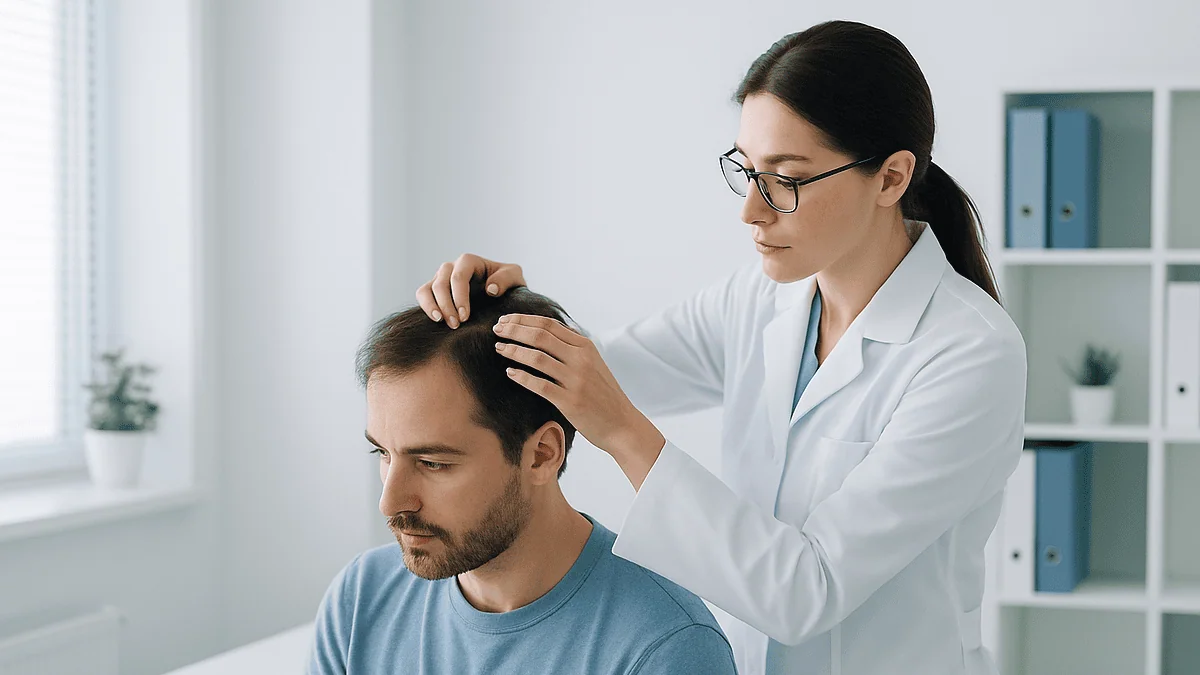
Microneedling uses fine needles to make controlled micro-injuries in the scalp, and small randomized trials show that adding it to topical minoxidil increases hair counts in pattern hair loss more than minoxidil alone. The evidence is promising but limited: trials are short, small and varied in technique, so protocols, frequency and safety should be set by a dermatologist rather than copied from online videos.
Open any short-video app this month and you will find someone rolling a spiked drum across a receding hairline, serum glistening, promising a thicker crown by spring. Search interest in microneedling hair treatment has climbed alongside those clips, helped by a steady drip of pooled analyses suggesting that needling the scalp makes topical minoxidil work harder, and by the perennial question of what one famous tech billionaire did to his hairline. As of September 2026, the idea has moved from dermatology conferences to bathroom counters.
The science underneath the trend is real but slimmer than the enthusiasm. Roughly a dozen randomized trials, most of them small and short, have compared minoxidil with and without microneedling. They point the same direction. They also leave big questions open about needle depth, frequency, who benefits and what happens when a device meant for a clinic is used weekly, unsupervised, on a scalp that was never examined.
This piece walks through what the trials measured, how the procedure is thought to work, where it can go wrong, and the moment a thinning scalp needs a clinician rather than a roller.
Does microneedling actually work for hair growth?
The short version: in men with androgenetic alopecia, the common inherited pattern of thinning driven partly by hormones, microneedling combined with topical minoxidil has outperformed minoxidil alone in randomized trials. The best-known study, published in 2013, randomized 100 men to weekly microneedling plus minoxidil or minoxidil alone for 12 weeks. Hair counts in a marked square centimeter rose by about 91 hairs in the combination group against roughly 22 in the minoxidil-only group. Four in five men in the combination group judged their improvement greater than 50 percent; fewer than one in twenty said the same with minoxidil alone.
That is a striking gap, and it is why the trial is quoted in nearly every microneedling hair video online. It is also a single-center, 12-week study with evaluator blinding but no sham procedure, which means expectation could have colored the self-ratings even though the hair counts were made by assessors who did not know the group assignment.
Later trials, mostly from India, China and the Middle East, have been similar in size and direction. Pooled analyses find the combination raises hair density more than minoxidil alone, with high variation between studies in device type, needle length, frequency and how results were measured. Microneedling used entirely on its own has far less data; a few small trials report modest gains, not enough to recommend it as a stand-alone treatment.
So the honest answer is yes, there is a genuine signal, and it is strongest when needling is paired with an established medicine. What the evidence does not yet show is how durable the gains are beyond six months, whether women respond the same way, or what the safest protocol looks like for someone doing this at home.
What changed recently in microneedling hair research
Nothing dramatic happened in a single week. The trend is cumulative, which is often how a treatment idea tips from niche to mainstream.
The foundation was laid in 2013, when the randomized, evaluator-blinded trial of 100 men described above appeared in a peer-reviewed trichology journal and is indexed on PubMed. Between 2017 and 2023, a cluster of further randomized studies tested needling alongside minoxidil, finasteride (an oral prescription medicine that lowers a hormone linked to follicle shrinkage) or platelet-rich plasma. Several systematic reviews then pooled those trials and reported a consistent advantage for combination therapy on hair count, while flagging small samples, short follow-up and risk of bias.
Mainstream patient-information sources caught up. Cleveland Clinic now lists hair loss among the conditions for which microneedling is used, placing it beside acne scarring and fine lines, and describes the procedure, typical recovery and side effects in plain terms. Mayo Clinic’s hair loss pages continue to center minoxidil, finasteride and, for suitable candidates, hair transplantation as the established options, which is a useful reminder of where needling sits: an adjunct, not a replacement.
The other change is cultural. Low-cost rollers and motorized pens are sold widely for cosmetic use, and creators have translated clinic protocols into weekly home routines, often paired with serums that have no trial evidence at all. That shift, from a supervised procedure to a do-it-yourself habit, is what makes the current moment worth examining carefully rather than simply celebrating.
What has not changed: no major guideline body recommends microneedling as a first-line treatment for pattern hair loss, and no large, long-term trial has yet been completed.
How microneedling hair treatment is thought to work
A hair follicle is a tiny organ with its own stem cells and its own cycle. It grows for two to six years, rests for a few months, sheds, then starts again. In pattern hair loss, follicles gradually miniaturize, producing finer, shorter hairs until some stop producing visible hair at all.
Microneedling introduces hundreds of controlled micro-wounds into the upper layers of the scalp. The wounds are too shallow to scar when done properly, but deep enough to trigger a healing cascade. Three mechanisms are proposed, and it is worth saying plainly that most of the supporting data comes from laboratory and animal studies rather than human trials.
First, injury activates platelets and local cells to release growth factors, the signaling proteins such as platelet-derived growth factor and vascular endothelial growth factor that coordinate repair and encourage new blood vessel formation around follicles.
Second, wound healing switches on the Wnt pathway, a chain of chemical signals that tells hair follicle stem cells in a region called the bulge to wake up and begin a new growth phase. Mouse studies show wounding can even generate new follicles, although that has not been demonstrated in human scalp.
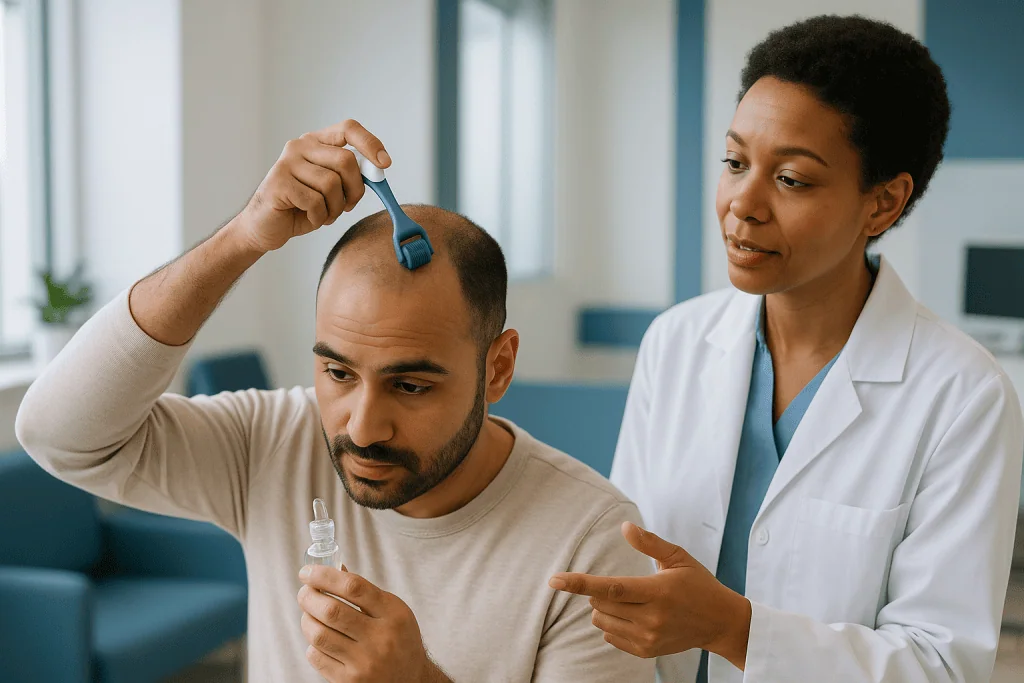
Third, and most practically, needling punches temporary channels through the stratum corneum, the dead outer layer of skin that blocks most topical medicines. Minoxidil applied after needling likely reaches the follicle in greater amounts. This also explains why some trial protocols delayed the minoxidil application rather than applying it immediately, to limit how much of the medicine entered the bloodstream.
Put together, the theory is elegant. The human evidence, so far, only confirms the outcome, more hairs, not which mechanism deserves the credit.
Why microneedling with minoxidil may work better than either alone
Minoxidil is the only topical medicine approved specifically for pattern hair loss in both men and women. MedlinePlus describes it as a treatment that stimulates hair growth and slows loss, used continuously, with results that fade if it is stopped. Its exact mechanism is still debated; it widens blood vessels, prolongs the growth phase of the follicle and appears to activate potassium channels in follicle cells.
Here is the problem it runs into. Minoxidil is applied as a liquid or foam to skin designed to keep things out. Only a fraction penetrates. On a scalp where follicles are shrinking and blood supply is thinning, that fraction may simply not be enough for some people, which matches real-world experience: a sizeable minority of users see little change after months of faithful application.
Microneedling attacks both halves of that problem. The channels increase penetration, and the healing response may independently nudge dormant follicles. In the 2013 trial, the difference in hair count between groups was already visible by week 12, suggesting the effect is not just better delivery but also a biological head start.
Trials that paired needling with finasteride, or with minoxidil in people who had previously failed minoxidil, add to the picture. One small study in men who had not responded to minoxidil or finasteride reported new growth after adding needling, though without a control group the result is suggestive rather than conclusive.
None of this makes microneedling a substitute for the medicine. Every positive trial kept minoxidil in the protocol. Anyone tempted to stop a prescribed treatment because a roller seems to be working should raise that with the clinician who prescribed it, because the gains measured in trials belonged to the combination.
What the evidence actually says, graded by strength
Evidence in medicine is not all the same weight, and the microneedling literature is a good lesson in why that matters.
Strongest layer: randomized controlled trials of combination therapy. Around a dozen trials, mostly 12 to 24 weeks long, with sample sizes from a few dozen to one hundred participants, consistently show higher hair counts when microneedling is added to topical minoxidil. This is genuine randomized evidence, and the direction is consistent. Its limits are equally real: short duration, small size, mostly men, almost no sham-controlled designs, and wide differences in needle length, device and frequency that make pooling imprecise.
Middle layer: systematic reviews and meta-analyses. These pool the trials above and confirm the advantage of combination therapy on hair density. Several rate the certainty of evidence as low to moderate because of heterogeneity and risk of bias. A meta-analysis cannot be stronger than the trials it contains.
Weaker layer: microneedling alone. A handful of small trials and case series suggest some benefit on its own, but the data are too thin for a recommendation.
Weakest layer: add-ons. Claims about needling with exosomes, peptide serums, caffeine, rosemary oil or resveratrol rest on laboratory work, tiny open-label series or no published human data at all.
Mechanistic layer: animal and lab studies. These explain how needling might work but do not prove it works in people.
What a careful clinician takes from this: microneedling is a reasonable adjunct to discuss for pattern hair loss when standard medicine is in place and results are plateauing. It is not an evidence-based treatment for patchy alopecia areata, scarring alopecias or diffuse shedding from illness or iron deficiency, where the cause, not the delivery system, is the issue.
Microneedling vs minoxidil vs combination: a comparison table
The table below summarizes how the main options for pattern hair loss compare on the kind of evidence behind them and what trials measured. It is a map, not a prescription; the right combination for an individual scalp belongs to the examining clinician.
| Approach | Evidence type | What trials measured | Main cautions |
|---|---|---|---|
| Topical minoxidil alone | Large randomized trials; regulatory approval for men and women | Increased hair count and slowed loss over 6–12 months; benefit lost if stopped | Scalp irritation, early shedding, unwanted facial hair; continuous use required |
| Oral finasteride (men) | Large randomized trials; approved for male pattern loss | Slowed loss and regrowth over 12 months and beyond | Prescription only; sexual and mood side effects reported in a minority; not for use in pregnancy |
| Microneedling alone | A few small trials and case series | Modest hair count gains in some studies | Insufficient data to recommend as stand-alone treatment |
| Microneedling plus minoxidil | Around a dozen small randomized trials, 12–24 weeks | Roughly four times the hair count gain versus minoxidil alone in the landmark 2013 trial; consistent advantage in pooled analyses | Short follow-up; mostly men; protocols vary; infection, pigment change, scarring if done poorly |
| Microneedling plus PRP or exosomes | Small trials for PRP; almost none for exosomes | PRP shows some density gains; exosome data largely preclinical | Exosome products are not approved for hair loss; variable preparation |
| Hair transplantation | Long surgical experience; observational outcome data | Permanent redistribution of existing follicles | Surgery; does not stop ongoing loss elsewhere; often combined with medicine |
Two things stand out. The best-studied intervention remains the medicine, and the most exciting numbers belong to a combination that still depends on it. The newest products at the bottom of the table have the loudest marketing and the thinnest rows.
Derma roller for hair growth at home versus in-clinic devices
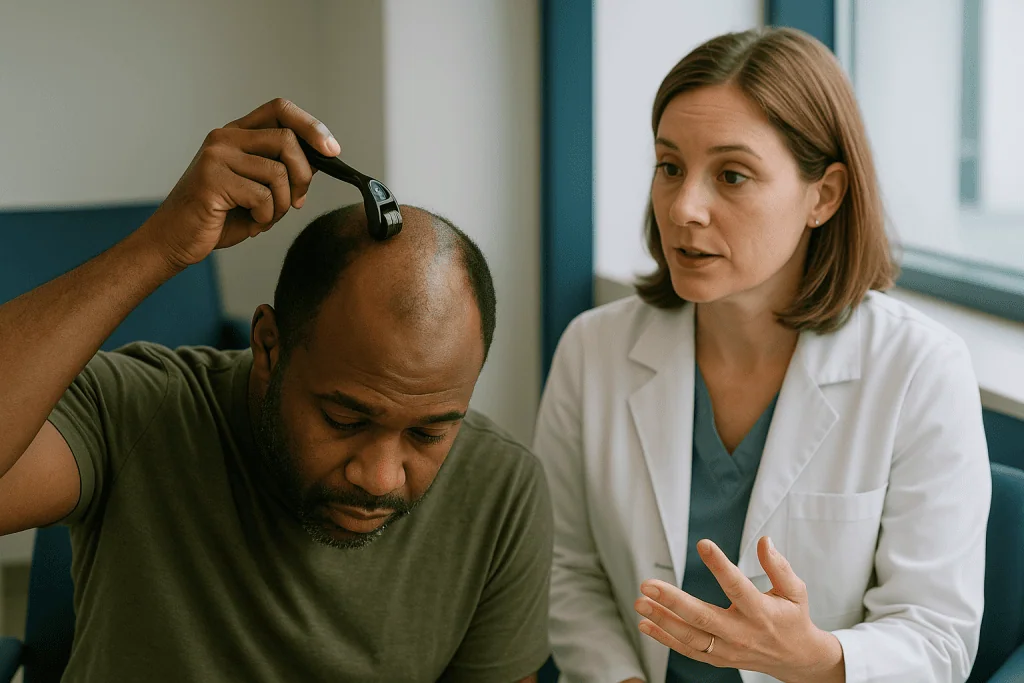
The derma roller, a small drum studded with needles that is rolled across the skin, is the device in most viral videos. Clinics more often use motorized pens that stamp needles vertically at adjustable depth, or radiofrequency devices that add heat. Trials have used both rollers and pens, which is one reason protocols are hard to compare.
The distinction matters less for the mechanism than for the margin of error. A rolling needle enters the skin at an angle and exits at another, producing a tiny tear rather than a clean puncture. On a scalp with hair in the way, the roller also drags. In trained hands, with a sterile device, this is manageable. On a bathroom counter, with a roller reused for months and rinsed under the tap, several problems arrive together: dull needles that tear more, bacterial contamination, inconsistent pressure and no one checking the skin first.
Cleveland Clinic’s description of microneedling emphasizes that it is a procedure performed by a dermatologist or trained professional under sterile conditions, with the skin assessed beforehand. That framing is not gatekeeping. The scalp hosts a dense population of bacteria and yeast; puncturing it hundreds of times is an invitation to folliculitis, an infection of the follicles that itself causes hair loss.
Consumer rollers are typically sold for cosmetic skin use and are not marketed as hair-loss devices, which places them outside the protocols the trials actually tested. Shorter needles sold for home use are less likely to cause scarring but also less likely to replicate trial results. Anyone considering a derma roller for hair growth should treat it as a medical decision, discuss it with the clinician managing their hair loss and, if it goes ahead, follow that clinician’s instructions on hygiene, pressure and what may be applied afterward.
How often to microneedle the scalp: what the trials used
The most-asked practical question is frequency, and the trials give a range rather than a rule. The 2013 study needled once a week for 12 weeks. Later studies have spaced sessions anywhere from weekly to every three weeks, and a few used monthly sessions with deeper needles in a clinic setting. Pooled analyses have not been able to identify an optimal interval because the trials differ in too many other ways at once.
Biology offers a reasoning framework. The healing response that is thought to drive the benefit takes days to unfold; the growth factors released peak within the first day or two and the tissue remodels over a week or more. Needling again before the skin has recovered does not add stimulation, it adds inflammation, and chronic inflammation is one of the processes implicated in follicle miniaturization in the first place. This is why no trial has used daily needling, and why dermatologists tend to look askance at online routines that recommend it.
Depth interacts with frequency. The longer needles used in some clinic protocols reach the deeper dermis where follicles sit and demand longer recovery between sessions. Very short needles, which mostly open channels in the outer skin, are sometimes used more often in cosmetic settings but have not been well tested for hair.
Timing of minoxidil also varies. Some protocols applied the medicine a day after needling to reduce absorption into the bloodstream; others applied it the same day. Lightheadedness and a racing heartbeat after applying minoxidil to freshly needled skin have been described, which is a reminder that a channel open to a medicine is also a channel open to its systemic effects.
The responsible answer to “how often” is therefore: as often as the clinician supervising your treatment decides, based on your device, your skin and your other treatments.
What is the downside of microneedling? Side effects and risks
Done well, microneedling is a low-risk procedure. Done poorly or too often, it has a recognizable list of problems, several of which can worsen hair loss.
Expected and short-lived. Redness, pinpoint bleeding, tenderness and mild swelling are normal for one to three days. Some people notice a little extra shedding in the weeks after starting, which also happens with minoxidil and usually reflects follicles cycling into a new growth phase rather than damage.
Infection. Folliculitis, impetigo and, rarely, deeper skin infections have followed microneedling, almost always linked to non-sterile devices, shared rollers or applying unsterile products afterward. Signs include spreading redness, warmth, pus, crusting or fever.
Pigment change. People with darker skin are more prone to post-inflammatory hyperpigmentation, a darkening of skin after injury, and occasionally to lighter patches. This is more likely with aggressive technique or sun exposure soon after treatment.
Scarring. Linear “tram-track” scars have been reported from rollers used with heavy pressure, and people prone to keloids, raised scars that grow beyond the original wound, can develop them on the scalp.
Reactions to topicals. Needled skin absorbs far more of whatever is applied. Allergic contact dermatitis to serums, essential oils or preservatives, which might cause a mild rash on intact skin, can become a severe, weeping reaction on punctured skin. Granulomas, small inflammatory lumps, have followed the application of cosmetic products not designed for broken skin.
Systemic absorption. Minoxidil applied to freshly needled scalp can enter the bloodstream in larger amounts, with reports of dizziness, palpitations and headache.
None of these risks is a reason to dismiss the treatment. They are the reason it was designed as a supervised procedure.
Who is a candidate and who should avoid microneedling for hair loss
Microneedling has been studied in one condition: pattern hair loss, mostly in men between their twenties and fifties with mild to moderate thinning who still have miniaturized follicles to stimulate. That is the group in which the randomized evidence applies. Women with female pattern hair loss have been included in a few trials, and the biology suggests a similar response, but the data are too sparse to be confident about effect size.
The procedure is not an evidence-based option for other causes. Alopecia areata, an autoimmune condition producing round, smooth bald patches, is treated with medicines that calm the immune attack, and needling an area under immune assault has no trial support. Scarring alopecias, a group of inflammatory conditions that permanently destroy follicles, are a particular concern; several dermatologists have cautioned that wounding an already inflamed scalp could accelerate damage, and these conditions can mimic ordinary thinning in their early stages. Telogen effluvium, the diffuse shedding that follows illness, surgery, childbirth, crash dieting or iron deficiency, resolves when its trigger is addressed and does not need a roller.
Beyond the diagnosis, certain situations make microneedling a poor idea regardless of cause. Active scalp infection, acne, psoriasis or eczema at the site. A bleeding disorder or anticoagulant therapy, where pinpoint bleeding becomes something more. A history of keloid scarring. Uncontrolled diabetes or immune suppression, which slow healing and raise infection risk. Recent isotretinoin treatment, which some clinicians regard as a reason to delay elective skin procedures. Pregnancy and breastfeeding, where minoxidil is not recommended and elective procedures are generally postponed.
The screening step is simple: an examination of the scalp, sometimes with a dermatoscope, a handheld magnifier, and occasionally blood tests or a small biopsy. It takes a few minutes and determines whether needling is even the right conversation.
Common myths about microneedling hair treatment, corrected
“Microneedling alone regrows a full head of hair.” No trial shows that. The positive results come from needling combined with minoxidil, and even then the gains were measured in hairs per square centimeter over a few months, not in full restoration. Follicles that have fully disappeared do not return with any non-surgical treatment.
“Deeper and more often is better.” Trials used weekly or less frequent sessions, never daily. Over-needling creates chronic inflammation and raises the risk of scarring and pigment change, both of which can cost hair rather than grow it.
“This is what Elon Musk used.” The question tops search results, so it deserves a straight answer. Musk has not published any medical account of his hair, and no clinician has spoken on his behalf. Commentators comparing older and newer photographs generally attribute the change to hair transplantation, a surgical procedure that moves follicles from the back of the head to thinning areas. Whatever the truth, a celebrity’s unverified regimen is anecdote, not evidence, and it tells you nothing about what will work on a different scalp.
“Needling with exosome or growth-factor serums is the real breakthrough.” Exosomes, tiny packets of signaling molecules released by cells, are an active research area. No exosome product is approved for hair loss, and human trial data are almost nonexistent. Applying an unregulated biological product to freshly punctured skin adds risk without proven benefit.
“If it bleeds, it is working.” Pinpoint bleeding is common and acceptable; heavier bleeding means excessive depth or pressure.
“You can stop minoxidil once needling takes over.” Every trial kept the medicine in place. Stopping minoxidil, with or without needling, has repeatedly been followed by loss of the hair it maintained. Any change to a prescribed treatment should go through the prescriber.
Microneedling with PRP, exosomes and other add-ons: where they stand
Because needling opens the skin, it has become a delivery platform for almost everything a clinic or influencer wants to sell. The evidence behind the passengers varies enormously.
Platelet-rich plasma (PRP) is a concentrate of the patient’s own platelets, prepared by spinning a blood sample, then injected into or applied onto the scalp. Small randomized trials suggest PRP increases hair density in pattern hair loss, and a few have combined it with microneedling with encouraging but preliminary results. Preparation methods differ so much between clinics that comparing studies is difficult. PRP is widely performed and uses the patient’s own tissue, which limits some risks, but it is not approved as a hair-loss treatment and insurers generally regard it as unproven.
Exosomes are vesicles released by cells that carry proteins and genetic signals. Laboratory studies show they can influence follicle cells. In most countries, exosome products for hair are not approved for any medical use; they are marketed as cosmetics or research materials, and regulators have warned about unapproved exosome therapies. They are not for self-use, and a topical “exosome serum” applied after home needling is an unregulated product entering compromised skin.
Botanicals and cosmeceuticals. Rosemary oil, caffeine, resveratrol, peptide serums and similar products have small or no human trials for hair, and essentially none in combination with needling. Essential oils are among the more common causes of allergic contact dermatitis, a risk amplified on punctured skin.
Finasteride and dutasteride. Oral finasteride is approved for male pattern loss; topical formulations and dutasteride are off-label for this use in most places. Some trials paired these with needling. The decision to use any off-label medicine, with or without needling, belongs to the treating clinician after a discussion of benefits and side effects.
The principle is simple. Needling may improve delivery, but it cannot improve what is being delivered.
What realistic results look like and how long they take
Hair is slow. A follicle that is nudged into a new growth phase today produces a hair that becomes visible at the surface weeks later and reaches cosmetic length months after that. In the trials, hair counts separated between groups by 12 weeks, but photographs and self-ratings tended to improve more over 24 weeks. Expecting a visible change in a month sets up disappointment and, often, over-treatment.
What “improvement” meant in the studies is also worth translating. A gain of 90 hairs in a square centimeter sounds dramatic and is meaningful, but a square centimeter is roughly the area of a fingernail, and the gains were concentrated in regions that still had miniaturized follicles. Areas of smooth, shiny scalp, where follicles have been lost, did not fill in. Participants typically described thicker coverage and a less visible scalp under light, not a restored hairline.
Durability is the biggest unknown. Few trials followed participants beyond six months, and almost none assessed what happened when needling stopped while minoxidil continued, or vice versa. The reasonable assumption, drawn from how pattern hair loss behaves with every other treatment, is that the underlying process continues and maintenance is needed. Whether that maintenance means ongoing sessions, less frequent sessions, or minoxidil alone after an initial course is not yet answered by research and will be an individual decision.
Measurement helps keep expectations honest. Clinics often photograph the scalp under standardized lighting at baseline and at intervals, and some count hairs in a marked area, the same methods the trials used. Someone treating at home has neither, which is one more reason results in videos should be read with caution: lighting, hairstyle, camera angle and wet versus dry hair change apparent density far more than most treatments do.
When to see a doctor about hair loss or after microneedling
Two situations call for a clinician: the hair loss itself, and complications after a procedure.
Before any treatment, see a doctor or dermatologist if hair loss is sudden or rapid, if it comes out in clumps, if it forms round or irregular patches rather than a gradual pattern at the temples and crown, or if the scalp is itchy, painful, scaly, red or has pustules. These features can point to alopecia areata, scarring alopecia, fungal infection or an inflammatory skin condition, none of which should be needled and all of which have their own treatments. Shedding that starts a few months after illness, surgery, childbirth, significant weight loss or a new medicine deserves a conversation about the trigger rather than a roller. Hair loss alongside fatigue, weight change, irregular periods, acne or new facial hair in women can signal thyroid or hormonal conditions that a blood test can identify. The NHS and Mayo Clinic both advise seeking advice when hair loss is distressing, sudden or accompanied by other symptoms.
After microneedling, seek care promptly for spreading redness or warmth, swelling that worsens after the second day, pus, yellow crusting, increasing pain, fever or chills. Hives, intense itching or a weeping rash in the hours after a serum or minoxidil was applied suggests an allergic reaction. Dizziness, fainting, a racing or irregular heartbeat, chest discomfort or sudden swelling of the hands or feet after applying minoxidil to needled skin are red flags for systemic absorption and warrant same-day medical attention. New bald patches, scarring, shiny hairless areas or dark or light patches appearing at treated sites should also be examined.
Finally, if you are using minoxidil, finasteride or any other prescribed treatment and are thinking about adding, reducing or stopping anything, the person to tell first is the clinician who prescribed it. The trials that justify microneedling tested it as an addition to supervised care, and that is the setting in which its benefits and risks are understood.
Frequently asked questions
Does microneedling work for hair loss on its own?
The evidence for microneedling by itself is thin. A few small trials and case series report modest hair count gains, but nearly all the randomized evidence comes from microneedling combined with topical minoxidil, where the combination outperformed the medicine alone. Dermatologists generally consider needling an adjunct to established treatment for pattern hair loss, not a replacement, and the decision to add it should be made with the clinician managing your hair loss.
What did Elon Musk use to regrow his hair?
He has never published a medical account, and no clinician has spoken for him. Observers comparing photographs usually attribute the change to hair transplantation, a surgical procedure that moves follicles from the back of the head to thinning areas, not to microneedling or a particular product. An unverified celebrity regimen is anecdote, not evidence, and says nothing about what would suit a different scalp or cause of hair loss.
What is the downside of microneedling for hair?
Short-term redness, pinpoint bleeding and tenderness are expected for a day or three. The real downsides come from poor technique or hygiene: scalp infection, folliculitis, post-inflammatory darkening of the skin, linear scarring from heavy pressure, severe reactions to products applied on punctured skin, and increased absorption of minoxidil into the bloodstream, which can cause dizziness or palpitations. Over-needling can worsen inflammation and hair loss.
How often should I microneedle my scalp for hair growth?
Trials used sessions ranging from once a week to once a month, never daily, and research has not identified an optimal interval because studies differed in device, depth and other treatments. The healing response takes days to unfold, so needling too frequently adds inflammation rather than stimulation. Frequency should be set by the clinician supervising your treatment, based on the device, your skin type and anything else you apply.
Is a derma roller for hair growth safe to use at home?
Home rollers are sold for cosmetic skin use and sit outside the protocols trials tested. They carry higher risks than clinic treatment because of dull or contaminated needles, inconsistent pressure, dragging through hair and no prior examination of the scalp to rule out conditions that should not be needled. If a clinician agrees home use is appropriate, their instructions on sterilization, technique and what may be applied afterward should be followed exactly.
How does microneedling with minoxidil work better than minoxidil alone?
Two mechanisms are proposed. Needling opens temporary channels through the outer skin barrier so more minoxidil reaches the follicles, and the controlled injury triggers release of growth factors and signaling pathways that may push resting follicles into a growth phase. In the 2013 trial the combination roughly quadrupled the hair count gain seen with minoxidil alone over 12 weeks, though which mechanism deserves credit has not been proven in humans.
How long does it take to see results from microneedling for hair loss?
Trials detected differences in hair counts at around 12 weeks, with photographs and participant ratings improving further by 24 weeks. Because a newly stimulated follicle takes weeks to produce a visible hair and months to reach cosmetic length, expecting change within a month is unrealistic. How long results last after stopping is not well studied; pattern hair loss is a continuing process, so some form of maintenance is likely needed.
Can microneedling help alopecia areata or scarring hair loss?
There is no trial evidence supporting microneedling for alopecia areata, an autoimmune condition causing smooth round patches, and clinicians caution against it in scarring alopecias, where wounding an already inflamed scalp could speed permanent follicle loss. Both conditions can resemble ordinary thinning early on, which is why a scalp examination, and sometimes a biopsy, should come before any needling. These conditions have their own established treatments.
Should I apply minoxidil right after microneedling?
Some trial protocols applied minoxidil a day after needling specifically to limit how much entered the bloodstream, while others applied it the same day. Freshly punctured skin absorbs far more medicine, and dizziness, headache and a racing heartbeat have been reported after immediate application. The timing of minoxidil relative to needling is a question for the clinician prescribing it, not something to copy from a video.
Does microneedling with exosomes or PRP work for hair?
Platelet-rich plasma, a concentrate of your own platelets, has small randomized trials suggesting density gains, with preliminary data when combined with needling, though preparation methods vary and it is not approved for hair loss. Exosome products have almost no human trial evidence, are not approved for hair loss and are not for self-use. Applying unregulated biological products to punctured skin adds risk without proven benefit.
References
- Microneedling: What It Is, Uses, Benefits and Results (Cleveland Clinic)
- Minoxidil Topical (MedlinePlus Drug Information)
- Hair loss (NHS)
This article is for general information only and is not a substitute for professional medical advice. Please consult a qualified doctor about your individual situation.

More from the Blog

Spironolactone for Hair Loss in Women: The Off-Label Option Explained
Spironolactone is an oral blood pressure medicine that also blocks androgen hormones, which is why dermatologists sometimes prescribe it off-label for female pattern hair…
How Much Hair Loss Is Normal? The 50-to-100 Rule and the Pull Test
Shedding roughly 50 to 100 hairs a day is normal for most adults, because around 10 percent of scalp hair is always in its…

Saw Palmetto for Hair Loss: Supplement Claims vs Clinical Reality
Saw palmetto may modestly slow androgen-driven pattern hair loss for some people, but the evidence comes from a handful of small, short studies of…

Red Light and Laser Caps for Hair Growth: The FDA-Cleared Devices Examined
Red light and laser caps for hair growth are FDA-cleared low-level light devices intended for hereditary thinning (androgenetic alopecia). Several small sham-controlled randomized trials…
Scalp Massage for Hair Growth: The Small Study Everyone Cites
Scalp massage has only weak evidence for hair growth. The study most often shared tested nine men who massaged for four minutes daily over…
Microneedling for Hair Loss: The Evidence, the Protocols, the Caveats
Microneedling shows genuine promise for pattern hair loss, but the evidence is modest. Small randomized trials, mostly in men, found that adding weekly scalp…