

Muscle Loss on GLP-1 Medicines: How Much Is Lean Mass and How to Protect It

Key Takeaways
- In the STEP 1 DXA substudy, about 40 percent of weight lost on semaglutide registered as lean mass; in SURMOUNT-1, about 25 percent did on tirzepatide, and only part of that lean figure is skeletal muscle.
- Lean mass includes water, glycogen, organ tissue and fat inside muscle, so the true muscle share of weight lost is likely well under a fifth.
- Weight lost by diet alone is typically 20 to 30 percent lean tissue, which puts GLP-1 medicines in or near the ordinary range for any effective weight loss.
- Adding two or three resistance-training sessions a week to a calorie deficit has roughly halved lean-tissue loss in randomized lifestyle trials.
- Nutrition bodies generally suggest 1.2 to 1.6 grams of protein per kilogram daily during active weight loss, spread as 25 to 30 grams per meal.
- Bimagrumab and similar muscle-preserving add-ons are investigational, with phase 2 data only, and are not approved, for sale or for self-use anywhere.
On GLP-1 medicines such as semaglutide and tirzepatide, roughly 25 to 40 percent of the weight lost in trial body-composition substudies was lean mass, a figure that includes water and organ tissue as well as muscle. That share is similar to or somewhat higher than dieting alone. Adequate protein and regular resistance training are the best-supported ways to protect muscle, alongside your prescribing clinician's guidance.
The watch that used to fit snugly now slides halfway down the forearm. That small, oddly emotional detail comes up again and again from people several months into semaglutide or tirzepatide, usually followed by a quieter question: is some of what I lost the muscle I will need to carry groceries at 70?
As of September 2026, glp-1 muscle loss is one of the fastest-rising health searches, pushed by two forces at once. Drug developers have spent the past year reporting early-stage results for investigational add-on medicines meant to protect muscle during pharmacological weight loss, and social feeds have filled with “thin but frail” testimonials that rarely come with a body-composition scan attached.
The honest picture sits between the alarm and the shrug. Trials do show lean tissue going down. They also show that most of it is not muscle fiber, and that the two cheapest tools in medicine, protein and lifting, still do most of the protecting.
What changed recently in the GLP-1 muscle loss conversation
The worry is not new; the volume is. A GLP-1 receptor agonist is a medicine that copies a gut hormone, glucagon-like peptide-1, which slows stomach emptying and tells the brain you are full. Semaglutide was approved for chronic weight management in the United States in June 2021, on the strength of the STEP 1 trial published in the New England Journal of Medicine that February. Tirzepatide, which also acts on a second gut hormone receptor called GIP, followed with the SURMOUNT-1 trial in 2022 and a weight-management approval in late 2023.
Both trials quietly included something the headlines skipped: small substudies using DXA, a low-dose X-ray scan that separates the body into fat, lean tissue and bone. Those substudies are still the backbone of nearly every serious article on this subject, including this one.
Three things shifted the tone over the past two years. Obesity researchers published commentary in 2024 arguing that the quality of weight lost deserves as much attention as the quantity, especially for older adults. Then, through 2025 and into 2026, several companies reported early-phase results for investigational medicines designed to be given alongside GLP-1 therapy to preserve lean tissue, the best known being bimagrumab, an antibody that blocks a receptor involved in muscle breakdown. Those products are not approved, not for sale and not for self-use; they belong in trials for now.
The third shift was cultural. Rapid, visible weight loss in public figures generated a wave of “Ozempic body” commentary, and “losing muscle” became a convenient explanation for any change in appearance. Some of that is true. Much of it is a misunderstanding of what a lean-mass number measures, which is where any honest explainer has to begin.
Lean mass is not the same thing as muscle
Picture a 220-pound person. Roughly a third of that weight is fat, and the remaining 150 or so pounds is what a scan calls lean mass. Only about 40 to 45 percent of that lean figure is skeletal muscle. The rest is water, blood, glycogen (the stored sugar packed into muscle and liver), the liver and kidneys themselves, connective tissue, skin and the contents of the gut.

That distinction changes the entire conversation. When a trial reports that 40 percent of weight lost was lean mass, it is not reporting that 40 percent was muscle. Several of those non-muscle components fall predictably during any weight loss:
- Water: eating less, especially fewer carbohydrates, empties glycogen stores, and each gram of glycogen holds about three grams of water with it.
- Organ mass: the liver, kidneys and heart shrink modestly as the body has less mass to serve. This is expected, not harmful.
- Fat inside muscle: marbling within muscle fibers registers partly as lean tissue on DXA. When it clears, the lean number drops even though the contractile muscle may be unchanged or healthier.
Sarcopenia, the medical term for the age-related loss of muscle mass and strength, is diagnosed by function as much as by mass: grip strength, walking speed, how quickly you rise from a chair. No trial of a GLP-1 medicine has yet shown a fall in those functional measures in the general population; several small studies have shown physical function scores improving as people carry less weight.
None of this means muscle is untouched. Some genuine skeletal muscle is lost during rapid weight loss by any route, and for someone who started with little reserve that matters. It means the lean-mass percentage circulating online is an upper bound, not a muscle count.
How much lean mass do people lose on semaglutide and tirzepatide?
The most quoted number comes from the STEP 1 DXA substudy, which scanned 140 participants over 68 weeks. People taking semaglutide lost about 15 percent of their body weight, and lean body mass fell by roughly 10 percent from baseline, against about 1 percent in the placebo group. Set against total weight lost, lean tissue accounted for somewhere near 40 percent. Fat mass fell by around 19 percent, so the proportion of the body made up of lean tissue actually rose by about three percentage points.
SURMOUNT-1 ran a similar substudy with 160 participants on tirzepatide. Fat mass dropped by about a third, lean mass by around 11 percent, and lean tissue made up roughly a quarter of the total weight lost. The greater total weight loss with tirzepatide, and its slightly more favorable ratio, is one reason the two medicines get compared so often.
Read those figures with three cautions. First, the substudies were small; 140 and 160 people cannot tell you what happens across the millions now prescribed these medicines. Second, DXA has known limits, including sensitivity to hydration changes, and neither trial mandated a protein target or an exercise program. Third, the participants were mostly adults in their 40s and 50s. Data in people over 65, in whom reserve is thinner, remain sparse.
Translate the numbers into a person. Someone losing 30 pounds might see 7 to 12 pounds of that registered as lean tissue on a scan, of which perhaps half, and possibly less, is skeletal muscle. That is real and worth defending. It is also a far cry from the “melting away” language that dominates short videos.
Is GLP-1 muscle loss worse than losing weight by diet alone?
Not dramatically, and in some comparisons not at all. Decades of calorie-restriction studies show that when adults lose weight without exercising, about 20 to 30 percent of the weight lost is lean tissue. Researchers sometimes call this the “quarter rule.” Bariatric surgery, which produces losses on the same scale as tirzepatide, lands in a similar or higher range in observational cohorts.
Against that background, the tirzepatide figure of roughly 25 percent is ordinary, and the semaglutide figure of roughly 40 percent is at the higher end of what diet alone produces. The most plausible explanation is not a special muscle-wasting property of the medicine but the speed and depth of the appetite suppression: people eat much less, and when total food drops sharply, protein usually drops with it.
| Route of weight loss | Approximate share of weight lost as lean mass | Type of evidence |
|---|---|---|
| Calorie restriction, no exercise | 20-30% | Multiple randomized trials, meta-analyses |
| Calorie restriction plus resistance training | Often under 15% | Randomized trials |
| Semaglutide (STEP 1 DXA substudy, 140 people) | About 40% | Randomized trial substudy |
| Tirzepatide (SURMOUNT-1 DXA substudy, 160 people) | About 25% | Randomized trial substudy |
| Bariatric surgery | 20-30%, higher in some cohorts | Observational studies |
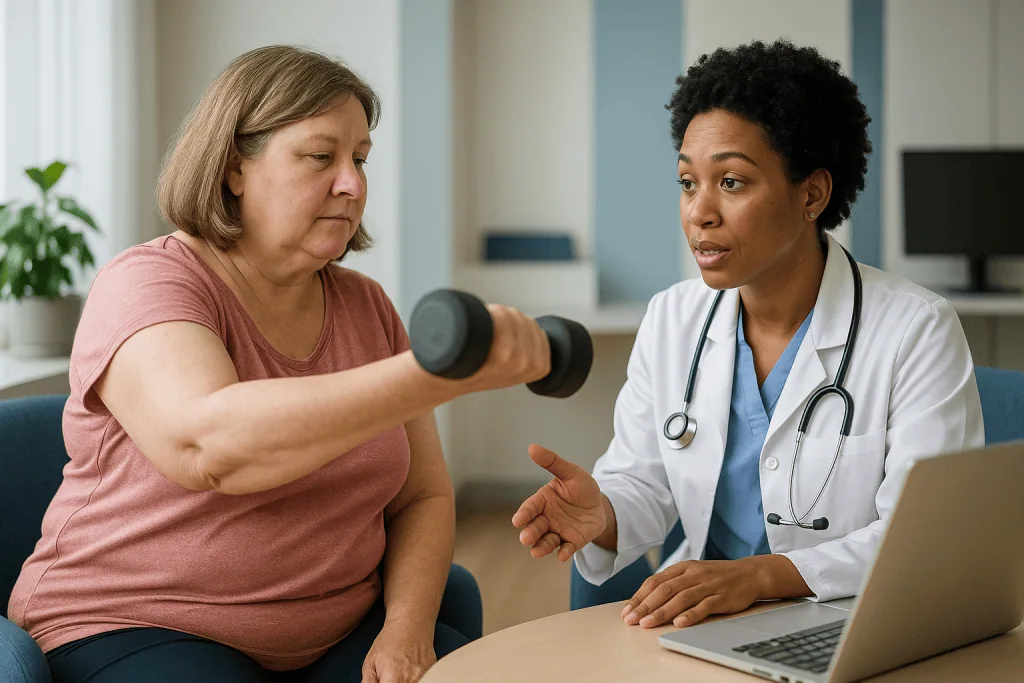
The second row is the one that deserves the most attention. In lifestyle trials that add two or three sessions a week of resistance training to a calorie deficit, the lean-tissue share of weight lost typically falls by half or more. That effect has not yet been confirmed in a large randomized trial of people taking a GLP-1 medicine, but there is no known biological reason it would not apply.
What the evidence actually says, and how strong it is
Grading the evidence matters here because the strongest claims online rest on the weakest data. Here is where each piece stands.
That lean mass falls on GLP-1 medicines: strong. This comes from randomized, placebo-controlled trial substudies using DXA. The direction of the effect is not in doubt; the precise magnitude in older adults and people with diabetes is.
That the lean tissue lost is mostly muscle: weak. DXA cannot distinguish muscle fiber from water, organ tissue or fat inside muscle. Early MRI substudies of tirzepatide, which can look inside the thigh, suggest muscle volume falls less than DXA implies and that fat within muscle decreases, a marker of improving muscle quality. These are small and mostly reported at conferences, so treat them as promising rather than settled.
That function declines: not shown. Physical function questionnaires in the major trials improved. Grip and chair-stand testing were not routinely measured, which is a gap rather than a reassurance.
That protein and resistance training protect muscle during weight loss: strong in general, indirect for these medicines. Randomized trials in diet-induced and surgery-induced weight loss consistently show both interventions preserve lean mass. Dedicated trials in GLP-1 users are underway, but the principle rests on well-established physiology.
That investigational add-on drugs preserve muscle: early. Phase 2 data for bimagrumab combined with semaglutide reported that the great majority of weight lost was fat. Phase 2 means safety and dose-finding in a few hundred people; it is not approval, and long-term safety is unknown.
Expert opinion, the lowest rung, currently fills the biggest gaps: how much protein is ideal, how often to lift, and whether older adults need different monitoring. Reasonable clinicians disagree at the margins. They agree on the core: eat enough protein, load your muscles, and have someone check your strength if you are at risk.
Why does the body shed muscle when weight drops fast?
Muscle is expensive tissue. It burns energy at rest and must be rebuilt constantly, so when the body senses a steep energy shortfall it economizes. Three mechanisms drive that economy, and understanding them shows exactly where protein and training push back.
Protein under-delivery. Muscle is in perpetual turnover; roughly one to two percent of muscle protein is broken down and rebuilt daily. Rebuilding requires amino acids from food. Appetite suppression on a GLP-1 medicine can cut daily intake by 30 percent or more, and people tend to drop protein-rich foods first because meat, eggs and dairy feel heavy when the stomach empties slowly. Breakdown continues; synthesis stalls.
Mechanical unloading. Muscles keep their size because they are asked to work. As body weight falls, every step carries less load. Someone who drops 40 pounds has, in effect, taken off a heavy backpack they wore for years. Unless they add deliberate resistance, their legs receive less stimulus than before.
Hormonal signaling. Rapid weight loss lowers insulin and leptin, hormones that among other things tell muscle to hold on to protein. In older adults this stacks on top of anabolic resistance, the age-related tendency of muscle to respond more weakly to a given amount of protein and exercise.
Do the medicines themselves do anything directly harmful to muscle? Laboratory and animal work is mixed and mostly reassuring. GLP-1 receptors are sparse in skeletal muscle, and the weight-loss-adjusted lean tissue changes look like those seen with any equivalent energy deficit. The most defensible statement, as of 2026, is that the medicines cause muscle loss the way a very effective diet causes muscle loss: through the deficit, not through a poison.
Who is most at risk of losing muscle on these medicines?
Risk is not evenly distributed. A 38-year-old with a large fat reserve and a physically active job has very little to fear from a 10 percent drop in lean tissue. A 72-year-old who already struggles with stairs is in a different position, because muscle lost late in life is harder to rebuild and its absence shows up as falls.
Groups clinicians watch most closely:
- Adults over 65. Anabolic resistance means the same meal and the same workout produce less muscle building. Baseline reserve is lower, and sarcopenia may already be present but unrecognized.
- People with type 2 diabetes. Diabetes accelerates muscle loss independently, roughly doubling the rate of decline seen in age-matched peers in observational cohorts. Many people prescribed semaglutide or tirzepatide fall into this group.
- Women after menopause. Falling estrogen reduces muscle protein synthesis and accelerates bone loss; lean tissue lost in this window is disproportionately consequential.
- Anyone with “normal weight” obesity or a lower starting BMI. When there is less fat to lose, a larger fraction of weight lost tends to come from lean tissue.
- People with persistent nausea. If gastrointestinal side effects keep total intake very low for weeks, protein intake almost certainly falls below what muscle maintenance requires.
- The sedentary. Without any loading, unloading dominates.
A practical way to think about it: risk rises when weight loss is fast, protein is low, activity is minimal and age is high, and it rises multiplicatively rather than additively. The reassuring flip side is that three of those four variables are within reach. Rate of loss is a conversation for the prescribing clinician; protein and movement belong to the person taking the medicine.
Does Ozempic cause muscle loss? Untangling the brand from the molecule
Searches for “ozempic muscle loss” outnumber searches naming the actual molecule several times over, so the naming deserves a paragraph. Ozempic is a brand of semaglutide approved for type 2 diabetes. Wegovy is the same molecule at a different strength approved for chronic weight management. Rybelsus is a tablet form for diabetes. Mounjaro and Zepbound are both tirzepatide, again for diabetes and weight management respectively. Every body-composition study cited in this article was done with the weight-management formulations, so strictly speaking the muscle data come from Wegovy and Zepbound trials, not Ozempic.
Does that distinction matter for muscle? Only a little. The lean-tissue effect tracks with how much weight is lost, not with the label on the pen. Someone prescribed Ozempic for diabetes who loses a modest amount of weight will lose modest lean tissue; someone who loses a large amount will lose more. The molecule is identical.
What the brand confusion does distort is the population. Ozempic is prescribed to people with type 2 diabetes, who tend to be older and to have lower muscle mass to begin with, for the reasons covered above. A 68-year-old with diabetes on Ozempic and a 42-year-old without diabetes on Wegovy may lose the same percentage of lean mass and experience completely different consequences.
One more note on naming. Compounded versions of semaglutide and tirzepatide, and products sold online as “research peptides,” are not the tested medicines, have not been through these trials and are not approved for personal use. Any body-composition claims attached to them are borrowed from studies of the branded products and have not been verified for the compounded ones. Decisions about which formulation is appropriate belong to the prescribing clinician.
How do I stop losing muscle on a GLP-1? Start with protein
If you can only change one thing, change protein. Muscle is built from amino acids, and no amount of exercise compensates when the raw material is missing. The challenge on these medicines is not knowledge but appetite: when a small meal feels like a feast, protein has to be deliberate.
The general adult recommendation for protein is about 0.8 grams per kilogram of body weight per day, a figure set to prevent deficiency, not to protect muscle during weight loss. Sports and geriatric nutrition bodies generally suggest 1.2 to 1.6 grams per kilogram during active weight loss, and some experts go higher, anchoring to goal weight rather than current weight so the target does not become impossible. For a 90-kilogram adult, 1.2 grams per kilogram works out to roughly 110 grams of protein a day, about the amount in a chicken breast, two eggs, a cup of Greek yogurt and a cup of lentils combined.
Distribution matters as much as total. Muscle protein synthesis appears to be triggered by roughly 25 to 30 grams of protein at a sitting, and older adults may need the upper end. Three or four protein-anchored meals beat one large dinner.
Practical patterns that work when appetite is low:
- Eat protein first on the plate, before vegetables and starches, while capacity remains.
- Choose dense sources: Greek yogurt, cottage cheese, eggs, fish, lean meats, tofu, tempeh, lentils.
- Use liquid protein when solids feel heavy; a milk-based or fortified drink counts.
- Keep a rough tally for two weeks. Most people are surprised how far below target they sit.
Anyone with kidney disease should not raise protein without medical advice, and anyone whose nausea prevents eating enough at all should tell the prescribing clinician rather than push through. The point is nourishment, not willpower.
Can you build muscle while on a GLP-1? Resistance training and what it does
Yes, and people do. Muscle growth requires a stimulus and materials; the medicine restricts appetite, not the body’s ability to respond to load. Studies of adults building muscle while in a calorie deficit, including older adults and people after bariatric surgery, show gains in strength and often in muscle size when resistance training and adequate protein are combined. Gains are slower than they would be while eating freely, but the direction is positive.
Resistance training means any activity that makes muscles work against a force: free weights, machines, resistance bands, or body weight in the form of squats, push-ups and step-ups. The CDC’s adult guidelines call for muscle-strengthening activity on at least two days a week that works all major muscle groups, alongside at least 150 minutes a week of moderate aerobic activity. Those are minimums for general health; for muscle protection during rapid weight loss, many clinicians suggest aiming for two or three sessions.
What makes a session effective is effort, not equipment. A set that ends when you could do only one or two more repetitions is a strong signal to muscle; a set that stops at “comfortable” is mostly a warm-up. Eight to twelve repetitions per set, two or three sets per exercise, covering legs, hips, back, chest, shoulders and arms, is a proven and widely used structure.
Prioritize the legs and hips. They hold the most muscle, they are what unloading affects first, and they are what fails when someone cannot rise from a low chair at 75. Squats to a chair, step-ups, hip hinges with a light weight and calf raises cover most of it.
Aerobic exercise still matters for heart and metabolic health, but on its own it does little to preserve muscle. Walking more while losing weight is excellent. Walking instead of lifting is the most common gap.
How to rebuild muscle that was lost, and what happens after stopping
Lost muscle is not gone for good. Muscle has a form of memory: the nuclei added to fibers during previous training persist, and retraining tends to restore size faster than the original building took. Someone who lost several pounds of muscle over a year of weight loss can generally rebuild much of it over months with consistent training and protein, though results slow with age.
The rebuilding phase usually works best once weight has stabilized, because building muscle is easier when the body is no longer in a large energy deficit. That transition is worth planning with the prescribing clinician, since it involves the medicine as well as the plate.
The more pressing question is what happens if the medicine stops. In the STEP 1 extension study, participants regained about two-thirds of their lost weight within a year of discontinuing semaglutide. Observational data from diet studies show that regained weight is disproportionately fat, particularly when no resistance training is done, which can leave a person with the same weight but less muscle than before. This weight-cycling pattern is one of the strongest arguments for lifting during the loss, not only after it: muscle preserved on the way down does not have to be rebuilt.
A sensible rebuilding sequence:
- Keep protein at the higher weight-loss level for several months after weight stabilizes.
- Progress resistance training: slightly more weight, an extra set, or a harder variation every couple of weeks.
- Prioritize sleep, as muscle protein synthesis and hormonal recovery happen largely overnight.
- Ask for a functional check, such as grip strength or a chair-stand test, before and after, so progress is measured rather than guessed.
Never stop or alter the medicine on your own to “protect” muscle. Abrupt discontinuation carries its own risks, and the trade-offs are for the prescribing clinician to weigh with you.
What about muscle-preserving drugs like bimagrumab?
This is the piece of the story fueling most of the 2026 search interest, and it needs plain regulatory language. Bimagrumab is an investigational monoclonal antibody that blocks activin type II receptors, which are part of the signaling system that tells muscle to shrink. In a phase 2 trial reported in 2025, adults given bimagrumab alongside semaglutide lost slightly more weight than those on semaglutide alone, and more than 90 percent of the weight they lost was fat. Lean mass was largely preserved.
Those are striking numbers. They are also phase 2 numbers, meaning a few hundred people over about a year, with the primary goals of checking safety and finding a dose. Phase 3 trials, which test effectiveness and safety in thousands of people, are the step that precedes any approval, and no regulator had approved bimagrumab for this or any use as of this writing.
Several other companies are testing molecules with related mechanisms, including antibodies against myostatin, a muscle-growth brake. All are investigational. None is legally available for personal use, and products marketed online under similar names are unverified substances of unknown purity. They are not for sale or self-use, and anyone offering them outside a registered trial is not offering the medicine tested in the studies.
Open questions that trials must answer before this becomes clinical practice: whether preserved lean tissue translates into preserved strength, whether the extra muscle matters for health outcomes in people who were never sarcopenic, and what antibodies that alter muscle signaling do to the heart, bones and metabolism over years rather than months.
For now, the medicine-shaped solution is a headline, not an option. The behavior-shaped solution is in the previous three sections and is available to everyone today.
Common myths about GLP-1 muscle loss
Viral claims travel faster than trial substudies. Here are the six most common, corrected.
“Ozempic melts your muscle.” Lean tissue falls by about a tenth in trials while fat falls by a fifth to a third. Muscle itself is a fraction of that lean figure. The body composition of participants improved: a higher percentage of them was lean tissue at the end than at the start.
“Half of what you lose is muscle.” The often-quoted 40 percent is lean mass, not muscle, and applies to one semaglutide substudy. Tirzepatide’s figure was closer to 25 percent. Skeletal muscle is likely well under a fifth of total weight lost.
“This is unique to GLP-1 drugs.” Diet alone typically loses 20 to 30 percent of weight as lean mass. The medicines behave like an unusually effective diet, which is what they are.
“You cannot build muscle while taking them.” Muscle responds to load and protein regardless of appetite. Trials in people losing weight by other means show strength gains during a deficit; nothing about these medicines blocks that.
“A protein shake fixes it.” Protein without loading slows loss but does not stop it. Loading without protein gives muscle a signal it cannot act on. Both are needed.
“There is already a drug that prevents it.” Investigational add-ons have early results and no approvals. Anything sold today under those names is not the tested product.
One myth runs the other way. “It doesn’t matter at all” is also wrong. For an older adult, a person with diabetes or someone starting with little muscle, a 10 percent lean-tissue drop can be the difference between independence and a walker. The evidence supports neither panic nor complacency. It supports lifting.
When to see a doctor about muscle loss on a GLP-1 medicine
Most people on these medicines will never need a special appointment about muscle. Some will, and knowing the signs matters more than any percentage. Every decision about the medicine itself, including whether to continue, pause or adjust, belongs to the clinician who prescribed it; the list below is about when to start that conversation quickly.
Arrange a prompt appointment if you notice:
- New difficulty rising from a chair without using your arms, climbing stairs, or getting up from the floor.
- A fall, or a near-fall, that would not have happened a year ago.
- Grip weakness noticeable in daily tasks, such as opening jars or carrying bags you used to manage.
- Weight falling faster than you and your clinician planned, or continuing to fall after you were meant to plateau.
- Persistent nausea, vomiting or early fullness that keeps you from eating anything close to adequate protein for more than a few days.
- Dizziness on standing, which can signal dehydration or under-eating.
Seek urgent care the same day for severe, persistent abdominal pain, especially with vomiting; signs of dehydration such as very little urine or confusion; or muscle pain with dark, cola-colored urine after intense exercise, which can indicate muscle breakdown severe enough to affect the kidneys.
Useful things to ask for at a routine visit: a grip-strength measurement, a timed five-repetition chair-stand test, a review of your protein intake, and, if you are over 65 or have diabetes, whether a DXA scan or referral to a dietitian or physical therapist makes sense. These are simple, inexpensive checks that turn a vague worry into a number you can track.
If you are tempted to stop the medicine because of muscle worries, bring that to the appointment rather than acting on it. There are usually ways to protect muscle without giving up the metabolic gains, and the trade-offs are individual.
Frequently asked questions
How do I stop losing muscle on Ozempic?
Eat protein deliberately and lift weights at least twice a week. Ozempic is semaglutide, and the lean-tissue loss seen with it tracks the size of the energy deficit rather than the brand. Aim for a protein-rich food first at every meal, keep sessions of resistance training for legs, hips and upper body on the calendar, and tell your prescribing clinician if nausea stops you eating enough.
How do I rebuild muscle that was lost on a GLP-1?
Progressive resistance training plus adequate protein rebuilds muscle, and it usually goes faster than the original building because muscle retains a form of memory. Rebuilding is easiest once weight has stabilized and the energy deficit is smaller. Plan that transition with the clinician managing your medicine, keep protein high for several months, and track a simple functional measure such as a chair-stand test.
Can you build muscle while on a GLP-1 medicine?
Yes. Muscle grows in response to load and amino acids, and the medicines restrict appetite rather than the muscle’s ability to respond. Trials of people training during a calorie deficit, including older adults, show strength gains and often size gains. Progress is slower than while eating freely, so consistency matters more than intensity, and protein intake needs to be planned rather than left to appetite.
Why shouldn't you panic about GLP-1 muscle loss?
Because the numbers describe lean mass, not muscle, and because the proportion is in the range seen with any effective weight loss. Fat fell two to three times more than lean tissue in the trials, so body composition improved overall, and physical-function scores went up. The real risk is concentrated in older adults and people with low reserve, who can protect themselves with protein and lifting.
Is lean mass the same as muscle?
No. Lean mass is everything that is not fat or bone: water, glycogen, organs, skin, connective tissue and skeletal muscle. Muscle is roughly 40 to 45 percent of it. During weight loss, water and glycogen drop early, organs shrink modestly and fat inside muscle clears, all of which lower the lean number without reducing contractile muscle. Trial percentages are therefore an upper limit for muscle loss.
How much protein should I eat on a weight-loss injection?
Nutrition experts generally suggest 1.2 to 1.6 grams per kilogram of body weight daily during active weight loss, well above the basic adult recommendation of 0.8. Spread it across three or four meals of about 25 to 30 grams each, since muscle protein synthesis responds to that threshold. People with kidney disease should check with their clinician before increasing protein.
Does tirzepatide cause less muscle loss than semaglutide?
In the trial substudies, lean tissue made up roughly a quarter of weight lost on tirzepatide versus about 40 percent on semaglutide, which looks favorable for tirzepatide. Both substudies were small, ran in different populations and used no protein or exercise protocol, so the comparison is indirect. Head-to-head body-composition data are limited, and choice of medicine belongs to the prescribing clinician.
Are there medicines that prevent muscle loss on GLP-1 drugs?
Not approved ones. Bimagrumab and related antibodies have shown lean-mass preservation in phase 2 trials, with more than 90 percent of weight lost as fat in one study, but phase 3 trials and regulatory review have not been completed. They are investigational, not for sale and not for self-use. Anything marketed online under those names is an unverified substance, not the tested product.
Should I get a DXA scan to check for muscle loss?
Not routinely. DXA is useful in research and for people at higher risk, such as adults over 65 or those with diabetes, but for most people a grip-strength test and a timed chair-stand test capture what matters, which is function. Ask your clinician; if a scan is done, repeat it under similar hydration conditions, since water shifts can change the lean reading.
Does muscle come back if I stop the medicine?
Weight tends to return after stopping, and without resistance training the regained weight is mostly fat, which can leave you with the same weight but less muscle than before. Muscle preserved during the loss does not need rebuilding, which is the strongest argument for lifting throughout. Never stop or change the medicine on your own; discuss any plan to discontinue with your prescribing clinician.
References
- Adult Activity: An Overview – CDC Physical Activity Guidelines
- Sarcopenia – Cleveland Clinic
- Semaglutide Injection – MedlinePlus Drug Information
This article is for general information only and is not a substitute for professional medical advice. Please consult a qualified doctor about your individual situation.

More from the Blog

The GLP-1 Diet: What to Eat to Support (or Naturally Boost) Your Own Gut Hormones
A GLP-1 diet is not an official eating plan. It describes two things: foods that modestly stimulate your own glucagon-like peptide-1, mainly protein, fiber-rich…

Survodutide: The Glucagon-GLP-1 Dual Agonist Being Studied for Obesity and Liver Disease
Survodutide is an investigational injectable peptide that activates both the glucagon receptor and the GLP-1 receptor. In phase 2 trials it produced average weight…

Ozempic Feet: What Rapid Weight Loss Does to the Fat Pads of the Feet
Ozempic feet is a social-media term, not a medical diagnosis. It describes feet that look bonier or feel sore under the heel or ball…

Is Ozempic Safe? What Years of Semaglutide Data Say About Risks and Benefits
Ozempic (semaglutide) is considered safe for most adults with type 2 diabetes when prescribed and monitored by a clinician. Large randomized trials covering tens…

Food Noise: Why GLP-1 Medicines Quiet It, and What Helps When You Are Not on Them
Food noise is the persistent, intrusive stream of thoughts about food that continues when the body does not need fuel. GLP-1 medicines such as…

Weight Loss Injections Explained: The Approved Medicines, How They Differ and Who Qualifies
Weight loss injections are prescription medicines that mimic gut hormones to reduce appetite and slow digestion. Three are FDA-approved for chronic weight management: semaglutide…