

Natural Antibiotics for a Tooth Infection: The Myth and the Reality
Key Takeaways
- Once a tooth's pulp dies, the tooth loses its blood supply, so nothing swallowed, natural or pharmaceutical, can be delivered to the bacteria inside it.
- The NHS states a dental abscess will not go away on its own and that antibiotics are not routinely prescribed for one; drainage, root canal, or extraction is the actual treatment.
- Garlic and clove oil kill bacteria in laboratory dishes, but held against the gum they can cause chemical burns while leaving the abscess untouched.
- Sudden pain relief with a foul taste often means the abscess ruptured or the nerve died: the infection is still there and still needs treatment.
- Many localized abscesses are cured by the dental procedure alone, with no antibiotics at all: a practice that also helps limit the 2.8 million antimicrobial-resistant infections the CDC counts in the US each year.
- Swelling spreading toward the eye or neck, trouble swallowing or breathing, or fever with facial swelling are same-day emergency signs, not wait-for-the-dentist signs.
There is no natural antibiotic strong enough to cure a tooth infection. Garlic, clove oil, and honey show antibacterial activity in laboratory studies, but none can reach the bacteria sealed inside an abscessed tooth, where the dead pulp has no blood supply. A dental abscess will not heal on its own; it needs professional drainage, root canal treatment, or extraction, sometimes with prescribed antibiotics.
It is almost always 2 a.m. when this search happens. The jaw has its own heartbeat, the frozen peas have gone soft, and somewhere between the third and fourth search result, a confident website is promising that a crushed garlic clove pressed against the gum will do what a dentist does. The pain is real. The promise, unfortunately, is not.
Tooth infections have a way of making smart people bargain. If the right rinse or spice could buy a few days, or spare an appointment altogether, who wouldn’t try it? So the internet obliges, ranking “the strongest natural antibiotics” as if bacteria inside a tooth were reading the same lists.
This article takes the question seriously instead of humoring it. We’ll look at what an abscess actually is, why the anatomy of a dead tooth defeats every kitchen remedy, which home measures genuinely earn a place while you wait for care, and which ones can burn your mouth on the way to not working.
What is actually happening inside an infected tooth?
Every tooth is hollow. Beneath the enamel and dentin sits the pulp: a small chamber of nerves, connective tissue, and blood vessels that runs down through the roots. When decay, a crack, or an old filling gives bacteria a path inside, they colonize that chamber. The immune system responds, pressure builds inside a space that cannot expand, and the pulp often dies. Pus then collects at the root tip or in the surrounding gum, forming what dentists call a periapical or periodontal abscess (Mayo Clinic).
Here is the detail that changes everything about home treatment: once the pulp dies, the tooth’s internal blood supply is gone. Antibiotics, pharmaceutical or otherwise, travel through the bloodstream. A necrotic tooth is, in circulatory terms, a sealed room with the plumbing cut off. Nothing you swallow, sip, or chew can be delivered into it in any meaningful concentration.
That is why an abscessed tooth behaves differently from, say, a skin infection. Your body can often fight infections in well-perfused tissue. It cannot clear bacteria hiding inside a dead root canal system, and it cannot drain a pocket of pus through intact bone and gum on demand. The bacteria sit in a protected reservoir, periodically flaring, occasionally quieting, but never actually leaving (Cleveland Clinic). Understanding that one anatomical fact makes the rest of this article, and every “natural antibiotic” list you will ever read, much easier to judge.
So, what is the strongest natural antibiotic for a tooth infection?
The honest answer: there isn’t one. Not garlic, not clove oil, not oregano, not honey, not colloidal anything. No natural substance has been shown in clinical studies to cure a dental abscess, and mainstream medical sources, the NHS, Mayo Clinic, Cleveland Clinic, do not list a single one as a treatment (NHS).
The question itself contains a hidden assumption worth unpacking. “Antibiotic” implies something that circulates through your body and kills bacteria where they live. As we covered above, the bacteria in an abscessed tooth live somewhere your circulation no longer reaches. Even prescription antibiotics, genuinely potent, carefully dosed molecules, cannot cure an abscess by themselves for exactly this reason. Dentists use them as backup, not as the main event.
So when a website ranks natural antibiotics by “strength,” it is usually citing laboratory studies: bacteria in a petri dish, exposed directly to a concentrated extract. Those studies are real science, and some plant compounds do kill bacteria on contact under those conditions. But a petri dish has no enamel, no bone, no gum tissue, and no saliva constantly washing everything away. The gap between “kills bacteria in a dish” and “cures an infection in a living jaw” is the gap between a spark and a furnace.
None of this means home measures are useless, several genuinely help with pain and oral hygiene while you arrange care. It means their job description is comfort, not cure. Keeping those two jobs separate is the single most useful thing this article can offer.
What actually kills tooth abscess bacteria?
Removal, not rinsing. The definitive treatments for a dental abscess are mechanical: a dentist physically eliminates the infected material and the space it occupies. That happens in one of three ways (Mayo Clinic):
- Incision and drainage. A small opening lets the pus escape, relieving pressure, often with striking speed, because much of abscess pain is pressure pain.
- Root canal treatment. The dentist removes the dead pulp, cleans and disinfects the hollow canal system, and seals it so bacteria have nowhere to live. The tooth stays in your mouth.
- Extraction. If the tooth can’t be saved, removing it removes the reservoir entirely.
Notice what all three have in common: they don’t try to kill bacteria where they hide: they eliminate the hiding place. That is why the NHS is blunt on this point: a dental abscess will not go away on its own, and antibiotics are not routinely prescribed for one, because drugs alone can’t reach or drain the source (NHS).
Prescription antibiotics enter the picture as reinforcements when infection shows signs of spreading beyond the tooth, facial swelling, fever, feeling generally unwell. Their mechanism is to suppress bacterial growth in surrounding, blood-supplied tissue so your immune system and the dental procedure can finish the job. If pharmaceutical antibiotics are only a supporting actor here, it puts the “strongest natural antibiotic” question in perspective: you’re shopping for a stronger version of something that was never the cure to begin with.
Can salt water rinses help a tooth infection?
Yes, as long as you’re clear about what “help” means. A warm saltwater rinse is the one home measure that mainstream sources actively recommend while you wait for dental care; Mayo Clinic suggests rinsing with warm water mixed with a small amount of table salt, and the NHS offers similar advice for dental pain (Mayo Clinic).
What it does is modest but real. Salt water creates a mildly hypertonic environment that can draw fluid from inflamed gum tissue, easing soreness. Swishing flushes food debris away from the painful area, which matters because trapped particles feed bacterial growth at the gumline. If an abscess has begun draining on its own, gentle rinsing helps keep the area clean and reduces the foul taste. It is cheap, safe, and repeatable throughout the day.
What it does not do is penetrate the tooth. Salt water touches surfaces, enamel, gum, the lining of your cheek. The infection sits in the root canal system or in a pus pocket beneath bone. No rinse, however salty, warm, or frequent, reaches that space. People sometimes notice pain easing after a rinse and conclude the infection is retreating; more often the rinse has soothed the inflamed gum around the tooth while the abscess sits untouched underneath.
Verdict: use it, generously, as comfort care and oral hygiene. Just don’t let day three of feeling slightly better talk you out of the appointment you booked on day one.
Does clove oil kill tooth infection bacteria?
Clove oil is the most credentialed remedy on the list, and still not a cure. Its active compound, eugenol, has a genuine history in dentistry: eugenol-based materials have long been used in temporary fillings and dressings, and the compound has documented local anesthetic and antibacterial properties in laboratory settings.
The mechanism is worth understanding, because it explains both the relief and the myth. Eugenol dampens the activity of pain-signaling nerve fibers on contact. Dab it near an angry tooth and the throbbing may genuinely quiet for a while, not because bacteria are dying, but because the nerve is temporarily muffled. It is numbing, not treating. The abscess underneath continues exactly as before.
There are also real cautions. Concentrated clove oil is harsh: applied undiluted or repeatedly, it can chemically irritate or burn gum tissue and the lining of the mouth, adding a soft-tissue injury on top of the infection. Swallowing meaningful amounts can be harmful, and it should be kept away from children. Anyone tempted to pack a painful cavity with clove-soaked cotton for days on end is trading short-term numbness for potential tissue damage and a longer delay before real treatment.
The fair summary: clove oil is a folk remedy with a legitimate pharmacological kernel: a topical numbing agent that dentistry itself has borrowed from. Used sparingly and briefly, it may take the edge off tonight. It has never resolved an abscess, and no mainstream medical source suggests it can (Cleveland Clinic).
Garlic for a tooth infection: what the evidence really shows
Garlic earns its reputation honestly, in glassware. When a clove is crushed, an enzyme reaction produces allicin, a sulfur compound that kills a range of bacteria on direct contact in laboratory studies. This is the finding that launched a thousand blog posts crowning garlic “nature’s strongest antibiotic.”
Now walk that finding into a human mouth. For allicin to kill the bacteria causing your abscess, it would need to arrive at the infection site in a concentration comparable to the lab dish. Two routes exist, and both fail. Swallowed garlic is digested; allicin is unstable, and whatever reaches your bloodstream cannot enter a tooth whose blood supply is gone. Topical garlic, the crushed clove held against the gum, touches only the surface, while the infection sits beneath bone and enamel.
The topical route isn’t just ineffective; it’s the one garlic remedy that reliably causes harm. Raw garlic held against oral tissue for extended periods can cause chemical burnspainful, slow-healing ulcers on the gum or cheek. Dentists see these injuries. The patient arrives with the original abscess plus a self-inflicted burn beside it, having lost days in the process.
Eating garlic as food is a fine habit and nobody’s concern here. But the leap from “allicin kills bacteria in a dish” to “garlic cures tooth infections” skips over pharmacology, anatomy, and the entire concept of drug delivery. Laboratory antibacterial activity is where drug development starts, not where treatment ends, most compounds that kill bacteria in vitro never become medicines, precisely because getting them safely to an infection is the hard part.
Honey, turmeric, and oil pulling: sorting hope from evidence
These three round out most “natural antibiotic” lists, and each deserves an honest sentence rather than a ranking.
Honey. Medical-grade honey is genuinely used in modern wound care, as a component of dressings on certain skin wounds, where its high sugar content and acidity create a hostile surface environment for bacteria. That is a topical application on exposed, blood-supplied tissue. An abscess inside a tooth is neither exposed nor topical. Coating a tooth in honey delivers sugar to the very bacteria that cause decay while the abscess continues undisturbed. The wound-care evidence, real as it is, simply doesn’t transfer.
Turmeric. Curcumin, turmeric’s headline compound, shows anti-inflammatory and antibacterial activity in laboratory studies. It is also notoriously poorly absorbed by the body, which is one reason decades of research interest have produced far more petri-dish results than clinical treatments. A turmeric paste on the gum may stain more than it soothes, and it cannot reach a root canal.
Oil pulling. Swishing oil for long periods is an old practice with limited modern evidence: a handful of small studies suggest possible modest effects on plaque and gingivitis, nothing more. No study supports oil pulling as a treatment for dental abscess, and no major health organization recommends it for infection. It is also no substitute for brushing with fluoride toothpaste.
A pattern emerges across all three: real but modest surface-level or laboratory effects, repackaged online as systemic cures. The remedies aren’t fraudulent. The job titles they’ve been given are.
Home measures at a glance: what each one can and can't do
Here is the whole landscape in one honest table, what mainstream evidence supports, and the realistic role of each measure while you wait for your dental appointment.
| Home measure | What the evidence shows | Realistic role |
|---|---|---|
| Warm saltwater rinse | Soothes inflamed gums, flushes debris; recommended by Mayo Clinic and NHS as interim care | Comfort and hygiene several times daily |
| Cold compress on the cheek | Reduces surface swelling and dulls pain via cold-induced numbing | Short sessions for pain and swelling |
| Over-the-counter pain relievers | Effective for dental pain when used as directed on the label; NHS advises them while awaiting care | Pain control only, ask a pharmacist if unsure which type suits you |
| Clove oil (eugenol) | Topical numbing effect; can burn tissue if overused | Brief, sparing use for pain at most |
| Crushed garlic on the gum | Lab antibacterial activity only; documented cause of oral chemical burns | Not recommended |
| Honey, turmeric, oil pulling | Surface or laboratory effects; no clinical evidence against abscess | No role in treating infection |
Two things are deliberately absent from the “realistic role” column: killing the infection and replacing the dentist. Every measure above is a bridge: a way to sleep tonight and function tomorrow. The moment any of them is asked to be the destination, it fails, and the abscess quietly collects interest (NHS).
Can I fight a tooth infection without antibiotics?
Surprisingly, yes, but not the way the question usually means it. Many localized dental abscesses are treated without any antibiotics at all. The treatment is the dental procedure: drainage, root canal, or extraction. Once the source is removed, a healthy immune system typically clears the residual bacteria in surrounding tissue on its own. The NHS explicitly notes that antibiotics are not routinely prescribed for dental abscesses, because they cannot substitute for drainage (NHS).
So if your motivation is avoiding unnecessary antibiotics, modern dentistry is already on your side. Dental professional guidance in both the US and UK has moved firmly toward procedure-first care, reserving antibiotics for infections that are spreading or for patients whose immune defenses are compromised. Fewer prescriptions, faster resolution, less contribution to antibiotic resistance: this is one of those rare cases where the conservative option and the evidence-based option are the same option.
What you cannot do is fight the infection without the procedure. “Without antibiotics” and “without a dentist” are entirely different sentences. Your immune system, however robust, cannot drain pus through intact bone or sterilize a dead root canal. People who wait sometimes experience the abscess bursting on its own: a rush of foul-tasting fluid and dramatic pain relief. That feels like victory. It isn’t. The pressure is gone, but the infected canal remains, and the abscess refills on its own schedule (MedlinePlus).
The honest reframe: you can often skip the antibiotics. You cannot skip the appointment.
Why waiting it out is the riskiest option of all
Tooth infections have a cruel talent for false endings. Pain that raged for days can fade abruptly, sometimes because the nerve inside the tooth has finally died, sometimes because the abscess has ruptured and relieved its own pressure. Either way, the silence is misleading. The bacteria remain, now with less warning attached.
Left untreated, an abscess can spread beyond its original pocket. Infection can track into the jawbone, into the sinus above an upper tooth, or through the soft tissues of the face and neck. Mayo Clinic notes that an untreated tooth abscess can lead to serious, even life-threatening complications, including sepsis: the body’s runaway response to infection spreading through the bloodstream (Mayo Clinic). Deep neck-space infections, though uncommon, can compromise breathing and swallowing and constitute genuine emergencies.
None of this is meant to alarm; serious spread is the exception, not the rule, and most abscesses are resolved with a straightforward dental visit. But the arithmetic of waiting deserves a clear-eyed look. Every week of delay is a week of bone around the root being damaged, potentially converting a saveable tooth into an extraction. It’s also a week in which a manageable outpatient problem retains a small but real chance of becoming a hospital problem.
There is a practical cost, too. Early treatment often means one appointment and a predictable recovery. Late treatment can mean urgent care visits, more complex procedures, and more expense. The cheapest, calmest version of this story is always the one where you called the dental office first.
What will a dentist actually do for an abscessed tooth?
Knowing what happens in the chair takes much of the dread out of booking. The visit typically follows a predictable arc (Mayo Clinic).
First, diagnosis. The dentist examines the tooth, may tap it gently (an abscessed tooth is often exquisitely sensitive to pressure), and usually takes an X-ray to see the infection at the root tip and check whether it has spread into surrounding bone.
Then, one of three paths:
- Drainage. If pus has collected, a small incision releases it. Because so much abscess pain is pressure, relief often begins almost immediately: a fact that surprises people who spent weeks dreading this exact procedure.
- Root canal treatment. Done under local anesthesia, this removes the dead pulp, disinfects the canal system, and seals it. Despite its fearsome reputation, a modern root canal is closer in experience to getting a filling than to the horror stories, and it saves the natural tooth.
- Extraction. When decay or bone damage is too advanced, removing the tooth removes the infection’s home. Replacement options can be discussed later, once things are calm.
Antibiotics may be prescribed alongside, not instead of, these procedures if the infection has spread or if your medical history warrants it. That decision belongs to the treating clinician, who can see your X-ray and your chart. What every path shares is the same principle running through this entire article: eliminate the reservoir, and the infection loses.
When do antibiotics enter the picture, and why not always?
Prescription antibiotics have a specific, limited role in dental infections, and understanding it clarifies why no natural substitute exists either. Dentists typically reach for them when infection shows signs of moving beyond the tooth, swelling spreading into the face or neck, fever, swollen lymph nodes, a patient feeling systemically unwell, or when a person’s immune defenses are weakened by illness or medical treatment (NHS).
The mechanism explains the limits. Antibiotics circulate in blood and suppress bacterial growth in perfused tissue: the swollen gum, the cheek, the tissue planes an infection is invading. They buy time and contain spread. What they cannot do is sterilize the dead, bloodless interior of the tooth. That is why a course of antibiotics without dental treatment produces a familiar, frustrating cycle: the swelling settles, weeks pass, and the infection flares again from its untouched reservoir.
There is also a wider reason for restraint. The CDC reports at least 2.8 million antimicrobial-resistant infections in the United States each year, and every unnecessary prescription nudges that number upward (CDC). Dentistry writes a meaningful share of all antibiotic prescriptions, which is precisely why professional guidance now favors procedures first.
If antibiotics are prescribed for you, take them exactly as your clinician directs, report any suspected allergy honestly, and keep the follow-up appointment: the prescription is the escort, not the destination. And if you have a known allergy to a common antibiotic, the answer is an alternative prescription chosen by your dentist or doctor, never a kitchen substitute.
When to see a dentist or doctor: the red flags that can't wait
Every suspected tooth infection deserves a prompt dental appointment, ideally within days, not weeks. The NHS advises seeing a dentist as soon as possible for a dental abscess, since it will not resolve on its own (NHS). Persistent throbbing pain, sensitivity to hot or cold, pain on biting, a bad taste, gum swelling, or a pimple-like bump on the gum are all reasons to call.
Some signs, however, mean the infection may be spreading and warrant emergency care the same day, go to an emergency department or call emergency services rather than waiting for a dental slot:
- Swelling spreading into your face, around your eye, or down your neck
- Difficulty swallowing, difficulty opening your mouth, or any trouble breathing
- High fever with facial swelling, or fever with a general sense of being seriously unwell
- Rapid heartbeat, confusion, or drowsiness alongside an infection, possible signs of sepsis (Mayo Clinic)
Two situations deserve special mention. Parents should treat facial swelling in a child as urgent, small anatomy means less room for spread. And anyone with a weakened immune system, from illness or from medical treatments that suppress immunity, should contact a clinician at the first sign of dental infection rather than watching and waiting.
One more counterintuitive rule: sudden pain relief is not an all-clear. A nerve dying or an abscess rupturing both silence the alarm without ending the fire. Keep the appointment even if you feel better.
How to make this your last tooth infection
Almost every dental abscess starts as something smaller and cheaper: a cavity that went unfilled, a crack that went unexamined, gum disease that deepened quietly. Prevention here is unusually concrete: this is not vague wellness advice, but a short list of habits with decades of evidence behind them (NHS).
Brush twice a day with a fluoride toothpaste, and clean between your teeth daily with floss or interdental brushes. Fluoride is the unglamorous hero of this story: it hardens enamel against the acid attacks that open the door to bacteria in the first place. Frequency of sugar matters more than quantity, sipping a sweet drink across an afternoon bathes teeth in acid far longer than finishing it with a meal, so keep sugary foods and drinks to mealtimes.
Then there is the habit that catches problems before they become emergencies: routine dental checkups at the interval your dentist recommends. A cavity found on an X-ray is a small filling. The same cavity found by a 2 a.m. toothache is often a root canal. Between visits, treat warning signs as appointments waiting to be booked: a lost filling, a cracked tooth, a tooth that has become sensitive to sweets or temperature, gums that bleed persistently.
If you take one idea from this entire article, let it be this: the strongest weapon against tooth infection was never in the spice cabinet. It is the boring, brilliant combination of fluoride, floss, and a dentist who sees the problem while it is still small.
Frequently asked questions
What is the strongest natural antibiotic for a tooth infection?
There is no natural antibiotic that can cure a tooth infection, not garlic, clove oil, honey, or any other ranked remedy. Substances like allicin and eugenol kill bacteria in laboratory studies, but they cannot reach the infection sealed inside a tooth whose blood supply is gone. A dental abscess requires professional drainage, root canal treatment, or extraction. Home measures can ease pain while you wait, but none treats the infection itself.
What kills tooth abscess bacteria?
Physical removal of the infection source kills a tooth abscess: a dentist drains the pus, cleans out the dead pulp during a root canal, or extracts the tooth. These procedures eliminate the protected space where bacteria live. Prescription antibiotics may be added if infection is spreading into surrounding tissue, but they support the procedure rather than replace it, because drugs cannot penetrate a dead, bloodless tooth interior.
Can I fight a tooth infection without antibiotics?
Often yes, but only with dental treatment, not with home remedies. Many localized abscesses are cured by drainage, root canal, or extraction alone, and the NHS notes antibiotics are not routinely prescribed for dental abscesses. What no one can do is fight the infection without a dentist: your immune system cannot drain pus through bone or sterilize a dead root canal, so untreated abscesses persist and can spread.
Will a tooth infection go away on its own?
No. The NHS is explicit that a dental abscess will not heal without treatment. Pain may fade if the nerve dies or the abscess ruptures and releases pressure, but the bacteria remain in the tooth and typically flare again. Meanwhile, the infection can quietly damage the bone around the root, sometimes turning a tooth that could have been saved with a root canal into one that must be extracted.
Does salt water kill a tooth infection?
No, but it genuinely helps with comfort. Warm saltwater rinses soothe inflamed gum tissue, flush away food debris, and help keep a draining area clean, which is why Mayo Clinic recommends them while you await dental care. Salt water only touches surfaces, though: it cannot penetrate enamel, bone, or gum to reach the abscess itself. Use it freely as interim care, and keep your dental appointment regardless of how much better it feels.
Is clove oil safe to put on an infected tooth?
Briefly and sparingly, perhaps, but with real cautions. Clove oil’s active compound, eugenol, temporarily numbs pain-signaling nerves, which is why dentistry has long used eugenol-based materials. It does not treat the infection. Concentrated or repeated application can chemically burn gum and cheek tissue, it should not be swallowed in any quantity, and it must be kept away from children. Treat it as a stopgap for one rough night, not a treatment plan.
Does garlic cure a tooth abscess?
No. Garlic’s allicin kills bacteria in laboratory dishes, but that finding does not transfer to an abscessed tooth. Swallowed garlic cannot reach a tooth with no blood supply, and garlic held against the gum only touches the surface, while frequently causing painful chemical burns to oral tissue. Dentists regularly see these self-inflicted burns alongside the original infection. Enjoy garlic as food; do not use it as medicine for your mouth.
What can I take if I'm allergic to common antibiotics for a tooth infection?
Tell your dentist or doctor about the allergy: there are alternative prescription antibiotics from different drug families, and choosing between them is the prescriber’s job based on your history. A natural remedy is not the alternative; nothing from the kitchen can substitute for either the medication or, more importantly, the dental procedure. Also remember that many abscesses are treated with drainage or root canal alone, so an allergy rarely blocks effective care.
How do I know if a tooth infection is spreading?
Watch for swelling extending into your face, around your eye, or down your neck; difficulty swallowing, opening your mouth, or breathing; fever; swollen lymph nodes under the jaw; or feeling generally, rapidly unwell. Mayo Clinic notes untreated abscesses can lead to serious complications, including sepsis. Any of these signs means same-day emergency care, an emergency department or emergency services, rather than waiting for a routine dental appointment.
What helps tooth infection pain at home tonight?
Warm saltwater rinses, a cold compress against the cheek in short sessions, sleeping with your head slightly elevated, and over-the-counter pain relievers used exactly as the label directs: a pharmacist can advise which type suits you. Avoid very hot, cold, or sweet foods on that side, and skip garlic or undiluted clove oil against the gum, which can burn tissue. These measures manage the night; a dental appointment manages the infection.
References
- NHS: Dental abscess
- MedlinePlus: Tooth abscess
- Cleveland Clinic: Abscessed tooth
- CDC: Antimicrobial Resistance Facts and Stats
This article is for general information only and is not a substitute for professional medical advice. Please consult a qualified doctor about your individual situation.

More from the Blog

Tooth Extraction Healing Timeline: The Socket From the First Day to the Fourth Week
After a tooth extraction, a blood clot forms in the socket within the first day, soft granulation tissue replaces it over the following week,…
Bringing Old X-Rays and Records to a Dental Anatomy Assessment: Why History Helps Planning
Bringing old X-rays and records to a dental anatomy assessment gives the clinician a timeline rather than a single snapshot. Prior radiographs, periodontal charts,…
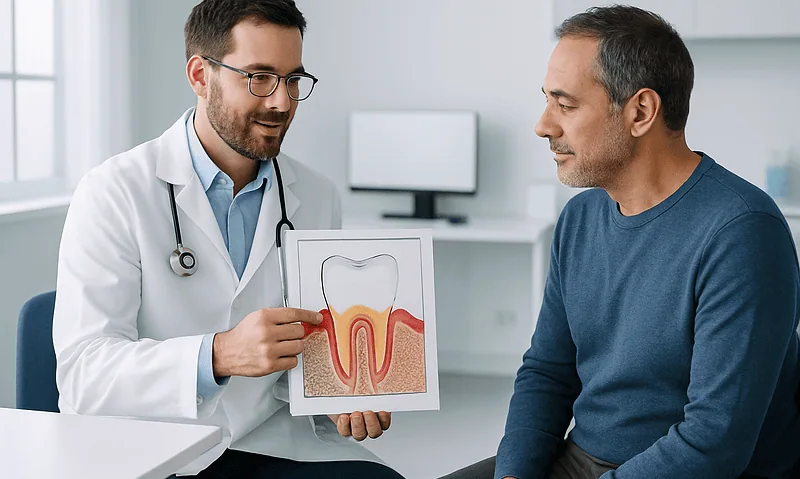
How Periodontal Disease Develops Below the Gumline and Why SRP Deep Cleaning Is Planned
Periodontal disease begins when bacterial plaque collects along the gumline, inflames the gums (gingivitis) and, if it persists, spreads below the gum to destroy…
Before Clear Aligners Start: Digital Scans, Cavities to Treat and the Aligner Plan
Before starting clear aligners, an orthodontist or dentist usually completes a full dental exam, X-rays, photographs and a digital scan of both jaws. Any…

Canker Sore vs Cold Sore: How to Tell Them Apart in Ten Seconds
Location is the fastest clue. Canker sores are shallow, round ulcers with a white or yellow center that form inside the mouth, on the…
Is a Dental Spa Right for Anxious Patients? Comfort Care Without Cutting Corners
A dental spa can suit many anxious patients when the comfort features sit on top of standard clinical care rather than replacing it. Warm…