

Ovulation Pain (Mittelschmerz): Why It Happens and When It Is Something Else
Key Takeaways
- Ovulation pain (mittelschmerz) affects roughly one in five people who ovulate and typically lasts from a few minutes to about two days, always on one side.
- The pain comes from a follicle about 2 centimetres wide stretching the surface of an almond-sized ovary, then from a teaspoon or so of fluid irritating the pelvic lining after the egg is released.
- Small ultrasound studies suggest the twinge often arrives before the egg is actually released, so it marks the fertile window with a margin of error of hours to a day, not the exact moment.
- Because an egg survives 12–24 hours but sperm survive up to five days, the two days before ovulation carry the highest conception chance, and the twinge cannot flag those days in advance.
- PCOS, which the WHO estimates affects 8–13% of women of reproductive age, often reduces ovulation pain by stopping ovulation, while causing other pelvic pain from larger cysts.
- True mittelschmerz keeps no company: fever, vomiting, abnormal bleeding, urinary symptoms or pain beyond two days point to another cause and warrant medical assessment.
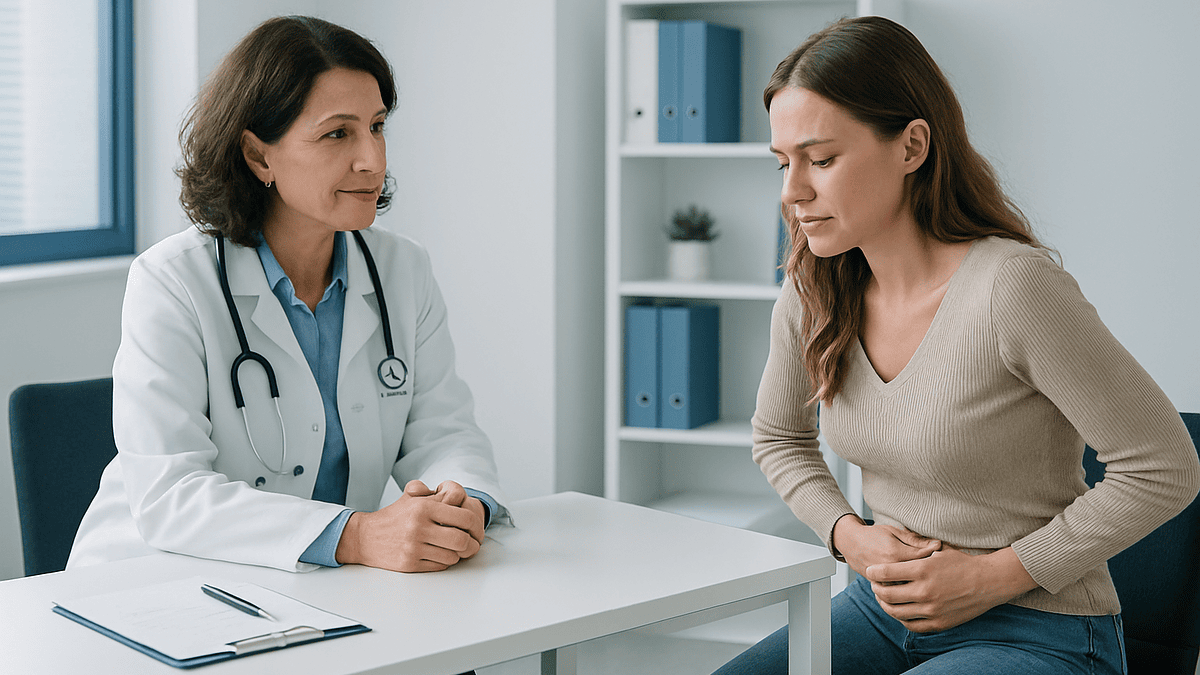
Ovulation pain, also called mittelschmerz, is a one-sided lower abdominal ache or twinge that occurs around the middle of the menstrual cycle when a follicle swells and releases an egg. It affects roughly one in five people who menstruate, usually lasts minutes to about two days, and is harmless. Severe, prolonged or feverish pain, or pain with bleeding or dizziness, needs medical assessment.
Scroll through any cycle-tracking forum this season and you will find the same confident claim repeated in dozens of short videos: that a sharp twinge on one side of the lower abdomen is the body’s most reliable fertility alarm, more accurate than any test strip. As of September 2026, that idea has pushed ovulation pain into one of the fastest-rising reproductive health searches, helped along by wearables that now estimate ovulation from overnight skin temperature.
The twinge itself is real and has had a medical name for well over a century. German doctors called it mittelschmerz, literally “middle pain”, because it lands in the middle of the cycle. What the viral posts get wrong is the certainty. The pain is a useful clue, not a stopwatch, and it shares its symptoms with several conditions that should never be waved away as “just ovulation”.
This explainer walks through what the ache is, why it happens, what the evidence can and cannot tell you about timing a pregnancy, and the specific signs that mean the pain is something else.
What is ovulation pain and how common is it?
Ovulation is the moment an ovary releases a mature egg, usually once per menstrual cycle. Ovulation pain is the discomfort some people feel in the lower abdomen or pelvis in the hours around that release. Clinicians also use the German term mittelschmerz, which simply means “middle pain”, because it arrives roughly midway between one period and the next.
Estimates of how many people experience it vary with how the question is asked. Mayo Clinic and MedlinePlus both describe it as common, and most reviews put the figure at about one in five people who ovulate, though many more may notice a faint pressure they never think to mention. It can begin at any point after periods start and often becomes more recognisable in the late twenties and thirties, when people have tracked enough cycles to spot the pattern. It stops at menopause, because ovulation stops.
Three features set it apart from period cramps. First, timing: it appears around day 14 of a 28-day cycle, or about two weeks before the next period starts, rather than during bleeding. Second, location: it is almost always on one side, matching the ovary that is releasing an egg that month. Third, duration: it tends to be brief, from a few minutes to a day or two, where period cramps commonly span the first days of bleeding.
Not everyone who ovulates feels it, and feeling nothing is not a sign that ovulation has failed. The NHS is clear that the absence of pain carries no meaning on its own. Equally, having it most months is not a sign of disease. The vast majority of people with mittelschmerz have perfectly healthy reproductive organs.
What changed recently
Nothing about the biology of ovulation pain has changed. What has changed is how many people are measuring their cycles, and how loudly a mid-cycle twinge is being marketed as a fertility signal.
Two developments sit behind the surge. The first is technology. Since 2018, when the US Food and Drug Administration first cleared a smartphone app to be marketed for contraception based on daily temperature readings, and since 2022, when a mainstream smartwatch began offering retrospective ovulation estimates from wrist temperature, millions of people have started receiving a notification that says, in effect, “you probably ovulated yesterday”. Many of them are now matching that notification against a remembered twinge and posting about it.
The second is a renewed public focus on polycystic ovary syndrome. In its June 2023 fact sheet, the World Health Organization estimated that PCOS affects 8–13% of women of reproductive age and that up to 70% of those affected remain undiagnosed. Because PCOS disrupts ovulation, people with irregular cycles have begun asking whether their pelvic pain is ovulation pain at all, which is a genuinely good question and one this article takes up below.
Guideline-level advice from the NHS, Mayo Clinic and MedlinePlus has stayed consistent: mittelschmerz is benign, usually needs no treatment, and should be evaluated when pain is severe, persistent or accompanied by fever, vomiting or abnormal bleeding. No new trial has overturned that, and no medicine has been newly approved for it. The honest headline is that the symptom is trending, not the science.
Why does ovulation pain happen? The two main mechanisms
Each cycle, a fluid-filled sac on the ovary called a follicle grows around a maturing egg. By the day before ovulation that follicle has swollen to roughly 2 centimetres across, about the width of a grape, on an ovary that is itself only about the size of an almond. Two explanations for the pain follow from that geometry, and both are supported by clinical observation rather than by controlled trials.
The first is stretch. The surface of the ovary is covered by a thin, nerve-rich layer. As the follicle expands in its final day, it pushes that layer outward, and the stretch registers as a dull, pressure-like ache. This likely explains pain that begins before the egg is released.
The second is irritation. When the follicle ruptures to release the egg, it also spills a small amount of follicular fluid and sometimes a little blood into the pelvis. The lining of the abdominal cavity, the peritoneum, is exquisitely sensitive to fluid and blood. Even a teaspoon can produce a sharp, localized sting that fades as the fluid is reabsorbed over hours. This is the mechanism most often cited by Cleveland Clinic and Mayo Clinic for the sudden, stabbing version of ovulation pain.
A third, less certain contributor is the muscle of the fallopian tube itself, which contracts rhythmically around ovulation to help move the egg along. Some people may feel those contractions as cramping, though direct evidence for this is limited.
What links all three mechanisms is that they are normal events happening to normal tissue. The pain is a side effect of the plumbing working, not a signal that something has gone wrong with it.
What does ovulation pain feel like, and how long does ovulation pain last?
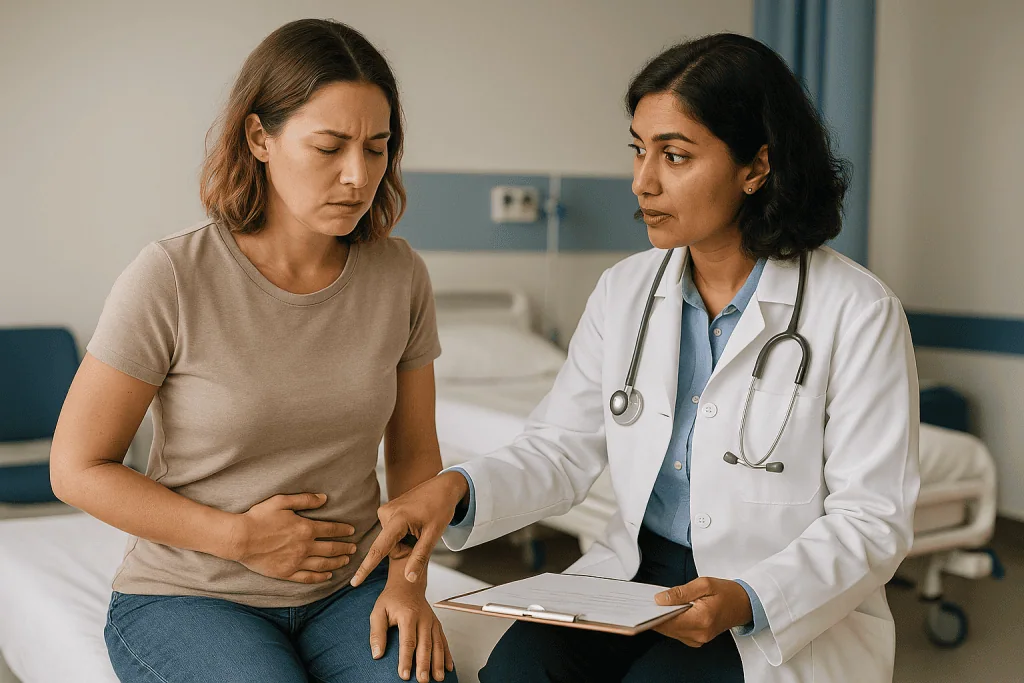
Ask ten people with mittelschmerz to describe it and you will hear two broad accounts. The first is a dull, heavy ache low on one side, a little like the pressure of a full bladder but off-centre, which builds over a few hours and fades. The second is a brief, sharp twinge or stab, sometimes startling enough to make someone stop walking, which is over in seconds or minutes and may be followed by mild soreness.
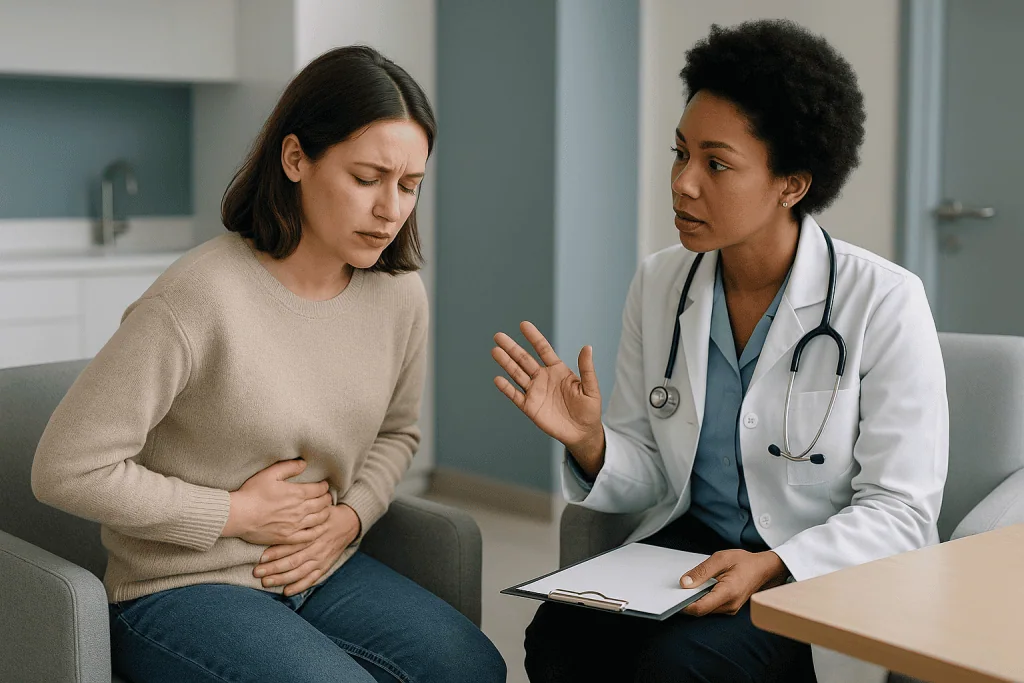
Both are typical. Some people also notice a small amount of clear or slightly pink vaginal discharge at the same time, which reflects the mid-cycle surge in estrogen thinning the cervical mucus, and a few see light spotting. Mild nausea can accompany sharper episodes. What is not typical is pain that spreads across the whole abdomen, pain that makes it impossible to stand straight, or pain with a high temperature.
On duration, the NHS gives the widest honest range: from a few minutes to one or two days. Mayo Clinic describes most episodes lasting minutes to hours. If the ache is still there on the third day, or it comes and goes for a week, the working assumption should shift away from ovulation and toward another cause, and that is worth discussing with a clinician.
Intensity also varies from month to month in the same person. A cycle with a larger follicle, or one in which slightly more fluid escapes, may hurt more than its neighbours. That variability is one reason people often cannot tell whether a given month was “stronger” ovulation; follicle size and pain do not track neatly with egg quality or the chance of conception.
Ovulation pain on one side: which ovary, and does it alternate?
One-sidedness is the hallmark. In any given cycle only one follicle typically reaches the point of release, so only one ovary stretches and only one spot of peritoneum gets irritated. The pain sits low in the abdomen, roughly where the hip bone meets the pubic hair line, on the side of the active ovary.
The popular belief that the ovaries take polite turns, left one month and right the next, is not quite accurate. Ovulation side is closer to a coin toss each cycle. Imaging studies that have followed people over many months find runs of several cycles on the same side, and some people ovulate predominantly from one ovary for long stretches. So a right-sided twinge three months running does not mean the left ovary is “not working”.
One side matters more than the other for a practical reason. The appendix sits in the lower right abdomen, close to the right ovary. Early appendicitis can begin as a vague ache that is easy to attribute to ovulation if the timing happens to coincide. The distinguishing features are that appendicitis pain usually worsens steadily over 12–24 hours, often moves from around the navel to the lower right, and brings loss of appetite, nausea and sometimes fever. Ovulation pain does the opposite: it peaks early and eases.
Left-sided pain has its own look-alikes, including constipation and, less commonly, diverticulitis, which is inflammation of small pouches in the bowel wall and tends to affect people over 40. Side alone never settles the diagnosis. Pattern, duration and the company the pain keeps do.
What the evidence actually says
Mittelschmerz is one of those symptoms that is universally recognised and sparsely studied. It helps to be explicit about what kind of evidence underpins each claim.
That ovulation pain exists, is one-sided, is mid-cycle and is benign: this rests on more than a century of consistent clinical observation and on the agreement of every major patient-information body, including the NHS, Mayo Clinic, Cleveland Clinic and MedlinePlus. Grade it as strong consensus from observational experience, not randomised trial data, because no trial is needed to establish that a common, self-limiting symptom occurs.
That the pain comes from follicular stretch and peritoneal irritation: this is a plausible mechanism supported by small ultrasound studies and by surgical observation of fluid in the pelvis after ovulation. Grade it as moderate, mechanistic evidence. It has not been tested against an alternative explanation in a controlled way.
That the pain marks the exact moment of egg release: here the evidence is weaker and more interesting. Small studies that tracked people with serial ultrasound found the twinge often occurred before the follicle had actually ruptured, sometimes a day or more earlier, consistent with the stretch mechanism. Grade it as limited observational data pointing in one direction: the pain is a rough timing clue with a margin of error measured in hours to a day.
That any specific treatment works for mittelschmerz: there are no randomised trials of pain relievers or heat specifically for ovulation pain. Advice to use over-the-counter analgesia or a warm compress is extrapolated from their general effectiveness for cramping pain. Grade it as expert opinion. The observation that hormonal contraception stops the pain by preventing ovulation is well grounded in how those medicines work, but the decision to use one for this purpose belongs with a prescribing clinician.
Is ovulation pain a fertility sign, or is ovulation pain too late to conceive?
This is the question driving most of the current search traffic, so it deserves a careful answer.
Start with two numbers. Once released, an egg can be fertilised for only about 12–24 hours. Sperm, by contrast, can survive in the reproductive tract for up to five days. Put together, the fertile window is roughly six days long and ends on the day of ovulation. The highest chance of conception comes from intercourse in the two days before ovulation, when sperm are already waiting as the egg arrives.
Now apply the evidence on timing. If the twinge comes from follicular stretch, it may precede release by several hours to a day, which would place it inside the fertile window. If it comes from fluid irritation after rupture, the egg is already out and the clock is running. Since a person cannot know which mechanism they are feeling, the honest position is this: ovulation pain is a reasonable prompt that the fertile window is open or just closing, but acting only when the pain arrives means missing the two most fertile days every month.
So is it “too late”? Not usually. Intercourse on the day of ovulation pain still falls within the window in most cycles. It is simply not the optimal day, and people relying on the twinge alone will conceive more slowly on average than those who also track cervical mucus changes, use ovulation predictor kits that detect the hormone surge about 24–36 hours before release, or simply have intercourse every two to three days across the cycle.
For anyone trying to avoid pregnancy, the margin of error works the other way and is far more consequential. Ovulation pain should never be used as a contraceptive signal.
Ovulation cramps or something else? A comparison table
The conditions below share territory with mittelschmerz: lower abdominal or pelvic pain, often on one side. The table sets out the features that most help a clinician tell them apart. It is a guide to the conversation, not a self-diagnosis tool, and anyone whose pain fits the right-hand rows needs to be seen.
| Cause | Typical timing | Character and duration | Features that point here |
|---|---|---|---|
| Ovulation pain (mittelschmerz) | Mid-cycle, about 14 days before the next period | Dull ache or sharp twinge, minutes to 1–2 days | One-sided, eases on its own, no fever, recurs at the same cycle point |
| Period cramps | Starts with or just before bleeding | Cramping across the lower abdomen, 1–3 days | Central rather than one-sided, linked to flow |
| Ovarian cyst (rupture or torsion) | Any time, often mid-cycle | Sudden severe one-sided pain, hours | Nausea, vomiting, pain that does not settle; torsion is an emergency |
| Appendicitis | Any time | Steadily worsening over 12–24 hours | Right lower abdomen, loss of appetite, fever, pain on movement |
| Ectopic pregnancy | Usually 6–8 weeks after last period | Persistent one-sided pain, may be sharp | Missed period, vaginal bleeding, shoulder-tip pain, faintness; emergency |
| Pelvic inflammatory disease | Any time | Constant lower pain, days | Fever, unusual discharge, pain during sex, bleeding between periods |
| Endometriosis | Often around periods, can be mid-cycle | Deep, recurring, may be severe | Painful periods, pain with sex or bowel movements, difficulty conceiving |
| Urinary tract infection or kidney stone | Any time | Burning, aching or colicky pain | Painful or frequent urination, blood in urine, flank pain |
The single most useful column is the last one. Mittelschmerz keeps no company: no fever, no vomiting, no abnormal bleeding, no urinary symptoms. The moment pain brings a companion, the label changes.
Can PCOS cause ovulation pain?
Polycystic ovary syndrome is a hormonal condition in which the ovaries produce higher than usual levels of androgens, the group of hormones that includes testosterone, and often contain many small, immature follicles. The World Health Organization estimates it affects 8–13% of women of reproductive age. Its defining features are irregular or absent periods, signs of androgen excess such as acne or extra hair growth, and the characteristic ovarian appearance on ultrasound.
The relationship with ovulation pain is paradoxical. PCOS is the most common cause of anovulation, meaning cycles in which no egg is released. If there is no ovulation, there can be no mittelschmerz. Many people with PCOS therefore experience ovulation pain less often than average, or not at all for months at a time.
That said, PCOS is a spectrum. Plenty of people with the condition do ovulate, just irregularly, perhaps every five to eight weeks instead of every four. When they do, they can feel the same one-sided twinge as anyone else. The difficulty is that with an unpredictable cycle the pain cannot be anchored to “day 14”, so it is harder to recognise and easy to confuse with other pelvic discomfort.
PCOS also brings pain of its own that is not ovulation pain. The small follicles that give the syndrome its name are not usually painful, but people with PCOS can develop larger functional cysts that ache, stretch or occasionally rupture. Bloating from insulin resistance and bowel symptoms add to the picture.
For someone with PCOS, a sudden recognisable one-sided twinge after weeks of nothing can actually be good news, a hint that ovulation has occurred. But persistent or worsening pelvic pain in PCOS should be assessed rather than assumed to be hormonal, and management of the syndrome itself is a matter for the treating clinician.
Is it normal to experience body aches during ovulation?
A surprising number of people type this question, often after noticing that a mid-cycle twinge seemed to arrive alongside a heavy, flu-like feeling. The short answer is that whole-body aching is not a recognised feature of ovulation, and it deserves a different explanation.
What ovulation does bring, for some people, is a cluster of mild, localized symptoms driven by hormone shifts. Estrogen peaks just before ovulation and progesterone begins to rise just after. Around that switch, people may notice breast tenderness, bloating, a slightly raised resting body temperature of about 0.3–0.5 degrees Celsius, mild lower back ache on the same side as the pelvic pain, and a change in cervical mucus to a clearer, stretchier consistency. Some report a dip in energy or mood as estrogen falls from its peak. These are all plausible and widely described, though the evidence for most of them is observational.
Generalized muscle aches, joint pain, chills or a feeling of being unwell are a different matter. They point toward an infection, a viral illness that happens to have coincided with mid-cycle, or an inflammatory condition. If body aches come with fever and pelvic pain, pelvic inflammatory disease, an infection of the uterus, tubes or ovaries, needs to be excluded promptly, because untreated it can scar the fallopian tubes.
The small rise in body temperature after ovulation is often misread as the beginning of a fever. It is not. A true fever is 38 degrees Celsius or higher. A thermometer settles the question in a minute, and if the reading is high, ovulation is not the cause.
Back pain alone, on one side, at mid-cycle, is a reasonable extension of mittelschmerz. Back pain with urinary symptoms is more likely a kidney or bladder problem and should be checked.
Ovulation pain, ovarian cysts and endometriosis: when the ache has a cause
Most mid-cycle pain is simple mittelschmerz. In a minority of people, however, a recurring, intense or lengthening pattern of pain at ovulation is the first visible edge of an underlying condition. Two deserve particular attention.
Functional ovarian cysts are fluid-filled sacs that form when a follicle either fails to release its egg and keeps growing, or releases it and then seals over and fills with fluid. They are extremely common, usually harmless and usually dissolve within a few cycles. But a cyst several centimetres across stretches the ovary far more than a normal follicle, producing a heavier, longer-lasting ache. If a cyst ruptures, the sudden release of fluid causes abrupt sharp pain that can mimic severe ovulation pain but typically lasts longer and may come with nausea. Rarely, a large cyst causes the ovary to twist on its blood supply, known as ovarian torsion. That produces severe, unrelenting pain with vomiting and is a surgical emergency.
Endometriosis is a condition in which tissue similar to the lining of the uterus grows outside it, on the ovaries, tubes, pelvic lining or bowel. Because this tissue responds to the same hormones, it can become inflamed around ovulation, and endometriosis on an ovary can make the normal stretch of a follicle far more painful. The clue is context: people with endometriosis almost always also have very painful periods, and often pain during sex, pain with bowel movements, or difficulty conceiving. Mid-cycle pain that is severe enough to interrupt work, or that lengthens year on year, is worth raising, since diagnosis of endometriosis is often delayed by years.
Scar tissue from previous pelvic surgery or infection can also tether an ovary so that normal follicle growth pulls on surrounding structures. Again, the pattern is pain that is more severe and more persistent than textbook mittelschmerz.
How to relieve ovulation pain at home
For most people, mittelschmerz needs nothing more than acknowledgement. When it does need easing, the options are modest and the evidence behind them is mostly borrowed from how these approaches work for cramping pain in general, rather than from trials specific to ovulation.
Heat is the simplest tool. A warm compress, hot water bottle or warm bath relaxes the abdominal wall and may improve blood flow to the pelvic tissues. It is also the one approach with essentially no downside, provided the heat source is not hot enough to redden the skin.
Over-the-counter pain relievers are the second line. The anti-inflammatory type works on the same chemical pathway, prostaglandin production, that drives cramping, which is why clinicians commonly suggest it for period pain and by extension for ovulation pain. Which product suits a particular person depends on their other health conditions, especially stomach, kidney or heart issues, and on any other medicines they take. A pharmacist or doctor can advise; this article deliberately does not give product names or dosing because the right choice is individual.
Movement and position help some people. Gentle walking, a few minutes of stretching or lying with knees drawn up can ease the muscular component of the ache. Rest is fine too; there is no evidence that activity worsens the pain or that resting prolongs it.
Tracking has an underrated therapeutic effect. People who log their cycles and recognise the twinge as predictable report less anxiety about it, and anxiety itself amplifies pain perception. Noting the day, side and duration also produces exactly the record a clinician would want if the pattern ever changes.
What does not help is waiting out pain that is clearly worsening. If home measures bring no relief within a few hours and the pain is intensifying, that is a reason to seek care, not to try harder at home.
How can I prevent ovulation pain?
The only reliable way to prevent mittelschmerz is to prevent ovulation, which is why the question has a short medical answer and a longer practical one.
Combined hormonal contraception, whether pill, patch or ring, works by suppressing the hormone surge that triggers egg release. No follicle matures to the point of stretching the ovary, no rupture occurs, and ovulation pain typically disappears within the first cycle or two. Mayo Clinic and MedlinePlus both list this as an option for people whose mittelschmerz is severe or disruptive. Some progestogen-only methods also suppress ovulation, though less consistently. These are prescription medicines with their own benefits, risks and eligibility criteria, and whether one is appropriate is a decision for the person and their prescribing clinician, weighing contraceptive needs, medical history and preference. This article does not recommend starting, stopping or changing any contraceptive for pain alone.
For people who are trying to conceive, or who prefer not to use hormonal methods, prevention in the strict sense is not available, because the pain is a by-product of the very event they want. The practical goal shifts to making it predictable and manageable. Knowing the likely day allows heat or analgesia to be used early, before the ache builds. A regular cycle makes prediction easier, and the things that steady cycles, adequate sleep, moderate rather than extreme exercise, and a stable weight, are good for reproductive health anyway, though none has been shown in trials to reduce mittelschmerz specifically.
Diet is a frequent subject of online advice. Claims that cutting dairy, sugar or gluten eliminates ovulation pain have no supporting evidence. Staying hydrated and avoiding constipation can reduce background pelvic pressure, which may make the twinge less noticeable, but that is a reasonable inference rather than a tested finding.
The most important form of prevention is not of the pain itself but of misattribution: knowing the pattern well enough to recognise instantly when a month’s pain does not fit it.
Common myths about ovulation pain
The current wave of videos has revived several old misconceptions and added a few new ones. Here is what the evidence supports.
Myth: feeling ovulation pain means you are definitely fertile right now. The pain indicates ovulation is near or has just happened, but it may arrive before or after egg release, and the egg survives only about a day. It is a clue, not a confirmation, and the most fertile days are the two before ovulation, which the pain cannot flag in advance.
Myth: no pain means you are not ovulating. Four in five people who ovulate feel nothing. Absence of mittelschmerz says nothing about whether an egg was released.
Myth: the ovaries alternate strictly left, right, left. Ovulation side is close to random each cycle. Several months on the same side is normal.
Myth: strong ovulation pain means a strong egg or a higher chance of pregnancy. Pain intensity reflects follicle size and how much fluid escaped, not egg quality. There is no evidence linking painful ovulation to better fertility.
Myth: ovulation pain is really implantation pain. Implantation, when a fertilised egg embeds in the uterine lining, happens 6–12 days after ovulation, not at mid-cycle. Any sensation from it is unproven and would be central, not one-sided.
Myth: ovulation pain can be used to avoid pregnancy. Sperm survive up to five days. By the time pain arrives, intercourse from earlier in the week may already have led to fertilisation. The symptom is useless and unsafe as a contraceptive signal.
Myth: it is always harmless, so never worry about it. True mittelschmerz is harmless. The danger lies in using that label for pain that is severe, prolonged, feverish or accompanied by bleeding, which is how early appendicitis, cysts and ectopic pregnancies get missed.
When to see a doctor about ovulation pain
Mittelschmerz that follows its usual pattern, mild, one-sided, mid-cycle and gone within a day or two, does not need an appointment. The following situations do.
Seek emergency care immediately if lower abdominal pain is severe or sudden and comes with any of these: vomiting that will not stop; fever; fainting, light-headedness or a racing heart; pain in the tip of the shoulder; heavy vaginal bleeding; a positive pregnancy test or a missed period; or an abdomen that is rigid or painful to the lightest touch. These signs can indicate ovarian torsion, a ruptured cyst with internal bleeding, appendicitis or an ectopic pregnancy, which is a pregnancy growing outside the uterus, usually in a fallopian tube, and can be life-threatening if the tube ruptures.
Book a prompt, non-emergency appointment if pain lasts more than two or three days; if it occurs at times other than mid-cycle or comes most days; if it is becoming more severe cycle on cycle; if it is accompanied by painful urination, unusual vaginal discharge, pain during sex or bleeding between periods; if your periods are very irregular or absent and you are unsure whether you ovulate; or if you have been trying to conceive for 12 months, or six months if you are over 35, without success.
At the visit, expect questions about cycle dates, the side and character of the pain, and other symptoms, followed by an abdominal and possibly pelvic examination. A pregnancy test and urine test are routine. An ultrasound is commonly used to look at the ovaries, and in some cases blood tests check for infection or hormone patterns. There is no specific test for mittelschmerz; it is diagnosed by its pattern once other causes are excluded.
Bring your cycle log. Three months of dated notes on pain and bleeding is the most useful thing you can hand a clinician, and it shortens the path to an answer considerably.
Frequently asked questions
Is it normal to experience body aches during ovulation?
Whole-body aching is not a recognised feature of ovulation. Mid-cycle hormone shifts can cause localized symptoms such as breast tenderness, bloating, mild one-sided back ache and a small rise in resting temperature of about half a degree. Generalized muscle or joint aches, chills or feeling unwell suggest an infection or viral illness that has coincided with mid-cycle. If body aches come with fever and pelvic pain, see a clinician promptly to exclude pelvic infection.
Can PCOS cause ovulation pain?
PCOS more often reduces ovulation pain than causes it, because the syndrome frequently prevents ovulation altogether, and without egg release there is no mittelschmerz. People with PCOS who do ovulate irregularly can still feel the classic one-sided twinge, but it is harder to recognise without a predictable cycle. Separately, PCOS can produce pelvic pain from larger functional cysts or bloating. Persistent pelvic pain in PCOS should be assessed rather than assumed to be hormonal.
Is ovulation pain too late to conceive?
Usually not, but it is not the best day either. The egg survives about 12–24 hours after release, and the pain may occur shortly before or after that moment, so intercourse on the day of the twinge still falls inside the fertile window in most cycles. The highest chance comes from the two days before ovulation, which the pain cannot predict. People trying to conceive do better combining the twinge with mucus tracking, ovulation kits or regular intercourse every two to three days.
How can I prevent ovulation pain?
The only reliable way to prevent it is to prevent ovulation, which combined hormonal contraception does by suppressing the hormone surge that releases the egg; whether that is appropriate is a decision for you and a prescribing clinician. For people who want to ovulate, prevention is not possible, but predicting the day allows heat or over-the-counter pain relief to be used early. Dietary eliminations promoted online have no supporting evidence for reducing ovulation pain.
How long does ovulation pain last?
Most episodes last from a few minutes to several hours, and the NHS gives an upper range of one to two days. Sharp twinges tend to be brief; the dull, pressure-like ache tends to build and fade over hours. Pain that continues into a third day, comes and goes for a week, or returns at times other than mid-cycle does not fit mittelschmerz and should be discussed with a clinician, since cysts, endometriosis and infection can all cause longer-lasting pelvic pain.
Why is ovulation pain on one side only?
In any given cycle, typically only one ovary matures and releases an egg, so only that ovary stretches and only that side of the pelvic lining is irritated by fluid. The pain sits low in the abdomen on the active side. Contrary to popular belief, the ovaries do not alternate strictly; side is close to random each month, and several cycles in a row on the same side is normal. Right-sided pain that worsens steadily with fever or loss of appetite needs assessment for appendicitis.
Are ovulation cramps different from period cramps?
Yes, in timing, location and duration. Ovulation cramps occur about two weeks before a period, are one-sided and usually last minutes to a day or two. Period cramps begin with or just before bleeding, are felt centrally across the lower abdomen and typically span the first one to three days of flow. Both are driven partly by prostaglandins, inflammatory chemicals that cause muscle contraction, which is why the same over-the-counter approaches are commonly suggested for each.
What does sharp pain during ovulation mean?
A sudden, brief, stabbing pain at mid-cycle most often reflects the follicle rupturing and releasing a small amount of fluid or blood that stings the sensitive pelvic lining. It typically lasts seconds to minutes and settles into mild soreness. Sharp pain that is severe, does not ease within a few hours, or comes with vomiting, fever, faintness or bleeding is not typical mittelschmerz and may indicate a ruptured or twisted ovarian cyst or an ectopic pregnancy, both of which need urgent care.
Can ovulation pain be a sign of endometriosis?
On its own, no, but severe or lengthening mid-cycle pain can be part of the endometriosis picture. In this condition, tissue similar to the uterine lining grows on the ovaries or pelvic surfaces and becomes inflamed with hormonal changes, so normal follicle growth can hurt far more. The telling context is very painful periods, pain during sex or bowel movements, or difficulty conceiving alongside the mid-cycle ache. Raising that pattern with a clinician matters, as diagnosis is often delayed by years.
Does ovulation pain mean the egg has already been released?
Not necessarily. Small ultrasound studies found that the twinge often occurred before the follicle had ruptured, consistent with pain from the ovary surface stretching as the follicle swells. In other cycles, the pain follows release, when escaped fluid irritates the pelvic lining. Because a person cannot tell which they are feeling, the pain should be treated as a rough indicator that ovulation is imminent or has just occurred, with a margin of error of hours to about a day.
References
- Mittelschmerz, MedlinePlus Medical Encyclopedia
- Ovulation pain, NHS
- Ovulation Pain (Mittelschmerz), Cleveland Clinic
- Polycystic ovary syndrome fact sheet, World Health Organization
This article is for general information only and is not a substitute for professional medical advice. Please consult a qualified doctor about your individual situation.

More from the Blog

Who Is ICSI Recommended For? Male-Factor Infertility, Prior Fertilization Failure and More
ICSI is usually recommended when sperm are unlikely to fertilize an egg on their own: severe male-factor infertility such as very low sperm count,…

GIFT (Gamete Intrafallopian Transfer) Step by Step: Eggs, Sperm and the Laparoscopic Placement
GIFT, or gamete intrafallopian transfer, is an assisted reproduction technique in which eggs are collected after ovarian stimulation, mixed with prepared sperm, and placed…

GIFT vs IVF: Why Fertilization Location Matters and How Fertility Teams Choose Between Them
GIFT (gamete intrafallopian transfer) places eggs and sperm together into a fallopian tube so fertilization happens inside the body, while IVF fertilizes eggs in…
Tracking Ovulation: Basal Temperature, Cervical Mucus and the Fertility Window Explained
Cervical mucus changes with estrogen: scant and sticky after a period, then wetter, and finally clear, stretchy and slippery in the days before ovulation,…
Cramping or Spotting After Insemination: What Is Expected and When to Contact Your Clinic
Mild cramping after IUI is common and usually expected. The thin catheter passing through the cervix, the fluid placed in the uterus, and the…
How ICSI Is Performed: What the Embryologist Does From Sperm Selection to Injection
ICSI, or intracytoplasmic sperm injection, is a laboratory step within IVF in which an embryologist prepares a semen sample, picks out one live, normally…