

Preparing for an MRI: Eating, Metal, What to Wear
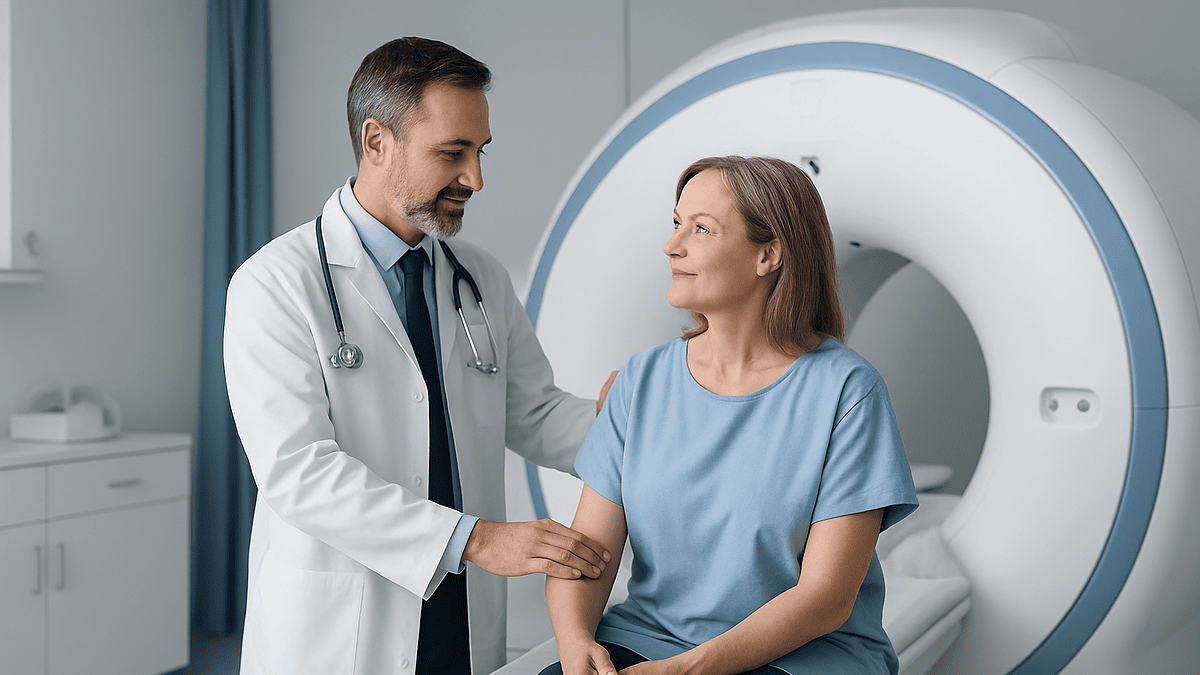
Key Takeaways
- MRI images hydrogen atoms in water and fat, so a normal meal does not affect scans of the brain, spine, joints or breast.
- Abdominal and pelvic scans are the main fasting exceptions, and the NHS notes some require no food or drink for up to 4 hours so the bowel is quieter and the gallbladder stays full.
- Fasting before sedation or anesthesia protects your airway, not the picture, which is why those rules are strict and a forgotten coffee can delay the scan.
- The magnet is always on, so bank cards, phones, hair clips and underwire must stay outside the room, and pacemakers, cochlear implants and eye metal fragments need model-level safety checks.
- Antiperspirants and metallic cosmetics do not endanger you but can create image artifacts directly beneath the skin, which matters for breast, chest and head scans.
- According to the NHS, a whole MRI appointment can run 15 to 90 minutes with loud knocking noises, so hearing protection, warm layers and a call button are standard.
For most MRI scans you can eat and drink normally beforehand, because the magnet images tissue, not stomach contents. The exceptions are scans of the abdomen or pelvis, scans with contrast dye, and scans under sedation, where you may be asked to fast for up to about four hours. Always follow the specific instructions in your appointment letter, since they are tailored to your scan.
The night before her first MRI, a colleague of mine did what many people do: she skipped dinner, drank nothing after nine, and arrived hungry, thirsty and a little irritable at a scan of her knee. Nobody had asked her to fast. She had simply assumed that any big hospital machine wanted an empty stomach.
That assumption is understandable. Colonoscopies, some blood tests and certain CT scans do come with food rules, and the instructions blur together. MRI is different in a way that matters: it uses a strong magnet and radio waves to map water and fat inside your body, and for most body parts, a sandwich at lunchtime changes nothing about the picture.
What does change the picture, and occasionally your safety, is metal. An underwire, a forgotten hair clip, a heart device you have lived with for years. This guide sorts the food rules from the metal rules, explains the deodorant question honestly, and tells you what to wear so the day goes smoothly.
Can you eat before an MRI? The honest answer
Usually, yes. The NHS and Mayo Clinic both describe the default as eating, drinking and taking your usual medicines as normal unless you are told otherwise. That default exists because MRI does not depend on an empty digestive tract to see a brain, a spine, a shoulder or a knee. The signal comes from hydrogen atoms in water and fat, nudged by radio waves inside a magnetic field. Breakfast does not interfere with a hydrogen atom in your rotator cuff.
So why does the question come up so often? Because the exceptions are common enough that many people know someone who was told to fast. Scans of the abdomen and pelvis are the main one. After a meal, the gut moves more as it digests, and the gallbladder squeezes out bile. Motion blurs images, and a collapsed gallbladder is harder to assess than a full one. Fasting keeps both quieter. The NHS notes that for some scans you may be asked not to eat or drink for up to 4 hours, and for others to drink a large amount of water beforehand, depending on the body area.
The practical rule is simple and slightly boring: read your appointment letter. Radiology departments write instructions for the exact protocol booked, not a generic MRI. If the letter says nothing about food, eat normally. If you cannot find the letter, a quick call to the imaging department beats guessing, and it beats arriving light-headed for no reason.
Which MRI scans need an empty stomach?
Fasting requests cluster around a few situations, and each has a mechanism behind it rather than tradition. The table below reflects common practice described by the NHS and Mayo Clinic; your own department may differ, and its instructions win.
| Scan type | Food and drink before | Why |
|---|---|---|
| Brain, spine, joints, breast | Usually eat and drink normally | Stomach contents do not affect these images |
| Liver, pancreas, bile ducts, bowel | Often asked to fast, sometimes up to 4 hours | Less bowel movement; gallbladder stays full and visible |
| Pelvis and bladder studies | May be asked to drink water and arrive with a full bladder, or to fast | A distended bladder or quiet bowel improves the view |
| Any scan with contrast dye | Some centers ask for a light meal or a short fast | Reduces nausea if a reaction occurs |
| Scans under sedation or anesthesia | Fasting is standard | An empty stomach lowers the risk of inhaling stomach contents while drowsy |
Notice what is missing from that table: any suggestion that fasting makes a scan more accurate for your knee or your head. It does not. If you are having a joint scan and someone tells you to skip breakfast, it is reasonable to ask why. In children’s imaging, fasting is more often about sedation than about the pictures, which is why the instructions for a small child can look stricter than for an adult having the same body part scanned.
What if I accidentally drink water before my MRI?
Take a breath. For the majority of scans, water was never off the menu. For the fasting scans, a few sips of plain water rarely spoils anything, and the radiographer would far rather know than not. Tell them when you check in. They will decide whether it changes the plan, and in most cases it does not.
The scenario where honesty matters most is sedation or anesthesia. Here the fasting rule protects your airway rather than the image quality: when you are deeply relaxed, the reflexes that normally keep stomach contents out of your lungs are dulled. Anesthesia teams set clear cut-off times for solids and clear fluids, and a forgotten coffee with milk is the kind of thing that can lead them to delay the scan for safety. That delay is not a punishment. It is the system working.
A related worry: what if you ate a full meal before an abdominal scan you were meant to fast for? The scan may still go ahead, with the radiologist noting that the gallbladder is contracted and bowel motion is increased. Or the department may reschedule. Either way, the picture is not dangerous, only potentially less useful. Compare that with the metal checklist, where a forgotten item genuinely can hurt you, and you can see where to spend your worry.
If you have diabetes and were asked to fast, the appointment letter should say how to handle it. If it does not, call ahead. Going without food while managing blood sugar is a conversation for your prescribing clinician, not something to improvise in the waiting room.
What should you not do before an MRI?
Think of the room that holds the scanner as a place where the magnet is always on. It does not switch off between patients. Anything that responds to a magnet can move, pull, heat up or ruin the image, and the safety screening you fill out is designed around that reality.
Before the appointment, avoid these:
- Wearing clothing with metal: zips, snaps, underwire, belt buckles, metallic threads or printed glitter.
- Leaving on jewelry, watches, hairpins, piercings, hearing aids, removable dental work or glasses. All come off before you enter the magnet room.
- Carrying anything with a magnetic strip or electronics: bank cards, phones, key fobs. Cards can be wiped, phones can become projectiles.
- Applying products that may contain metallic particles, such as some antiperspirants, glittery makeup or certain hair sprays, if your department asks you to skip them.
- Staying silent about implants, past surgery, tattoos, or work involving metal grinding or welding.
The Cleveland Clinic and Johns Hopkins both list this kind of preparation, and the emphasis is consistent: disclose everything, remove everything, and let the team decide what is safe. Radiographers are not judging your underwear or your piercings. They are keeping a very strong magnet from doing something you would not enjoy.
One more thing not to do: skip the questionnaire because you have had an MRI before. Devices get implanted, fragments get lodged, and a scan that was safe two years ago may need a different check today.
Which implants and metal matter most in an MRI?
Not all metal is equal, and this is where a lot of online fear-mongering deserves a correction. The Mayo Clinic groups the concern into two questions: could the item move or heat, and could it interfere with the magnetic field? Dental fillings, most joint replacements and many surgical screws are fixed, non-magnetic and routinely scanned, though they can blur nearby tissue. Modern orthopedic hardware is generally considered safe once the team knows what it is.
The items that demand a pause are active or delicate devices. Pacemakers and implantable defibrillators top every list, because the magnet and radio waves can disrupt their function; some newer devices are designed for MRI under specific conditions, but that requires the exact model and settings to be confirmed beforehand. Cochlear implants, certain aneurysm clips in the brain, some implanted pumps and nerve stimulators need the same model-level check. Hopkins and the NHS both note that a metal fragment in the eye, common in people who have done welding or grinding, can be a serious hazard, and a quick X-ray of the orbits is sometimes done first.
Then there are the surprises. Medication patches with a metal-containing backing can heat. Some permanent makeup and tattoo inks contain iron oxide and may cause a warm or tingling sensation; the NHS advises telling staff about tattoos, and most people with tattoos are scanned without incident. Copper or hormonal IUDs are generally fine. A bullet or shrapnel from decades ago is worth mentioning even if you have not thought about it in years.
The takeaway is not to catalog your body from memory in a panic. Bring any implant card you have, name every operation you remember, and let the radiographer match the details to safety data.
Can you put on deodorant for an MRI?
This is one of the most searched pre-MRI questions, and the honest answer is: it depends on the scan and the department, so check, but the reasoning is worth knowing.
Many antiperspirants contain aluminum compounds, and some cosmetics contain iron oxides or other metallic pigments. These are not dangerous in the magnet in the way a hair clip is. The concern is image quality. Metallic particles on the skin can create small distortions, called artifacts, in the tissue directly beneath them. For a breast MRI or a scan of the chest wall, shoulder or axilla, a layer of antiperspirant sits exactly where the radiologist is looking. For a knee, it is irrelevant.
Hopkins advises avoiding hair products, cosmetics and other items that may contain metal before the scan, and many centers translate that into a blanket request to skip deodorant on the day. If you are unsure, a plain, unscented product without antiperspirant ingredients is the lower-risk choice, and washing it off before the scan is always an option. Bring a stick in your bag for afterwards.
The same logic applies to makeup, especially around the eyes for a brain or orbit scan, to glittery nail polish if you are having a hand scan, and to hair spray or gel. None of these will harm you. All of them can, occasionally, put a smudge on the one part of the image that matters. Since the fix is free and takes a minute, it is worth doing.
What to wear to an MRI
Dress as if you might have to change into a gown, because you very well might. Many departments ask everyone to change, both to remove hidden metal and to keep the process consistent. Others will let you stay in your own clothes if they are plainly metal-free. Either way, the ideal outfit is soft, loose, and boring.
Good choices include cotton T-shirts, sweatshirts without zips, jogging bottoms or leggings with a plain elastic waist, and socks. Sports bras without hooks or underwire work well; some athletic fabrics contain metallic or silver-based threads for odor control, so if a label mentions them, choose something else. Leave the jeans at home. Rivets, zips and buttons are exactly what the screening is designed to catch, and a metal fly will get you sent to change.
Remove jewelry before you leave the house if you can, including wedding rings if they come off easily. If a ring does not come off, tell the staff; gold and platinum are usually not magnetic, but the team will want to know it is there. Hearing aids, dentures with metal clasps and removable retainers come out before you enter the room, so bring a case for them.
Temperature is the detail people forget. Scanner rooms are kept cool to protect the equipment, and you may lie still for a long stretch. Layers help, and most departments can offer a blanket. Finally, wear shoes that slip off. You will lie down, and untying laces on a narrow table is nobody’s idea of a graceful start.
Should I take my regular medications before an MRI?
In almost every case, yes, take them as normal. The NHS and Mayo Clinic both describe the standard advice as continuing your usual medicines unless the department specifically says otherwise. An MRI does not interact with the chemistry of what you swallow; the magnet is indifferent to blood pressure tablets or thyroid medicine.
The nuances arise when fasting or contrast is involved. If you have been told not to eat, ask whether a small sip of water with your usual pills is fine. It nearly always is, and the appointment letter often says so. If you take a medicine that needs to be taken with food, or one that affects blood sugar, that is a conversation for the prescribing clinician before the day, so you have a clear plan rather than a guess.
Contrast dye adds one more consideration. Because the agent is cleared by the kidneys, people with reduced kidney function may need a recent blood test before it is given; the NHS notes this check may be part of preparation. If you have kidney disease, diabetes, or take medicines that affect the kidneys, mention it when you book. That is not a reason to stop anything on your own. It is a reason to make sure the radiology team knows.
Patches deserve a special word. Some transdermal patches have a thin metallic layer and can heat in the magnet. Do not simply peel one off, since that interrupts your treatment; ask in advance whether it should be removed and when it can go back on.
Will I need contrast dye, and what should I know about it?
Some MRI scans use an injected contrast agent to make blood vessels, inflammation or certain tumors stand out more sharply. It is given through a small cannula in a vein, usually in the arm, partway through the scan. Not every MRI needs it, and the request form from your doctor determines whether it is planned.
The agent works by altering how nearby hydrogen atoms respond to the radio waves, brightening tissue with a rich blood supply. The Mayo Clinic describes serious allergic reactions as rare, and most people notice nothing more than a cool sensation in the arm or a brief metallic taste. Mild reactions such as nausea, headache or a rash can occur. The NHS advises telling staff about any previous reaction to contrast, and about kidney problems, since the agent is filtered out by the kidneys and a blood test may be needed first.
Where does food come in? A few centers ask for a light meal or a short fast before contrast simply to reduce discomfort if nausea occurs. This is a comfort measure, not a safety-critical rule in the way sedation fasting is. Drinking water after the scan is often encouraged to help clear the agent, and there is no need to avoid normal meals afterwards.
If you are breastfeeding, Mayo notes that some clinicians may suggest a brief pause afterwards, though many professional bodies consider it unnecessary. Ask the department what they recommend and why, so you can plan feeds or expressed milk without stress.
How long does an MRI take, and what does it feel like?
Longer than most people expect, and louder. According to the NHS, a whole appointment can run from 15 to 90 minutes depending on how much of the body is being scanned and how many image sets are needed. A single sequence lasts from a few seconds to a few minutes, and there may be a dozen or more sequences, each producing its own pattern of knocking, buzzing or thumping. That noise is the sound of electrical coils switching on and off rapidly inside the magnet; it is normal, and hearing protection with earplugs or headphones is standard.
You lie on a motorized table that slides into the tunnel, head-first or feet-first depending on the body part. A lightweight frame called a coil may be placed over the area being scanned; it is an antenna, not a restraint, though it can feel snug. The radiographer controls everything from the next room and can see and hear you throughout, and you will hold a squeeze-ball or button to call them.
Movement is the enemy of a good image. You will be asked to keep still, and for chest or abdominal scans you may need to hold your breath for short stretches on command. That is another quiet argument against a heavy meal before a belly scan: a full stomach makes breath-holds harder.
Warmth is common, especially in longer scans, and a light tingling in the scanned area is occasionally reported. Pain is not expected. If anything feels wrong, hot or frightening, squeeze the call button. Stopping a sequence is easy and costs nothing.
What if I am claustrophobic or cannot lie still?
Fear of the tunnel is common, and it is not a character flaw. The scanner is narrow, the noise is strange, and being told to stay still tends to make people want to move. There are several practical answers, and none of them involve pretending you are fine.
Start by telling the department when you book. Some scanners have a wider bore, and some body parts can be scanned feet-first with your head outside the tunnel. Mirrors fitted to the head coil let you see out of the room, and many centers can play music through the headphones. Closing your eyes before the table moves and keeping them closed removes much of the trigger. Slow breathing, counting sequences, or bringing a companion who can sit in the room in some centers all help.
If those measures are not enough, your referring clinician can discuss a short-acting sedative to be taken before the scan. This is medication that dampens the brain’s alarm response for a limited window, so timing is arranged around the appointment. The decision, the choice of medicine and any instructions about fasting or transport belong to the prescribing clinician; the practical consequence for you is that you will need someone to take you home and you should not drive that day.
Children and people with movement disorders or severe pain sometimes need general anesthesia for the scan to succeed, and that is when fasting rules become strict. The imaging team plans these appointments differently, so flag the need early rather than on arrival.
Is MRI safe in pregnancy, while breastfeeding, and for children?
MRI uses no ionizing radiation, which is why it is often preferred over CT when imaging is needed during pregnancy. The Cleveland Clinic and NHS both describe it as generally safe in pregnancy, with a note of caution: the NHS advises that as a precaution, scanning is usually avoided in the first three months unless there is a clear need, and that you should tell the department if you are or might be pregnant. Contrast dye is typically avoided during pregnancy because it crosses the placenta, and the benefit would need to be judged clearly worthwhile.
Breastfeeding is not a reason to avoid an MRI, and the food rules are the same as for anyone else. If contrast is used, ask what your department recommends about feeding afterwards; guidance varies, and the Mayo Clinic notes some clinicians suggest a short pause while others consider it unnecessary.
Children can have MRI scans safely, and the main challenge is stillness. Toddlers and many preschoolers cannot hold position for the length of a scan, so sedation or anesthesia is often used, which brings strict fasting rules for the child. Older children frequently manage with preparation: a practice visit, a video of the sounds, or a familiar toy that has been checked for metal. If your child has a scan booked, ask about play specialists and whether a parent can stay in the room. The magnet rules apply to you too, so leave your own metal outside.
When should you see a doctor before or after an MRI?
Most MRI appointments come and go with nothing more dramatic than a stiff neck from lying still. Still, there are moments when a call to your doctor or the imaging department is the right move rather than an optional one.
Before the scan, speak up if you discover or remember any implant, device, metal fragment or past surgery involving metal that was not on your screening form. Contact the department if you develop a new illness such as a fever or vomiting, if you might be pregnant, or if you have kidney disease and a contrast scan is planned but no blood test has been arranged. If you have been asked to fast and you take medicines that affect blood sugar, ask your prescribing clinician how to manage the morning rather than deciding alone.
After the scan, seek urgent care for red-flag signs following contrast: swelling of the face, lips or throat, difficulty breathing, widespread hives, a racing heartbeat, or feeling faint. These serious reactions are rare, as the Mayo Clinic notes, but they are emergencies when they occur. Redness, pain or swelling spreading from the cannula site over the following days, or a burn-like mark on the skin where a tattoo or patch was, also deserve a medical review.
Finally, remember the scan is a tool, not a verdict. The images are reported by a radiologist and sent to the clinician who referred you, and that conversation is where the results become meaning. If you have not heard anything in the timeframe you were given, call and ask.
What should I bring, and how does the day usually run?
A well-packed bag and a realistic timeline take most of the friction out of scan day. Here is what seasoned patients bring:
- The appointment letter and any implant, device or surgery cards you hold.
- A list of your current medicines and any allergies, particularly to contrast agents.
- Glasses rather than contact lenses if you will need to read forms; both come off in the room, but glasses are easier to hand over.
- Metal-free comfortable clothes, or the willingness to change into a gown.
- A small case for hearing aids, dentures or jewelry.
- A snack for afterwards if you have been asked to fast, and water.
On arrival, expect a safety questionnaire, a conversation with the radiographer, a change of clothes, and the locking away of valuables. If contrast is planned, a cannula goes in before you enter the room. The scan itself follows the timings described earlier, with the NHS estimate of 15 to 90 minutes as a reasonable range to plan around. Afterwards you can leave immediately unless you had sedation, in which case you will rest until staff are satisfied and then go home with your companion.
Eat normally as soon as you like. Drink water if you had contrast. Return to your day. The results go to your referring clinician rather than to you at the desk, which can feel anticlimactic after the build-up, but it means the images are read carefully by a specialist and discussed with someone who knows your history.
Frequently asked questions
Can you eat before an MRI?
For most MRI scans, yes, you can eat and drink normally. The magnet images water and fat in tissue and is not affected by stomach contents. Fasting is usually only requested for scans of the abdomen or pelvis, scans with contrast dye at some centers, and any scan done under sedation or anesthesia. Follow the instructions in your appointment letter, as they are written for your specific scan.
Does an MRI need an empty stomach?
Only certain MRI scans do. Scans of the liver, pancreas, bile ducts or bowel often ask for a fast of up to about four hours, because digestion increases bowel movement and empties the gallbladder, both of which degrade the images. Scans under sedation require fasting for airway safety. Brain, spine, joint and breast scans do not need an empty stomach unless your department says otherwise.
What if I accidentally drink water before my MRI?
Tell the radiographer when you check in; for most scans it makes no difference at all. If you were asked to fast for an abdominal scan, a few sips of plain water rarely affects the images. The situation where it matters most is sedation or anesthesia, because fluids in the stomach raise the risk of inhaling contents while drowsy, and the team may delay the scan for safety.
Can you put on deodorant for an MRI?
It depends on the scan. Many antiperspirants contain aluminum compounds that can cause small image distortions in the skin beneath them, which matters for breast, chest, shoulder and armpit scans. Many departments ask everyone to skip deodorant, makeup and hair products on the day to be safe. It is not a danger to you, only a possible smudge on the image, and washing it off before the scan is an easy fix.
What should you not do before an MRI?
Do not wear clothing with metal such as zips, underwire or buttons, and do not bring bank cards, phones or jewelry into the scanner room. Avoid products that may contain metallic particles if asked, and never withhold information about implants, past surgery, tattoos, or work with metal. Do not skip the safety questionnaire because you have had a scan before, since implants and injuries change.
Can I take my medications before an MRI?
In almost all cases you should take your usual medicines as normal, according to the NHS and Mayo Clinic. If you have been told to fast, ask whether a small sip of water with your tablets is acceptable; it usually is. If you take medicines that affect blood sugar or need food, or use a patch with a metallic layer, discuss the plan with your prescribing clinician before the day.
What should I wear to an MRI scan?
Wear soft, loose clothing without any metal: a cotton T-shirt, a sweatshirt without zips, plain elastic-waist trousers or leggings, and socks. Avoid jeans, underwire bras, belt buckles and athletic fabrics with metallic or silver threads. Take off jewelry, watches and hairpins before you arrive. Many departments will ask you to change into a gown anyway, so prioritize comfort and easy-to-remove shoes.
Can I have an MRI if I have a tattoo or permanent makeup?
Usually yes. Some tattoo inks contain iron oxide pigments that can warm or tingle in the magnetic field, and the NHS advises telling staff about tattoos and permanent makeup so they can advise you. The vast majority of people with tattoos are scanned without any problem. If you feel heat or discomfort in a tattooed area during the scan, squeeze the call button and the radiographer will pause.
How long does an MRI scan take?
The NHS describes a full MRI as taking anywhere from 15 to 90 minutes, depending on the body area and the number of image sequences required. Each sequence lasts from a few seconds to a few minutes and produces loud knocking sounds, so hearing protection is provided. Allow extra time for the safety questionnaire, changing clothes and, if contrast is planned, placing a small cannula in your arm.
Is it safe to have an MRI during pregnancy?
MRI uses no ionizing radiation and is generally considered safe in pregnancy, which is why it is often preferred over CT when imaging is needed. As a precaution, the NHS notes scanning is usually avoided in the first three months unless clearly necessary, and contrast dye is typically avoided throughout pregnancy. Always tell the department if you are or might be pregnant so the plan can be adjusted.
References
- NHS – MRI scan
- Cleveland Clinic – MRI (Magnetic Resonance Imaging)
- MedlinePlus – MRI Scans
- NIH National Institute of Biomedical Imaging and Bioengineering – Magnetic Resonance Imaging (MRI)
This article is for general information only and is not a substitute for professional medical advice. Please consult a qualified doctor about your individual situation.

More from the Blog

What Does a Comprehensive Check-Up Include? Blood Work, Imaging and the Follow-Up Plan
A comprehensive check-up usually includes a medical and family history, a physical examination with blood pressure and body measurements, and blood and urine tests…

What a CT Scan Shows, and Why Doctors Order One
A CT scan shows detailed cross-sectional images of bones, organs, blood vessels and soft tissue by combining many X-ray views into slices. Doctors most…
Can an Ultrasound Detect Cancer? What It Can Show, Its Limits and the Next Steps
An ultrasound can detect abnormal lumps, masses and changes in organs that may be cancer, and it is especially good at telling a fluid-filled…
What a PET-CT Scan Shows That a CT Alone Cannot: Metabolic Activity in Cancer Staging
A PET-CT scan shows how actively tissues are using energy, mapped onto a detailed anatomical picture. The PET part tracks a mildly radioactive sugar…

When Does a Brain Lesion Need a Stereotactic Biopsy Instead of Open Surgery?
A brain lesion is usually sampled with a stereotactic needle biopsy when the tissue diagnosis will change treatment but removing the lesion is not…

Stereotactic Brain Biopsy Step by Step: Planning Scans, Coordinates and the Needle Path
A stereotactic brain biopsy uses a detailed MRI or CT scan, a three-dimensional coordinate system and a thin needle to remove a tiny sample…