

Preparing for Brain Injury Rehabilitation: Records, Routines and the Goals That Matter to You

Key Takeaways
- A written description of what the person could do in the month before the injury is one of the most useful documents in the records folder, because every rehabilitation goal is measured against that baseline.
- Most people with concussion recover within about 2 weeks according to the NHS and CDC, while recovery from moderate or severe injury is fastest in the first 6 months and can continue for years.
- Imaging shows structural damage, not function; two people with similar scans can recover very differently depending on age, prior health, support and goals.
- Stress does not re-injure the brain but it measurably worsens attention, sleep and headache after injury, so removing avoidable stress frees capacity for the useful stress of therapy.
- Current guidance favors a brief rest period followed by graded return to activity after concussion, replacing the older advice of total rest in a dark room.
- Assisting only as much as safety requires, then stepping back, preserves the repetition that drives neuroplasticity; doing tasks for the person removes their practice.
Preparing for brain injury rehabilitation means gathering the medical records the rehab team will need, settling predictable daily routines for sleep, meals and rest, and writing down the specific everyday goals that matter to you or your family member. Good preparation also includes arranging practical support at home and agreeing with the treating team on how progress will be measured and reviewed.
The discharge folder sits on the kitchen table, two inches thick, and nobody in the house has read past the first page. A daughter is trying to work out whether her father should be sleeping this much. Her father is trying to remember the name of the therapist who visited yesterday. Both of them are waiting for the same phone call: the one that says a rehabilitation place is available.
That waiting period is where preparing for brain injury rehabilitation quietly begins. It is not a glamorous phase. It is paperwork, calendars, a notebook by the bed, and some honest conversations about what a good day would look like six months from now.
What follows is a practical guide to those weeks: what rehabilitation actually involves, which records make the first assessment far more useful, why routines matter more than motivation, and how to set goals the team can build a program around.
What actually happens in brain injury rehabilitation?
Rehabilitation is not a single treatment. It is a coordinated program delivered by several professions, each working on a different part of the same problem: a brain that has been injured and a person who needs to live with the result.
A traumatic brain injury (TBI) is damage to the brain caused by an external force, such as a fall, a road collision or a blow to the head. An acquired brain injury is the broader term that also covers strokes, infections and lack of oxygen. Rehabilitation principles are similar across both, which is why many programs treat them side by side.
The team usually includes a physiotherapist (movement, balance, strength), an occupational therapist (the practical tasks of daily life, from dressing to managing money), a speech and language therapist (communication and, often, safe swallowing), and a neuropsychologist, a specialist who assesses thinking skills such as memory, attention and planning. A rehabilitation physician coordinates the medical side, and nursing staff cover the rest of the day, which is where many of the real gains are practiced.
The biological idea underneath all of this is neuroplasticity: the brain’s ability to form new connections and reassign tasks to undamaged areas. Repetition, task-specific practice and gradually increasing challenge drive that process. A patient does not get better at making a cup of tea by discussing it; they get better by making it, with help that is slowly withdrawn.
Sessions are therefore structured around real tasks, measured against a baseline taken at the first assessment, and reviewed at set intervals. Mayo Clinic describes the goal plainly: to improve the ability to perform daily activities, with the type and length of rehabilitation depending on which part of the brain was injured and how severely.
Who is usually offered rehabilitation, and who is usually asked to wait?
Not everyone with a brain injury needs formal rehabilitation, and not everyone who needs it is ready for it on the day they leave the acute ward.
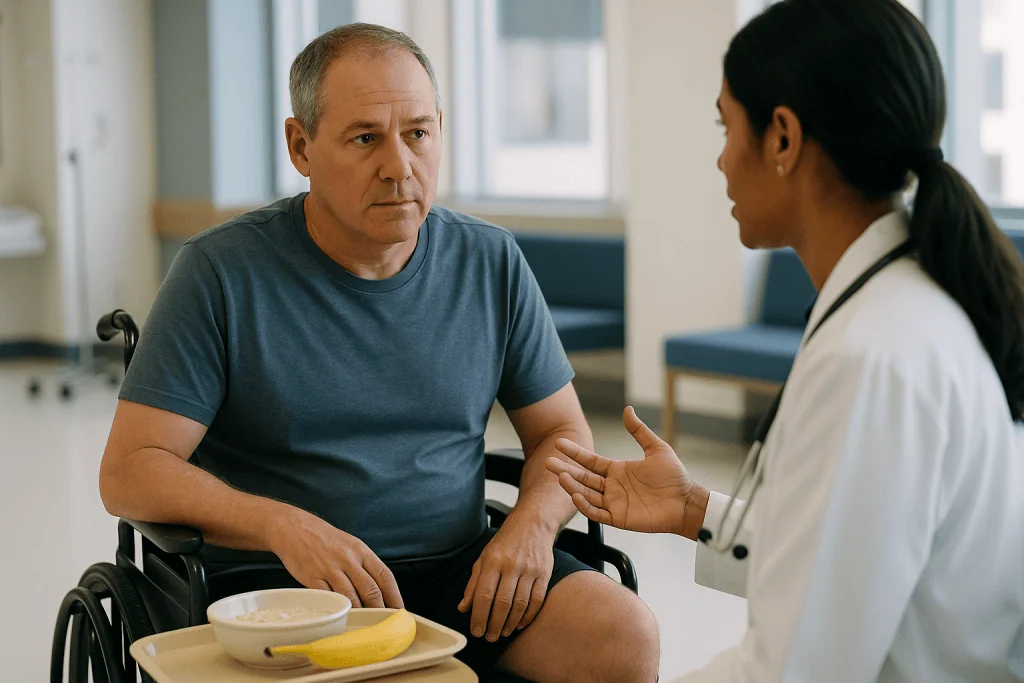
Severity is one of the first filters. Clinicians grade an injury using the Glasgow Coma Scale, a 3-to-15 point score of eye opening, verbal response and movement, with lower scores indicating more severe injury (Mayo Clinic). They also look at the length of post-traumatic amnesia, the period after the injury when a person cannot form new memories reliably. People with moderate or severe injuries, or with lasting problems in movement, speech, swallowing or thinking, are the ones most often referred to structured inpatient or outpatient programs.
People with a mild injury, including most concussions, are usually managed differently. The CDC and NHS both note that most people with concussion start feeling better within days and have recovered within about 2 weeks. For them, the right preparation is graded rest, a gradual return to activity, and a plan for what to do if symptoms linger.
Some patients are asked to wait, and the reasons are medical rather than bureaucratic. Rehabilitation asks a lot of the body and brain, so a person still medically unstable, still heavily sedated, or still in the deepest phase of post-traumatic amnesia may be unable to take part in a way that produces benefit. In those cases the team often provides lower-intensity input on the ward, such as positioning to prevent contractures and early swallowing assessment, until the person can engage.
Age alone is not a reason to exclude anyone. What the team is really judging is whether the person can tolerate and participate in therapy, and whether they have goals that therapy can plausibly move. Both of those can change week to week, so a decision to wait is rarely a final one.
Preparing for brain injury rehabilitation: the records worth gathering
The first rehabilitation assessment is only as good as the information in front of the team. Families regularly arrive with a vague memory of “a scan” and a bag of medicine boxes. Arriving with an organized file can save days.
Start with the story of the injury itself. The date and mechanism (fall, collision, assault, sports), whether the person lost consciousness and for how long, the Glasgow Coma Scale score recorded at the scene or in the emergency department, and how long the confused, memory-poor phase lasted. These details help the team estimate severity and set realistic early expectations.
Next, imaging and operative notes. CT and MRI reports (or, better, the images on disc or through a patient portal) show where the damage is. If there was surgery, such as removal of a blood clot or a bone flap lifted to relieve pressure, the operation notes matter, because they change precautions around headgear, positioning and when it is safe to progress certain exercises.
Then the current medicine list, with the reason each one was started. Some medicines used after brain injury, including those for seizure prevention or for agitation, can slow thinking or affect balance. The rehabilitation physician will want to review them with the prescribing team, and your job is simply to make the list accurate, not to change anything yourself.
Finally, the baseline before the injury. A short written description of what the person could do a month before the accident is one of the most useful documents in the folder: their job, their driving, their hobbies, whether they managed their own finances and medicines, how far they could walk, whether they already had memory, mood or hearing problems. Rehabilitation goals are measured against that baseline, so a few honest paragraphs from a family member carry real clinical weight.
Inpatient, outpatient or brain injury rehabilitation at home? A plain comparison
Where rehabilitation happens shapes how you prepare for it. The settings are not rungs on a ladder of quality; they are matched to medical stability, the intensity a person can tolerate, and what is available locally. Many people move through more than one.
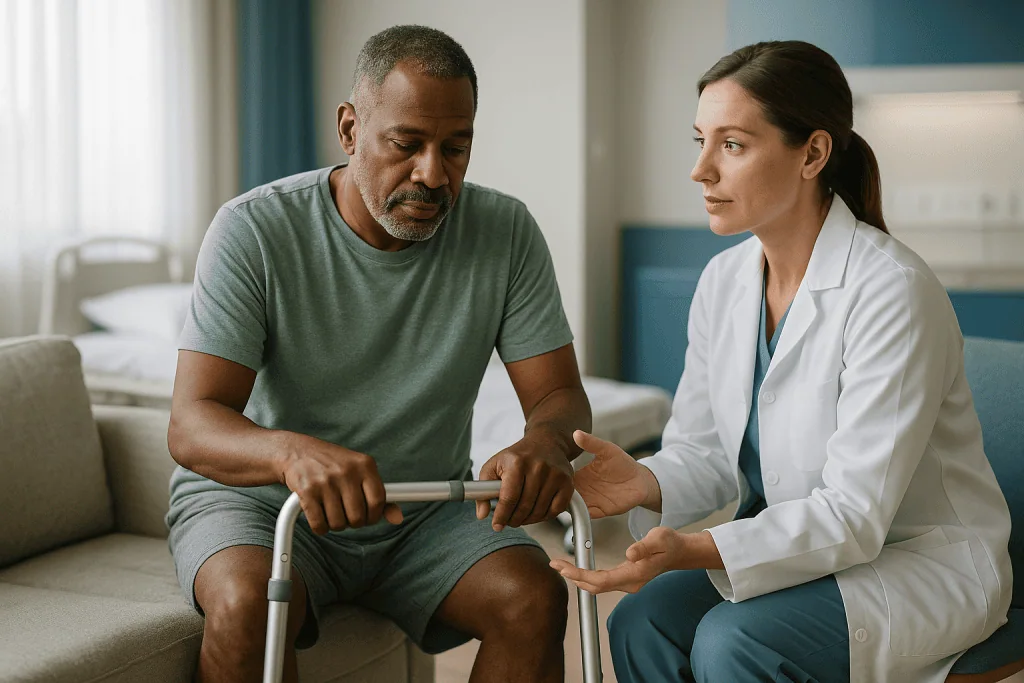
| Setting | Typically suited to | What a day often involves | What to prepare |
|---|---|---|---|
| Acute inpatient rehabilitation unit | Medically stable but needing daily nursing care and help from several therapies | Multiple therapy sessions, structured ward routine, 24-hour nursing | Records file, comfortable clothing and footwear, familiar photos, a visitor rota |
| Residential or slower-stream unit | People who tire quickly or need a longer, gentler pace | Fewer sessions per day, more rest, longer stays | Same records, plus a clear picture of pre-injury routines |
| Outpatient or day program | Safe at home between sessions, able to travel | Scheduled appointments, homework between visits | Transport plan, a practice diary, a quiet space at home |
| Rehabilitation at home (community team) | Goals centered on the real environment: kitchen, stairs, local shops | Therapist visits, carer coaching, graded practice in context | Home safety review, consistent carer involvement, written daily plan |
Brain injury rehabilitation at home has a particular advantage: the stairs the person practices are the stairs they will actually climb. Its limitation is intensity, since a therapist visiting twice a week cannot replicate a unit where practice happens all day. That gap is closed, or not, by the household.
Which setting is offered depends on the clinical assessment, and the treating team makes that decision with you. Your preparation task is the same in every case: make the person’s baseline, their environment and their priorities visible to the people planning the program.
How long is brain injury rehab? What the evidence actually shows
This is the question families ask first and clinicians answer most carefully, because honest answers are ranges, not dates.
For mild injury, the picture is relatively clear. The NHS advises that most people with concussion feel better within a few days and have fully recovered within 2 weeks, and the CDC gives the same broad timeline. A minority have symptoms that persist longer; Mayo Clinic notes that persistent post-concussive symptoms usually settle within about 3 months, though they can last longer in some people.
For moderate and severe injury, the timeline stretches and becomes less predictable. The NHS describes recovery as continuing for months and sometimes years, with the fastest improvement generally in the first 6 months. Johns Hopkins and the NIH both emphasize that the pace and extent of recovery vary with the location and severity of damage, the person’s age and general health, and how quickly rehabilitation begins.
Length of stay on an inpatient unit is a different measure from length of recovery. A person might spend weeks on a unit and then continue outpatient therapy for many months. Discharge from a unit does not mean recovery has finished; it means the goals that needed that setting have been met or that the next setting fits better.
Two practical points follow. First, prepare for a marathon measured in months, with reviews rather than a finish line. Second, be wary of anyone who gives a precise date. The team can and should give you milestones, such as “we will review walking goals in 4 weeks,” and those are the markers worth tracking. Improvement that slows is not the same as improvement that has stopped, and plateaus are often followed by further, slower gains as the person returns to meaningful activity.
Routines to settle before rehabilitation begins: sleep, meals, rest and the house
Motivation fluctuates after a brain injury. Routine does not have to. Before the program starts, the most valuable thing a household can do is build a predictable day that therapy can slot into.
Sleep comes first. Disturbed sleep is one of the most common complaints after brain injury and it degrades attention, memory and mood, the very things rehabilitation is trying to rebuild (Mayo Clinic). Aim for the same bedtime and wake time daily, daylight exposure in the morning, and a wind-down hour without screens. Note down how the person actually sleeps, including daytime naps, because the team will ask.
Meals should follow the same logic: regular, unhurried, and timed so that therapy does not land on an empty stomach or straight after a heavy lunch. If there has been any coughing or choking with food or drink, keep a written note and raise it early; swallowing problems are common after brain injury and are assessed by the speech and language therapist.
Build in planned rest. Cognitive fatigue, a heavy mental tiredness that arrives after effort rather than exertion, is a hallmark of brain injury. Scheduling rest before the person is exhausted works better than reacting afterward.
Then look at the house with fresh eyes. Clear loose rugs and trailing cables. Make sure stair rails are secure on both sides. Put frequently used items at waist height. Set up a single “command center”: a whiteboard or large wall calendar for appointments, a notebook that stays by the phone, and a labelled medicine organizer that the person or carer fills under the pharmacist’s guidance. These are not luxuries; they are the external memory the brain will lean on while its own recovers.
Finally, protect one quiet space with a comfortable chair and good light. Homework from therapists gets done there, and so does the rest that makes it possible.
Setting the goals that matter to you, not just the ones on the form
Every rehabilitation program is built on goals. The quality of those goals determines whether the person feels the program is theirs or something being done to them.
Clinicians often use the shorthand SMART: specific, measurable, achievable, relevant and time-bound. Behind the jargon is a simple test. “Get better at walking” fails it. “Walk from the front door to the corner shop and back, with a stick, without stopping, within 8 weeks” passes. The second version tells the physiotherapist exactly what to train and tells the family exactly what success looks like.
The best goals start from a life, not a body part. Before the first meeting, sit down together and answer three questions. What did a normal week look like before the injury? Which parts of it does the person most miss? Which single task, if regained, would make the biggest daily difference? The answers may surprise the team. One person wants to return to work; another cares most about getting to the bathroom alone at night, or making breakfast for a grandchild, or being able to follow a conversation at a noisy dinner table.
Write the goals in the person’s own words. Where cognition or communication is affected, the family’s job is to translate, not to substitute. A goal chosen by relatives alone tends to be abandoned by the person who is supposed to work for it.
Expect goals to be revised. Early goals are often about safety and basic function; later goals shift toward independence, roles and relationships. The review meetings where goals are updated are the moments to speak up if something on the list no longer matters, or if something important is missing. The team sets the program; the person sets the direction.
Can stress make a head injury worse?
Stress does not re-injure brain tissue. It can, however, make an injured brain function worse, and that distinction matters when you are preparing for months of effort.
Acute stress releases adrenaline and cortisol, which sharpen attention briefly and then degrade it. In a healthy brain the dip is minor. After injury, attention, working memory and emotional control are already running on reduced capacity, so the same stress produces a larger drop. People describe it as the fog thickening. Headache, irritability, poor sleep and difficulty concentrating are all recognized post-injury symptoms that worsen under pressure (NHS, Mayo Clinic).
Chronic stress has a second effect: it disrupts sleep, and sleep is when the brain consolidates what therapy taught it that day. A stressed, sleepless week can therefore look like a week of lost progress even though the underlying recovery is intact.
None of this means the person should be wrapped in silence. Rehabilitation itself is a stressor, and graded exposure to challenge is how the brain adapts. The aim is to remove avoidable stress so that capacity is spent on useful stress. Practical measures include handling paperwork, insurance and employer conversations on the person’s behalf where they consent; limiting visitors to short, planned slots; reducing background noise from televisions and radios; and keeping to the routines described earlier.
Mood deserves its own attention. Depression and anxiety are common after brain injury and respond to treatment; the neuropsychologist or rehabilitation physician will usually screen for them. If low mood, persistent worry or emotional outbursts are getting in the way of daily life, tell the team. It is a treatable part of the condition, not a personal failing, and managing it often unlocks progress elsewhere.
Tips for post-concussion syndrome: pacing without stalling
Post-concussion syndrome is the term used when concussion symptoms such as headache, dizziness, poor concentration and fatigue persist beyond the expected recovery window. Mayo Clinic notes that for most people these symptoms resolve within about 3 months, though a smaller group has them for longer. Preparing to manage this phase is largely about pacing.
The outdated advice was total rest in a dark room until symptoms vanished. Current guidance from the CDC and NHS has shifted: a short period of relative rest for the first day or two, then a gradual return to normal activities, stopping short of the point where symptoms flare and then building from there. Prolonged inactivity tends to worsen fatigue, mood and deconditioning.
Useful habits in this period include:
- Keeping a brief symptom and activity diary so that patterns become visible, such as headaches arriving after screen time or crowded places.
- Breaking tasks into shorter blocks with planned breaks, and treating cognitive effort (reading, meetings, screens) as seriously as physical effort.
- Protecting sleep with regular hours and a dark, quiet room, since poor sleep amplifies every other symptom.
- Returning to light physical activity such as walking as tolerated, which several sources, including the CDC, now encourage rather than forbid.
- Avoiding alcohol, which worsens balance, sleep quality and headache and is specifically cautioned against by the NHS during recovery.
Return to work, study or driving should be graded and discussed with the clinician, who may advise against driving until symptoms settle. A second blow to the head before recovery is a genuine concern, so contact sports and risky activities are usually paused until cleared.
If symptoms are not improving after a few weeks, or are worsening, that is the moment for review rather than more waiting. Targeted therapy for balance, vision or persistent headache exists, and the referral route runs through your doctor.
Caring for someone with TBI: how families prepare without burning out
Families often become part of the rehabilitation team without ever being asked whether they wanted to be. Preparing for that role protects both the patient and the carer.
Learn the specific injury, not brain injury in general. Ask the team which functions are affected and which are preserved, because support that overshoots is as unhelpful as support that falls short. A person who can dress themselves slowly needs time, not help; taking over removes the practice that drives recovery.
Change how you communicate. Short sentences, one question at a time, and pauses that feel slightly too long. Reduce competing noise. Write key information down and put it where the person will see it, rather than relying on them to remember a conversation. When memory fails, correct gently and move on; arguing about what was said yesterday helps no one.
Expect personality and behavior changes and understand their origin. Irritability, impulsiveness, reduced empathy or apathy often reflect damage to the frontal lobes, the region governing judgment and self-control, rather than a change of heart toward the family (Johns Hopkins, NINDS). Knowing this does not make the behavior pleasant, but it makes it less personal, and the neuropsychologist can suggest strategies for specific situations.
Plan for your own limits. Carer exhaustion is common and predictable. Decide early who else can share visiting, transport and paperwork. Keep your own medical appointments. Accept help that is offered and ask for respite before you need it rather than after.
Finally, attend the team meetings. Family members notice changes that a therapist who sees the person for an hour cannot, and they are the ones who will carry the program home. Your observations about sleep, mood, appetite and what the person said they wanted belong in the clinical record.
What the first days and weeks of rehabilitation usually look like
Day one is mostly assessment. Each discipline takes its baseline: how far and how safely the person walks, what they can do with their hands, how clearly they speak and swallow, how their memory and attention score on standardized tests. The results, combined with your records file and goal list, become the program. Expect it to be tiring even though it looks like talking.
Across the first week, a timetable appears. On an inpatient unit this typically means several sessions a day spread across therapies, with nursing staff reinforcing the same techniques during washing, dressing and meals. In outpatient or home settings the pattern is appointments plus daily homework. Either way, fatigue arrives early and heavily. Planned rest is written into the day; a person who is asleep by mid-afternoon has usually worked hard, not failed.
Medicines are reviewed in this period rather than left alone. Common categories include anti-seizure medicines, which reduce abnormal electrical activity in injured tissue and are sometimes prescribed for a defined period after injury; medicines for spasticity, which lower muscle overactivity; and treatments for mood or sleep. Several of these can dull thinking or affect balance, so the rehabilitation physician weighs benefit against side effect over the first weeks. Any change is theirs to make with the prescribing team, and you should never stop or alter a medicine without asking.
Family training begins sooner than most people expect. Therapists show relatives how to assist a transfer, cue a memory strategy or thicken fluids safely, because those skills travel home. By the end of the first few weeks, there is usually a formal review: goals adjusted, discharge or step-down discussed, and the next set of milestones agreed. The pace feels slow from the inside. Measured against the baseline, it rarely is.
What people often get wrong about preparing for brain injury rehabilitation
Myths cluster around brain injury because recovery is hard to see and easy to misjudge. Correcting a few of them before the program starts saves disappointment later.
“Rest completely until fully better.” This has been reversed for concussion and was never true for severe injury. Current CDC and NHS guidance favors a brief rest period followed by graded return to activity. For moderate and severe injury, early mobilization and task practice are the engine of recovery.
“Recovery stops after a year.” The fastest gains usually occur in the first 6 months (NHS), but slower improvement often continues well beyond that, particularly in people who keep practicing meaningful activities. A plateau is a point to change strategy, not a verdict.
“The scan tells you how they will do.” Imaging shows structural damage, not function. Two people with similar scans can have very different outcomes depending on age, pre-injury health, support and the goals they are working toward (NINDS).
“Looking well means being well.” Many consequences of brain injury are invisible: fatigue, slowed processing, poor memory, altered mood. Friends who say “you look fine” mean well and are often wrong. Prepare the person and the family for that gap.
“More therapy is always better.” Intensity has to match capacity. Overloading a fatigued brain produces worse performance and lower mood. The team sets the dose of therapy for a reason.
“Doing things for them is kindness.” It feels like care and functions as deprivation of practice. The rule most therapists teach is: assist only as much as is necessary for safety, then step back.
“Unproven treatments are worth a try.” Supplements, devices and intensive private programs are heavily marketed to desperate families. Where mainstream evidence does not support a treatment, the honest position is that it is unproven, and anything that competes with sleep, routine or the team’s program has a cost.
Questions to ask your care team before and during rehabilitation
A good team welcomes questions and will have heard most of these before. Write yours down beforehand; the meetings move quickly and memory, on both sides of the family, is under strain.
About the injury and the plan:
- Which parts of the brain were injured, and which functions do you expect to be affected?
- How is severity being graded, and what does that mean for the kind of rehabilitation offered?
- Who is coordinating the program, and who do we contact between sessions?
- What are the goals for the first review, and how will progress be measured?
About daily life and safety:
- Is it safe to drive, return to work or study, drink alcohol, or play sport, and who decides when that changes?
- Are there swallowing precautions we should follow at home?
- What should we do, and what should we avoid doing, when they are confused, agitated or very tired?
- How much help should we give with washing, dressing and cooking, and when should we step back?
About medicines and medical follow-up:
- Which medicines are new since the injury, what is each one for, and how long is it expected to continue?
- Are any of them likely to affect thinking, balance or sleep, and should anything be reviewed?
- What is the plan for seizure risk, headaches and mood, and who manages each?
About what comes next:
- What has to be true for a move to the next setting or discharge, and what support follows?
- Is there training for family members, and can we attend sessions?
- What signs would make you want to see them urgently rather than at the next appointment?
Bring the records folder and the goals list to every meeting. Leave each one with the next milestone written down and a name to call if something changes.
When to call your doctor: red-flag signs during recovery
Most of rehabilitation happens at a steady pace, but some changes need same-day attention. Keep this list on the whiteboard where everyone in the household can see it.
Seek emergency care immediately for any of the following, which can indicate bleeding, swelling or a seizure: a worsening or sudden severe headache; repeated vomiting; a seizure or convulsion; new weakness, numbness or drooping on one side of the face or body; new difficulty speaking or understanding speech; increasing drowsiness, difficulty staying awake, or a drop in responsiveness; unequal pupils; clear or bloody fluid from the nose or ears; or any new loss of consciousness. These warnings reflect NHS and CDC guidance for head injury and apply whether the injury was last week or last month.
Contact the rehabilitation team or your doctor promptly, rather than waiting for the next appointment, if you notice coughing or choking with food or drink, a chest infection, a wound or surgical site that becomes red, hot or leaks, a fall, new or worsening pain, sudden change in behavior or confusion, low mood with thoughts of self-harm, or symptoms that are getting worse rather than slowly better.
Carers should call for themselves too. Exhaustion, persistent low mood or feeling unable to cope safely are clinical problems with clinical solutions, and the team would rather hear early.
Every decision about treatment, medicines, setting and timing rests with the treating team, who can see the whole picture. Preparation does not replace their judgment. It makes their judgment better informed, and it gives the person at the center of all this a program that is built around a life they recognize as their own.
Frequently asked questions
How long is rehab after a brain injury?
There is no fixed length; it depends on the severity and location of the injury. The NHS advises that concussion usually resolves within about 2 weeks, while recovery from moderate or severe injury progresses fastest in the first 6 months and can continue for a year or more. An inpatient stay is only one phase, often followed by months of outpatient or home-based therapy with regular goal reviews.
Can stress make a head injury worse?
Stress does not cause further structural damage, but it does worsen how an injured brain functions. Stress hormones impair attention and working memory, disrupt sleep and intensify headache and irritability, all of which are already fragile after injury. Reducing avoidable stress such as paperwork, noise and crowded visiting, while keeping predictable routines, leaves more capacity for the planned challenge of therapy.
What are the best tips for post-concussion syndrome?
Pace activity rather than resting completely. After a day or two of relative rest, return gradually to normal tasks, stopping before symptoms flare and building from there. Protect sleep, limit alcohol, keep a short symptom diary to spot triggers, and return to light exercise such as walking as tolerated. Mayo Clinic notes most persistent symptoms settle within about 3 months; if yours are not improving, ask for review.
What are some tips for caring for someone with TBI?
Learn which functions are affected and which are preserved, then help only as much as safety requires. Use short sentences, one question at a time, and write important information down. Treat irritability or apathy as symptoms of frontal lobe injury rather than personal attacks. Attend team meetings, report changes you notice at home, and plan respite before you are exhausted.
What records should I bring to the first brain injury rehabilitation assessment?
Bring the account of the injury including Glasgow Coma Scale score and duration of confusion, CT or MRI reports, any operation notes, a current medicine list with the reason for each medicine, and a written summary of the person’s abilities before the injury. Discharge letters and contact details for the treating doctors are also helpful. The pre-injury baseline is often the item teams value most.
Is inpatient brain injury rehabilitation better than home-based rehabilitation?
Neither is better in general; they suit different needs. Inpatient units offer more intensive daily therapy and nursing for people who are medically stable but need substantial help. Home-based rehabilitation allows practice in the real environment, such as the person’s own stairs and kitchen, but is less intensive. Many people move through more than one setting, and the treating team matches the setting to the person.
Why is my family member so tired during brain injury rehabilitation?
Cognitive fatigue is one of the most common consequences of brain injury. The injured brain uses more effort for ordinary tasks, so even conversation and assessment sessions are draining. Fatigue is a sign of work, not failure. Planned rest periods, consistent sleep hours and limiting visitors help. Tell the team if tiredness is worsening or accompanied by increasing drowsiness, which needs urgent review.
Should medicines be changed before rehabilitation starts?
Only by the prescribing clinician. Some medicines used after brain injury, such as those for seizure prevention or agitation, can affect thinking or balance, and the rehabilitation physician will review them with the treating team during the first weeks. Your task is to bring an accurate list and report side effects. Never stop or adjust a medicine on your own, even if you suspect it is slowing progress.
When should I worry that recovery has stopped?
Plateaus are common and usually signal a need to change strategy rather than the end of recovery. The NHS describes the fastest gains in the first 6 months with slower improvement continuing afterward. What should prompt a call is reversal: symptoms getting worse, new weakness or speech problems, increasing drowsiness, worsening headache or seizures. Those need urgent medical assessment, not patience.
How do I set rehabilitation goals that the team can actually use?
Make them specific, measurable and tied to the person’s real life. Replace “improve walking” with “walk to the corner shop with a stick without stopping within 8 weeks.” Start from what the person misses most, write goals in their own words, and expect them to be revised at review meetings as safety-focused early goals give way to independence and roles.
References
- Severe head injury: recovery
- Concussion
- Traumatic Brain Injury (TBI)
- About Traumatic Brain Injury and Concussion
This article is for general information only and is not a substitute for professional medical advice. Please consult a qualified doctor about your individual situation.

More from the Blog

Aquatic Therapy: Why Rehab in Water Works When Land Hurts
Aquatic therapy is physical rehabilitation performed in a warm pool under a licensed therapist's guidance. Buoyancy can offload 50–90% of body weight, letting people…

Who May Benefit From Bobath Treatment? Cerebral Palsy, Stroke and Brain Injury Explained
Bobath therapy, also called neurodevelopmental treatment, is a hands-on physiotherapy approach used for cerebral palsy, stroke and acquired brain injury. It may suit people…

Physical Therapy Program Milestones: How Therapists Progress You From Pain Relief to Strength
Physical therapy program milestones are the checkpoints a therapist uses to move you through rehabilitation in stages: first calming pain and swelling, then restoring…

Your First Pulmonary Rehabilitation Assessment: Inhalers, Walking Tests and What to Wear
A first pulmonary rehabilitation appointment is an assessment, not a workout. A physiotherapist or respiratory therapist reviews your diagnosis, medicines and inhaler technique, asks…

Vestibular Rehabilitation: Retraining Balance After Dizziness
Vestibular rehabilitation therapy is an exercise-based program that retrains the brain to compensate for inner-ear balance problems. Guided by a specially trained physical therapist,…

Who May Need to Avoid Manual Therapy? Osteoporosis, Blood Thinners and Recent Surgery
People with osteoporosis, those taking blood thinners and anyone recovering from recent surgery are the groups most often asked to avoid or modify manual…