Spasticity
Spasticity is muscle stiffness caused by brain or spinal cord damage. Learn about common symptoms, causes, how doctors diagnose it, and treatment options.
Quick answer
Spasticity is continuous muscle tightness and stiffness caused by damage to the brain or spinal cord, most often from stroke, cerebral palsy, multiple sclerosis, or spinal cord injury. Symptoms include stiff muscles, involuntary spasms, and exaggerated reflexes. Diagnosis is clinical, and treatment usually combines physical therapy, medication, injections, and sometimes surgery.
What is spasticity?
Spasticity is a condition in which certain muscles are continuously tight or stiff and cannot relax normally. It happens when the signals that travel from the brain and spinal cord to the muscles are disrupted. Normally, the nervous system sends a balanced mix of “tighten” and “relax” messages so that movement is smooth. When part of the brain or spinal cord is damaged, the “relax” messages weaken, and muscles may become overactive, stiff, and prone to involuntary contractions.
Spasticity is not a disease on its own. It is a symptom of an underlying problem in the central nervous system, which is the medical name for the brain and spinal cord. It is a form of what doctors call hypertonia, meaning increased muscle tone. Muscle tone is the small amount of tension that healthy muscles keep even at rest.
Spasticity can affect people of any age. In children, it is most often linked to cerebral palsy, a group of movement disorders caused by injury to the developing brain. In adults, common causes include stroke, multiple sclerosis, spinal cord injury, and traumatic brain injury. The severity ranges widely: some people notice only mild stiffness, while others have painful spasms and limited movement that interfere with walking, sitting, sleeping, or personal care.
Spasticity symptoms
Spasticity symptoms vary from person to person and often depend on which part of the nervous system is affected and how much. The signs may be constant, or they may appear mainly when a muscle is stretched or moved quickly. Common spasticity symptoms include:
- Muscle stiffness that makes movement feel tight or effortful
- Involuntary muscle spasms, which are sudden, uncontrolled contractions
- Clonus, a series of rapid, rhythmic muscle jerks, often seen in the ankle
- Exaggerated reflexes, such as an overly strong knee-jerk response
- Abnormal posture, for example a clenched fist, bent elbow, or pointed foot
- Pain or aching in the affected muscles and joints
- Difficulty walking, including a scissoring gait in which the legs cross, or dragging a foot
- Fatigue from the extra effort needed to move
- Contractures, which are permanent shortening of muscles or tendons that fix a joint in one position
In many cases, spasticity affects the muscles that bend the arm and straighten the leg, which is why a bent elbow or wrist and a stiff, extended knee are typical patterns after a stroke. In spinal cord injury and multiple sclerosis, the legs are often affected on both sides, and spasms may be triggered by touch, a full bladder, infection, or changes in position.
Spasticity symptoms can change over time. After a stroke or brain injury, muscles may be floppy at first and become stiff over the following weeks or months. In progressive conditions such as multiple sclerosis, symptoms may fluctuate or gradually worsen. Symptoms are also often worse in cold weather, during illness, with stress, or when a person is tired.
It is worth noting that not all spasticity is harmful. Some people rely on stiffness in the legs to help them stand or transfer from a chair. This is one reason treatment decisions are made individually rather than aiming simply to remove all muscle tone.
Causes and risk factors
Spasticity causes always trace back to damage or disease in the brain or spinal cord. The nerve pathways that normally calm the muscles are interrupted, so the spinal reflexes that tighten muscles become overactive. Conditions that commonly lead to spasticity include:
- Stroke, in which blood flow to part of the brain is blocked or a blood vessel bleeds
- Cerebral palsy, caused by injury to the brain before, during, or shortly after birth
- Multiple sclerosis, an autoimmune disease that damages the protective covering of nerve fibers
- Spinal cord injury from accidents, falls, or violence
- Traumatic brain injury from a blow to the head
- Brain or spinal cord tumors that press on or invade nerve tissue
- Lack of oxygen to the brain, for example after cardiac arrest or near-drowning
- Inherited or degenerative neurological diseases, such as hereditary spastic paraplegia or amyotrophic lateral sclerosis (ALS)
- Infections of the brain or spinal cord, such as encephalitis or meningitis
Risk factors for developing spasticity are largely the risk factors for these underlying conditions. For stroke, these include high blood pressure, diabetes, smoking, high cholesterol, and atrial fibrillation. For cerebral palsy, premature birth and complications around delivery increase risk. People who have already been diagnosed with multiple sclerosis or a spinal cord injury are at higher risk of spasticity simply because of their condition.
Once spasticity is present, certain factors can make it worse. These triggers include urinary tract infections, constipation, pressure sores, ingrown toenails, pain, tight clothing, poor positioning, fatigue, anxiety, and extreme temperatures. Identifying and treating these triggers is often an important part of managing spasticity.
Spasticity diagnosis
Spasticity diagnosis is mainly clinical, meaning it is based on a physical examination and medical history rather than a single test. A doctor, often a neurologist or a specialist in physical medicine and rehabilitation, will ask when the stiffness began, which activities it affects, what makes it better or worse, and whether there is pain or spasms.
During the examination, the doctor moves your limbs at different speeds and checks how the muscles respond. A key feature of spasticity is that resistance increases when the limb is moved faster, a quality described as velocity-dependent. This helps distinguish spasticity from rigidity seen in Parkinson’s disease, where resistance is the same at any speed. The doctor also tests reflexes, checks for clonus, looks at posture and walking pattern, and assesses joint range of motion to detect early contractures.
Standardized rating scales are commonly used to record severity and track change over time. These include:
- Modified Ashworth Scale, which grades resistance to passive movement
- Tardieu Scale, which measures the angle at which a muscle “catches” during movement at different speeds
- Spasm frequency scales, which record how often spasms occur
- Functional assessments, such as timed walking tests or measures of daily activities
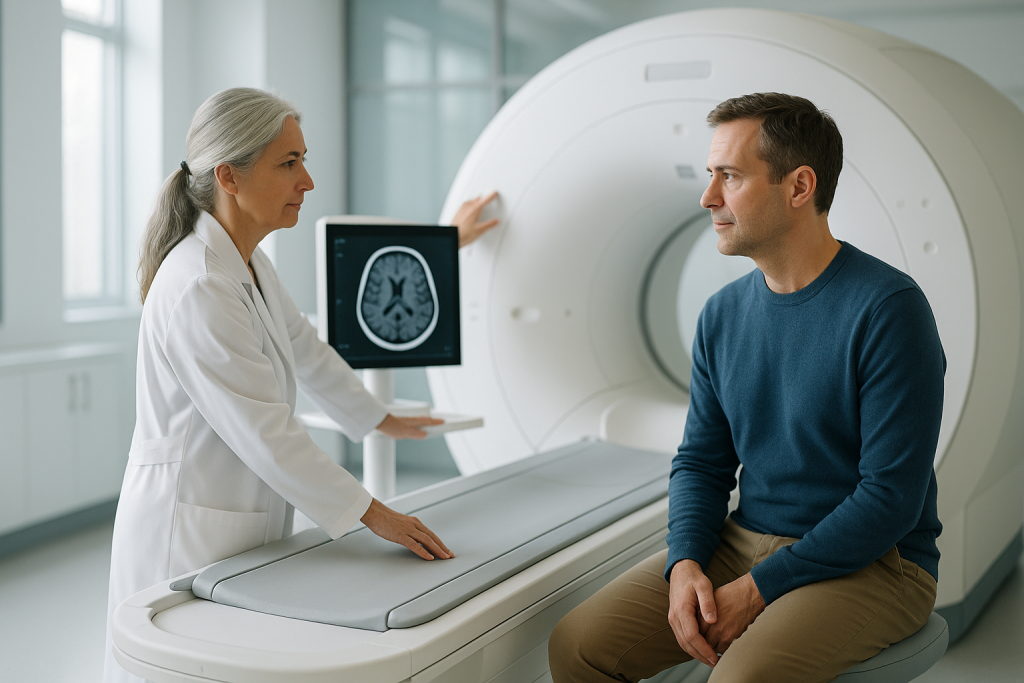
If the cause of spasticity is not already known, additional tests may be ordered to identify the underlying condition. These can include magnetic resonance imaging (MRI) of the brain or spinal cord, computed tomography (CT) scans, blood tests, and sometimes electromyography (EMG), which records electrical activity in muscles. When spasticity suddenly worsens in someone with a known condition, the doctor may look for triggers such as infection, a pressure sore, or a bladder problem before adjusting treatment.
Spasticity treatment options
Spasticity treatment aims to reduce pain, improve function and comfort, prevent complications such as contractures and pressure sores, and make daily care easier. Because spasticity affects each person differently, treatment plans are individualized and usually combine several approaches. In many hospitals, including Acibadem, this care is coordinated by the physical medicine and rehabilitation department together with neurology and, when needed, neurosurgery or orthopedics.
Rehabilitation and physical therapy
Physical therapy and occupational therapy form the foundation of spasticity treatment. Regular stretching helps maintain muscle length and joint mobility. Strengthening exercises for weaker opposing muscles may improve balance and control. Therapists also teach positioning techniques, and they may recommend splints, braces, or serial casting, in which a limb is casted in progressively better positions over several weeks. Weight-bearing activities such as standing frames can be helpful for some people. In mild cases, therapy and observation alone may be sufficient.
Oral medications
Several medicines taken by mouth can reduce muscle tone throughout the body. Commonly used options include baclofen, tizanidine, dantrolene, and benzodiazepines such as diazepam. In some cases, gabapentin is also used. These drugs can cause side effects such as drowsiness, weakness, dizziness, or, with dantrolene, liver problems, so doctors usually start at a low dose and increase gradually. Oral medication is often most useful when spasticity affects many muscles at once.
Injections
When spasticity is concentrated in a few muscles, injections directly into those muscles may be preferred. Botulinum toxin injections temporarily block the nerve signals that make a muscle contract. The effect usually develops over one to two weeks and wears off after roughly three months, so injections are repeated as needed and are typically combined with stretching or casting. Phenol or alcohol injections, which act on the nerve itself, are used less commonly and can have longer-lasting effects.
Intrathecal baclofen pump
For severe spasticity that does not respond well to oral medicines, a small pump can be implanted under the skin of the abdomen. It delivers baclofen directly into the fluid around the spinal cord through a thin tube. Because the medicine goes straight to the target, much smaller doses are needed and side effects such as drowsiness may be reduced. A trial injection is usually performed first to see whether the person responds. The pump must be refilled regularly and monitored for complications.
Surgery
Surgical options are considered when other treatments have not provided enough relief or when contractures have developed. Orthopedic procedures include tendon lengthening or transfer and, in some cases, bone surgery to correct joint deformities. Selective dorsal rhizotomy is a neurosurgical procedure, most often performed in children with cerebral palsy, in which some of the sensory nerve fibers entering the spinal cord are cut to reduce overactive reflexes. Surgery is always followed by a period of intensive rehabilitation.
Managing triggers
Treating infections, relieving constipation, caring for skin, managing pain, and ensuring good seating and sleeping positions can substantially reduce spasticity in some people. Your doctor may review these factors before changing medication.
Living with spasticity and outlook
The long-term outlook for spasticity depends largely on the underlying cause. After a stroke or brain injury, spasticity may improve, remain stable, or develop gradually during recovery. In cerebral palsy, spasticity is usually lifelong but can change as a child grows, which is why regular reassessment is important. In progressive conditions such as multiple sclerosis or ALS, spasticity may worsen over time and treatment plans are adjusted accordingly.
Although spasticity often cannot be cured, it can usually be managed. Many people find that a combination of daily stretching, appropriate medication, and attention to triggers keeps symptoms at a level that allows them to carry on with work, school, and family life. Assistive devices such as walkers, wheelchairs, adapted utensils, and home modifications can reduce the effort of daily tasks. Untreated or poorly controlled spasticity, on the other hand, can lead to contractures, pressure sores, pain, sleep disturbance, and falls, so ongoing follow-up matters.
Living with a chronic neurological condition can also affect mood and relationships. Fatigue, pain, and reduced independence are common concerns. Talking with your care team about these issues is part of good spasticity care, and support from psychologists, social workers, or peer groups may be helpful. Family members and caregivers often benefit from training in stretching and positioning so that they can assist safely.
Frequently asked questions
What is the difference between spasticity and muscle spasms?
A muscle spasm is a single sudden, involuntary contraction that can happen to anyone, for example a leg cramp at night. Spasticity is an ongoing state of increased muscle tone caused by damage to the brain or spinal cord. People with spasticity often do have spasms, but the underlying stiffness and exaggerated reflexes are present even between spasms.
What are the first spasticity symptoms people notice?
Early spasticity symptoms often include a feeling of tightness or heaviness in a limb, difficulty straightening or bending a joint fully, muscles that jerk when stretched, and a change in walking pattern. After a stroke, family members may notice that a hand stays closed or an arm rests bent against the body. These signs should be reported to a doctor so that treatment can begin before contractures develop.
What are the most common spasticity causes in adults?
In adults, the most common spasticity causes are stroke, multiple sclerosis, spinal cord injury, and traumatic brain injury. Less often, tumors, infections, lack of oxygen to the brain, or inherited neurological diseases are responsible. In every case the shared mechanism is disruption of the nerve pathways that normally allow muscles to relax.
How is spasticity diagnosis made if I already have a neurological condition?
If you already have a condition such as multiple sclerosis or a previous stroke, spasticity diagnosis is usually made during a clinical examination in which the doctor moves your limbs, tests reflexes, and uses rating scales such as the Modified Ashworth Scale. Imaging is generally not needed to confirm spasticity itself, though your doctor may order tests if symptoms change suddenly or do not fit the known condition.
Can spasticity treatment make my muscles too weak?
This is a valid concern. Some oral medicines can cause generalized weakness or drowsiness, and injections can weaken the treated muscle for several weeks. Because some people use their stiffness to stand or transfer, doctors aim for a balance between reducing harmful tone and preserving useful function. Doses are usually adjusted gradually, and you should tell your care team if you feel weaker or less stable after a change in treatment.
Does spasticity go away on its own?
In some people recovering from a stroke or brain injury, spasticity lessens as the nervous system recovers, but it often persists to some degree. In conditions such as cerebral palsy, spinal cord injury, or multiple sclerosis, spasticity is typically long-term. Regular stretching and follow-up help prevent complications even when the underlying cause cannot be reversed.
Is spasticity painful?
Spasticity is not always painful, but many people experience aching muscles, painful spasms, or joint pain from abnormal positioning. Pain can also make spasticity worse, creating a cycle. Treating the spasticity, addressing triggers, and using appropriate pain management usually help; your doctor may also check for other sources of pain such as pressure sores or joint problems.
When to see a doctor
Anyone who notices new or worsening muscle stiffness, spasms, or changes in movement should discuss these symptoms with a doctor, particularly if they have a known neurological condition. Regular follow-up allows treatment to be adjusted before complications develop. Seek urgent medical attention if you or someone you care for experiences any of the following:
- Sudden weakness, numbness, facial drooping, or trouble speaking, which may indicate a stroke and requires emergency care
- Rapid worsening of spasticity over hours or days, especially with fever, which may signal infection or another new problem
- New loss of bladder or bowel control or new numbness in the legs
- Signs of a pressure sore, such as a red, warm, or open area of skin that does not heal
- Severe pain that is not relieved by usual measures
- Signs of intrathecal baclofen pump problems, including sudden severe stiffness, itching, high fever, confusion, or excessive drowsiness, which can indicate too little or too much medication and need immediate assessment
- A fall or injury caused by spasms or loss of balance
- A joint that suddenly cannot be moved or appears deformed
If you take oral medications for spasticity and develop yellowing of the skin or eyes, dark urine, or severe fatigue, contact your doctor promptly, as these may be signs of liver problems. Do not stop baclofen or benzodiazepines suddenly without medical advice, because abrupt withdrawal can cause serious symptoms.
Medically reviewed by the Acıbadem International Medical Board September 13, 2026
See our medical review board →
Update history
- PublishedSeptember 13, 2026
- Medical review approvedSeptember 13, 2026
- Last content updateSeptember 13, 2026