

Reading Your Radiation Therapy Plan: Fractions, Fields and Questions Worth Asking

Key Takeaways
- A 'fraction' is simply one treatment session, and splitting the total dose across daily visits exploits the fact that healthy cells repair radiation damage between sessions far better than tumor cells do.
- NCI patient information describes most external beam courses as once daily, five days a week, over roughly two to ten weeks, with the length set by cancer type, goal and technique rather than by severity.
- Target volumes on a plan are nested: GTV is the visible tumor, CTV adds a margin for microscopic spread, and PTV adds a further margin for breathing and positioning, while 'organs at risk' are the structures the beams are steered around.
- Mayo Clinic and Cleveland Clinic both put a typical session at around 10 to 30 minutes, most of it positioning, with the beam itself on for only a few minutes.
- After external beam radiation nothing radioactive remains in your body, according to MedlinePlus and NCI, so precautions around children or partners apply only to certain internal or radioactive drug treatments.
- Skin reactions and fatigue usually build over the course and, per NHS guidance, tend to settle in the weeks after treatment ends, whereas late effects such as tissue stiffening can appear months or years later.
A radiation therapy plan lists how many sessions (fractions) you will have, the areas being treated (fields), and the nearby structures the team is protecting. The most useful questions to ask your radiation oncologist cover the goal of treatment, the number and timing of sessions, expected side effects and how they will be managed, the alternatives considered, and who to call if problems arise. Every decision rests with your treating team.
The portal notification arrives on a Tuesday evening: ‘Your treatment plan is ready.’ Maria opens it at the kitchen table and finds a page of terms that look like a physics exam. Twenty-five fractions. Four fields. PTV, CTV, a list of ‘organs at risk’ that includes her own heart. She has a consent appointment on Friday and no idea what to ask.
That gap between the document and the conversation is where this article lives. A radiation plan is not written for patients, but it can be read by them, and the best questions to ask radiation oncologists grow directly out of the words on the page. Once you know what a fraction is and why a field has margins, the appointment stops being a briefing and becomes a discussion.
What follows walks through the plan the way an experienced oncology nurse might over a cup of tea: term by term, with the evidence behind each choice and the questions that turn jargon into understanding.
How does radiation therapy actually work, in plain language?
Radiation therapy uses high-energy X-rays, or sometimes particles such as protons or electrons, to damage the DNA inside cells. Cancer cells tend to divide quickly and repair themselves poorly, so the damage builds up until they can no longer multiply. Healthy cells in the path of the beam are hit too, but most of them repair the breaks between sessions. That difference in repair is the whole idea behind splitting treatment into daily sessions rather than one large exposure.
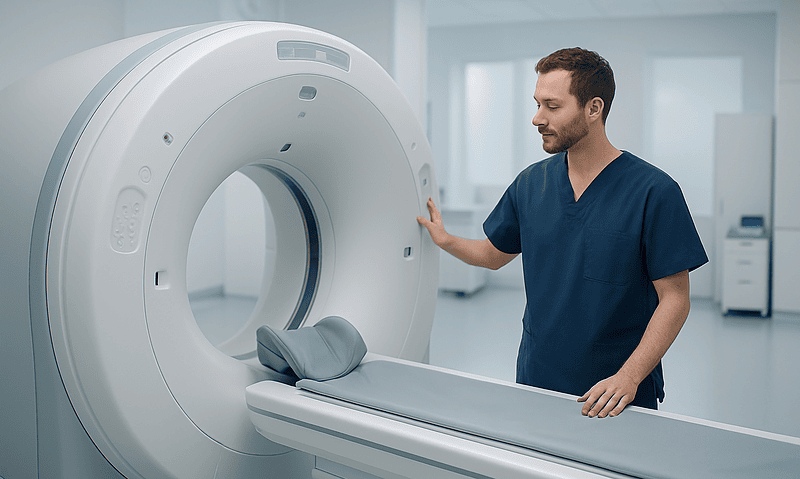
Most people receive external beam radiation from a machine called a linear accelerator, often shortened to ‘linac’. It rotates around you on a couch and delivers the beam in a set of short bursts from planned angles. You feel nothing during delivery; the experience is closer to a long X-ray than to a procedure. Internal radiation, known as brachytherapy, works differently: a sealed radioactive source is placed inside or next to the tumor for a defined period, which the comparison table below covers.
Effects unfold slowly. Because the treatment works by preventing division rather than destroying cells on contact, tumors shrink over weeks and sometimes months after the last session. That lag is one reason imaging is not usually repeated straight away, and it is worth asking your team when they expect to assess response. NCI patient information describes this delayed action and explains why nothing radioactive remains in your body after external beam sessions; you can hold a baby or sit beside a partner the same evening.
What is a radiation fraction, and why is treatment split up?
A fraction is one radiation session; the word comes from the fact that each visit delivers a fraction of the total planned dose. When your plan says ’25 fractions’, it means 25 treatment appointments. Dose is measured in a unit called the gray, and the plan will list both the total and the amount per session, but the numbers matter less to you than the reasoning behind them, which your radiation oncologist can explain.

Why split it up at all? Healthy tissue recovers between sessions far better than tumor tissue does, so daily fractions with overnight and weekend gaps widen the margin between harming the cancer and harming you. NCI patient information notes that most people having external beam treatment attend once a day, five days a week, for a course lasting roughly two to ten weeks, with the exact length set by the cancer type, the goal of treatment and the technique used.
Two courses can look alike on paper and be quite different in purpose. A long course of many small fractions is common when the aim is long-term control and the target sits beside sensitive structures. A short course of fewer, larger fractions is often chosen to relieve pain or pressure quickly, or when modern image guidance makes larger fractions safe for a small target. Questions worth raising: why this number of fractions rather than fewer or more, and what happens if you miss one. Teams usually add missed sessions to the end rather than doubling up, because the biology depends on the gaps as much as on the doses.
What does 'field' mean on my radiation plan?
A field is one shaped beam of radiation entering from a fixed angle. Older plans might use two or four fields; modern techniques may use many, or sweep the beam in an arc, so the count alone tells you little. What the fields have in common is a target, and radiation plans describe that target in nested layers.
The gross tumor volume, or GTV, is the disease that can be seen on scans or felt on examination. The clinical target volume, or CTV, adds a margin for microscopic spread that imaging cannot show. The planning target volume, or PTV, adds a further margin for the small movements of breathing, digestion and daily positioning. Wrapped around these are the organs at risk: the spinal cord, heart, lungs, bowel, kidneys, salivary glands or whichever structures happen to sit nearby. The plan sets a limit for each, and the physics team checks the beams against those limits.
You may also see a ‘boost’, an extra series of fractions aimed at a smaller area, often the original tumor bed after surgery. A dose-volume histogram, or DVH, is a graph showing how much of each structure receives how much dose; you are unlikely to be handed one, but you can ask what it shows for the organs you care about most. If the surgical scar, a lymph node region or a second site is not included, ask why. The answer is usually deliberate, and hearing it will tell you more about the plan than the field count ever will.
What happens at the radiation therapy planning session?
Before the first fraction comes a planning appointment, often called a simulation or ‘CT sim’. Nothing is treated that day. You lie on a flat couch in the exact position you will hold for every session, and a CT scan maps your anatomy in that pose. Contrast dye, a full or empty bladder, or a breathing technique such as a held breath may be requested so the scan matches the treatment conditions.

Immobilization is the quiet star of the session. For head and neck or brain treatment a warm mesh mask is molded to your face and hardens in minutes; for the chest or pelvis a cushion or foam cradle may be shaped to your body. These devices are not about restraint but reproducibility, so that the PTV margin can stay small. Small ink marks or permanent dot tattoos on the skin serve the same purpose, lining you up with the room’s lasers each day. Some centers use surface-tracking cameras instead; ask which applies to you and whether marks can later be removed.
The appointment usually takes longer than a treatment visit, and there is a gap before treatment starts because the real work happens afterwards. Your radiation oncologist outlines the target volumes and organs at risk on every slice of the scan, dosimetrists and physicists then compute the beams, and the plan passes through quality checks and a peer review. NCI patient information describes this interval as typically several days to a couple of weeks. Use the wait to write down your questions; the review appointment before day one is the natural moment to ask them.
Who is radiation usually for, and who is usually asked to wait?
Radiation is offered in several distinct roles, and the plan should name which one applies. It can be the main treatment for a localized cancer. It can be given before surgery to shrink a tumor (neoadjuvant) or after surgery to treat cells that may remain (adjuvant). It is often paired with chemotherapy, which can make cells more sensitive to the beam. And it is widely used to ease pain, bleeding or pressure when the goal is comfort rather than long-term control; NHS guidance describes that palliative use as often short and focused on symptom relief.
Some people are asked to wait, and the reasons are practical rather than a judgment about them. Surgical wounds generally need to heal first. Staging scans or a biopsy may still be pending. Chemotherapy sequencing may mean radiation comes later in the treatment path. A pacemaker or implanted defibrillator needs a check with the cardiology team, because the beam and its scatter can affect the device. Pregnancy changes the calculation entirely, and most abdominal or pelvic treatment is deferred. Prior radiation to the same region limits what can safely be given again, since normal tissue remembers earlier exposure.
Certain conditions call for extra caution rather than exclusion: some connective tissue disorders, active infection in the treatment area, or severe skin disease at the site. None of these decisions belong to a checklist. They sit with a multidisciplinary tumor board, where surgeons, medical oncologists, radiation oncologists, radiologists and pathologists weigh your case together. If your plan is being delayed, you are entitled to ask what the wait is for and what would change the timing.
Hypofractionated radiation therapy: fewer visits, larger sessions
Hypofractionated radiation therapy delivers the course in fewer sessions, each carrying a larger share of the total dose. The reasoning is that for some cancers and some sites, larger fractions achieve the same biological effect with less time on the road, and randomized trials in settings such as early breast cancer and localized prostate cancer have supported shorter schedules in specific circumstances. Your team can tell you whether your situation matches those trials or sits outside them.
At the far end of the spectrum is stereotactic body radiation therapy, sometimes called SBRT or SABR, which concentrates a high dose into a very small target across a handful of visits. It relies on tight immobilization, imaging at every session and often on tracking the target as you breathe. Stereotactic radiosurgery does the same job for small brain targets, usually in a single session despite the word ‘surgery’.
Shorter is not automatically better, and this is where a good question earns its keep. Larger fractions can raise the risk of certain late effects when the target sits against sensitive tissue, and the trade-off differs by organ. Ask why a particular schedule was chosen for you, whether a longer or shorter course was considered, and what the evidence base is for your cancer type. NCI patient information lists hypofractionation and stereotactic techniques among standard external beam approaches, and describes them as options rather than upgrades. A schedule that suits a small lung tumor may be entirely wrong for a large pelvic field. Fewer visits is a genuine benefit for many people; it should follow from the anatomy and the evidence, not lead them.
Which type of radiation is on my plan? A plain-language comparison
The technique name on your plan describes how the beam is shaped and guided, not how strong it is. This table lays out the terms you are most likely to meet.
| Term on the plan | What it means in plain language | Where it is commonly used |
|---|---|---|
| 3D conformal (3D-CRT) | Beams shaped to match the target’s outline from several angles | Many sites; simpler targets |
| IMRT | Intensity-modulated: the beam’s strength varies across its width to wrap dose around curved targets | Head and neck, prostate, gynecologic, anal cancers |
| VMAT | A form of IMRT delivered while the machine arcs around you, shortening each session | Same settings as IMRT |
| IGRT | Image-guided: a scan or X-ray before each fraction confirms position | Layered onto other techniques |
| SBRT / SABR | Very high-precision, few-session treatment of small targets | Small lung, liver, spine, prostate or limited metastatic sites |
| Proton therapy | Charged particles that stop at a set depth, sparing tissue behind the target | Some pediatric, skull base and selected adult cases |
| Brachytherapy | A sealed radioactive source placed inside or beside the tumor | Cervical, prostate, some breast and skin cancers |
Two cautions when reading it. First, these categories overlap; IGRT is a way of checking position that can accompany almost any technique, and VMAT is a way of delivering IMRT. Second, the newer-sounding option is not automatically the right one. NCI patient information presents these as tools matched to anatomy, and a well-shaped 3D plan for a simple target can spare more healthy tissue than an elaborate technique applied where it adds nothing. If your plan names a technique you do not recognize, ask what problem it solves in your case. Ask also whether the choice changes the number of fractions, the daily time on the couch, or the side effects you should watch for; sometimes it changes all three, sometimes none.
What do the first days and weeks of a radiation course usually look like?
Day one is usually the longest visit. Therapists check your identity and the marks, place any immobilization device, take verification images and compare them with the planning scan before the first beam is delivered. From then on the routine settles quickly. You check in, change if the area requires it, lie down, and the therapists line you up using lasers and the daily image. The couch may move in small steps. The machine hums and clicks and rotates; you hear it, you do not feel it.
Mayo Clinic and Cleveland Clinic patient information both describe a typical session as taking around 10 to 30 minutes, most of it positioning. Beam-on time is often only a few minutes in total. You breathe normally unless you have been coached in a breath-hold, and the therapists watch you on camera and can talk to you through an intercom throughout. Many people drive themselves and go on to work, though fatigue can change that later in the course.
Expect a weekly review, sometimes called an on-treatment visit, with your radiation oncologist or a nurse specialist. Weight is often checked, skin is examined, and side effects are logged so that supportive care can start early. Repeat imaging partway through may lead to a re-plan if you have lost weight or a tumor has shrunk enough to change the geometry. On the final day many departments offer a brief end-of-treatment summary and a follow-up date. Ask for a written copy; it lists the total dose and fields, which matters if you ever need treatment again and a future team asks what has already been given.
Radiotherapy side effects timeline: what tends to happen when
Side effects follow the beam, not the whole body. Someone treated for a leg sarcoma will not lose scalp hair; someone treated for a brain tumor may. Within that rule, two effects are common to nearly every site: fatigue that builds gradually, and skin changes over the treated area that resemble sunburn. NHS guidance describes both as tending to develop over the course rather than on day one, and notes that many acute effects settle in the weeks after the last session, although fatigue can linger longer.
Site-specific effects arrive in a similar rhythm. Head and neck treatment may bring a sore mouth, altered taste and dryness as the salivary glands react. Chest treatment may irritate the esophagus and make swallowing uncomfortable. Pelvic treatment can inflame the bladder and bowel, causing urgency or loose stools. Because these are inflammatory reactions that build with cumulative dose, they usually peak toward the end of the course or in the week or two after it, then ease.
Late effects are a separate category, appearing months or years afterwards: fibrosis (stiffening) of treated tissue, changes in fertility after pelvic treatment, lymphedema after treatment of lymph node regions, and a small long-term risk of a second cancer within the field, which NCI patient information acknowledges. Your plan’s organ-at-risk limits exist precisely to keep these risks low, and the consent discussion should name the ones relevant to your anatomy.
Skin care during treatment is mostly gentle: wash with lukewarm water and unperfumed soap, pat dry, avoid friction from tight clothing, and keep the area out of the sun, as NHS guidance advises. Do not apply anything to the field without checking with your team, since some products interfere with the beam or the marks.
Questions to ask your radiation oncologist about the plan itself
Bring the plan summary or the portal printout to your consent appointment, and work through it line by line. These questions to ask your radiation oncologist are phrased so the answers will be concrete.
- What is the goal of this course: long-term control, lowering the chance of recurrence after surgery, shrinking before surgery, or relief of symptoms?
- How many fractions will I have, over how many weeks, and why was this schedule chosen over a shorter or longer one?
- Exactly which areas are inside the field, and which nearby structures are you deliberately protecting?
- Is there a boost, and what is it aimed at?
- Which technique will be used, and what does it add for my anatomy?
- Will imaging be taken at every session, and what happens if I have moved?
- Was this plan reviewed by a tumor board or peer-review meeting?
- Have I had radiation to this area before, and does that change what can be given?
- What are the most likely early side effects for this field, and which late effects concern you most?
- How and when will you judge whether the treatment has worked?
Listen for reasoning rather than reassurance. A good answer to the fraction question explains the trade-off; a good answer to the field question can point to the structures on a screen. If a term is used that you do not know, ask for it in one sentence, then repeat it back in your own words. Take someone with you if you can, or ask whether you may record the conversation; most teams are happy for you to do so. None of these questions second-guesses the plan. They confirm you understand what you are consenting to, which is the point of consent.
Questions to ask your care team about daily life during treatment
The plan tells you what the machine will do. Your care team, meaning nurses, radiation therapists, dietitians and the oncologist together, can tell you how the coming weeks will feel, and that conversation is just as worth preparing for.
- Can I keep working, and are there points in the course when fatigue usually peaks?
- Is it safe for me to drive myself to and from sessions?
- Do I need a full or empty bladder, an empty bowel or a fasting period before each visit?
- Should I change what I eat or drink during treatment, and will I see a dietitian?
- Which skin products, deodorants or shaving methods should I avoid over the treated area?
- Can I swim, bathe, exercise or spend time in the sun?
- Is sex safe during treatment, and do we need to use contraception?
- Who do I contact between sessions, and who do I call at night or on a weekend?
- Which of my regular medicines and supplements should the team know about?
- Will I be radioactive at any point, and are there precautions around children or pregnant people?
The medicines question deserves emphasis. Some supplements and skin preparations can interact with radiation or with concurrent chemotherapy, and any change to what you take should be made by the prescribing clinician, never on your own. Ask the team to review your full list, including herbal products, at the start. The radioactivity question has a clear answer for external beam treatment: none remains in your body, as MedlinePlus explains. Brachytherapy and radioactive drug treatments have their own precautions, which the team will spell out in writing if they apply. Write the after-hours number on the fridge before day one, not on the night you need it.
Questions to ask your radiation oncologist about alternatives and follow-up
Consent means understanding what else could be done, so the questions to ask your radiation oncologist should include the options that were not chosen. Depending on the cancer, alternatives may include surgery, systemic treatment such as chemotherapy, hormone therapy or immunotherapy, active surveillance for some slow-growing disease, or a different radiation schedule or technique. Sometimes radiation is one leg of a combination and the real question is order: which comes first, and why.
Useful phrasing: ‘What would happen if I did nothing for now?’, ‘What were the other options discussed at the tumor board?’, and ‘What would make you change this plan partway through?’ The last one matters because plans are living documents. Weight loss, tumor shrinkage or an unexpected reaction can prompt a re-plan, and knowing in advance that this is normal removes the alarm if it happens.
Follow-up is part of the plan too. Ask when the first response assessment will be, whether it will be a scan, a blood test or an examination, and who owns your care afterwards: the radiation team, the surgeon, the medical oncologist or your primary care clinician. Ask what symptoms in the months ahead should prompt an earlier call, and how late effects will be monitored over the years.
A second opinion is a legitimate request, not a breach of trust, and many teams will help arrange one; what you are asking for is confirmation that the reasoning holds, and another radiation oncologist can review the same plan and scans. Whatever emerges from these conversations, the decision to proceed, adjust, pause or decline rests with you and your treating team together. Guidance from NHS and Mayo Clinic frames radiation as one component of a plan shaped by tumor type, stage, general health and personal priorities, and none of those can be read off a fraction count.
What people often get wrong about radiation therapy
Radiation carries a heavy load of folklore, much of it decades out of date. A few corrections, each grounded in mainstream patient guidance.
‘I will be radioactive and dangerous to my family.’ Not after external beam treatment. The beam switches off with the machine and nothing lingers in your tissues, as MedlinePlus and NCI both state. Temporary precautions apply only to some internal or radioactive drug treatments, and your team will say so explicitly if they do.
‘It hurts.’ Delivery is painless. Discomfort, when it comes, arrives days or weeks later as the treated tissue reacts, and the team manages it as it develops.
‘I will lose all my hair.’ Hair falls out only where the beam passes through hair-bearing skin. Chest treatment does not touch the scalp.
‘If I feel nothing, it is not working.’ Radiation acts on cell division over weeks. The absence of dramatic side effects says nothing about response, and neither does their presence.
‘Fewer sessions means the team is cutting corners.’ Fractionation is chosen for biology and anatomy. Short schedules are supported by trials in defined settings and are not a lesser version of treatment; equally, a long course is not a sign of severity.
‘Skipping a session or two is fine.’ Gaps matter because tumor cells can recover too. Teams generally make up missed fractions rather than shrug them off, and they would rather hear about a clash in advance.
‘Radiation is the old-fashioned option.’ Image guidance, intensity modulation and stereotactic techniques have changed what the field can spare. The right question is not old versus new but whether the chosen tool suits your target.
When to call your doctor
Most reactions during a radiation course build gradually and are handled at weekly review. A smaller set of signs should not wait for the next appointment, and your team wants to hear about them the same day, including at night or on a weekend through the number they gave you.
- A fever, shaking chills or feeling suddenly very unwell, especially if you are also having chemotherapy, when infection can escalate quickly.
- Skin in the treated area that is blistering, weeping, bleeding or showing spreading redness beyond the field.
- Being unable to swallow fluids, or vomiting that stops you keeping anything down for more than a day.
- New or worsening shortness of breath, chest pain or coughing up blood after chest treatment.
- Severe headache, confusion, new weakness, seizures or vision change during brain or spine treatment.
- Heavy rectal or urinary bleeding, or being unable to pass urine, during pelvic treatment.
- Pain that has stopped responding to what the team recommended.
- A swollen, hot or painful calf, or sudden breathlessness, which can signal a blood clot; cancer and reduced mobility both raise that risk.
Call emergency services rather than the department for chest pain, severe breathing difficulty, a seizure, or signs of a stroke. For anything less dramatic that still worries you, call anyway. NHS and Mayo Clinic guidance both encourage people in treatment to report new symptoms early, because most are easier to manage when caught at the start. Keep a short daily note of how you feel; it makes the weekly review sharper and gives the team a timeline if something changes. Nothing in this article replaces that conversation, and any change to your schedule, your medicines or your plan belongs with the clinicians who know your scans.
Frequently asked questions
What is a radiation fraction on my treatment plan?
A fraction is one radiation treatment session, so ’20 fractions’ means 20 appointments. The word reflects that each visit delivers a portion of the total planned dose. Splitting treatment lets healthy tissue recover between sessions while damage in tumor cells accumulates. The number chosen depends on cancer type, treatment goal and technique, and your radiation oncologist can explain why yours was selected.
How long does each radiation therapy session take?
Mayo Clinic and Cleveland Clinic patient information both describe a typical external beam session as around 10 to 30 minutes from lying down to getting up. Most of that time goes to positioning and daily imaging; the beam itself is usually on for only a few minutes. Your first session and any breath-hold or bladder-preparation techniques can make individual visits longer.
Will I be radioactive after external beam radiation?
No. External beam radiation switches off with the machine and leaves nothing radioactive in your body, as MedlinePlus and NCI patient information both explain, so you can be around children and pregnant people immediately. Temporary precautions apply only to some internal treatments such as brachytherapy or radioactive drug therapies, and your team will give written instructions if those apply to you.
Why do I need tattoos or skin marks for radiation?
Small ink marks or permanent dot tattoos let therapists line you up with the room’s lasers the same way every day, keeping the planning target margin small and protecting nearby organs. They are made at the planning session, not at treatment. Some departments use surface-tracking cameras instead, so ask which method your center uses and whether marks can be removed afterwards.
What happens if I miss a radiation session?
Tell the department as soon as you know. Because the schedule is built around gaps that favor healthy tissue recovery, teams usually add missed fractions to the end of the course rather than doubling up on another day. Occasional unavoidable gaps are managed routinely; repeated gaps can matter, which is why it helps to raise clashes in advance.
When do radiation side effects start and how long do they last?
NHS guidance describes common effects such as skin soreness and fatigue as building gradually over the course rather than appearing on day one, then easing in the weeks after the last session, with fatigue sometimes lingering longer. Site-specific effects follow the same pattern. Late effects are different and can appear months or years afterwards, which is why follow-up continues.
Can I keep working during radiation therapy?
Many people do, particularly early in the course, since sessions are short and painless. Fatigue tends to accumulate toward the end, and site-specific effects such as a sore mouth or bowel changes can affect daily routines. Ask your care team when fatigue usually peaks for your treatment site and whether driving yourself is advisable; the answer depends on your field and any concurrent chemotherapy.
What is the difference between IMRT and SBRT?
IMRT, or intensity-modulated radiation therapy, varies the beam’s strength across its width so dose wraps around irregular targets over a standard multi-week course. SBRT, or stereotactic body radiation therapy, concentrates a high dose into a very small target across a handful of sessions using tight immobilization and imaging at every visit. They suit different targets, and your plan names whichever matches your anatomy.
Can I ask for a second opinion on my radiation plan?
Yes. Requesting a second opinion is a normal part of consent, and many teams will help arrange one. Another radiation oncologist can review the same scans and plan and comment on the goal, fractionation and fields. The final decision to proceed, adjust or decline remains with you and your treating team, informed by whatever the second review adds.
Why does my plan list organs at risk?
Organs at risk are healthy structures near the target, such as the spinal cord, heart, lungs, bowel or salivary glands, that the beams must be steered around. The plan sets a dose limit for each, and physicists check the beams against those limits before treatment begins. Asking which organs are listed for you tells you which late effects the team is working to prevent.
References
This article is for general information only and is not a substitute for professional medical advice. Please consult a qualified doctor about your individual situation.

More from the Blog
How a Stomach Cancer Tumor Board Decides Between Surgery First and Chemotherapy First
A stomach cancer tumor board is a scheduled meeting where surgeons, medical and radiation oncologists, radiologists, pathologists and nurse specialists review one patient's scans,…
Endometrial Cancer in Women Who Want Children: When Fertility-Sparing Care Is Discussed
Fertility-sparing treatment for endometrial cancer is a closely monitored alternative to hysterectomy that oncologists discuss only in a narrow situation: a low-grade endometrioid tumor…

Neck Dissection Recovery: Drains, Shoulder Stiffness and the Exercises That Restore Movement
Recovery after a neck dissection usually involves a suction drain for the first several days, tightness and numbness in the neck, and some degree…
Follow-Up After Liver Cancer Treatment: What Repeat Imaging and Blood Tests Track
After liver cancer treatment, follow-up usually combines repeat imaging (contrast CT or MRI, sometimes ultrasound) with blood tests such as alpha-fetoprotein and liver function…

Leukemia Chemotherapy in Phases: Induction, Consolidation and Maintenance Explained
Leukemia chemotherapy is usually delivered in phases. Induction aims to clear the bone marrow of leukemia cells and reach remission; consolidation uses further chemotherapy…

When Is a Small Kidney Tumor Watched, and When Is Surgery Recommended?
Small kidney tumors, generally under 4 cm, are often monitored with periodic scans because many grow slowly and some are benign. Surgery, usually a…