

Returning to Sport and Daily Life After Epididymitis: What to Wait For Before Exercising

Key Takeaways
- Epididymitis is most common between ages 14 and 35, and in sexually active younger adults the usual causes are chlamydia and gonorrhea, while urinary organisms predominate in older adults.
- Symptoms usually begin to improve within 48 to 72 hours of an appropriate antibiotic; no improvement by then is a reason for reassessment, not more waiting.
- Swelling and tenderness commonly persist for several weeks after the infection has been treated, so finishing antibiotics marks the start of rebuilding, not the end of recovery.
- Heavy lifting, running, cycling, contact sport, hot baths and sex are the activities mainstream guidance advises avoiding while the gland is acutely inflamed, because they raise pressure, impact or heat around the scrotum.
- Lifting weights does not cause infectious epididymitis, but straining can unmask or aggravate an existing inflammation, which is why the timing so often feels causal.
- Pain lasting six weeks or longer meets the CDC definition of chronic epididymitis and warrants structured re-evaluation to exclude other causes before any label of idiopathic pain is applied.
Most people with epididymitis are advised to rest and avoid heavy lifting, running, cycling and contact sport while pain and swelling are active, usually the first few days of antibiotic treatment. Gentle walking can typically resume as pain settles, with a gradual return to harder training over the following weeks, guided by comfort and the treating clinician. Swelling and tenderness often take several weeks to fully clear.
The gym bag is still packed from last Tuesday. It sits by the door, a small reproach, while its owner lies on the sofa with a bag of frozen peas wrapped in a tea towel, wondering how something the size of a kidney bean can rearrange an entire week. The antibiotics started yesterday. The pain is a little duller today. The question forming is not really about medicine at all: when can life, and the squat rack, start again?
Epididymitis sits in an awkward place for anyone who likes to move. It is common, it is usually treatable, and it almost never comes with a printed return-to-sport protocol. Clinic leaflets say “rest” and “avoid heavy lifting” and leave the rest to interpretation.
This article is an attempt to fill that gap honestly. It explains what is inflamed and why movement aggravates it, what the evidence does and does not say about exercise after epididymitis, and how to tell a normal slow recovery from a problem that needs a phone call. Every decision belongs with the person treating you; what follows is the context that makes those conversations easier.
What actually happens in epididymitis, and why movement hurts
The epididymis is a tightly coiled tube that sits along the back of each testicle, storing and maturing sperm before they travel onward. Uncoiled, it would stretch for several meters; coiled, it is a soft ridge you can barely feel. When it becomes inflamed, that ridge swells, warms and turns exquisitely tender. The testicle itself may join in, a situation clinicians call epididymo-orchitis.
Most cases begin with infection. In sexually active people under about 35, the usual culprits are the sexually transmitted bacteria that cause chlamydia and gonorrhea; in older adults, and in anyone with urinary tract problems or recent catheter use, bacteria from the bowel and urinary tract are more often responsible. The CDC STI treatment guidelines describe this age split and note that insertive anal intercourse can shift the likely organisms as well. Less often, the trigger is a medicine side effect, a viral illness such as mumps, or no identifiable cause at all.
Why does walking to the kitchen hurt? Inflammation stretches the tunica, the firm fibrous capsule around the testicle, and that capsule is densely supplied with nerves. Gravity pulls the swollen contents of the scrotum downward with every step, and the cremaster muscle, the thin sheet that lifts the testicle in response to cold or touch, contracts reflexively against the tenderness. Movement, in other words, tugs an already irritated structure in several directions at once.
Fluid can also collect around the testicle, forming a hydrocele, which adds weight and a feeling of heaviness. The Mayo Clinic lists this, along with a sense of pressure and pain that worsens with exertion, among the typical features. Understanding this mechanical picture explains almost every piece of advice that follows: support, elevation and a pause from jolting activity are not folklore. They reduce traction on a structure that is already under strain.
Why exercise after epididymitis is usually paused at first
There is no large clinical trial that tells people with epididymitis exactly when to run again. That is worth saying plainly, because much of what circulates online pretends otherwise. The guidance that does exist comes from major patient-information sources and from first principles about inflamed tissue, and it points consistently in one direction: back off during the acute phase.
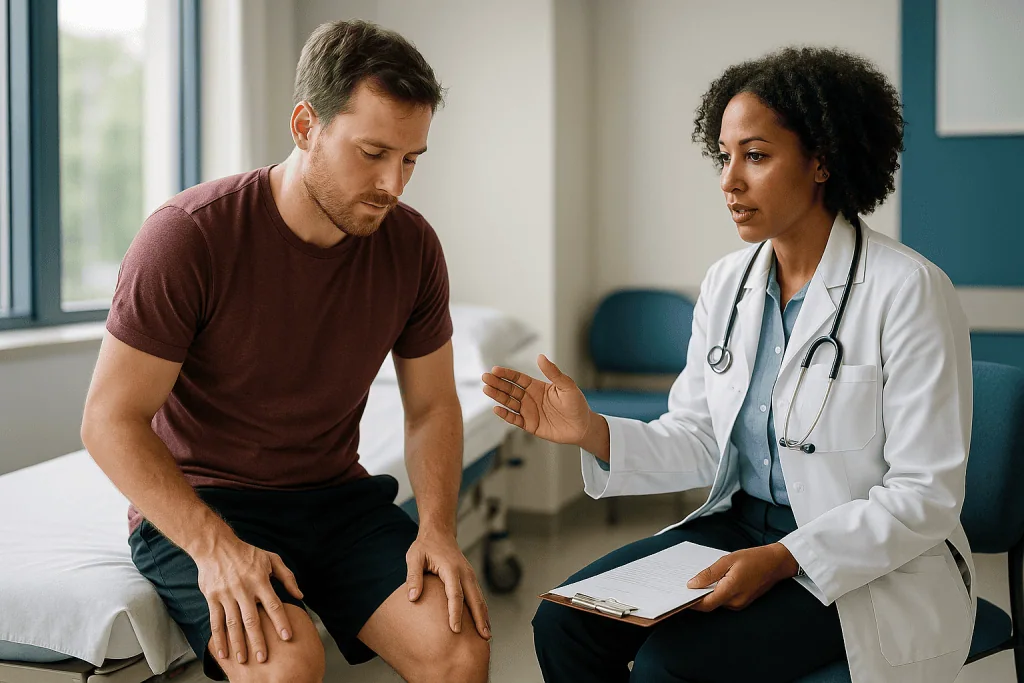
Consider what hard exercise does to the scrotum. Running and jumping deliver repetitive vertical impact, each stride a small jolt to a swollen gland. Heavy lifting involves the Valsalva maneuver, a held breath against a closed throat that spikes pressure inside the abdomen and pelvis; that pressure wave transmits straight down through the inguinal canal into the spermatic cord and scrotal veins. Cycling adds direct saddle compression on the perineum. Sweat, friction and heat, meanwhile, irritate skin that is already stretched and sensitive.
None of these is dangerous in the way that, say, exercising with a fever would be, but each one works against recovery in a simple way: it increases congestion and pain in a part of the body that heals fastest when it is supported, cool and still. The Mayo Clinic’s self-care advice captures this with four actions: rest in bed, lie so the scrotum is elevated, apply cold packs as tolerated, and avoid lifting heavy objects. The NHS adds supportive underwear and over-the-counter pain relief, and emphasizes finishing the antibiotic course even once you feel better.
So the honest framing of exercise after epididymitis is this: the first days are about letting antibiotics and the body’s own inflammatory brakes do their work, and the return to activity is paced by symptoms rather than by a calendar. If that sounds vague, it is because the evidence is vague. What it is not is permissive about pushing through sharp pain.
What should I avoid doing if I have epididymitis?
People search this question more than any other about the condition, and the answer is shorter than most expect. Avoid the things that increase pressure, impact or heat around the scrotum, and avoid passing on an infection that may be sexually transmitted.
Until a clinician says otherwise, that generally means:
- Heavy lifting, including awkward household lifting such as moving furniture or hoisting a toddler onto a hip. Pressure inside the abdomen is the issue, not the gym setting.
- Running, jumping, contact sport and anything with a risk of a direct blow.
- Long rides on a bicycle, motorcycle or horse, where the saddle presses on the perineum.
- Hot baths, saunas and hot tubs while the area is acutely swollen; cold is the recommended temperature in the early phase, applied through a cloth and never directly on skin.
- Tight, non-supportive clothing. A snug athletic supporter or briefs that lift the scrotum are helpful; skinny jeans that compress it are not.
- Sexual intercourse while the infection is being treated. The CDC advises abstaining until treatment is complete and symptoms have resolved in both the patient and any partners, and recommends that recent sexual partners be evaluated and treated when a sexually transmitted cause is suspected.
Two other things belong on the list, and neither involves movement. Do not stop antibiotics early because the pain eases; incomplete treatment is a recognized reason for relapse. And do not self-diagnose a recurrence or a new lump as “the same thing again.” The NHS is explicit that any new swelling or lump in a testicle should be checked by a doctor.
Sitting, desk work and short walks around the house are generally fine as comfort allows, and are covered in more detail below. Rest is advice about load on the scrotum, not an instruction to lie motionless for a week.
Who is usually encouraged to move early, and who is usually asked to wait
Not everyone with epididymitis is in the same position. A healthy twenty-five-year-old with mild one-sided tenderness and a clear diagnosis is a very different patient from someone with a high fever, a scrotum the size of a grapefruit and an infection that has not yet responded to treatment. Clinicians weigh several factors when they talk about activity.
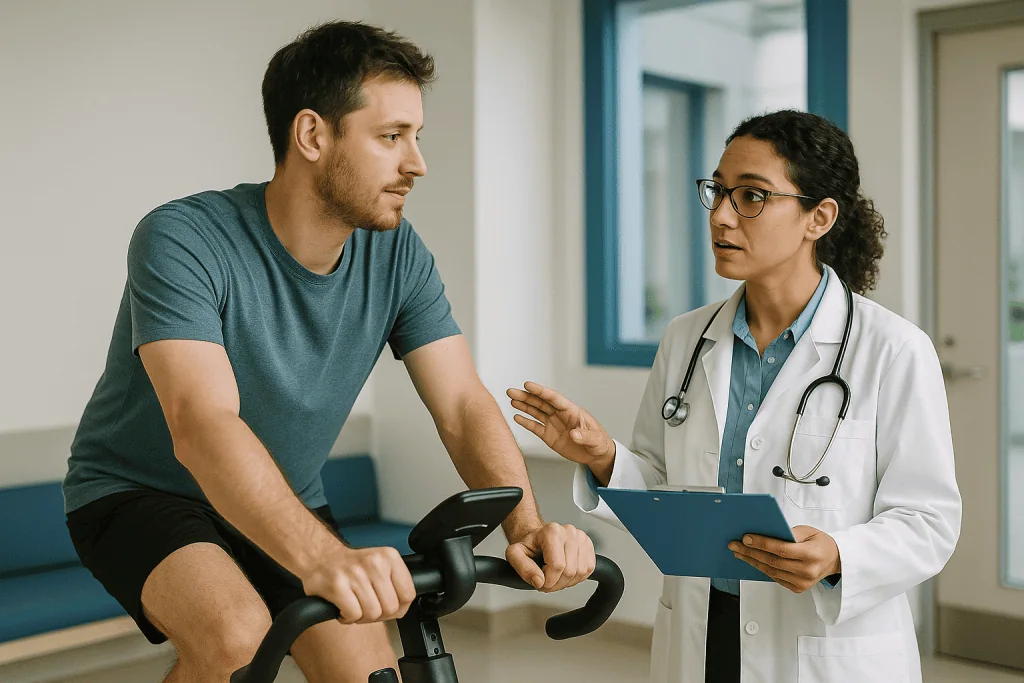
People who are commonly encouraged to start gentle movement within days include those whose pain is improving on antibiotics, who have no fever, whose swelling is modest, and whose only remaining symptom is a dull ache that eases with support. For this group, short walks, light stretching that does not involve bracing, and ordinary desk or domestic work are usually reasonable early on, with harder training deferred until tenderness has largely settled.
People who are usually asked to wait longer, or to hold off until a review, include:
- Anyone whose pain or swelling has not begun to improve within the first days of treatment. The CDC advises re-evaluation if there is no improvement within about 72 hours, because the diagnosis or the choice of antibiotic may need revisiting.
- Those with fever, chills or vomiting, which suggest a more significant infection.
- Anyone with a hydrocele large enough to cause marked heaviness, or an abscess (a pocket of pus) seen on ultrasound.
- People with a scrotal ultrasound that raised any question other than simple inflammation.
- Those with other conditions that slow healing, such as diabetes or a weakened immune system.
Age matters a little too. The Cleveland Clinic notes that epididymitis is most common between the ages of 14 and 35, a group that is also the most likely to be impatient to train. The point is not that younger people recover faster by right, but that the temptation to return too soon is strongest exactly where the swelling is often most pronounced.
How long does epididymitis last? The first 72 hours
The early days are the clearest part of the timeline, because the response to antibiotics gives a readable signal. According to the Mayo Clinic, people usually begin to feel better within 48 to 72 hours of starting an appropriate antibiotic. Pain becomes less sharp, the scrotal skin feels less hot, and the sense of dragging weight eases a notch.
What this window is for, in practical terms, is rest and symptom control rather than any form of training. Lying down with a small folded towel under the scrotum takes gravity out of the equation. A wrapped cold pack for short periods reduces swelling and dulls the ache. Supportive underwear worn even around the house keeps traction on the spermatic cord to a minimum. Over-the-counter anti-inflammatory pain relief is commonly used; the choice and whether it is suitable for you is a question for the prescribing clinician or pharmacist, particularly if you have kidney, stomach or heart conditions.
Movement in these three days is mostly about the ordinary business of living: walking to the bathroom, standing at the kitchen counter, a slow lap of the block if sitting still is making you restless. Each of these is a test. If the scrotum protests sharply, that is information, not failure.
If the signal does not arrive, if by day three the pain is unchanged or worse, the CDC guidelines recommend going back for reassessment. The reasons are practical: the organism may not be sensitive to the chosen antibiotic, an abscess may be forming, or the original diagnosis may need a second look with ultrasound. None of this is cause for panic, but it is a strong reason not to assume “it just needs more time” and keep waiting at home.
The answer to how long epididymitis lasts, then, has two parts. Infection symptoms usually turn within three days. Swelling is a different story.
Epididymitis recovery time: what weeks one to six usually look like
Once the sharp pain has eased, most people hit a plateau that surprises them. The infection is coming under control, the antibiotic course is finishing, and yet the epididymis still feels thickened, like a firm cord behind the testicle, and a dull ache lingers by evening or after a long day on their feet. This is normal. Both the Mayo Clinic and the NHS note that swelling and tenderness can take several weeks to resolve fully, even when the infection itself has been treated.
The reason is tissue biology rather than lingering bacteria. Inflammation leaves behind swollen, slightly fibrous tissue that remodels slowly. Fluid in a hydrocele is reabsorbed over weeks, not days. The nerves that were sensitized during the acute phase take time to settle their threshold back to normal, which is why a minor jolt can still produce a disproportionate twinge in week three.
What recovery usually looks like across this stretch:
- Week one: antibiotics completing or complete; pain mostly a background ache; supportive underwear still earning its keep; walking comfortable, stairs tolerable.
- Weeks two to three: thickening still palpable but shrinking; longer walks and light, non-bracing exercise usually tolerated; evening ache fading.
- Weeks four to six: for most people, residual tenderness only with firm pressure; graded return to lifting and running often underway, if the treating clinician agrees.
Those ranges are typical patterns described in patient-information sources, not a promise. Some people are essentially back to normal in a fortnight. Others carry a sore spot for longer. The CDC flags that swelling or tenderness persisting after a completed course of antibiotics should be re-evaluated to rule out other causes, including abscess, tumor and less common infections. That is not an alarm bell; it is a reminder that a follow-up appointment is part of the plan, not an optional extra.
A staged plan for exercise after epididymitis
Because no guideline publishes a return-to-sport schedule for this condition, the table below is a synthesis of the self-care principles above, arranged as the stages clinicians commonly describe in conversation. Treat it as a framework to discuss with your care team, not a timetable to follow unsupervised. The guiding rule throughout is simple: progress when the previous stage is comfortable, and step back if sharp pain, new swelling or a return of heat and redness appears.
| Stage | Usual markers that you are here | Activities commonly tolerated | Usually still avoided |
|---|---|---|---|
| 1. Acute | First days of antibiotics; sharp pain, heat, marked swelling | Rest with scrotum elevated; walking around the home; cold packs; supportive underwear | All sport, lifting, cycling, sex, hot baths |
| 2. Settling | Pain easing after about 48–72 hours; fever gone | Short outdoor walks; desk work; gentle stretching without breath-holding | Running, jumping, lifting, saddle sports |
| 3. Rebuilding | Antibiotics finished; dull ache only; swelling shrinking | Longer walks; stationary upright exercise such as elliptical if comfortable; light resistance with normal breathing; swimming once skin is intact | Heavy compound lifts, sprinting, contact sport, long rides |
| 4. Returning | Minimal tenderness; clinician happy at review | Graded return to running, cycling and lifting, increasing one variable at a time | Pushing through sharp or escalating pain |
A few practical details make the progression smoother. Keep wearing a snug supporter or compression shorts for the first sessions back; the extra lift reduces bounce and gives the cord less to pull against. Build volume before intensity: three easy ten-minute walks beat one ambitious thirty-minute one in the rebuilding stage. When you reintroduce lifting, breathe out through the effort rather than bracing, and leave maximal attempts for later.
Expect a test. The first run back often produces a mild ache that evening and nothing the next morning; that pattern is reassuring. An ache that is worse the next day, or swelling that visibly returns, is a signal to drop back a stage and mention it at your next appointment.
Can lifting weights cause epididymitis? Lifting weights with epididymitis explained
This question comes up constantly in gym forums, usually from someone who felt the first twinge the day after a heavy deadlift session. The short answer is that lifting does not cause epididymitis in the infectious sense. Bacteria cause it, or occasionally a medicine, a virus or an unknown trigger; a barbell cannot introduce chlamydia or a urinary organism into the epididymis.
What lifting can do is two things that create confusion. First, a bout of heavy straining can produce a transient ache in the groin and testicle through the same pressure mechanism described earlier, which is sometimes mistaken for inflammation. Second, if an infection is already smoldering, a hard session can be the moment it announces itself, because the extra congestion makes a mildly inflamed gland suddenly obvious. The timing feels causal. It usually is not.
There is one genuine exception worth knowing. Forceful straining and heavy lifting are among the recognized risk factors for what the MedlinePlus and other sources call chemical epididymitis, where urine flows backward into the epididymis and irritates it without infection. This is uncommon and tends to be diagnosed when cultures are negative and the picture does not fit infection; it is a conversation for a urologist, not a reason for healthy lifters to fear the squat rack.
As for lifting weights with epididymitis, the advice is consistent across the sources cited here: avoid heavy lifting while the gland is acutely inflamed. The Mayo Clinic names it directly in its self-care list. The reason is comfort and congestion, not a risk of rupturing anything. When you return, the order most clinicians favor is light, high-repetition work with steady breathing first, compound bracing lifts later, and personal bests last. The gym will still be there.
What are some exercises that may help with testicle pain?
Honesty first: there is no exercise with trial evidence that relieves pain from acute epididymitis. Searches turn up confident lists of “healing stretches,” but none of the sources this article is permitted to cite describes any such program, and inflamed tissue is not a problem that stretching solves. In the acute phase, the interventions with mainstream support are rest, elevation, cold, support and the antibiotic the clinician has prescribed.
That said, movement does have a role once the acute pain has passed, for three reasons grounded in ordinary physiology.
Gentle walking promotes venous and lymphatic return from the pelvis. Blood and fluid that pool when you sit or lie still for hours drain more readily when the calf and thigh muscles are pumping, and many people notice the evening heaviness is less on days they have walked.
Pelvic floor relaxation can matter more than people expect. Persistent testicular pain often comes with reflex tightening of the muscles at the base of the pelvis, which can themselves refer pain into the scrotum and perineum. Slow diaphragmatic breathing, lying on your back with knees bent and letting the belly rise rather than the chest, encourages those muscles to let go. It is not a treatment for infection; it is a way of stopping a secondary problem from layering on top.
Easy hip and lower-back mobility, such as gentle knee-to-chest holds or cat-cow movements on hands and knees, can ease the stiffness that comes from days of guarded posture. The key is that none of these involves breath-holding, bouncing or loading the abdomen.
Where pain outlasts the infection by weeks, formal pelvic physiotherapy is sometimes suggested as part of a broader plan for chronic scrotal pain, discussed below. Whether it is appropriate, and who should deliver it, is a judgment for the treating team after they have excluded other causes. Anyone promising that a particular stretch will fix testicle pain is selling certainty the evidence does not provide.
Epididymitis and sitting, cycling and desk work
One of the top-ranking searches on this topic is a plaintive forum post about prolonged sitting making the pain worse. It is a real and common observation, and it has a straightforward explanation. Sitting compresses the perineum, the soft area between the scrotum and the anus, and tilts the pelvis so that the scrotum is squeezed between the thighs. Venous return from the pelvis slows when the hips are flexed for hours, so congestion builds. A swollen epididymis notices all of this.
For desk work, the fixes are practical rather than medical. Stand or walk for a few minutes every half hour or so; a standing desk, if available, lets you alternate. Sit on a firm, flat chair rather than a soft one that lets you sink and pinch, and avoid perching on the edge with legs tightly crossed. Supportive underwear helps here as much as in the gym, because it lifts the scrotum clear of the seat. A small folded towel under the thighs, leaving a gap under the perineum, is an old trick that many people find eases the pressure.
Driving is a special case of sitting: the same advice applies, with breaks on longer journeys. Nothing about epididymitis affects the ability to control a vehicle, but severe pain is distracting, and the first days are not the time for a long drive.
Cycling deserves a longer pause than most other sports. The saddle delivers exactly the compression that the condition least tolerates, and the forward-leaning posture adds pelvic congestion. Most clinicians suggest leaving the bike until tenderness has largely gone, then returning with short, upright rides on a wider saddle before any long or aggressive sessions. Stationary upright cycling in the rebuilding stage is sometimes tolerated earlier; let comfort and your clinician decide.
If sitting pain persists for weeks after the infection has cleared, mention it specifically at follow-up. It can be a clue to pelvic floor involvement, which has its own management pathway.
What is idiopathic testicular pain, and when does epididymitis become chronic?
Most people with epididymitis recover and never think about it again. A minority find that the ache simply does not leave. Understanding the terms clinicians use for this helps keep the conversation precise.
Chronic epididymitis is defined in the CDC guidelines as discomfort or pain in the scrotum, testicle or epididymis lasting six weeks or longer. It is not simply an infection that refuses to clear; in many cases cultures are negative and the problem is persistent inflammation, scarring, or sensitized nerves rather than ongoing bacteria. The guidelines group it into inflammatory, obstructive and unexplained forms, which tells you something about how varied the underlying mechanisms can be.
Idiopathic testicular pain, often called chronic orchialgia (orchialgia simply means testicle pain), is the label used when pain in the testicle persists for months and a thorough evaluation, including examination and scrotal ultrasound, finds no structural cause. Idiopathic is the medical word for “we do not know why.” It is a diagnosis of exclusion, which means it should only be made after the things that can be found have been looked for: a varicocele (enlarged veins in the scrotum), a hernia, a cyst, referred pain from the spine or hip, nerve entrapment after previous surgery, or a tumor.
Why does this matter for someone a few weeks out from an episode of epididymitis? Because the two situations call for different responses. A gland that is still a little thick and tender at week four, improving slowly, is on the normal end of recovery. Pain that is unchanged or worsening at six weeks, or that has spread to the groin and lower abdomen, deserves a structured reassessment rather than another round of waiting. Management of chronic scrotal pain can involve anti-inflammatory strategies, pelvic physiotherapy, nerve-targeted approaches and, rarely, surgery; which, if any, is appropriate is a specialist decision after other causes have been excluded.
What people often get wrong
Epididymitis attracts a particular kind of misinformation: confident, specific and unsourced. A few corrections are worth making.
“Once the antibiotics are done, I am healed.” The infection may be treated, but swelling and tenderness commonly linger for weeks afterward, as both the Mayo Clinic and NHS describe. Finishing the course is the start of the rebuilding phase, not the finish line.
“Exercise will help me sweat out the infection.” There is no mechanism by which exertion clears bacteria from the epididymis. What exercise does in the acute phase is increase congestion and pain. Save the sweat for later.
“Heat is good for inflammation.” In the acute phase, mainstream guidance favors cold packs, not heat. Warmth can feel soothing on tight muscles once the swelling has gone, but a hot bath in week one tends to make the scrotum heavier and more tender.
“It is only an STI problem.” Sexually transmitted bacteria are the leading cause in younger adults, but urinary organisms, catheters, prostate enlargement, certain medicines and viruses all cause it too. The Cleveland Clinic lists these varied triggers. Assuming infidelity or assigning blame is both unkind and frequently wrong.
“Lifting gave me this.” Covered above: lifting can unmask or aggravate, but does not infect.
“Natural remedies will clear it without antibiotics.” No herb, supplement or topical product has evidence for treating bacterial epididymitis, and untreated infection can progress to abscess or, rarely, damage that affects fertility. Supportive measures sit alongside prescribed treatment, not instead of it.
“If it hurts suddenly and badly, it is just the epididymitis flaring.” Sudden severe one-sided pain can be testicular torsion, a twisting of the cord that cuts off blood supply. It is a surgical emergency, discussed in the final section, and it does not wait for an appointment.
Questions to ask your care team
A ten-minute appointment goes further with a short list in hand. These are the questions that tend to produce the most useful answers for someone trying to plan a return to normal life.
- What do you think caused my epididymitis, and does that change how long recovery is likely to take?
- Was a scrotal ultrasound done or needed, and did it show anything other than inflammation, such as a hydrocele or abscess?
- How will we know the antibiotic is working, and at what point should I come back if it is not?
- Do my sexual partners need to be tested or treated, and when is it reasonable to resume sex?
- What activities would you like me to avoid for now, and what are the signs that I can start adding them back?
- Is there any reason specific to me, such as another health condition or a medicine I take, that means I should be more cautious with exercise?
- If I still have tenderness or a thickened feeling after finishing the antibiotics, is that expected, and when would you want to see me again?
- Which over-the-counter pain relief is suitable for me, and are there any I should avoid?
- Is there anything about my work, commuting or sport that you want to know about before advising me?
- Who do I contact, and how quickly, if the pain suddenly becomes severe or I develop a fever?
Two habits make the answers more useful. Write them down during the appointment; pain and worry both erode memory. And ask for the plan in terms of signs rather than dates: “return when X has settled” is more honest guidance than “return in three weeks,” because bodies do not read calendars.
If you find yourself hesitant to ask about sex, partners or urinary symptoms, remember that this is routine territory for anyone who treats epididymitis. The questions are expected. The embarrassment is optional.
When to call your doctor
Most of this article has been about patience. This section is about the opposite: the handful of situations where waiting is the wrong choice.
Seek emergency care immediately if you develop sudden, severe pain in one testicle, especially if it comes on over minutes, is accompanied by nausea or vomiting, or the testicle appears to sit higher or at an unusual angle. These are the features of testicular torsion, a twisting of the spermatic cord that cuts off blood flow. According to the Mayo Clinic, the best chance of saving the testicle is surgery within about six hours of the pain starting. Torsion can occur in someone who has epididymitis, and the two can be hard to tell apart without an urgent ultrasound. Do not try to distinguish them at home.
Contact your doctor the same day if you have a fever or chills, the scrotal skin becomes increasingly red, hot, shiny or tight, swelling is enlarging rapidly, you cannot pass urine or it is painful to do so, or you notice pus or discharge from the penis. These may signal a spreading infection or an abscess that needs a change in treatment.
Arrange a review within a few days if your pain has not started to improve after 48 to 72 hours of antibiotics, as the CDC advises, or if symptoms return after they had settled.
Book a follow-up if a lump, hardness or swelling persists after the course is finished, or if pain is still present at around six weeks. The NHS is clear that any persistent testicular lump should be examined, because other causes, including testicular cancer, need to be excluded.
Finally, call if the plan is not working for you in a quieter way: if pain is stopping you sleeping, if anxiety about the diagnosis is high, or if you are unsure whether what you feel is normal. A phone call is cheap. Guessing is not.
Frequently asked questions
How long after epididymitis can I exercise again?
Most people are advised to rest through the first days of antibiotic treatment and then rebuild gradually as pain and swelling settle, which commonly takes several weeks. Gentle walking usually resumes early; running, cycling and heavy lifting are generally reintroduced in stages once tenderness has largely gone. There is no fixed date in any guideline, so the pace is set by symptoms and by your treating clinician.
What should I avoid doing if I have epididymitis?
Avoid heavy lifting, running, jumping, contact sport, long rides on a saddle, hot baths and sexual intercourse while the epididymis is acutely inflamed. Supportive underwear, elevation and cold packs are the preferred comfort measures. Finish the full antibiotic course even if you feel better, and arrange for sexual partners to be evaluated if a sexually transmitted cause is suspected.
Can lifting weights cause epididymitis?
No, lifting does not cause infectious epididymitis; bacteria do. Straining can produce a temporary groin ache or make an early, mild inflammation suddenly noticeable, which is why many people blame a workout. A rare non-infectious form linked to urine flowing backward into the epididymis has been associated with heavy straining, but this is uncommon and is diagnosed by a specialist after infection has been excluded.
Is lifting weights with epididymitis safe?
Heavy lifting is on the list of activities mainstream guidance advises avoiding during the acute phase, because the held breath and raised abdominal pressure increase congestion and pain in the scrotum. It is not thought to rupture or permanently damage anything, but it slows comfort. Once tenderness has settled and your clinician agrees, light resistance with steady breathing is usually reintroduced before heavy compound lifts.
What are some exercises I can do to relieve testicle pain?
No exercise has trial evidence for relieving pain from acute epididymitis, and inflamed tissue does not respond to stretching. Once the acute phase has passed, gentle walking helps drain pelvic congestion, slow diaphragmatic breathing can relax a reflexively tight pelvic floor, and easy hip mobility eases guarded posture. None of these should involve breath-holding or bouncing, and persistent pain should be assessed rather than exercised through.
How long does epididymitis last?
Infection symptoms usually start to improve within 48 to 72 hours of appropriate antibiotics, but swelling and tenderness often take several weeks to clear completely. Pain or discomfort persisting for six weeks or longer meets the CDC definition of chronic epididymitis and should prompt re-evaluation. Individual timelines vary with the cause, the degree of swelling and other health conditions.
What is idiopathic testicular pain?
Idiopathic testicular pain, also called chronic orchialgia, is persistent pain in the testicle for which a thorough evaluation, including examination and scrotal ultrasound, finds no identifiable cause. It is a diagnosis of exclusion, made only after conditions such as varicocele, hernia, cyst, nerve entrapment, referred pain and tumor have been ruled out. Management is individualized and sits with a specialist.
Why does sitting make epididymitis pain worse?
Sitting compresses the perineum, squeezes the scrotum between the thighs and slows venous return from the pelvis, all of which increase congestion in an already swollen epididymis. Standing or walking briefly every half hour, using a firm flat chair, wearing supportive underwear and avoiding tightly crossed legs usually help. Pain with sitting that persists after the infection has cleared is worth raising at follow-up.
When is it okay to have sex after epididymitis?
The CDC advises abstaining from sexual intercourse until treatment is complete and symptoms have resolved in both the patient and any partners. When a sexually transmitted cause is suspected, recent partners should be evaluated and treated to prevent reinfection. Your clinician can confirm the right point for you based on the cause identified and how your symptoms are settling.
What is the typical epididymitis recovery time for returning to running?
Running is usually one of the later activities to return because each stride jolts the scrotum. Many people are back to easy running within a few weeks as tenderness fades, wearing a supporter for the first sessions, but this varies and no guideline fixes a date. A mild ache that evening and nothing the next morning is reassuring; pain that is worse the next day means stepping back a stage.
References
- Epididymitis, NHS
- Epididymitis, STI Treatment Guidelines, CDC
- Epididymitis, Cleveland Clinic
- Epididymitis, MedlinePlus Medical Encyclopedia
This article is for general information only and is not a substitute for professional medical advice. Please consult a qualified doctor about your individual situation.

More from the Blog
Does Every Case of Hydronephrosis Need a Procedure? When Monitoring Is the Plan
No. Hydronephrosis, a swelling of the kidney from urine that cannot drain freely, does not always need a procedure. Many mild cases, especially those…

What Alkali Therapy Changes in Renal Tubular Acidosis and Why Lab Checks Continue
Alkali therapy for renal tubular acidosis replaces the bicarbonate the kidney fails to keep, so blood acidity normalizes and the downstream strain on bones,…

Acute UTI Recovery: How Quickly Symptoms Ease on Treatment and When to Recheck
On appropriate antibiotics, most uncomplicated bladder infections start to feel better within a day or two, and symptoms typically settle within about three to…

How Do You Prepare a Child for Circumcision? Fasting Times, Comfort Items and What to Tell Them
Preparing a child for circumcision means following the care team's fasting instructions exactly, explaining the procedure in short, honest, age-matched words a day to…

Laparoscopic Urology Recovery Week by Week: Drains, Walking and Returning to Work
Recovery from laparoscopic kidney surgery usually means one to a few nights in hospital, a urinary catheter and sometimes a small drain removed within…
Which Questions Matter Before Incontinence Injections or Surgery? Reading Your Treatment Plan
Before agreeing to incontinence injections or surgery, the questions that matter most are: which type of leakage you have (stress, urge, mixed, overflow or…