Quick answer
Testicular torsion is a sudden twisting of the spermatic cord that cuts off blood flow to the testicle and requires urgent treatment to help prevent permanent damage. At Acibadem in Turkey, evaluation is based on symptoms, physical examination, and imaging when appropriate, and treatment usually involves emergency surgery to untwist the testicle and secure it to reduce the risk of…
What is testicular torsion?
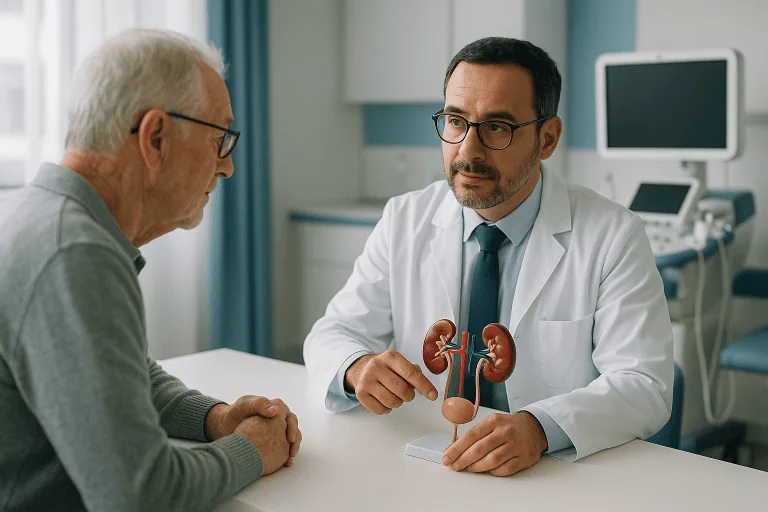
Testicular torsion is a medical emergency in which a testicle twists on the spermatic cord, the bundle of blood vessels, nerves, and tubes that connects the testicle to the rest of the body. When the cord twists, the blood supply to the testicle is squeezed off, much like kinking a garden hose. Without blood flow, the tissue of the testicle begins to suffer damage within hours. If the twist is not corrected quickly, the testicle can be permanently injured or lost.
Many people searching for what is testicular torsion want to know how it differs from ordinary testicular pain. The key difference is speed and severity: torsion usually causes sudden, intense pain in one testicle, often out of proportion to anything the person has experienced before. Because time matters so much, testicular torsion is treated as an emergency in every hospital system, and it is one of the few conditions in urology (the medical specialty focused on the urinary tract and male reproductive organs) where minutes and hours genuinely change the outcome.
Testicular torsion can happen at any age, but it is most common in two groups: newborn babies and boys or young men roughly between the ages of 12 and 18, around the time of puberty. It can also occur in adult men, although this is less frequent. The condition affects the testicle itself, not the penis or the urinary tract, and it usually involves only one side at a time.
Symptoms of testicular torsion
The most recognizable feature of testicular torsion is sudden, severe pain in one testicle or one side of the scrotum (the pouch of skin that holds the testicles). The pain often starts abruptly, sometimes waking a person from sleep, and it does not fade the way a minor bump or strain would. Common testicular torsion symptoms include:
- Sudden, severe pain in one testicle or one side of the scrotum, often beginning without warning
- Swelling of the scrotum, which may develop within hours
- Redness or darkening of the scrotal skin on the affected side
- A testicle that sits higher than usual or at an unusual angle compared with the other side
- Nausea and vomiting, which often accompany the pain
- Abdominal or groin pain, sometimes felt in the lower belly rather than the scrotum itself
- Pain that does not improve with rest, position changes, or over-the-counter pain relievers
Symptoms can vary depending on how the torsion develops. In classic, complete torsion, the pain is dramatic and constant from the start. Some people experience intermittent torsion, in which the testicle twists and untwists on its own. This causes episodes of severe pain that come and go, sometimes over weeks or months. Intermittent torsion is easy to dismiss because the pain resolves, but it is a warning sign that a complete, sustained torsion may occur later, and it should always be evaluated by a doctor.
In newborns, torsion often happens before or shortly after birth and may look different: the scrotum may appear swollen, firm, or discolored, and the baby may not show obvious pain. Parents or caregivers who notice any change in a newborn’s scrotum should have it examined promptly.
It is also worth knowing that as time passes without treatment, the pain of torsion can sometimes lessen because the tissue is losing its nerve supply. Fading pain after many hours does not mean the problem has resolved; in many cases it means the damage is advancing. Improvement in pain is never a reason to delay care.
Causes and risk factors
Understanding testicular torsion causes starts with anatomy. Normally, each testicle is anchored inside the scrotum by tissue attachments that keep it from rotating freely. In some people, one or both testicles are not firmly anchored, an anatomical variation often called a bell clapper deformity, because the testicle can swing inside the scrotum like the clapper of a bell. This variation is usually present from birth and often affects both sides. It does not cause symptoms on its own, and most people who have it never know until torsion occurs.
Common contributing factors and risk factors include:
- Age. Torsion is most common during adolescence, when the testicles grow rapidly, and in the newborn period.
- Anatomical predisposition. The bell clapper deformity or other loose attachments allow the testicle to rotate.
- Rapid growth during puberty. A heavier, larger testicle may be more likely to twist if it is not well anchored.
- Minor trauma or vigorous activity. A blow to the groin, sports, or exercise can precede torsion, although torsion can also occur with no injury at all.
- Cold temperatures. Some cases appear to be linked to muscle contraction in cold conditions, which may encourage twisting, though torsion happens in all climates and seasons.
- Sleep. Many episodes begin during sleep or upon waking, possibly related to muscle reflexes that move the testicle.
- Previous torsion or a family history of torsion. A prior episode on one side, or torsion in a close relative, may indicate an anatomical predisposition.
It is important to understand that testicular torsion is usually not caused by anything the person did or failed to do. It is not caused by sexual activity, masturbation, or ordinary daily behavior. In most cases it results from an anatomical variation that no one could have detected in advance.
Diagnosis
Testicular torsion diagnosis begins with a rapid physical examination and a description of the symptoms. Because time is critical, doctors move quickly and, when suspicion is high, may proceed straight to surgery rather than waiting for imaging. Elements of the evaluation typically include:
- Medical history. The doctor asks when the pain started, how quickly it developed, whether there have been similar episodes before, and whether there was any injury.
- Physical examination. The doctor examines the scrotum, checking for swelling, tenderness, the position of the testicle, and whether the affected testicle sits higher or lies horizontally. The doctor may also check the cremasteric reflex, a normal reflex in which the testicle rises when the inner thigh is stroked; this reflex is often absent on the affected side in torsion.
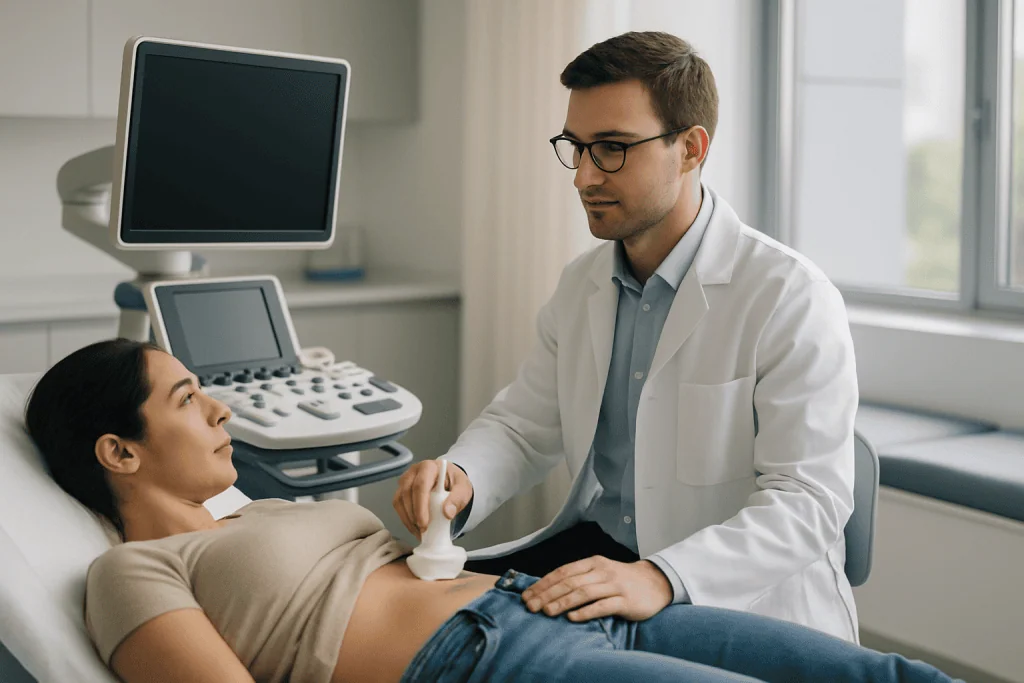
- Doppler ultrasound. This is the main imaging test. It uses sound waves to create a picture of the testicle and, importantly, to measure blood flow. Reduced or absent blood flow to the testicle strongly suggests torsion. Ultrasound is painless and does not use radiation.
- Urine tests. A urine sample may be checked to help rule out infection, such as epididymitis (inflammation of the coiled tube behind the testicle), which can cause similar pain but is treated very differently.
Doctors must distinguish torsion from other causes of sudden scrotal pain, including epididymitis, torsion of a small tissue remnant called the appendix testis, a hernia, or injury. However, when the clinical picture strongly suggests torsion, surgeons often do not wait for every test result. In many hospitals, if the examination points clearly to torsion, the definitive step is surgical exploration, an operation in which the surgeon looks directly at the testicle. This is because a delay of even a few hours to complete imaging can reduce the chance of saving the testicle. In other words, the final and most reliable diagnostic tool is often the operation itself.
Treatment options for testicular torsion
Testicular torsion treatment is fundamentally different from treatment for most other causes of testicular pain: surgery is the standard of care, and it is urgent. There is no role for watchful waiting, and no medication can untwist the spermatic cord or restore blood flow. Pain relievers may be given for comfort, but they do not treat the underlying problem. Anyone with suspected torsion needs emergency evaluation, typically managed by an emergency department together with a urology team such as the urology department at a hospital.
Emergency surgery (orchiopexy)
The definitive treatment is an operation. Under anesthesia, the surgeon opens the scrotum, untwists the spermatic cord, and assesses whether the testicle recovers a healthy color and blood flow. If the testicle appears viable, the surgeon performs an orchiopexy: the testicle is stitched securely to the inside of the scrotum so it cannot twist again. Because the anatomical looseness that allows torsion often affects both sides, surgeons commonly anchor the other testicle at the same time to prevent a future torsion on that side.
Manual detorsion
In some situations, a doctor may attempt manual detorsion, gently rotating the testicle by hand through the scrotal skin to relieve the twist temporarily. When it works, it can restore blood flow and reduce pain quickly. However, manual detorsion is not a substitute for surgery. The twist may be incomplete or may recur, and the testicle still needs to be surgically anchored. It is best understood as a bridge that may buy time before the operation.
Removal of the testicle (orchiectomy)
If too much time has passed and the testicle has lost its blood supply for too long, the tissue may no longer be viable. In that case, the surgeon may need to remove the testicle, a procedure called an orchiectomy. This decision is made during surgery based on how the tissue looks and responds. When one testicle is removed, the remaining testicle is usually anchored to protect it. Later, some patients choose to have a testicular prosthesis (an implant that restores the appearance of the scrotum), which can be discussed once healing is complete.
Why timing matters so much
The chance of saving the testicle depends heavily on how quickly blood flow is restored. In general, outcomes are best when surgery is performed within the first several hours after pain begins, and the likelihood of losing the testicle rises steadily as more time passes. This is why doctors treat every suspected torsion as an emergency, and why it is safer to seek care for pain that turns out to be something minor than to wait with pain that turns out to be torsion. More information about how this condition is managed is available on the testicular torsion treatment page; at Acibadem hospitals, care for this condition is coordinated through the urology specialty.
Living with testicular torsion and outlook
The outlook after testicular torsion depends largely on how quickly treatment took place. When the testicle is untwisted and anchored promptly, many people recover fully, keep the affected testicle, and return to normal activities after a period of healing. Recovery from the operation itself is usually measured in weeks: doctors typically advise rest, avoiding heavy lifting and strenuous sports for a period they will specify, and keeping the surgical area clean while it heals. Some soreness, swelling, and bruising in the scrotum is common at first and generally improves over time.
If the testicle could not be saved, it is natural to have concerns about fertility, hormones, and appearance. In many cases, a single healthy testicle can produce enough testosterone (the main male hormone) and sperm for normal hormone levels and fertility, although individual situations vary and your doctor may recommend follow-up testing if there are concerns. A prosthesis can address cosmetic concerns for those who want one. Emotional reactions, especially in teenagers, are common and understandable, and talking with a doctor, counselor, or trusted adult can help.
After surgery in which both testicles were anchored, a repeat torsion is uncommon, though no operation can remove risk entirely. Ongoing follow-up with a urologist is often recommended to check healing and, where relevant, testicular function. It is also sensible for anyone who has had torsion to remain alert to new testicular pain and to seek care quickly if it occurs, rather than assuming it cannot happen again.
Frequently asked questions
What is testicular torsion in simple terms?
Testicular torsion is a twisting of the testicle on the cord that carries its blood supply. The twist pinches the blood vessels shut, so the testicle stops receiving oxygen. Without prompt treatment to untwist the cord, the tissue can be permanently damaged. It is considered a surgical emergency at any age.
How serious is testicular torsion?
It is very serious. Torsion is one of the true emergencies in urology because the testicle can be lost if blood flow is not restored quickly. The condition itself is rarely life-threatening, but the window for saving the testicle is short, generally a matter of hours, which is why immediate emergency care is essential whenever torsion is suspected.
Can testicular torsion heal on its own?
Sometimes a testicle twists and untwists spontaneously, which temporarily relieves the pain; this is called intermittent torsion. However, this is not the same as healing. The underlying looseness that allowed the twist is still there, and a complete torsion can occur at any time. Anyone who has had episodes of sudden testicular pain that resolved should still see a doctor, because preventive surgery may be recommended.
How do doctors diagnose testicular torsion?
Testicular torsion diagnosis is based on a rapid physical examination, the pattern of symptoms, and often a Doppler ultrasound scan that measures blood flow to the testicle. When the examination strongly suggests torsion, doctors may take the patient straight to surgery without waiting for imaging, because the operation both confirms the diagnosis and treats the problem.
How long do I have before the testicle is damaged?
There is no exact deadline that applies to everyone, but as a general principle, the chance of saving the testicle is highest within the first several hours after pain begins and falls steadily after that. Because no one can know in advance how tight the twist is or how much blood flow remains, every case should be treated as if the window is closing. Sudden severe testicular pain warrants emergency care immediately, day or night.
What is the recovery like after testicular torsion surgery?
Most people go home the same day or after a short hospital stay. Soreness and swelling are common at first and are usually managed with rest, supportive underwear, and pain medication as advised by the surgical team. Doctors typically recommend avoiding sports, heavy lifting, and strenuous activity for a period of time they will specify, and they will schedule follow-up visits to check healing. Individual recovery times vary.
Does testicular torsion affect fertility?
It can, particularly if the testicle is lost or significantly damaged, but many people who lose one testicle remain fertile because the remaining testicle can often compensate. When torsion is treated quickly and the testicle is saved, long-term effects on fertility are less likely, though not impossible. If fertility is a concern, your doctor may suggest evaluation or monitoring after recovery.
When to see a doctor
Testicular torsion is an emergency. Do not wait to see whether the pain improves, and do not rely on pain medication alone. Go to an emergency department immediately if you or your child experiences any of the following:
- Sudden, severe pain in one testicle or one side of the scrotum, especially if it starts abruptly or wakes you from sleep
- Testicular pain with nausea or vomiting
- A swollen, red, or darkened scrotum, or a testicle that appears higher or angled differently than usual
- Testicular pain after an injury that does not settle within a short time or that worsens
- Severe pain that suddenly fades after several hours, which can be a sign of advancing tissue damage rather than recovery
- Any change in a newborn’s scrotum, such as swelling, firmness, or discoloration
Also arrange a prompt, non-emergency medical appointment if you have had repeated episodes of testicular pain that came and went on their own, because intermittent torsion can precede a complete torsion. When it comes to sudden testicular pain, seeking care quickly is always the safer choice: an examination that finds nothing serious costs a few hours, while a delayed torsion can cost the testicle.
Medically reviewed by the Acıbadem International Medical Board September 2, 2026
See our medical review board →
Update history
- PublishedJune 14, 2026
- Medical review approvedSeptember 2, 2026
- Last content updateSeptember 2, 2026