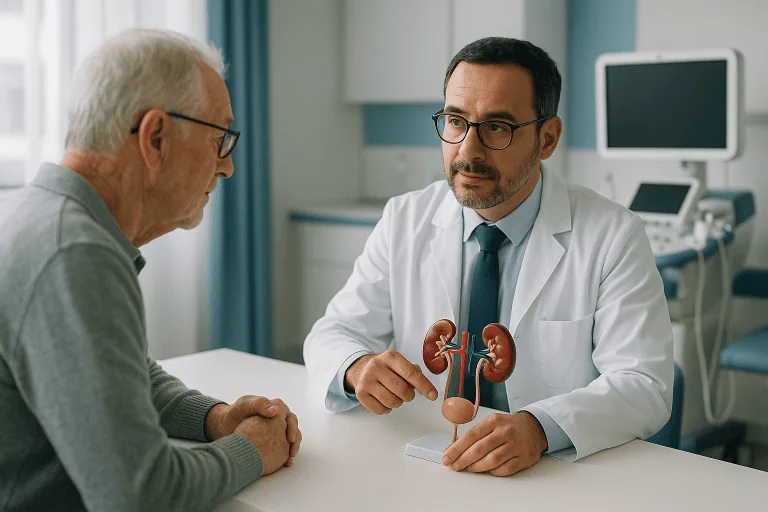
Epididymitis Treatment
Epididymitis is inflammation of the epididymis, often caused by infection, urinary tract problems or sexually transmitted infections. Treatment focuses on accurate diagnosis, antibiotics when needed, pain relief and follow-up.

Quick answer
Epididymitis is inflammation of the epididymis, the coiled tube behind the testicle that stores and carries sperm. Treatment usually involves antibiotics when a bacterial infection is suspected, anti-inflammatory medication, scrotal support, rest and follow-up testing. Most cases are managed without hospital admission; hospital care or drainage procedures are reserved for severe infection, abscess or diagnostic uncertainty.
What Is Epididymitis?
Epididymitis is inflammation of the epididymis, the delicate coiled tube that sits behind each testicle and stores and transports sperm. It is one of the most common causes of scrotal pain in adolescents and adult men, and it is usually treatable once the cause has been identified. Treatment centres on antibiotics when infection is present, anti-inflammatory medication, scrotal support and rest, with follow-up to confirm that the inflammation is settling.
Pain, swelling or tenderness in the scrotum is alarming, and the worries that come with it are predictable: fertility, sexual health, infection, cancer, the possibility of surgery. Some men also feel embarrassed to seek care, particularly when symptoms might be linked to a sexually transmitted infection. These concerns are understandable, but delaying evaluation can make epididymitis harder to treat and increases the risk of complications such as abscess or chronic pain.
The most important first step is an accurate diagnosis, because not every painful or swollen testicle is epididymitis. Testicular torsion, a condition in which the testicle twists and cuts off its own blood supply, can look very similar and is a surgical emergency. Other causes of scrotal pain include trauma, hernia, urinary tract infection, prostatitis, varicocele, hydrocele and, less commonly, a tumour. A careful medical assessment separates these possibilities and allows treatment to begin without unnecessary delay.
What does the epididymis do?
The epididymis is a tightly coiled tube attached to the back of each testicle. Sperm produced in the testicle pass into the epididymis, where they mature and are stored before travelling onwards through the vas deferens. Because the tube is long, narrow and richly supplied with nerves, even modest inflammation in this area produces pain that is difficult to ignore. The epididymis also sits close to the testicle itself, which is why inflammation can spread from one structure to the other. Understanding this anatomy explains two things you may notice during an episode: why tenderness is often most intense behind and slightly above the testicle rather than in the testicle itself, and why swelling can feel like a firm, lump-like ridge along the back of the scrotum.
Epididymitis Symptoms
Epididymitis symptoms usually build over hours to days, in contrast to torsion, where pain typically strikes suddenly. The most common picture is pain, tenderness and swelling around one testicle, often worse with walking, standing or touching the area. Discomfort may begin in the lower abdomen or groin and move towards the scrotum. You may notice redness, warmth, heaviness or a lump-like swelling behind the testicle.
Urinary symptoms are common because the infection frequently starts in the urinary tract or urethra. These include burning when passing urine, needing to urinate more often or more urgently, and discomfort after ejaculation. Fever, chills, nausea or a general feeling of being unwell suggest that infection is more active. Discharge from the penis, pain during sex or a recent new sexual partner point towards a sexually transmitted cause. In older men, symptoms may appear alongside urinary hesitancy, a weak stream, incomplete bladder emptying or known prostate enlargement. After catheter placement, cystoscopy, prostate procedures or urinary tract surgery, epididymitis may reflect bacteria travelling along the urinary tract.
How is epididymitis different from testicular torsion?
Epididymitis usually develops gradually and often comes with urinary symptoms or fever, whereas torsion tends to begin abruptly, is severe from the outset and may be accompanied by nausea, vomiting or a testicle that sits higher than usual. The distinction matters because torsion destroys the testicle within hours if blood flow is not restored, so clinicians treat sudden severe testicular pain as an emergency until torsion has been ruled out, usually by examination and urgent Doppler ultrasound, and sometimes by surgical exploration when doubt remains. No examination finding is reliable enough on its own, which is why a proper assessment, rather than self-diagnosis, is the safe route.
How long does epididymal hypertension last?
Epididymal hypertension: the informal condition sometimes called “blue balls”, is a different problem altogether and typically settles on its own within a few hours. It is a dull ache caused by prolonged sexual arousal without ejaculation, it involves no infection or true inflammation, and it needs no treatment. Epididymitis, by contrast, involves genuine inflammation of the epididymis, does not resolve within hours, and tends to worsen rather than fade if the cause is untreated. Aching that persists beyond a day, swelling, fever or urinary symptoms point away from epididymal hypertension and towards a condition that deserves assessment.
What Causes Epididymitis?
Epididymitis is most often caused by bacteria, and the likely source shifts with age and circumstance. In younger sexually active men, the usual culprits are sexually transmitted organisms, particularly chlamydia and gonorrhoea. In older men, the condition is more commonly linked to urinary tract bacteria, bladder outlet obstruction, prostate enlargement, catheter use or recent urinary tract procedures. In these cases, bacteria that would normally be flushed out of the urinary tract find their way into the epididymis instead.
Not every episode is straightforwardly infectious. Epididymitis can also follow heavy lifting or straining, trauma, certain medications, or reflux of sterile urine backwards into the epididymis, which irritates the tube chemically rather than infecting it. Sometimes no clear infectious cause is found at all, particularly in chronic cases, where inflammation, nerve sensitivity or pelvic floor dysfunction may drive the symptoms. This variety is exactly why treatment is not one-size-fits-all: an antibiotic chosen for a urinary source may not cover a sexually transmitted organism, and antibiotics may not be the answer at all when no infection is present.
Can you get epididymitis without an STD?
Yes, epididymitis frequently occurs without any sexually transmitted infection. Urinary tract bacteria are a common cause, especially in men over forty, in men with prostate enlargement or incomplete bladder emptying, and after catheterisation or urological procedures. Reflux of urine into the epididymis during straining or heavy lifting can cause a chemical, non-infectious inflammation. Trauma, certain medications and, in some parts of the world, tuberculosis or brucellosis can also be responsible. In boys and adolescents, viral illness or urinary tract abnormalities may be involved. So while sexual history is a routine and necessary part of the assessment, a diagnosis of epididymitis is not, by itself, evidence of a sexually transmitted infection, and assuming an STI without testing can lead to the wrong antibiotic.
Orchitis and Epididymo-Orchitis
Orchitis is inflammation of the testicle itself, and it often occurs together with epididymitis because the two structures sit directly against each other. When both are inflamed, the condition is called epididymo-orchitis. It tends to cause more pronounced swelling, higher fever and greater tenderness than epididymitis alone, and because the testicle is involved, evaluation is usually more urgent. Ultrasound is commonly used to confirm blood flow to the testicle and to map the extent of inflammation.
When orchitis disease develops on its own, without the epididymis being involved, a viral cause becomes more likely, mumps is the classic example, particularly in boys and young men who have not been vaccinated. Viral orchitis is managed with supportive care rather than antibiotics, which is another reason accurate diagnosis matters before treatment begins. Bacterial epididymo-orchitis, on the other hand, is treated along the same lines as epididymitis, with antibiotics selected for the likely source and closer follow-up because of the testicular involvement.
Forms of Epididymis Disease That Need Treatment
Epididymitis is the most common epididymis disease, but it presents in several distinct forms, and each calls for a slightly different approach.
Acute infectious epididymitis is the most straightforward: inflammation caused by bacteria from a sexually transmitted or urinary tract source, developing over hours to days. Prompt antibiotic treatment is central to recovery, alongside pain control and rest. Most men in this group improve steadily once the right antibiotic is started.
Epididymo-orchitis, described above, involves both the epididymis and the testicle. It generally needs more urgent evaluation, imaging to confirm testicular blood flow, and closer monitoring during treatment.
Recurrent epididymitis requires a broader plan. Repeated episodes may signal urinary obstruction, incomplete bladder emptying, prostate disease, urethral stricture, kidney or bladder stones, or a persistent focus of infection. The goal is not only to treat the current episode but to find and manage the underlying cause so the cycle stops. That usually means additional urological testing between episodes rather than simply repeating antibiotics each time.
Chronic epididymitis is usually defined as pain or discomfort lasting several weeks or longer. It may be inflammatory, infectious, or related to pelvic floor dysfunction, nerve sensitivity or scarring from a previous infection. Antibiotics help when infection is documented or strongly suspected, but chronic symptoms often need a more individualised plan combining anti-inflammatory medication, pelvic floor assessment, pain management strategies and structured urological follow-up.
Epididymitis in children and adolescents deserves particular care, because the causes differ from those in adults. Viral illness, trauma, inflammation and congenital disease of the urinary tract may all be involved, and in any young patient with acute testicular pain, torsion has to be considered urgently before anything else. Boys with confirmed epididymitis may need imaging of the urinary tract to look for structural abnormalities that predispose them to infection.
How Epididymitis Is Diagnosed
Diagnosis begins with a focused history and physical examination. The physician asks about the timing and character of the pain, urinary symptoms, sexual exposure, prior infections, recent procedures, medications, injuries and previous episodes. Examination localises the tenderness and assesses whether the testicle itself, the epididymis or the surrounding structures are involved. In classic epididymitis, tenderness is greatest along the back of the testicle where the epididymis lies.
Urine testing is routine. A urinalysis looks for white blood cells, bacteria or blood; a urine culture can identify the specific bacteria responsible and show which antibiotics they respond to. When a sexually transmitted infection is possible, nucleic acid amplification testing is typically performed on a urine or swab sample to detect chlamydia and gonorrhoea. Blood tests may be added when fever, systemic infection or significant inflammation is suspected.
Scrotal ultrasound with Doppler assessment is used when the diagnosis is uncertain, the pain is significant, or torsion must be excluded. Ultrasound evaluates blood flow to the testicle, the degree of inflammation around the epididymis, fluid collections and other scrotal conditions such as hydrocele or tumour. Inflamed tissue typically shows increased blood flow on Doppler, while torsion shows reduced or absent flow: a distinction that changes management completely. This imaging step matters most when symptoms are sudden, severe or atypical.
In selected cases, further evaluation includes prostate assessment, kidney and bladder ultrasound, urinary flow testing, post-void residual measurement or cystoscopy. Not every patient needs these, but they become valuable when infections recur or obstruction is suspected, because they answer the question behind the question: why did this infection reach the epididymis in the first place?
How Epididymitis Treatment Is Performed
Initial assessment and safety check
Treatment starts by confirming that the symptoms fit epididymitis rather than a condition that needs immediate surgery. The physician weighs the onset of pain, its location, the degree of swelling, urinary symptoms and any fever or systemic illness. A rapid safety check takes priority when pain began suddenly, is severe, or is accompanied by a high-riding testicle, nausea or vomiting, features that raise concern for torsion. If torsion cannot be confidently excluded by examination, urgent ultrasound or surgical evaluation follows, because protecting testicular blood flow comes before everything else. Once epididymitis is judged the most likely diagnosis, targeted testing and treatment proceed in parallel.
A typical care pathway runs in this order:
- History and examination, with an explicit check for torsion risk.
- Urinalysis, urine culture and STI testing as indicated; Doppler ultrasound when the picture is uncertain or severe.
- Antibiotics started for the most likely source, before culture results return, when bacterial infection is suspected.
- Pain and inflammation control, scrotal support and activity modification.
- Adjustment of treatment once culture and STI results are available.
- Follow-up to confirm improvement and, where episodes recur, evaluation of the underlying urinary tract.
Epididymitis antibiotics
Epididymitis antibiotics are chosen according to the most likely source of infection, not from a single standard list. If a sexually transmitted infection is possible, treatment is selected to cover the most common organisms and adjusted when test results return. If the source is more likely urinary tract bacteria, the antibiotic is chosen with attention to culture results, local resistance patterns, kidney function, allergies and previous medication use. In complicated or resistant infections, input from an infectious diseases specialist can refine the choice further.
Urologists generally ask patients to finish the prescribed course even when symptoms improve early, because pain often eases before the infection has actually cleared, and stopping too soon can allow it to persist or return. Any change to the medication plan, the drug, the dose or the duration, belongs to the treating doctor, and leftover or borrowed antibiotics have no place in treating this condition. If symptoms worsen after treatment starts, or fever and severe pain continue, prompt reassessment is needed to check for abscess, a resistant organism or a different diagnosis.
What is the best antibiotic to treat epididymitis?
There is no single best antibiotic for epididymitis, because the right choice depends on the likely organism. An antibiotic that works well against urinary tract bacteria may not cover chlamydia or gonorrhoea, and the reverse is equally true. Age, sexual history, recent procedures, culture results, allergies, kidney function and local resistance patterns all feed into the decision. This is why lists of drug names found online are of limited use to an individual patient: the value lies in matching the drug to the cause, which is a clinical judgement made from your history and test results, then confirmed or corrected when the laboratory reports back.
Pain relief, inflammation control and supportive care
Pain control is a genuine part of treatment, not an afterthought. Anti-inflammatory medications can reduce swelling and discomfort when they are safe for the individual; paracetamol (acetaminophen) or other options may be preferred depending on medical history. Patients with kidney disease, stomach ulcers, bleeding risk, anticoagulant use or certain heart conditions need their physician’s judgement on which pain relief is appropriate, because anti-inflammatory drugs are not safe for everyone.
Supportive care makes a measurable difference to comfort. Scrotal elevation, supportive underwear, cold packs wrapped in cloth and reduced physical activity all ease symptoms while the inflammation settles. You will usually be advised to avoid heavy lifting, intense exercise and sexual activity until pain improves and infection treatment is under way. Good hydration is encouraged, particularly when a urinary infection is involved.
Can ejaculating help epididymitis?
No: there is no evidence that ejaculation treats epididymitis, and during the acute phase it usually makes the pain worse. The confusion likely comes from epididymal hypertension, the unrelated and short-lived ache described earlier, which does resolve after ejaculation. Epididymitis involves real inflammation, and often infection, of the epididymis; the treatment is antibiotics where indicated, anti-inflammatory measures and rest. During recovery, physicians generally advise avoiding sexual activity until symptoms improve and, where an STI is involved, until both patient and partner have completed treatment.
Partner management and sexual health
When epididymitis may be related to a sexually transmitted infection, partner evaluation and treatment are part of responsible care, reinfection from an untreated partner is one of the most common reasons an apparently successful treatment fails. Sexual activity is usually paused until both people have completed the recommended treatment and symptoms have resolved according to the physician’s guidance. These conversations are handled confidentially and professionally. Written documentation of test results, prescribed medications and partner recommendations is particularly useful when follow-up will happen with a different doctor, or in a different country.
When hospital care or procedures are needed
Most men with epididymitis are treated as outpatients, without any hospital stay. Hospital-based care becomes relevant when infection appears severe, pain is difficult to control, oral antibiotics cannot be tolerated because of vomiting, or the patient has diabetes, immune suppression or other significant medical risks. In those situations, intravenous antibiotics and closer observation may be recommended.
Procedures are uncommon. Drainage may be performed by a urologist if an abscess develops or imaging shows a collection that does not respond to medication. Surgery may also be considered when the diagnosis remains uncertain despite testing, or when another condition, torsion above all, must be treated urgently. For routine epididymitis, surgery plays no role.
Recovery Timeline After Epididymitis Treatment
Recovery varies with the cause, the severity of the episode and whether underlying urinary or sexual health factors are present. The pattern below reflects a typical uncomplicated course; your own timeline may differ, and persistent or worsening symptoms always justify reassessment.
| Time Period | What Patients Can Expect |
|---|---|
| Day 1 | Assessment, urine or STI testing and ultrasound may be performed. Antibiotics and pain-relief measures may begin if epididymitis is suspected. |
| First Week | Pain often starts to improve with appropriate treatment. Swelling may still be present. Rest, scrotal support and avoiding strenuous activity remain important. |
| First Month | Most acute symptoms continue to settle. Mild tenderness or firmness can persist. Follow-up may review culture results, STI testing and treatment response. |
| Longer Term | Persistent or recurrent symptoms may need further urological evaluation for urinary obstruction, chronic inflammation, pelvic pain or other underlying causes. |
Some men notice residual firmness or mild discomfort in the epididymis for several weeks after an acute episode. This does not automatically mean treatment has failed, inflamed tissue takes time to remodel, but symptoms that persist, worsen or return should be reassessed rather than tolerated.
Why Acting Early Matters
Acute scrotal pain has several possible causes, and some demand urgent action. The most time-sensitive is testicular torsion: if torsion is mistaken for epididymitis and treatment is delayed, the testicle can be permanently damaged by loss of blood supply. This single fact is the strongest argument against waiting to see whether the pain passes.
When epididymitis is infectious, early treatment controls bacterial spread, reduces pain sooner and lowers the risk of complications. Untreated infection can progress to abscess, epididymo-orchitis, chronic pain or, rarely, more serious systemic infection. Repeated or severe inflammation may affect sperm transport, particularly if both sides are involved, although many patients recover without fertility problems when treated appropriately. Early diagnosis also protects partners when a sexually transmitted infection is the cause, and it shortens the period of anxiety, men often fear cancer or permanent sexual dysfunction when they notice scrotal swelling, and a careful assessment usually replaces that fear with a specific, manageable plan.
Will epididymitis ever go away?
Yes, acute epididymitis usually resolves with appropriate treatment. Pain tends to ease within days of starting the right antibiotic, while swelling and tenderness take longer to settle, sometimes weeks. What epididymitis rarely does is disappear quickly on its own when a bacterial infection is driving it; untreated, it is more likely to smoulder, recur or complicate. The realistic expectation is steady improvement rather than an overnight change, with follow-up to confirm the trend and adjust treatment if culture results point somewhere unexpected.
Can chronic epididymitis be treated successfully?
Chronic epididymitis can usually be improved, but honesty matters here: there is no single fix that works for every man, and accounts of one dramatic remedy rarely transfer from one patient to another. Because chronic symptoms may be driven by lingering inflammation, pelvic floor dysfunction, nerve sensitivity or scarring rather than active infection, repeated antibiotic courses are often the wrong tool. What tends to help is a structured approach: confirming or excluding infection properly, treating any underlying urinary problem, using anti-inflammatory strategies, assessing the pelvic floor and building a pain-management plan with urological follow-up. Progress is typically gradual, and the men who do best are those whose treatment plan is matched to their specific findings rather than borrowed from someone else’s story.
Benefits of Epididymitis Treatment
Appropriate treatment is designed to relieve symptoms, address the cause and reduce the likelihood of complications.
| Benefit | What It Means for You |
|---|---|
| Accurate diagnosis | Evaluation distinguishes epididymitis from torsion, hernia, trauma, tumour and other causes of scrotal pain. |
| Targeted infection treatment | Antibiotics are selected for the most likely source and adjusted when test results are available. |
| Pain and swelling control | Medication, scrotal support and activity modification make recovery more comfortable. |
| Protection from recurrence | When episodes repeat, urological evaluation can identify urinary tract or prostate factors that need treatment. |
| Sexual health support | If an STI is involved, confidential testing and partner guidance reduce reinfection and transmission. |
| Clear follow-up plan | Written instructions clarify medication use, warning signs and when reassessment is sensible. |
Factors That Influence Outcomes
A good result depends first on correct diagnosis. Epididymitis is often very treatable, but the treatment has to match the cause: an antibiotic appropriate for a urinary tract infection may not be sufficient for a sexually transmitted infection, and vice versa. Laboratory testing and clinical judgement together guide this choice, which is why testing before or alongside treatment is standard rather than optional.
Timing matters. Men who are evaluated early tend to have pain controlled sooner and complications identified before they escalate. Severe swelling, high fever, symptoms on both sides, immune suppression or diabetes call for closer monitoring. Prior antibiotic use is worth mentioning to your doctor, because it can suppress culture results and influence which medication is chosen next.
Completing the prescribed medication course is another decisive factor. Symptoms frequently improve before the bacteria are actually gone, and a course abandoned halfway leaves the door open to relapse. Antibiotics prescribed for someone else, or left over from a previous illness, are a poor match for a condition where the specific organism determines the right drug. If side effects occur, the treating physician can substitute an alternative: that adjustment is a medical decision, not one to improvise.
Partner treatment shapes outcomes whenever an STI is involved, because reinfection from an untreated partner restarts the whole process. Confidential counselling, testing and clear instructions reduce this risk, along with following guidance on when sexual activity can safely resume.
Underlying urinary tract conditions affect both recovery and recurrence. Men with an enlarged prostate, incomplete bladder emptying, urethral narrowing, bladder stones or recent catheter use may need those problems managed in their own right; otherwise the epididymitis episode being treated today is likely to have a successor. In these patients, the acute treatment is only one part of the plan.
Finally, general health and behaviour during recovery influence comfort and healing: resting through the most painful period, avoiding heavy lifting, using scrotal support and keeping follow-up appointments all help. If you plan to travel soon after diagnosis, it is worth leaving with a written summary of your diagnosis, medication timing and warning signs, so that any doctor you see elsewhere can pick up the thread quickly.
Reducing the Risk of Another Episode
Once an acute episode of epididymitis has settled, the sensible question is how to avoid the next one, and the answer depends on what caused the first. When the source was a sexually transmitted infection, the most effective protection is consistent barrier protection with new or non-exclusive partners, completion of treatment by both partners before sexual activity resumes, and retesting where the treating physician recommends it. A single treated episode confers no immunity; reinfection behaves exactly like the original infection and needs the same evaluation.
When the source was urinary, prevention runs through the urinary tract itself. An enlarged prostate that empties the bladder poorly, a urethral stricture, bladder stones or chronic incomplete emptying each keep a reservoir of bacteria close to the epididymis, and treating that underlying problem, medically or, where appropriate, surgically, does more for prevention than any behavioural change. Men who use urinary catheters, whether short-term or long-term, benefit from meticulous catheter care and from reviewing with their care team whether the catheter plan can be changed, since catheters are a well-recognised route for bacteria.
Mechanical and lifestyle factors play a smaller but real role. Because reflux of urine into the epididymis during straining can trigger chemical inflammation, it is reasonable to build back up to heavy lifting gradually after recovery rather than returning to maximum effort immediately. Good hydration supports regular bladder emptying, and emptying the bladder fully rather than hurriedly reduces residual urine. Men with pelvic floor dysfunction identified during a chronic episode often benefit from continuing the pelvic floor programme after symptoms improve, under guidance from their urology team.
Finally, keep records. A copy of each urine culture, ultrasound report and antibiotic course builds a picture over time that no single consultation can reconstruct from memory. If episodes do recur, that history is what allows a urologist to distinguish a resistant organism from a structural problem, and to plan investigations rather than repeating the same treatment and hoping for a different result.
Preparing for an Evaluation
If you are going to be assessed for scrotal pain, anywhere, a little preparation makes the consultation more productive. It helps to know when the pain started and how it developed, whether urination has changed, whether you have had fever, and what medications and antibiotics you have taken recently. Previous ultrasound reports, urine culture results and records of past episodes are genuinely useful, because recurrence and resistance patterns change the treatment plan. Be prepared for questions about sexual history; they are asked of every patient with this presentation, they are handled confidentially, and they exist to choose the right antibiotic rather than to judge. Epididymitis responds best when the diagnosis is precise, the treatment matches the cause and the follow-up is planned from the start, and each of those steps begins with accurate information about you.
Preparation
- A urologist reviews symptoms, sexual and urinary history, medications and previous infections. Urine tests, blood tests, STI screening and scrotal ultrasound may be requested to confirm the diagnosis and rule out testicular torsion. Patients should avoid sexual activity until evaluation and treatment instructions are clear.
Aftercare
- Take antibiotics or other prescribed medicines exactly as directed, even if symptoms improve early. Rest, scrotal support, cold packs and anti-inflammatory pain relief may help reduce swelling and discomfort. Avoid sexual activity until treatment is completed and partners are evaluated when an STI is suspected. Return promptly if pain worsens, fever develops or swelling does not improve.
Frequently Asked Questions
What affects the cost of epididymitis treatment?
The main factors are the specialist consultation, laboratory tests, ultrasound if needed, prescribed medicines, urgency of care and follow-up requirements. Costs may also change if an STI, urinary tract problem or complication needs additional evaluation.
How can I get a personalised quote from Acibadem?
You can request a free consultation and share your symptoms, previous test results, current medicines and any imaging or laboratory reports. The international patient team can then help coordinate a urology review and provide a personalised estimate based on the recommended pathway.
Is epididymitis usually treated as an outpatient condition?
Many cases are managed with outpatient assessment, antibiotics when indicated, pain relief and follow-up advice. Hospital care may be needed if symptoms are severe, fever is present, pain is worsening or a complication is suspected.
Will testing increase the total cost?
Testing can affect the total cost, but it is often important for identifying the cause and choosing appropriate treatment. A specialist may recommend urine tests, culture, STI testing or ultrasound depending on symptoms and examination findings.
Does a treatment package include medication and follow-up?
Package content varies by clinical need and provider policy. It may include consultation and selected diagnostics, while medicines, additional tests or follow-up visits may be listed separately, so the details should be confirmed before treatment.
Medically reviewed by the Acıbadem International Medical Board September 13, 2026
See our medical review board →
Update history
- PublishedJune 8, 2026
- Medical review approvedSeptember 13, 2026
- Last content updateSeptember 12, 2026
References2
- Epididymitis nhs.uk
- Epididymitis medlineplus.gov
Trusted care for international patients
From the Acibadem Blog

When Epididymitis Is Not Improving: Abscess, Chronic Pain and the Follow-Up Your Doctor Plans
Epididymitis that has not improved within about 48 to 72 hours of starting treatment, or that still causes swelling after antibiotics end, needs re-evaluation.…

Epididymitis Explained: How the Tube Behind the Testicle Becomes Inflamed and How It Is Treated
Epididymitis is inflammation of the epididymis, the coiled tube behind each testicle that stores and carries sperm. Bacteria are the most common cause: sexually…