

Salmonella Infection: When Doctors Order a Stool Test and How the Result Changes Treatment
Key Takeaways
- Salmonella symptoms typically begin six hours to six days after exposure and last four to seven days, according to the CDC, so the meal responsible is often not the last one eaten.
- Stool culture takes roughly two to three days but yields a living isolate for antibiotic susceptibility and outbreak tracing; PCR panels return results within hours but cannot test resistance.
- The CDC and Mayo Clinic describe most healthy adults as recovering without antibiotics, and note that antibiotics may prolong the period of shedding bacteria in stool.
- No stool appearance is specific to Salmonella; blood, high fever, and diarrhea lasting beyond three days are the features that push doctors toward testing.
- People shed Salmonella in stool for several weeks after symptoms end, and a small number for a year or more, so handwashing before food preparation matters long after recovery.
- Laboratory-confirmed Salmonella is reportable to public health authorities in the United States, and a call from the health department is routine outbreak investigation, not a judgment.
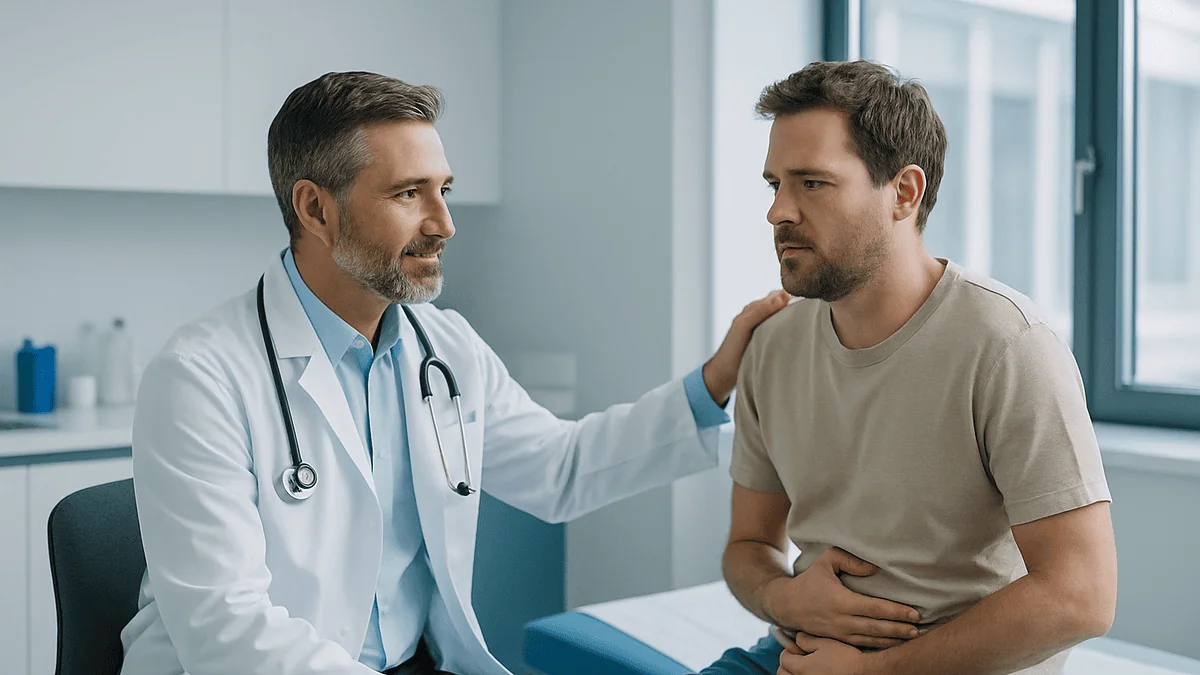
Doctors usually order a salmonella stool test when diarrhea is severe, bloody, lasting more than a few days, accompanied by high fever, or occurring in someone at higher risk, such as an infant, an older adult, or a person with a weakened immune system. A positive result confirms the cause, guides whether antibiotics are worth their risks, and alerts public health teams to possible outbreaks.
By the third night, the bathroom light had become a fixture. She had eaten the same picnic chicken as everyone else, but she was the one with cramps that arrived in waves and a fever that climbed each evening. Her sister, a nurse, asked the question that sends thousands of people to a clinic every week: is this just a stomach bug, or should someone actually test for it?
That question sits at the heart of how a salmonella stool test gets ordered. Most people with a few days of diarrhea never need one, and the result would not change what happens next. For a smaller group, the test does change things: it separates a self-limiting infection from one that needs antibiotics, it flags resistant strains, and sometimes it links one household’s misery to a supermarket shelf three states away.
Knowing where that line falls, and why doctors draw it where they do, makes the wait for a result far less mysterious.
What a salmonella stool test actually detects
Salmonella is a family of bacteria that live in the intestines of animals and people and spread through contaminated food, water, or contact with infected animals and surfaces. A salmonella stool test looks for those bacteria, or their genetic fingerprint, in a sample of feces.
Two broad approaches exist. The older method, stool culture, places a small amount of stool on nutrient plates designed to favor Salmonella while discouraging the trillions of harmless gut bacteria that would otherwise swamp the result. If colonies grow, technicians confirm their identity with biochemical tests. The newer method uses PCR, short for polymerase chain reaction, a technique that copies and detects tiny fragments of bacterial DNA. Many laboratories now run PCR as part of a multiplex gastrointestinal panel, a single test that screens for a dozen or more diarrhea-causing organisms at once.
Neither test measures how sick you are. Both simply answer a yes-or-no question: is Salmonella present in this sample? That distinction matters, because a person with mild symptoms and a person in a hospital bed can both return a positive result. The clinical picture, not the lab slip, decides how aggressively the infection is managed.
The test also does not detect every case. Bacteria are shed unevenly, so a single sample can miss an infection that is genuinely there, particularly late in the illness or after antibiotics have already been started. MedlinePlus describes stool culture as a test that can require several days and may need repeating. Doctors weigh that imperfection against the fact that, for most healthy adults, the body clears the infection on its own within about a week, according to the CDC, and the answer arrives roughly as recovery begins.
Why doctors do not test everyone with diarrhea
Diarrhea is one of the most common reasons adults visit a clinic, and the overwhelming majority of episodes are caused by viruses that no stool culture will find. Ordering a salmonella stool test for each of them would generate a mountain of negative results, delay nothing useful, and change no treatment plan.
Guidance from the CDC and Mayo Clinic converges on a practical filter. Testing is usually reserved for people whose illness is unusually severe, prolonged, or dangerous, or who belong to a group where a confirmed diagnosis carries public health weight. In plain terms, doctors ask two questions: will the answer alter what I do for this patient, and will it protect anyone else?
A healthy thirty-year-old with two days of watery diarrhea and no fever falls outside both. Supportive care, meaning fluids, rest, and gradual return to normal eating, is the plan whether the culprit is norovirus, a mild Salmonella infection, or something never identified. A test result arriving three days later would confirm what is already improving.
The calculation flips for a seventy-eight-year-old with chemotherapy in progress, a six-month-old refusing fluids, or anyone whose stools contain visible blood. Here the result may decide whether antibiotics are started, whether blood tests are added to look for infection that has spread beyond the gut, and whether admission is needed.
People who handle food for a living, work in childcare, or care for patients form a third category. Their infection is rarely more severe, but a positive result can determine when it is safe to return to work, so testing serves the community rather than the individual. The NHS notes that people in these roles are commonly advised to stay away from work while symptomatic and sometimes longer.
Can you test for Salmonella in stool? Salmonella stool culture versus PCR panels
Yes, and stool remains the standard specimen because that is where the bacteria concentrate during intestinal infection. The question people really mean is which test their doctor will choose, and the two options have different strengths.
A salmonella stool culture grows live bacteria. That takes time; MedlinePlus explains that results typically take a couple of days or more because the organisms must multiply enough to be seen. The payoff is a living isolate that the lab can test against antibiotics and send to public health laboratories for serotyping, a process that identifies the exact strain and can link scattered cases to a single outbreak.
A PCR panel detects genetic material rather than living bacteria. Results can be available within hours, and the panel tests for many pathogens simultaneously, which is why it has become common in emergency departments. Its drawbacks are subtle. PCR cannot tell the lab which antibiotics the strain resists, it may pick up dead bacteria or tiny amounts of DNA that are not driving symptoms, and it does not by itself yield an isolate for outbreak tracking. Many laboratories therefore reflex a positive PCR to culture.
| Feature | Stool culture | PCR gastrointestinal panel |
|---|---|---|
| What it finds | Live, growing Salmonella | Salmonella DNA |
| Typical turnaround | Roughly two to three days or longer | Often same day |
| Antibiotic susceptibility | Yes, from the grown isolate | No; requires follow-up culture |
| Outbreak tracing | Yes, isolate can be serotyped | Only if reflexed to culture |
| Detects other pathogens | Only those specifically sought | Many at once |
Neither is uniformly better. The right choice depends on how urgently an answer is needed and what the answer will be used for.
What does Salmonella stool look like? The honest answer
People search this question hoping for a visual shortcut, and the honest reply is that no appearance is specific to Salmonella. The bacteria inflame the lining of the small and large intestine, so stools are usually loose or watery and more frequent than normal. Some people notice mucus. A portion see streaks of blood, which the Mayo Clinic lists among possible features, and the CDC notes that bloody diarrhea is one of the signs that should prompt a call to a doctor.
Every one of those descriptions also fits Campylobacter, Shigella, certain strains of E. coli, and inflammatory conditions that have nothing to do with infection. Green stool, a frequent worry, simply reflects rapid transit through the gut before bile pigments have finished breaking down, and it occurs with viral illness just as readily. Color, smell, and texture cannot distinguish one cause from another.
What the appearance can do is signal severity. Blood, large volumes, or stools that continue relentlessly for days matter more than any particular shade. Those features push a clinician toward ordering a salmonella stool test not because they prove Salmonella, but because they mark an illness where knowing the cause could change management.
Photographs online showing supposedly typical Salmonella stool are unhelpful for another reason. Roughly the same infection can cause mild loose stools in one person and profuse bloody diarrhea in another, depending on the dose swallowed, the strain, the person’s age, and stomach acidity. If you are worried about what you see, describe it plainly to your doctor. That description, alongside fever, duration, and travel or food history, does far more diagnostic work than a mirror or a camera.
How do I know if I have Salmonella or just diarrhea? Salmonella vs stomach flu
You usually cannot tell from symptoms alone, and clinicians are cautious about guessing too. Still, some patterns tilt the odds one way or the other.
Viral gastroenteritis, the illness most people call stomach flu, tends to open with vomiting, often within a day or two of exposure, and settles within one to three days. Fever, if present, is typically low. Salmonella, by contrast, has an incubation period the CDC describes as anywhere from six hours to six days, and the illness itself commonly lasts four to seven days. Cramping and diarrhea dominate rather than vomiting, and fever is frequent. The WHO fact sheet gives a similar window of six to seventy-two hours to onset and two to seven days of illness.
History carries weight. Undercooked poultry or eggs, unpasteurized dairy, raw sprouts, contact with reptiles, backyard poultry, or a recent trip abroad all raise the probability of Salmonella. So does a cluster: several people falling ill after the same meal points to a shared food source rather than a virus passed hand to hand, although both can behave that way.
None of this amounts to a diagnosis. The overlap between bacterial and viral diarrhea is wide enough that experienced physicians are frequently surprised by culture results. What the pattern does is help decide whether testing is worthwhile. Prolonged fever, blood in the stool, or exposure history that fits a foodborne outbreak all make a salmonella stool test more likely to return a useful answer.
Treating the two illnesses similarly at the outset is not a failure of medicine. Fluid replacement is the cornerstone regardless of cause, and starting there while the picture clarifies is standard practice.
How the sample is collected and what happens in the lab
The mechanics are simpler than most people fear. You will be given a clean, sealed container, sometimes with a preservative or transport medium already inside, and a collection device such as a disposable tray or a sheet of paper that fits over the toilet bowl. The goal is a sample that has not touched water, urine, or the inside of the bowl, since contamination can dilute the bacteria or introduce others.
A small amount is enough. Laboratories generally want the sample to arrive promptly, ideally within a couple of hours if there is no preservative, because Salmonella competes poorly with other gut organisms once the sample sits at room temperature. Your clinic will tell you whether refrigeration or a specific drop-off window applies. For infants, stool can often be collected from a diaper lined with plastic to prevent absorption.
Once received, a culture sample is spread on selective agar plates and incubated at body temperature. Colonies that look like Salmonella are picked and confirmed through biochemical reactions, then tested for antibiotic susceptibility by exposing them to a panel of drugs and observing which stop growth. MedlinePlus notes that the whole process can take several days.
A PCR sample skips the growing stage. Technicians extract DNA and run it through cycles that amplify any Salmonella genetic sequence present until it becomes detectable. Results follow within hours.
A few practical points improve accuracy. Tell the clinic about any antibiotics taken in recent days, since they can suppress growth and produce a false negative. Do not use laxatives or enemas to hurry a sample unless instructed. If a first culture is negative but symptoms persist, a second sample is sometimes requested; a single test is not the final word.
How the result changes treatment: negative, positive, and what comes with it
A negative result rarely closes the case, but it does redirect it. If a culture grows nothing while symptoms continue, the doctor may look toward other bacteria, parasites, a virus, or a non-infectious cause such as inflammatory bowel disease. A negative PCR panel is more reassuring because it excludes many pathogens at once, though no test excludes everything.
A positive result confirms the cause and immediately raises three questions. First, is this infection confined to the gut, or has it spread? Fever that persists, rigors, or an ill appearance may prompt blood cultures, since the Mayo Clinic notes Salmonella can enter the bloodstream and, less commonly, seed bones, joints, heart valves, or the lining of the brain.
Second, does this person need antibiotics? For a healthy adult with uncomplicated diarrhea, the answer from the CDC and Mayo Clinic is usually no. For infants, older adults, people with weakened immunity, or anyone with signs of spread, the answer is often yes, and here the culture earns its keep.
Third, which antibiotic? Susceptibility testing returns a list of drugs the isolate resists and those it remains sensitive to. Resistance among Salmonella strains has been documented widely by the CDC and WHO, so a clinician who has already started an empirical antibiotic may switch based on the report, or stop it entirely if the infection is settling on its own.
The result also changes advice about others. A positive test prompts guidance on handwashing, food handling, and staying home from work or school, and it reaches the local health department through mandatory reporting. Every one of these decisions sits with the treating team, who interpret the report alongside how the patient actually looks and feels.
When antibiotics are considered, and why they are often withheld
The instinct that a confirmed bacterial infection demands antibiotics is understandable, and for Salmonella it is frequently wrong. The CDC states that most people recover without specific treatment, and that antibiotics are typically reserved for severe illness or for those at higher risk of complications.
Two reasons underlie that restraint. Antibiotics have not been shown to shorten uncomplicated Salmonella diarrhea meaningfully in otherwise healthy people. Several sources, including the Mayo Clinic, note that they may in fact prolong the period during which bacteria are shed in stool, extending the window of contagiousness. Add the ordinary costs of antibiotic exposure, from side effects to resistance, and the balance tips toward watchful supportive care.
The balance shifts when the stakes rise. Infants, adults over about sixty-five, pregnant women in some circumstances, and people with weakened immune systems, sickle cell disease, or other conditions that impair defense against bloodstream infection are groups where the CDC and Mayo Clinic describe antibiotics as more commonly used. Signs that the infection has spread beyond the gut make the case clearer still.
Fluoroquinolones, third-generation cephalosporins, and azithromycin are the classes most often discussed in guidelines, chosen according to the susceptibility report, patient age, and allergies. This article deliberately says nothing about how they are given; the prescribing clinician decides regimen and duration based on the individual.
One more point deserves emphasis. Anti-diarrheal medicines that slow gut movement are generally discouraged in bloody or feverish diarrhea because they may keep bacteria and toxins in the bowel longer. Ask before using them. The safest self-care remains what it has always been: fluids with salts and sugars, rest, and gradual return to food as appetite allows.
What the following days and weeks usually look like
Recovery from Salmonella has a recognizable arc, though its length varies. The CDC describes symptoms typically lasting four to seven days. Diarrhea usually peaks in the first two or three days, fever settles first, and cramping lingers slightly longer than the fever. Appetite returns unevenly; many people find that small, bland meals sit better than a return to normal portions.
If a stool test was sent, its timing intersects awkwardly with this curve. A culture result often lands around day three or four of testing, which may coincide with noticeable improvement. Doctors know this, which is why they frequently begin supportive care immediately and treat the result as confirmation and public health data rather than as the trigger for care.
After the acute phase, a smaller group experience lingering effects. Bowel habits can take weeks to normalize, particularly in older adults or those who were dehydrated. Post-infectious irritable bowel symptoms are recognized after bacterial gastroenteritis. The Mayo Clinic also lists reactive arthritis, joint pain and irritation of the eyes or urinary tract appearing weeks after infection, as an uncommon complication that can persist for months.
Dehydration is the main hazard during the illness itself, and it announces itself through reduced urination, dizziness on standing, dry mouth, and in infants a sunken soft spot or fewer wet diapers. These are worth monitoring daily.
Return to work or school depends on role. For most people, being free of diarrhea and vomiting for around forty-eight hours is the threshold the NHS suggests before returning. Food handlers, healthcare staff, and childcare workers may be asked by public health authorities to wait longer or provide follow-up samples, since their infection carries greater potential to spread.
How long does a stool test stay positive, and how long is Salmonella contagious?
Bacteria do not vanish the moment diarrhea stops. The CDC notes that people continue to shed Salmonella in their stool for several weeks after symptoms resolve, and that a small number carry it for a year or more. During shedding, a stool culture can remain positive even in someone who feels entirely well.
Contagiousness tracks shedding, but with important nuance. Salmonella spreads through the fecal-oral route, meaning bacteria from stool must reach someone else’s mouth, usually via unwashed hands, contaminated surfaces, or food prepared by an infected person. A person who washes hands thoroughly after every bathroom visit and does not prepare food for others poses a low risk to household members even while still shedding. Risk is highest while diarrhea is active and hygiene is hardest to maintain.
That is why follow-up testing is not routinely recommended for most people. A repeat culture that returns positive three weeks after recovery would not change advice for a healthy office worker; the guidance is the same handwashing counsel that applies to everyone. Public health authorities do request clearance samples from specific groups, including food handlers and some healthcare and childcare staff, precisely because their work makes hand-to-mouth spread to vulnerable people more likely.
Antibiotics complicate the timeline. As noted earlier, several major sources observe that antibiotic treatment can lengthen the period of shedding in uncomplicated cases, which is one reason clinicians hesitate to prescribe them without a clear indication.
Chronic carriage, meaning shedding for more than a year, is far more characteristic of the typhoid strains of Salmonella than of the common food-poisoning types, and it is uncommon overall. If you are told a follow-up sample is required, ask what result is expected and what will happen if it remains positive, so that the process feels less like an open-ended sentence.
Why a positive result may trigger a call from the health department
Few people expect their diarrhea to become a matter of public record, yet in the United States, laboratory-confirmed Salmonella is a nationally notifiable condition. The laboratory or your clinician reports the result to the local or state health department, which may then contact you.
The call serves outbreak detection. Isolates from culture are forwarded to public health laboratories and characterized using whole-genome sequencing, a method that reads the complete DNA of the bacterium and reveals whether your strain matches others found elsewhere. The CDC coordinates this network nationally. When a dozen isolates in different states turn out to be near-identical, investigators start asking what those patients ate, and that is how contaminated products get traced and pulled from shelves.
The questionnaire can feel intrusive. Investigators ask about restaurants, grocery items, pets, farm visits, and travel in the week before illness. Answering fully is genuinely useful; the WHO describes non-typhoidal Salmonella as one of four key global causes of diarrheal disease, and food-based interventions depend on this kind of detail.
A positive PCR without a culture creates a gap. The health department knows a case exists but has no isolate to sequence, which is why many laboratories automatically culture PCR-positive samples. If your test was PCR-only, do not be surprised if you are asked for another sample.
Nothing about the report affects your medical care or your privacy in ordinary terms. Health departments operate under confidentiality rules, and the purpose is protection of others, not scrutiny of you. The one practical consequence, discussed earlier, is that people in sensitive occupations may receive specific guidance about returning to work.
Stool test for food poisoning in children, older adults, and pregnancy
The threshold for ordering a stool test for food poisoning drops when the patient belongs to a group where Salmonella behaves more dangerously. The CDC identifies children under five, adults over sixty-five, and people with weakened immune systems as those at highest risk of severe illness and of infection spreading to the bloodstream.
Infants deserve special mention. Their small fluid reserves mean dehydration develops quickly, and their immune systems are less able to contain bacteria within the gut. A febrile infant with diarrhea is more likely to have both a stool test and blood tests, and more likely to be treated with antibiotics if Salmonella is confirmed. Parents should expect closer observation and possibly admission, not because the outlook is poor, but because the margin for delay is thin. Comfort measures matter: frequent small volumes of oral rehydration solution, unhurried feeds, and gentle skin care for diaper rash.
Older adults face a different pattern. Fever may be blunted, confusion may appear before any complaint of diarrhea, and existing heart or kidney conditions make dehydration and its treatment more delicate. Testing is more readily pursued, and the result more readily acted upon.
In pregnancy, Salmonella is generally not more common, but dehydration and high fever are managed more cautiously, and the choice of antibiotic, if any, is constrained by safety considerations for the fetus. The decision to test and treat sits with the obstetric and primary care team together.
People with weakened immunity, whether from medication, transplant, HIV, or chemotherapy, occupy the top of the risk ladder. For them, a stool test is close to routine when diarrhea and fever coexist, because the consequences of a missed bloodstream infection are serious and antibiotics are far more likely to be beneficial.
What people often get wrong about Salmonella and stool testing
Several beliefs circulate widely and hold up poorly against the evidence.
The first is that a negative test means you never had Salmonella. A culture can miss an infection when bacteria are shed intermittently, when antibiotics were taken beforehand, or when the sample was delayed. The Mayo Clinic notes that testing is not needed to diagnose most cases, and doctors interpret a negative result in context rather than as a verdict.
The second is that a positive test means you need antibiotics. As discussed, the CDC and Mayo Clinic both describe most infections as resolving without them, and antibiotics may prolong shedding. The test informs the decision; it does not dictate it.
The third is that Salmonella comes only from chicken and eggs. Those are common sources, but outbreaks have been traced to peanut butter, melons, sprouts, flour, spices, and pet reptiles and backyard poultry. The CDC lists animal contact as a recurring route, particularly for young children.
The fourth is that the illness begins within hours of the offending meal, so the last thing eaten must be the cause. Incubation ranges from six hours to six days per CDC figures, meaning a meal several days earlier is often the true source. This trips up many home investigations.
The fifth is that you are safe to cook for others once diarrhea stops. Shedding continues for weeks, and handwashing after using the bathroom and before preparing food remains essential for that whole period.
A final misconception is that freezing kills Salmonella. Freezing halts growth but does not reliably destroy the bacteria; thorough cooking to safe internal temperatures does. Rinsing raw poultry, another common habit, spreads bacteria around the sink rather than removing them.
Questions to ask your care team
A short list carried into the appointment tends to produce clearer answers than trying to remember everything mid-conversation. These questions cover the decisions that most often matter.
- Do you think a stool test will change my treatment, or is it mainly for confirmation and reporting?
- Will this be a culture, a PCR panel, or both, and roughly when should I expect the result?
- If the result is positive, what would make you recommend antibiotics in my case, and what would make you hold off?
- Are there any medicines I take that could interfere with the test or that should be paused while I am unwell?
- Should I avoid anti-diarrheal products, and which fluids do you recommend?
- What signs would mean I should come back or go to an emergency department rather than wait?
- How long should I stay away from work or school, and does my job require a clearance sample?
- Will anyone from the health department contact me, and what kind of information will they want?
- Do other people in my household need testing, or only if they develop symptoms?
- If my symptoms improve before the result arrives, do I still need to follow up on it?
Bring a rough timeline of meals, travel, and animal contact from the week before you became ill, along with a note of when each symptom began. Clinicians find this more helpful than descriptions of stool appearance, and health investigators, if they call, will ask for the same details.
It also helps to say plainly what worries you most. Someone anxious about infecting a newborn grandchild needs different reassurance from someone anxious about losing shifts at a restaurant, and the care team can tailor advice once the concern is on the table.
When to call your doctor
Most Salmonella infections settle at home with fluids and patience, but a defined set of warning signs should prompt a same-day call, and some warrant emergency care. The CDC and Mayo Clinic agree on the core list.
Contact a doctor promptly if diarrhea lasts more than three days without improving, if you see blood in the stool, if fever rises above about 102°F (39°C), or if vomiting prevents you from keeping fluids down. Signs of dehydration deserve the same urgency: very little urine, a dry mouth and tongue, dizziness when standing, or in infants a dry diaper for many hours, sunken eyes, or a lack of tears when crying.
Seek emergency care for severe or worsening abdominal pain, confusion or unusual drowsiness, difficulty breathing, a rapid heartbeat with weakness, or a fever accompanied by shaking chills in someone with a weakened immune system. These can indicate that infection has moved into the bloodstream or that dehydration has become dangerous.
The threshold is lower for the groups described earlier. Any infant under three months with fever, any older adult who becomes confused, and any person on immune-suppressing treatment who develops fever with diarrhea should be assessed the same day rather than observed at home.
Symptoms appearing weeks after recovery also merit a call: new joint pain and swelling, eye redness, or pain on urination can signal reactive arthritis, which the Mayo Clinic lists as a recognized complication.
Whatever the situation, the person best placed to weigh your symptoms against your history is your treating clinician. This article explains how the decisions are usually made; it does not make them.
Frequently asked questions
Can you test for Salmonella in stool?
Yes. A stool sample is the standard specimen, tested either by culture, which grows live bacteria over several days, or by a PCR panel, which detects bacterial DNA within hours. Culture is preferred when antibiotic susceptibility or outbreak tracing is needed; PCR is faster and screens for many pathogens at once. Your doctor chooses based on how urgently the answer will be used.
What does Salmonella stool look like?
There is no appearance unique to Salmonella. Stools are usually loose or watery, sometimes with mucus, and a proportion of people notice blood. Green color reflects rapid transit through the gut and occurs with viral illness too. Appearance signals severity rather than cause, so describe what you see to a clinician rather than trying to match it to online photographs.
How long does a stool test stay positive for Salmonella?
Often for several weeks after symptoms resolve, because the CDC notes that people continue shedding bacteria well beyond recovery, and a small number carry it for a year or more. This is why follow-up testing is not routine for most people; results would remain positive without changing advice. Food handlers and similar workers may be asked for clearance samples.
How do I know if I have Salmonella or just diarrhea?
Symptoms alone rarely settle it, and clinicians do not guess. Salmonella more often brings fever, cramps, and diarrhea lasting four to seven days, while viral stomach bugs lean toward vomiting and shorter duration. Exposure history, such as undercooked poultry or reptile contact, raises suspicion. Only a stool test confirms the cause, and it is ordered when the result would change care.
Is a salmonella stool culture different from a stool test for food poisoning?
A stool culture is one type of stool test for food poisoning. General food poisoning testing may include culture for several bacteria, PCR panels covering viruses and parasites, or microscopy. Salmonella culture specifically uses selective media that favor this organism. Your doctor decides which components to request based on symptoms, travel, and exposures.
How long is Salmonella contagious after symptoms stop?
Potentially for weeks, since bacteria continue to be shed in stool after recovery. Spread requires stool bacteria to reach another person’s mouth, so thorough handwashing after using the bathroom and before handling food sharply reduces risk even while shedding continues. Public health authorities give specific return-to-work guidance to food handlers and healthcare or childcare staff.
Will a positive salmonella stool test mean I need antibiotics?
Not necessarily. The CDC and Mayo Clinic describe most healthy people as recovering without antibiotics, which have not been shown to shorten uncomplicated illness and may prolong shedding. Antibiotics are more commonly used for infants, older adults, people with weakened immunity, or anyone with signs the infection has spread. Your treating clinician weighs the result against how you actually are.
What if my stool test is negative but I still have diarrhea?
A negative result does not fully exclude Salmonella, because bacteria are shed unevenly and prior antibiotics or delayed samples reduce sensitivity. Your doctor may repeat the test, look for other infections or parasites, or consider non-infectious causes if symptoms persist. Ongoing diarrhea beyond a week, or any blood or fever, should be reassessed regardless of the first result.
Why did the health department call me about my Salmonella result?
Laboratory-confirmed Salmonella is reportable in the United States, and health departments contact cases to gather food, travel, and animal-contact history for outbreak investigation. Isolates from culture are sequenced and compared nationally through CDC networks, which is how contaminated products get identified and recalled. The call is confidential and protective, not an accusation.
Do other people in my household need a salmonella stool test?
Usually only if they develop symptoms. Testing well household members rarely changes management, and shedding without illness does not typically require treatment. The exception is when a household member is at high risk or works in food handling or care settings, where public health guidance may differ. Consistent handwashing and separate towels remain the most effective household measures.
References
This article is for general information only and is not a substitute for professional medical advice. Please consult a qualified doctor about your individual situation.

More from the Blog
Tick Bites: Safe Removal and the Signs of Infection to Watch For
Tick bites are best handled by removing the tick as soon as you find it: grasp it close to the skin with fine-tipped tweezers,…

Walking Pneumonia: The Mycoplasma Infection Behind the Lingering Cough
Walking pneumonia is a mild form of pneumonia most often caused by the bacterium Mycoplasma pneumoniae. It typically brings a dry, hacking cough that…
After a Tick Bite: When Doctors Recommend an Evaluation and How Lyme Disease Care Begins
See a doctor after a tick bite if you cannot remove the tick fully, if it was likely attached for 36 hours or more,…

Athlete’s Foot and Nail Fungus: Why They Return and What Actually Clears Them
Athlete's foot is a fungal skin infection of the feet that usually clears with an over-the-counter antifungal cream, spray or powder used for the…

Does Dengue Need Hospital Care? When Fluids and Monitoring Move From the Clinic to a Ward
Most people with dengue recover at home with rest, oral fluids and daily check-ins, because there is no specific antiviral and care is supportive.…

Long COVID Symptoms: The Patterns Doctors Now Recognize and the Tests That Help
Long COVID symptoms are health problems that persist or newly appear at least three months after a COVID-19 infection and last two months or…