

Scars After Bariatric Contouring: Where They Sit, How They Fade and How to Care for Them
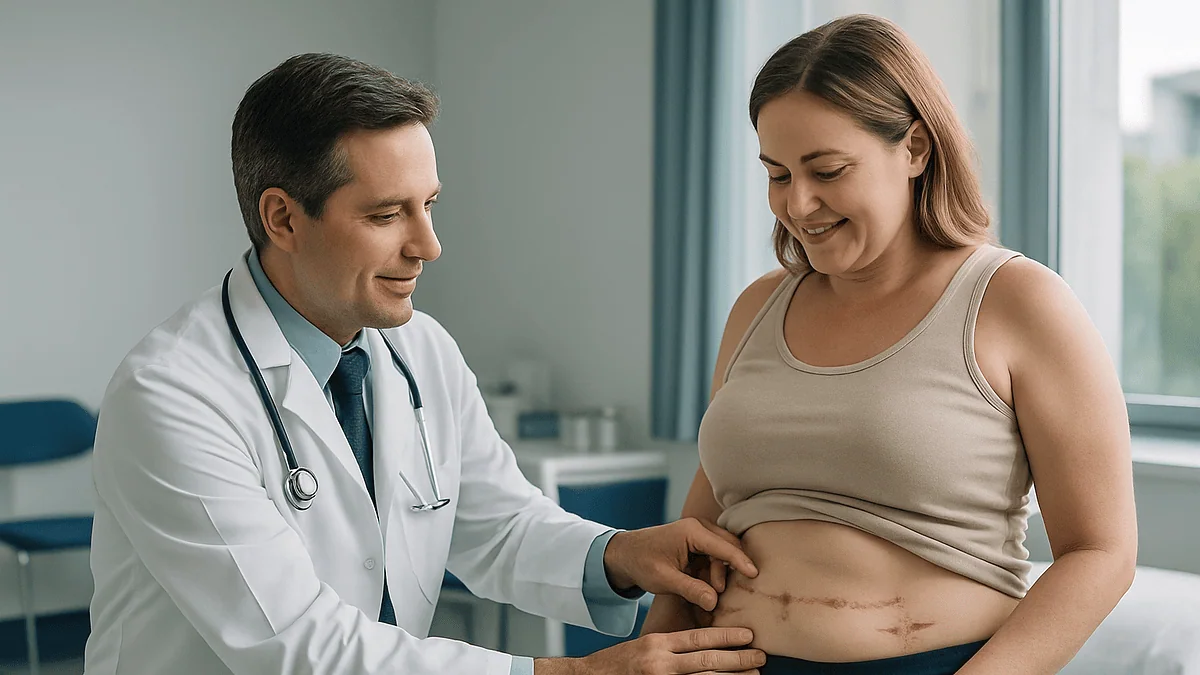
Key Takeaways
- Scars from skin-removal surgery are as long as the skin removed; a tummy tuck line typically runs hip to hip and a lower body lift circles the trunk.
- Scars usually look their worst around months two to four and continue to fade and flatten for up to two years, according to NHS guidance.
- Contouring is generally considered around 12 to 18 months after bariatric surgery, once weight has been stable for several months, to prevent scars from migrating or widening.
- Silicone gel or sheets and consistent sun protection have the best evidence for helping scars mature; vitamin E oil and cocoa butter do not.
- Keloids spread beyond the original incision, are more common in people with darker skin, and can appear months after surgery, so a history of thick scars should be shared before the operation.
- Spreading redness, fever, a gaping wound, a rapidly growing swelling or dark cold skin near the incision are red flags that need a same-day call to the surgical team.
Scars after bariatric contouring are long and permanent because large amounts of loose skin are cut away, but they are planned to sit where clothing hides them: low across the abdomen, along the inner arm or thigh, or around the breast. They usually look reddest in the first months and soften and pale over one to two years. Sun protection, wound care and follow-up with the surgical team matter most.
The first thing she did, after the tape came off, was stand sideways in front of the bathroom mirror. Not to look at the new waistline, which she had waited two years and 130 pounds for, but to trace the line that ran hip to hip like a horizon. “So this is the price,” she said, half to herself. Her surgeon had drawn it on her skin with a marker the morning of the operation; seeing it in raised, purple-red reality was different.
That moment is where most people land when they ask about scars after bariatric contouring. The medical question is not whether there will be scars. There will be, and they will be long. The useful questions are where they will sit, how they will change month by month, what genuinely helps them settle and what does not.
This article walks through all of that using what mainstream evidence actually shows, including the honest parts about slow healing, thick scars and the limits of every cream on the shelf.
What actually happens in bariatric contouring, and why scars are the trade
Body contouring after bariatric surgery is a family of operations that remove skin and fat left behind after major weight loss and re-drape what remains. The most common is abdominoplasty, the medical term for a tummy tuck, in which a strip of lower abdominal skin is removed and the belly button is repositioned. A panniculectomy is a simpler cousin that removes only the overhanging apron of skin, called the pannus, without tightening muscles. Brachioplasty is an arm lift, a thigh lift is exactly what it sounds like, and mastopexy is a breast lift.
Every one of these works the same way at the level of the skin. A surgeon measures how much excess there is, excises it in an ellipse or a wedge, then brings the two edges together with layers of stitches. Skin that has been stretched for years has lost much of its elastin, the protein that lets skin snap back, so it cannot be shrunk. It can only be removed. The length of the scar therefore tracks the amount of skin taken: the bigger the loss of weight, the more skin, the longer the line.
Wound healing then follows a fixed biological script. Within days, inflammatory cells clear debris. Over the following weeks, cells called fibroblasts lay down collagen, the structural protein of skin, in a hurried and disorganized way, which is why early scars look raised and red. Over the next one to two years that collagen is slowly remodeled, flattened and drained of extra blood vessels, so the scar pales, according to the NHS scar guidance.
The Cleveland Clinic describes these procedures as frequently staged, with operations months apart, partly because the total incision length in a full lower-body lift can run a few feet. Nobody heals that much at once comfortably. Understanding that scale up front makes the mirror moment less of a shock.
Where do scars after bariatric contouring sit?
Placement is planned, not accidental. A surgeon marks the skin while you stand, sit and bend, so that the final line falls into a natural fold or under a garment. The table below summarizes the usual positions described by Mayo Clinic and the Cleveland Clinic; individual plans vary with anatomy and with how much skin needs to go.
| Procedure | Typical scar position | Typical shape and length |
|---|---|---|
| Abdominoplasty (tummy tuck) | Low across the abdomen, roughly along the underwear or bikini line; a second small scar around the navel | Hip to hip; may extend around the flanks after large weight loss |
| Panniculectomy | Low abdomen, similar to a tummy tuck but often lower and longer | Horizontal, sometimes with a vertical limb creating an inverted T |
| Lower body lift (belt lipectomy) | Circumferential, running across the lower back and buttock crease | A continuous line around the body |
| Brachioplasty (arm lift) | Inner arm from armpit toward elbow | Straight or gently curved; visible when arms are raised |
| Medial thigh lift | Groin crease, sometimes down the inner thigh | Hidden in the crease when short; vertical when more skin is removed |
| Mastopexy (breast lift) | Around the areola, vertically to the fold, sometimes along the fold | Lollipop or anchor pattern |
Two honest points follow from this. First, a scar that hides under a swimsuit still exists, and some people find the inner-arm and inner-thigh lines the hardest to accept because they show in short sleeves and shorts. Second, the more skin removed, the more likely a surgeon needs a vertical component, which is harder to conceal. This is a conversation to have with markers in hand before the operation, not afterward.
Who is usually offered contouring, and who is asked to wait
Timing is the single biggest lever on how scars turn out, and it is largely about weight stability. The Cleveland Clinic advises that contouring is generally considered around 12 to 18 months after bariatric surgery, once weight has plateaued for several months. Skin that is excised while weight is still dropping will loosen again, and a scar that is placed under tension on a shrinking frame can migrate or widen.
Surgeons also look closely at nutrition. After a gastric bypass or sleeve, absorption of protein, iron, zinc and several vitamins can fall, and each of those is a raw material for collagen. A person with unrecognized protein deficiency heals slowly and is more prone to wound separation. Most programs therefore check blood work and may ask for a period of dietary correction before booking surgery. That is not a delay for its own sake; it is scar prevention.
People who smoke or use nicotine in any form are usually asked to stop well before the operation. Nicotine narrows small blood vessels, and skin flaps that have been lifted and pulled depend on those vessels. Mayo Clinic lists smoking among the main risk factors for poor wound healing and skin loss after a tummy tuck.
Poorly controlled diabetes, an active skin infection under a skin fold, or a body mass index that remains high are common reasons for a pause rather than a refusal. Some people with conditions that make anesthesia riskier, such as unstable heart disease, may be advised against elective surgery altogether.
Finally, expectations matter. Contouring is reconstructive in purpose and cosmetic in effect, and a good candidate is someone who has weighed a lifelong scar against a lifelong skin apron and understands that the operation trades one for the other. That judgment, and the medical clearance behind it, always rests with the treating team.
The first six weeks: what your incisions usually look like
Day one to three is about tubes and tape. Most abdominal contouring involves surgical drains, thin tubes that pull fluid away from under the skin so it does not collect and stretch the incision. Mayo Clinic notes these commonly stay in for several days. The incision itself will be covered with a dressing, sometimes with skin glue or surgical tape along the line. It is normal for the edges to look puckered and for the whole area to be numb, because small skin nerves were cut.
By the end of week one, stitches that dissolve are doing their quiet work under the surface, and any external sutures or staples are usually assessed. Bruising can spread far beyond the incision, tracking down into the thighs or up the flanks with gravity, and this can look alarming while being entirely expected.
Weeks two to four are when the scar looks its angriest: red or dark, firm, slightly raised, and itchy. Itch is a sign that nerves are regrowing and histamine is active in the healing tissue. Scratching is a bad idea; a cool compress over the dressing is a better one.
The NHS tummy tuck guidance describes a compression garment worn for around six weeks and a return to strenuous activity after roughly the same period. The garment reduces swelling and supports the incision so the edges are not repeatedly tugged apart when you sit up or cough. Light walking from the first day, however, is encouraged because it lowers the risk of blood clots in the legs.
By week six, most incisions are sealed and the surface is closed. That does not mean the scar is finished; in collagen terms it has barely started. It means the wound has become a scar, and a different phase of care begins.
Months three to twenty-four: how body contouring scars after weight loss fade
If you photographed your scar at three months and again at eighteen, you would hardly believe they were the same line. The NHS describes typical scars as continuing to change and fade for up to two years, and that arc is worth knowing in detail so the middle of it does not frighten you.
Around months two to four, many scars go through their worst-looking stage. Collagen production has peaked and the tissue is dense with new blood vessels, which is why the line can turn bright pink, deep red or, in darker skin, a shade darker than the surrounding skin. Some sections widen slightly, particularly where the skin is under the most pull, such as the center of the abdomen or the inner arm.
From roughly month six, remodeling takes over. Enzymes break down disordered collagen and rebuild it in more aligned bundles, the scar softens under the fingertips, and the blood vessels regress so the color fades toward a paler pink and then toward the surrounding skin tone or slightly lighter. Firm ridges usually flatten. Sensation returns unevenly; patches of numbness above a tummy tuck scar can persist for a year or longer.
By twelve to twenty-four months, the scar has reached what surgeons call maturity. It is typically flat, soft, and paler or whiter than the surrounding skin. It will never disappear, and a mature scar is somewhat weaker than intact skin, but at this point it has essentially stopped changing on its own.
Two caveats keep this honest. Scars in areas of constant movement, like the inner thigh, often mature more slowly. And in a minority of people the scar keeps thickening past the point where it should be flattening, which is the subject of a later section on hypertrophic scars and keloids.
What decides how a scar heals
Two people can have the same operation from the same surgeon and end up with visibly different scars. Most of the variation comes down to a handful of factors, some fixed and some within reach.
Genetics and skin tone set the baseline. MedlinePlus notes that keloids, a form of overgrown scar, are more common in people with darker skin, and a family history of thick scars is a meaningful predictor. Younger skin, which has more collagen activity, tends to produce redder and thicker scars than older skin, paradoxically.
Tension is the surgeon’s main concern. A wound closed under strain is more likely to widen and thicken. This is why contouring surgeons close in several layers, stitching deeper tissue first so the skin surface carries little of the load, and why they favor positions along natural skin lines where movement pulls least.
Blood supply decides whether edges knit at all. Nicotine, poorly controlled diabetes, and very tight garments that press unevenly all reduce flow to the skin flap. The Cleveland Clinic lists smoking as one of the strongest predictors of complications after body contouring.
Nutrition supplies the bricks. Protein, vitamin C, zinc and iron are all involved in collagen synthesis, and all can run low after bariatric surgery. Your bariatric team monitors these, and correcting deficiencies before surgery is standard practice.
Infection and fluid collections, discussed later, derail healing when they occur, leaving wider or more irregular scars where the wound reopened.
Sun exposure in the first year darkens scars persistently, because healing skin produces pigment unpredictably. The NHS advises protecting new scars from sun with clothing or a high-factor sunscreen.
Notice what is not on this list: any particular brand of cream. What you can control is mostly about tension, blood flow, nutrition, sun and patience.
Tummy tuck scar care: what to do in the early weeks
The first job is not to improve the scar but to protect the wound while it becomes one. Your surgical team will give specific instructions, and those override anything written here, but the general principles are consistent across mainstream guidance.
Keep dressings as directed. Most teams want incisions kept dry for a set period, then allow showering with gentle patting, not rubbing. Soaking in baths, pools or hot tubs is usually deferred until the wound is fully sealed because standing water carries bacteria into any small gap.
Wear the compression garment for the period your team specifies, commonly about six weeks according to the NHS. It should feel snug and even, not pinching. A garment that leaves deep grooves or turns the skin pale in one spot is doing harm rather than good and should be adjusted.
Move, but do not stretch. Walking from day one keeps blood moving in the legs. Reaching overhead, lifting anything heavier than a light bag, or arching backward pulls directly on a lower abdominal incision, so a slightly bent posture is normal for a week or two after a tummy tuck. Arm-lift scars are protected by avoiding pushing and pulling movements early on.
Eat as your bariatric dietitian advises, with attention to protein at every meal. Healing tissue is built from what you absorb, and after bariatric surgery that requires deliberate effort.
Leave the surface alone. Do not pick at glue, tape or scab, and do not apply oils, vitamin E capsules or home remedies to an incision that has not fully closed. Several of these products can cause contact irritation, and there is no good evidence they improve scarring.
Watch, and report. Take a photograph every few days in the same light. A change you can see side by side is far easier to describe to a nurse than a vague sense that something is different.
Silicone, massage, sun protection: what the evidence shows
Once the incision is fully closed, usually from around week three to six, the focus shifts to helping the scar mature as flat and pale as possible. Three approaches have reasonable evidence; several popular ones do not.
Silicone gel or sheets are the best supported of the over-the-counter options. The NHS scar guidance lists silicone gel or sheets among treatments that can help soften and flatten scars, and they are widely used in plastic surgery follow-up. The proposed mechanism is that silicone keeps the scar surface hydrated and slightly warmer, which appears to reduce the overactive collagen signaling that makes scars thick. They are typically worn for many hours a day over weeks to months; your team will set the routine. They are not a promise of an invisible scar, and they require patience.
Scar massage, gentle pressure along and across the line once the wound is sealed, is commonly recommended to soften firm bands and to help skin move freely over deeper tissue. The research base is thinner than for silicone, but it is low risk when done on closed skin and many patients find it reduces tightness. Ask your team when to start; massaging too early can separate a fragile wound.
Sun protection is not optional. Healing skin overproduces pigment in response to ultraviolet light, and a scar that darkens in the first year may stay dark. The NHS advises covering new scars or using a high-SPF sunscreen once the wound has healed. In practice that means clothing over arm and abdominal scars for at least the first summer.
Vitamin E oil, cocoa butter and most branded scar creams have not shown consistent benefit in studies, and vitamin E has been associated with skin irritation in some people. Pressure garments are primarily useful for burns and for established hypertrophic scars rather than for routine surgical lines.
Keloid vs hypertrophic scar: when a scar overgrows
Most scars follow the fade-and-flatten script. Some do not, and the two ways they go wrong are worth telling apart because they behave and respond differently.
A hypertrophic scar is one that stays raised, red and firm beyond the usual timeline but remains within the boundaries of the original incision. It usually develops within the first few months, often where the wound was under tension or where a small infection or separation occurred. The encouraging news is that hypertrophic scars frequently improve on their own over a year or two, and they respond to conservative measures such as silicone, pressure and, when needed, injected corticosteroid, a type of anti-inflammatory medicine that calms collagen production. Whether and when to use injections is a decision for the surgical team.
A keloid is different in one defining way: it grows beyond the original wound edges, spreading into surrounding skin like a claw. MedlinePlus describes keloids as more common in people with darker skin and notes they can appear months after the injury, sometimes continuing to grow for years. They can itch, feel tender and be firm or rubbery. Keloids are stubborn. Simply cutting one out often leads to a larger keloid, so treatment usually combines approaches, which may include corticosteroid injections, silicone, pressure, cryotherapy or laser, chosen by a dermatologist or plastic surgeon based on the individual.
Why does this matter before surgery? Because history is the best predictor. If you formed a keloid after ear piercing, acne, a cesarean section or a previous operation, say so during planning. A surgeon may adjust closure technique, start silicone earlier, or discuss preventive treatments. The bariatric contouring incision is long, and a keloid along even a portion of it is a significant burden, so this is one place where a two-minute conversation can change the outcome.
When healing stalls: wound separation, infection, seroma
Body contouring after major weight loss has a higher wound complication rate than most cosmetic surgery, and the Cleveland Clinic is explicit that this is the trade-off of removing large amounts of skin from tissue that has been stretched, under-nourished and, often, previously operated on. Three problems account for most of the trouble, and each leaves its mark on the eventual scar.
Dehiscence is the medical word for a wound edge coming apart. It most often happens at the points of greatest tension, such as the vertical limb of an inverted-T abdominal closure or the center of a groin incision. Small separations are common and are usually managed with dressings and time, healing from the base upward. Larger ones may need re-closure. Either way, the affected section tends to scar wider or more irregularly.
A seroma is a pocket of clear fluid that collects under the skin after drains are removed. It feels like a water balloon under the surface and may slosh. Small seromas often resorb; larger ones are drained with a needle in clinic, sometimes more than once. Left untreated, they stretch the incision and raise infection risk.
A hematoma is the same idea with blood rather than clear fluid. It appears as a rapidly enlarging, tense, painful swelling, often within the first day or two, and may need urgent return to the operating room.
Surgical site infection shows as spreading redness, warmth, increasing rather than decreasing pain, cloudy or foul drainage and sometimes fever. The CDC describes infection at the incision as one of the most common healthcare-associated complications after surgery. Prompt treatment matters for both health and scar quality, because infected tissue heals slowly and thickly.
None of these should be diagnosed at home. They are listed here so that the early signs are recognized and reported rather than waited out.
Does loose skin removal leave scars, or can skin be tightened without surgery?
This is the question that sends people down long online rabbit holes, so here is the direct version. Any operation that removes skin leaves a scar exactly as long as the skin removed. There is no surgical technique that excises a large apron of skin invisibly.
Non-surgical skin tightening, using radiofrequency, ultrasound or laser energy to heat the deeper skin and stimulate collagen, does exist and does leave no scar. Its measured effect, however, is modest and is suited to mild laxity, such as a slightly soft jawline or a small degree of looseness on the arms. After losing 80, 100 or 150 pounds, the excess skin is measured in inches and in pounds, and no amount of heating persuades it to retract. Mainstream sources, including the Cleveland Clinic, position these devices as options for mild laxity rather than as alternatives to excisional surgery after massive weight loss.
Exercise builds muscle beneath the skin and can improve the overall look of an arm or thigh by filling out the envelope somewhat, but it does not shrink skin that has lost its elastin. Creams marketed for tightening act on the very top layer and do nothing to the structural layer beneath.
Doing nothing is a legitimate choice too. Loose skin is not a disease. Some people manage it comfortably with supportive garments and skin-fold hygiene, and many decide the scar is not worth it for them. Where skin folds cause recurrent rashes, fungal infections, ulceration or interfere with walking or hygiene, panniculectomy moves from cosmetic to medically indicated, and the scar becomes part of treating a real problem.
Framed this way, the choice is honest: no scar and the loose skin, or the skin gone and a scar in its place. There is no third option that delivers both.
What people often get wrong about scars after bariatric contouring
Some misunderstandings show up in almost every consultation, and they are worth correcting plainly.
“The scar will fade in a few months.” It will change in a few months, usually for the worse before the better. The NHS gives up to two years for scars to mature, and judging a scar at month three is like judging a loaf at the halfway point of baking.
“A good surgeon leaves no scar.” Skill affects placement, tension and closure, all of which improve the final result. No surgeon controls your collagen biology, and no surgeon can remove a foot of skin without a foot of scar.
“Vitamin E oil makes scars disappear.” Studies have not supported this, and in some people vitamin E causes skin irritation that worsens the appearance. Silicone has better evidence, and even silicone helps rather than erases.
“Redness means infection.” Early scars are red because they are full of new blood vessels; that is normal for months. Infection is spreading redness with heat, worsening pain, discharge or fever. The difference matters, and when in doubt, ask.
“Once the wound is closed, the care is done.” Closure is the start of the maturation phase, when sun protection and silicone actually make a difference.
“Weight does not matter now that I am done losing.” Regaining weight stretches a scar, and losing more afterward loosens skin around it. Stability protects the result, which is why teams ask for a plateau before operating.
“Dark skin cannot get contouring.” People with darker skin can and do have these operations. They carry a higher risk of keloids and of scar darkening, which means earlier scar care and frank pre-operative planning, not exclusion.
“The scar is the only downside.” Numbness, contour irregularities, asymmetry and the possibility of revision surgery are all part of informed consent and deserve equal airtime.
Questions to ask your care team
Consultations pass quickly and the scar conversation can get squeezed out by discussion of the operation itself. Bringing a written list keeps it on the table. These are questions that experienced patients wish they had asked.
- Can you draw the planned incisions on me while I stand, so I can see where they fall against underwear, shorts and a short-sleeved shirt?
- Given how much skin needs to come off, is a vertical scar likely, and what would that look like?
- Will this be done in stages, and how far apart? Which area would you do first and why?
- What is my personal risk of wound separation or delayed healing, based on my nutrition results, smoking status and other health conditions?
- Do I need any blood tests or dietary changes before surgery to improve healing?
- I have had thick or spreading scars before. How will that change your plan?
- How long will I have drains, and how will I care for them at home?
- When can I shower, bathe, swim and return to exercise?
- When do you want me to start silicone, massage or other scar care, and for how long?
- What does the follow-up schedule look like, and who do I contact after hours if something looks wrong?
- If a section of scar widens or thickens, what are the options, and how long would you wait before considering a revision?
- Are there any of my regular medicines or supplements you want reviewed before surgery?
The last point deserves emphasis. Some medicines and supplements affect bleeding or healing, but decisions about pausing or continuing anything you take belong to your prescribing clinician and the surgical team together. Never adjust a prescription on your own before an operation.
One more question, less clinical but just as useful: may I see photographs of mature scars from this operation, including ones that did not heal perfectly? A team confident in its work will show both.
When to call your doctor
Most of what a healing contouring scar does is normal and slow. A short list of signs is not, and each of them warrants a same-day call to your surgical team or, if you cannot reach them, urgent care.
- Redness spreading outward from the incision, especially with warmth, increasing pain, or a foul or cloudy discharge.
- Fever, chills or feeling generally unwell in the first weeks after surgery.
- A wound edge that opens, gapes or shows yellow or gray tissue in its base.
- A rapidly enlarging, tense or very painful swelling under the skin, particularly in the first days, which could indicate a hematoma.
- A soft, sloshing collection of fluid under the incision that grows rather than shrinks.
- Skin near the incision turning dark, purple-black or cold, which can signal that a skin flap is losing its blood supply.
- Calf pain, swelling of one leg, or sudden shortness of breath or chest pain, which are warning signs of a blood clot and are a reason to call emergency services rather than the clinic.
- Drains that stop draining suddenly, fall out, or produce bright red blood in large amounts.
Later on, a scar that keeps thickening after six months, begins to spread beyond the original line, becomes persistently painful or itchy, or develops an open sore is worth a scheduled appointment. These are usually not emergencies, but they are exactly the situations in which early treatment of a hypertrophic scar or keloid produces a better result than waiting.
Trust the instinct that sent you to the mirror in the first place. A photograph and a phone call cost nothing and can prevent a small problem from becoming a wide, permanent one. Your treating team would far rather hear about a false alarm than see a wound that has been quietly separating for a week.
Frequently asked questions
Do scars after bariatric contouring ever go away completely?
No. Scars from skin-removal surgery are permanent because the skin is replaced by collagen-rich scar tissue rather than regrown. What changes is their appearance: over one to two years most scars flatten, soften and fade from red or dark to a paler line close to the surrounding skin tone. Placement in natural folds and along underwear lines is what makes them inconspicuous rather than absent.
How long does tummy tuck scar care need to continue?
Active scar care, such as silicone gel or sheets and sun protection, is usually continued for several months and often through the first year, because that is the period when collagen is being remodeled and the scar is most responsive. Your surgical team sets the exact routine. After the scar matures at around 12 to 24 months, most people stop treatments but keep protecting the line from strong sun.
Does loose skin removal leave scars that are worse in darker skin?
People with darker skin have the same incision length but a higher likelihood of two specific issues: scars that darken with pigment, and keloids, which grow beyond the wound edges. MedlinePlus notes keloids are more common in darker skin. This does not exclude anyone from surgery; it means earlier silicone use, strict sun protection and a frank conversation about scar history with the surgeon before the operation.
What is the difference between a keloid and a hypertrophic scar?
A hypertrophic scar is raised, red and firm but stays within the original incision and often improves on its own within a year or two. A keloid extends beyond the wound edges into normal skin, can keep growing for years, may itch or hurt, and tends to recur if simply cut out. Both are treated with combinations of silicone, pressure, injections or other measures chosen by the treating team.
Can you tighten loose skin after bariatric surgery without an operation?
Only modestly. Energy-based devices using radiofrequency or ultrasound can firm mild laxity, and strength training can fill out the shape beneath the skin, but neither shrinks large amounts of skin that has lost its elastin after major weight loss. For skin measured in inches or pounds, removal is the only method that reliably works, and removal always leaves a scar. Choosing no surgery is also a valid option.
Why do body contouring scars after weight loss heal more slowly than other surgical scars?
Several factors stack up: the incisions are very long, the skin has been stretched and has poorer elasticity, nutrition after bariatric surgery can run short of protein and micronutrients that build collagen, and the closures often sit under tension across mobile areas like the abdomen and inner thigh. The Cleveland Clinic notes that wound healing problems are among the most common complications of these procedures.
Does smoking really affect how my contouring scars turn out?
Yes, substantially. Nicotine constricts the small blood vessels that feed the skin flaps lifted during contouring, raising the risk of delayed healing, wound separation and even loss of a section of skin. Mayo Clinic lists smoking among the main risk factors for poor healing after a tummy tuck. Surgeons routinely ask people to stop all nicotine well before surgery and to remain off it through recovery.
What happens 20 years after bariatric surgery to skin and scars?
Mature contouring scars remain stable over decades, usually as pale, flat lines, although skin naturally loses elasticity with age and weight fluctuations can loosen surrounding tissue again. Long-term bariatric follow-up focuses more on nutrition, bone health and weight maintenance than on scars. Some people choose small revision procedures years later; many do not. Lifelong follow-up with a bariatric team is recommended regardless.
Why is the divorce rate reported to be high after bariatric surgery?
Studies of relationship outcomes after bariatric surgery have reported increases in both separations and new partnerships compared with the general population, but the reasons are not fully understood and the findings vary between countries and study designs. Researchers point to changes in confidence, social life, health priorities and relationship dynamics rather than the surgery itself. Anyone concerned about this can ask to be connected with a bariatric psychologist.
What can you never do again after a gastric sleeve?
There are few absolute nevers, but there are permanent changes. The stomach is smaller, so large meals, drinking with meals and very sugary or fizzy drinks are usually discouraged for life. Lifelong vitamin and mineral monitoring is standard because absorption changes. Some medicines are reviewed by the prescribing team because the smaller stomach handles them differently. Contouring surgery does not add restrictions beyond its own recovery period.
References
This article is for general information only and is not a substitute for professional medical advice. Please consult a qualified doctor about your individual situation.

More from the Blog

Bariatric Surgery Recovery Milestones: Hospital Days, First Walks and Returning to Work
A typical bariatric surgery recovery timeline unfolds in stages: a hospital stay of about 1 to 3 days, short assisted walks within hours of…

Does Gastric Sleeve Surgery Change Diabetes Care? Blood Sugar Management Around the Operation
Yes. Gastric sleeve surgery usually changes diabetes care substantially, often within days. Blood sugar frequently falls before much weight is lost, so glucose-lowering medicines…

Life After Gastric Bypass: Eating Out, Alcohol, Travel and the Habits That Protect the Pouch
Life after gastric bypass means eating small, protein-first meals slowly, separating drinks from food, taking vitamin and mineral supplements for life, and attending regular…

The Pre-Bariatric Surgery Diet: Why Surgeons Ask You to Shrink the Liver Before Surgery
A pre bariatric surgery diet is a short, structured, low-calorie and higher-protein eating plan that surgical teams prescribe before weight-loss surgery, usually lasting about…

How Gastric Bypass Reroutes Digestion: The Pouch, the Bypassed Segment and the New Connection
Roux-en-Y gastric bypass reroutes digestion in three steps. Surgeons staple off a walnut-sized pouch at the top of the stomach, then divide the small…

Nausea and Cramps After a Gastric Balloon: What Is Normal and When to Call Your Team
Nausea, stomach cramps and some vomiting are expected during the first week after a gastric balloon. Mayo Clinic notes that pain and nausea affect…