

Slugging: What Occlusive Skincare Does, and Who Should Skip It
Key Takeaways
- A layer of petrolatum reduces transepidermal water loss by more than 98 percent in laboratory measurements, making it the benchmark occlusive against which other moisturizers are compared.
- Petrolatum is a well-studied, randomized-trial-backed skin protectant, but slugging as a nightly routine has never been tested in a clinical trial; its support is mechanism plus expert opinion.
- Refined petroleum jelly is non-comedogenic, yet the warm sealed film it forms traps sebum and residue against the skin, which is why oily and acne-prone faces often break out after slugging.
- Occlusion increases absorption of whatever sits beneath it, so slugging over retinoids, exfoliating acids or prescribed steroid creams changes how those products act and should be cleared with the prescriber.
- Multi-ingredient healing ointments contain roughly 41 percent petrolatum plus lanolin and humectants, while plain petroleum jelly is essentially 100 percent petrolatum; lanolin allergy is the main practical difference.
- UK regulators broadened emollient fire-risk warnings in 2018 to cover saturated fabric from any emollient, a real hazard for heavy body use but not created by a pea-sized layer on the face.
Slugging means sealing your face overnight with a thin layer of an occlusive ointment, usually petroleum jelly, applied over your usual moisturizer. It reduces water loss from the skin and can ease dryness, flaking and irritation. Evidence for petrolatum as a barrier protectant is strong, but slugging itself has not been tested in trials. People with acne-prone or oily skin, and anyone using potent prescription actives, should check with a dermatologist first.
Somewhere tonight a bathroom mirror will reflect a face glistening like a glazed doughnut, a phone propped against the tap, and a caption promising the softest morning skin of your life. The clips are everywhere again as of early 2025: a fresh wave of side-by-side videos comparing tubs of ointment, dermatologists filming rebuttals in scrubs, and a running argument in the comments over whether a century-old wound salve belongs on a grown adult’s cheekbones.
The trend is called slugging skincare, a name borrowed from the wet sheen a garden slug leaves behind. It surged during the pandemic, dipped, and has now climbed back up the search charts alongside colder weather and a viral claim that the routine can replace a moisturizer entirely.
Here is the thing the videos rarely say out loud. The ointment itself is one of the best-studied protectants in dermatology. The nightly ritual built around it is not. This piece separates those two facts, and explains who gains from slugging and who is better off leaving the lid on.
What is slugging skincare, exactly?
Strip away the hashtag and slugging is a very old idea with a new outfit. You wash your face, apply whatever moisturizer you normally use, then smooth a thin film of an occlusive ointment over the top and go to bed. An occlusive is simply an ingredient that sits on the skin surface and slows the evaporation of water through it. Petroleum jelly, also called petrolatum, is the classic example, though some people use lanolin-based ointments or thick balms instead.
Nurses and dermatologists have used this same layering for decades under a less glamorous name: wet-to-dry or ointment-over-cream therapy for cracked hands, eczema flares, post-procedure skin and chapped lips. What changed is the framing. Social media turned a practical medical habit into a beauty ritual with its own vocabulary, its own before-and-after lighting and a growing list of rules that the underlying science does not always support.
The appeal is easy to understand. Petroleum jelly is inexpensive, fragrance-free in its purest form, rarely triggers allergies and has a long safety record on damaged skin. Waking up with plump, calm skin after a single night feels like a small miracle when your cheeks have been tight and flaky for weeks.
What slugging is not matters just as much. It does not add water to skin; it keeps water from leaving. It does not exfoliate, brighten, treat acne or reverse sun damage. It has no active ingredient in the pharmacological sense. Think of it less as a treatment and more as a lid on a pot. Whether that lid helps depends entirely on what is already simmering underneath, which is why the same routine can rescue one person’s winter skin and leave another person with a fresh crop of clogged pores by Thursday.
What changed recently to make slugging trend again
Three threads have pulled slugging skincare back into the spotlight over the past year, and none of them is a new clinical trial.

The first is a viral claim that slugging can stand in for moisturizer altogether, with creators applying ointment straight onto freshly washed skin. This runs against how occlusives actually behave. Mayo Clinic’s guidance on moisturizers separates ingredients that seal, such as petrolatum, from ingredients that draw in or replenish water, and notes that the sealing kind works best over skin that is already slightly damp or has been moisturized. A lid on an empty pot keeps nothing warm.
The second thread is a tub-versus-tub debate. Search interest in comparing plain petroleum jelly against multi-ingredient healing ointments has climbed steadily since late 2024, driven by videos that treat the choice as high-stakes. Later in this article a table lays out what actually differs between them, which is mostly the presence or absence of lanolin and humectants.
The third thread is safety-flavored. Clips warning that petroleum jelly is a fire hazard, is comedogenic, or suffocates the skin have spread nearly as fast as the routine itself. Some of these have a real kernel. The NHS emollient guidance, updated after UK medicines regulators broadened their fire-risk warning in 2018 to cover all paraffin-based and even paraffin-free emollients, is clear that fabric soaked in these products ignites more easily. That is a genuine concern for people who use large amounts on the body, dressings or bedding, not a reason to fear a thin layer on the face. Other claims, particularly the idea that petrolatum blocks the skin from breathing, do not survive contact with the physiology described in the next section.
The freshness of the trend, in other words, comes from argument rather than discovery. The underlying evidence on petrolatum has been stable for roughly thirty years. What has shifted is the volume of confident, unsupported advice built on top of it.
How does an occlusive actually work on skin?
Your outermost skin layer, the stratum corneum, is often compared to a brick wall: flattened dead cells are the bricks, and a mortar of lipids holds them together. That mortar is what keeps water in and irritants out. When it is intact, water still escapes slowly through the surface in a process dermatologists call transepidermal water loss, or TEWL for short. When the mortar is damaged by cold air, harsh cleansers, over-exfoliation or conditions like eczema, TEWL rises and skin feels tight, rough and reactive.
Petrolatum works by lying in that wall’s cracks and across its surface as a semi-solid film that water cannot easily cross. Laboratory measurements dating back to the early 1990s found that a layer of petrolatum can reduce transepidermal water loss by more than 98 percent, which is why it remains the benchmark against which newer occlusives are compared. Mineral oil, lanolin, silicones such as dimethicone and plant butters all slow water loss too, but by smaller margins and with more variability.
Two details complicate the tidy story. The first is that petrolatum does not form an impermeable plastic wrap. Electron microscopy shows it penetrating into the upper layers of the stratum corneum rather than sitting purely on top, and some water and gas exchange continues. Skin does not, in any meaningful sense, breathe through its surface; oxygen arrives through the bloodstream. The suffocation fear is a metaphor, not a mechanism.
The second detail is more interesting. Research in the mid-2010s applying petrolatum to healthy volunteers under occlusion for two days found it increased the expression of antimicrobial peptides and genes involved in barrier repair, and thickened the stratum corneum. That was a small mechanistic study, not proof of clinical benefit, but it hints that petrolatum is not the inert blob it was long assumed to be.
Put together, the mechanism explains both the glow and the grumbling. Trapped water plumps dehydrated cells, which reads as smoother skin by morning. Trapped sweat, sebum and leftover product, on the other hand, sit against the skin all night too.
Is slugging good for skin? What the evidence actually says
Honest grading requires separating the ingredient from the ritual, because they sit at very different points on the evidence ladder.
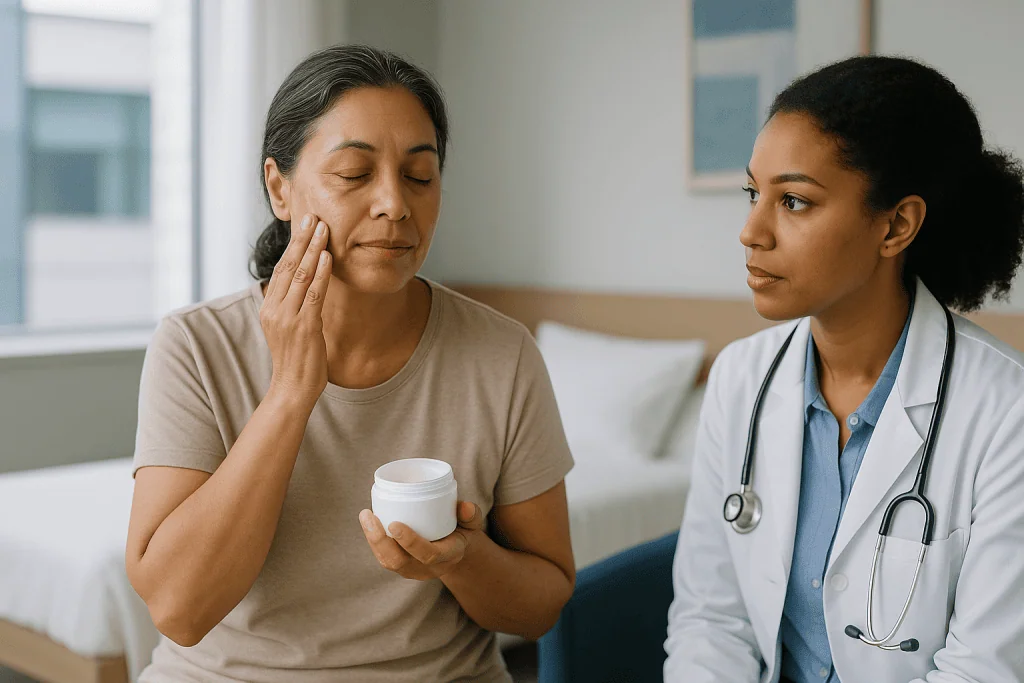
For petrolatum as a skin protectant, the evidence is strong. It has been studied in randomized trials of wound care, where it performs comparably to antibiotic ointments for preventing infection in minor surgical wounds while causing far fewer allergic reactions. Randomized trials in premature infants and in children at high risk of eczema have tested daily emollient application, with mixed results on eczema prevention but a consistent safety profile. Regulatory bodies in the United States recognize white petrolatum as an over-the-counter skin protectant based on decades of data. Mayo Clinic, the NHS and Harvard Health all list it among the most effective moisturizing ingredients for dry skin. That is about as settled as skincare gets.
For slugging as a specific nighttime routine layered over moisturizer, the evidence is thin. No randomized trial has compared slugging with simply using a good moisturizer, or tested it on acne-prone skin, or measured whether nightly use beats occasional use. What exists is expert opinion from dermatologists, mechanistic reasoning from TEWL studies, and a very large pool of anecdotes. Expert opinion is the lowest rung of the evidence ladder, though here it is unusually consistent: most dermatologists interviewed by Cleveland Clinic and Harvard Health agree that slugging is reasonable for dry or compromised skin and unnecessary or counterproductive for oily, acne-prone skin.
A few specific viral claims fall off the ladder entirely. There is no evidence that slugging reverses wrinkles, shrinks pores, fades dark spots or replaces a moisturizer. Petrolatum contains no ingredient that could do those things.
So is slugging good for skin? For a dry, tight, flaking face in winter, the answer is a well-supported probably yes, because everything we know about occlusives points that way. For a face that is oily, breaking out, or already comfortable, the honest answer is that it will not help and may hinder. The strength of the routine depends less on the ointment than on the skin underneath it.
Who is most likely to benefit from slugging
The people who post the most convincing slugging results share a pattern, and it is not a coincidence. Their skin was losing water faster than it could hold on to it.
Dry and dehydrated skin tops the list. MedlinePlus describes dry skin as most common in winter, in low-humidity climates and with frequent hot showers or harsh soaps, all of which strip the lipid mortar described earlier. An occlusive at night gives the barrier several undisturbed hours to rebuild without losing water to a heated bedroom.
Skin recovering from over-exfoliation is a close second. Anyone who has combined a glycolic acid toner, a retinoid and a scrub in the same week will recognize the sting-when-you-wash feeling. That is a barrier crying out for less, not more. A few nights of slugging over a bland moisturizer, with the actives paused, is a common dermatologist suggestion for what is sometimes called a damaged moisture barrier.
Mature skin often benefits because sebum production and natural moisturizing factors decline with age, leaving the surface drier and slower to recover. Mayo Clinic notes that people over 40 are more prone to dry skin for exactly this reason.
Eczema-prone skin and skin around healing scrapes or dermatology procedures also respond well, though these are situations where slugging should follow the guidance of the treating clinician rather than a video, because prescription creams may need to go on first or be timed differently.
Lips, hands, heels and elbows deserve their own mention. Slugging the body is far older than slugging the face, and the risk of clogged pores is lower on skin with fewer oil glands. Cotton socks over ointment on cracked heels is the same principle in a less photogenic location.
The common thread is a barrier under stress from the outside in. If your skin feels tight after cleansing, looks dull and flaky by afternoon, or stings when you apply products that used to feel fine, you are in the group most likely to notice a difference.
Who should skip slugging skincare, and why
An occlusive traps whatever is under it. That single fact generates most of the reasons to leave slugging alone.
Oily and acne-prone skin heads the list. Petrolatum itself is classified as non-comedogenic, meaning it does not directly plug pores in laboratory testing, but the film it forms holds sebum, sweat, bacteria and any residue from products against the skin for eight hours. For people whose pores already struggle to clear, that warm, sealed environment tends to worsen congestion and small inflamed bumps, especially along the forehead and jaw. The NHS acne guidance recommends avoiding heavy oil-based products for the same reason.
Active breakouts, including cystic acne, fall into the same category. Sealing over an inflamed lesion does not speed healing and can encourage neighboring pores to clog.
Fungal acne, which is not acne at all but an overgrowth of a yeast that lives naturally on skin and produces itchy uniform bumps, thrives in warm occluded conditions. Anyone who suspects this pattern should skip slugging entirely until a clinician has looked.
Rosacea-prone skin is a mixed case. Some people with rosacea find bland occlusives soothing; others find that trapped heat triggers flushing. A patch test on one cheek for a few nights is a sensible way to find out which group you belong to.
Skin with an active infection, weeping eczema, open cold sores or fresh wounds that a clinician has not assessed should not be sealed with anything from a bathroom cabinet. Occlusion can trap bacteria and worsen infection.
Anyone with a known wool or lanolin allergy should avoid multi-ingredient healing ointments that contain lanolin and stick to pure petrolatum if they slug at all.
People using potent prescription topicals, from tretinoin to topical steroids, should not add slugging without asking the prescribing clinician, for reasons the section on actives covers in detail.
Skipping slugging is not a failure. It is a recognition that a lid helps a pot that is drying out and hurts one that is already boiling over.
How to slug your face properly, step by step
The routine is forgiving, but a few details separate a good night from a greasy pillow and a clogged T-zone.
- Start clean. Wash with a gentle, non-foaming cleanser and rinse thoroughly. Anything left on the skin, including cleanser residue, sunscreen or makeup, is going to be sealed in for the night.
- Leave the skin slightly damp. Occlusives work by holding water in, so give them water to hold. Pat rather than rub dry.
- Apply your usual moisturizer, or a humectant serum, first. A humectant is an ingredient such as glycerin or hyaluronic acid that attracts water. Mayo Clinic’s moisturizer guidance describes layering an occlusive over a humectant as the most effective approach for dry skin. This step is what the viral moisturizer-free version gets wrong.
- Wait a minute or two. Let the moisturizer settle so you are sealing it rather than pushing it around.
- Use less ointment than you think. A pea-sized amount warmed between clean fingertips is enough for the whole face. Press it in rather than dragging. The goal is a faint sheen, not a visible mask.
- Skip the areas that struggle. Many people slug only the cheeks and around the mouth, leaving the forehead and nose bare. This zoned approach suits combination skin well.
- Protect the pillow, protect the eyes. An old cotton pillowcase or a silk one you do not mind washing helps. Keep ointment away from the lash line, where it can migrate into the eye and blur vision.
- Wash it off in the morning. A gentle cleanser, possibly two passes, removes the film. Then apply your daytime moisturizer and sunscreen as normal. Petrolatum offers no sun protection.
One more habit worth adopting: notice what your skin does over a week, not one night. The morning-after plumpness is mostly trapped water and fades by lunchtime. What matters is whether tightness, flaking and stinging ease over several days. If they do, the barrier is recovering. If new bumps appear instead, your skin is telling you it belongs in the skip group.
Should I do slugging every night?
The most common follow-up question, and the one with the least direct evidence. No study has compared nightly slugging with occasional slugging, so what follows is mechanism plus expert opinion, graded accordingly.
For genuinely dry skin during a cold, dry season, nightly use is reasonable and is essentially how dermatologists have long advised patients with eczema to use ointment-based emollients. The NHS emollient guidance encourages frequent, liberal application for dry skin conditions and does not set an upper limit for ointments on intact skin. Nothing about petrolatum accumulates or builds up tolerance; it washes off each morning and the skin starts fresh.
For combination or normal skin, most dermatologists quoted in Cleveland Clinic and Harvard Health coverage suggest treating slugging as an occasional rescue rather than a standing ritual: two or three nights a week during a rough patch, or a single night after a long flight or a windy day. The reasoning is practical. If your barrier is not leaking water, sealing it adds little, and the nightly film of trapped sebum starts to outweigh the benefit.
There is also a subtler point about feedback. Slugging every night can mask the early signs that something else in your routine is causing dryness, such as a cleanser that is too strong or an exfoliant used too often. Fixing those causes matters more than sealing over their effects.
Seasonality is the sensible frame. Many people slug most nights from late autumn to early spring, then taper to weekly or stop when humidity returns. Skin that is well-behaved in July does not need a lid.
Signs you are overdoing it include new small bumps along the hairline or jaw, a persistent greasy feel even after cleansing, tiny white bumps called milia, or products that previously absorbed well now seeming to sit on the surface. Any of those is a cue to pull back to a few nights a week or to zone the ointment away from congested areas.
The honest answer, then: slugging every night is fine for dry skin in a dry season, unnecessary for most other people, and worth reassessing whenever the weather or your skin changes.
Is Aquaphor or Vaseline better for slugging? Occlusives compared
The tub-versus-tub debate is far louder than the difference between the products deserves. Both are petrolatum-based ointments made for dry and damaged skin. The gap lies in what else is in the jar.
Plain petroleum jelly is essentially 100 percent white petrolatum. It is the most occlusive option, contains no fragrance or plant extracts, and is the one dermatologists reach for when allergy risk needs to be as close to zero as possible.
Multi-ingredient healing ointments, of which the widely discussed brand is one example, typically contain around 41 percent petrolatum blended with mineral oil, ceresin wax, lanolin alcohol, glycerin, panthenol and bisabolol. That mix is a little less occlusive and a little more moisturizing, because the glycerin and panthenol draw in water. The trade-off is lanolin, a wool-derived wax that is a well-recognized contact allergen in a small minority of people, particularly those with eczema.
| Occlusive | What it is | Occlusion strength | Best suited to | Main caution |
|---|---|---|---|---|
| White petrolatum | Refined petroleum-derived semi-solid | Very high; reduces TEWL by over 98 percent in lab studies | Very dry, sensitive or allergy-prone skin; post-procedure care | Heavy feel; traps sebum on oily skin |
| Petrolatum-lanolin ointments | Petrolatum blended with lanolin, mineral oil and humectants | High | Dry skin that tolerates lanolin; chapped lips and hands | Lanolin allergy; more ingredients to react to |
| Lanolin alone | Wax from sheep’s wool | Moderate to high | Cracked lips, nipples during breastfeeding | Allergy; sticky texture |
| Mineral oil | Liquid petroleum derivative | Moderate | Lighter body moisturizing | Runs into eyes; less effective seal |
| Dimethicone | Silicone polymer | Moderate | People who dislike greasy textures; daytime use under makeup | Weaker seal than petrolatum |
| Shea butter and plant butters | Plant-derived fats | Low to moderate | Body skin; people avoiding petroleum derivatives | Variable comedogenicity; can go rancid |
So which is better for slugging? For most faces the honest answer is whichever one you already own and tolerate. If your skin is reactive or you have eczema, plain petrolatum has the edge because it has the fewest possible ingredients to react to. If you want a touch more slip and a small humectant boost and you have never reacted to lanolin, the blended ointment is a fine choice. Neither will outperform the other in a way you could detect in a mirror.
Putting petroleum jelly on your face over retinoids, acids and prescription creams
This is the section where slugging stops being a harmless beauty habit and starts touching medicine, so the tone shifts accordingly.
Occlusion increases how much of a topical product penetrates the skin. Dermatologists use this deliberately: applying a prescription cream under a dressing or plastic wrap can multiply its absorption several-fold. The same physics applies to a layer of petrolatum. Whatever you put on before slugging will be absorbed more, and for longer, than it would be on open skin.
For bland moisturizers and humectant serums, that is the whole point. For active ingredients, it changes the equation.
Retinoids, including over-the-counter retinol and prescription tretinoin or adapalene, are designed to be irritating in a controlled way. Sealing them in can amplify redness, peeling and stinging, especially in the first weeks of use. Some dermatologists recommend a version of slugging on retinoid nights to buffer irritation; others advise applying the retinoid on alternate nights and slugging only on the nights in between. There is no trial settling this. It is expert opinion, and it varies.
Exfoliating acids such as glycolic, lactic and salicylic acid, and higher-strength vitamin C, present the same concern. Trapping an acid against the skin overnight can push a mild tingle into a chemical burn on sensitive skin. Most dermatologists suggest not slugging on nights these products are used.
Topical corticosteroids and other prescription anti-inflammatories deserve the most caution. Occlusion is a recognized way to increase steroid potency and, with it, the risk of skin thinning and other side effects. Slugging over a prescribed steroid cream without discussing it is, in effect, changing how the medicine is delivered.
Benzoyl peroxide, topical antibiotics and prescription acne treatments generally belong to skin types that should not be slugging anyway.
The rule that follows from all of this is simple. If a clinician has prescribed a cream, ask that clinician before layering an occlusive over it, and follow their instructions on order and timing rather than a creator’s. This article explains the mechanism; the decision about your specific medicine belongs to the person who prescribed it.
Slugging for acne-prone skin: does petroleum jelly clog pores?
Two things are true at once here, which is why the comment sections never resolve.
First, petrolatum is non-comedogenic. In the classic rabbit-ear and human back tests used to grade ingredients, refined petrolatum does not itself form the plugs of dead cells and oil that become blackheads and whiteheads. Its molecules are too large to enter the pore lining. Cleveland Clinic’s dermatologists make this point repeatedly when addressing the fear that petroleum jelly is inherently pore-clogging.
Second, people with acne-prone skin frequently break out after slugging anyway. The reason is not the petrolatum directly but the environment it creates. Sebum, sweat, dead cells and traces of cleanser, sunscreen or makeup are held against the skin in a warm, humid film for eight hours. Bacteria that contribute to acne prefer exactly that low-oxygen, lipid-rich setting. So the ointment does not plug the pore; it locks the door behind everything that might.
There is also the yeast issue. The skin organism sometimes blamed for so-called fungal acne, technically a folliculitis rather than acne, feeds on oils and multiplies under occlusion. If your bumps are small, uniform, itchy and cluster on the forehead and chest, slugging is likely to make them worse, and a clinician should confirm what they are before you treat them as ordinary acne.
Does that mean nobody with acne can ever slug? Not quite. Some people with acne-prone skin that is also dry and irritated from acne treatments, such as benzoyl peroxide or a retinoid, find that slugging only the driest zones, only occasionally, and only over completely clean skin helps them tolerate their treatment. That is a narrow use case, best worked out with the dermatologist managing the acne rather than by trial and error at midnight.
For the typical oily, congested face, the practical guidance is straightforward. Skip full-face slugging, consider a lighter gel or lotion moisturizer instead, and if dryness is a problem, address the cleanser and exfoliation habits that are likely causing it. A lid on a pot that is already overflowing solves nothing.
Slugging for eczema and very dry skin: where it fits with real treatment
People with atopic dermatitis, the most common form of eczema, have skin that leaks water and lets irritants in because of inherited and acquired weaknesses in the barrier. For them, occlusive emollients are not a trend. They are a cornerstone of management, recommended by the NHS, Mayo Clinic and every major dermatology body as the daily foundation on which any prescription treatment sits.
Slugging, in this context, is just the social media name for what eczema clinics have called ointment therapy for decades. Greasy ointments are more effective than creams and lotions at reducing water loss, and the NHS emollient guidance notes that ointments are particularly suited to very dry, thickened skin and to overnight use.
Where the trend and the medicine diverge is in what slugging cannot do. Petrolatum reduces water loss and may calm mild irritation, but it does not treat the immune inflammation that drives an eczema flare. Red, itchy, weeping or infected patches need assessment and, often, a prescription anti-inflammatory. Sealing an active flare under ointment while skipping treatment can prolong it, and sealing an infected patch can worsen it.
The order of application also matters and is a common source of confusion. Many clinicians advise applying prescribed creams first and waiting before emollient; others prefer emollient first with a gap. The right sequence depends on the specific medicine, and the prescribing clinician’s instruction overrides any general rule in an article, including this one.
Bathing habits pair naturally with slugging for eczema. Mayo Clinic recommends short, lukewarm baths or showers, a gentle fragrance-free cleanser, and moisturizing within a few minutes of patting dry while the skin still holds water. That soak-and-seal rhythm is slugging at its most evidence-based.
One honest caveat. Large randomized trials testing whether daily emollients from birth can prevent eczema in high-risk infants have produced disappointing results, with the biggest trials finding no significant protective effect. Emollients treat dry skin; they have not been shown to stop eczema from developing. That is a useful reminder of the difference between a barrier protectant and a cure.
Common myths about slugging skincare, corrected
Viral routines accumulate folklore the way a garden slug accumulates grit. These are the claims that circulate most, set against what the evidence supports.
Myth: Slugging replaces your moisturizer. Petrolatum contains no water and no water-attracting ingredients. It seals; it does not hydrate. Applied to bare dry skin it locks in dryness. Mayo Clinic’s guidance is explicit that occlusives work best over damp or already-moisturized skin.
Myth: Petroleum jelly suffocates the skin. Skin receives oxygen from blood, not air. Petrolatum also does not form a fully impermeable film; some exchange continues. The suffocation image is vivid and wrong.
Myth: Petroleum jelly causes acne. Refined petrolatum is non-comedogenic. What can cause breakouts is the sealed, warm environment holding sebum and residue against acne-prone skin. That is a reason for oily skin to skip slugging, not evidence that the ingredient itself is a pore-clogger.
Myth: Cosmetic petroleum jelly is contaminated with cancer-causing compounds. Unrefined petroleum contains polycyclic aromatic hydrocarbons that are genuine carcinogens. Cosmetic-grade white petrolatum sold in the United States is highly refined to remove them and must meet purity standards for use as a skin protectant. The concern applies to industrial grades, not the jar in your bathroom.
Myth: Slugging shrinks pores, erases wrinkles or fades dark spots. No ingredient in petrolatum acts on pigment, collagen or pore structure. Morning plumpness is trapped water and fades within hours. Long-term barrier health can make skin look smoother, but that is a different, slower claim.
Myth: More ointment means more benefit. A thin film reduces water loss almost as effectively as a thick one. Extra product simply transfers to the pillow and increases the chance of migrating into the eyes.
Myth: Slugging is dangerous because of fire risk. The fire warning attached to paraffin-based emollients in the UK is real and worth respecting for people who apply large amounts to the body and whose clothing or bedding becomes saturated. A pea-sized layer on the face does not create that scenario, though ointment-soaked fabric should still be kept away from open flames and washed at high temperature.
Each of these myths contains a sliver of something true, which is exactly why they travel so well.
Safety, side effects and small print people forget
Petrolatum has one of the cleanest safety records in skincare, which is precisely why it is the default recommendation for newborns, post-surgical wounds and severely allergic patients. Still, a few practical hazards are worth naming.
Eyes first. Ointment applied close to the lash line migrates during sleep and can leave vision blurry on waking, and in rare cases irritate the eye surface. Keep it at least a finger-width from the eyes, and never apply it to the eye itself unless an eye specialist has recommended an ophthalmic preparation.
Aspiration is the most serious petrolatum risk, though it has nothing to do with slugging. Inhaling mineral oil or petrolatum into the lungs, which has occurred when people used it inside the nose or when young children ingested large amounts, can cause a form of pneumonia. Keep tubs out of children’s reach and do not put ointment inside the nostrils without medical advice.
Allergic reactions to pure petrolatum are extraordinarily rare. Reactions to blended ointments usually trace to lanolin, fragrance or plant extracts. Any new itching, redness or small blisters after starting a product is a reason to stop and, if it persists, to be seen.
Milia, the tiny hard white bumps that form when dead skin becomes trapped under the surface, are reported by some frequent sluggers, particularly around the eyes and cheeks. Reducing frequency and zoning ointment away from those areas usually resolves them; a clinician can remove stubborn ones.
Fabric fire risk, discussed earlier, applies to saturated clothing and bedding. Wash pillowcases and pyjamas regularly at the highest temperature the fabric allows, and never smoke or use candles near fabric that has absorbed ointment.
Heat and humidity deserve a mention for anyone who exercises or sleeps in a very warm room. Occlusion in heat encourages sweat retention and heat rash, another reason slugging is a winter habit for most people.
Finally, remember what slugging does not protect against. Petrolatum offers no ultraviolet protection whatsoever. The morning after, sunscreen is not optional.
When to see a doctor about dry, irritated or breaking-out skin
Slugging is a home habit for ordinary dryness. Some situations sit outside its lane, and a few need prompt attention.
Book an appointment with a primary care clinician or dermatologist if dryness, flaking or tightness persists for more than a few weeks despite gentle cleansing and regular moisturizing, or if it is severe enough to crack, bleed or interfere with sleep. Persistent dry skin can occasionally signal an underlying condition such as an underactive thyroid, diabetes or a nutritional deficiency, and MedlinePlus lists these among the causes worth ruling out.
Seek care rather than self-treating if you notice any of the following red flags:
- Redness that spreads, feels hot, or is accompanied by pus, yellow crusting, honey-colored scabs or a fever, which may indicate a skin infection that occlusion could worsen.
- Painful blisters or a rapidly spreading rash after applying a new product, which may signal a significant allergic or irritant reaction.
- Weeping, oozing or intensely itchy patches that do not settle within a few days, especially if you have a history of eczema.
- Small uniform itchy bumps on the forehead, chest or back that worsen with occlusion, which may be a yeast folliculitis needing specific treatment.
- Any new or changing mole, sore that does not heal within a few weeks, or scaly patch that bleeds, which should be examined regardless of your skincare routine.
- Eye pain, redness or persistent blurred vision after ointment has entered the eye.
- Difficulty breathing, coughing or chest discomfort after ointment has been inhaled or ingested, which needs emergency assessment.
You should also speak with the prescribing clinician before adding slugging on top of any prescription cream, including topical steroids, retinoids, calcineurin inhibitors or acne treatments. Occlusion changes how those medicines are absorbed, and only the person who prescribed them can weigh that for your case. Never stop, reduce or alter a prescribed treatment because a skincare routine seems to be working; discuss any change first.
A dermatologist can also settle the questions this article can only frame in general terms: whether your breakouts are acne or something else, whether your dryness is barrier damage or a condition, and whether an occlusive belongs in your routine at all. That conversation is short, and it saves a lot of midnight guessing.
Frequently asked questions
Is slugging good for skin?
Slugging is beneficial for dry, dehydrated or irritated skin because petroleum jelly dramatically slows water loss and gives the barrier time to recover overnight. The evidence for petrolatum as a protectant is strong, though slugging as a routine has not been studied in trials. For oily, acne-prone or already comfortable skin it offers little and can worsen congestion, so the answer depends on what your skin is doing underneath the ointment.
Should I do slugging every night?
Nightly slugging is reasonable for genuinely dry skin during a cold, dry season, mirroring how ointment emollients are used for eczema. For combination or normal skin, most dermatologists suggest occasional use, perhaps two or three nights a week during a rough patch. Watch for small bumps, milia or a persistent greasy feel, which signal you are overdoing it, and taper when humidity returns.
Is Aquaphor or Vaseline better for slugging?
Neither is meaningfully better for most people. Plain petroleum jelly is nearly pure petrolatum, the most occlusive and least allergenic option, ideal for reactive or eczema-prone skin. Blended healing ointments add lanolin, mineral oil, glycerin and panthenol for slightly more moisturizing feel but carry a small lanolin allergy risk. Use whichever you already tolerate; the difference is not visible in a mirror.
How do I slug my face properly?
Cleanse gently, leave skin slightly damp, apply your usual moisturizer or a humectant serum, wait a minute, then press a pea-sized amount of ointment over the top in a thin film. Keep it away from the lash line, protect your pillowcase with cotton, and wash it off in the morning before applying sunscreen. Many people slug only the cheeks and skip the oilier forehead and nose.
Is putting petroleum jelly on your face safe?
Cosmetic-grade white petrolatum is highly refined, non-comedogenic, and one of the least allergenic ingredients in skincare, which is why it is recommended for newborns and post-surgical skin. Keep it away from the eyes, do not use it inside the nose without medical advice, and remember it provides no sun protection. People with oily or acne-prone skin may find it worsens congestion despite its safety.
Is slugging for acne-prone skin ever a good idea?
Usually not. Petrolatum itself does not clog pores, but the sealed, warm film holds sebum, sweat and residue against skin for hours, encouraging breakouts and yeast folliculitis. A narrow exception is dry, irritated skin from acne treatments, where zoned, occasional slugging over clean skin may help tolerance. That approach is best discussed with the dermatologist managing your acne rather than tried at random.
Can I slug over retinol or tretinoin?
Occlusion increases how much of a retinoid penetrates the skin, which can amplify redness and peeling, particularly in the first weeks. Some dermatologists suggest slugging to buffer irritation; others advise alternating retinoid nights and slugging nights. No trial settles it. For prescription retinoids, ask the clinician who prescribed it before layering an occlusive on top, and follow their guidance on order and timing.
Does slugging help with wrinkles or dark spots?
No. Petroleum jelly contains nothing that acts on collagen, pigment or pore structure. The plump, smooth look after a night of slugging comes from trapped water and fades within hours. A healthier barrier over time can make skin look smoother, but that is a slow, indirect effect, and anyone promising anti-aging or brightening results from slugging is overstating what an occlusive can do.
Can slugging replace my moisturizer?
It cannot. Petrolatum seals water in but adds none and contains no humectants. Applied directly to bare dry skin it locks in dryness rather than relieving it. Mayo Clinic’s moisturizer guidance describes layering an occlusive over damp or moisturized skin as the effective approach. The viral moisturizer-free version of slugging misunderstands how the ingredient works.
Is slugging safe for eczema?
Ointment-based occlusives are a foundation of eczema care, recommended by the NHS and Mayo Clinic, and slugging is essentially the same practice. It eases dryness but does not treat the inflammation driving a flare, so red, weeping or infected patches need assessment and often prescription treatment. Ask your clinician how to sequence prescribed creams with ointment rather than following a general rule.
This article is for general information only and is not a substitute for professional medical advice. Please consult a qualified doctor about your individual situation.

More from the Blog
Why Photos of Your Flares Help: Preparing for an Atopic Dermatitis Visit When Skin Looks Calm
Atopic dermatitis tends to settle between flares, so the skin a clinician examines on appointment day often does not reflect your worst weeks. Dated,…

When to Get a Mole Checked: The Changes That Matter
Get a mole checked promptly if it changes in size, shape, or color over weeks to months; becomes asymmetrical; develops ragged borders or multiple…
Folliculitis vs Acne: How Dermatologists Tell Them Apart and Why the Treatments Differ
Folliculitis and acne both produce red bumps and pustules, but they are different conditions. Acne involves clogged pores with blackheads or whiteheads, oil, and…
Preventing Cellulitis From Coming Back: Skin Care, Swelling Control and Foot Fungus Checks
Preventing recurrent cellulitis usually rests on three habits: caring for the skin barrier with daily moisturizer and prompt treatment of cuts, controlling chronic leg…

Is Rosacea Autoimmune, Does It Itch, and Does It Get Worse with Age?
Rosacea is not classified as an autoimmune disease. Current evidence describes it as a chronic inflammatory skin condition driven by an overactive innate immune…
Is It Eczema or Another Dermatitis? How Dermatologists Tell Atopic and Contact Types Apart
Eczema (atopic dermatitis) and contact dermatitis can look nearly identical, but they arise differently. Atopic eczema is a chronic, inherited tendency toward a leaky…