

Stress Rash and Stress Hives: Why Skin Reacts to Pressure and How Dermatologists Treat It
Key Takeaways
- Stress hives are ordinary urticaria triggered when stress neuropeptides such as substance P and corticotropin-releasing hormone prompt skin mast cells to release histamine.
- A true hive almost always fades within 24 hours and leaves no mark; a spot that stays put for two days or bruises is probably not a hive and needs a clinician's eye.
- Roughly one in five people gets hives at some point, and in chronic cases a third to a half carry autoantibodies that activate their own mast cells, so stress is usually an amplifier rather than the sole cause.
- Hives often worsen at night because cortisol reaches its daily low near midnight while skin warmth, histamine release and itch sensitivity peak.
- The 2022 international urticaria guideline advises against routine allergy testing, long-term oral corticosteroids and antihistamine creams, and in 2025 two new treatments for chronic spontaneous urticaria were approved in the United States.
- Hives without throat swelling, breathing difficulty or dizziness are not anaphylaxis and do not progress to it, but those systemic features are an emergency whatever the stress level.
Stress hives are real. Emotional stress can prompt mast cells in the skin to release histamine, producing raised, itchy welts (urticaria) on the chest, neck, arms or face. Individual welts usually fade within 24 hours, and most episodes settle within days. Evidence linking stress to hives is mostly observational, so stress is best viewed as a trigger that lowers the skin's threshold, not the sole cause. Persistent or widespread hives deserve medical review.
She was three slides into her thesis defense when the first welt rose on her forearm, pale and puffy, ringed in pink. By the time the questions started, her neck looked sunburned in patches. Her phone recorded the whole thing, and the clip, posted that evening with the caption “my body’s review of my presentation,” has been watched tens of millions of times. Dozens of near-identical videos followed: exam halls, job interviews, airport gates.
The timing is not random. As of March 2026, hives are having a moment well beyond social media. In 2025 the United States approved two new treatments for chronic spontaneous hives, the first in more than a decade, and dermatology societies have been fielding a wave of questions about whether a stress rash and stress hives are the same thing, whether they are dangerous, and what actually helps.
The honest answer sits between the viral alarm and the breezy reassurance. Stress genuinely can make skin erupt. It also rarely acts alone, and the way the welts behave tells you more than any photo can.
What are stress hives, and are they a real diagnosis?
Dermatologists call hives urticaria, a reaction in which small blood vessels in the skin leak fluid and produce raised, itchy welts. “Stress hives” is not a separate disease. It is ordinary urticaria in which emotional or psychological pressure is the trigger that tips the skin over its threshold.
That distinction matters more than it sounds. Hives have one final common pathway no matter what starts them: mast cells, immune sentinels that sit in the skin’s middle layer, release histamine and other chemicals. A shrimp allergy, a viral cold, a tight waistband and a looming deadline can all set off the same cells. The skin does not know why it was told to react.
How common is this? Roughly one in five people experiences hives at some point in life, according to the Cleveland Clinic and Mayo Clinic. Most episodes are acute, meaning they come and go within six weeks. When welts keep recurring for longer than six weeks on most days, clinicians use the term chronic spontaneous urticaria, or CSU, and this is where stress most often appears in the medical literature as an aggravating factor.
The welts themselves are called wheals. A typical wheal is pink or skin-colored, slightly raised, blanches (turns pale) when pressed, and shifts location. One on the collarbone at lunch may be gone by dinner while two new ones have appeared on the wrist. That migrating, fading-within-a-day pattern is the signature of true hives and the first thing a dermatologist asks about.
So yes, stress hives are real in the sense that matters: the stress is real, the mast cells are real, and the welts are visible. What is less settled is how much of the blame belongs to stress alone, and that question is worth taking seriously rather than waving away.
Why do I get itchy when I'm stressed? The mast cell connection
The skin and the nervous system grow from the same embryonic tissue, and they never fully stop talking. When you perceive a threat, the brain activates the hypothalamic-pituitary-adrenal (HPA) axis, the hormone chain that ends in cortisol, and fires the sympathetic nerves that run through the skin.

Those nerves release more than adrenaline. Their endings secrete neuropeptides, small signaling molecules, including substance P and corticotropin-releasing hormone (CRH). Both can bind directly to receptors on mast cells. In laboratory studies, that binding is enough to make mast cells degranulate, a word that means they empty their stored packets of histamine, leukotrienes and other mediators into the surrounding tissue.
Histamine does three things at once. It widens tiny arteries, which turns the skin pink. It makes capillary walls leaky, so fluid pools and raises the wheal. And it stimulates itch-sensing nerve fibers, which is why the welt demands scratching. Scratching releases more substance P, which recruits more mast cells, and the loop tightens.
Cortisol complicates the picture. In the short term it is anti-inflammatory and should calm this cascade. The leading explanation, supported by observational and laboratory data rather than large trials, is that sustained stress blunts how skin cells respond to cortisol, so the brake wears while the accelerator keeps working.
Two caveats keep this honest. First, most people under enormous stress never develop a single welt, so stress is necessary for nothing on its own. Second, people with chronic hives often carry an autoimmune tendency: roughly a third to a half have antibodies that activate their own mast cells, according to Mayo Clinic. In that setting, a stressful week does not create the disease; it lowers the amount of provocation the already-primed cells need.
What does a stress rash look like, and where does it show up?
Readers often ask for pictures, and the request is reasonable. We do not publish identification photos because hives look strikingly different across skin tones and because a photograph cannot show the one feature that matters most: movement over time. What follows is the description a dermatologist would give you instead.
On lighter skin, stress hives appear as pink or red welts with a paler center, anywhere from a few millimeters to several centimeters across. On darker skin, redness is often subtle or absent; the wheals read as raised, slightly shiny patches that may look the same color as surrounding skin or faintly violet. Running a fingertip over them is more reliable than looking: the edge feels like a step up.
Shapes vary. Round spots are common, but welts frequently merge into irregular islands or ring-like maps. The torso, neck, upper chest and inner arms are the most frequent sites, likely because these areas have dense nerve supply and tend to warm up when the heart races. The face, especially around the eyes and lips, can swell more deeply; that deeper swelling is called angioedema and is discussed later.
Timing is the real tell. A wheal from hives typically lasts 30 minutes to a few hours and almost always fades within 24 hours without leaving a mark. If a single spot has sat in exactly the same place for two days, or if it leaves a bruise or a scaly patch behind, it probably is not a hive at all, whatever the stress level.
One more clue: stress hives itch, and some people describe a burning or prickling sensation, but they do not blister, weep or crust. Those features point toward eczema, infection or a drug reaction, and they change the conversation.
What changed recently in how chronic hives are treated
For most of the last decade, the treatment ladder for hives that outlast six weeks had three rungs: a non-sedating antihistamine, an adjusted antihistamine regimen if the first did not work, and then an injectable antibody treatment, omalizumab, which was approved for chronic spontaneous urticaria in 2014. Mayo Clinic’s current overview of chronic hives still describes this sequence as the backbone of care.

Two dated events moved the field in 2025. In April, the United States extended the approval of dupilumab, an injectable antibody already used in eczema and asthma, to chronic spontaneous urticaria in people whose hives persist despite antihistamines. In September, regulators approved remibrutinib, the first oral medicine in a new class called BTK inhibitors for the same condition. BTK stands for Bruton’s tyrosine kinase, an enzyme inside mast cells and certain immune cells that helps relay the signal to release histamine.
These approvals rest on randomized, placebo-controlled trials in people with chronic hives, which is the strongest form of evidence a treatment can have. They do not rest on trials in “stress hives” specifically, because no such diagnostic category exists in the trials.
The other change is quieter. The international urticaria guideline, revised in 2022 and adopted across dermatology and allergy societies, sharpened its advice on what not to do: no routine allergy testing when the history gives no clue, no long-term oral corticosteroids, and no sedating first-generation antihistamines as a default. It also recommended that clinicians ask about psychological stress and sleep as part of the standard history, which is why more patients are now hearing the question.
None of this means someone with a two-day flare after a bad week needs a new biologic. It means the options for people stuck in months of daily welts are better than they were, and every one of them is a decision for the treating clinician.
What the evidence actually says about stress causing hives
It helps to sort the research into tiers, because the headlines flatten them.
Strongest: randomized trials. There are none in which people were deliberately stressed to see whether hives appeared; ethics committees would not allow it. Randomized trials do show that antihistamines and newer biologic treatments reduce wheals and itch in chronic spontaneous urticaria, regardless of what the patient believes triggered a flare. That is firm ground.
Moderate: observational studies. Multiple cohort and case-control studies have found that people with chronic hives report higher rates of anxiety, depression and recent stressful life events than matched controls, and that a sizable minority identify a stressful period shortly before onset. These studies are consistent, which raises confidence, but they cannot prove direction. Living with unpredictable, itchy welts is itself stressful, and poor sleep from nighttime itch worsens mood. Some of the arrow points from skin to mind.
Supportive: laboratory and mechanistic work. Studies in cell culture and animal models show that stress neuropeptides can activate mast cells. This explains how stress could trigger hives. It does not measure how often it does in real people.
Weakest: expert opinion and case reports. Clinicians widely accept stress as an aggravating factor; the 2022 guideline endorses asking about it. Opinion is informed, but it remains opinion.
Put together, the fair summary is this: stress is a well-documented aggravator of hives and a plausible trigger of individual episodes, supported by consistent observational and mechanistic data, but not by trials, and almost never acting as the only factor. Anyone promising that “stress is the root cause” and nothing else is ahead of the evidence. So is anyone insisting stress has nothing to do with it.
Stress hives vs allergic rash: how to tell the difference
The welts from a stress flare and the welts from eating a food you are allergic to can be identical on the skin, because both are histamine at work. The difference lies in the story around them, not the spots themselves.
| Feature | Stress hives | Allergic hives | Contact rash (dermatitis) |
|---|---|---|---|
| Onset after trigger | Minutes to hours after emotional pressure, sometimes the day after | Usually within minutes to 2 hours of exposure | Hours to 2 days after skin contact |
| Shape and feel | Raised, smooth wheals that migrate | Raised, smooth wheals that migrate | Flat or bumpy, often with blisters or scale |
| Single spot duration | Under 24 hours | Under 24 hours | Days to weeks |
| Location | Chest, neck, arms, face; variable | Anywhere; often widespread | Exactly where the substance touched |
| Other symptoms | Racing heart, sweating, poor sleep | May include lip or tongue swelling, wheeze, vomiting | Burning, cracking; rarely systemic |
| Repeats with | Stressful situations, not a specific substance | The same food, drug or sting each time | The same material each time |
Two patterns push toward allergy and away from stress. The first is reproducibility with a substance: hives every time after peanuts, or within an hour of a new antibiotic. The second is any symptom beyond the skin, particularly swelling of the lips, tongue or throat, wheezing, dizziness or stomach cramps. Those are features of anaphylaxis, a whole-body allergic reaction, and they are an emergency regardless of how stressed you were that day.
Stress, by contrast, tends to produce hives that arrive with a pounding heart and clammy hands, cluster around hard weeks, and fail to line up with anything you ate or touched. Keeping a two-week diary of welts, meals, medicines, sleep and mood often reveals the pattern faster than any test.
What causes hives to appear at night?
A striking number of people say their hives behave like a nocturnal animal: quiet at the office, awake at 11 p.m. Several mechanisms converge, and none of them require a nighttime allergy.
Cortisol follows a daily rhythm, peaking shortly after waking and bottoming out around midnight. Because cortisol damps inflammation, its nightly dip removes a natural brake on mast cells. Histamine release and skin itch sensitivity rise over the same hours; studies of itch in eczema and chronic hives consistently show evening and nighttime peaks.
Temperature adds to it. Core body temperature drops at night while skin blood flow increases to shed heat, and a warm duvet traps that heat against the surface. Warmth encourages vasodilation, the widening of blood vessels, which makes existing wheals redder and more swollen and lowers the threshold for new ones. People with a related condition called cholinergic urticaria, in which small hives follow any rise in body temperature, often notice this most under heavy bedding.
Distraction disappears, too. Itch signals compete for the brain’s attention with everything else happening during the day. In a dark, quiet room, a sensation that would have been ignored at noon becomes the loudest thing in the house.
Stress feeds into every part of this. Rumination tends to peak when the day’s tasks stop, raising sympathetic nerve activity exactly when cortisol is lowest. Poor sleep then increases next-day stress reactivity, and the cycle continues.
What helps, in guideline-level terms: a cooler bedroom, lighter bedding, loose cotton nightwear, keeping nails short to limit scratch damage, and taking any antihistamine a clinician has recommended at the time of day they advised, since many non-sedating options are timed to cover the evening peak. If nighttime hives are the only hives you get, mention the pattern; it is a useful diagnostic clue rather than a nuisance.
How long do stress hives last, and do they come back?
Think in two timescales. The individual welt is short-lived: most fade within an hour or two, almost all within 24 hours, and they leave no trace. The episode, the period during which new welts keep appearing, is the number people actually care about.
For acute hives of any cause, the NHS notes that most episodes settle within a few days, and the great majority within six weeks. Stress-related flares usually sit at the short end of that range, often ending within 48 hours of the stressful event passing, which is one reason a weekend can feel like a treatment.
Recurrence is common and not alarming in itself. Someone who breaks out before every major presentation has a reproducible trigger and a predictable course. The pattern to watch is different: welts appearing on most days for longer than six weeks with no clear trigger at all. At that point the label changes to chronic spontaneous urticaria, and stress, if present, becomes one aggravator among several rather than the explanation.
Chronic hives have their own natural history. Mayo Clinic describes a condition that can last months or years, though in a large share of people it eventually becomes inactive on its own, and it does not cause permanent skin damage. It also does not raise the risk of anaphylaxis, a point worth repeating to anyone lying awake worrying about their throat.
What does not help the timeline: hot showers aimed at the itch, which widen vessels and prolong the welt; vigorous scratching, which releases more neuropeptides; and alcohol, which dilates skin blood vessels and is a well-documented aggravator in chronic hives. What does help is treating the itch early with whatever your clinician has advised, so you do not spend the night scratching and seeding tomorrow’s flare.
How do dermatologists diagnose hives, and why photos are not enough?
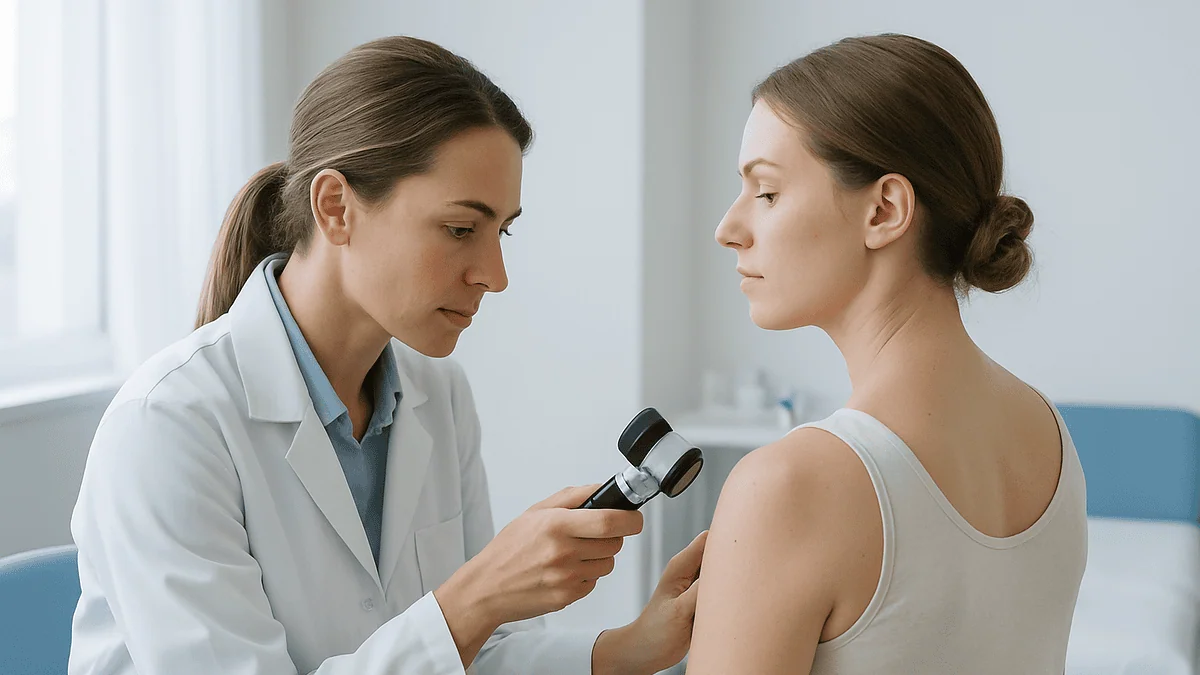
The most important diagnostic tool in a hives consultation is the question, “Does any single spot last more than a day?” If yes, the clinician starts thinking about conditions that merely resemble hives. If no, urticaria is confirmed and the task shifts to finding the pattern.
The history does most of the work. Dermatologists ask about onset, timing, duration of individual welts, locations, new medicines (including over-the-counter pain relievers, which commonly aggravate hives), recent infections, physical triggers such as pressure, cold, heat, sunlight or exercise, and yes, what else was going on in life. The 2022 international guideline explicitly includes stress and sleep in the recommended history.
A physical examination may include a simple bedside test for dermatographism, a condition in which firm stroking of the skin raises a wheal along the line within minutes. It is common in people with stress-triggered hives, harmless, and useful to know about because it explains why a bra strap or a scratch can produce a stripe of welts.
Tests are used sparingly, and this surprises people. The guideline discourages routine allergy panels when nothing in the story points to an allergen, because positive results in the absence of a matching history mislead more often than they help. For hives lasting beyond six weeks, a short set of blood tests to look for inflammation and thyroid antibodies is typical; autoimmune thyroid disease travels with chronic hives more often than chance would predict.
Photographs do have a role, and it is a specific one. Because welts vanish before most appointments, a dated phone photo of a flare, ideally with a coin or ruler for scale, lets the clinician see what you saw. What a photo cannot do is replace the history, and no online gallery can tell you whether your spot is a hive or something else. Movement over time is the diagnosis.
How dermatologists treat stress hives: the guideline-based steps
Treatment of hives follows the same ladder whatever lit the fuse, and for most stress-related flares the first rung is the last one needed.
Step one: a second-generation antihistamine. These block the H1 histamine receptor, the docking site histamine uses to cause itch and swelling, and unlike the older first-generation drugs they do not reliably cross into the brain, so they cause far less drowsiness. Randomized trials show they reduce wheals and itch in both acute and chronic urticaria. The guideline recommends them as regular, scheduled treatment during a flare rather than only when welts appear, because preventing histamine’s effects works better than chasing them. Which one, and for how long, is a decision for the prescribing clinician.
Step two: adjustment. If scheduled antihistamines are not enough after a couple of weeks, the guideline permits clinicians to intensify the antihistamine regimen within defined limits before moving on. This is a clinician’s judgment call, not a self-directed one.
Step three: targeted treatments. For chronic spontaneous urticaria that persists despite steps one and two, the options now include omalizumab, dupilumab and remibrutinib, all backed by placebo-controlled trials, each with its own monitoring requirements and each prescribed by a specialist.
What is used cautiously. A short course of oral corticosteroids can settle a severe acute flare, but the guideline advises against long-term use because of well-documented harms to bone, blood sugar and blood pressure. Antihistamine creams are not recommended; they rarely help and can sensitize the skin.
Supportive measures sit alongside, not instead of, this ladder: cool compresses, fragrance-free moisturizer, loose clothing, and avoiding known aggravators such as alcohol, heat and non-steroidal pain relievers if a clinician agrees they are implicated.
Never stop or alter a prescribed medicine because a video said hives are “just stress.” If a medicine is suspected, that conversation belongs with the person who prescribed it.
Can managing stress itself calm the skin?
If stress can open the gate, it is fair to ask whether closing it helps. The evidence here is thinner than for antihistamines, and it is worth being clear about why.
A handful of small trials and pilot studies have tested psychological approaches in people with chronic hives, including cognitive behavioral therapy (a structured talking therapy that targets unhelpful thought and behavior patterns), mindfulness-based stress reduction and relaxation training. Several reported improvements in itch, quality of life or anxiety scores. Most were small, few were blinded, and some lacked a proper control group, so they count as encouraging rather than conclusive.
Indirect evidence is stronger. Sleep deprivation is well documented to increase itch perception and inflammatory signaling, and poor sleep is one of the most consistent complaints in people with chronic hives. Regular aerobic exercise lowers resting sympathetic activity and improves sleep, though exercise itself can trigger a sweat-related flare in some people, so timing and intensity may need adjusting.
What this means in practice is modest and useful. Stress management is unlikely to replace treatment for anyone whose hives persist for months, and no guideline positions it that way. For someone whose welts reliably arrive with exams, deadlines or conflict, it is reasonable to treat the pattern on both ends: with whatever the clinician recommends for the skin, and with the sleep, movement and support that lower the baseline arousal the skin is reacting to.
One point deserves emphasis because it is often inverted online. Being told your hives are “caused by stress” can feel dismissive, as though the problem were imaginary. It is not. The mast cells are real, the histamine is real, and a stress trigger is a physiological event, not a character flaw. If a clinician raises stress, they are asking about a mechanism, not doubting you.
What else could a stress rash be? Conditions that mimic hives
Because stress amplifies almost every skin condition, a flare during a hard month is easily misread as stress hives when the underlying process is different. The behavior of individual spots sorts most of these out.
Flushing. Anxiety produces blotchy redness on the neck and upper chest that is flat, not raised, does not itch much, and fades within minutes once the heart rate drops. It is a blood-flow phenomenon, not a mast cell one.
Eczema (atopic dermatitis). Dry, scaly, intensely itchy patches that stay put for days or weeks, often in the elbow creases, behind the knees or on the hands. Stress is a recognized flare trigger, but the lesions are fixed and the skin surface is disturbed.
Contact dermatitis. A reaction confined to where a substance touched, appearing a day or two later, often with tiny blisters. A new laundry product during a stressful move is a classic source of confusion.
Psoriasis. Thick, well-defined plaques with silvery scale; stress aggravates it, and it never looks like a smooth wheal.
Drug eruptions. Widespread, symmetrical red spots that persist, usually one to two weeks into a new medicine. Any fixed rash after starting a drug warrants a call to the prescriber.
Urticarial vasculitis. Rare, but the one that must not be missed: welts that look like hives but last more than 24 hours, feel tender or burning rather than itchy, and leave bruise-like marks. It reflects inflammation of small vessels and needs specialist assessment.
Shingles. A one-sided band of painful blisters following a nerve, sometimes preceded by tingling. Stress and fatigue are recognized triggers for reactivation of the dormant virus.
The thread connecting these is simple: hives migrate and vanish; most mimics stay. If your “stress rash” has been in the same place since Tuesday, it deserves a different name and a look from a clinician.
Common myths about stress hives, checked against the evidence
The videos travel faster than the corrections. Here are the claims circulating most widely and what the evidence supports.
“If you have hives, you must be allergic to something.” Not so. In chronic spontaneous urticaria, a specific external allergen is identified in only a small minority of cases; most are driven by autoimmune or unexplained mast cell activation, and routine allergy testing without a suggestive history is discouraged by the international guideline.
“Stress hives mean your immune system is failing.” The opposite framing is closer: mast cells are doing what they evolved to do, just at the wrong moment. Hives do not indicate immune deficiency.
“Stress hives can turn into anaphylaxis.” Hives alone, without throat swelling, breathing difficulty or dizziness, are not anaphylaxis and do not progress to it. People with chronic hives do not have an elevated anaphylaxis risk. Those systemic features, when present, signal a different, urgent process.
“A detox or elimination diet clears stress hives.” No randomized trial supports elimination diets for spontaneous urticaria without a documented food trigger, and restrictive diets carry their own risks. If a food is suspected, the way to confirm it is a clinician-guided history, not a cleanse.
“Antihistamine cream is the gentlest option.” Topical antihistamines are not recommended for hives; they are poorly effective and can cause contact sensitization. Oral options, when a clinician advises them, are the evidence-based route.
“If it’s stress, you don’t need a doctor.” Short, self-limited flares with an obvious trigger often do settle on their own. Hives that persist beyond six weeks, recur without pattern or come with any symptom outside the skin need assessment, because the label “stress” should be reached by excluding other causes, not by assuming them.
“Scratching helps the histamine out.” Scratching releases more neuropeptides and extends the flare. Cool pressure works better than nails.
When to see a doctor about stress hives or any new rash
Most stress hives pass quietly and never need a clinic. The exceptions are clear, and they are worth memorizing, because they apply to any rash in an adult or child regardless of what you think caused it.
Call emergency services or go to an emergency department immediately if hives occur with:
- Swelling of the lips, tongue, throat or around the eyes that is spreading or affecting swallowing
- Difficulty breathing, wheezing, a tight chest or a hoarse voice
- Faintness, dizziness, a racing or thready pulse, or collapse
- Vomiting, cramping or widespread hives within minutes of a food, medicine or insect sting
These point to anaphylaxis, which can progress within minutes. Stress does not cause it; something else is happening.
Book a prompt appointment, within days, if:
- Welts have appeared on most days for more than six weeks
- Any single spot lasts longer than 24 hours, feels painful or bruise-like, or leaves a mark
- The rash is blistering, weeping, crusting or scaling
- You have fever, joint pain, swollen glands or feel generally unwell
- The rash began within two weeks of starting a new medicine
- Itch is wrecking your sleep or your ability to work
- You are pregnant, or the rash is in a child under one year
Bring dated photographs, a list of every medicine and supplement including over-the-counter pain relievers, and a short diary of flares, meals, sleep and stress. The prescribing clinician decides on testing and treatment; nothing in this article replaces that conversation, and no medicine should be started, stopped or adjusted on the strength of an online video.
One final note on the question people type most often, “when to worry about a rash in adults.” The honest rule is this: worry less about how a rash looks and more about how it behaves and what comes with it. Movement, duration, and any symptom beyond the skin are what clinicians weigh, and they are what you should weigh too.
Frequently asked questions
Can you show me pictures of different types of hives?
We do not publish identification photos because hives vary widely by skin tone and a still image cannot show the feature that defines them: welts that move and fade within 24 hours. On lighter skin, expect pink raised patches with pale centers; on darker skin, raised shiny areas with little visible redness. If you want a visual record for your clinician, take dated phone photos during a flare with a coin for scale.
What causes hives to appear at night?
Cortisol, the body’s natural anti-inflammatory hormone, hits its daily low around midnight, while skin warmth under bedding, histamine release and itch sensitivity all rise in the evening. Fewer distractions make itch feel louder, and bedtime rumination raises nerve activity in the skin. A cooler room, lighter bedding and taking any clinician-recommended antihistamine at the advised time can help.
Why do I get itchy when I'm stressed?
Stress fires nerves in the skin that release signaling molecules, including substance P, which can activate mast cells directly. Those cells release histamine, which widens blood vessels, lets fluid leak into the skin and stimulates itch nerves. Sustained stress may also blunt the skin’s response to cortisol, weakening a natural brake. Most people never get welts from this, so an underlying sensitivity usually plays a role.
When should I worry about a rash as an adult?
Seek emergency care if a rash comes with lip, tongue or throat swelling, breathing difficulty, faintness or vomiting. Book a prompt appointment if spots last more than 24 hours, blister, bruise or scale, if you have fever or joint pain, if the rash followed a new medicine, or if hives have recurred for more than six weeks. How a rash behaves matters more than how it looks.
Is a stress rash the same thing as stress hives?
Often, but not always. Many people say stress rash when they mean hives: raised, itchy welts that migrate and fade within a day. The same phrase is also used for anxiety flushing, which is flat and fades in minutes, and for stress-triggered flares of eczema or psoriasis, which stay in place for days. Only the first is true urticaria.
How long do stress hives last?
Each welt usually fades within a few hours and always within about 24 hours, leaving no mark. A stress-related episode typically settles within one to two days of the pressure easing, and nearly all acute hives resolve within six weeks. Welts appearing on most days beyond six weeks are classified as chronic spontaneous urticaria and warrant medical assessment.
Can stress cause hives on the face and around the eyes?
Yes. The face has a dense nerve and blood supply, and welts can appear on the cheeks, forehead and around the eyes during a flare. Deeper swelling of the eyelids or lips is called angioedema; when it accompanies hives without breathing or swallowing problems, it is usually the same histamine process. Spreading lip or tongue swelling, however, is an emergency.
Do antihistamines help stress hives?
Randomized trials show that non-sedating second-generation antihistamines reduce welts and itch in urticaria regardless of the trigger, and international guidelines recommend them as first-line treatment, taken on a regular schedule during a flare rather than only when welts appear. Which product, how long to use it and whether to adjust it are decisions for your prescribing clinician, not for self-management.
Are stress hives contagious or a sign of something serious?
They are not contagious; no infection is involved. Isolated hives do not damage the skin, do not signal immune failure and do not raise the risk of anaphylaxis. Hives lasting beyond six weeks are sometimes associated with autoimmune thyroid disease, which a clinician may check for with a simple blood test, and welts that persist more than a day or bruise need evaluation.
Can an anxiety rash on the neck and chest be prevented?
Partly. Identifying the pattern with a two-week diary of flares, sleep, meals and mood is the most useful first step. Cooling the skin, avoiding alcohol and heat, and protecting sleep lower the threshold for flares. Small studies suggest relaxation and cognitive behavioral approaches may help some people with chronic hives, though the evidence is preliminary. Ongoing or frequent hives should be reviewed by a clinician.
References
This article is for general information only and is not a substitute for professional medical advice. Please consult a qualified doctor about your individual situation.

More from the Blog
Can You Die from a Panic Attack, and Can They Happen in Your Sleep?
A panic attack is frightening but not directly life-threatening. The racing heart, chest tightness and breathlessness come from a surge of stress hormones that…

Supplements to Reduce Cortisol: Ashwagandha, Rhodiola, Magnesium: What Trials Actually Show
Supplements to reduce cortisol have modest, mixed evidence. Ashwagandha has the most support: several small, short randomized trials found lower perceived stress and serum…

Health Anxiety: What It Is and How It Is Treated
Health anxiety is a persistent, distressing preoccupation with having or developing a serious illness, even when medical checks find nothing wrong. Ordinary sensations get…

Correlation vs Causation: The Health-Headline Trap, Explained
Correlation means two things tend to occur together; causation means one actually produces the other. Health headlines often blur the two because observational studies…

High Cortisol Symptoms: What Chronically Raised Stress Hormones Do to the Body
High cortisol symptoms range from the common and non-specific, such as poor sleep, fatigue, irritability, cravings and weight gain around the middle, to the…

How Bipolar Is Diagnosed (and the ‘Am I Bipolar?’ Question)
Bipolar disorder is diagnosed by a mental health professional through a detailed clinical interview and history, not by a blood test or brain scan.…