

The Couch Stretch: A Two-Minute Fix for Chronic Sitters
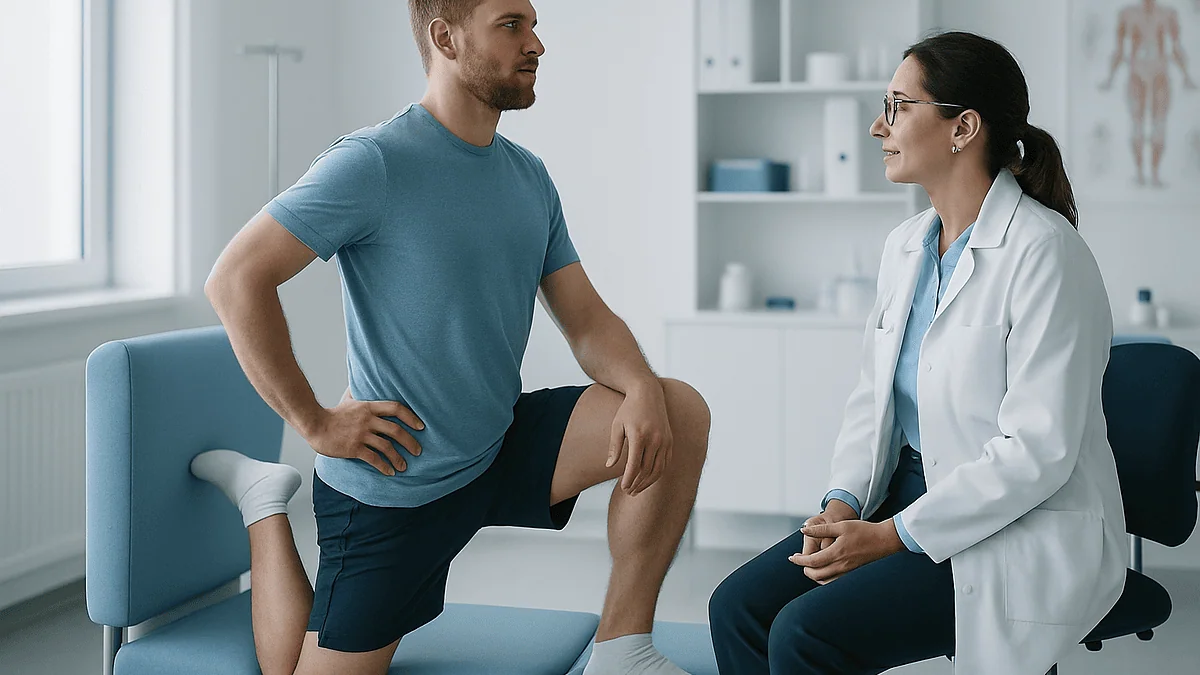
Key Takeaways
- The couch stretch's vertical-shin setup targets the rectus femoris, the only quad muscle crossing both hip and knee, which standard flat-shin lunge stretches largely miss.
- Mayo Clinic guidance supports holding static stretches 30 to 60 seconds per side, so one honest round of the couch stretch genuinely fits in about two minutes.
- Early flexibility gains come mostly from increased stretch tolerance, your nervous system permitting more range, rather than muscles physically lengthening, which is why gentle consistency beats intense occasional sessions.
- The single most important form cue is squeezing the back leg's glute and tucking the pelvis before rising upright; skip it and the stretch shifts into the lower back.
- Sharp pain, groin pinching, numbness, or tingling are stop signals, not intensity milestones, productive stretch tension should sit around a four or five out of ten with smooth breathing.
- Pairing the stretch with hip-extension strength work like glute bridges helps new range of motion stick, because the nervous system retains positions it can actively control.
The couch stretch is a kneeling hip flexor stretch performed with the back shin propped against a couch or wall, targeting muscles that stay shortened during long sitting. Held for 30 to 60 seconds per side, about two minutes total, it can improve hip range of motion and ease front-of-hip tightness, though it works best alongside regular movement breaks and strengthening, not as a standalone cure.
Somewhere around hour six of a workday, most desk workers do the same involuntary move: stand up, press both hands into the front of the hips, and lean back with a small groan. That groan has an anatomy. The muscles that fold your hips into a chair, chiefly the hip flexors along the front of the pelvis and thigh, have been held at half their length since breakfast.
Enter the couch stretch, a move with an unglamorous name and a devoted following among physical therapists, runners, and anyone who has ever felt like their hips were rusted shut. It asks for one piece of equipment you already own and roughly the time it takes to microwave leftovers.
But the internet has oversold it, too, as a back-pain cure, a posture miracle, a substitute for actually moving. Here’s what the stretch genuinely does, how to perform it without wrecking your lower back, and where the evidence draws the line.
What Is the Couch Stretch, Exactly?
Strip away the fitness-forum mythology and the couch stretch is a deep kneeling hip flexor stretch with one clever modification: the back leg’s shin runs vertically up a couch cushion, wall, or bench. That vertical shin is the whole point. Bending the back knee while extending the hip pulls tension through the rectus femoris, the only quadriceps muscle that crosses both the knee and the hip, along with the iliopsoas, the deep muscle group that flexes your hip every time you sit, climb stairs, or swing a leg forward to walk.
A standard lunge stretch reaches the iliopsoas reasonably well. It largely lets the rectus femoris off the hook, because the back knee stays relatively straight. Prop the shin up, and suddenly both major sitting muscles are on the line at once. That’s why the couch stretch feels dramatically more intense than a lunge, and why it demands more careful form.
The name comes from where people typically do it: back knee tucked into the base of the couch, foot resting up the front of the cushion, front foot planted on the floor. A wall works identically, and for many beginners a wall plus a folded towel under the knee is the smarter starting setup.
One framing worth keeping: this is a mobility drill, not a treatment. Stretching can improve how far a joint comfortably moves and how tight an area feels, according to guidance from Mayo Clinic. It does not repair injuries, and it does not undo ten seated hours by itself. Two minutes of stretching is a useful counterweight to sitting: a counterweight, not an eraser.
Why Does Sitting Make My Hips Feel So Tight?
Muscles are adaptable to a fault. Hold one in a shortened position long enough and often enough, and the nervous system and connective tissue both recalibrate: the muscle becomes stiffer to stretch and less comfortable at its full length. Sitting parks your hip flexors at roughly 90 degrees of flexion, close to their shortest working position, and many adults hold that pose for the majority of waking hours. Public health guidance from the NHS notes that many adults spend around nine hours a day sitting, and links prolonged sedentary time to a range of health risks independent of exercise habits.
The felt result is familiar. Standing up after a long meeting, your hips resist full extension for a few steps. Some people compensate by arching the lower back to get upright, which can leave the lumbar spine doing work the hips should handle. Others notice tightness most while running or walking briskly, when each stride demands the hip extension that sitting rarely asks for.
A useful clarification: “tight” hip flexors are not necessarily short in a permanent, structural sense. Research on stretching suggests much of the tightness we feel is neurological: the nervous system guarding a range it doesn’t trust because it rarely visits it. That’s actually good news. Sensation-based tightness responds to regular, gentle exposure to the stretched position far faster than tissue would physically remodel. It also explains why consistency beats intensity: five relaxed sessions a week outperform one heroic Saturday session that leaves you sore.
What Does the Evidence Actually Say About Stretching Tight Hip Flexors?
Honesty first: the couch stretch itself has not been the subject of large clinical trials. What we have is a solid body of research on static stretching in general, and it supports a modest, specific claim, regular static stretching reliably increases joint range of motion at the stretched area within a few weeks.
The mechanism is more interesting than most fitness content admits. Studies consistently find that short-term flexibility gains come largely from increased stretch toleranceyour nervous system allowing a deeper position before signaling discomfort, rather than muscles physically lengthening like taffy. Structural tissue changes may follow with months of consistent practice, but the early wins are mostly your brain deciding the position is safe.
What stretching has not been convincingly shown to do matters just as much:
- It does not reliably prevent injuries on its own; reviews of the research are mixed at best, as Harvard Health notes.
- It is not a proven standalone treatment for chronic low back pain, though general movement and exercise are strongly supported for back health.
- It cannot compensate for prolonged sitting the way regular activity breaks can.
So why bother? Because range of motion is genuinely useful. Hips that extend fully make walking, running, and standing posture easier and more comfortable, and Mayo Clinic includes flexibility work among the core components of a balanced fitness routine. The couch stretch earns its place as an efficient, well-targeted tool, as long as you hold it to realistic expectations. It will likely make your hips feel looser and move further. It will not, on its own, fix your back, your posture, or your desk job.
How to Do the Couch Stretch, Step by Step
Set up slowly. This stretch punishes people who rush into the deepest position first.
- Position the back leg. Kneel facing away from a couch or wall. Slide your left knee back until it rests where the floor meets the couch, with your shin and the top of your foot running vertically up the cushion. Put a folded towel or cushion under the kneecap: this is comfort, not weakness.
- Plant the front foot. Step your right foot forward so the knee stacks over the ankle, roughly hip-width from the back leg for balance. Hands can rest on the front thigh, a chair, or the floor.
- Set the pelvis before anything else. Squeeze the left glute firmly and tuck your tailbone slightly under, as if zipping the front of your pelvis toward your ribs. You should feel the stretch bloom across the front of the left hip and thigh immediately, often before your torso is even upright.
- Rise only as far as the stretch allows. Gradually bring your torso toward vertical, keeping the glute squeeze and pelvic tuck. Many people never need to reach fully upright. Depth is not the goal; tension in the right place is.
- Breathe and hold. Slow nasal breaths, 30 to 60 seconds. On each exhale, see if the position softens slightly. Then switch sides.
The intensity should register around a four or five out of ten, clear tension, no pain, no shaking, no breath-holding. If you can’t breathe smoothly, back off. A stretch you can relax into teaches your nervous system something; a stretch you brace against teaches it the opposite.
The Three Mistakes Almost Everyone Makes
Watch ten people attempt the couch stretch and you’ll see the same errors on repeat. Each one shifts the stretch away from the hip flexors and onto structures that shouldn’t bear it.
Mistake one: arching the lower back. This is the big one. When the hip won’t extend, the lumbar spine volunteers, and the torso reaches vertical through an exaggerated arch rather than genuine hip extension. It looks impressive and accomplishes little, and it can leave the lower back achy afterward. The fix is the glute squeeze and pelvic tuck described above, held for the entire stretch. If tucking the pelvis dramatically reduces how upright you can get, that’s not failure; that’s the stretch finally reaching its target.
Mistake two: chasing depth over position. Social media rewards the fully upright, chest-proud version. Physiology rewards whatever depth lets you keep the pelvis tucked and breathe calmly. A half-height couch stretch with honest positioning does more for hip mobility than a vertical one powered by spinal compensation.
Mistake three: grinding the kneecap into the floor. Direct pressure on an unpadded kneecap can turn a hip stretch into a knee complaint. A folded towel, cushion, or yoga mat solves it in five seconds. People with existing kneecap sensitivity should pad generously or choose a variation that loads the knee less.
A fourth, subtler error: holding your breath. Breath-holding usually signals that the intensity is too high, and it keeps the surrounding muscles braced: the opposite of what a stretch needs. If a full sentence would be hard to say out loud in the position, ease back until it isn’t.
Too Intense? Start With These Gentler Variations
The full couch stretch sits near the top of the hip-flexor-stretch intensity ladder, and starting at the top is how people decide stretching “isn’t for them.” There’s a rung for everyone. Climb one level roughly every one to two weeks, moving up only when the current version feels like a four out of ten or easier with good form.
| Level | Variation | How it differs | Best for |
|---|---|---|---|
| 1 | Standing hip flexor stretch | Staggered stance, tuck pelvis, gentle glute squeeze, no kneeling | Knee pain, limited floor access, true beginners |
| 2 | Half-kneeling lunge stretch | Back shin flat on the floor; targets iliopsoas, spares rectus femoris | Most desk workers starting out |
| 3 | Lunge with heel-to-glute grab | Hold the back foot by hand instead of propping it; you control the intensity | Bridging toward the full version |
| 4 | Couch stretch, hands on floor or chair | Shin vertical, torso leaning well forward for support | First weeks of the full setup |
| 5 | Full couch stretch, torso upright | Vertical shin, tucked pelvis, torso tall | Comfortable, experienced stretchers |
Two setup tweaks also dial intensity down within any level: move the back knee a few inches away from the couch so the shin angles rather than standing vertical, or keep the torso lower and lean on a chair seat. Small adjustments change the stretch more than most people expect: an inch of knee position can be the difference between productive tension and gritted teeth.
How Long Should I Hold the Couch Stretch, and How Often?
The two-minute framing in this article’s title isn’t marketing shorthand; it maps directly onto mainstream guidance. Mayo Clinic recommends holding a static stretch for about 30 seconds, up to 60 for genuinely problem areas, and repeating on each side. One 60-second hold per hip, or two 30-second holds, lands at roughly two minutes total.
Frequency matters more than heroics. Flexibility research consistently shows that gains come from regular exposure, most days of the week, rather than occasional long sessions. Stretching two or three times a week maintains what you have; near-daily practice is what moves the needle. The encouraging flip side: gains arrive faster than most people expect. Many notice the position feeling meaningfully easier within two to three weeks of consistent practice, largely because stretch tolerance improves quickly.
Timing is flexible, with one caveat. Stretching muscles that are completely cold is less comfortable and slightly less productive, so a couple of minutes of easy movement first, a short walk, a flight of stairs, some marching in place, makes the stretch feel better and go deeper. After a workout is a natural slot. Right before explosive activity is the one time to skip long static holds, since prolonged static stretching immediately before sprinting or jumping can temporarily reduce muscle power output; save the couch stretch for afterward on those days.
And expect impermanence. Flexibility is use-it-or-lose-it. Stop stretching for a few weeks while the sitting continues, and the tightness drifts back. That’s not the stretch failing: it’s the ratio of ten seated hours to zero stretching reasserting itself.
Will the Couch Stretch Fix My Lower Back Pain?
This is the claim that launched a thousand videos, so it deserves a straight answer: the evidence doesn’t support the couch stretch as a back-pain fix, and anyone promising otherwise is ahead of the science.
The popular theory goes like this: tight hip flexors tilt the pelvis forward, the forward tilt exaggerates the lumbar curve, and the exaggerated curve causes back pain, so stretching the hip flexors should relieve it. It’s a tidy story. The research is messier. Studies comparing people with and without back pain find inconsistent differences in pelvic tilt and hip flexor length, and posture in general correlates with pain far more weakly than intuition suggests. Plenty of people with pronounced anterior pelvic tilt have no pain at all; plenty with textbook alignment hurt daily.
What is well supported: staying generally active, breaking up long sitting, and building overall strength and movement capacity all help most people with garden-variety back discomfort. The couch stretch can be a reasonable piece of that picture, hips that extend freely mean the lower back does less compensating during walking and standing, but it’s a supporting actor, not the lead.
There’s also a practical safety point. Done badly, with the lower back arched hard to force an upright torso, the couch stretch can provoke back discomfort rather than relieve it. If your back feels worse after stretching, that’s a form problem or a signal to use a gentler variation, not a reason to push harder.
Persistent back pain, especially pain lasting more than a few weeks, or pain with numbness, tingling, or leg weakness, belongs in front of a clinician, not a couch cushion. More on that below.
Couch Stretch vs. Other Hip Flexor Stretches: Which Is Best?
“Best” is the wrong frame; “best-matched” is closer. Hip flexor stretches differ mainly in two ways, how much they involve the rectus femoris, and how much control they demand, and the right choice depends on where you are.
The half-kneeling lunge stretch is the workhorse. Back shin flat on the floor, pelvis tucked, gentle forward shift. It reaches the iliopsoas well, is easy to control, and is hard to do dangerously wrong. For most desk workers, this is the correct starting point, and some people never need anything more.
The couch stretch adds the bent back knee, which recruits the rectus femoris: the two-joint quad muscle a flat-shin lunge barely touches. That makes it the more complete stretch for chronic sitters, since sitting shortens both muscle groups. The cost is intensity and a greater temptation to cheat through the lower back.
The standing quad stretchgrabbing your foot behind you, hits the rectus femoris but usually with the hip in a neutral or slightly flexed position, which spares the iliopsoas. It’s convenient and knee-friendly for some, less complete for the sitting-tightness pattern.
The pigeon pose family targets the back of the hip and the rotators, different real estate entirely. Useful, but not a substitute.
A sensible progression for a chronic sitter: two to three weeks of half-kneeling lunges to build tolerance, then graduate to the couch stretch with hands supported, then work toward upright. And if the half-kneeling version keeps your hips feeling good with less setup, staying there is a perfectly evidence-consistent choice. Intensity is a tool, not a virtue.
Should the Couch Stretch Hurt?
No, and the distinction between stretch discomfort and pain is worth learning precisely, because this stretch blurs the line for beginners.
Productive stretching feels like pulling tension in the belly of the muscle: across the front of the hip, down the front of the thigh. It’s uncomfortable the way a deep yawn is uncomfortable. It eases slightly as you breathe and hold, and it disappears within moments of coming out of the position. On a zero-to-ten scale, aim for four or five.
These sensations are stop signals, not badges of effort:
- Sharp or stabbing pain anywhere, at any point in the stretch.
- Pinching in the front of the hip creasea distinct, jamming sensation different from muscle pull, which can indicate the hip joint itself is unhappy in that position.
- Pain in the kneecap of the back leg beyond mild pressure that padding fixes.
- Numbness, tingling, or burning down the thigh, nerves, not muscles, and never something to stretch through.
- Lower back pain during or after, which usually means the pelvis lost its tuck.
Trembling legs and held breath sit in a gray zone: not dangerous, but a sign the intensity exceeds what your nervous system can relax into, which undermines the point. Drop down a variation level.
Afterward, mild looseness or even brief mild soreness the next day can happen when starting out, similar to soreness after new exercise. Sharp next-day pain, a limp, or hip pain that lingers for days means the stretch was too aggressive, or that something other than simple tightness is going on, per guidance on hip flexor injuries from Cleveland Clinic.
Who Should Skip or Modify This Stretch?
The couch stretch places the knee in deep flexion under body weight and the hip near end-range extension: a combination that isn’t right for everyone.
Modify or choose an alternative if you have:
- Knee problems. Deep knee bending under load can aggravate kneecap pain, arthritis, or recent knee injuries. The standing hip flexor stretch delivers a similar hip benefit with the knee barely bent.
- A recent hip replacement or hip surgery. Hip precautions after surgery vary by procedure and surgeon; end-range hip positions should be cleared by your care team before you attempt them, full stop.
- A suspected hip flexor strain. Aggressively stretching a freshly strained muscle tends to irritate it. Recent sharp front-of-hip pain after activity deserves rest and, if it persists, assessment, not deeper stretching.
- Balance concerns or significant osteoporosis. Getting into and out of the position is the risky part. Set up next to a sturdy chair for support, or use the standing variation near a wall.
- Pregnancy, especially later stages. Ligament laxity increases and balance shifts; gentler, supported variations are wiser, and your prenatal care provider can advise on specifics.
- Hypermobility. If you’re naturally very flexible, aggressive end-range stretching often isn’t what your hips need; strength work through your existing range usually serves you better.
None of this makes the stretch dangerous for the general population, kneeling with a padded knee and controlled intensity is a low-risk activity. It simply means the two-minute fix, like every fix, has a right audience. When in doubt, a physical therapist can match the variation to your body in a single visit.
When to See a Doctor About Hip Tightness
Ordinary sitting-related tightness follows a predictable pattern: it’s symmetrical or nearly so, it’s worst after long stillness, it eases with movement, and it responds to a few weeks of regular stretching. When hip symptoms break that pattern, stop troubleshooting with a couch cushion and get evaluated.
Make an appointment if you notice:
- Hip pain, as opposed to tightness, that persists beyond one to two weeks despite rest and gentle activity.
- Tightness or pain that is markedly one-sided and progressive, or that began after a specific injury, fall, or awkward movement.
- A deep pinching or catching sensation in the groin during hip movement, which can involve the joint rather than the muscles.
- Pain that wakes you at night or hurts at rest, not just with movement.
- Stiffness accompanied by numbness, tingling, or weakness in the leg, nerve-related symptoms that stretching won’t address and may aggravate.
- Hip symptoms alongside unexplained fever, unintentional weight loss, or a warm, swollen joint.
Seek urgent care for sudden inability to bear weight, visible deformity after a fall, or severe pain following trauma. General overviews of hip injuries and disorders from MedlinePlus outline how wide the range of possible causes runs, from simple muscle strain to arthritis, bursitis, labral problems, and referred pain from the spine. That range is exactly why persistent symptoms deserve a professional eye rather than a deeper stretch.
One reassurance worth stating plainly: the overwhelming majority of desk-related hip tightness is benign and responds to movement. The doctor’s visit is for the exceptions, and knowing what the exceptions look like is what lets you stretch the ordinary cases with confidence.
How to Fit the Couch Stretch Into a Desk-Bound Day
The stretch that gets done at a mediocre time beats the stretch that gets planned for a perfect one. A few placements that survive contact with real schedules:
Anchor it to an existing habit. Habit research consistently favors stacking a new behavior onto an established cue. The end of your last meeting, the moment you change out of work clothes, the two minutes while dinner reheats: the couch is usually within reach at all three. Evening works especially well because your muscles are warm from the day and the couch is literally the destination.
Pair it with movement breaks, not instead of them. The NHS and other public health bodies emphasize breaking up sitting itself, standing, walking, moving every 30 to 60 minutes, because sedentary time carries risks that no single stretch offsets. Think of the hierarchy this way: moving often is the meal; the couch stretch is a well-chosen side dish. A practical desk-day rhythm looks like a one-to-two-minute movement break most hours, plus one deliberate stretching session daily.
Warm up for ninety seconds first. A brisk lap of the hallway or a flight of stairs makes the stretch noticeably more comfortable and productive than dropping into it cold from a chair.
Track something small. Not apps or streaks necessarily, just a marker. How upright can you comfortably get with a genuinely tucked pelvis? Where do your fingertips reach on the front thigh? Watching that marker shift over three weeks is quietly motivating in a way vague “looseness” isn’t.
Two minutes a day, most days, attached to something you already do. That’s the entire logistics plan, and its modesty is precisely why it works.
Stretching Alone Isn't Enough: Why Your Glutes Matter
Here’s the opinionated part, and the evidence backs the opinion: if you only have energy for one intervention, strengthening the back of your hips arguably matters more than stretching the front, and doing both beats either alone.
The logic runs on a simple pairing. Sitting doesn’t just shorten the hip flexors; it also leaves the gluteal muscles, your hip extensors, underworked for hours at a stretch. When you finally stand and walk, hips that lack both extension range and extension strength recruit the lower back and hamstrings to fill the gap. Stretching addresses the range half of that equation. Strength work addresses the other half, and it’s the half that makes the new range stick, because your nervous system grants lasting access to positions it can control.
The couch stretch itself hints at this. That glute squeeze you hold throughout isn’t just a back-protector: it’s a small dose of active hip-extension work performed at end range, which is part of why the stretch feels so effective.
To build on it, add simple hip-extension strengthening two or three days a week: glute bridges, hip thrusts off the couch (it earns its keep twice), step-ups, or sit-to-stand repetitions from a chair. None require equipment. All fit the broader guidance from the CDC that adults benefit from muscle-strengthening activity at least two days a week alongside 150 minutes of moderate aerobic activity.
The honest summary for chronic sitters: stretch the front, strengthen the back, and interrupt the sitting. The couch stretch is the most efficient tool for the first job: a genuinely useful two minutes, as long as you remember it’s one leg of a three-legged stool.
Frequently asked questions
What muscles does the couch stretch work?
It primarily stretches the hip flexors: the iliopsoas deep in the front of the pelvis and the rectus femoris running down the front of the thigh. Because the back knee is bent with the shin vertical, the rectus femoris, which crosses both the hip and knee, is stretched far more than in a standard lunge. Secondary tension often reaches other front-of-thigh muscles and the front of the hip capsule area.
How long should you hold the couch stretch?
Thirty to 60 seconds per side is the evidence-aligned range, consistent with Mayo Clinic’s general stretching guidance of about 30 seconds, up to 60 for problem areas. Longer marathon holds add little for most people and increase the temptation to sag into poor positions. One quality hold per side, breathing calmly with the pelvis tucked, done most days of the week, outperforms occasional five-minute grinding sessions.
Can I do the couch stretch every day?
Yes, daily or near-daily practice is actually how flexibility improves fastest, provided intensity stays moderate. Keep the sensation around a four or five out of ten and stop if you develop sharp pain, joint pinching, or next-day soreness that lingers. If daily stretching leaves the hip feeling irritated rather than looser, drop to a gentler variation like the half-kneeling lunge or reduce frequency until it settles.
Why does the couch stretch hurt my knee?
Usually because the kneecap is pressing directly into a hard floor, which padding fixes, kneel on a folded towel, cushion, or doubled yoga mat. If pain persists with padding, the deep knee bend itself may be aggravating an existing kneecap or joint issue. In that case switch to a standing hip flexor stretch, which reaches similar hip territory with the knee only slightly bent, and consider getting persistent knee pain evaluated.
Is the couch stretch good for lower back pain?
The evidence doesn’t support it as a back-pain treatment. Research links back pain to posture and hip flexor length far more weakly than popular videos suggest, and no trials show this stretch relieves back pain on its own. It may still help indirectly by improving hip extension so the lower back compensates less during walking. Persistent back pain, or pain with leg numbness or weakness, warrants a clinician rather than more stretching.
What can I use instead of a couch?
A wall works identically and many coaches prefer it, since the firm surface keeps the shin truly vertical. A padded bench, ottoman, sturdy chair, or a bed edge also work. Whatever you use, pad the kneecap and make sure the surface won’t slide. To reduce intensity on any surface, move the back knee a few inches away from it so the shin angles instead of standing straight up.
How long does it take to loosen tight hip flexors?
Most people notice the stretch feeling meaningfully easier within two to three weeks of near-daily practice, largely because stretch tolerance, the nervous system’s comfort at end range, improves quickly. More durable changes build over two to three months of consistency. The gains reverse if you stop while the sitting continues, so treat it as ongoing maintenance rather than a project with a finish line.
Should I do the couch stretch before or after a workout?
After is generally better. Muscles stretch more comfortably when warm, and holding long static stretches immediately before explosive activity like sprinting or jumping can temporarily reduce muscle power output. Before easy activity, a brief, gentle version is fine. On non-training days, any time works, just precede it with a minute or two of light movement, like a brisk hallway walk, rather than stretching completely cold.
Can tight hip flexors cause anterior pelvic tilt?
The relationship is weaker than commonly claimed. Some degree of anterior pelvic tilt is normal and extremely common in pain-free people, and studies don’t consistently find that hip flexor tightness predicts tilt or that tilt predicts pain. Stretching may modestly influence resting posture in some people, but chasing a “neutral pelvis” as a health goal isn’t well supported. Comfort, range of motion, and overall activity matter more than tilt angle.
Is the couch stretch safe after a hip replacement?
Not without clearance from your surgical team. Hip replacements come with movement precautions that vary by surgical approach and how long ago the procedure was, and the couch stretch pushes the hip toward end-range extension under load. Some people are eventually cleared for it; others are steered to gentler alternatives permanently. Ask your surgeon or physical therapist specifically about end-range hip extension stretches before attempting this one.
References
This article is for general information only and is not a substitute for professional medical advice. Please consult a qualified doctor about your individual situation.

More from the Blog

Strength Training for Women: Why Lifting Heavy Does Not Make You Bulky, and What It Does for Bone
Strength training for women does not cause bulky muscle because women produce far less testosterone than men, and visible size requires years of deliberate…

Morning Stretches: A 10-Minute Routine Built From Physiology, Not Instagram
Gentle morning stretching is safe for most people and helps ease overnight stiffness, which comes from cooled muscles, thickened joint fluid, and fluid absorbed…

Muscle Memory Is Real: The Cell Biology Behind Getting Strong Again Faster
Muscle memory is real, and it works on two levels. In the brain, practiced movements are stored as procedural memory, so skills like a…
Kettlebell Swings: Form, Benefits and the Back-Pain Mistake
A kettlebell swing is a hip-hinge exercise that trains the glutes, hamstrings and back muscles while raising heart rate, and small trials show it…

How Long Does It Take to Walk a Mile? Pace, Age and What It Says About Fitness
Most adults walk a mile in about 15 to 22 minutes, which works out to roughly 3 miles per hour. A brisk pace covers…

The Post-Workout Meal: The Anabolic Window, Revisited
A post workout meal still matters, but the strict 30-minute anabolic window does not hold up in randomized trials. Evidence suggests eating 20–40 grams…