

The First 24 Hours After a Bronchoscopy: Sore Throat, Swallowing Checks and Driving Rules
Key Takeaways
- Throat numbness from the anesthetic spray lasts roughly one to two hours, and nothing passes your lips until a nurse confirms your gag reflex and swallow have returned.
- Driving is off limits for 24 hours after sedation because reaction time and judgment lag behind the feeling of alertness, even when you feel completely normal.
- Pink or rust-streaked mucus after a biopsy is expected for a day or two; more than about a tablespoon of fresh blood, or bleeding that increases, is a reason to seek urgent care.
- A brief low temperature on the first evening is a recognized reaction to lung lavage, but fever that climbs or persists beyond 24 hours should be reported the same day.
- Sudden one-sided chest pain with new breathlessness can signal an air leak around the lung and needs emergency assessment, even if it starts hours after discharge.
- Visual findings may be shared the same day, but biopsy and culture results typically take days or longer, so a wait says nothing about what the answer will be.
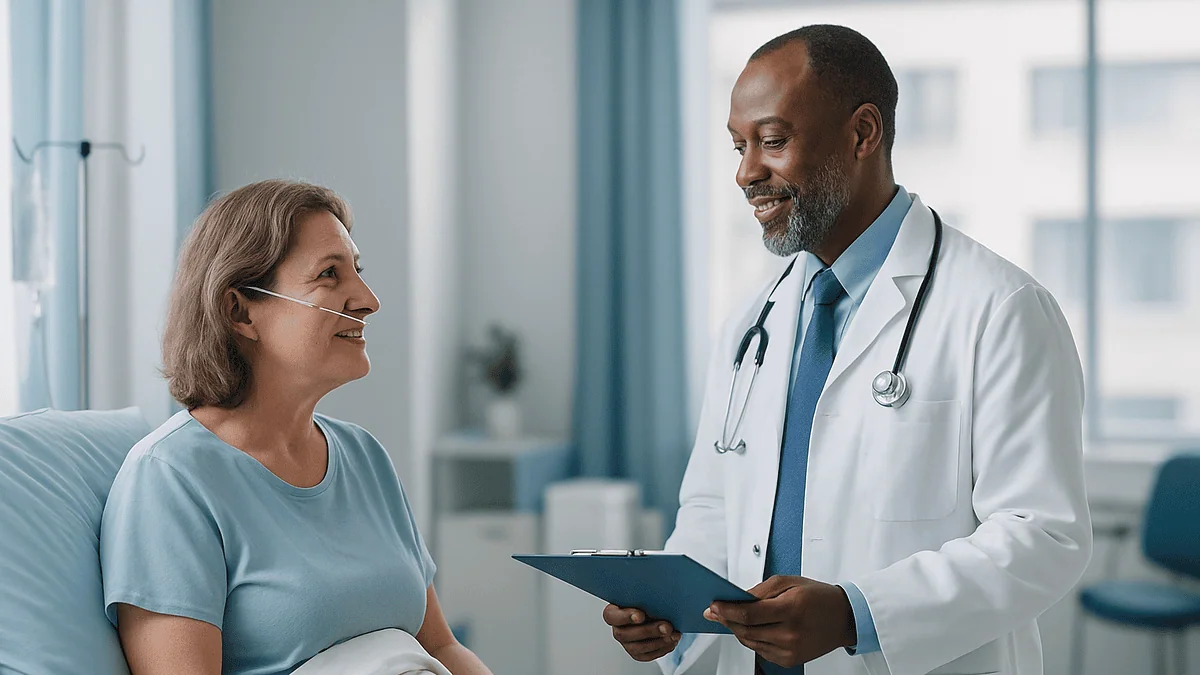
After a bronchoscopy, most people spend one to several hours in a recovery area while sedation wears off, then go home the same day with a ride arranged. A sore throat, hoarseness, mild cough and small streaks of blood in mucus are common for a day or two. Eating and drinking wait until the throat numbness fades and a swallow check is passed, and driving is usually off limits for 24 hours.
The last thing many people remember is a nurse counting backward with them, and the next thing is a cup of ice chips they are not yet allowed to drink. That gap, somewhere between 30 and 60 minutes for a routine bronchoscopy, is often the easiest part of the day. The hours that follow are where the real questions pile up: why does my throat feel like sandpaper, why is someone asking me to sip water while they watch, and why can’t I just drive myself home when I feel fine?
Knowing what to expect after bronchoscopy takes the edge off those hours. Almost everything that feels alarming in the first day has a plain mechanical explanation, from the local anesthetic still coating the back of the throat to the tiny biopsy sites that bleed a little before they seal.
This explainer walks through the first 24 hours in order, separates ordinary recovery from the handful of signs that need a phone call, and leaves every medical decision where it belongs: with the team that performed your procedure.
What to expect after bronchoscopy: the first day in plain terms
A bronchoscopy is a procedure in which a doctor passes a thin, flexible tube with a camera, called a bronchoscope, through the nose or mouth and down into the airways of the lungs to look, take samples or clear a blockage. Mayo Clinic describes the procedure itself as typically lasting 30 to 60 minutes, with recovery adding a few more hours before discharge.
Those recovery hours have a predictable shape. First comes monitoring: a clip on the finger tracks oxygen levels, a cuff checks blood pressure, and staff watch breathing while the sedative fades. Then comes the throat. The local anesthetic sprayed onto the back of the mouth and voice box keeps the gag reflex quiet during the procedure, and it keeps the throat numb for roughly one to two hours afterward. Nothing to eat or drink is allowed until that numbness lifts and a swallow has been checked, because a numb throat can let liquid slip toward the lungs instead of the stomach.
Once home, the picture is usually quiet. A scratchy or sore throat, a hoarse voice, a tickly cough and a mild sense of chest tightness are the most common complaints, and most settle within a day or two according to Mayo Clinic. Some people run a low temperature on the first evening, especially when the lungs were rinsed with fluid for sampling. Blood-streaked mucus is expected if a biopsy was taken.
What is not expected matters just as much: heavy bleeding, sharp new chest pain, shortness of breath that worsens rather than eases, or a fever that climbs. Those are covered in detail later, but the headline is simple. Recovery after a diagnostic bronchoscopy is usually a matter of hours, not weeks, with a short list of things to watch and one firm rule about driving.
What is a lung bronchoscopy and what actually happens during it?
Understanding the first 24 hours is easier when you know what the airways have just been through. The bronchoscope used in most adult procedures is thinner than a pencil and carries a light, a camera and a narrow working channel. The doctor steers it past the vocal cords, down the windpipe (trachea) and into the branching tubes called bronchi, watching the images on a screen.
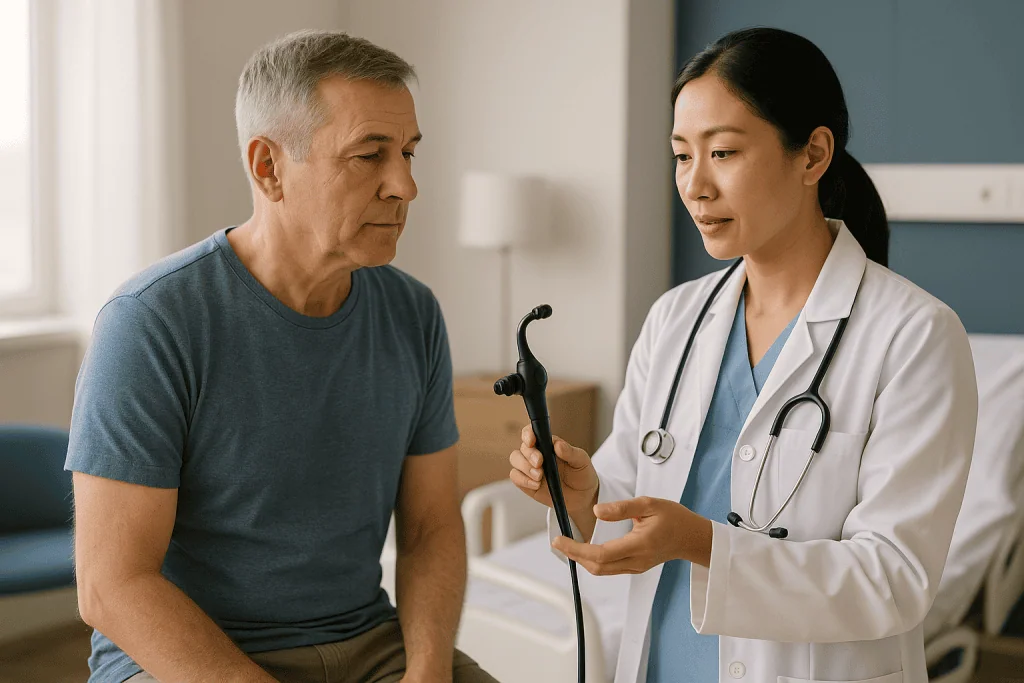
Preparation accounts for much of the throat discomfort later. According to MedlinePlus, a numbing medicine is applied to the nose or mouth and sprayed into the throat; this is a local anesthetic, a medicine that blocks nerve signals in one area so you do not gag or cough as the scope passes. Most people also receive sedation through a vein, which leaves them drowsy and relaxed rather than fully unconscious. Some procedures, including rigid bronchoscopy or longer interventional cases, are done under general anesthesia, where you are fully asleep with breathing supported.
What happens inside depends on the reason for the test. The doctor may simply inspect the lining for inflammation, narrowing or growths. Samples can be collected several ways: a small brush rubbed against the lining, a saline rinse that is suctioned back for analysis (bronchoalveolar lavage, often shortened to BAL), or tiny forceps that take a pinch of tissue. Endobronchial ultrasound, called EBUS, adds a sound-wave probe to the scope tip so lymph nodes just outside the airway wall can be sampled with a fine needle.
Each of these leaves a signature in recovery. Lavage explains the first-evening fever some people notice. Brushings and biopsies explain blood-flecked mucus. The scope’s passage past the vocal cords explains the hoarseness. Nothing about the first day is random; it is the airway responding to a brief, deliberate intrusion.
Who usually has a bronchoscopy, and who is asked to wait
Doctors reach for bronchoscopy when imaging raises a question that only a direct look or a tissue sample can answer. Johns Hopkins Medicine lists the common reasons: an abnormal shadow or spot on a chest X-ray or CT scan, a cough that will not settle, coughing up blood, a suspected infection that has not been identified by sputum tests, or a need to check lymph nodes in the center of the chest. The procedure is also used therapeutically, to remove an inhaled object, suction thick secretions, open a narrowed airway or place a stent.
Not everyone is scheduled straight away. Clinicians generally pause when the risks of sedation or sampling temporarily outweigh the benefit of an answer. Someone in the middle of a severe asthma or COPD flare, whose airways are already irritable, is often treated first and scoped later. Very low oxygen levels, an unstable heart rhythm, a recent heart attack or a severe bleeding tendency are all reasons to wait or to adjust the plan. People taking blood-thinning medicines are frequently asked to discuss timing with their prescribing clinician before any biopsy, because tissue sampling raises bleeding risk; the decision about whether and when to pause such a medicine belongs entirely to that team, never to a general article.
Pregnancy is another situation where the question becomes “is this needed now,” with the obstetric and lung teams deciding together. In frail or elderly people, the plan may shift toward lighter sedation or a shorter procedure rather than cancellation.
The point for recovery is this: the first 24 hours look different depending on which group you fall into. Someone who had a quick inspection with light sedation may feel close to normal by dinner. Someone who had multiple biopsies under general anesthesia should expect a longer period of grogginess and more throat irritation. Your discharge instructions are written for your version of the procedure, and they override anything generic.
Sore throat after bronchoscopy: why it happens and how long it lasts
Picture the path the scope took. It slid along the floor of the nose or across the tongue, past the soft palate, between the vocal cords and down the windpipe. Each of those surfaces is lined with delicate tissue that is used to warm air, not to plastic. Add the anesthetic spray, which stings slightly as it goes on, and some suction of secretions, and you have the recipe for a raw, scratchy throat.
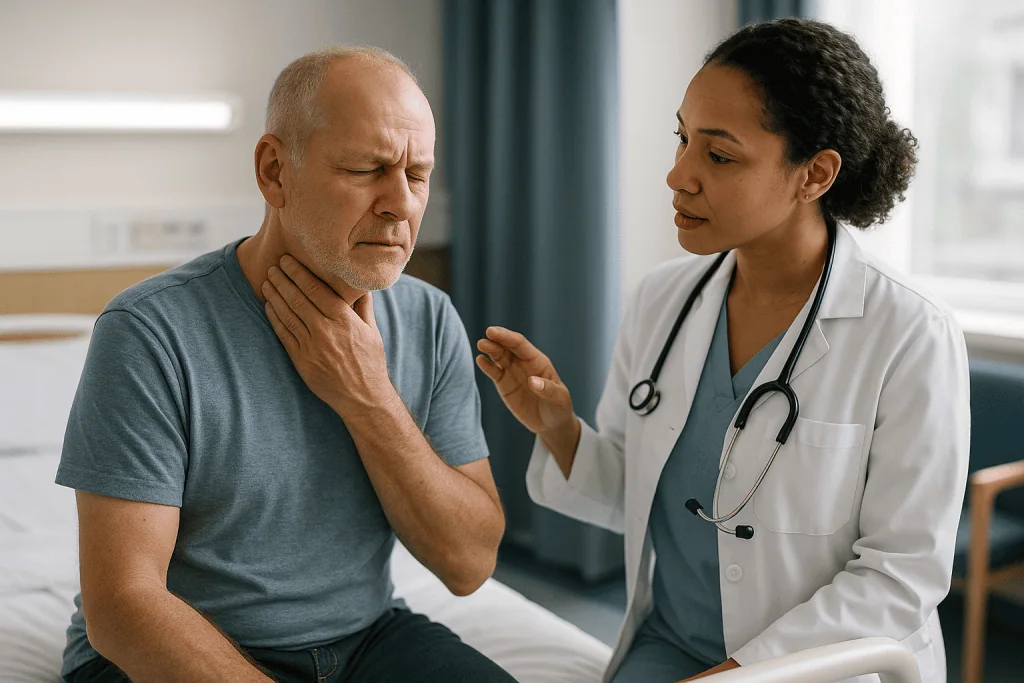
Mayo Clinic notes that a sore throat, hoarseness and a cough are common after the procedure and usually ease within a day or two. The soreness tends to peak in the first evening, once the numbing medicine has fully worn off and you can feel the tissue again. Swallowing may feel slightly uncomfortable, speaking may sound rough, and some people describe a lump-in-the-throat sensation that is really mild swelling around the voice box.
Simple measures help most people. Cool fluids once you are cleared to drink, soft foods for the first meal, resting the voice rather than whispering (whispering actually strains the vocal cords more than quiet speech), and avoiding smoke or very dry air. Throat lozenges or warm drinks are reasonable comfort measures; if you want to take anything for pain, ask the discharging team which options are compatible with the sedation and any other medicines you take, rather than deciding alone.
Hoarseness deserves its own note. The vocal cords were held slightly open while the scope passed between them, and they can be mildly swollen for a day. A croaky voice the next morning is ordinary. A voice that is still noticeably hoarse after a week or two, or that worsens, is worth mentioning at follow-up.
What a sore throat is not: a sign the procedure went wrong. It is the single most predictable feature of the first 24 hours, and its absence is the surprise, not its presence.
The swallowing check: why you cannot eat or drink straight away
The most frequently misunderstood rule of the recovery room is the one about the water you cannot have yet. It is not about nausea, and it is not about the stomach. It is about the gag reflex, the protective reflex that closes off the airway and triggers a cough when something touches the back of the throat or heads the wrong way.
The local anesthetic that made the procedure tolerable also switches that reflex off. While the throat is numb, a sip of water can slide toward the windpipe without you feeling it or coughing in response. Fluid or food entering the lungs is called aspiration, and it can cause a chemical irritation or infection. Mayo Clinic advises that you should not eat or drink until the numbness wears off and the gag reflex returns, which typically takes one to two hours; MedlinePlus gives a similar window of about two hours.
Nurses test this in a low-tech way. They may touch the back of the throat with a swab to see whether you gag, or ask you to take a small sip of water and watch for coughing, a wet-sounding voice or a delayed swallow. If you clear that check, you progress to larger sips, then to a light snack. If you do not, you wait and try again; there is no penalty for a slow return of sensation.
Once home, the first proper meal is best kept soft and lukewarm. Very hot drinks can scald tissue you cannot yet fully feel, and crunchy or sharp foods can scratch an already irritated throat. Most people are eating normally by the next morning.
If, in the days afterward, you notice coughing every time you swallow, a persistently wet or gurgly voice, or food feeling stuck, that is a conversation for your doctor rather than something to push through.
Is it normal to cough after a bronchoscopy? Blood-streaked mucus explained
Yes, and it would be slightly odd if you did not. The airway lining is studded with sensors that trigger coughing whenever something unfamiliar touches it, and a bronchoscope is about as unfamiliar as it gets. Even after the scope is out, the mild inflammation it leaves behind keeps those sensors irritable for a day or two. Mayo Clinic lists cough among the expected after-effects, alongside sore throat and hoarseness.
The character of the cough matters more than its presence. A dry, tickly cough that comes in bursts, especially when you talk or lie flat, is the typical pattern. It usually fades within 24 to 48 hours. A cough that produces small amounts of mucus is also ordinary, particularly if saline was washed into the lungs during lavage; some of that fluid is suctioned out during the procedure, and the rest is cleared by coughing over the next day.
Blood is the detail that frightens people. If brushings or biopsies were taken, the sampled spots bleed a little, and that blood mixes with mucus to produce pink, rust-colored or streaked phlegm. Johns Hopkins Medicine and Cleveland Clinic both describe small amounts of blood in the sputum as a normal finding after biopsy, usually clearing within a day or two. The amount is the key: streaks and flecks are expected; a tablespoon or more of fresh red blood, or bleeding that is increasing rather than tapering, is not.
A few practical points help. Coughing with a hand pressed over the lower chest is more comfortable if the chest wall feels bruised. Staying upright for the first evening reduces the lying-flat tickle. Smoking in the first days after a bronchoscopy irritates tissue that is trying to settle, so this is a natural moment to pause if you smoke, and to ask about support if you want to stop.
Can you drive after bronchoscopy? Sedation and the 24-hour rule
No, not on the day of the procedure, and most discharge instructions extend that to a full 24 hours. Johns Hopkins Medicine states plainly that you will not be able to drive for 24 hours after a bronchoscopy, and Mayo Clinic advises arranging for someone to take you home. The rule applies even if you feel clear-headed, and the reason is worth understanding, because it is the rule people are most tempted to bend.
The sedatives used for bronchoscopy are chosen because they wear off quickly, but “wearing off” is not a single moment. The drowsy phase passes within an hour or two. What lingers is subtler: slowed reaction time, impaired judgment of distance and speed, and patchy short-term memory. People in this phase often report feeling fine while performing noticeably worse on attention tasks. Behind the wheel, a half-second delay in braking is the difference between a near miss and a collision.
The same logic extends beyond driving. Most centers advise against operating machinery, cycling, signing legal documents, making major decisions or drinking alcohol for the rest of the day. Alcohol in particular compounds the sedative effect. Staff will usually ask who is collecting you before the procedure begins, and some will not start sedation without a named adult escort. A taxi or rideshare on your own is often not accepted, because the concern is not just the journey but having someone who can notice if you become unwell in the hours after you get home.
If the procedure was done with local anesthetic only and no sedation, the rules may differ, and your team will say so explicitly. Unless they do, assume 24 hours. The inconvenience is one afternoon; the alternative is a risk that has no upside.
Hour by hour: what a typical first day after bronchoscopy looks like
Timelines vary with the type of sedation, the number of samples taken and your general health, but the shape of a routine outpatient day is remarkably consistent across the major patient guides. The table below pulls those stages together, with the typical windows tied to published sources rather than promises.
| Time after the scope comes out | What is usually happening | What you may notice |
|---|---|---|
| 0 to 1 hour | Monitoring of oxygen, pulse and blood pressure in recovery; sedation fading | Drowsiness, dry mouth, numb throat, little memory of the procedure |
| 1 to 2 hours | Numbing medicine wears off; gag reflex returns (Mayo Clinic, MedlinePlus) | Throat sensation returns and begins to feel sore; first swallow check with water |
| 2 to 4 hours | Light snack if swallow check passed; discharge instructions reviewed; chest X-ray in some cases after biopsy | Hoarse voice, tickly cough, mild chest tightness |
| Evening of day one | Rest at home with an adult present; no driving, alcohol or machinery | Peak throat soreness, blood-flecked mucus if biopsied, possible low temperature |
| Next morning (around 24 hours) | Driving restriction typically ends (Johns Hopkins Medicine); normal diet | Cough and soreness easing; voice recovering |
| Days 2 to 3 | Return to usual activity for most people | Residual mild cough; mucus clearing; waiting for results |
A chest X-ray before discharge is routine in some centers after a transbronchial biopsy, a biopsy taken through the airway wall into lung tissue, because it carries a small risk of letting air leak into the space around the lung (a pneumothorax). If your team orders one, it is a precaution, not a sign that something looks wrong.
Treat this table as a map, not a schedule. If your own day runs slower, especially after general anesthesia, that is variation, not failure. If it runs in the wrong direction, with symptoms building rather than fading, that is what the red-flag section at the end is for.
Fever, chest soreness and hoarseness: common reactions versus warning signs
Three symptoms sit in the gray zone between “expected” and “call someone,” and the difference usually comes down to degree and direction.
Fever first. A mild rise in temperature on the evening of the procedure is a recognized reaction, most often after bronchoalveolar lavage, when saline is washed into a lung segment and suctioned back. The body responds to the rinse and the mild inflammation it causes with a short-lived temperature that typically settles by the next day. What it should not do is climb, persist beyond 24 hours, or arrive with shaking chills, worsening cough, thick discolored sputum or breathlessness. That combination points toward a chest infection and needs a same-day conversation with your team; both Mayo Clinic and Johns Hopkins Medicine list fever among the post-procedure signs to report.
Chest soreness next. A dull ache or tightness across the chest, worse with deep breaths or coughing, is common after biopsies and after a lot of coughing. It behaves like a bruise: present, annoying, slowly fading. Sharp, sudden chest pain, particularly on one side and paired with new shortness of breath, is a different animal. It is one of the classic signs of a pneumothorax, where air has leaked into the space between the lung and the chest wall. This is uncommon after bronchoscopy and most likely after biopsies through the airway wall, but it can develop hours after discharge, which is why the instruction to seek urgent care for sudden chest pain is not padding.
Hoarseness last. A croaky voice from mild vocal cord swelling is near-universal and resolves over a day or two. Hoarseness that persists for more than a couple of weeks, or voice change accompanied by difficulty swallowing or noisy breathing, warrants review rather than reassurance.
The pattern across all three: mild and improving is ordinary; new, severe or worsening is the signal to pick up the phone.
Bronchoscopy recovery time: the days that follow and waiting for results
For most people, physical recovery is measured in a day or two. The throat settles, the cough quiets, the voice returns, and the mucus loses its pink tinge. Mayo Clinic frames the common after-effects as lasting a day or two, and most patient guides describe a return to usual activity, including work, within a similar window for routine outpatient procedures. Someone who had multiple biopsies, EBUS sampling or general anesthesia may reasonably take a little longer to feel fully themselves.
The psychological recovery is often slower, because it is tied to results rather than symptoms. If the bronchoscopy was purely a visual inspection, the doctor may share what they saw before you leave. Samples take longer. Fluid sent for infection testing may return preliminary results within days, while cultures for slow-growing organisms can take weeks. Tissue biopsies are processed and read by a pathologist, a doctor who examines cells under a microscope, and Mayo Clinic notes that these results typically take a few days. Your team will tell you how results will be shared, whether by phone, portal or at a scheduled visit; if nobody has mentioned this by the time you are dressed to leave, ask.
A few practical points for the week ahead. Gentle activity is fine as soon as you feel steady; there is no bed rest requirement after a diagnostic bronchoscopy. Flying is rarely restricted after a simple inspection, but if a biopsy was taken through the airway wall, some teams prefer a short wait or a check for air leak first, so confirm before booking travel. Smoking irritates healing tissue and is best avoided. If you were asked to pause a blood-thinning medicine, restarting it is a decision for the prescribing clinician with a specific day attached, not a guess.
What recovery is not: a countdown to a guaranteed answer. Sometimes samples are inconclusive and a repeat or different test is proposed. That is a normal fork in the diagnostic road, not a failure of the first procedure.
Bronchoscopy in infants and children: what parents can expect afterward
A bronchoscopy in an infant or child uses a much smaller scope and almost always general anesthesia, because a young child cannot be expected to lie still with a tube in the airway. The reasons differ from adult practice too. Pediatric teams most often look for an inhaled foreign object such as a nut or small toy part, investigate noisy breathing (stridor, a high-pitched sound on breathing in, usually from a narrowed upper airway), assess airway softness or malformations present from birth, or sample secretions in a child with recurrent chest infections.
The recovery pattern mirrors the adult experience, scaled down and watched more closely. Children wake in a recovery area with a parent brought in as soon as it is safe. Grogginess, irritability and tearfulness are expected as anesthesia wears off, and some children are sick once. Because a small airway swells proportionally more than a large one, teams watch carefully for croupy cough or noisy breathing in the first hours, and humidified air or other measures may be used at the clinician’s discretion. Feeding resumes with clear fluids once the child is awake and swallowing safely, then usual milk or food.
At home that evening, a hoarse cry, a barky cough and a reduced appetite are common and should ease by the next day. Many pediatric units ask that a parent sleep in the same room for the first night. Signs that need urgent attention include breathing that is fast or labored, a high-pitched noise on breathing in that is new or worsening, blue or gray tinge to the lips, a child who is unusually drowsy and hard to rouse, or coughing up more than small streaks of blood.
Comfort is as important as monitoring. Familiar toys, a parent’s voice and a quiet room do more than any instruction sheet. Any question about pain relief, including whether a child needs any at all, is answered by the discharging team with your child’s weight and history in front of them.
What people often get wrong about what to expect after bronchoscopy
Recovery myths cluster around a few themes, and each one has a factual correction.
“If I feel fine, I can drive.” Feeling fine is exactly what sedation does to judgment. Reaction time and attention lag behind alertness for hours, which is why Johns Hopkins Medicine sets the restriction at 24 hours regardless of how you feel. The rule is about the medicine, not your character.
“Blood in my mucus means something was damaged.” Streaks of blood after a biopsy mean the biopsy did what it was meant to do: take a small piece of tissue, which leaves a small raw spot. Cleveland Clinic and Johns Hopkins Medicine both describe this as expected. Volume and trend are what matter, not presence.
“A sore throat means they scratched something.” The soreness comes from the anesthetic spray, the scope passing the vocal cords and some suctioning. It is the most predictable after-effect of all and fades in a day or two.
“I should hold back coughing to protect the biopsy site.” Coughing clears lavage fluid and secretions and is part of recovery. Suppressing it entirely is neither necessary nor helpful; the sites seal on their own.
“The procedure means my doctor expects cancer.” Bronchoscopy is ordered for infections, inflammation, inhaled objects, unexplained cough, airway narrowing and many other reasons. Sampling is how uncertainty is resolved in either direction.
“I will get results before I leave.” Visual findings may be shared the same day, but pathology and cultures take days or longer. Waiting is normal and says nothing about the answer.
“A low fever that evening means infection.” A brief, mild temperature after lavage is a recognized inflammatory reaction. Fever that climbs or persists into the next day is a different matter and should be reported.
The thread running through every myth is the same: recovery is usually boring, and boredom is the goal.
Questions to ask your care team before you go home
The discharge conversation happens when you are still a little foggy, so it helps to have the questions written down beforehand or to let your escort hold the list. These are the ones that most often go unasked and most often matter later.
- Were any samples taken, and of what kind? Knowing whether you had lavage, brushings, a biopsy through the airway wall or lymph node sampling tells you which after-effects to expect.
- Do I need a chest X-ray before leaving, and if not, why not? This clarifies whether an air leak was a concern for your procedure.
- Exactly how long should I avoid driving, alcohol and machinery? Confirm the 24-hour figure or whatever your team specifies.
- When can I eat and drink normally, and is there anything to avoid tonight?
- Which medicines should I take this evening, and were any paused? If a blood thinner or diabetes medicine was held, ask for the specific day and instruction for restarting from the prescribing clinician.
- What amount of blood in my mucus is acceptable, and what amount should prompt a call?
- Who do I call out of hours, and which number? Ask whether there is a direct line for the procedure unit or whether you should use an emergency service.
- How and when will I receive results, and who will explain them?
- Is there any restriction on flying, exercise or returning to work in the coming days?
- If I smoke, who can help me use this moment to stop?
One more question is worth asking even if it feels obvious: “What would make you want to see me again before my follow-up?” The answer is a personalized red-flag list, tailored to what was done inside your chest rather than a general one.
Write the answers on the discharge sheet itself. Sedation erodes memory of conversations held in the hour after a procedure, and the paper will remember what you cannot.
When to call your doctor: red-flag signs after bronchoscopy
Serious complications after bronchoscopy are uncommon, and most people never need this section. It exists because the few problems that do occur, bleeding, air leak and infection, are far easier to manage when caught early. Mayo Clinic, Johns Hopkins Medicine and MedlinePlus all list a similar set of warning signs, and they cluster into three groups.
Seek emergency care immediately if you have:
- Sudden, sharp chest pain, especially on one side, with new or worsening shortness of breath. This can indicate air leaking around the lung (pneumothorax).
- Breathing that is rapid, labored or noisy, or lips and fingertips turning blue or gray.
- Coughing up more than small streaks of blood, roughly more than a tablespoon of fresh red blood, or bleeding that is increasing rather than easing.
- Fainting, severe dizziness or confusion.
Call your procedure team or doctor the same day if you have:
- A fever that rises above a mild level, lasts beyond 24 hours, or comes with shaking chills.
- A cough producing thick yellow, green or foul-smelling sputum, or a cough that is clearly worsening after the first day.
- Chest soreness that is getting worse instead of better.
- Trouble swallowing, coughing every time you drink, or a persistently wet or gurgly voice.
- Redness, swelling or pain at the site where the sedation line was placed.
Mention at follow-up if you have:
- Hoarseness that has not improved after one to two weeks.
- A mild cough that lingers beyond a week without other symptoms.
When in doubt, call. Procedure units expect these phone calls and would always rather hear from someone whose symptoms turn out to be ordinary than miss someone whose symptoms do not. Everything in this article is general information; the team that performed your bronchoscopy knows what was done, what was sampled and what your particular risks are, and their advice takes precedence over any published guide.
Frequently asked questions
Is it normal to cough after a bronchoscopy?
Yes, a dry or tickly cough is one of the most common after-effects and usually fades within a day or two. The scope irritates sensors in the airway lining, and if saline was washed into the lungs for sampling, coughing is how the remainder clears. A cough that worsens after the first day, produces thick discolored sputum or comes with fever should be reported to your team.
What is a bronchoscopy in infants and what is it used for?
A pediatric bronchoscopy uses a very small scope under general anesthesia to look inside a baby’s or child’s airways. It is most often used to find and remove an inhaled object, investigate noisy breathing, check for airway narrowing or softness present from birth, or sample secretions in a child with repeated chest infections. Recovery involves close monitoring for airway swelling before the child goes home.
What is a lung bronchoscopy?
A lung bronchoscopy is a procedure in which a doctor passes a thin, flexible tube with a camera through the nose or mouth, past the vocal cords and into the airways to inspect them, collect samples or clear a blockage. It is usually done with a numbing spray plus sedation and takes about 30 to 60 minutes, with a few hours of recovery before going home.
Can you drive after having a bronchoscopy?
Not on the day of the procedure, and most teams extend the restriction to 24 hours. Sedatives leave reaction time and judgment impaired for hours after you feel awake. You will need an adult to take you home and ideally stay with you. If your procedure used local anesthetic only with no sedation, your team will tell you explicitly whether the rule differs.
How long does a sore throat after bronchoscopy last?
Usually a day or two. The soreness comes from the anesthetic spray, the scope passing the vocal cords and some suctioning, and it tends to peak the first evening once numbness wears off. Cool fluids, soft food and resting the voice help. A sore throat is not a sign of damage; hoarseness lasting beyond one to two weeks is worth mentioning at follow-up.
What is the typical bronchoscopy recovery time?
Most people feel close to normal within one to two days after a routine outpatient bronchoscopy and return to usual activities in a similar window. Procedures with multiple biopsies or general anesthesia may take a little longer. Physical recovery is quick; waiting for pathology or culture results typically takes several days or more and is often the harder part.
When can I eat and drink after a bronchoscopy?
Only after the throat numbness has worn off and a nurse has confirmed your gag reflex and swallow are working, which typically takes one to two hours. While numb, liquid can slip toward the lungs without triggering a cough. You will usually start with sips of water, progress to a snack, and be eating normally by the next morning, keeping the first meal soft and not too hot.
Why is there blood in my mucus after a bronchoscopy?
Small streaks or flecks of blood are expected if brushings or biopsies were taken, because each sampled spot bleeds slightly before it seals. This usually clears within a day or two. Larger amounts of fresh red blood, roughly more than a tablespoon, or bleeding that increases rather than tapers, is not expected and should prompt urgent medical attention.
Is a fever after a bronchoscopy normal?
A mild, short-lived rise in temperature on the evening of the procedure is a recognized reaction, especially after saline lavage of the lungs, and it usually settles by the next day. A fever that climbs, lasts beyond 24 hours, or arrives with shaking chills, worsening cough or breathlessness may indicate infection and should be reported to your team the same day.
When will I get my bronchoscopy results?
What the doctor saw may be shared before you leave, but samples take longer. Fluid tested for infection may give early results in days while some cultures take weeks, and tissue biopsies read by a pathologist typically take a few days. Ask your team how and when results will reach you, and remember that waiting time says nothing about the outcome.
References
- Bronchoscopy, MedlinePlus Medical Encyclopedia
- Bronchoscopy and Bronchoalveolar Lavage (BAL), MedlinePlus Medical Tests
This article is for general information only and is not a substitute for professional medical advice. Please consult a qualified doctor about your individual situation.

More from the Blog

Who Benefits Most From a Structured Smoking Cessation Program? What Doctors Consider
A structured smoking cessation program tends to help most when nicotine dependence is strong, earlier quit attempts have not lasted, or a health condition…

What Pulmonary Rehabilitation Can Realistically Change for Someone With Emphysema
Pulmonary rehabilitation for emphysema does not repair damaged air sacs or raise lung function test scores. What it reliably changes, according to systematic reviews,…
Pneumonia Treatment Warning Signs: When Breathing Changes Mean Urgent Care
During pneumonia treatment, most people begin to feel better within a few days. Warning signs that need urgent medical review include breathing that becomes…

What Does Withdrawal Feel Like Week by Week in a Smoking Cessation Program?
Nicotine withdrawal usually begins within hours of the last cigarette, peaks during the first three days, and eases steadily over two to four weeks.…

When Pleural Effusion Keeps Coming Back: Pleurodesis, Indwelling Catheters and Next Steps
Recurrent pleural effusion treatment depends on why the fluid keeps returning. When the underlying cause, most often heart failure, cancer, or infection, can be…
Single-Port VATS vs Multi-Port Thoracoscopy: What One Incision Changes for Recovery
Single-port VATS uses one small incision for the camera and instruments; multi-port VATS uses two to four. Both are keyhole lung operations that do…