

The First 48 Hours After Teeth Whitening: Foods, Drinks and Habits to Pause
Key Takeaways
- Whitening gel temporarily dehydrates enamel and strips the salivary pellicle, which is why freshly whitened teeth pick up pigment more easily for a short period.
- The 48-hour window on most aftercare sheets is a clinical convention that covers enamel rehydration and the few days of typical sensitivity, not a figure from a large trial.
- Coffee, black tea and red wine combine tannins with acidity, so they trigger both staining and sensitivity, while white wine and citrus mainly provoke sensitivity.
- Teeth look brightest on day one because they are dehydrated; the true shade appears after two to three days as water returns.
- The NHS states whitening effects can last up to three years, but the result fades sooner in people who smoke or regularly consume staining foods and drinks.
- Twice-yearly dental visits are a tradition, not a rule; the NHS advises intervals from three months to two years set individually by your dentist.
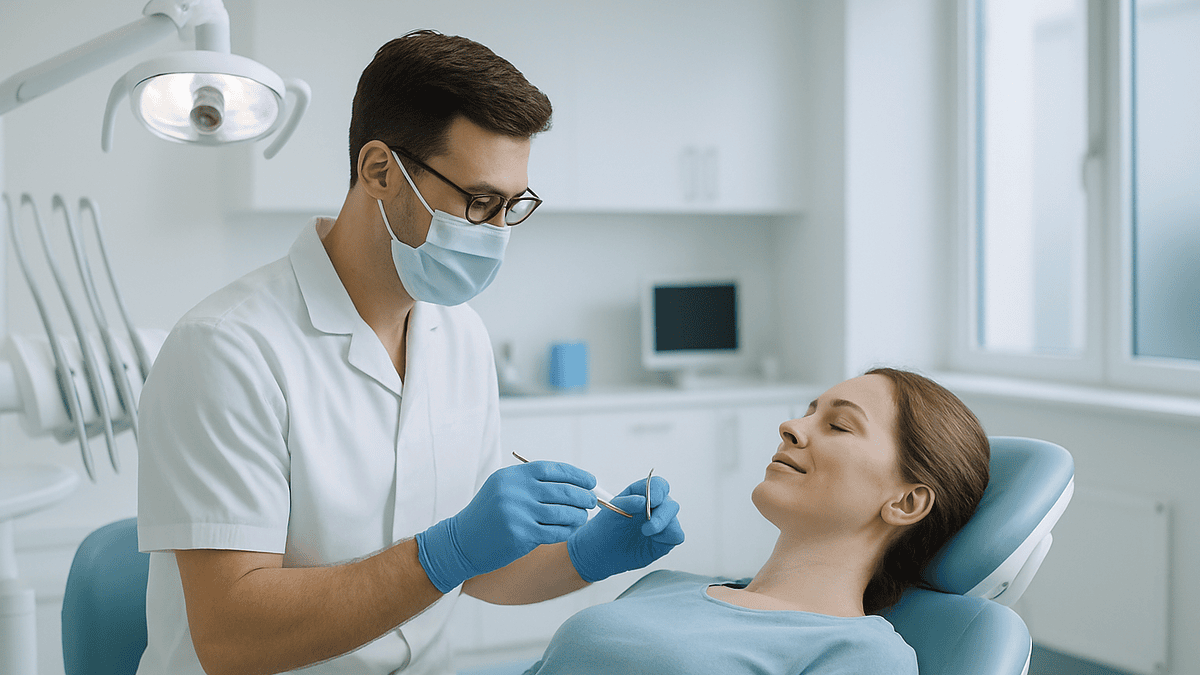
For roughly the first 48 hours after teeth whitening, most dental teams advise pausing strongly colored or acidic foods and drinks such as coffee, tea, red wine, berries, tomato sauce, soy sauce and dark sodas, along with smoking, vaping and colored mouthwash. Freshly whitened enamel is temporarily dehydrated and more prone to picking up pigment, and teeth may feel sensitive to cold. Follow the specific instructions from your own dentist.
You leave the dental chair with a smile that looks a shade or two brighter under the overhead lights, and the first thing you want is a coffee. Then you remember the sheet of paper in your bag. No coffee. No red wine. No curry. Nothing, apparently, that tastes like anything for two whole days.
That list feels arbitrary in the moment, and some of it is folklore. But the core of it rests on a real, well-understood change in the surface of your teeth that lasts a short while after bleaching. Understanding what to avoid after teeth whitening, and why, makes the two days far easier to live through than a blanket ban on everything you enjoy.
This explainer walks through what actually happens to enamel during whitening, which foods and drinks genuinely matter, which ones are only rumor, how sensitivity usually behaves, and when a symptom is worth a phone call rather than patience.
What to avoid after teeth whitening: the short list and the reason behind it
Strip away the mythology and the advice comes down to three groups. First, anything with deep pigment: coffee, black tea, red wine, dark berries, beetroot, tomato-based sauces, soy sauce, balsamic vinegar, dark sodas and brightly colored sports drinks. Second, anything strongly acidic, including citrus, vinegar dressings and carbonated drinks, because acid softens the outer layer of the tooth and can amplify sensitivity. Third, habits that stain or irritate: smoking, vaping with dark or sweetened liquids, colored mouthwashes and whitening toothpastes with gritty abrasives.
The reasoning is not that whitened teeth are fragile. Enamel, the hard mineral shell covering each tooth, is the hardest substance in the body and does not become soft because of a bleaching gel. What changes is its water content and its surface chemistry. During whitening, peroxide gel pulls water out of the enamel and temporarily strips the pellicle, the thin protein film from saliva that normally coats teeth and acts as a buffer against pigment. Dehydrated enamel with no pellicle behaves a little like a dry sponge: it rehydrates over hours, and while it does, colored molecules have an easier path in.
The 48-hour figure that appears on most aftercare sheets is a clinical convention rather than a number lifted from a large trial. Dental teams choose it because it comfortably covers the period when enamel rehydrates and the pellicle re-forms, and because sensitivity after whitening typically settles within a few days according to the Cleveland Clinic. Some clinicians say 24 hours; a cautious few say 72. Your own dentist’s instruction takes precedence over any general guide, including this one.
How teeth whitening actually works, and why teeth feel different afterward
Nearly every whitening product, whether applied by a dentist or in a custom tray at home, relies on hydrogen peroxide or carbamide peroxide, a compound that breaks down into hydrogen peroxide when it meets saliva. Peroxide releases reactive oxygen molecules that diffuse into the enamel and the dentin beneath it. Dentin is the softer, yellowish tissue that gives teeth much of their underlying color.
Once inside, those oxygen molecules break apart chromogens, the large colored compounds that accumulate over years from food, drink, tobacco and age. Smaller fragments reflect light differently, so the tooth appears lighter. The NHS describes whitening as a process of bleaching rather than a surface polish, which is why abrasive toothpastes cannot achieve the same effect.
Two side effects explain the aftercare rules. Peroxide dehydrates enamel, which makes teeth look chalky and extra bright in the first hours; some of that early whiteness fades as water returns, which is normal and not a sign the treatment failed. Peroxide also reaches the pulp, the living center of the tooth containing nerves and blood vessels, and can irritate it. That irritation is what people feel as a sharp, brief “zing” when cold air or water touches the tooth.
Gums can react too. If gel touches the gum line, the tissue may blanch white for a short time and feel sore. That usually resolves quickly once the gel is removed and the tissue rehydrates. The dehydration, the temporary loss of the pellicle and the pulp irritation are all reversible, and they form the whole scientific basis for the first 48 hours of caution.
Who whitening is usually for, and who is usually asked to wait
Whitening suits adults whose teeth are structurally healthy and whose discoloration is extrinsic or age-related: the gradual yellowing from coffee, tea, wine, tobacco and years of ordinary wear. MedlinePlus notes that these surface and age-related stains respond to bleaching far better than stains built into the tooth during development.
Several groups are commonly asked to wait or to consider alternatives, and the aftercare rules matter more for them if they do proceed:
- People with untreated cavities, cracked teeth or exposed root surfaces, because peroxide reaching the pulp through a defect causes disproportionate pain. Dentists treat decay first.
- People with active gum disease, since inflamed gums are more easily irritated by gel.
- Anyone under 18, whose pulp chambers are larger and more reactive. In the UK the NHS notes that whitening is not permitted for under-18s except for clinical reasons.
- People who are pregnant or breastfeeding. There is no evidence of harm, but safety data are limited, and most clinicians suggest postponing an elective procedure.
- People with crowns, veneers or white fillings on front teeth. These materials do not bleach, so whitening natural teeth can leave a mismatch.
- People with grayish stains from tetracycline antibiotics taken in childhood or from fluorosis. These may lighten unevenly, and a dentist may suggest bonding or veneers instead.
None of these are absolute prohibitions; they are reasons for an individual assessment. The NHS is clear that whitening is a dental procedure and should be carried out or supervised by a registered dental professional, who can check for these issues beforehand. Whether to proceed, and with which method, is a decision for you and your treating team.
Why the first 48 hours after whitening matter more than the next 48 days
Here is the honest version. The evidence that a strict two-day “white diet” preserves your shade for months is thinner than the confidence of the aftercare sheets suggests. Laboratory studies on extracted teeth do show that freshly bleached enamel picks up more stain from coffee, tea and wine than unbleached enamel in the hours after treatment. What is far less certain is how much a single espresso on day one changes what you see in the mirror at week eight.
That uncertainty cuts both ways. Skipping coffee for two days is unlikely to guarantee a longer result, but it costs nothing and removes a plausible risk during the one window when enamel is genuinely more absorbent. Most dentists treat it as cheap insurance rather than as a scientific law.
Where the first 48 hours matter more clearly is comfort. Sensitivity peaks in this period and, according to the Cleveland Clinic, typically fades over a few days. Acidic drinks and very hot or very cold foods do not damage the tooth, but they do provoke the irritated pulp, and repeated provocation can make an already uncomfortable day miserable. Pausing them is about feeling better, not about protecting the shade.
Think of the two days in two columns: the pigment rules, which are sensible precautions with modest evidence, and the temperature and acid rules, which are about pain and have a much clearer rationale. If you are going to bend a rule, the pigment column is the one where a lapse is least likely to matter, and the temperature column is the one you will regret bending.
Foods to avoid after teeth whitening: what genuinely stains and what is only rumor
A useful test for any food is the white shirt rule: if a spill would leave a mark you could not rinse out, treat it as a food to pause. That covers tomato sauce, soy sauce, balsamic vinegar, curry with turmeric, beetroot, blueberries, blackberries, cherries, dark chocolate and colored icing. Turmeric deserves special mention because its pigment, curcumin, binds readily to proteins and is notoriously hard to remove from anything porous.
Acidic foods form the second category. Citrus fruit, pickles, vinegar-based dressings and very sour sweets lower the pH at the tooth surface. Acid does not stain, but it briefly dissolves mineral from the enamel surface, a process called demineralization. Saliva normally repairs this within hours, but on top of freshly bleached, dehydrated enamel the combination can make sensitivity noticeably worse.
Some items on popular lists are rumor. Bananas, plain yogurt, white rice, chicken, white fish, cauliflower, peeled potatoes, white bread, plain pasta, egg whites and milk are all fine. Mild cheese is fine too; it is nearly pH neutral and stimulates saliva, which helps enamel rehydrate. Very hot soup is not a staining risk but may sting an irritated tooth, so let it cool.
Two subtleties are worth knowing. Sugar itself does not stain, but sticky sweets cling to the tooth and feed plaque bacteria, which produce acid. Bright artificial colors in sweets and drinks are dyes designed to be stable, and they behave much like natural pigments. Reading the ingredient panel for color additives during the two-day window is a small, practical habit.
If you want the simplest possible rule, eat foods that are pale, soft and not sour for two days, then return to your normal diet.
Can I drink coffee after teeth whitening? Drinks in the first two days
Coffee is the question almost everyone asks, and the answer most dental teams give is to wait the full window, or at minimum the first 24 hours, before returning to it. Coffee combines two of the three problems at once: it carries dark tannins, plant compounds that bind to tooth surfaces, and it is mildly acidic. Black tea has a similar tannin load, and many people find it stains teeth more than coffee over time.
Red wine is the third classic offender, pairing tannins with acidity and a deep pigment. White wine stains less but is more acidic than red, so it belongs in the caution column for sensitivity rather than the pigment column. Dark sodas, energy drinks and sports drinks add a further concern: high acidity combined with color additives.
Fruit juices sit in an awkward spot. Orange, grapefruit and cranberry juice are acidic; grape and pomegranate juice are both acidic and pigmented. Smoothies with berries or beetroot count as food and drink at once.
Safe drinks are water, milk, plain sparkling water without added acids (check the label, since some contain citric acid), and coconut water. Some people ask about drinking through a straw to bypass the front teeth. A straw does reduce contact for cold or pigmented liquids on the visible surfaces, though it does nothing for the back teeth, and it is a reasonable half-measure rather than a loophole.
When you resume coffee or tea, two habits limit staining over the long run: rinsing with water afterward, and waiting about half an hour before brushing so that saliva can neutralize the acid first. The NHS advises the same general approach after acidic food and drink for anyone, whitened or not.
Habits to pause: smoking, vaping, mouthwash and the toothbrush itself
Tobacco is the most powerful staining agent most people ever put in their mouths. Tar and nicotine settle into microscopic irregularities in enamel and turn yellow-brown on exposure to oxygen. The National Institute of Dental and Craniofacial Research also links smoking with gum disease, which weakens the tissue that whitening gel can irritate. Pausing cigarettes for two days after whitening is standard advice; many people find the procedure a natural moment to talk with their doctor about stopping altogether, which is a decision to make with that clinician rather than a demand from an aftercare sheet.
Vaping is often assumed to be stain-free. Nicotine in e-liquid still oxidizes to a yellowish residue, and dark or sweetened flavors add pigment and sugar. The evidence on vaping and tooth color is less developed than for cigarettes, but there is no basis for treating it as harmless to a fresh result.
Colored mouthwashes, especially deep blue, green or purple ones, contain dyes. Chlorhexidine mouthwash, an antiseptic sometimes prescribed for gum problems, is well known to cause brown staining with regular use, so if you have been prescribed it, ask your dental team how to time it around whitening.
Brushing itself needs a gentle hand for two days. Use a soft brush and a plain fluoride toothpaste, and skip charcoal or gritty “whitening” pastes, which polish rather than bleach and can feel harsh on sensitive teeth. Avoid brushing within half an hour of anything acidic. Flossing is fine and encouraged.
Finally, resist the urge to inspect your teeth under harsh bathroom light every hour. The chalky brightness of the first day softens as enamel rehydrates, and judging the result before day three is a reliable way to feel disappointed for no reason.
A quick reference: what to enjoy, what to limit, what to pause for 48 hours
Most people do not want a lecture at mealtime; they want a list on the fridge. The table below groups common items by the two mechanisms that matter, pigment and acidity, with the third column reflecting the typical advice from dental teams for the first two days. It is general guidance, not a substitute for your own dentist’s sheet.
| Category | Examples | Typical advice for first 48 hours | Main reason |
|---|---|---|---|
| Pale, mild foods | Chicken, white fish, rice, pasta, cauliflower, bananas, plain yogurt, mild cheese, egg whites | Enjoy freely | Little pigment, near-neutral pH |
| Neutral drinks | Water, milk, plain sparkling water without citric acid | Enjoy freely | No pigment, no acid |
| Acidic but pale | White wine, lemon, pickles, vinegar dressing, clear sodas | Limit; expect sensitivity | Acid softens enamel surface, provokes irritated pulp |
| Pigmented but low acid | Dark chocolate, soy sauce, dark chocolate desserts | Pause | Pigment binds to dehydrated enamel |
| Pigmented and acidic | Coffee, black tea, red wine, cola, berries, tomato sauce, balsamic | Pause | Both mechanisms at once |
| Habits | Smoking, vaping, colored mouthwash, abrasive toothpaste | Pause | Staining residue, dye or surface irritation |
| Temperature extremes | Ice cream, iced drinks, very hot soup | Limit as comfort allows | Triggers sensitivity, no staining risk |
One column is missing on purpose: there is no “never again” list. After the window closes, every item in the table returns to being an ordinary part of a varied diet, with the same rinse-and-wait habits that protect anyone’s teeth.
When can I eat normally again after teeth whitening?
For most people, normal eating resumes once the window their dentist specified has passed, typically after 24 to 48 hours. There is no ceremony to it. Enamel has rehydrated, the salivary pellicle has re-formed, and the tooth surface is back to behaving as it did before. Your first coffee will not undo the result, and a plate of pasta with tomato sauce on day three is not a mistake.
The pace at which you return to normal depends less on staining and more on sensitivity. If your teeth still zing at cold water on the morning of day three, there is no harm in keeping temperatures moderate for another day or two while the pulp settles. The Cleveland Clinic notes that whitening sensitivity is usually temporary and resolves over a few days; if it is worsening rather than easing after that, the section on when to call your dentist applies.
People who whiten at home over a series of days or weeks with dentist-supplied trays face a slightly different rhythm. Each application re-dehydrates the enamel, so the same short precautions apply after every session, not only after the last one. Many find it simplest to apply the gel in the evening, avoid pigmented drinks before bed, and eat normally the next day.
A few people never return to exactly their old habits, and that is a choice rather than a rule. Rinsing with water after coffee, drinking cold pigmented drinks through a straw, or switching a daily red wine to a less frequent one are the kinds of small changes that plausibly slow re-staining over months. None of them is required, and none of them replaces the routine care your dental team recommends.
Sensitivity in the first two days: what helps and what to ask about
Sensitivity after whitening feels like a brief, sharp response to cold, sometimes to sweetness, and occasionally as a spontaneous twinge without any trigger. It is the pulp reacting to peroxide that has diffused through the tooth, and it is the most common side effect of the procedure, reported by the NHS and the Cleveland Clinic alike.
Simple measures reduce it. Room-temperature food and drink, breathing through the nose in cold air, and a soft brush all avoid provoking the nerve. Toothpastes formulated for sensitive teeth work through two mechanisms: potassium nitrate calms the nerve fibers inside the dentin, and fluoride or related minerals help plug the microscopic channels in dentin that carry stimuli to the pulp. Many dentists suggest starting such a paste before whitening rather than after; ask yours what they recommend in your case.
Over-the-counter pain relievers are sometimes used for a day or two. Anti-inflammatory medicines work by blocking the production of prostaglandins, the signaling molecules that amplify pain and inflammation, while acetaminophen acts mainly on pain signaling in the central nervous system. Which, if any, is appropriate depends on your other health conditions and medicines, so that decision belongs with your dentist or pharmacist, and no dose information is offered here.
Some in-office systems include a fluoride or desensitizing gel applied at the end of the appointment, and dentists who supervise home whitening may adjust the gel strength or the wearing schedule if sensitivity is troublesome. Do not change how you use a prescribed home kit on your own; tell the team and let them adjust it.
Gum soreness follows a similar pattern. Blanched white patches where gel touched the tissue usually recover within a day. Rinsing gently with warm water is enough for most people.
How long does teeth whitening last, and do teeth turn yellow again?
Yes, teeth gradually return toward their previous shade, because the same processes that discolored them in the first place continue: pigment from food and drink, tobacco if you use it, and the slow thinning of enamel with age that lets more of the yellowish dentin show through. Whitening reverses accumulated stain; it does not change the biology that creates new stain.
How quickly that happens varies enormously. The NHS states that the effects of whitening can last up to three years, while noting that the result will not last as long in people who smoke or who regularly eat and drink things that stain. In practice, a heavy coffee and red wine drinker may notice fading within months, while someone who drinks mostly water may hold the shade for far longer. No clinician can promise a specific duration, and any provider who does is overstating what the evidence allows.
The first week has its own arc. Day one looks brightest because enamel is dehydrated. By day two or three, water returns and the shade settles into what will become the true result. Mild sensitivity fades over a few days. Any gum irritation resolves.
Over the following weeks, nothing dramatic should happen. Teeth that look blotchy on day one, with white spots or bands, usually even out as hydration returns; persistent unevenness is worth mentioning at a follow-up.
Many dentists offer periodic top-up sessions with home trays when the shade drifts. The interval, if any, is a matter for you and your dental team, weighed against the fact that repeated bleaching does bring repeated bouts of sensitivity. A common-sense approach is to let your maintenance habits do most of the work and to reserve bleaching for when you actually notice a change.
The 2 2 2 rule and the everyday habits that keep whitened teeth white
The 2 2 2 rule is a memory aid rather than a clinical guideline: brush for two minutes, twice a day, and see your dentist twice a year. The first two parts are well supported. The NHS advises brushing for about two minutes with a fluoride toothpaste, last thing at night and at one other time during the day, and cleaning between the teeth daily with floss or interdental brushes.
The third part is the one worth questioning. Twice-yearly visits are a tradition rather than a universal recommendation. The NHS advises that the interval between check-ups should be set individually by your dentist and can range from three months to two years depending on your oral health. Someone with healthy gums and few fillings may be seen less often; someone with a history of gum disease or decay may need to be seen more often. Ask your dentist what interval is right for you rather than assuming the calendar.
For keeping a whitened shade specifically, a few habits have a plausible mechanism even where trials are lacking:
- Rinse or drink water after coffee, tea or wine so pigment spends less time on the enamel.
- Wait about 30 minutes after acidic food or drink before brushing, so saliva can re-harden the surface first.
- Use a soft brush and a standard fluoride paste; abrasive pastes remove surface stain but can roughen enamel over time, and rough enamel picks up stain faster.
- Have plaque and tartar removed professionally at the interval your dental team advises, since tartar itself stains and traps pigment.
None of these is a secret. They are the same habits the NHS and MedlinePlus recommend for preventing decay and gum disease, and they happen to protect a lighter shade as a side benefit.
What people often get wrong about the days after whitening
The most common error is treating the aftercare list as a test of willpower with a prize at the end. A single lapse on day one will not visibly undo the result, and a perfect two days will not lock the shade in for years. The window is a reasonable precaution, not a guarantee in either direction.
The second error is judging the result on the first evening. Dehydrated enamel looks brighter than the final shade. People who compare a day-one photo with a week-one photo often believe the whitening “wore off” within days, when the teeth simply rehydrated to their true new color.
Third, many assume that because enamel is “more porous” after whitening, it is fragile and must be babied. Enamel does not lose structural strength from bleaching. The temporary change is about water content and the missing pellicle, and it reverses on its own.
Fourth is the belief that whitening toothpaste or charcoal powder will extend or replace bleaching. The Mayo Clinic notes that whitening toothpastes remove surface stains through mild abrasives and cannot change the intrinsic color of teeth the way peroxide bleaching does. Used aggressively, abrasive pastes can worsen sensitivity.
Fifth, people sometimes stop using their prescribed home trays early because of sensitivity, or double up sessions to speed things along. Both decisions belong with the dentist who supplied the kit, who can adjust the plan safely.
Finally, some assume whitening is a substitute for a check-up. It is not. Bleaching gel does nothing for decay, gum disease or worn enamel, and can make all three more uncomfortable. A dental examination before whitening is how those problems get caught, which is exactly why the NHS recommends whitening only under the care of a registered dental professional.
Questions to ask your care team before and after whitening
Good aftercare starts before the gel goes on. Asking a handful of specific questions at the consultation prevents most of the confusion people report afterward, and it gives you a personal set of instructions rather than a generic sheet.
Before the appointment, consider asking:
- Do I have any cavities, cracks, exposed roots or gum inflammation that should be treated first?
- Which of my teeth have fillings, crowns or veneers that will not change color, and how will that affect the match?
- What kind of discoloration do I have, and how well is it likely to respond?
- Is there anything in my medical history, or any medicine I take, that changes the advice for me?
- Would you suggest a sensitivity toothpaste before treatment, and if so, for how long?
For the days afterward:
- How long do you want me to avoid pigmented and acidic foods, and is there anything specific to your system?
- What sensitivity is normal for this method, and what would you consider excessive?
- Is it acceptable for me to use an over-the-counter pain reliever, given my other medicines?
- If I am using home trays, what should I do if a session is very uncomfortable: skip, shorten or call?
- When should I expect to see the final shade, and when would you like to review it?
For the longer term:
- How often do you recommend a check-up and professional cleaning for someone with my oral health?
- If the shade fades, what would top-up treatment involve, and how would we decide whether it is appropriate?
Write the answers down. The aftercare sheet covers everyone; the answers to these questions cover you, and they are what to follow when this article and your dentist differ.
When to call your doctor or dentist after teeth whitening
Most discomfort after whitening is mild and self-limiting. A few signs mean the situation deserves a professional opinion rather than patience, and none of them should be managed by adjusting a home kit on your own.
Contact your dentist promptly if you notice any of the following:
- Tooth pain that is severe, throbbing or keeps you awake, or that continues to worsen after the first few days rather than easing. Whitening sensitivity typically settles within days, according to the Cleveland Clinic, and pain that follows a different course may point to a cavity, a crack or an inflamed pulp that needs assessment.
- A single tooth that hurts far more than its neighbors, or that aches on biting. This pattern is not typical of whitening and often signals an underlying problem.
- Gum tissue that is blistered, ulcerated, bleeding or still white and painful after a day. Brief blanching is expected; tissue damage is not.
- Swelling of the gum, cheek or face, or a bad taste that suggests infection.
- A tooth that has turned gray or dark rather than lighter, which can indicate the pulp has been compromised.
- Any symptom that frightens you or that your instinct says is not right.
Seek urgent medical care, through your doctor or an emergency department, if you experience difficulty breathing or swallowing, swelling of the lips or tongue, hives, or a widespread rash after using a whitening product. These are features of an allergic reaction and are rare, but they require immediate attention.
If you accidentally swallow a large amount of gel, contact your local poison control service or doctor for advice. Small amounts that are incidentally swallowed during normal use are generally not harmful, but a full syringe or tray of gel is a different matter.
Whatever the symptom, the person best placed to judge it is the clinician who examined your teeth before treatment and knows which method and strength were used. Call them first.
Frequently asked questions
What should I avoid after teeth whitening?
Pause strongly pigmented and acidic foods and drinks, plus smoking, vaping and colored mouthwash, for the window your dentist specifies, commonly 24 to 48 hours. That means coffee, tea, red wine, dark sodas, berries, tomato and soy sauces, curry and citrus. Very hot or cold items are safe for the tooth but can provoke sensitivity, so keep temperatures moderate for comfort.
When can I eat normally again after teeth whitening?
Most people return to a normal diet after the period their dentist advised, typically 24 to 48 hours, once the enamel has rehydrated and the protective salivary film has re-formed. If your teeth are still sensitive to cold, you may prefer moderate temperatures for another day or two. People using home trays over several sessions repeat the short precautions after each application.
Do teeth turn yellow again after whitening?
Yes, gradually. Whitening removes accumulated stain but does not stop new stain from coffee, tea, wine or tobacco, nor the natural thinning of enamel with age. The NHS notes results can last up to three years, but fade sooner with smoking or frequent staining foods. Rinsing after pigmented drinks and keeping regular dental cleanings slow the drift.
What is the 2 2 2 rule for teeth?
It is a memory aid: brush for two minutes, twice a day, and see the dentist twice a year. The NHS supports brushing twice daily for about two minutes with fluoride toothpaste. The check-up part is a tradition rather than a guideline; the NHS advises an individual interval between three months and two years based on your oral health.
Can I drink coffee after teeth whitening?
Most dental teams advise waiting the full aftercare window, usually 24 to 48 hours, because coffee combines dark tannins with mild acidity, hitting both the staining and the sensitivity mechanisms. After that, coffee is fine as part of a normal diet. Rinsing with water afterward and waiting about half an hour before brushing help limit long-term staining.
What are the main foods to avoid after teeth whitening?
Use the white shirt test: anything that would leave a lasting mark on fabric is worth pausing for two days. Common examples are tomato sauce, soy sauce, balsamic vinegar, curries with turmeric, beetroot, blueberries and dark chocolate. Acidic foods such as citrus and pickles do not stain but can worsen sensitivity. Pale, mild foods like chicken, rice and plain yogurt are fine.
Is the white diet after teeth whitening really necessary?
It is a sensible precaution with modest evidence rather than a proven requirement. Laboratory studies show freshly bleached enamel absorbs more pigment for a short period, but how much a single lapse changes the visible result months later is unclear. Since the precaution costs nothing and covers the only window when enamel is genuinely more absorbent, most dentists recommend it. Follow your own dentist’s instruction.
How long does teeth whitening sensitivity last?
Sensitivity is the most common side effect and, according to the Cleveland Clinic, is usually temporary and settles over a few days. It feels like brief sharp responses to cold or sweetness. Room-temperature food, a soft brush and a toothpaste for sensitive teeth help. If pain is severe, worsening after several days or confined to one tooth, contact your dentist.
Why do my teeth look less white a few days after whitening?
Because they were dehydrated on day one. Peroxide pulls water out of enamel, which makes teeth look chalky and extra bright immediately after treatment. As water returns over two to three days, the shade settles into the true result. This is normal and not a sign the whitening failed. Judge the outcome after the first few days, not on the first evening.
Can I smoke or vape after teeth whitening?
Dental teams generally advise pausing both for at least the aftercare window. Tar and nicotine from cigarettes are among the strongest tooth-staining agents, and nicotine in e-liquid also oxidizes to a yellowish residue, with dark or sweetened flavors adding pigment. Smoking is also linked with gum disease by the NIH. If you are considering stopping, your doctor can discuss support options.
References
This article is for general information only and is not a substitute for professional medical advice. Please consult a qualified doctor about your individual situation.

More from the Blog
What Happens at a Composite Bonding Appointment: Shade Matching, Layering and Polishing
A composite bonding procedure usually takes 30 to 60 minutes per tooth and rarely needs an injection. The dentist selects a resin shade against…
Bleeding Gums and Blood Thinners: What Your Dentist Checks Before Gum Treatment
Blood thinners do not cause gum disease, but they can make inflamed gums bleed longer and more visibly. Before gum treatment, a dentist reviews…

Clear Aligner Problems to Watch: Tracking Issues, Sore Spots and Gum Irritation
Most clear aligner problems are minor and fixable: trays that stop fitting usually reflect too few hours of wear, sore spots come from pressure…
How Digital Smile Planning Shapes Gummy Smile Treatment Before Anything Is Reshaped
Digital smile design for a gummy smile uses photographs, video and a scan of the teeth to map how much gum shows, why it…
What to Do With a Knocked-Out Tooth in the First Hour Before Emergency Dental Care
If a permanent tooth is knocked out, pick it up by the crown, not the root, rinse it briefly in milk or water without…
Preparing for a Tooth Extraction: Medication Lists, Eating and Arranging Your Ride Home
Preparing for a tooth extraction comes down to three practical steps: give your dentist a complete list of every medicine and supplement you take,…